

Vietnam has quietly become the go-to choice for US companies looking to scale their tech teams without breaking the bank. While everyone’s still talking about India and Eastern Europe, smart companies are discovering that Vietnamese developers deliver comparable quality at significantly lower costs with better English skills and timezone compatibility.
The offshore development landscape shifted dramatically in 2026. Geopolitical tensions, rising costs in traditional markets, and the urgent need for AI-specialized talent forced companies to reconsider their options. Vietnam’s IT sector is projected to reach $13 billion by 2026, with offshore development services growing at 11-17% annually while established markets stagnate.
This guide breaks down exactly which countries offer the best value for US companies right now. I’ll show you why Vietnam consistently ranks in the top 3, what specific advantages each destination offers, and how to avoid the common mistakes that waste money and delay projects.
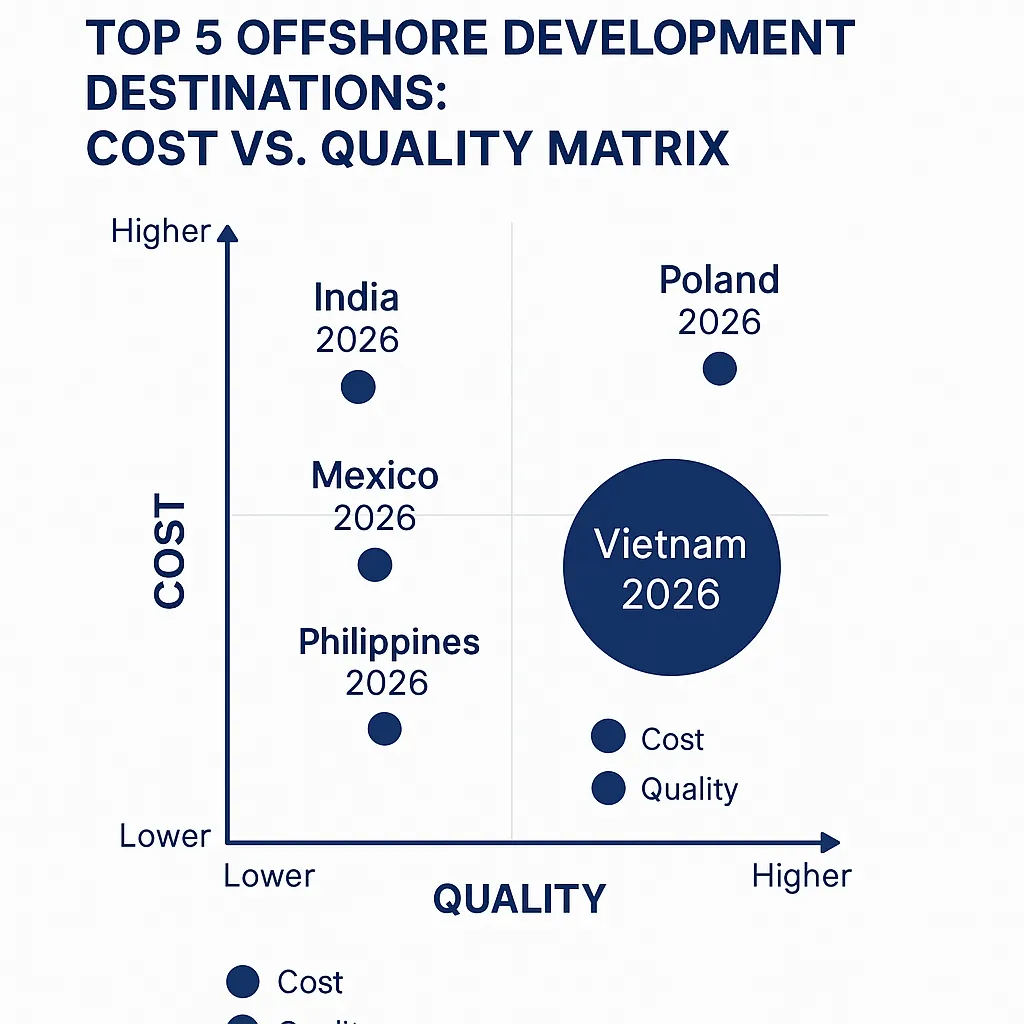
Fig.1 Top 5 Offshore Development Destinations – Cost vs Quality Matrix
Top 3 Offshore Development Winners in 2026
- Vietnam: 500,000+ developers, 60-70% cost savings, excellent English proficiency
- India: 4.5 million professionals, 70-80% cost savings, unmatched scale
- Ukraine: 200,000+ developers, premium quality, geopolitical considerations
Current State: Global Offshore Software Development Market in 2026
According to this research of VRinSofts, the global offshore software development market reached $146-151 billion in 2024 and is projected to grow at 8-12% CAGR through 2030. This isn’t just steady growth – it’s acceleration driven by AI adoption and digital transformation needs.
Here’s what’s driving this surge: US companies account for approximately 40-65% of offshore software development spending globally. The primary motivation used to be pure cost reduction, but that’s changed. Companies now prioritize accessing specialized talent, particularly in AI and machine learning, while still achieving those significant cost savings.
Why Companies Are Going Offshore in 2026
The talent shortage is real. The average time to hire a software developer domestically is 4-6 months versus 2-4 weeks through established offshore partnerships. When you need to scale fast, that 3x speed advantage becomes critical.
Cost optimization remains huge, obviously. Companies typically save 50-80% on development costs through offshore partnerships. But access to specialized skills has become equally important – try finding senior AI developers in Silicon Valley without paying $200k+ salaries (and good luck with that hiring timeline).
Key Market Drivers:
- AI and machine learning talent shortage
- Rising domestic development costs
- Accelerated digital transformation timelines
- Remote work normalization post-pandemic
Top 3 Offshore Software Development Countries for US Companies
Three countries dominate when US companies evaluate offshore development options. Each offers distinct advantages, but the rankings have shifted significantly in 2026.
1. Vietnam: The Balanced Champion
Vietnam offers 500,000+ software professionals with 70% English proficiency. This combination creates the sweet spot many US companies have been seeking – quality, communication, and cost-effectiveness.
Why Vietnam Works:
- Cost Advantage: Senior developers earn $20,000-$35,000 annually vs $120,000-$180,000 in the US
- Timezone Sweet Spot: 12-hour difference allows 2-4 hours of overlap with proper scheduling
- Technical Quality: Strong in Java, .NET, Python, and emerging AI technologies
- Government Support: Significant infrastructure investment and education initiatives
2. India: Still the Volume Leader
India maintains its position with over 4.5 million software professionals and handles approximately 55% of global IT outsourcing. The sheer scale is unmatched – no other country comes close to this talent pool depth.
India’s Strengths:
- Massive Scale: Largest developer pool globally
- Cost Benefits: 70-80% savings compared to US rates
- Mature Ecosystem: Established processes and quality standards
- Specialized Skills: Strong in enterprise software, data analytics, and AI
Challenges to Consider:
- 10.5-13.5 hour timezone difference
- Communication overhead can be higher
- Rising costs in tier-1 cities
3. Ukraine: Premium Quality with Considerations
Ukraine has 200,000+ IT professionals with exceptional technical skills and approximately 85% English proficiency rates. The cultural alignment with Western business practices makes collaboration smooth and natural.
Ukraine’s Advantages:
- Technical Excellence: Strong in complex software architecture
- Cultural Fit: European business practices align with US expectations
- Competitive Rates: $25-$50 hourly for senior developers
- Innovation Focus: Strong in fintech, blockchain, and emerging technologies
Current geopolitical considerations require careful planning, though many Ukrainian companies maintain operations through distributed teams across Europe.
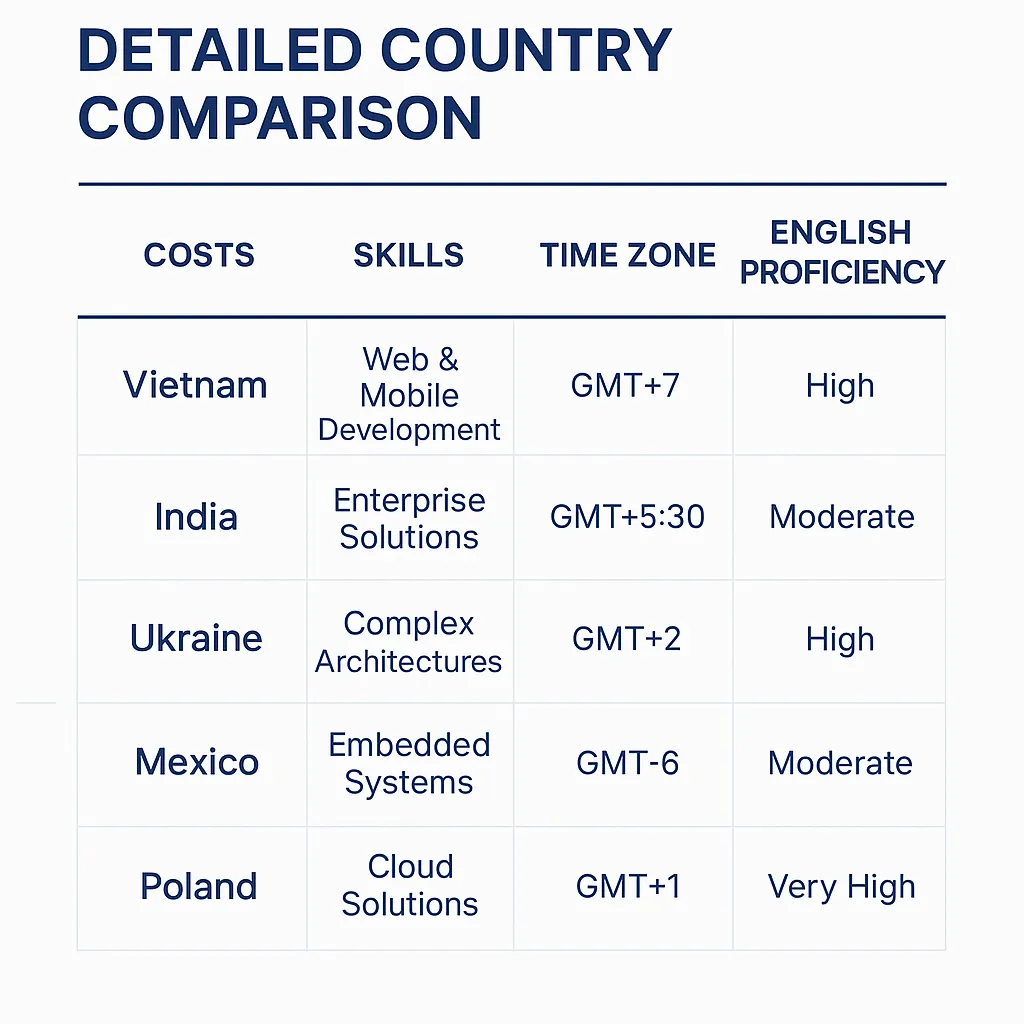
Fig2. Detailed Country Comparison – Costs, Skills, Timezone, English Proficiency
Why Vietnam Ranks #1 for Most US Companies: Deep Dive Analysis
Vietnam’s rise to top-tier status didn’t happen overnight. Several factors converged to create an ideal offshore development environment.
Technical Talent: Quality Meets Scale
Vietnam produces 57,000+ IT graduates annually from 600+ universities with strong computer science programs. This isn’t just quantity – major technology companies like Samsung, Intel, and LG have established significant R&D operations in Vietnam, validating the talent quality.
Technical Capabilities:
- 40% of professionals have 5+ years experience
- Strong in Java, .NET, Python, React, Angular
- Growing expertise in AI/ML, blockchain, IoT
- Vietnam ranks 25th globally in HackerRank programming skills assessment
Cost Economics That Actually Work
Senior Vietnamese developers cost 60-70% less than US equivalents, but the real value comes from total project economics. Companies achieve positive ROI within 6-8 months while accessing talent that would cost 3-4x more domestically.
Annual Salary Ranges (USD):
- Junior Developer: $12,000 – $18,000
- Mid-level Developer: $18,000 – $28,000
- Senior Developer: $25,000 – $35,000
- Tech Lead/Architect: $35,000 – $50,000
Communication Excellence
70% of Vietnamese IT professionals demonstrate strong English communication skills
—with approximately 70% of IELTS test-takers achieving scores between 5.5–7.0 (B2-C1 proficiency levels) and an average score of 6.2, placing Vietnam 29th globally.
Vietnam’s education system emphasizes English from elementary school through university, with the country ranking 13th in Asia and demonstrating above-average performance in listening and writing skills.
According to the British Council, 80% of mid-level IT job postings require English proficiency, and ITViec’s 2026 market data shows demand for English-proficient IT experts surged 52% year-over-year—underscoring how Vietnamese professionals are increasingly comfortable with Western business communication and global collaboration at scale.
This proficiency level enables effective participation in:
- Daily standups and sprint planning
- Technical architecture discussions
- Client requirement gathering
- Code reviews and documentation
Strategic Government Investment
Vietnam’s government has invested heavily in digital infrastructure and education. While exact figures vary, multi-billion dollar investments in IT infrastructure since 2020 include fiber optic networks, technology parks, and university partnerships with global tech companies.
Infrastructure Advantages:
- 99.5% internet uptime in major cities
- Average speeds of 60+ Mbps
- World-class office facilities in Ho Chi Minh City, Hanoi, Da Nang
- Tax incentives for technology partnerships
Ready to discover which countries offer the best offshore software development services in 2026—and how to choose the right destination for cost, talent quality, and long-term scalability?
Compare the top offshore development countries of 2026 with insights on engineering talent, pricing trends, innovation strength, and operational reliability.
Learn how global companies evaluate offshore regions using criteria such as tech specialization, communication practices, engineering culture, and project delivery performance.
Explore the 2026 Guide to the Best Offshore Software Development CountriesSmart Strategies: How to Succeed with Vietnamese Development Teams
Getting offshore development right requires more than picking the right country. Here’s what actually works based on real partnerships.
1. Choose Partners with Proven Track Records
Look for development companies with:
- Certifications: ISO 27001, SOC 2 compliance
- Cloud Partnerships: AWS, Azure, Google Cloud certifications
- US Experience: Demonstrated success with American companies
- Modern Practices: DevOps, agile methodologies, AI tool adoption
Leading Vietnamese firms report 30% productivity gains through AI-assisted development tools like GitHub Copilot and advanced automation.
2. Establish Communication Protocols
Daily Operations:
- Morning standup calls during overlap hours (7-9 AM EST works well)
- Asynchronous updates via Slack or Microsoft Teams
- Weekly video calls for deeper technical discussions
- Quarterly face-to-face meetings (virtual or in-person)
Documentation Standards:
- Clear requirement specifications
- Structured code review processes
- Regular milestone checkpoints
- Transparent project tracking
3. Implement Risk Management
Establish comprehensive agreements covering IP protection and data security compliance. Reputable Vietnamese firms maintain enterprise-grade security measures and understand US regulatory requirements.
Risk Mitigation Checklist:
- Start with pilot projects to evaluate capabilities
- Implement phased delivery with regular milestones
- Maintain backup communication channels
- Plan for team scaling and knowledge transfer
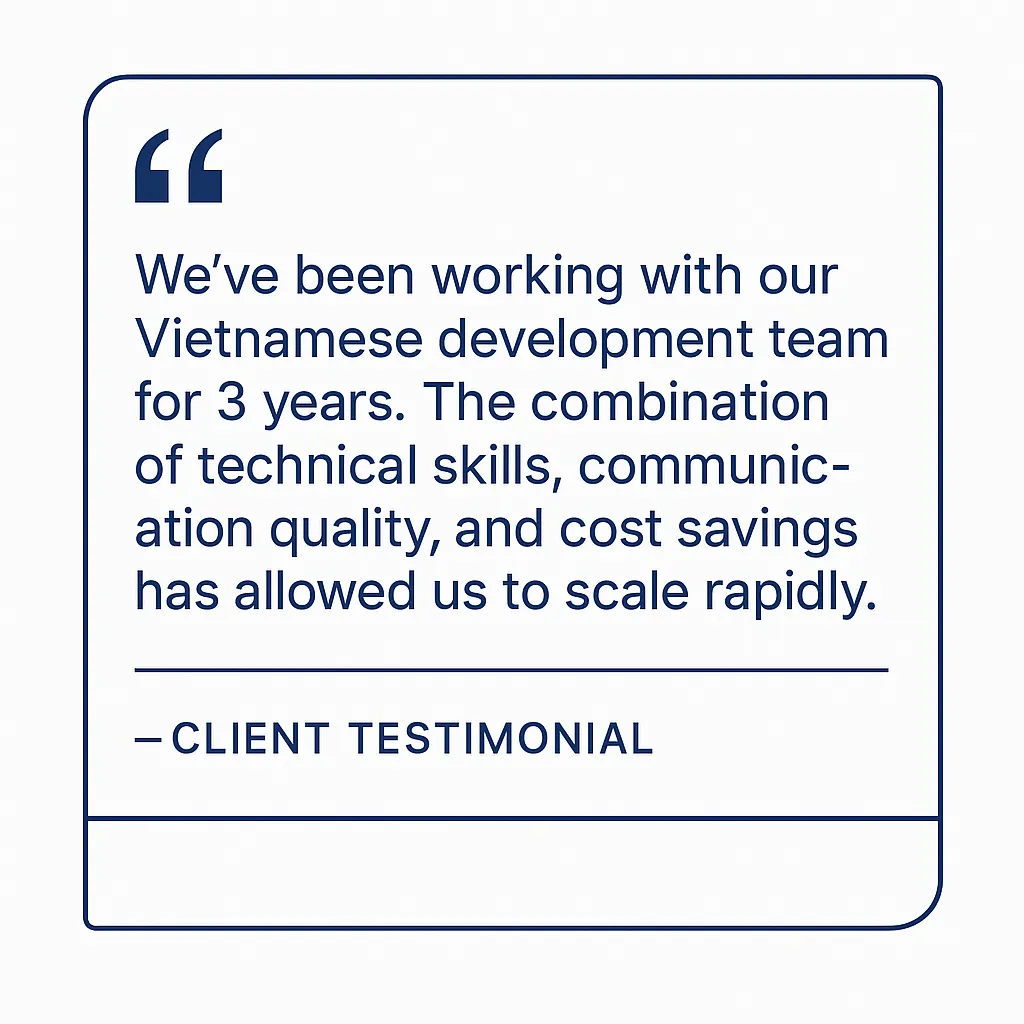
Fig.3 CTO, US SaaS Company
Vietnam vs Other Leading Destinations: Real Comparison
When you analyze the actual working relationships, Vietnam’s advantages become clearer against traditional alternatives.
Vietnam vs India: Communication and Collaboration
While India offers larger scale, Vietnam provides superior day-to-day collaboration for most US companies:
Vietnam Advantages:
- Better timezone alignment (12 vs 13+ hours)
- Higher English proficiency in practical communication
- Greater cultural adaptability to US business practices
- 20-30% lower project management overhead
India Advantages:
- Massive talent pool for large-scale projects
- More specialized niche skills available
- Established global delivery models
- Slightly lower hourly rates in some regions
Vietnam vs Eastern Europe: Cost and Stability
Vietnamese developers cost 40-50% less than Eastern European counterparts while maintaining comparable technical quality. For long-term partnerships, this creates significant cumulative savings.
Vietnam Benefits:
- Better long-term cost predictability
- Growing tech ecosystem and talent retention
- Government stability and support
- Emerging specialization in AI and fintech
Eastern Europe Benefits:
- Closer cultural alignment with US/EU practices
- Strong technical education traditions
- Established IT services industry
- Geographic proximity to European markets
Future Outlook: Vietnam’s Position in 2026 and Beyond
The trajectory looks strong for Vietnam’s continued rise in the offshore development market.
AI and Emerging Technology Focus
Vietnam is positioning itself as a regional hub for next-generation technologies. The IT outsourcing market is projected to reach $1.3 billion by 2028, with significant growth in AI, blockchain, and IoT development capabilities.
Government Initiatives:
- AI and machine learning training programs
- University partnerships with global tech companies
- Regulatory sandboxes for fintech innovation
- Investment in 5G and digital infrastructure
Market Growth Trajectory
Vietnam aims to become a top-3 global outsourcing destination through continued talent development and infrastructure investment. The country’s focus on education, English proficiency, and technical skills creates a sustainable competitive advantage.
Key Growth Drivers:
- Annual production of 57,000+ IT graduates
- Increasing foreign investment in tech education
- Growing specialization in high-value services
- Strong government support for digital transformation
Making the Decision: Is Vietnam Right for Your Company?
Vietnam offers the best balance of quality, cost, and collaboration for most US companies seeking offshore development partnerships. The combination of technical capability, cost efficiency, and communication ease creates a compelling value proposition that’s hard to match elsewhere.
Vietnam is ideal if you need:
- Strong technical skills at competitive rates
- Effective English communication
- Reasonable timezone overlap for collaboration
- Long-term partnership stability
- Access to AI and modern development expertise
Consider alternatives if you require:
- Massive scale (>100 developers) – India might be better
- Specialized niche skills not yet available in Vietnam
- European timezone alignment – Eastern Europe could work better
- Specific regulatory expertise (GDPR, etc.)
Ready to Explore Vietnam for Offshore Development?
The numbers support the trend toward Vietnam as a premier offshore development destination. Companies working with Vietnamese teams consistently report positive ROI within 6-8 months and higher satisfaction scores compared to other offshore relationships.
If you’re evaluating offshore development options, Vietnam deserves serious consideration. The combination of technical capability, cost efficiency, and collaboration ease makes it an increasingly popular choice for companies looking to scale their development capabilities.
Next Steps:
- Research Partners: Use our comprehensive offshore development center checklist to evaluate potential partners
- Start Small: Begin with a pilot project to test capabilities and communication
- Plan for Growth: Understand different offshore development models to choose the right approach
Want to learn more about offshore development strategies? Check out our master offshore software development guide or discover why Vietnam offers exceptional value for offshore development centers.
For companies ready to explore Vietnamese talent solutions, discover how our talent solutions can accelerate your development goals.