Artificial Intelligence (AI) has become one of the most powerful forces transforming enterprise software today. When integrated with Enterprise Resource Planning (ERP) systems, AI can help businesses make smarter decisions, automate repetitive work, and anticipate problems before they arise. But beyond the hype, what does AI in ERP truly mean, and how can leaders use it to build long-term value?
In episode 6 of the Ctrl + Shifter podcast, Wei Chien Sun, Head of the Center of Excellence for SAP Enterprise Asset Management at ConVista Consulting AG, shared his experience helping asset-heavy organizations navigate digital transformation. His insights reveal not only how AI enhances ERP but also what businesses need to get right before embracing it.
Why AI Is Changing ERP Systems
Traditional ERP systems were designed to bring data, processes, and people together in one platform. They standardized workflows and created visibility across departments, but they were also rigid, data-heavy, and often slow to adapt. To understand this foundation, it helps to start with what ERP is and how SAP ERP works.
AI is changing that dynamic. By learning from historical data and identifying patterns, AI brings a new level of intelligence to ERP systems. It can predict demand, detect inefficiencies, and automate decision-making, which aligns with emerging intelligent ERP trends for 2025. As Wei put it, technology alone isn’t enough: “technology and process knowledge always go hand in hand.”
AI allows ERP systems to evolve from tools of control into engines of foresight and growth. Instead of simply recording what happened, they can now tell you what will happen, and how to respond. This shift is at the heart of the next wave of intelligent ERP systems.
What AI in ERP Really Means
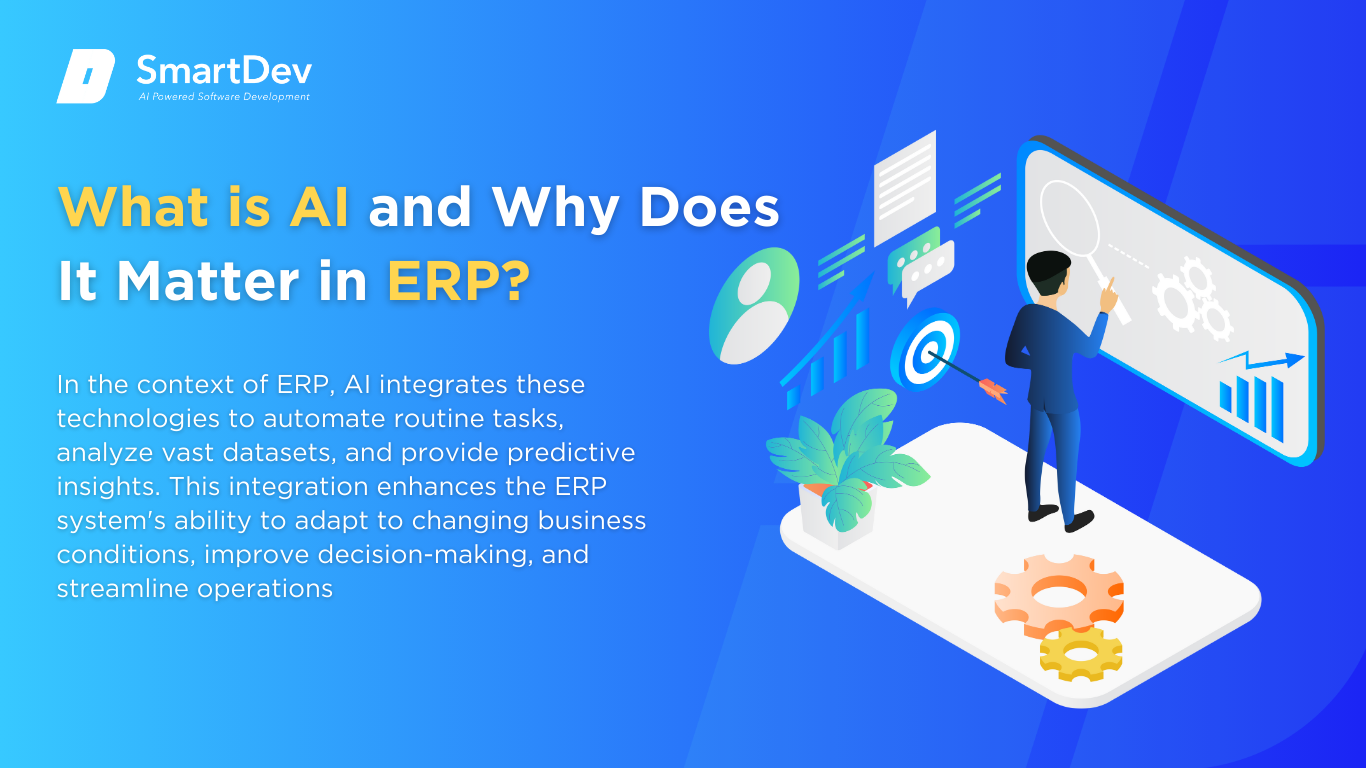
AI in ERP refers to the use of machine learning, natural language processing, and automation to enhance how ERP systems function. Rather than relying on static rules or manual inputs, AI enables ERP platforms to continuously learn from data, adjust processes in real time, and deliver actionable insights. You can see this clearly in how vendors describe AI for ERP and finance.
For example, in an SAP environment, AI can analyze thousands of transactions to detect unusual patterns, recommend supply chain adjustments, or even automate maintenance schedules before a machine fails. Explore how SAP and AI are changing ERP with embedded analytics and smart workflows. It’s not about replacing people, it’s about freeing them from routine work so they can focus on more strategic challenges.
Wei explained that in asset-heavy industries, many organizations still spend huge amounts of time handling data manually, mapping, cleansing, and migrating it from legacy systems. With AI, these once-painful steps can now be automated and validated faster, reducing human error and freeing teams to focus on innovation instead of administration. This aligns with common ERP implementation and data migration best practices.
Key AI Capabilities in Modern ERP
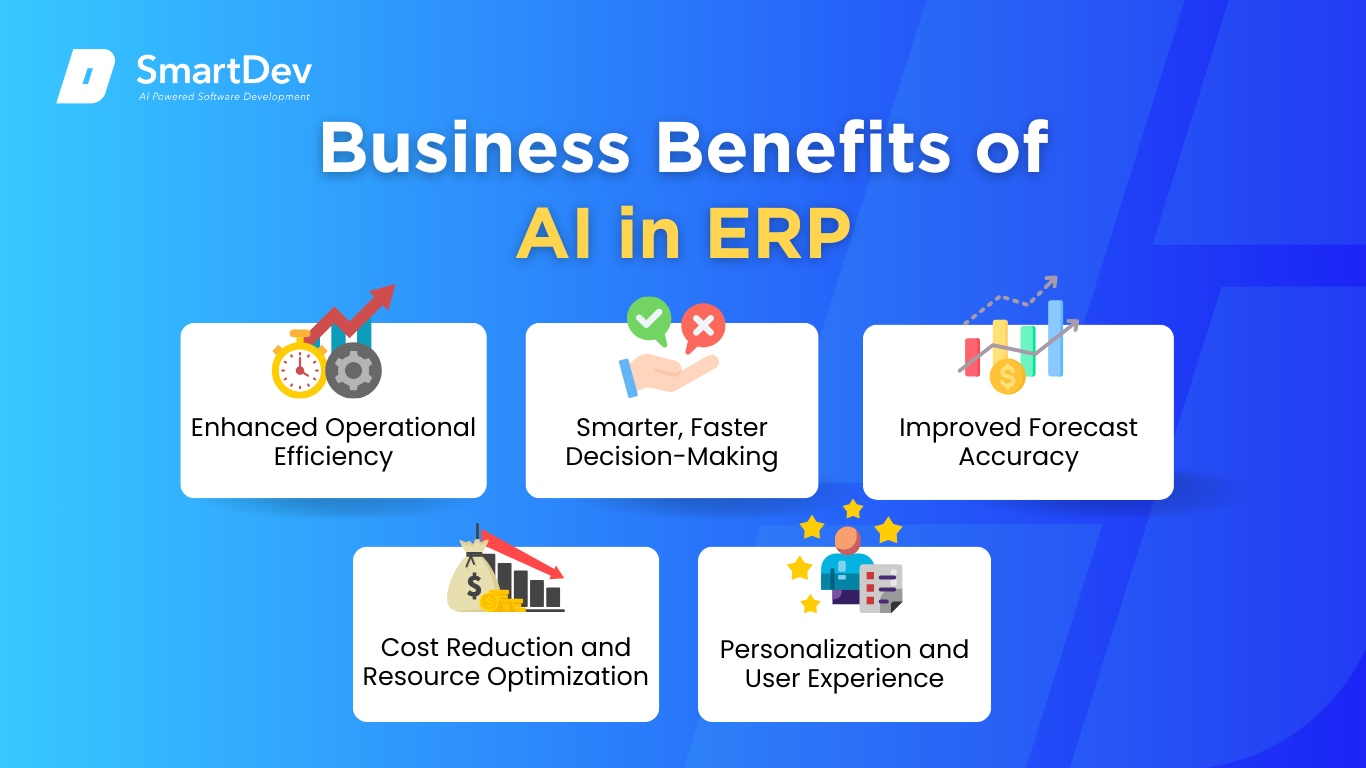
AI’s value in ERP can be grouped around three key capabilities: automation, prediction, and insights. These are also the pillars highlighted in many AI-in-ERP use cases.
Automation handles repetitive tasks such as data entry, invoice matching, or order processing, ensuring accuracy and consistency. In finance, for example, AI for ERP and finance supports automated invoice processing, cash application, and reconciliation.
Prediction enables systems to anticipate issues, such as equipment failure, supply delays, or cash flow fluctuations, before they occur. This predictive layer is becoming a defining feature of next-generation ERP trends.
Finally, insight generation helps leaders understand performance trends across departments, uncovering hidden inefficiencies and opportunities for improvement.
Wei described how his teams already use AI-driven automation to simplify complex ERP migrations. Instead of manually testing every process, they leverage automated testing and process mining tools to pinpoint where human expertise is most needed. The result is not just efficiency, it’s better decision-making. Similar approaches are discussed in AI-first ERP and smart SAP dashboards.
How AI Improves Daily Operations
The real impact of AI in ERP appears in the day-to-day. For manufacturers, it means predicting when a production line needs maintenance before downtime occurs. For finance teams, it means faster reconciliations and more accurate forecasting. For supply chain leaders, it means real-time inventory optimization that reduces waste and improves fulfilment. These scenarios mirror real-world AI in ERP benefits and applications.
Wei highlighted that one of the most powerful applications of AI is process mining—analyzing user interactions and transactions to understand how work actually flows across an organization. This gives leaders a clear picture of what’s working, what’s not, and where AI-driven optimization can add value. Many AI-ERP implementation guides position process mining as a critical first step.
As he put it, “We can’t always trust what we’re told about how a process runs—but the system can show us.”
Benefits for Growing and Enterprise Businesses
For growing companies, AI-powered ERP systems create scalability without extra complexity. Automating back-office operations allows smaller teams to manage enterprise-level workflows and maintain control as they expand. This is particularly important for mid-market ERP adopters and 2025 trends.
For large enterprises, the advantages go deeper: AI provides cross-functional visibility that improves decision-making at scale. It helps organizations align strategy, operations, and execution in real time. As Wei explained, when companies move beyond short-term fixes and start connecting data across engineering, manufacturing, and sales, “that’s when real transformation begins.” This is consistent with intelligent ERP predictions for 2025.
AI also enables a more sustainable way of working. By predicting resource needs, optimizing production schedules, and reducing manual waste, it drives not only efficiency but environmental and operational responsibility. These themes appear frequently in top ERP trends for 2025.
Common Challenges When Adding AI to ERP
Despite its potential, AI in ERP is not a plug-and-play solution. The biggest barrier, according to Wei, is a lack of understanding, not of technology itself, but of how it fits into the business context. Many organizations chase the latest AI features without ensuring their data, processes, or culture are ready. This reflects broader generative AI adoption challenges in business.
He cautioned against implementing AI simply because it’s fashionable: “Don’t pitch into AI because it’s hype. Ask: ‘what do we actually need for our organization?’”
Poor data quality, fragmented systems, and insufficient user training are other common pitfalls. Wei also pointed out that many ERP transformations fail not because of technology, but because of people. When employees aren’t properly trained or included in the process, resistance grows, and even the most advanced systems underperform. These issues are well-documented in ERP implementation challenge overviews and studies on failed implementations.
Best Practices to Get Started with AI in ERP
Success with AI in ERP starts with clarity and humility. Businesses must understand their processes deeply before layering on automation. Wei emphasized the importance of preparing a strong foundation—clean data, clear governance, and well-defined goals—before adopting new tools. Many AI-ERP best practice guides recommend starting with a limited pilot and clear KPIs.
Open communication is equally important. AI should be introduced as a collaborative partner, not an imposed change. Training, enablement, and continuous feedback ensure that teams stay confident and curious rather than resistant. This echoes recommendations from ERP implementation best practices.
Finally, leadership alignment is essential. ERP transformation touches every part of a business, so executives must stay connected to both the vision and the day-to-day realities of implementation. Thought leadership around preparing ERP for the AI era consistently highlights executive sponsorship as a critical success factor.
Insights from the Ctrl + Shifter Podcast
In his conversation with the Ctrl + Shifter host, Wei Chien Sun reflected on how AI can elevate ERP from a system of record to a system of intelligence. Yet he also reminded listeners that technology alone cannot drive transformation.
“AI can automate commodity processes,” he said, “but it’s people who create value.”
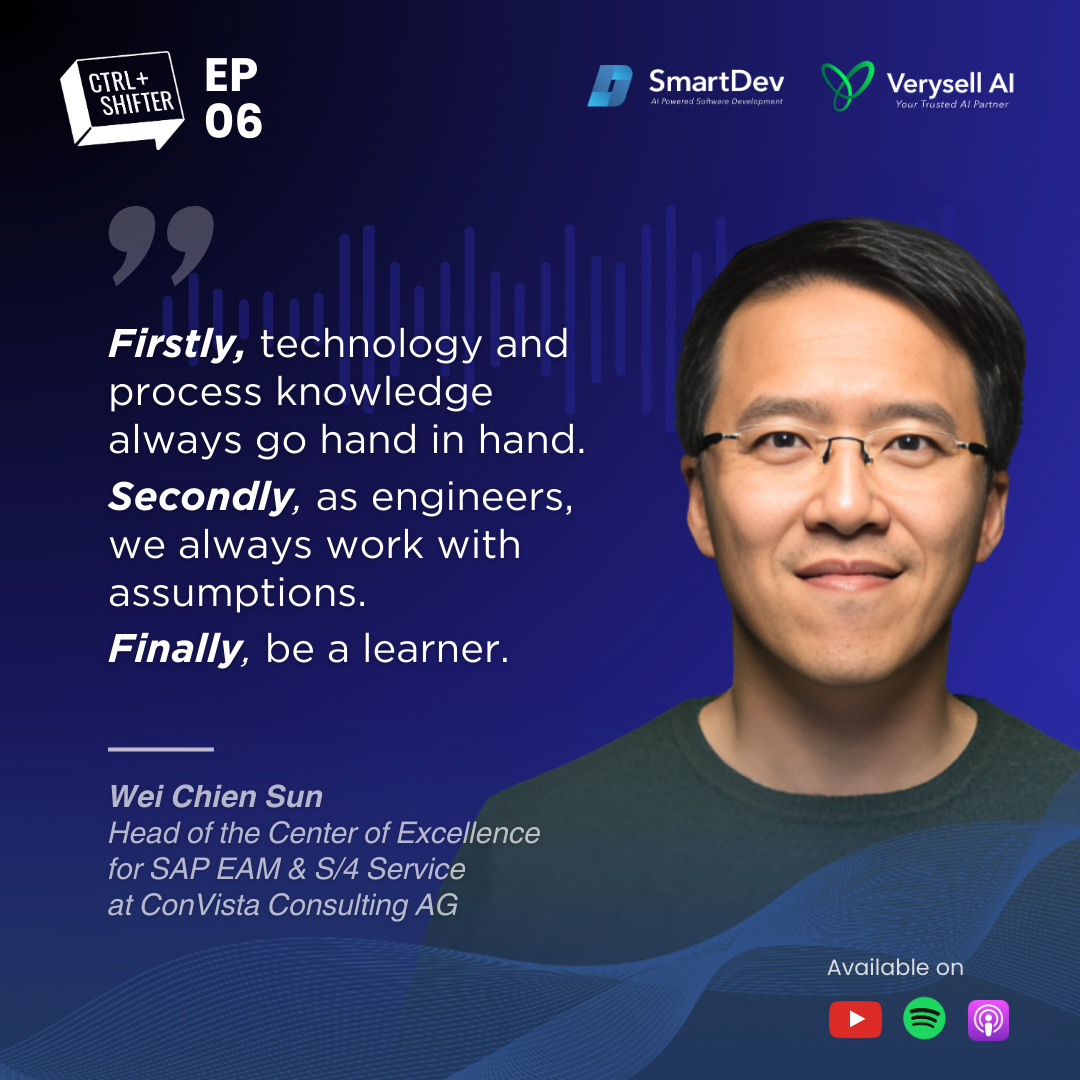 Wei’s engineering mindset – a blend of precision, collaboration, and respect for process, has shaped his philosophy on ERP transformation. He believes the future lies in connecting people, data, and processes across the entire digital thread, creating one consistent language for business. That, he said, is when “technology finally becomes human-centered.”
Conclusion – The Future of AI-Driven ERP Systems
AI is redefining how ERP systems operate, making them more intelligent, predictive, and adaptive. From AI-first ERP architectures to industry-wide ERP and AI trends, the direction is clear: ERP is becoming smarter, more autonomous, and more connected.
Yet, as Wei’s experience shows, the real transformation happens when technology meets understanding.
Businesses that combine AI’s power with human insight will not only optimize operations but also reinvent how work gets done. The future of ERP isn’t just digital, it’s intelligent, connected, and deeply human.
To hear Wei’s full perspective on how AI is reshaping ERP transformation, listen to Episode 6 of the Ctrl + Shifter podcast.