
TL;DR
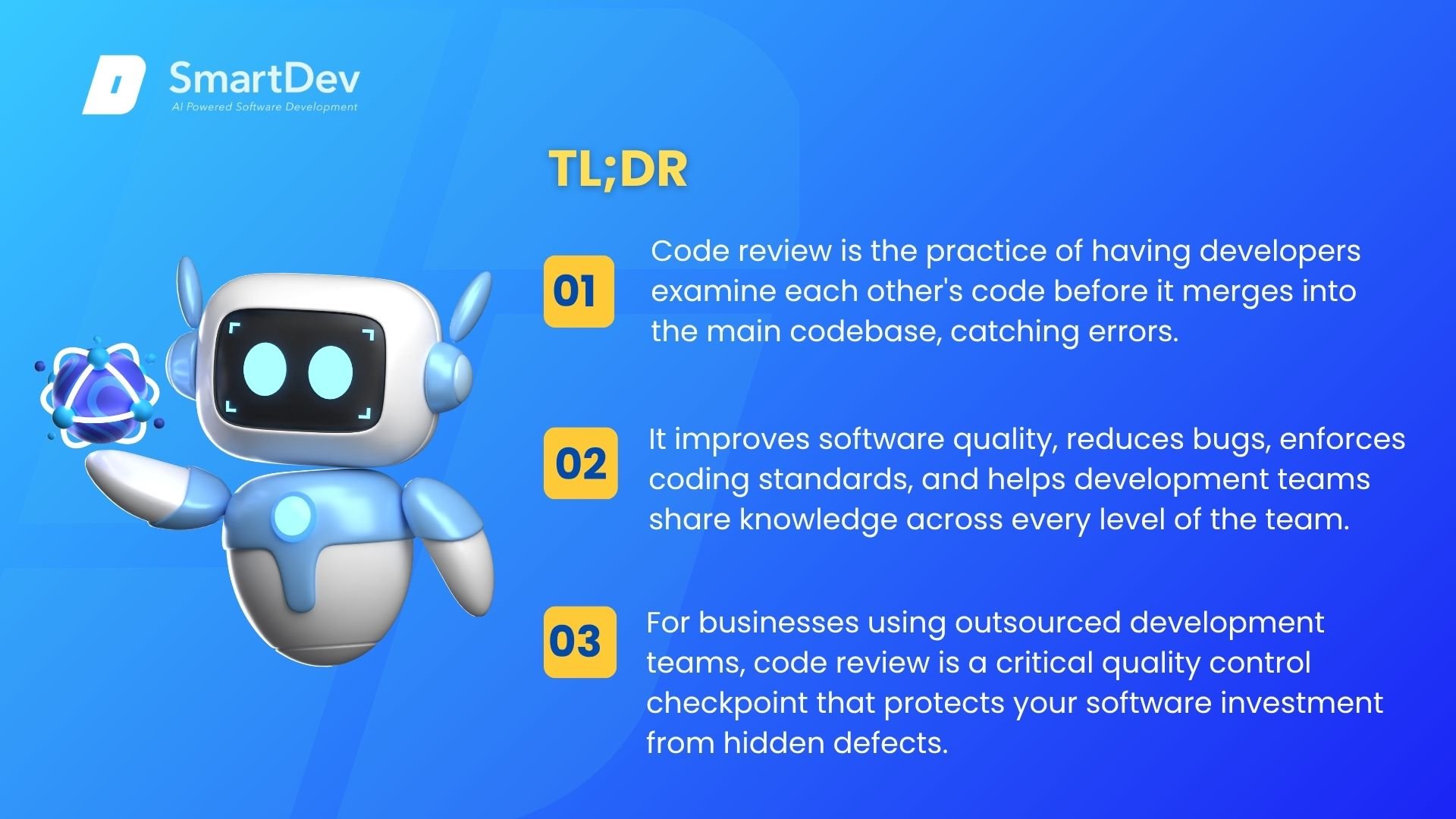
- Code review is the practice of having developers examine each other’s code before it merges into the main codebase, catching errors before they reach production.
- It improves software quality, reduces bugs, enforces coding standards, and helps development teams share knowledge across every level of the team.
- For businesses using outsourced development teams, code review is a critical quality control checkpoint that protects your software investment from hidden defects.
Code review is one of the simplest and most effective ways to improve software quality. By having a second set of eyes examine code before it becomes part of the product, teams catch problems early, share knowledge across the team, and maintain consistent standards throughout the codebase. This article explains what code review is, who uses it, and how it works in practice.
What is Code Review?
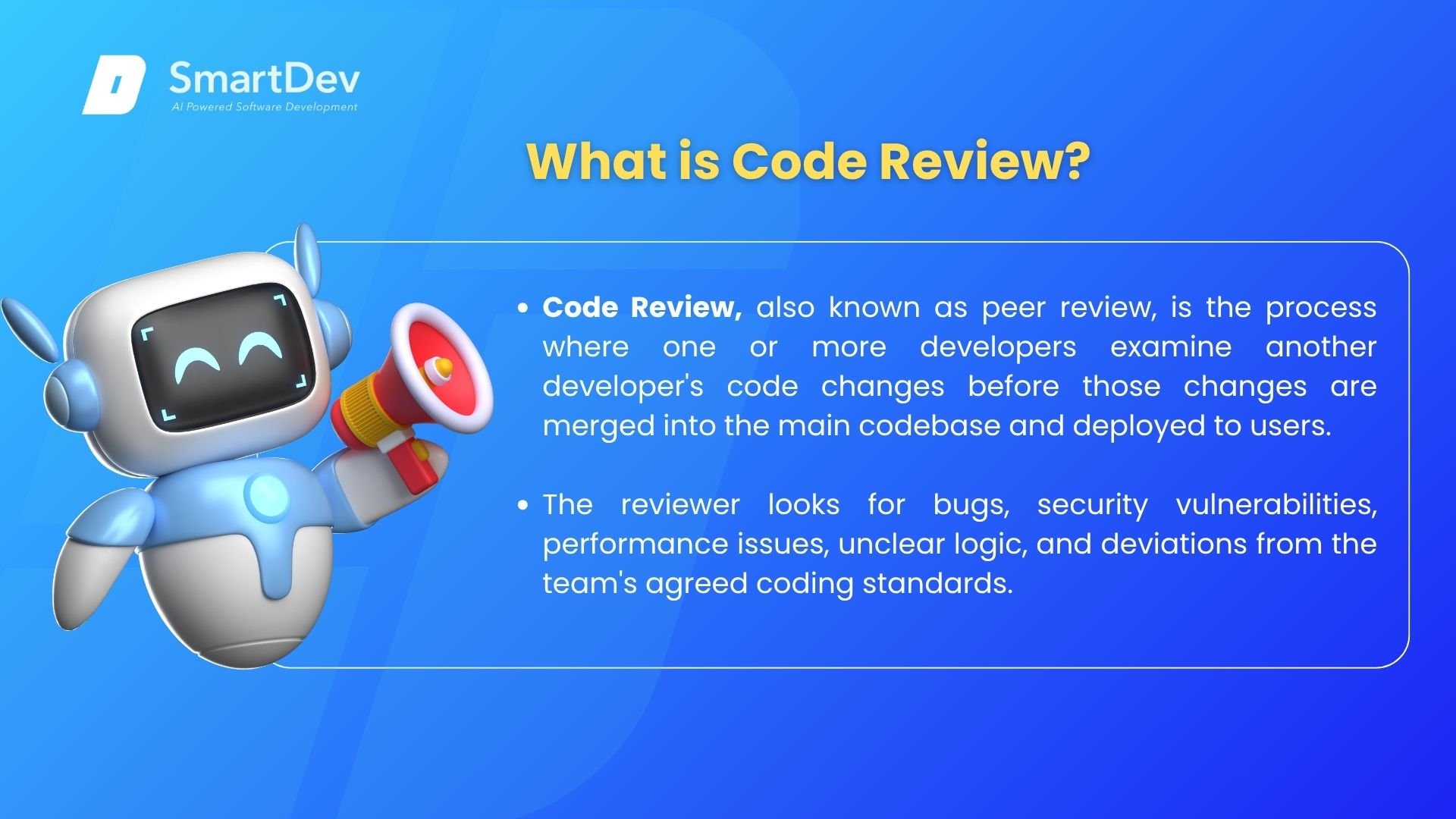
Code review, also known as peer review, is the process where one or more developers examine another developer’s code changes before those changes are merged into the main codebase and deployed to users. The reviewer looks for bugs, security vulnerabilities, performance issues, unclear logic, and deviations from the team’s agreed coding standards.
Code review can be performed in several ways depending on the team’s workflow and tooling:
- Pull request review: The most common modern approach. The developer submits their changes through a version control platform such as GitHub or GitLab, and reviewers leave comments on specific lines of code before approving or requesting changes.
- Pair programming: Two developers work together in real time, with one writing code and the other reviewing simultaneously. Feedback is immediate and prevents issues from forming in the first place.
- Automated code analysis: Tools like SonarQube, ESLint, or Snyk automatically scan code for known issues, style violations, and security vulnerabilities before human review begins, filtering out the most common problems efficiently.
Why It Matters for Businesses?
Every defect that reaches production costs significantly more to fix than one caught during development. Research consistently shows that bugs found in code review cost 10 to 100 times less to fix than the same bugs discovered after deployment, where they affect real users and require emergency response. Code review is one of the highest-leverage quality investments a software team can make.
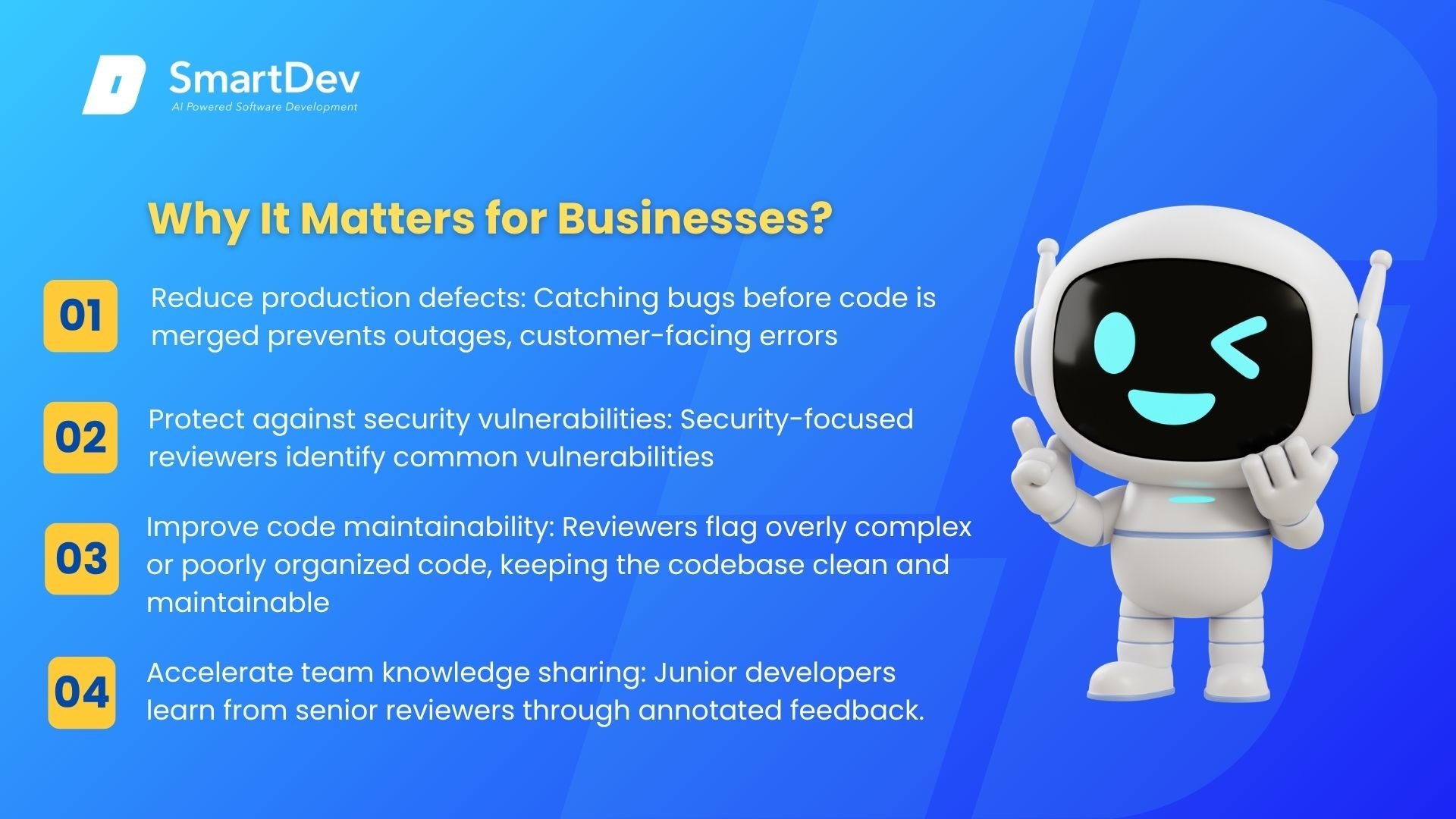
- Reduce production defects: Catching bugs before code is merged prevents outages, customer-facing errors, and costly emergency deployments that disrupt your team’s planned work.
- Protect against security vulnerabilities: Security-focused reviewers identify common vulnerabilities such as SQL injection or insecure data handling before they expose your business, your customers, and their data to risk.
- Improve code maintainability: Reviewers flag overly complex or poorly organized code, keeping the codebase clean and maintainable over time so future development stays fast and cost-effective.
- Accelerate team knowledge sharing: Junior developers learn from senior reviewers through annotated feedback. New team members get up to speed faster when their code is reviewed and explained.
For businesses managing outsourced development teams, code review is especially important. With less direct visibility into daily development activities, a structured review process ensures that external teams meet your quality standards before their code becomes part of your production system.
Who Uses Code Review?
Code review is used across virtually every industry that builds software, but it is most critical in environments where quality, security, and compliance carry significant business risk:
- Financial services: Banks, payment processors, and fintech companies use rigorous code review to protect against security vulnerabilities and ensure software meets regulatory compliance requirements before deployment.
- 健康管理: Healthcare software teams review code to ensure data privacy requirements such as HIPAA compliance are met and that patient-facing systems are reliable and safe.
- E-commerce: Online retailers require code review to maintain uptime, protect payment processing systems, and ensure a consistently reliable customer experience under high traffic conditions.
- IT outsourcing: Companies that outsource software development rely on code review as the primary quality gate between the outsourced team’s work and their production systems, compensating for reduced direct oversight.
Within these organizations, code review is typically performed by senior developers, tech leads, or dedicated code reviewers. Some businesses outsource code review itself to independent specialists, particularly when evaluating the work of a new vendor, auditing an inherited codebase, or investigating quality problems.
How Does Code Review Work?
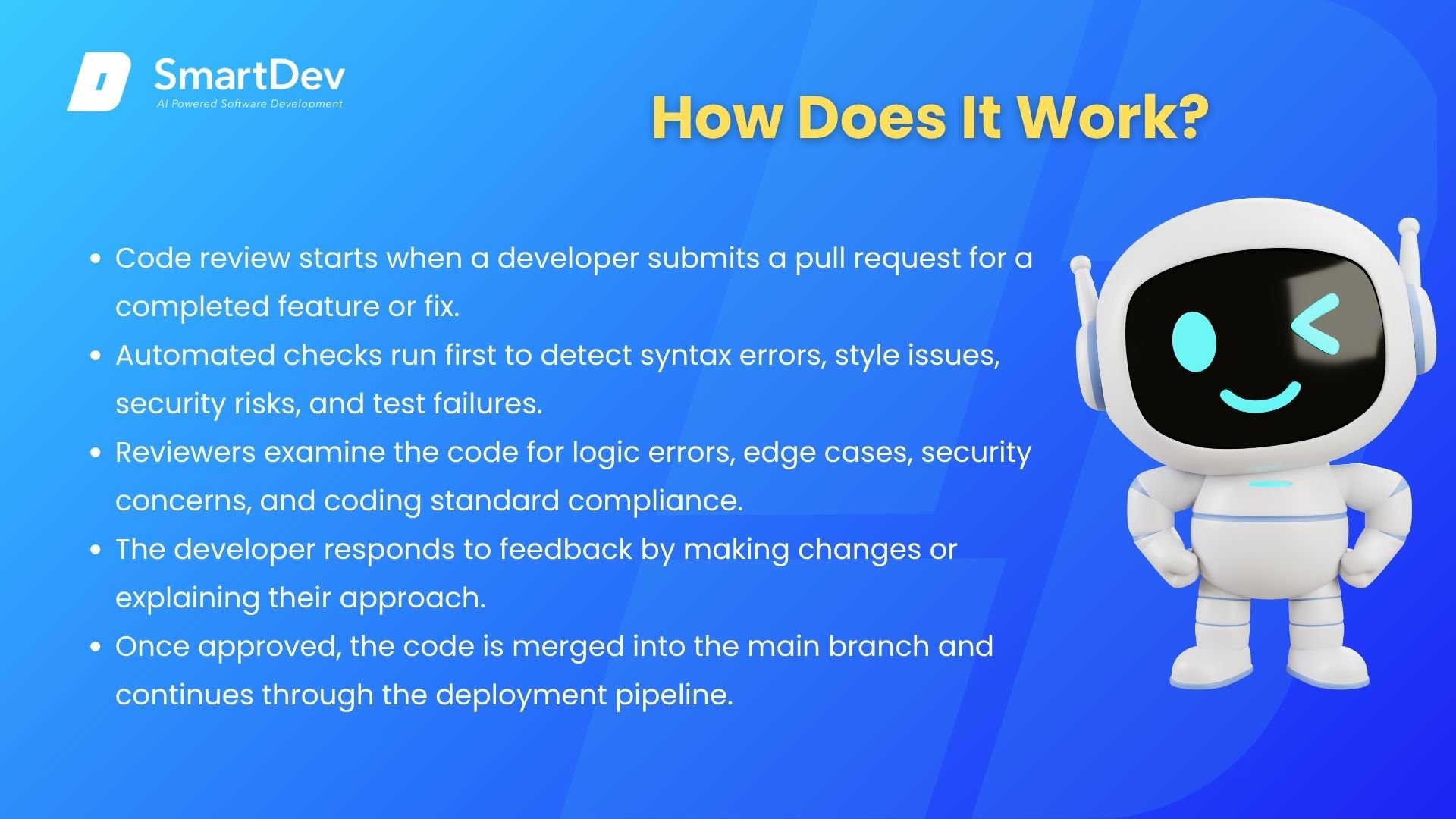
- Developer submits a pull request: After completing a feature or fix, the developer creates a pull request in the version control system. This signals to the team that their code is ready for examination before merging.
- Automated checks run first: Automated tools scan the code for syntax errors, style violations, security issues, and test failures. Problems flagged at this stage are resolved by the developer before human review begins.
- Reviewer examines the code: One or more reviewers read through the code changes carefully, checking for logic errors, edge cases not covered by tests, security risks, and adherence to the team’s coding standards. Comments are left on specific lines explaining concerns or requesting changes.
- Developer responds to feedback: The developer addresses reviewer comments, either making the requested changes or explaining their reasoning if they disagree. This back-and-forth continues until the reviewer is satisfied with the code quality.
- Code is approved and merged: Once the reviewer approves the changes, the code is merged into the main branch and moves forward in the deployment pipeline toward production release.
The result is higher-quality code, a shared team understanding of the codebase, and significantly fewer production incidents caused by unreviewed changes reaching your users.
Other Related Terms
Cloud Native Development: Cloud native development is an approach to building software designed specifically to run in cloud environments using containers, microservices, and automation.
Technical Debt: The accumulated cost of poor coding decisions and shortcuts that go unreviewed or uncorrected, building up over time in codebases where code review is absent or inconsistent.
Code Refactoring: The process of improving existing code quality without changing its behavior, often identified as necessary during code review and scheduled as a follow-up task to address structural issues in the codebase.