

Introduction
Artificial Intelligence is rapidly transforming the global sports industry, from elite performance analytics to fan engagement and stadium operations. Teams, leagues, and sports organizations are increasingly using AI to extract insights from data, automate operations, and create immersive experiences for fans. For organizations competing in a highly commercialized and data-driven sports ecosystem, AI is becoming a strategic capability rather than a technological experiment.
What is AI and Why Does It Matter in Sports?
Definition of AI and Its Core Technologies
Artificial Intelligence (AI) refers to the simulation of human intelligence in machines, enabling them to perform tasks such as learning, reasoning, problem-solving, and understanding natural language. Core AI technologies include machine learning, natural language processing, and generative AI, along with computer vision and robotic process automation.
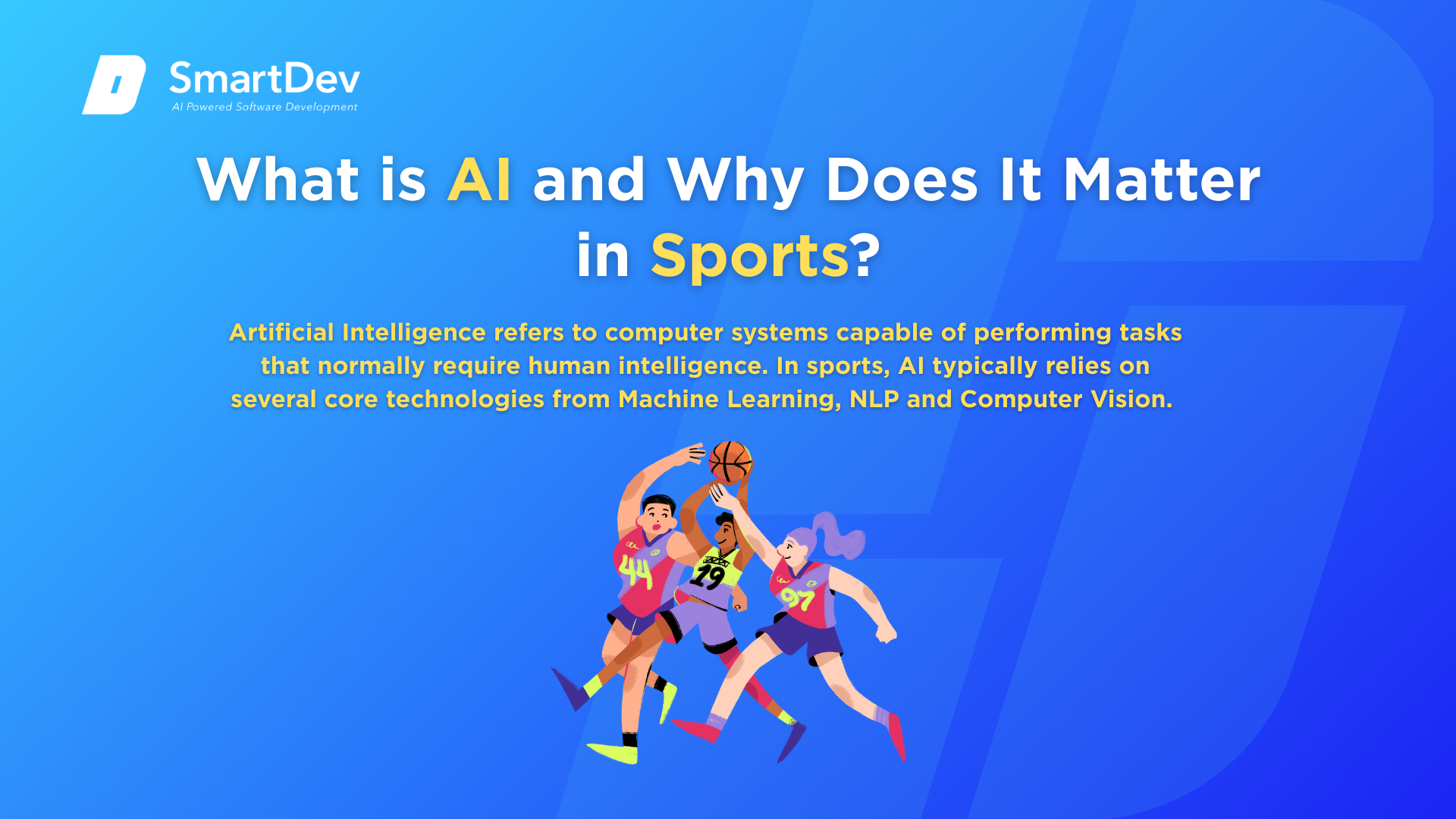
Artificial Intelligence refers to computer systems capable of performing tasks that normally require human intelligence. In sports, AI typically relies on several core technologies:
-
Machine Learning (ML): Algorithms that analyze historical performance data to identify patterns and predictions.
-
Natural Language Processing (NLP): Systems that interpret commentary, media content, and fan sentiment.
-
Computer Vision: AI models that analyze video footage to track players, movements, and gameplay events.
Together, these technologies enable sports organizations to process vast amounts of performance, biometric, and audience data.
The Growing Role of AI in Transforming Sports
Modern sports generate enormous data streams from wearable sensors, broadcast cameras, training equipment, ticketing platforms, and digital fan platforms. AI transforms this raw data into actionable insights that support:
-
Player performance optimization
-
Injury prevention and medical analytics
-
Scouting and recruitment
-
Fan personalization and digital engagement
-
Sports betting analytics and risk monitoring
Professional sports leagues and teams are increasingly building data science teams and AI partnerships to gain competitive advantages.
Key Statistics Highlighting AI Adoption in Sports
Several industry indicators demonstrate the acceleration of AI adoption in sports:
-
The global AI in sports market is projected to exceed USD 19 billion by 2030, driven by analytics, media, and fan engagement technologies.
-
Over 70% of professional sports teams now rely on data analytics for player performance and tactical decisions.
-
AI-powered broadcast analytics and fan engagement technologies are becoming standard across major leagues such as the NBA, NFL, and European football leagues.
Business Benefits of AI in Sports
1. Performance Optimization
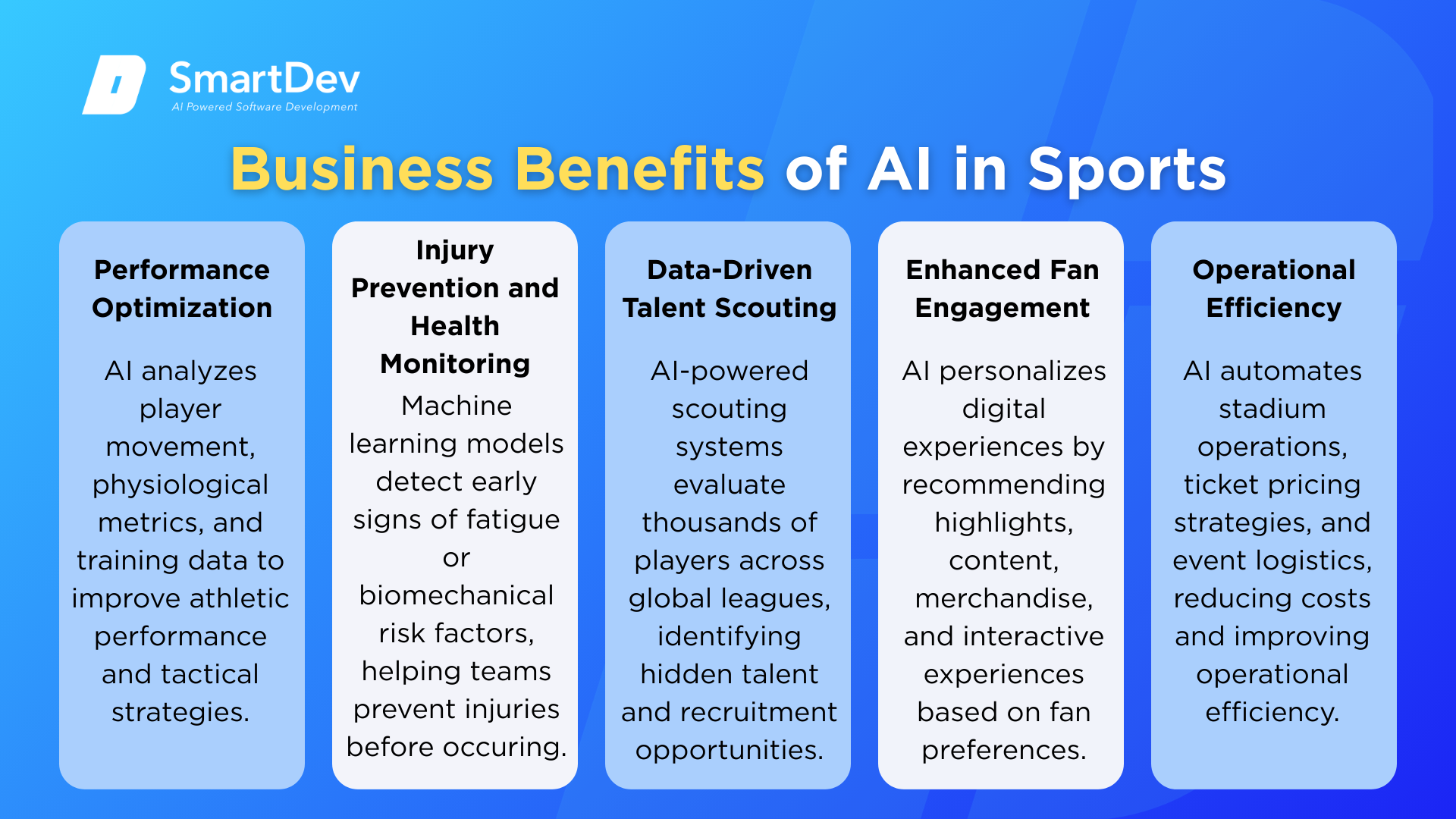
AI analyzes player movement, physiological metrics, and training data to improve athletic performance and tactical strategies. By collecting and analyzing various data points, AI can offer tailored recommendations to improve performance.
For example, we work AI for athletics as a sport. For key components, it work for player movement analysis, physiological metrics, and training data analysis. Firstly, AI systems track the biomechanics of an athlete’s movements, using motion capture and wearable sensors to assess speed, agility, and efficiency. Thererfore, analyzing positioning on the field or court helps in understanding how an athlete navigates space, ensuring optimal positioning relative to teammates and opponents.
Secondly, wearable technologies monitor heart rate, oxygen consumption, and muscle strain, providing real-time feedback on physical exertion levels. AI also an analyze sleep patterns and recovery metrics to optimize training loads and prevent injuries. Then, historical data on training sessions, match performance, and injury records allow AI to identify trends and patterns that can inform future training regimens.
2. Injury Prevention and Health Monitoring
Machine learning models play a crucial role in analyzing vast amounts of data collected from various sensors and monitoring devices worn by athletes. These models can identify patterns in physiological metrics, such as heart rate variability, muscle fatigue levels, and movement mechanics, which are often indicative of impending fatigue or stress. By continuously processing this data in real-time, machine learning algorithms can flag unusual trends that might suggest an increased risk of injury. For instance, a sudden drop in an athlete’s performance metrics or an increase in biomechanical irregularities can prompt coaches and trainers to intervene proactively, adjusting training intensity or providing necessary rest.
Moreover, the predictive capabilities of machine learning extend beyond immediate fatigue detection. By aggregating data over time, these models can identify subtle, long-term trends that may signal increased susceptibility to injury such as chronic overuse of certain muscle groups or imbalances in strength and flexibility. With this information, teams can create personalized training programs that focus on strengthening vulnerable areas and imbalances, effectively mitigating risks before they lead to serious injuries. This proactive approach not only preserves athlete health but also enhances overall team performance, as athletes can maintain consistent training without the setbacks often caused by preventable injuries.
3. Data-Driven Talent Scouting
4. Enhanced Fan Engagement
AI personalizes digital experiences in sports by leveraging data analytics to understand fan preferences and behaviors. By analyzing factors such as viewing history, engagement metrics, and social media interactions, AI systems can curate individualized content that resonates with each fan.
For instance, a dedicated baseball fan might receive tailored highlights from their favorite team’s latest game, while basketball enthusiasts could see customized video recaps and player interviews. This level of personalization not only enhances fan engagement but also deepens the emotional connection between fans and their teams.
5. Operational Efficiency
Challenges Facing AI Adoption in Sports
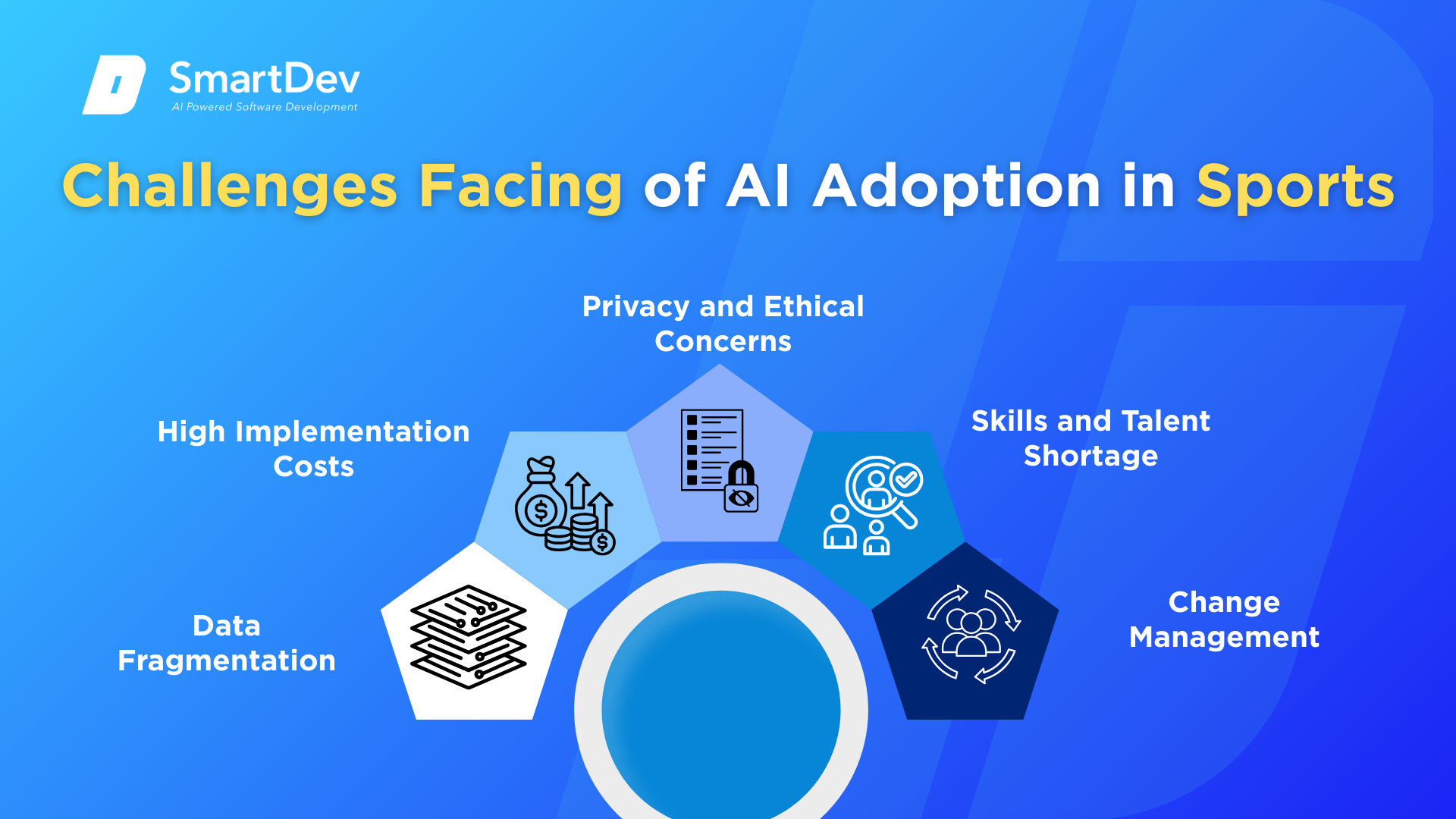
1. Data Fragmentation
2. High Implementation Costs
3. Privacy and Ethical Concerns
The collection and use of player biometric data, health information, and performance tracking are fraught with significant privacy and governance concerns that need careful consideration. As organizations gather sensitive data related to athletes’ physical conditions and personal health, ensuring the protection of this information becomes paramount. Athletes must have confidence that their data will be used ethically and transparently, with clear guidelines on who has access and how it will be utilized.
Moreover, regulatory compliance is critical, as organizations must navigate various laws and standards regarding data privacy, such as GDPR in Europe or HIPAA in the United States. Implementing robust data governance frameworks that incorporate consent mechanisms, data anonymization, and secure storage practices is essential to safeguard player information. Additionally, fostering open communication between players and management about data usage can enhance trust and collaboration. By addressing these privacy issues comprehensively, sports organizations can create a more ethical environment that respects athletes’ rights while still leveraging data to enhance performance and health outcomes.
4. Skills and Talent Shortage
Many sports organizations face challenges in developing and maintaining the data science and AI expertise needed to effectively implement advanced analytics systems. This gap can stem from a variety of factors, including the rapid pace of technological advancement, the specialized knowledge required in data engineering, machine learning, and statistical analysis, as well as the competitive nature of recruiting skilled professionals in these fields. Without a robust internal team, organizations may struggle to customize and optimize their data systems, leading to underutilized resources and missed opportunities for insights.
5. Change Management
For AI-driven insights to effectively enhance decision-making in sports, it is crucial for coaches, athletes, and management teams to cultivate a strong sense of trust in these technologies. This trust begins with transparency about how AI algorithms work, the data they rely on, and the rationale behind the recommendations they provide. By involving stakeholders in the development and evaluation of AI systems, organizations can foster a sense of ownership and confidence in the insights generated.
Specific Applications of AI in Sports
AI systems analyze training data, motion tracking, and game footage to evaluate player performance in real time. These models provide insights into tactical positioning, player fatigue levels, and passing patterns and play effectiveness.
1. Performance Analytics and Player Development
AI-powered systems analyze player movements, in-game performance, and biometrics to deliver real-time insights. Coaches and athletes use this data to improve training routines, identify strengths and weaknesses, and make data-driven decisions for skill development.
For example, AI is used in soccer to track player positions, ball movements, and fatigue levels, helping teams plan better strategies. Many organizations are now turning to Artificial Intelligence Consulting Services to develop customized performance analysis tools tailored to their teams’ specific goals.
2. Injury Prevention and Recovery
3. Game Strategy and Tactics
4. Scouting and Recruitment
Gone are the days when scouts relied solely on intuition. AI now helps analyze massive datasets on players across the globe, assessing skill levels, consistency, and fit for a team’s playing style. Many clubs are leveraging Artificial Intelligence Consulting Services to implement advanced talent identification systems that streamline the scouting process.
5. Fan Engagement and Broadcasting
AI personalizes fan experiences through chatbots for real-time queries, AI-generated match highlights and real-time stats and predictive analysis during games. Platforms like IBM Watson are already being used in tennis (e.g., Wimbledon) to generate highlight reels based on crowd noise and player gestures. AI-powered content strategies often developed with the help of specialized Artificial Intelligence Consulting Services, whichare transforming how fans consume and interact with sports content.
Need Expert Help Turning Ideas Into Scalable Products?
Partner with SmartDev to accelerate your software development journey — from MVPs to enterprise systems.
Book a free consultation with our tech experts today.
Let’s Build TogetherExamples of AI in Professional Services
Now let’s ground these AI use cases in professional services with standout, data-backed stories. These examples span research, operations, and client service to show measurable business impact.
Real-World Case Studies

Case 1: Single/Multi-Person Pose Estimation
Pose estimation is the process of reconstructing an athlete’s body posture by pinpointing key joints and limb endpoints. Single-person pose estimation technology has evolved significantly, accurately tracking between 17 and 25 keypoints and achieving near real-time performance on edge devices. In golf, TopTracer analyzes swing mechanics by monitoring the shoulders, elbows, and wrists to reconstruct the swing trajectory, revealing subtle flaws.
Multi-person scenarios introduce challenges such as occlusion and swift interactions, like soccer scrimmages in the penalty area or basketball plays in close quarters. To enhance 3D stability, multi-camera synchronization with triangulation techniques proves beneficial, while monocular 3D temporal priors help resolve depth ambiguities. NBA training facilities utilize overhead camera arrays to ensure continuous skeleton tracking during intense motion, facilitating objective monitoring of load and fatigue. Transformer-based models like ViTPose achieve over 90% accuracy in keypoint tracking in complex multi-person environments.
Case 2: Technique Segmentation and Recognition
Segmenting continuous sports videos into meaningful units, such as “takeoff—flight—landing” or “backswing—impact—follow-through,” is essential for analysis. In disciplines like gymnastics and diving, systems automatically pinpoint the timing of rotations and flips using temporal models, aiding coaches in recognizing subtle deviations in water entry angles. These systems can automatically assess difficulty coefficients and compare them against established action libraries, producing detailed technical assessments.
At Wimbledon, the IBM Watson Data Center employs AI to categorize tennis serves, forehands, backhands, and identify spin types and landing spots. By integrating temporal convolutional networks (TCN) with graph convolutional networks (GCN), these systems achieve over 95% accuracy in capturing spatiotemporal features. They also learn personalized athlete signatures, assisting in the creation of tailored training plans and strategies.
Case 3: Sports Medicine and Coaching Feedback
Computer vision applications in sports medicine play a pivotal role in reducing injury rates by analyzing biomechanical data to identify potential injury risks. MLB teams utilize KinaTrax, which employs high-speed cameras to model pitching mechanics and gauge elbow and shoulder loads, flagging risks to the ulnar collateral ligament (UCL) and informing necessary workload adjustments.
In training sessions, visual feedback systems provide real-time movement corrections. For instance, German soccer teams use KINEXON, which integrates wearable sensors with visual tracking, to assess movement quality during rehabilitation. This system detects minute deviations to mitigate the likelihood of re-injury due to improper movement patterns.
AI-Driven Innovations Transforming Sports
1. Generative AI
Generative AI has the capability to autonomously create match summaries, highlight clips, commentary scripts, and a variety of sports content. By analyzing game data and leveraging natural language processing, these systems can produce engaging narratives that capture the essence of a match, enhancing viewer experience. This automation significantly accelerates media production, allowing organizations to distribute content more swiftly and efficiently, thereby keeping fans informed and engaged in real time.
2. Computer Vision
Computer vision systems play a crucial role in tracking player movements and ball trajectories using broadcast cameras, offering sophisticated tactical analytics. By processing video feeds, these systems can generate detailed insights into player positioning, movement patterns, and game dynamics, aiding coaches and analysts in developing strategies. This technology not only enhances the understanding of gameplay but also contributes to improving performance through data-driven analysis, transforming the way teams approach training and competition.
How to Implement AI in Sports
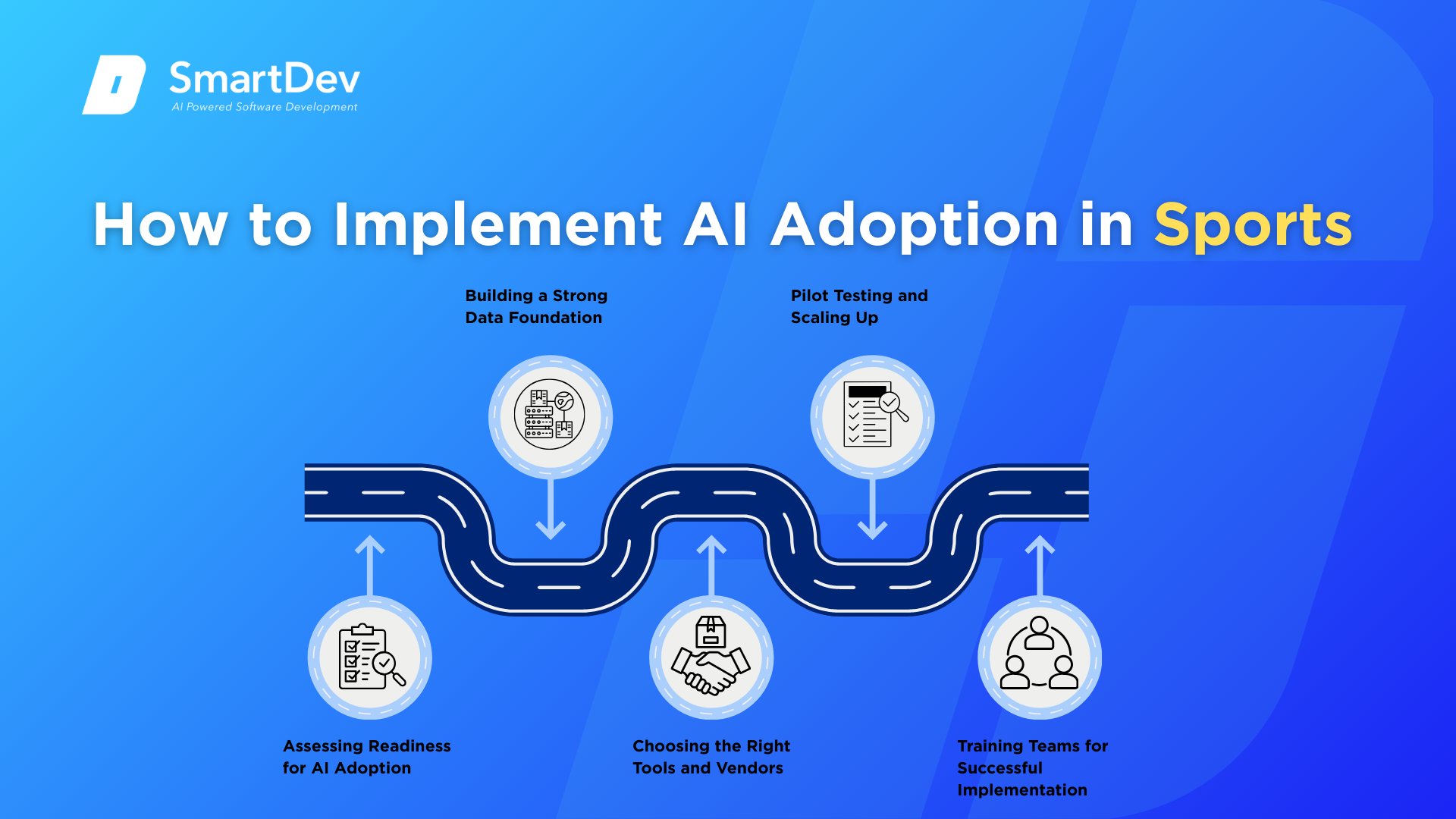
Step 1: Assessing Readiness for AI Adoption
To successfully embark on an AI adoption journey, sports organizations should first conduct a thorough assessment of their operational landscape to identify high-impact business areas that would benefit most from AI technologies. Focus areas such as performance analytics, fan engagement, and stadium operations are ripe for transformation through data-driven insights. By pinpointing these critical domains, organizations can allocate resources effectively and strategize their approach to integrate AI technologies.
Furthermore, understanding organizational readiness involves analyzing existing workflows, technological capabilities, and the overall culture surrounding data utilization. Engaging stakeholders from various departments, including coaching staff, management, and IT, can provide a holistic view of the current landscape and highlight any barriers to adoption, such as resistance to change or lack of technical expertise.
Step 2: Building a Strong Data Foundation
Successful AI initiatives hinge on establishing a solid data foundation, as clean and structured data is essential for generating meaningful insights. Organizations must gather data from multiple sources, including wearable sensors that track player performance, video feeds capturing game dynamics, and operational systems managing logistics and ticketing. This data must then be cleaned, organized, and stored in a manner that facilitates easy access and analysis. Implementing robust data governance practices to ensure data quality, security, and compliance with privacy regulations is vital.
Additionally, integrating disparate data sources into a cohesive architecture will enable a more comprehensive view of performance and operational metrics. Investing in data management tools, cloud storage solutions, and data analytics platforms can provide the necessary infrastructure to support AI innovations, setting the stage for successful implementation down the line.
Step 3: Choosing the Right Tools and Vendors
Selecting the appropriate AI tools and vendors is critical for the success of AI initiatives within sports organizations. The chosen AI platforms should seamlessly integrate with existing sports analytics systems, cloud infrastructure, and streaming services to ensure a smooth flow of data and enhance operational efficiency. Organizations must conduct thorough market research to evaluate different vendors based on their track record, technological capabilities, and compatibility with the organization’s specific needs. It is essential to consider factors such as scalability, user-friendliness, and the availability of support services when making these decisions.
Moreover, fostering collaborative relationships with vendors can provide ongoing access to new technologies and innovations, ensuring that the organization remains at the forefront of AI developments in the sports industry.
Step 4: Pilot Testing and Scaling Up
Before committing to a full-scale rollout of AI technologies, organizations should initiate small pilot projects to test the waters and gather insights. Projects focused on specific applications, such as injury prediction models or fan personalization systems, allow teams to evaluate the effectiveness of AI solutions in real-world conditions without overwhelming existing processes.
Conducting these pilot tests provides valuable feedback that can inform adjustments and improvements, offering insights into potential challenges and integration issues. Once these initial projects demonstrate success and return on investment, organizations can gradually scale up their AI initiatives across different departments and functions. This incremental approach reduces risks associated with larger deployments and helps to ensure that the transition to AI-driven operations is smooth and effective.
Step 5: Training Teams for Successful Implementation
Whether you’re exploring your first pilot or scaling an enterprise-wide solution, our team is here to help. Get in touch with SmartDev and let’s turn your challenges into opportunities.
Measuring the ROI of AI in Professional Services
Key Metrics to Track Success
Organizations should evaluate AI success through measurable indicators such as:
-
Improvements in player performance metrics
-
Reduction in injury rates
-
Increased fan engagement and viewership
-
Revenue growth from personalized fan experiences
-
Operational cost reductions
Case Studies Demonstrating ROI
Sports teams using AI-powered performance analytics have reported:
-
20–30% improvements in training efficiency
-
Reduced injury downtime through predictive monitoring
-
Higher digital engagement through personalized content
Common Pitfalls and How to Avoid Them
Implementing AI Without Clear Business Objectives:
One of the most common pitfalls in adopting AI technologies is the lack of clear business objectives. When organizations embark on AI projects without specific goals in mind, they risk wasting valuable resources on initiatives that may not align with their strategic priorities. To avoid this, it is crucial to define measurable outcomes before launching any AI projects.
By establishing clear objectives whether improving player performance metrics, enhancing fan engagement, or streamlining operations, teams can focus on initiatives that directly contribute to achieving these targets. Additionally, setting quantifiable KPIs helps track progress and assess the effectiveness of the AI system, ensuring that the project remains aligned with overall business goals.
Poor Data Quality:
Another significant challenge organizations face is poor data quality, which can severely undermine the effectiveness of AI applications. Inaccurate or inconsistent data leads to flawed models and unreliable insights, ultimately hampering decision-making processes. To mitigate this risk, investing in a robust data infrastructure and governance framework is essential.
Organizations should prioritize data cleaning, structuring, and validation processes to ensure that the information used for training AI models is accurate and reliable. Regular audits and updates of the data management systems can also help maintain data integrity over time, allowing teams to leverage high-quality data for more meaningful and actionable insights.
Lack of Stakeholder Buy-In:
A lack of stakeholder buy-in can derail AI initiatives before they even begin. When key personnel such as coaches, analysts, and management, which are not invested in the process, the adoption of AI tools can encounter significant resistance. To foster a supportive environment, it is essential to involve stakeholders early in the AI adoption process. This includes gathering input on the objectives of the projects and incorporating their expertise into the development and implementation phases.
By actively engaging these stakeholders, organizations can ensure their concerns and insights are considered, leading to greater enthusiasm and commitment to using AI solutions. Moreover, providing education about the benefits and potentials of AI can help garner support and build a culture of collaboration around data-driven decision-making.
Overly Complex Solutions:
Finally, opting for overly complex AI solutions can complicate implementation and lead to frustration among users. When organizations rush to adopt sophisticated technologies without a clear understanding of their needs, they may end up with systems that are difficult to use and integrate into existing workflows.
To avoid this pitfall, it is advisable to start with targeted use cases that address immediate challenges, allowing teams to experiment and learn in a manageable context. Gradual scaling of AI initiatives ensures that organizations can refine their approaches and make data-driven adjustments based on initial experiences. This method not only enhances user engagement but also builds confidence in AI systems, paving the way for successful long-term integration across various functions.
Future Trends of AI in Professional Services
Predictions for the Next Decade
How Businesses Can Stay Ahead of the Curve
Sports organizations that make early investments in data infrastructure, AI talent, and scalable technology platforms are positioned to gain substantial competitive advantages in the marketplace. By prioritizing these foundational elements, teams can harness data more effectively, enabling them to make informed decisions regarding player performance, fan engagement, and operational efficiency. Early adopters of data-driven strategies can capitalize on insights that drive success both on and off the field, ultimately creating a more agile and adaptive organization. This forward-thinking approach not only enhances performance but also deepens connections with fans, fostering loyalty and engagement.
As AI capabilities continue to advance at a rapid pace, forging partnerships with technology providers and AI engineering firms will become increasingly vital for sports organizations. Collaborating with these experts allows teams to stay abreast of the latest developments and integrate cutting-edge solutions into their operations. Such partnerships can facilitate access to specialized knowledge and resources that enhance the effectiveness of AI implementations, ensuring organizations are not left behind in the evolving landscape. By leveraging external expertise, sports organizations can accelerate their AI initiatives and maintain a competitive edge, driving innovation and growth in an ever-changing industry.
Conclusion
Artificial Intelligence is transforming every layer of the sports ecosystem, from athlete performance and injury prevention to fan engagement and stadium operations. Organizations that adopt AI strategically can unlock new levels of performance insights, operational efficiency, and digital fan experiences.
For sports teams, leagues, and technology partners exploring AI adoption, the opportunity lies not only in deploying advanced algorithms but in building data-driven organizations capable of competing in the future of sports.