

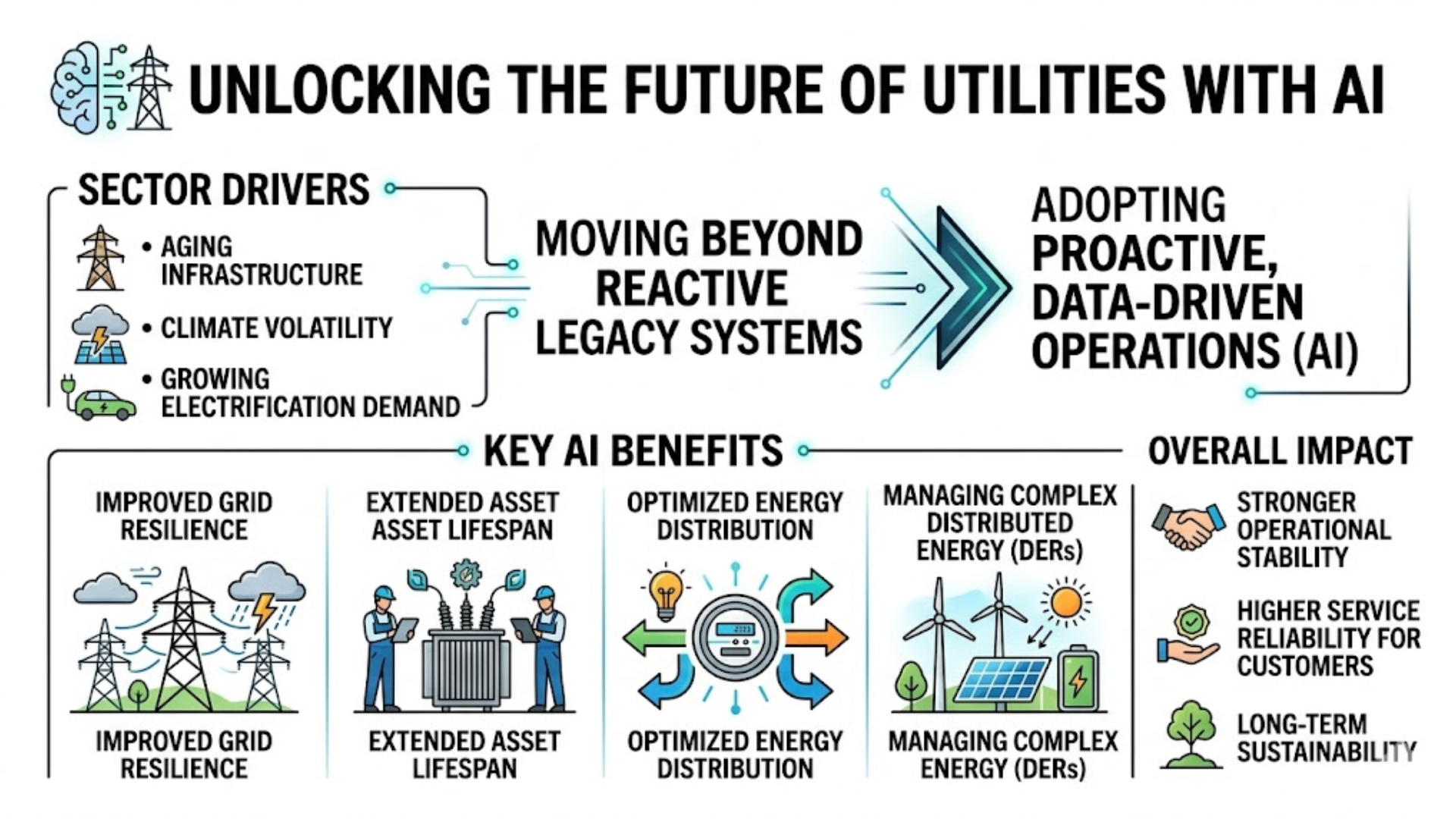
The utilities sector is entering a pivotal phase, shaped by aging infrastructure, climate volatility, and rapidly increasing electrification demand. To remain competitive, organizations must move beyond reactive legacy systems and adopt proactive, data-driven operations. AI use cases in utilities are enabling companies to improve grid resilience, extend asset lifespan, and manage increasingly complex distributed energy environments.
Artificial Intelligence provides the foundation for smarter decision-making, helping utilities anticipate risks, optimize maintenance strategies, and balance supply with demand more efficiently. As digital transformation accelerates, AI enables utilities to strengthen operational stability while improving service reliability for customers.
This guide explores the most valuable AI use cases in utilities, highlighting how intelligent technologies are transforming infrastructure management, improving energy distribution, and supporting long-term sustainability across the sector.
📌 Utilities operate under the most unforgiving conditions of any industry — 24/7 critical infrastructure where failure is not an option — making them one of the most compelling proof points for AI real world applications that must perform reliably at scale, offering a powerful benchmark for any organization evaluating AI deployment beyond the pilot stage.
What is AI and Why Does It Matter in Utilities?
Definition of AI and its core technologies
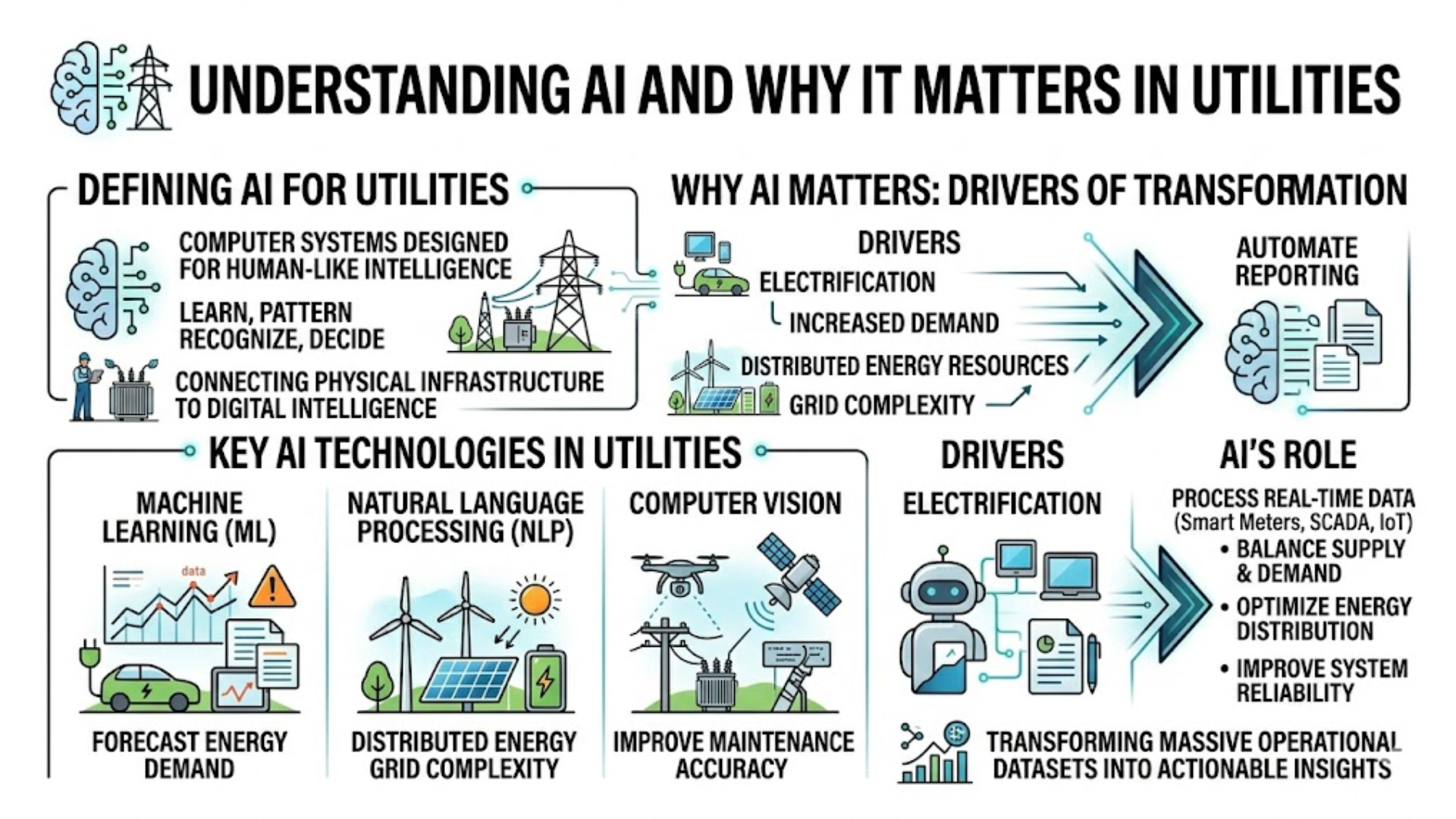
Artificial Intelligence (AI) refers to computer systems designed to perform tasks that typically require human intelligence, such as learning from data, identifying patterns, and making decisions. In the utilities industry, AI connects physical infrastructure with digital intelligence, enabling operators to manage increasingly complex energy systems with greater accuracy and speed.
Key technologies powering AI use cases in utilities include:
- Machine Learning (ML): analyzes historical and real-time data to forecast energy demand, detect anomalies, and predict equipment failures.
- Natural Language Processing (NLP): enables automated customer support, internal knowledge search, and intelligent documentation processing.
- Computer Vision: interprets images from drones, satellites, and sensors to detect infrastructure defects, monitor grid conditions, and improve maintenance accuracy.
- Generative AI: creates synthetic datasets, automates reporting, and produces technical documentation, accelerating compliance and operational workflows.
Together, these technologies enable utilities to transform massive operational datasets into actionable insights, improving decision-making across grid operations, asset management, and customer engagement.
The growing role of AI in transforming utilities
The increasing importance of AI use cases in utilities is driven by structural changes in energy demand and supply. Electrification trends, including the rapid adoption of electric vehicles and the expansion of digital infrastructure, are placing unprecedented pressure on existing power grids. At the same time, distributed energy resources such as solar panels, wind farms, and battery storage systems are shifting the grid from a centralized model to a dynamic, bidirectional network.
AI enables utilities to manage this complexity by processing real-time data from smart meters, SCADA systems, and IoT sensors. Intelligent algorithms help balance supply and demand, optimize energy distribution, and improve system reliability. As a result, utilities can respond faster to fluctuations in demand while maintaining grid stability and operational efficiency.
Key statistics and trends shaping AI adoption in utilities
Investment in AI technologies across the energy sector continues to accelerate, reflecting the growing need for advanced digital capabilities. Utilities are prioritizing AI-driven modernization to improve infrastructure resilience, enhance forecasting accuracy, and reduce operational risks.
Several key trends are driving adoption:
- Increased demand for electricity driven by electrification and digital transformation
- Growth of decentralized energy systems and renewable energy integration
- Rising importance of predictive maintenance and real-time grid monitoring
- Strong focus on operational efficiency and cost optimization
As these trends intensify, AI use cases in utilities are becoming essential for improving reliability, supporting sustainability goals, and enabling long-term infrastructure modernization.
| Market Segment | 2023/2025 Valuation | Projected Valuation | Target Year | Compound Annual Growth Rate (CAGR) |
| Global AI in Energy Market | USD 12.89 Billion (2025) | USD 137.33 Billion | 2032 | 40.2% |
| Generative AI in Utilities | USD 713 Million (2023) | USD 13.3 Billion | 2033 | 34.0% |
| AI in Networks | USD 10.9 Billion (2024) | USD 46.8 Billion | 2029 | 33.8% |
This staggering financial trajectory indicates that AI is no longer viewed as a speculative pilot technology. A recent industry survey revealed that 100% of interviewed utility leaders are personally utilizing AI tools, and 96% view AI as a primary strategic focus for their organization’s future.
Business Benefits of AI in Utilities
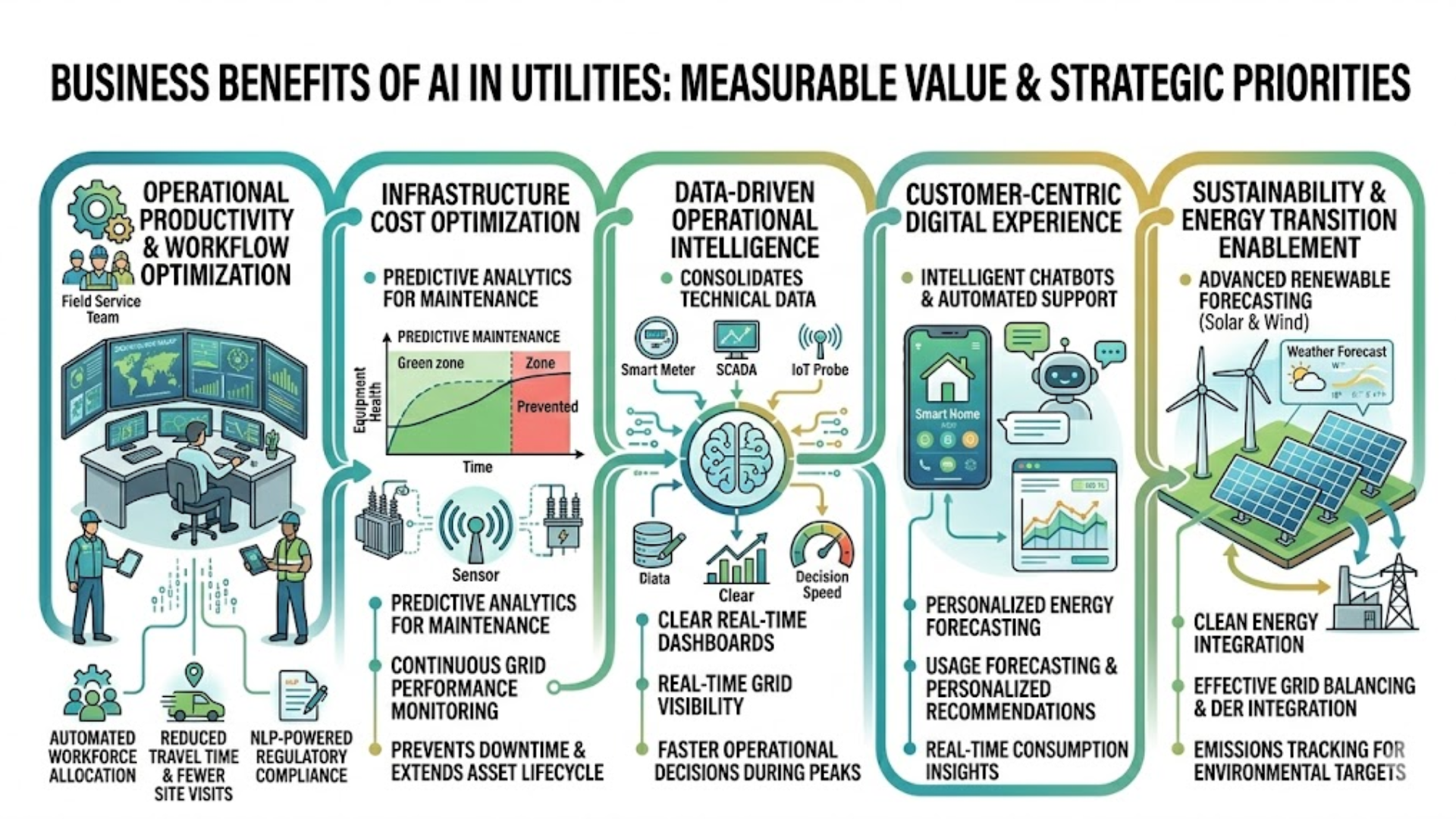
The adoption of AI use cases in utilities delivers measurable value across generation, transmission, distribution, and customer engagement. AI enables utilities to improve operational performance, reduce costs, and support long-term sustainability goals. The following key benefits highlight why AI is becoming a strategic priority across the utilities sector.
Operational productivity and workflow optimization
AI improves productivity by automating repetitive processes and optimizing workforce allocation. Machine learning analyzes real-time operational data such as technician availability, asset condition, and geographic location to enhance field service coordination. This ensures that maintenance teams are deployed efficiently and tasks are completed faster.
Intelligent automation reduces travel time, prevents resource overlap, and minimizes unnecessary site visits. Natural Language Processing also accelerates regulatory document analysis, helping utilities simplify compliance management and reduce administrative workload.
Infrastructure cost optimization
Predictive analytics is one of the most impactful AI use cases in utilities for controlling operational expenses. Instead of relying on fixed maintenance schedules or reacting to equipment failures, AI continuously monitors performance indicators from sensors embedded in grid infrastructure.
By identifying early warning signals of equipment degradation, utilities can perform maintenance only when needed. This reduces downtime, prevents expensive emergency repairs, and extends the lifecycle of high-value assets such as transformers and turbines.
Data-driven operational intelligence
Utilities operate in highly complex environments that generate massive volumes of technical data. AI consolidates inputs from smart meters, SCADA platforms, and IoT devices into structured insights that support faster operational decisions.
During peak demand periods or unexpected disruptions, AI helps operators evaluate system conditions and determine optimal response actions. Decision-makers gain clearer visibility into grid performance, enabling more accurate planning and improved system reliability.
Customer-centric digital experience
Customer expectations increasingly revolve around transparency, speed, and personalization. AI use cases in utilities support advanced customer engagement through intelligent chatbots, usage forecasting, and personalized energy recommendations.
AI-powered systems provide real-time insights into consumption patterns and suggest efficiency improvements tailored to individual households or businesses. Automated support channels also improve responsiveness and availability, enhancing overall service satisfaction.
Sustainability and energy transition enablement
AI supports the transition toward low-carbon energy systems by improving renewable energy forecasting and grid balancing. Machine learning models analyze weather conditions and historical performance data to predict solar and wind energy output with greater accuracy.
Improved forecasting enables utilities to integrate distributed energy resources more effectively while maintaining grid stability. AI also supports emissions tracking and energy optimization initiatives, helping organizations meet environmental targets and regulatory requirements.
Challenges Facing AI Adoption in Utilities
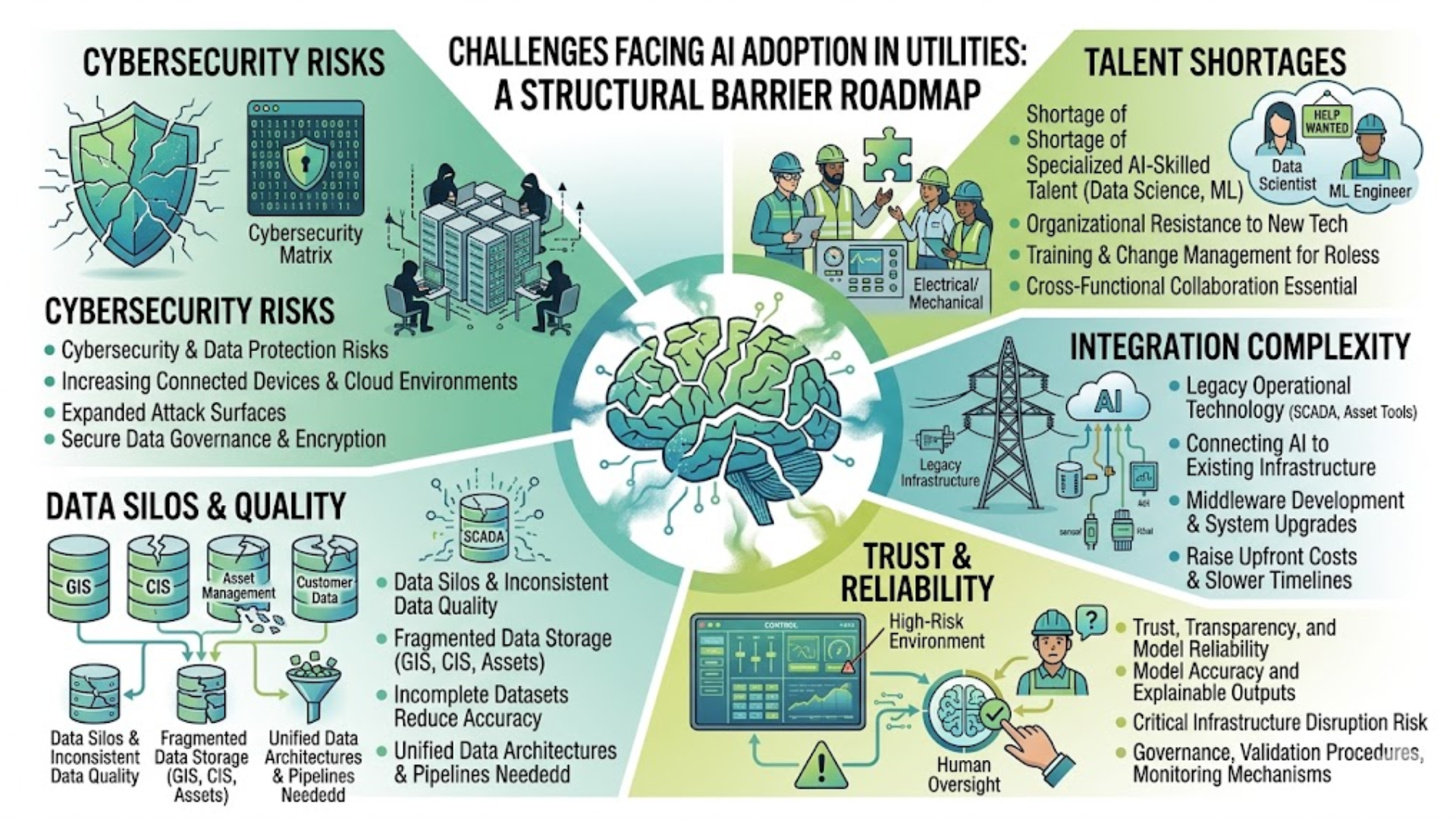
While AI use cases in utilities deliver strong operational and financial value, implementation can be complex due to regulatory requirements, legacy infrastructure, and organizational readiness. Utilities must address several structural barriers before achieving scalable AI adoption. The following challenges represent the most common obstacles across the industry.
Cybersecurity and data protection risks
Utilities operate as critical infrastructure providers, making them frequent targets for cyber threats. The integration of AI systems often increases the number of connected devices, cloud environments, and data exchange points, which can expand potential attack surfaces.
AI initiatives must align with strict cybersecurity frameworks and industry regulations to protect operational technology environments and sensitive customer data. When AI models analyze smart meter information or consumption patterns, utilities must ensure strong encryption, anonymization techniques, and secure data governance practices to prevent unauthorized access or data misuse.
Talent shortages and organizational readiness
The successful deployment of AI use cases in utilities requires specialized expertise in data science, machine learning, and AI engineering. However, many utility organizations primarily employ professionals with electrical, mechanical, or infrastructure backgrounds.
The shortage of AI-skilled talent can slow implementation and limit innovation capacity. In addition, organizational resistance to new technologies may emerge when employees are unfamiliar with AI tools or uncertain about their impact on existing roles. Effective change management strategies, training programs, and cross-functional collaboration are essential to ensure smooth adoption.
Integration complexity and infrastructure modernization
Many utilities rely on legacy operational technology systems that were not designed to integrate with modern AI platforms. Connecting AI models to existing SCADA systems, asset management tools, or grid monitoring infrastructure often requires middleware development and system upgrades.
These integration requirements can increase implementation timelines and raise upfront costs. Without a clear modernization roadmap, organizations may struggle to scale AI initiatives beyond pilot programs.
Trust, transparency, and model reliability
Utilities operate in high-risk environments where system errors can disrupt energy supply or damage critical infrastructure. AI models must therefore deliver highly accurate and transparent outputs before organizations can rely on them in operational workflows.
Human oversight remains essential when deploying AI for grid optimization, demand forecasting, or automated decision support. Clear governance frameworks, validation procedures, and monitoring mechanisms help ensure that AI-generated insights remain reliable and aligned with operational safety standards.
Data silos and inconsistent data quality
AI performance depends heavily on the quality and consistency of underlying datasets. Many utilities operate with fragmented data stored across multiple platforms such as GIS, CIS, and asset management systems.
Incomplete or inconsistent datasets reduce model accuracy and limit the effectiveness of AI use cases in utilities. Establishing unified data architectures, standardized data governance policies, and reliable data pipelines enables utilities to generate more accurate predictions and achieve stronger business outcomes from AI investments.
Core AI Use Cases in Utilities
To build a scalable digital transformation roadmap, organizations typically begin with foundational AI use cases in utilities that improve enterprise-wide efficiency. These applications are not limited to electricity providers; they also apply to water, gas, and multi-utility operators. By strengthening core operational capabilities, utilities create a stable base for more advanced AI deployments across grid optimization, predictive maintenance, and energy forecasting.
Intelligent document processing and workflow automation
Utilities manage large volumes of unstructured documents, including engineering drawings, regulatory filings, maintenance reports, and supplier invoices. AI-powered document processing combines Optical Character Recognition (OCR) with Natural Language Processing to automatically extract key information from these files.
This automation reduces manual data entry, improves accuracy, and accelerates administrative processes such as compliance reporting and invoice validation. As a result, utilities can streamline internal workflows while ensuring consistent record management across departments.
Enterprise knowledge management and AI agent support
Utilities rely heavily on institutional knowledge accumulated over decades of operations. However, workforce turnover and retirement can create knowledge gaps that affect operational continuity. Generative AI enables organizations to centralize technical manuals, operational procedures, and historical maintenance data into a searchable knowledge system.
AI-powered assistants can support customer service teams and field operators by providing real-time recommendations, troubleshooting steps, and relevant technical guidance. This capability improves response speed, enhances service quality, and supports more consistent decision-making across teams.
Anomaly detection and cybersecurity monitoring
Cybersecurity remains a top priority as utilities increasingly adopt digital technologies. AI strengthens security monitoring by identifying unusual system behavior across IT and operational technology environments. Machine learning models analyze network traffic patterns, user behavior, and device activity to detect anomalies that may indicate potential threats.
Early detection enables security teams to respond faster to suspicious activities and reduce the risk of operational disruption. These AI use cases in utilities support stronger infrastructure protection and help organizations maintain system integrity.
Workforce planning and field service optimization
Managing geographically distributed field teams can be challenging due to changing priorities, unpredictable maintenance needs, and environmental conditions. AI improves workforce planning by analyzing variables such as technician expertise, equipment availability, weather conditions, and real-time traffic data.
Optimized scheduling ensures that the right personnel are deployed efficiently, reducing travel time and improving service delivery. AI-driven routing also helps minimize operational delays and improve resource utilization across maintenance operations.
Procurement analytics and supply chain forecasting
Utilities depend on complex supply chains to maintain infrastructure and ensure continuous service delivery. AI-powered analytics can forecast demand for equipment, spare parts, and materials by analyzing historical procurement patterns and external risk indicators.
Predictive insights help organizations maintain optimal inventory levels, preventing shortages of critical components while reducing unnecessary stock costs. These capabilities improve supply chain resilience and enable utilities to respond more effectively to seasonal demand changes or unexpected disruptions.
Let’s uncover whether deploying edge-based Small Language Models (SLMs) or centralized hyperscale AI delivers the best ROI for your enterprise.
SmartDev helps enterprises evaluate and deploy intelligent infrastructure solutions that dynamically scale workloads, automate server provisioning, and predict hardware failures without compromising system security or compliance.
Compare cost drivers, optimize your AI budget, and choose the strategy that maximizes ROI with SmartDev’s enterprise AI architecture and implementation expertise.
Talk to an AI Strategy ExpertSpecific Applications of AI in Utilities
Building on foundational capabilities, more advanced AI use cases in utilities directly improve how electricity, water, and gas networks operate. These applications focus on optimizing infrastructure performance, forecasting demand, and improving operational safety across complex industrial environments.
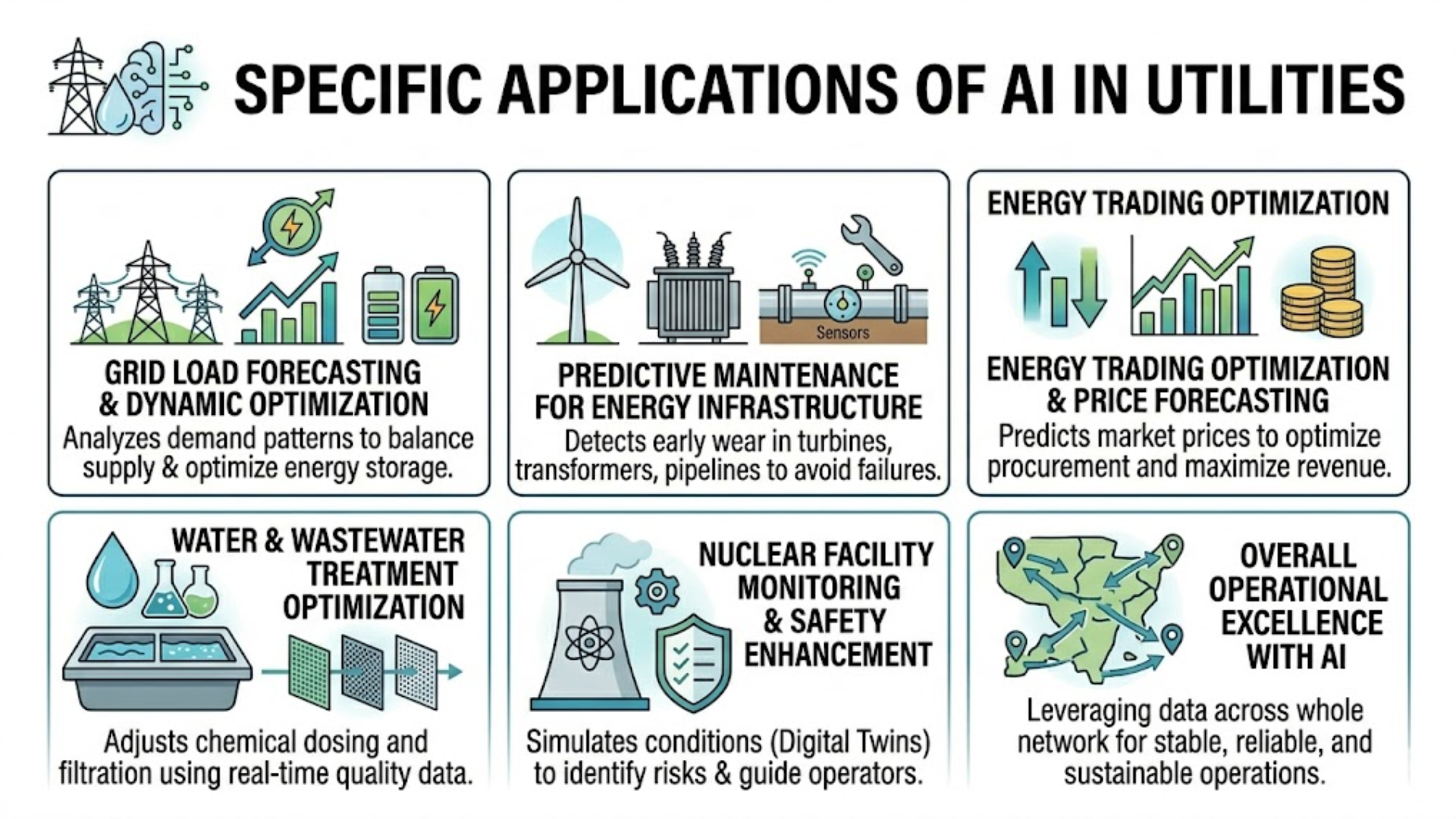
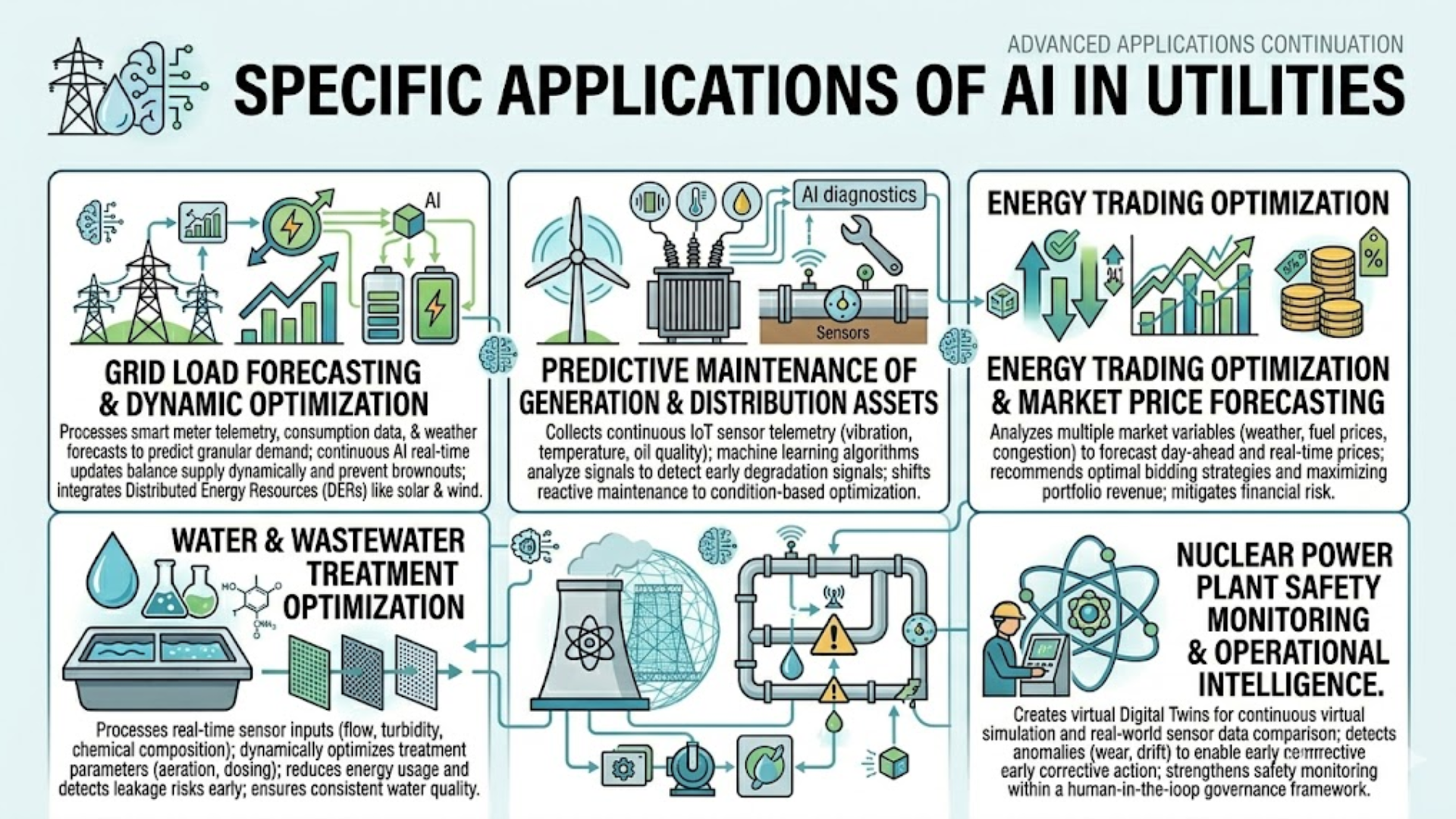
AI-powered grid load forecasting and dynamic optimization
Accurate load forecasting is essential for maintaining grid stability and preventing supply disruptions. AI models analyze historical consumption data, weather patterns, and real-time sensor inputs to predict electricity demand with high precision.
These predictive insights enable utilities to balance supply and demand more efficiently, especially when integrating renewable energy sources such as solar and wind. AI also helps operators optimize energy storage usage and reduce the risk of overloads or localized outages.
Predictive maintenance for energy infrastructure
Predictive maintenance is one of the most widely adopted AI use cases in utilities because it significantly improves asset reliability. AI models analyze sensor data from turbines, transformers, pipelines, and substations to identify early signs of wear or performance degradation.
By detecting anomalies in vibration, temperature, or pressure patterns, utilities can address equipment issues before failures occur. This reduces downtime, prevents costly repairs, and extends the operational lifespan of critical infrastructure.
Energy trading optimization and price forecasting
Energy markets are becoming increasingly volatile due to renewable energy integration and fluctuating demand. AI helps utilities forecast market price movements by analyzing weather data, consumption trends, and grid capacity constraints.
These insights enable energy providers to optimize procurement strategies, reduce exposure to price fluctuations, and maximize revenue from distributed generation assets. AI-driven forecasting also supports better risk management in day-ahead and real-time electricity markets.
Water and wastewater treatment optimization
AI plays a growing role in improving efficiency across water and wastewater treatment systems. Machine learning models analyze sensor data related to water quality, chemical composition, and flow rates to optimize treatment processes.
AI-driven optimization enables utilities to adjust chemical dosing, aeration rates, and filtration processes more accurately. These improvements reduce operational costs while ensuring compliance with environmental standards and maintaining consistent water quality.
Nuclear facility monitoring and safety enhancement
In nuclear energy environments, AI supports operational safety by continuously monitoring system performance. Digital twin models simulate reactor conditions and compare expected performance with real-time sensor data.
When deviations occur, AI systems identify potential risks and provide recommendations to human operators. These insights help improve safety, reduce operational uncertainty, and enhance long-term reliability in highly regulated environments.
Examples of AI in Utilities
The theoretical and strategic benefits of AI are rapidly being substantiated by highly quantifiable outcomes across major global utility providers. The transition from isolated pilot programs to enterprise-scale deployments is yielding remarkable operational and financial metrics.
Real-World Case Studies
To understand the true impact of AI use cases in utilities, it is essential to examine the direct outcomes achieved by industry leaders. The following table highlights specific applications and their corresponding success metrics.
| Utility Company | AI Application Area | Detailed Outcomes & Success Metrics |
| Duke Energy | AI Cybersecurity & Emissions | Deployed a Microsoft Azure AI platform to transition from estimated methane calculations to precise, real-time leak monitoring. Additionally utilizes AI to monitor grid control systems, detecting malware faster than manual methods to protect national infrastructure. |
| Octopus Energy | GenAI Customer Service | Implemented Generative AI to manage and automate customer email responses. Achieved an 80% customer satisfaction rate, outperforming the 65% satisfaction rate achieved by highly trained human staff. |
| PG&E | Grid Optimization & Wildfires | Deployed visual AI across 630+ high-definition cameras monitoring 90% of high-fire-risk zones. The AI autonomously detects smoke plumes, triggering rapid-response alerts to protect infrastructure and communities. |
| Utility Beta (Anon) | Computer Vision for Drones | Utilized AI to automatically filter blurry images during wind turbine drone inspections. This quality-control AI reduced the need for drone operators to return to sites by 80%, saving significant labor hours. |
Innovative AI Solutions
The utility ecosystem is increasingly supported and disrupted by agile technology startups pushing the boundaries of algorithmic capability.
- Amperon specializes in the intersection of energy data and AI, providing leading-edge predictive analytics and coherent ML models specifically designed to optimize asset economics and accelerate decarbonization for grid operators.
- KAKTI has developed an operational AI co-pilot that specifically targets district energy systems. The startup’s algorithms optimize power generation, balance fuel mixes, and integrate renewables, delivering tangible cost savings while reducing overall emissions.
- CrescoNet provides highly scalable, AI-driven Advanced Metering Infrastructure (AMI) and network-as-a-service solutions. Their flexible deployment models allow utilities to modernize their grid infrastructure and implement demand response capabilities without incurring massive, prohibitive upfront CapEx.
AI-Driven Innovations Transforming Utilities
As digital transformation accelerates, new generations of intelligent technologies are unlocking more advanced AI use cases in utilities. Innovations such as Generative AI and Computer Vision are expanding the role of AI beyond automation and predictive analytics. These technologies enable utilities to improve resilience, strengthen sustainability initiatives, and better manage increasingly decentralized energy ecosystems.
Emerging technologies shaping AI use cases in utilities
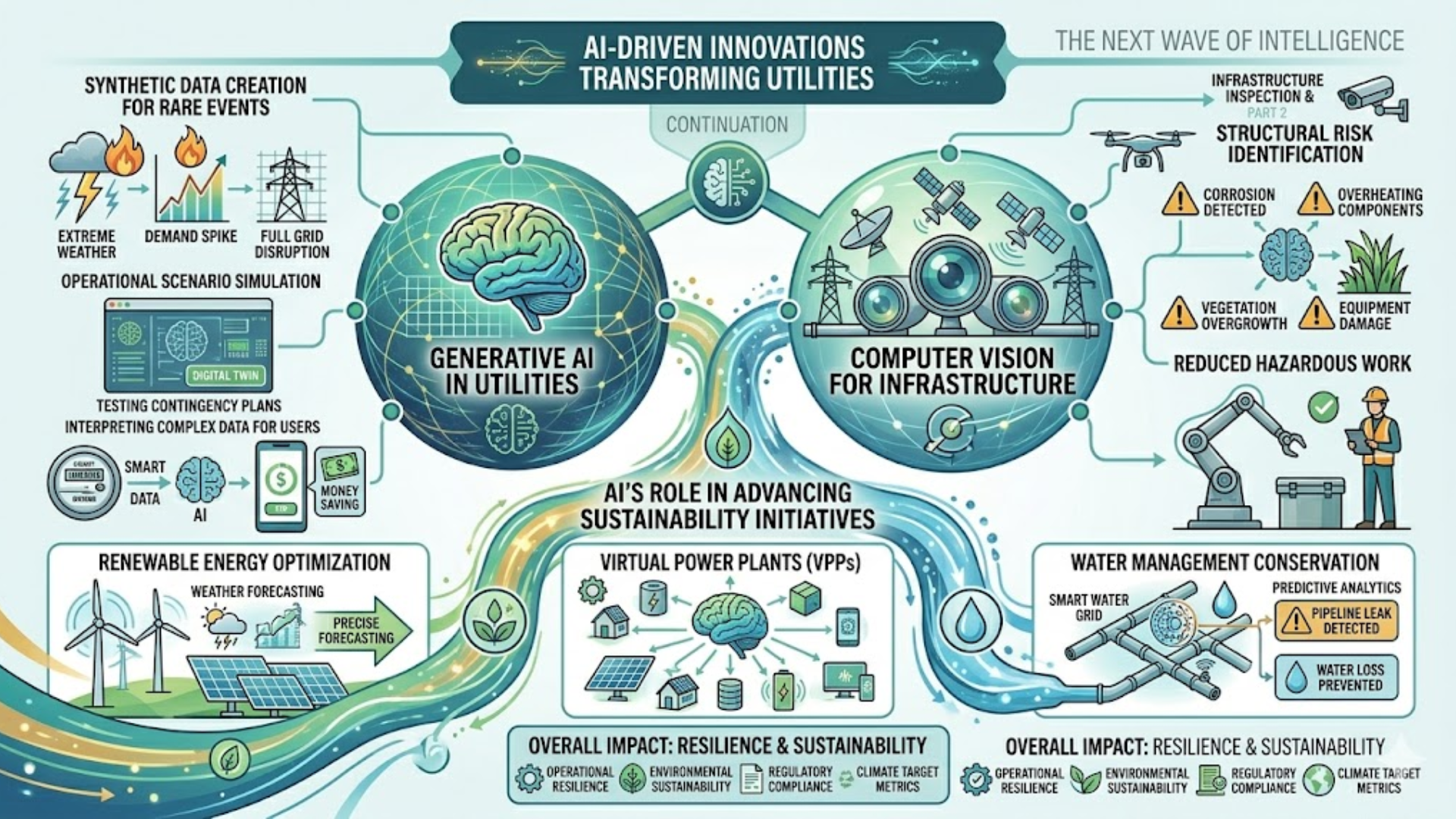
Generative AI is evolving from a content creation tool into a powerful engineering and simulation capability. In utilities, Generative AI can create synthetic datasets that replicate real-world operational scenarios. Because critical infrastructure failures occur infrequently, historical datasets may not fully capture extreme events. Generative models simulate realistic grid disruptions, weather-related damage, and sudden demand spikes, allowing operators to test contingency strategies in a safe digital environment.
This simulation capability strengthens infrastructure planning and improves emergency preparedness. Generative AI can also interpret complex technical data and translate it into user-friendly insights. For example, AI can convert smart meter telemetry into personalized energy-saving recommendations, helping customers better understand consumption patterns and reduce costs.
Computer Vision is transforming how utilities inspect and maintain physical infrastructure. AI-powered image recognition systems analyze visual inputs from drones, satellites, and fixed cameras to identify structural risks across transmission lines, substations, pipelines, and water facilities.
Automated visual inspection improves accuracy while reducing the need for manual checks in hazardous environments. Computer Vision models can detect corrosion, equipment damage, overheating components, or vegetation growth near power lines. By identifying risks earlier, utilities can prioritize maintenance activities and prevent service disruptions.
AI’s role in advancing sustainability initiatives
Sustainability objectives are driving increased investment in advanced AI use cases in utilities, particularly in renewable energy optimization and resource conservation. AI improves renewable energy forecasting by analyzing weather conditions, generation patterns, and grid demand fluctuations. More accurate forecasting helps utilities balance supply variability from solar and wind sources while maintaining grid stability.
AI also supports the development of Virtual Power Plants (VPPs), where distributed energy resources such as residential solar panels, battery storage systems, and smart devices operate as a coordinated energy network. AI continuously balances energy generation and consumption across these distributed assets, improving efficiency and reducing reliance on carbon-intensive power sources.
In water management systems, AI-powered predictive analytics detect pipeline leaks and inefficiencies earlier than traditional monitoring approaches. Reducing water loss not only preserves natural resources but also lowers the energy consumption required for pumping and treatment processes.
Together, these innovations demonstrate how AI use cases in utilities contribute to both operational resilience and environmental sustainability, positioning utilities to meet growing regulatory expectations and climate targets.
How to Implement AI in Utilities
Successfully deploying AI use cases in utilities requires a structured and risk-aware implementation approach. Because utilities operate critical infrastructure, AI adoption must prioritize reliability, security, and scalability. A phased strategy enables organizations to validate value early, reduce implementation risk, and build a strong foundation for long-term digital transformation.
Evaluate organizational readiness for AI adoption
Before selecting technologies, utilities must assess their current digital maturity, operational priorities, and internal capabilities. A structured readiness assessment helps identify where AI can deliver the highest impact with manageable complexity.
Organizations often begin by mapping operational challenges across departments such as asset management, grid operations, customer service, and compliance. Cross-functional collaboration between engineering teams, IT specialists, and business leaders ensures that AI initiatives align with operational goals.
Prioritizing early projects with measurable business value, such as document automation or predictive maintenance allows utilities to demonstrate quick wins and build internal momentum for broader AI adoption.
Establish a scalable and reliable data foundation
Data quality directly determines the success of AI use cases in utilities. Utilities often manage fragmented datasets stored across SCADA systems, GIS platforms, ERP systems, and customer databases. Consolidating these data sources into a unified architecture enables more accurate analytics and forecasting.
Implementing strong data governance frameworks helps ensure consistency, reliability, and security. Standardizing data formats, eliminating duplicates, and validating historical records improves model accuracy and supports long-term scalability.
A unified data environment also enables real-time insights, allowing utilities to respond faster to operational changes and infrastructure risks.
Select appropriate AI technologies and implementation partners
Choosing the right tools and vendors plays a critical role in successful AI deployment. Utilities must evaluate whether to build custom AI models internally or adopt specialized platforms designed for energy, water, or gas operations.
When assessing vendors, organizations should prioritize solutions that support regulatory compliance, cybersecurity requirements, and interoperability with existing infrastructure systems. Compatibility with grid management platforms and asset monitoring tools ensures smoother integration and reduces implementation complexity.
Implement pilot projects and scale gradually
AI deployment should follow a phased roadmap to minimize operational risk. Pilot projects allow utilities to test algorithms in controlled environments before expanding implementation across larger systems.
A typical roadmap includes:
- Pilot phase: small-scale implementation focused on validating model performance and demonstrating measurable business outcomes.
- Expansion phase: scaling successful solutions across selected regions, assets, or operational functions while refining performance based on real-world feedback.
- Enterprise integration phase: embedding AI capabilities into core workflows to support continuous optimization and real-time decision-making.
This structured approach ensures that AI delivers consistent value while maintaining system stability.
Develop workforce capabilities and AI adoption culture
Successful implementation of AI use cases in utilities requires both technical training and organizational alignment. Employees must understand how AI systems support decision-making rather than replace human expertise.
Training programs should focus on building AI literacy, enabling teams to interpret insights generated by machine learning models and apply them effectively in daily operations. Encouraging collaboration between technical specialists and operational teams improves trust in AI systems and supports smoother adoption.
Positioning AI as a decision-support tool helps utilities enhance human expertise while maintaining full operational oversight and accountability.
Measuring the ROI of AI in Utilities
To scale AI use cases in utilities beyond pilot projects, organizations must demonstrate measurable business value. Clear ROI measurement frameworks help executives evaluate whether AI contributes to operational efficiency, infrastructure reliability, and long-term cost optimization. By linking AI performance directly to industry-specific KPIs, utilities can justify continued investment and expand adoption across core operations.
Key metrics to evaluate AI performance
Measuring ROI in the utilities sector requires both financial and operational indicators. Because utilities operate critical infrastructure, success metrics often focus on reliability, efficiency, and risk reduction rather than purely commercial outcomes.
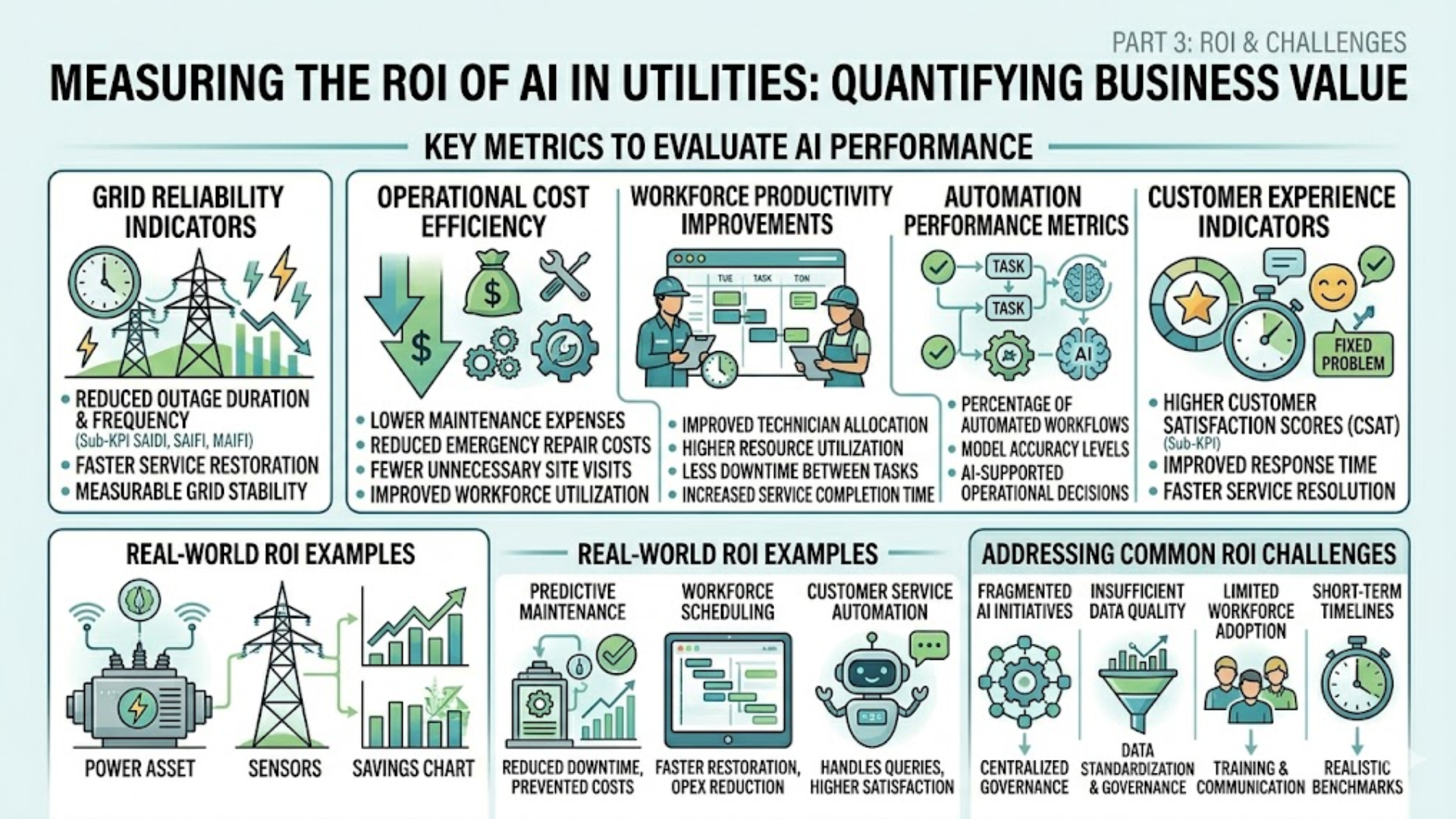
Grid reliability indicators
AI initiatives should demonstrate measurable improvements in grid stability and service continuity. Metrics such as outage duration, outage frequency, and service restoration speed help quantify the operational value of AI-powered forecasting and predictive maintenance systems.
Operational cost efficiency
Utilities can track reductions in maintenance expenses, emergency repair costs, and manual inspection requirements. AI-driven optimization often reduces unnecessary field visits, improves workforce utilization, and lowers overtime costs associated with reactive maintenance.
Workforce productivity improvements
AI scheduling and decision-support tools improve technician allocation and reduce downtime between tasks. Measuring improvements in service completion time and resource utilization helps quantify productivity gains.
Automation performance metrics
Organizations can evaluate the percentage of automated workflows, model accuracy levels, and the number of operational decisions supported by AI systems. These indicators demonstrate how effectively AI reduces manual effort across business processes.
Customer experience indicators
For customer-facing AI applications, utilities can measure satisfaction scores, response time improvements, and service resolution speed. AI-powered chatbots and personalized usage insights often improve service accessibility and engagement.
Real-world examples of AI ROI in utilities
Organizations implementing AI use cases in utilities often achieve measurable improvements across both operational and financial dimensions. Predictive maintenance solutions can significantly reduce equipment downtime and prevent costly infrastructure failures. Even modest reductions in maintenance frequency can generate substantial savings when applied across large asset networks.
AI-driven workforce optimization also contributes to faster response times during service disruptions. Improved scheduling accuracy enables field teams to restore services more efficiently, reducing operational costs and minimizing customer impact.
In customer service environments, AI-powered automation can reduce support workload while maintaining high service quality. Automated response systems enable faster issue resolution, improving satisfaction levels and strengthening customer trust.
Common ROI challenges and how to address them
Utilities often encounter barriers when measuring the financial impact of AI initiatives. Avoiding common pitfalls helps ensure more accurate evaluation of business outcomes.
Challenge: fragmented AI initiatives
When AI projects operate independently across departments, organizations may struggle to quantify enterprise-wide impact. Establishing centralized governance frameworks ensures alignment between AI investments and strategic objectives.
Challenge: insufficient data quality
Poor data consistency can reduce model accuracy and distort performance measurement. Utilities should prioritize data standardization and governance to ensure reliable ROI evaluation.
Challenge: limited workforce adoption
If employees do not trust AI-generated insights, adoption rates may remain low. Providing training programs and clearly communicating the benefits of AI helps teams integrate new tools into daily workflows.
Challenge: short-term evaluation timelines
Some AI use cases in utilities require longer implementation periods before measurable benefits appear. Establishing realistic performance benchmarks helps organizations track progress while maintaining strategic commitment.
By aligning ROI measurement with operational KPIs and long-term infrastructure goals, utilities can ensure that AI investments deliver measurable value and sustainable competitive advantage.
Future Trends of AI in Utilities
As technologies evolve, AI use cases in utilities will move beyond isolated automation initiatives toward fully connected, intelligent infrastructure ecosystems. The next decade will likely see utilities adopt AI as a core operational layer that continuously optimizes grid performance, supports decarbonization, and enables real-time coordination across distributed energy systems.
Predictions for the next decade
AI adoption in utilities is expected to accelerate as electrification, renewable energy expansion, and digital infrastructure demand increase simultaneously. Future grid systems will rely on advanced analytics and automation to maintain reliability while supporting more decentralized energy generation models.
Several key trends are expected to shape the evolution of AI use cases in utilities:
- Autonomous grid optimization: AI systems will increasingly support real-time balancing of electricity supply and demand, improving resilience as distributed energy resources such as solar panels and battery storage expand.
- Growth of distributed energy orchestration: AI will coordinate decentralized assets, enabling more efficient integration of microgrids, electric vehicles, and smart buildings into the broader energy ecosystem.
- Multimodal AI for operational monitoring: AI models capable of processing text, sensor data, images, and video simultaneously will improve situational awareness in control centers and support faster incident response.
- Expansion of digital twins: Utilities will increasingly deploy virtual replicas of infrastructure systems to simulate performance scenarios and optimize maintenance planning.
AI-powered resilience planning: predictive analytics will help utilities anticipate extreme weather impacts and strengthen disaster preparedness strategies.
These trends suggest that AI will become deeply embedded in daily grid operations, helping utilities improve both reliability and flexibility.
How utilities can stay ahead of AI transformation
To remain competitive, organizations must treat AI as a long-term strategic capability rather than a short-term technology experiment. Continuous investment in digital infrastructure, cloud platforms, and data governance frameworks will be essential for scaling AI use cases in utilities effectively.
Utilities can strengthen their AI readiness through several actions:
- Modernizing data architecture to support real-time analytics
- Building internal AI capabilities through workforce training programs
- Collaborating with technology partners and research institutions
- Developing governance frameworks for ethical and secure AI deployment
- Aligning AI initiatives with sustainability and operational resilience goals
Organizations that proactively invest in AI capabilities will be better positioned to manage increasing energy demand, regulatory complexity, and infrastructure modernization requirements.
Conclusion
Artificial Intelligence is redefining how utilities operate, shifting the industry from reactive infrastructure management toward predictive, data-driven decision-making. Across the value chain, AI use cases in utilities enable organizations to improve reliability, reduce operational costs, and accelerate the transition toward sustainable energy systems.
From predictive maintenance and intelligent load forecasting to customer engagement and distributed energy optimization, AI enables utilities to respond more effectively to rising demand and environmental challenges. While implementation requires overcoming challenges related to legacy systems, data governance, and workforce readiness, the long-term benefits significantly outweigh the risks.
Utilities that invest in strong data foundations, scalable AI platforms, and cross-functional collaboration will build more resilient and adaptive infrastructure. As digital transformation continues, AI will play a central role in shaping future-ready utilities that deliver reliable, efficient, and sustainable services in an increasingly complex energy landscape.