요약
What is Vibe Coding?
Vibe Coding refers to an AI-assisted software development approach where developers describe goals, intent, or desired functionality in natural language, and AI tools generate, modify, or optimize the code accordingly.
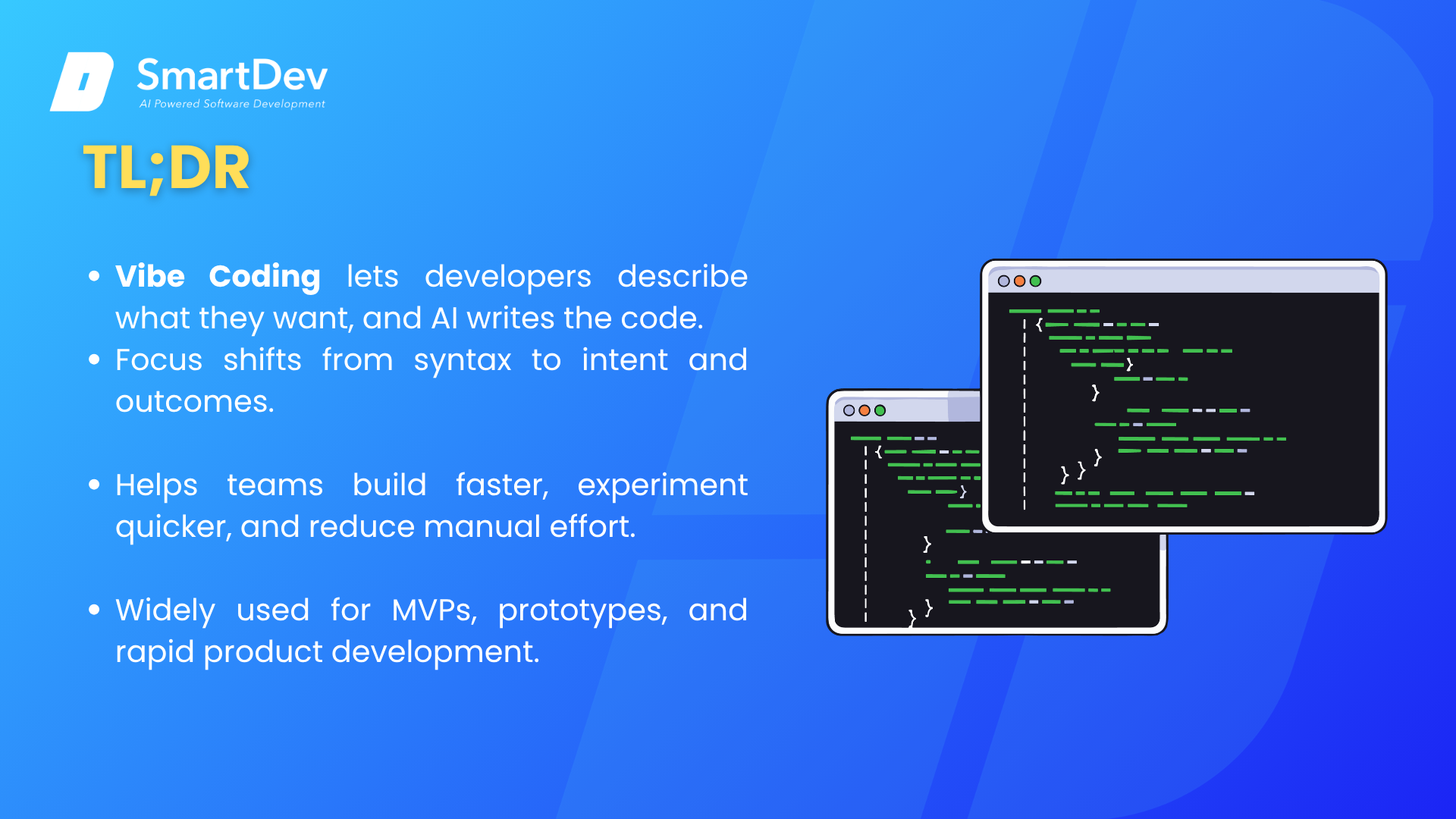
Instead of manually writing every line of code, developers focus on communicating the “vibe” — the logic, outcome, or user experience they want to achieve. AI coding assistants then translate that intent into executable code, helping accelerate development speed and reduce cognitive load.
Vibe Coding is commonly enabled by large language models, code copilots, and agent-based development tools that support tasks such as code generation, debugging, refactoring, and documentation. It represents a shift from syntax-heavy programming to intent-driven development, where human creativity guides AI-assisted implementation.
비즈니스에 중요한 이유
Vibe Coding significantly increases development speed and lowers barriers to building software products, allowing teams to move from idea to prototype much faster. This approach enables organizations to experiment rapidly, validate concepts, and iterate without requiring large engineering resources.
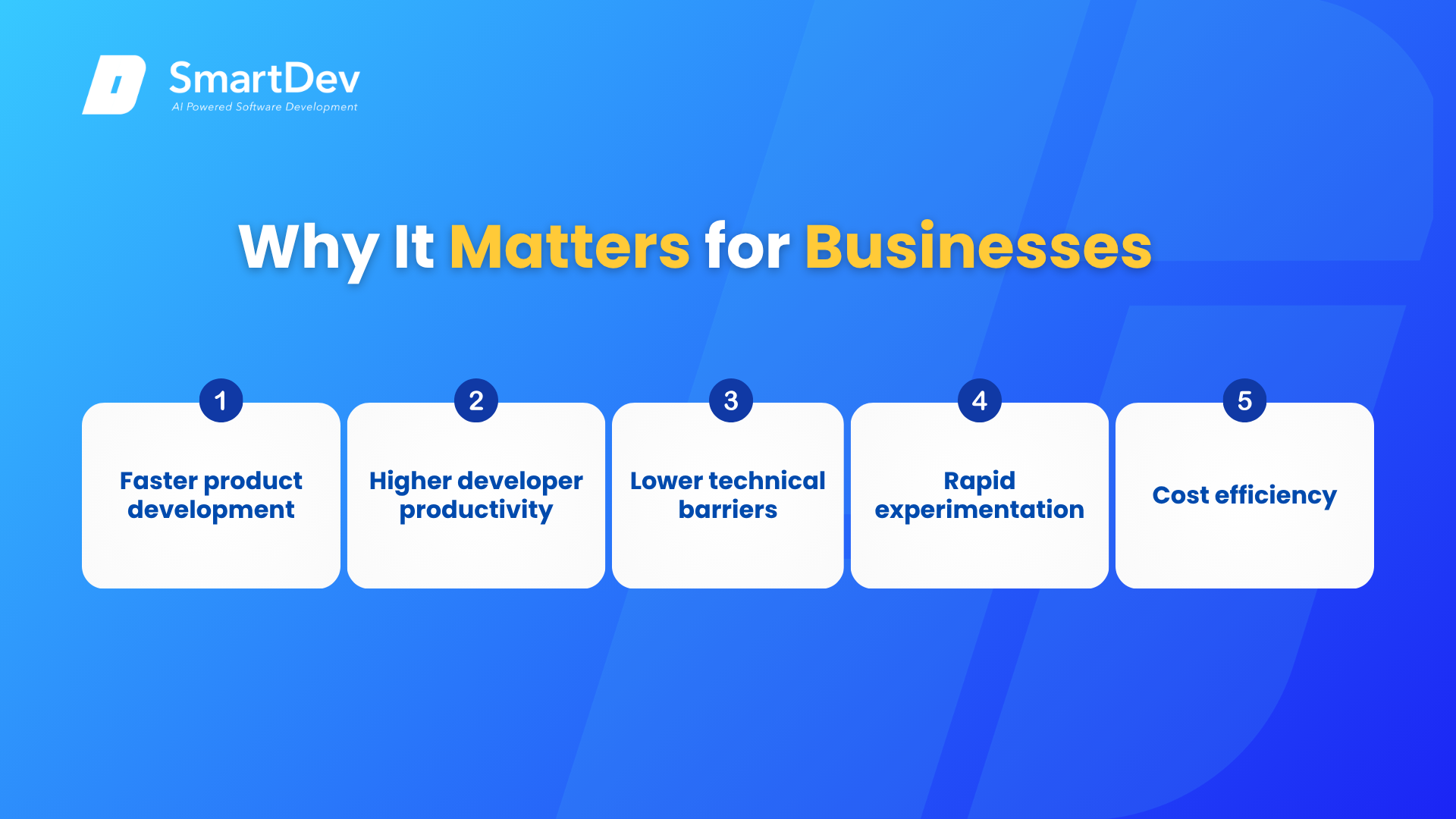
Business impact includes:
- Faster product development: Teams can build features or prototypes in hours instead of days.
- Higher developer productivity: Engineers spend less time on repetitive coding tasks and more time on problem-solving.
- Lower technical barriers: Non-expert developers or product teams can participate more actively in software creation.
- Rapid experimentation: Companies can test ideas quickly, supporting innovation and faster go-to-market cycles.
- Cost efficiency: Reduced manual effort leads to lower development costs for early-stage products.
Vibe Coding is particularly valuable in environments where speed, flexibility, and experimentation are critical.
How does Vibe Coding work?
Vibe Coding works by combining natural language interaction with AI-powered development tools. Developers describe requirements, functionality, or logic in conversational language, and AI models generate corresponding code snippets, functions, or full modules.
The process often involves iterative refinement, where developers adjust prompts, review generated code, and guide AI toward the desired outcome. AI tools may also assist with debugging, explaining complex logic, suggesting optimizations, or generating documentation.
Many workflows integrate AI into development environments, enabling real-time collaboration between developers and AI agents. Over time, this creates a feedback loop where human intent continuously shapes machine-generated output.
Who typically uses Vibe Coding?
Vibe Coding is used by software developers, product teams, startup founders, and technical professionals looking to accelerate development workflows. It is particularly popular among teams building MVPs, prototypes, or experimental features.
Experienced engineers use Vibe Coding to automate repetitive tasks such as writing boilerplate code or refactoring legacy systems, while less technical users leverage AI tools to build simple applications without deep programming expertise.
Organizations adopting AI-powered development workflows often integrate Vibe Coding into agile environments to support rapid iteration and continuous improvement.
기타 관련 용어
- AI-assisted Engineering
A development approach where AI tools support coding tasks such as generation, debugging, refactoring, and documentation to improve developer productivity. - Prompt Engineering
The practice of structuring inputs effectively to guide AI models toward producing accurate and useful outputs, especially important in AI-driven coding workflows. - Agentic Engineering
A software development paradigm where autonomous AI agents perform complex coding tasks with minimal human intervention, often coordinating multiple steps in a workflow.






