

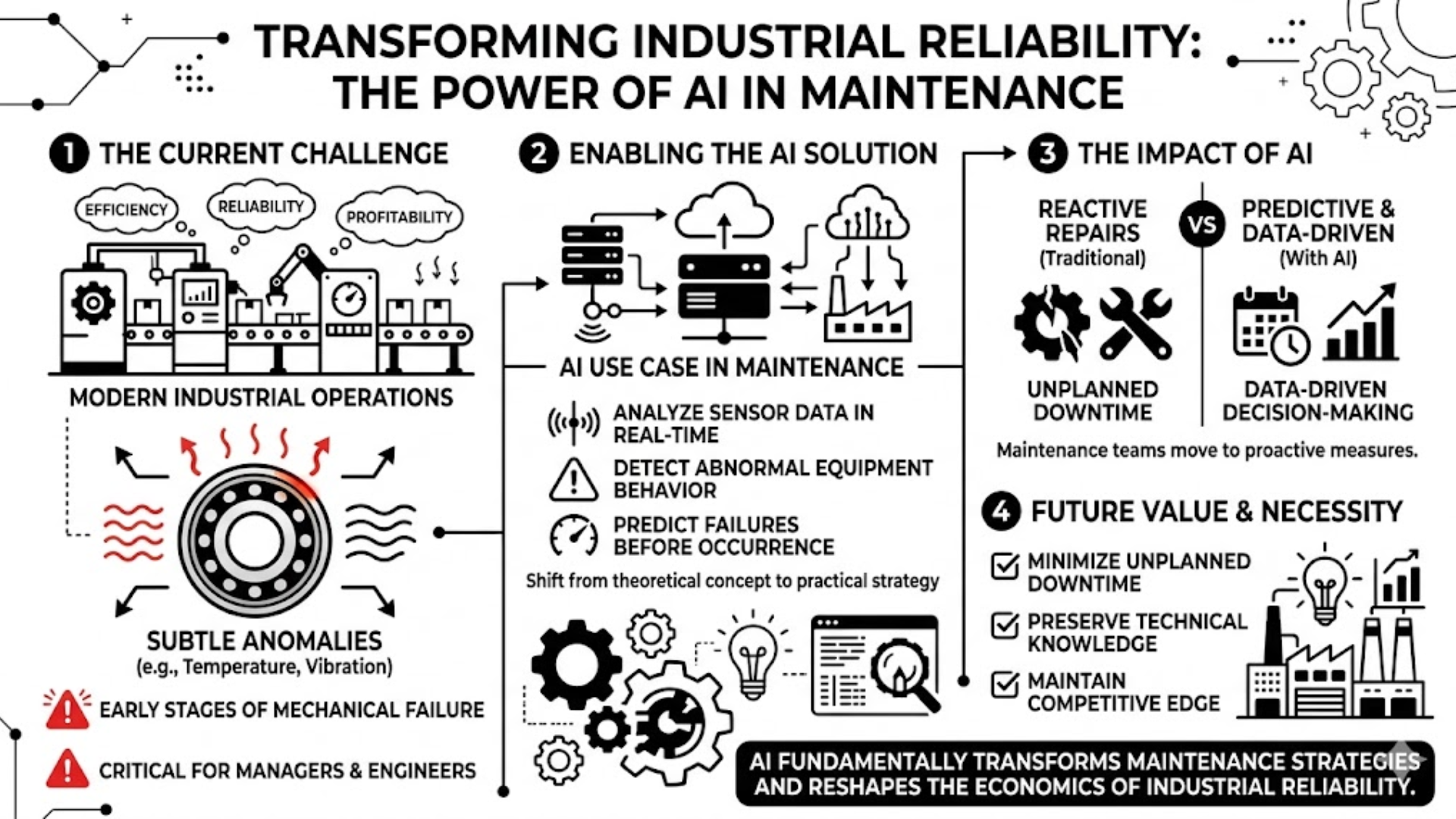
In modern industrial operations, the steady hum of a well-synchronized production line represents efficiency, reliability, and profitability. Yet behind this stability, even the smallest anomalies, such as a slight increase in bearing temperature or a subtle change in vibration patterns, can signal the early stages of mechanical failure. For operations directors, reliability engineers, and plant managers, detecting these signals early is critical. This is where AI use case in maintenance becomes a transformative solution.
Artificial intelligence is rapidly shifting from a theoretical concept to a practical strategy for asset management. By leveraging AI use case in maintenance, organizations can analyze sensor data in real time, detect abnormal equipment behavior, and predict failures before they occur. As a result, maintenance teams can move from reactive repairs to predictive and data-driven decision-making.
Today, implementing an AI use case in maintenance is no longer an experimental initiative. It has become an operational necessity for companies that want to minimize unplanned downtime, preserve valuable technical knowledge, and maintain a competitive edge in an increasingly digital and automated industrial landscape. This report explores how AI is fundamentally transforming maintenance strategies and reshaping the economics of industrial reliability.
What is AI and Why Does It Matter in Maintenance?
Definition of AI and Its Core Technologies
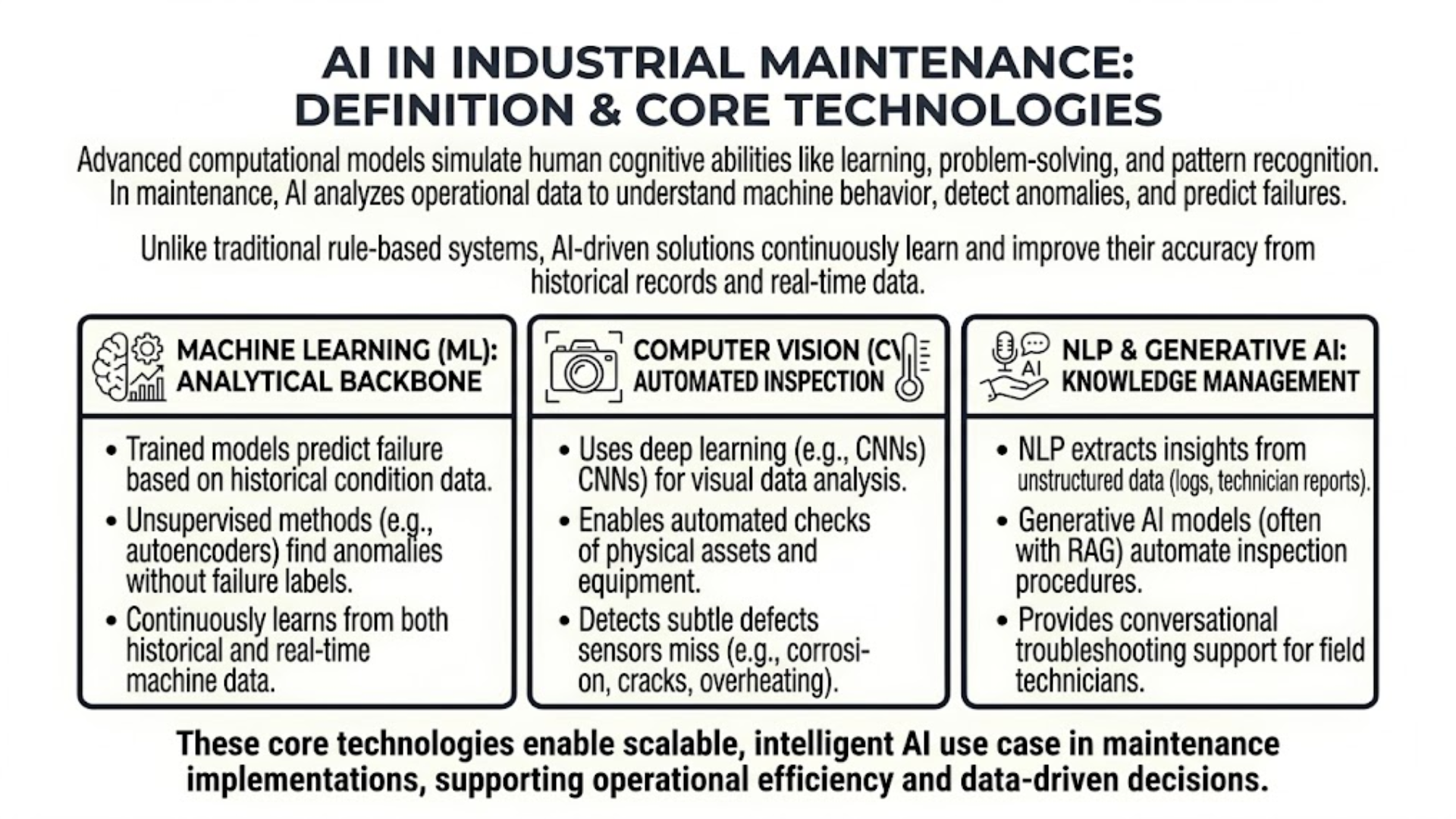
Artificial Intelligence (AI) in industrial environments refers to the use of advanced computational models that replicate human cognitive capabilities such as learning, problem-solving, and pattern recognition. In the context of an AI use case in maintenance, these technologies analyze large volumes of operational data to understand machine behavior, detect anomalies, and predict potential failures before they disrupt operations.
Unlike traditional rule-based systems, AI-driven maintenance solutions continuously improve their accuracy by learning from both historical records and real-time machine data. This adaptive capability makes AI a powerful tool for managing complex industrial assets where early detection of equipment degradation is critical.
Several core technologies form the foundation of modern AI use case in maintenance applications.
- Machine Learning (ML) acts as the analytical backbone of predictive maintenance systems. Through supervised learning models, algorithms can be trained on large datasets containing historical machine conditions and failure events to forecast equipment breakdowns. In addition, unsupervised learning methods—such as isolation forests and autoencoders—can identify unusual patterns or anomalies even when labeled failure data is unavailable.
- Computer Vision (CV) is another essential technology. Using deep learning models such as Convolutional Neural Networks (CNNs), computer vision systems analyze visual inputs from cameras, drones, and thermal imaging devices. This enables automated inspection of physical assets, detecting issues such as corrosion, cracks, overheating components, or misalignments that traditional sensors may not capture.
- Natural Language Processing (NLP) and Generative AI are increasingly transforming the knowledge-management aspect of maintenance operations. NLP can analyze unstructured data sources such as maintenance logs, technician reports, and historical work orders to extract valuable insights. Meanwhile, generative AI models—often combined with Retrieval-Augmented Generation (RAG)—can automatically generate inspection procedures, summarize maintenance history, and provide conversational troubleshooting support for technicians in the field.
Together, these technologies enable scalable and intelligent AI use case in maintenance implementations that support both operational efficiency and data-driven decision-making.
The Growing Role of AI in Transforming Maintenance
For decades, industrial maintenance strategies relied primarily on two traditional approaches: reactive maintenance and preventive maintenance.
Reactive maintenance, often called run-to-failure, involves repairing equipment only after a breakdown occurs. While simple to implement, this approach frequently leads to unexpected downtime, costly production disruptions, and potential damage to other connected components.
Preventive maintenance attempts to reduce these risks by scheduling routine inspections or component replacements at fixed time intervals. However, this method often results in unnecessary maintenance activities, replacing components that are still in good condition and increasing operational costs.
The introduction of an AI use case in maintenance has enabled a more advanced approach: predictive and prescriptive maintenance.
By combining multiple data sources—including vibration sensors, temperature readings, acoustic signals, and historical maintenance records—AI systems can build a continuous health profile for each piece of equipment. These models identify subtle patterns that indicate early-stage degradation and recommend maintenance actions before failures occur.
As a result, maintenance teams can transition from reactive problem-solving to proactive asset management. Organizations that successfully implement an AI use case in maintenance can reduce unplanned downtime, optimize spare parts inventory, extend equipment lifespan, and significantly improve Overall Equipment Effectiveness (OEE).
In this way, AI transforms maintenance from a traditional operational expense into a strategic capability that strengthens reliability, productivity, and long-term competitiveness.
Key Statistics and Trends Highlighting AI Adoption in Maintenance
The adoption of artificial intelligence in industrial maintenance is accelerating rapidly as organizations seek to reduce operational risks and improve asset reliability. With the rising cost of equipment failure and the increasing availability of industrial data, companies are investing heavily in AI use case in maintenance solutions that enable predictive insights and data-driven decision-making.
Several market indicators show that AI is quickly moving from experimental pilot projects to large-scale operational deployment across industries such as manufacturing, energy, transportation, and logistics.
| Metric / Trend | Current Status / Projection | Business Implication |
| Enterprise AI Market Growth | Expanding from $24 billion in 2024 to a projected $150–$200 billion by 2030, with a CAGR exceeding 30%. | Indicates a massive influx of capital into operational AI, making it a foundational infrastructure rather than a niche tool. |
| AI-Driven Predictive Maintenance Market | Valued at $837.1 million in 2024, projected to reach $2.556 billion by 2034 (12.0% CAGR). | Demonstrates sustained, aggressive investment specifically targeted at asset reliability and proactive failure mitigation. |
| Current Maintenance Paradigms | 88% of manufacturing firms still use preventive maintenance; 52% use run-to-failure; only 40% utilize analytics-driven predictive maintenance. | Highlights a massive opportunity for competitive differentiation for early adopters who successfully transition to AI-driven models. |
| Cost of Unplanned Downtime | Averages $260,000 (€220,400) per hour for major industrial equipment. | Serves as the primary financial catalyst for AI adoption, as avoiding even a single hour of downtime yields massive ROI. |
| Enterprise AI Adoption Rate | 78% of organizations are actively deploying AI systems, and 71% use generative AI for core functions. | Proves that the technology has crossed the chasm into mainstream enterprise operations. |
Business Benefits of AI in Maintenance
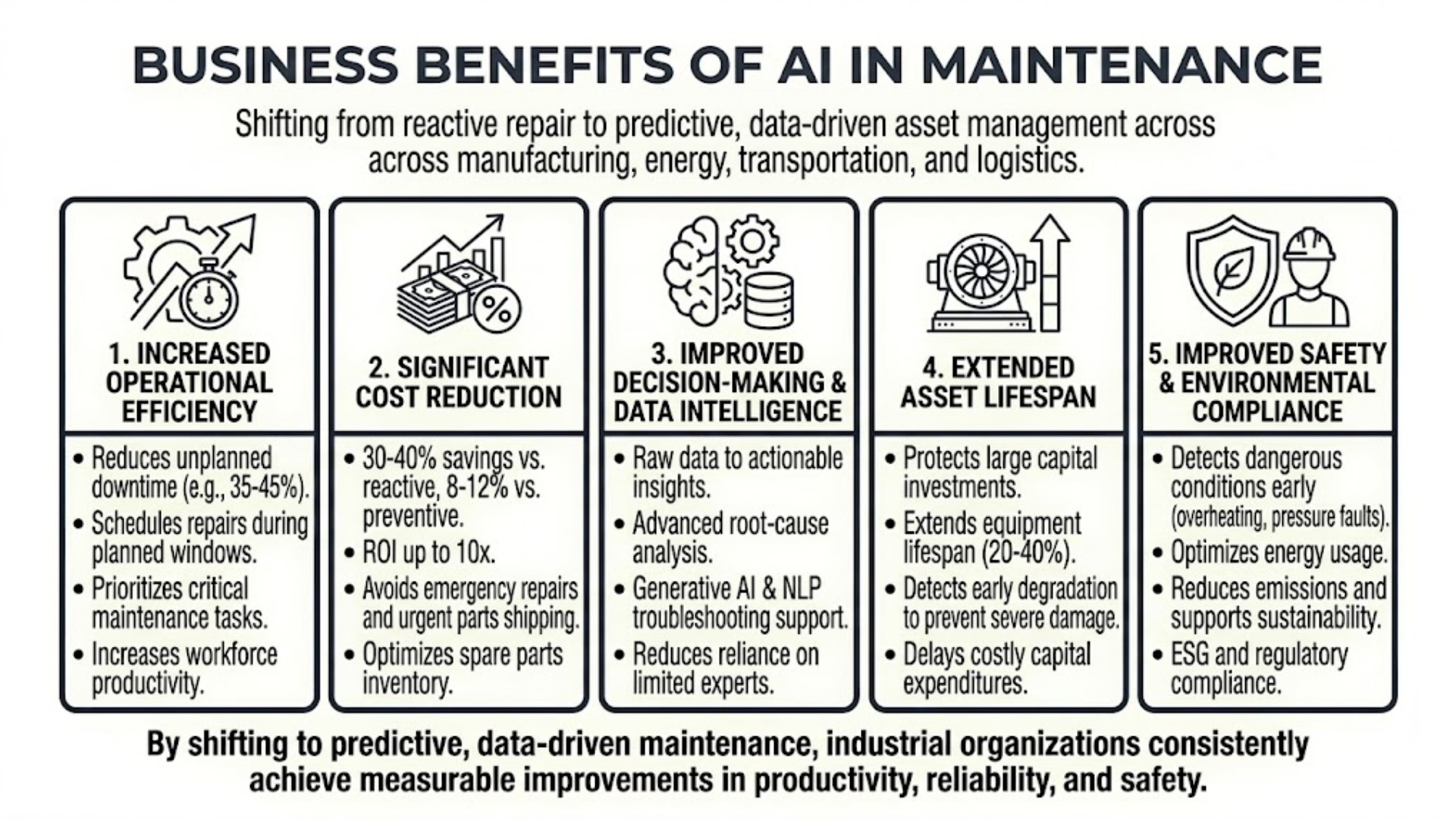
The implementation of an AI use case in maintenance brings significant operational and financial benefits to industrial organizations. By shifting from reactive repair strategies to predictive, data-driven asset management, companies can improve efficiency, reduce costs, and enhance long-term equipment performance.
Across industries such as manufacturing, energy, transportation, and logistics, organizations that deploy AI use case in maintenance solutions consistently report measurable improvements in productivity, reliability, and safety. Below are five of the most important business benefits.
1. Increased Operational Efficiency
One of the most immediate advantages of adopting an AI use case in maintenance is the improvement in operational efficiency and the reduction of unexpected downtime.
AI-powered predictive maintenance systems continuously analyze sensor data such as vibration signals, temperature fluctuations, and machine performance metrics. By identifying early warning signs of mechanical degradation, these systems can detect potential failures long before they affect production.
Manufacturers that implement predictive maintenance solutions often report a 35%–45% reduction in unplanned downtime. This allows maintenance teams to schedule repairs during planned maintenance windows rather than reacting to sudden equipment breakdowns.
AI also improves workforce productivity. Instead of conducting routine inspections on healthy equipment, technicians receive prioritized maintenance tasks based on real-time asset risk and operational impact. This ensures that skilled workers focus only on the most critical interventions, leading to more efficient maintenance planning.
2. Significant Cost Reduction
Another major advantage of implementing an AI use case in maintenance is the reduction of maintenance and operational costs.
Predictive maintenance strategies powered by AI can generate 30%–40% cost savings compared to reactive maintenance and 8%–12% savings compared to traditional preventive maintenance.
These savings are achieved through several mechanisms:
- Avoiding catastrophic equipment failures that require expensive emergency repairs
- Reducing the need for urgent shipping of replacement parts
- Minimizing unnecessary component replacements when equipment still has remaining useful life
- Optimizing spare parts inventory and maintenance scheduling
In some successful deployments, companies have achieved up to a 10× return on investment (ROI) from predictive maintenance initiatives, demonstrating the strong financial impact of adopting an AI use case in maintenance.
3. Improved Decision-Making Through Data Intelligence
Industrial operations generate massive volumes of operational data. However, traditional monitoring systems typically provide only simple alerts when thresholds are exceeded.
An AI use case in maintenance goes far beyond basic monitoring by transforming raw data into actionable insights.
AI-powered diagnostic models can perform advanced root-cause analysis, identifying the exact source of equipment problems. For example, the system can distinguish between different issues such as bearing wear, mechanical imbalance, or lubrication failure.
In addition, modern maintenance platforms increasingly incorporate Generative AI and Natural Language Processing (NLP) to support technicians in the field. These tools analyze historical maintenance records and technical documentation to provide step-by-step troubleshooting guidance.
As a result, organizations can significantly improve decision-making speed and accuracy while reducing reliance on a limited number of senior experts.
4. Competitive Advantage Through Extended Asset Lifespan
Heavy industrial equipment, such as turbines, manufacturing presses, and transportation infrastructure, often represents massive capital investments.
A well-designed AI use case in maintenance helps organizations protect these investments by extending the operational lifespan of critical assets.
Machine learning models detect small anomalies in machine behavior during the earliest stages of equipment degradation. Early intervention prevents minor issues from escalating into severe mechanical damage that could shorten the lifespan of expensive machinery.
Industry research suggests that predictive maintenance solutions powered by AI can extend equipment lifespan by 20%–40%. This allows organizations to delay costly capital expenditures while maximizing the value of existing assets.
5. Improved Safety and Environmental Compliance
Beyond efficiency and cost savings, implementing an AI use case in maintenance also improves workplace safety and environmental performance.
Equipment failures can pose serious risks to employees, especially in heavy industrial environments. AI systems can detect dangerous conditions—such as overheating motors, pressure anomalies, or electrical faults—long before they create safety hazards.
AI also supports sustainability initiatives by identifying inefficiencies that lead to excessive energy consumption or environmental pollution. For example, AI-driven monitoring systems can optimize the energy usage of industrial equipment and HVAC systems based on real-time operational conditions.
By improving energy efficiency and reducing emissions, organizations can more easily comply with Environmental, Social, and Governance (ESG) regulations while lowering their overall environmental footprint.
Challenges Facing AI Adoption in Maintenance
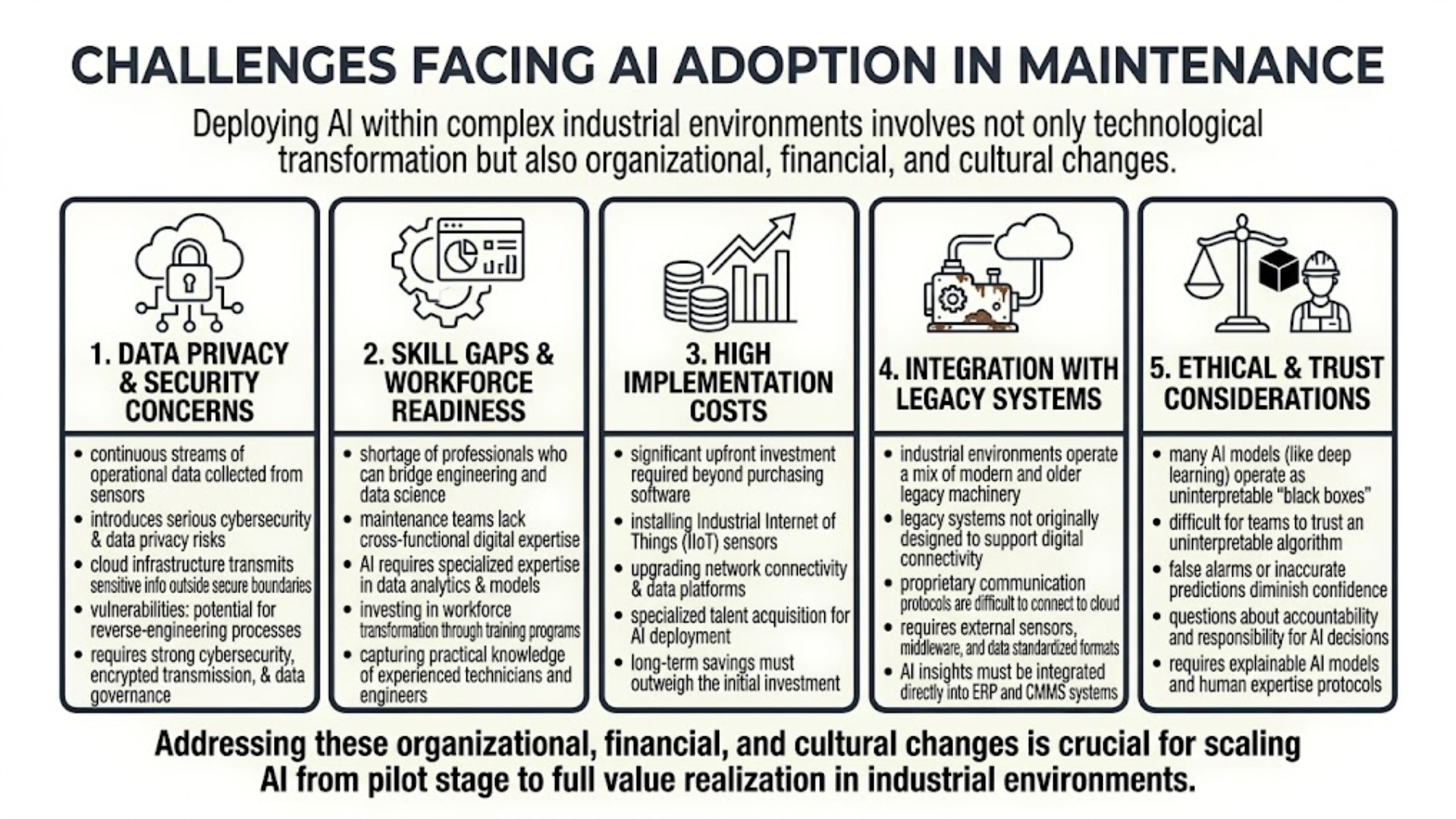
While the benefits of implementing an AI use case in maintenance are significant, organizations must overcome several practical challenges before these solutions can deliver full value. Deploying AI within complex industrial environments involves not only technological transformation but also organizational, financial, and cultural changes.
From data security concerns to workforce readiness, these barriers often determine whether an AI use case in maintenance succeeds at scale or remains stuck at the pilot stage.
Data Privacy and Security Concerns
Modern AI maintenance systems depend heavily on continuous streams of operational data collected from sensors, machines, and industrial control systems. While this data is essential for predictive analytics, it also introduces serious cybersecurity and data privacy risks.
Many AI use case in maintenance implementations rely on cloud infrastructure to process machine learning models and large-scale datasets. This often requires transmitting sensitive operational information outside the traditional security boundaries of the factory floor.
For industries such as manufacturing, energy, and transportation, this creates potential vulnerabilities. If attackers gain access to industrial data streams, they may be able to reverse-engineer proprietary production processes or disrupt critical operational systems.
To address these risks, organizations must implement strong cybersecurity frameworks, including encrypted data transmission, secure access controls, and robust data governance policies. Compliance with emerging global data regulations also requires careful management of data ownership, privacy, and storage policies.
Skill Gaps and Workforce Readiness
Another major barrier to adopting an AI use case in maintenance is the shortage of skilled professionals who can bridge the gap between industrial engineering and data science.
Maintenance teams traditionally consist of mechanical and electrical specialists who focus on physical equipment diagnostics. However, AI-driven maintenance systems require expertise in data analytics, machine learning models, and digital platforms.
Industry reports suggest that many organizations lack the cross-functional talent needed to successfully implement AI solutions. As a result, companies must invest in workforce transformation through training programs, digital literacy initiatives, and collaboration between engineers and data scientists.
At the same time, many experienced technicians and engineers are approaching retirement, taking decades of practical knowledge with them. Capturing this expertise and converting it into structured digital knowledge—often through AI-powered knowledge management systems—has become an urgent priority for many organizations.
High Implementation Costs
Deploying an enterprise-scale AI use case in maintenance requires significant upfront investment.
The costs extend far beyond purchasing AI software. Many industrial facilities must first upgrade their infrastructure to support predictive maintenance capabilities. This may include installing Industrial Internet of Things (IIoT) sensors, upgrading network connectivity, implementing data platforms, and investing in cloud computing resources.
Additional costs arise from data preparation, system integration, and hiring specialized AI talent. These expenses can make decision-makers hesitant, especially when the financial return depends on preventing equipment failures that have not yet occurred.
However, organizations that successfully implement predictive maintenance often find that the long-term savings, such as reduced downtime and optimized asset performance—far outweigh the initial investment.
Integration with Legacy Systems
Industrial environments typically operate a mix of modern equipment and older legacy machinery. These legacy systems were not originally designed to support digital connectivity or real-time data analytics.
As a result, integrating an AI use case in maintenance with existing infrastructure can be technically challenging. Many older machines use proprietary communication protocols that are difficult to connect with modern cloud platforms or analytics systems.
To overcome this barrier, organizations often need to install external sensors, develop middleware solutions, and standardize data formats across different systems. In addition, AI insights must be integrated directly into existing operational tools such as Enterprise Resource Planning (ERP) systems and Computerized Maintenance Management Systems (CMMS).
Without seamless integration into everyday workflows, maintenance teams may struggle to adopt AI-driven recommendations effectively.
Ethical and Trust Considerations
The increasing use of autonomous and predictive AI systems also raises important ethical and organizational questions.
Many advanced AI models, particularly deep learning algorithms, operate as “black boxes,” meaning their decision-making processes are not easily interpretable by humans. For maintenance teams, trusting an algorithm that recommends shutting down critical equipment can be difficult without clear explanations.
If an AI system produces inaccurate predictions—such as false alarms that trigger unnecessary repairs—confidence in the technology may quickly decline.
Furthermore, as AI systems become more influential in operational decisions, questions about accountability and responsibility arise. If an AI-driven maintenance recommendation fails to prevent a major equipment failure, organizations must determine who is responsible for the outcome.
Addressing these ethical concerns requires transparent AI governance frameworks, explainable AI models, and clear decision-making protocols that combine human expertise with machine intelligence.
Core AI Use Cases in Maintenance
Across industries such as manufacturing, energy, aviation, and logistics, the adoption of artificial intelligence is reshaping how organizations manage equipment reliability. Implementing an AI use case in maintenance enables companies to move away from reactive repair strategies and toward proactive, data-driven asset management.
Although the specific applications may vary depending on the industry, several core AI use case in maintenance scenarios are widely recognized as foundational to modern predictive maintenance strategies. These applications form the backbone of intelligent maintenance systems that improve operational reliability and efficiency.
| Core AI Use Case | Technical Mechanism | Primary Business Impact |
|---|---|---|
| Predictive Maintenance Forecasting | An AI use case in maintenance that analyzes continuous sensor data such as vibration, temperature, acoustics, and pressure using machine learning regression and classification models to predict equipment degradation and estimate remaining useful life (RUL). | Reduces unexpected breakdowns, minimizes unplanned downtime, and enables organizations to shift from time-based maintenance schedules to condition-based maintenance strategies. |
| Automated Anomaly Detection | Uses unsupervised machine learning algorithms—such as isolation forests, clustering, and autoencoders—to establish a baseline of normal equipment behavior and detect unusual deviations in real-time operational data. | Provides early warning signals for subtle machine performance changes, allowing maintenance teams to investigate issues before they escalate into critical failures. |
| Algorithmic Root Cause Analysis | This AI use case in maintenance analyzes multivariate datasets, including sensor signals, operational parameters, and historical repair records—to identify the exact component or operational condition responsible for abnormal machine behavior. | Helps technicians diagnose the real source of failures rather than treating surface-level symptoms, reducing repeated maintenance incidents and improving long-term equipment reliability. |
| Dynamic Spare Parts Forecasting | Integrates predictive failure models with enterprise systems such as ERP and supply chain platforms to forecast the timing, quantity, and location of required spare parts. | Reduces capital tied up in excess inventory while preventing delays caused by missing critical components during maintenance operations. |
| Intelligent Maintenance Workflow Prioritization | Combines real-time asset health data, failure risk analysis, and technician availability to automatically generate optimized maintenance schedules within CMMS platforms. | Improves workforce efficiency, balances technician workloads, and ensures critical maintenance tasks are prioritized based on operational risk and asset criticality. |
Ready to modernize your BFSI systems and accelerate digital transformation?
SmartDev helps banks, insurers, and fintech companies build secure, scalable platforms powered by cloud, AI, and automation.
Turn strategy into production-ready solutions with a trusted BFSI technology partner.
Talk to a BFSI ExpertSpecific Applications of AI in Maintenance
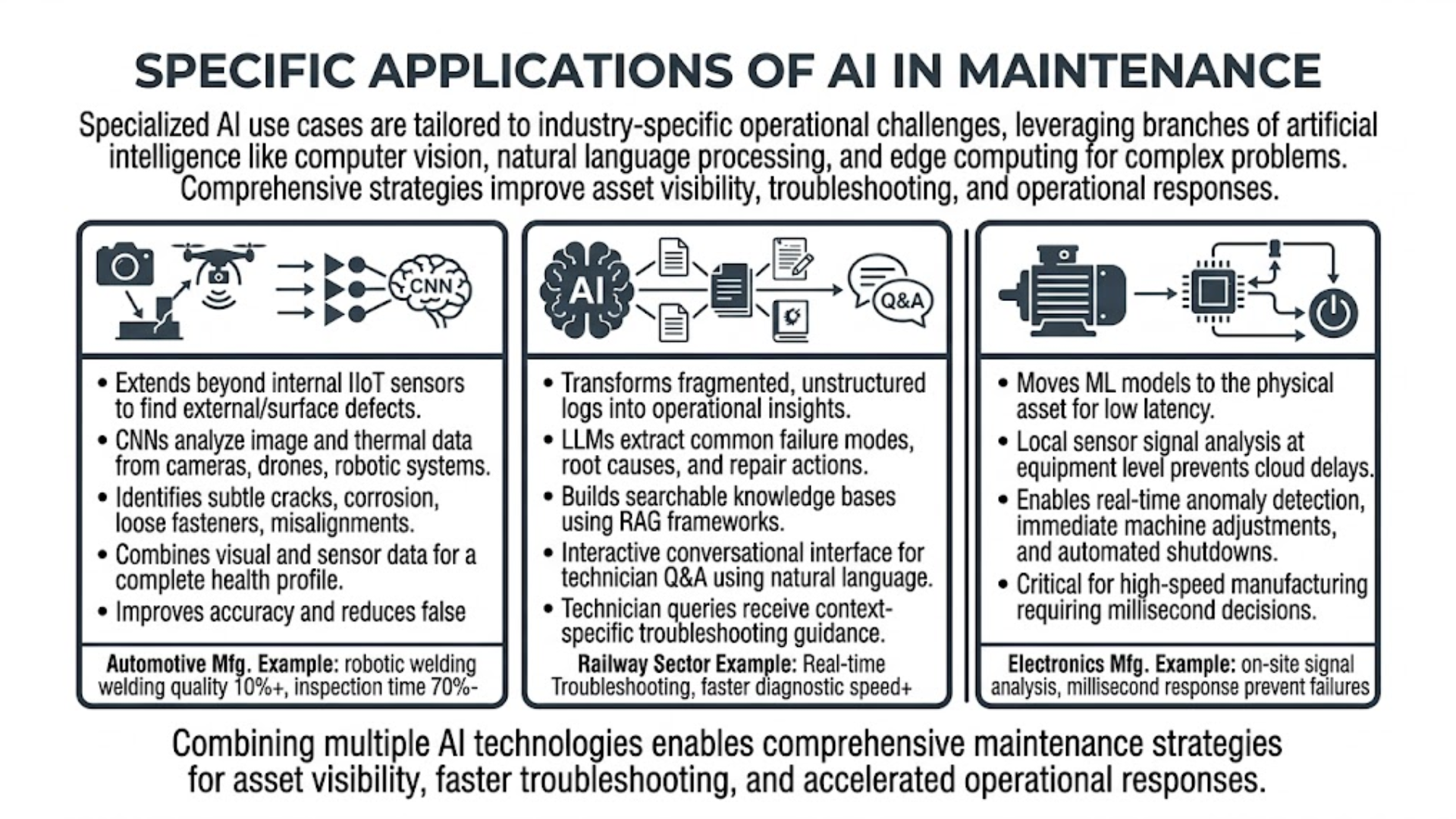
Beyond the foundational predictive maintenance models, organizations are increasingly implementing specialized AI use case in maintenance solutions tailored to address industry-specific operational challenges. These applications leverage different branches of artificial intelligence—such as computer vision, natural language processing, and edge computing to solve complex maintenance problems that traditional monitoring systems cannot handle effectively.
By combining multiple AI technologies, companies can create more comprehensive maintenance strategies that improve asset visibility, accelerate troubleshooting, and enable faster operational responses.
Visual Anomaly Detection for Heavy Industry
Traditional Industrial Internet of Things (IIoT) sensors are highly effective at monitoring internal machine conditions such as pressure, temperature, and vibration. However, they cannot detect external physical damage, structural deterioration, or surface-level defects.
A specialized AI use case in maintenance addresses this limitation through computer vision–based visual anomaly detection.
Using advanced Convolutional Neural Networks (CNNs), AI models analyze continuous image and thermal data captured from industrial cameras, drones, or robotic inspection systems. These models are trained using large datasets of labeled images that represent both normal conditions and various defect types.
As a result, the system can automatically identify subtle visual anomalies, including:
- Small cracks in pipelines or structural components
- Early signs of corrosion or surface rust
- Missing or loose mechanical fasteners
- Misaligned components or defective product assemblies
When visual data is combined with internal sensor readings, organizations can build a more complete asset health profile. This integrated approach significantly improves anomaly detection accuracy and reduces false alarms.
Real-world example
A major global automotive manufacturer implemented a computer vision–based AI use case in maintenance to monitor robotic welding operations. The system analyzed high-speed video streams from production lines and automatically detected microscopic welding defects in real time.
When abnormalities were detected, the AI system recommended parameter adjustments for the welding robots and alerted maintenance teams when equipment components required replacement. As a result, the company reduced inspection time by approximately 70% and improved welding quality output by around 10%.
Generative AI for Maintenance Logs and Knowledge Management
Maintenance documentation is often fragmented and difficult to analyze. Work orders may contain incomplete descriptions, handwritten notes, or inconsistent terminology across different technicians and departments.
A modern AI use case in maintenance leverages Generative AI and Natural Language Processing (NLP) to transform these unstructured records into valuable operational insights.
Large Language Models (LLMs) can process historical maintenance logs, technical documentation, and OEM manuals to extract key information such as common failure modes, root causes, and recommended repair actions. These insights can then be organized into searchable knowledge bases.
When combined with Retrieval-Augmented Generation (RAG) frameworks, the system can provide an interactive conversational interface that allows technicians to query maintenance knowledge using natural language.
For example, a technician might ask the system: “What are the most common causes of vibration anomalies in compressor units?”
The AI assistant can instantly generate a response based on historical maintenance records and technical documentation, providing context-specific troubleshooting guidance.
Real-world example
In the railway sector, a project implementing a generative AI assistant was deployed to support train commissioning technicians. The system used an LLM combined with a RAG framework to provide real-time troubleshooting recommendations based on historical maintenance knowledge.
During field testing, technicians using the AI assistant completed diagnostic tasks significantly faster than those relying on traditional manuals. The improvement was particularly notable among less experienced staff, demonstrating how generative AI can help bridge the industry’s growing skills gap.
Edge AI for Real-Time Maintenance Interventions
In many industrial environments, especially high-speed manufacturing, maintenance decisions must be made in milliseconds. Sending large volumes of sensor data to cloud platforms for analysis can introduce latency that delays critical responses.
To address this issue, organizations are increasingly implementing Edge AI–based AI use case in maintenance solutions.
Edge AI moves machine learning models directly onto devices located at the physical asset. Instead of transmitting raw data to a centralized cloud platform, the embedded processors analyze sensor signals locally at the equipment level.
This approach enables:
- Real-time anomaly detection
- Immediate machine adjustments
- Automated shutdowns when dangerous conditions occur
Because analysis occurs directly at the source, edge AI significantly reduces latency and ensures that maintenance interventions happen instantly.
Real-world example
In electronics manufacturing environments, companies such as Siemens have integrated AI-enabled processors into factory floor sensors. These processors analyze operational signals such as motor temperature and vibration patterns directly on-site.
When the edge AI system detects abnormal performance, such as a sudden overheating event in a conveyor motor, it can automatically adjust machine parameters or halt production within milliseconds. This rapid response prevents minor issues from escalating into major equipment failures or large-scale product defects.
Examples of AI in Maintenance
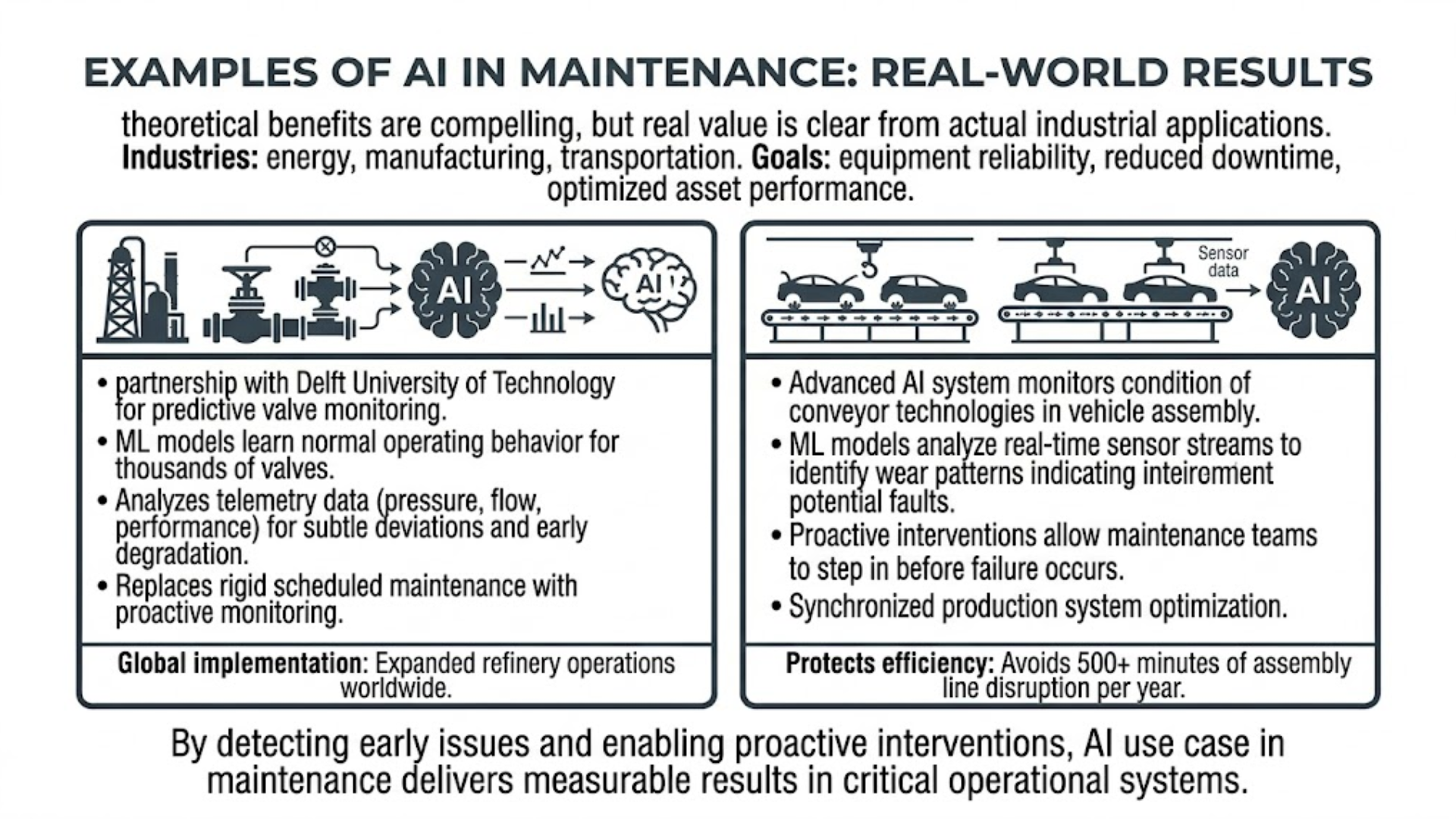
While the theoretical benefits of artificial intelligence are compelling, the real value of an AI use case in maintenance becomes clear when examining how organizations apply these technologies in real industrial environments. Across industries such as energy, manufacturing, and transportation, companies are deploying AI-driven maintenance systems to improve equipment reliability, reduce downtime, and optimize asset performance.
The following real-world examples demonstrate how AI use case in maintenance initiatives can deliver measurable operational and financial results.
Shell: Predictive Maintenance for Control Valves
Large oil refineries rely on thousands of control valves to regulate pressure, temperature, and fluid flow across complex processing systems. Maintaining these components is critical because a single valve malfunction can disrupt large sections of refinery operations.
Traditionally, many refineries relied on scheduled maintenance intervals to replace control valves. However, this approach often led to unnecessary replacements of components that were still functioning properly, while unexpected valve failures still caused costly operational disruptions.
To address this challenge, Shell partnered with Delft University of Technology to develop an advanced AI use case in maintenance focused on predictive valve monitoring.
Machine learning models were trained to analyze continuous telemetry data from the control valves, including pressure levels, flow rates, and operational performance metrics. By learning the normal operating behavior of each valve, the AI system could detect subtle deviations that signaled early mechanical degradation.
Results and outcomes
- Early detection of valve performance anomalies
- Reduced reliance on rigid maintenance schedules
- Significant reduction in unplanned downtime
- Extended operational lifespan of control valves
Following the success of the initial implementation, the predictive maintenance system was expanded across Shell’s global refinery operations.
BMW Group Plant Regensburg: AI in Automotive Assembly Lines
Modern automotive assembly lines operate as tightly synchronized production systems. Even a minor mechanical issue—such as a conveyor malfunction—can halt the entire production line and lead to significant financial losses.
To improve operational reliability, BMW Group implemented an advanced AI use case in maintenance at its BMW Plant Regensburg.
The AI-powered system continuously monitors the condition of conveyor technologies used in vehicle assembly. Machine learning models analyze real-time data streams from sensors installed across the production line to identify patterns that indicate potential equipment faults.
By detecting early signs of mechanical wear, the system allows maintenance teams to intervene before failures occur.
Results and outcomes
- Early identification of conveyor system issues
- Proactive scheduling of maintenance activities
- Reduction of unexpected production interruptions
The predictive maintenance solution helps the facility avoid more than 500 minutes of assembly line disruption each year, protecting production efficiency and ensuring timely vehicle delivery.
Innovative AI Solutions in Maintenance
As AI technology continues to evolve, organizations are expanding beyond traditional predictive models and exploring more advanced forms of AI use case in maintenance implementations.
Emerging technologies such as autonomous AI agents, multimodal AI systems, and AI-driven operations platforms are enabling a new generation of intelligent maintenance ecosystems.
Emerging AI Technologies in Maintenance
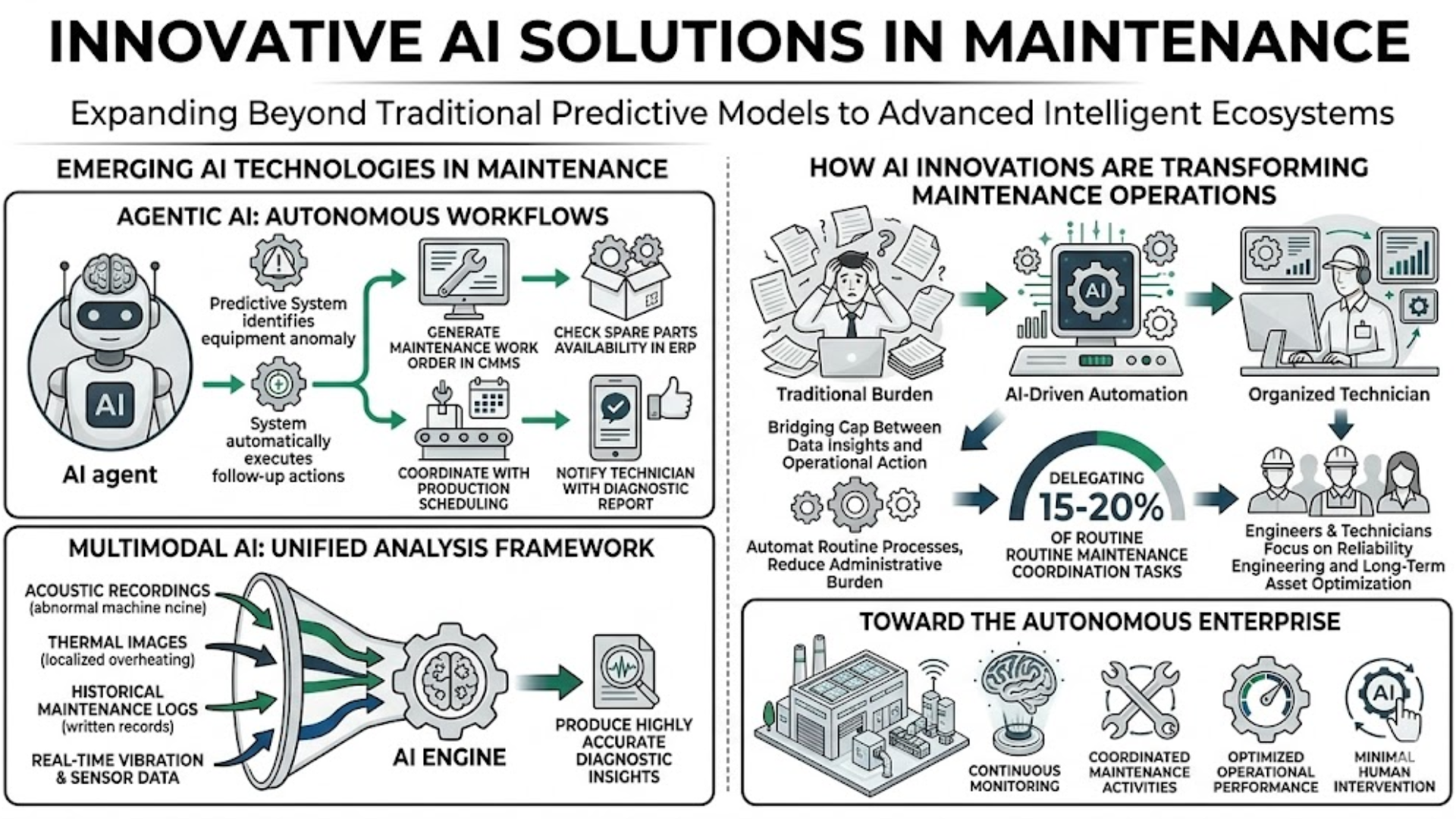
One of the most significant developments in the field is the rise of Agentic AI, which enables autonomous AI agents capable of executing complex workflows without continuous human intervention.
In a typical AI use case in maintenance, predictive systems identify potential equipment failures and generate alerts for human operators. However, with agent-based AI architectures, the system can automatically perform multiple follow-up actions.
For example, when an AI system detects a critical vibration anomaly, an autonomous agent could:
- Automatically generate a maintenance work order in the CMMS
- Check spare parts availability in the enterprise ERP system
- Coordinate with production scheduling software to identify safe maintenance windows
- Notify the appropriate technician with a detailed diagnostic report
Another emerging technology is multimodal AI, which integrates different types of operational data—such as text, images, acoustic signals, and sensor telemetry—into a unified analysis framework.
A multimodal AI use case in maintenance might analyze:
- Acoustic recordings of abnormal machine noise
- Thermal images showing localized overheating
- Historical maintenance logs
- Real-time vibration and sensor data
By correlating these multiple data sources, the AI system can produce highly accurate diagnostic insights that would be difficult for human operators to identify manually.
How AI Innovations Are Transforming Maintenance Operations
These advanced technologies are helping organizations bridge the gap between data insights and operational action.
In many industrial environments, maintenance teams spend a large portion of their time analyzing reports, scheduling tasks, and coordinating operational workflows. AI-driven maintenance platforms reduce this administrative burden by automating routine processes.
By delegating 15–20% of routine maintenance coordination tasks to AI-powered systems and AIOps platforms, organizations allow engineers and technicians to focus on higher-value activities such as reliability engineering and long-term asset optimization.
Ultimately, these innovations are moving industrial operations toward the concept of the Autonomous Enterprise, where AI systems continuously monitor equipment health, coordinate maintenance activities, and optimize operational performance with minimal human intervention.
AI-Driven Innovations Transforming Maintenance
As artificial intelligence technologies continue to evolve, new innovations are expanding the scope of what an AI use case in maintenance can achieve. Beyond traditional predictive maintenance models, emerging AI capabilities such as generative AI, computer vision, and advanced analytics are transforming how organizations monitor equipment, analyze operational data, and optimize maintenance strategies.
These technologies not only improve operational efficiency but also help organizations move toward more intelligent, autonomous maintenance ecosystems.
Emerging Technologies in AI for Maintenance
Generative AI Applications
Generative AI is rapidly becoming a powerful component of modern AI use case in maintenance strategies. It fundamentally changes how technicians interact with complex operational data, maintenance logs, and technical documentation.
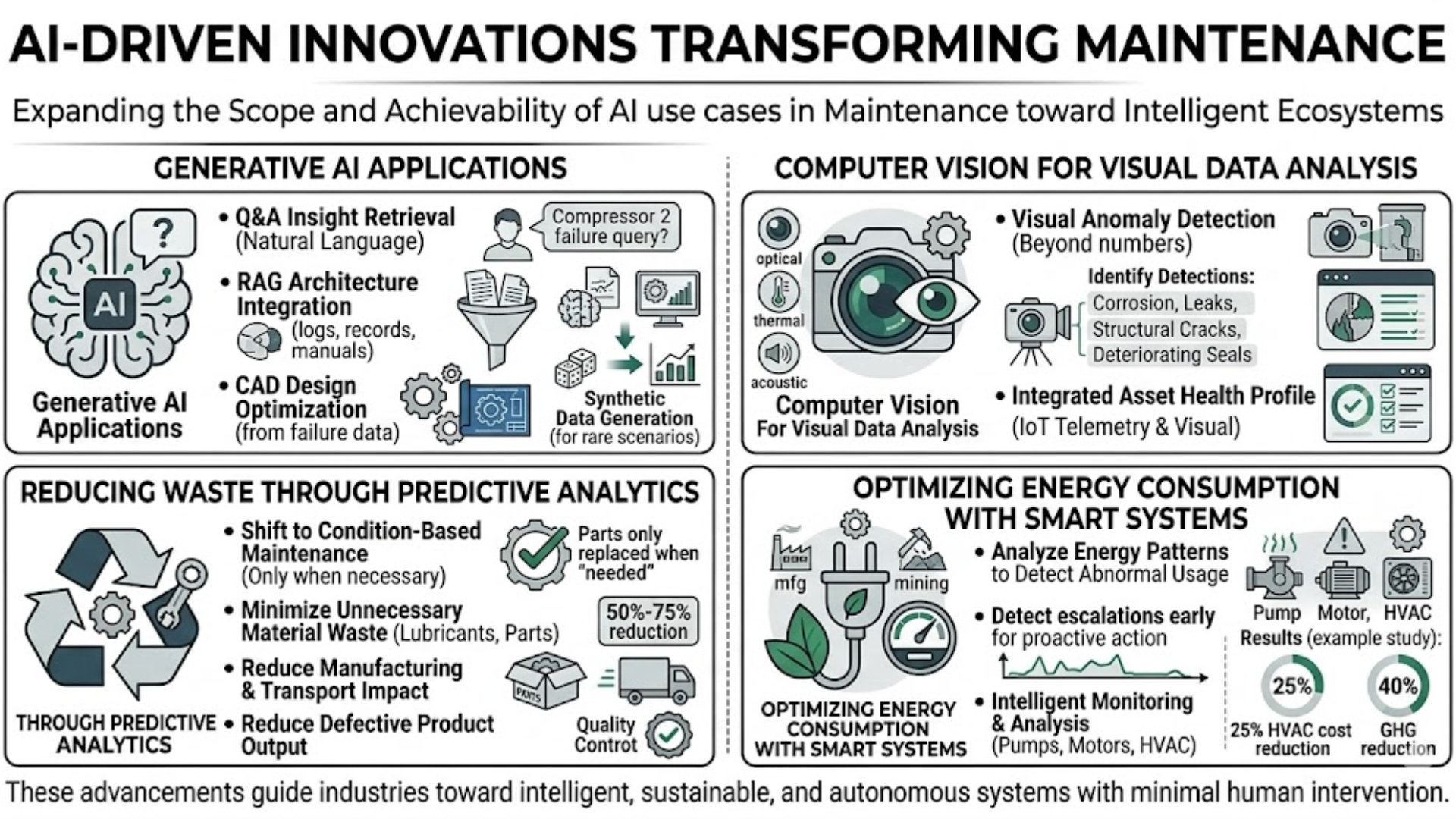
Instead of manually searching through databases or lengthy maintenance manuals, engineers can use natural language queries to retrieve insights instantly. For example, a technician might ask an AI assistant:
“What is the historical failure rate of Compressor 2, and what repair procedures were used in the last three incidents?”
Using Retrieval-Augmented Generation (RAG) architectures, the generative AI system retrieves information directly from internal documentation, maintenance records, and equipment manuals to generate accurate responses.
Beyond information retrieval, generative AI is also being applied to engineering and design optimization. By analyzing historical failure data, AI systems can generate improved CAD designs for replacement components. These redesigned parts may be stronger, lighter, or more durable than the original manufacturer specifications, helping prevent recurring equipment failures.
Another emerging application is the generation of synthetic data for training predictive maintenance models. For new equipment that lacks sufficient historical failure data, generative AI can simulate realistic operational scenarios and rare failure events. This synthetic data improves the accuracy of machine learning models and accelerates the deployment of predictive maintenance solutions.
Computer Vision for Visual Data Analysis
Computer vision technology is another critical innovation expanding the capabilities of an AI use case in maintenance.
Traditional industrial monitoring systems rely primarily on sensor data such as temperature, vibration, or pressure. However, many types of physical damage—such as corrosion, cracks, or leaks—are visible only through visual inspection.
Modern computer vision systems use deep learning models to analyze data from multiple sources, including optical cameras, thermal imaging devices, and acoustic sensors. These systems can continuously monitor industrial environments and automatically detect visual anomalies that might otherwise go unnoticed.
For example, computer vision algorithms can identify:
- Early signs of corrosion on pipelines or equipment surfaces
- Deteriorating seals or gaskets
- Small fluid leaks or abnormal thermal patterns
- Structural cracks in machinery components
By combining visual inspection data with traditional IoT sensor telemetry, organizations can create a more complete and accurate asset health profile. This integrated approach significantly improves anomaly detection accuracy and reduces false alerts.
AI’s Role in Sustainability Efforts
Sustainability has become a critical priority for modern industrial organizations. Increasing environmental regulations, rising energy costs, and corporate sustainability commitments are driving companies to adopt more efficient operational strategies.
Implementing an AI use case in maintenance allows organizations to simultaneously improve operational efficiency and reduce their environmental footprint.
Reducing Waste Through Predictive Analytics
Traditional maintenance strategies often rely on fixed schedules for replacing components such as filters, lubricants, or machine parts. While this approach reduces the risk of equipment failure, it also leads to significant waste because many components are replaced long before the end of their useful life.
An AI use case in maintenance addresses this inefficiency through predictive analytics. Machine learning models analyze equipment performance data to determine the actual health condition of each component. Maintenance interventions are then scheduled only when there is clear evidence of degradation.
This condition-based approach significantly reduces the amount of unnecessary material waste and lowers the environmental impact associated with manufacturing and transporting replacement parts.
In addition, predictive maintenance helps minimize defective product output. By ensuring that equipment operates within optimal performance parameters, AI reduces the likelihood of production errors that result in scrapped materials.
Studies have shown that advanced predictive analytics systems can reduce industrial waste by 50% to 75% by optimizing maintenance timing and preventing equipment-related defects.
Optimizing Energy Consumption with Smart Systems
Heavy industries such as manufacturing, mining, and metallurgy are highly energy-intensive. Even small inefficiencies in machine performance can lead to substantial increases in electricity consumption.
AI plays an important role in optimizing energy usage through intelligent monitoring and predictive analysis.
By analyzing machine performance data alongside energy consumption patterns, AI systems can detect abnormal energy usage that may indicate underlying mechanical issues. For example, a partially blocked pump, an imbalanced motor, or an inefficient HVAC system often consumes significantly more power than normal.
A well-implemented AI use case in maintenance can detect these anomalies early and trigger maintenance actions before energy waste escalates.
In large-scale industrial deployments, AI-driven energy optimization systems have demonstrated significant results. In one implementation involving more than 7,000 industrial machines, an AI analytics platform analyzed over 14 million data points per day, ultimately saving $19 million by reducing excessive energy consumption and avoiding peak-demand utility penalties.
Similarly, AI-driven HVAC optimization systems have achieved up to 25% reductions in energy costs and 40% reductions in greenhouse gas emissions, demonstrating how intelligent maintenance systems can support both operational efficiency and environmental sustainability.
How to Implement AI in Maintenance
Successfully deploying an AI use case in maintenance requires more than simply adopting new technology. Organizations must follow a structured implementation strategy that aligns AI capabilities with real operational challenges. Without proper planning, many AI initiatives fail due to poor data quality, lack of organizational readiness, or unclear business objectives.
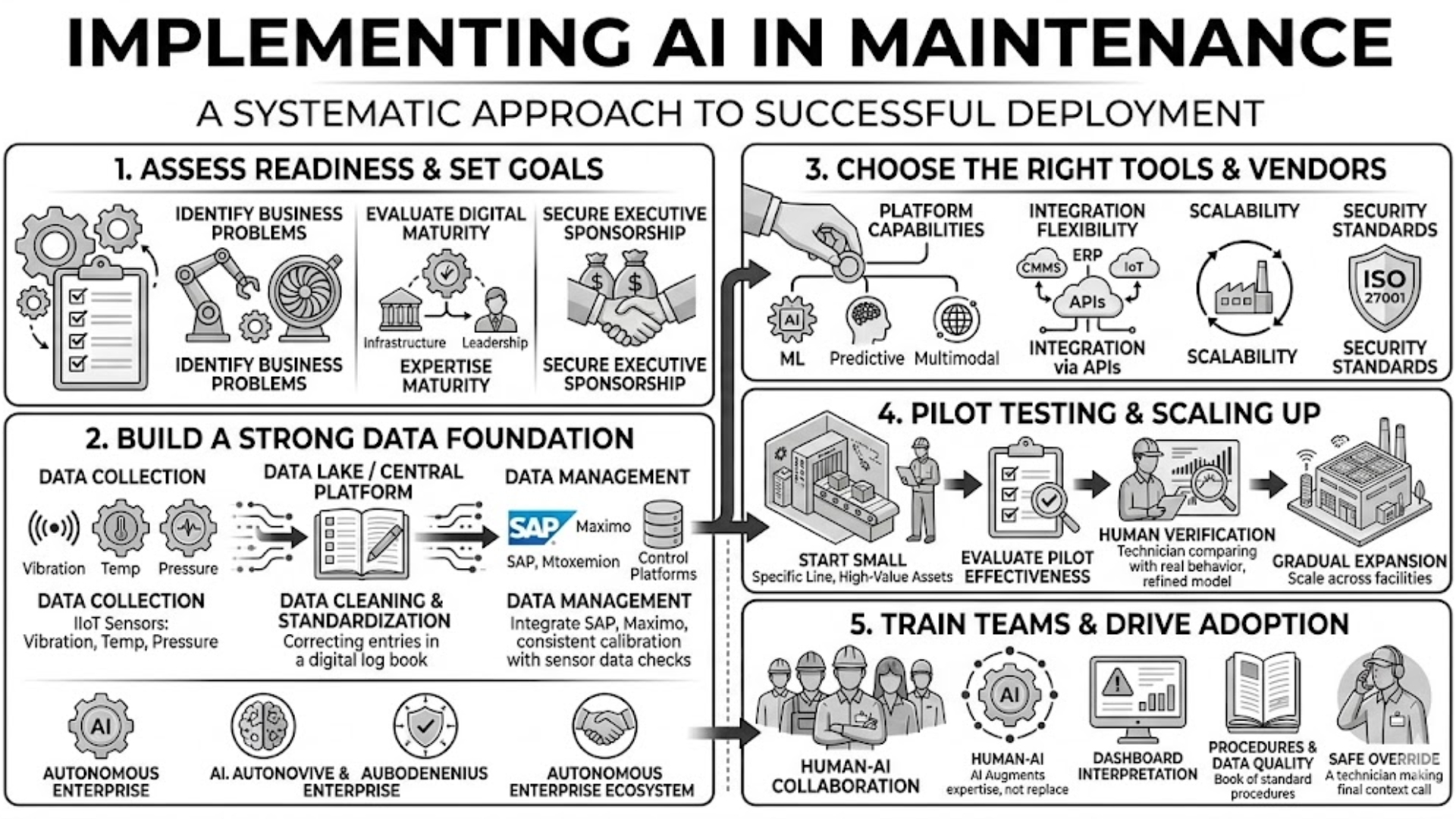
To maximize the value of an AI use case in maintenance, companies should follow a systematic approach that includes readiness assessment, data preparation, technology selection, pilot testing, and workforce training.
Assessing Readiness for AI Adoption
The first step in implementing an AI use case in maintenance is identifying specific business problems that AI can solve.
Instead of introducing AI for experimentation alone, organizations should conduct an operational assessment to determine which assets have the highest impact on productivity and operational risk. Critical equipment that frequently causes downtime or production bottlenecks often represents the most suitable starting point for predictive maintenance initiatives.
In addition to identifying target assets, companies should evaluate their digital maturity level. This includes assessing whether the organization has the necessary data infrastructure, technical expertise, and leadership support required to implement AI solutions effectively.
Executive sponsorship is particularly important. AI adoption often requires significant upfront investment, and strong leadership commitment ensures that projects can continue through early experimentation phases before delivering measurable returns.
Building a Strong Data Foundation
Data quality is one of the most important factors determining the success of any AI use case in maintenance. Machine learning models rely heavily on accurate and consistent operational data to generate reliable predictions.
Organizations should focus on three key areas when building their data infrastructure:
- Data collection: Critical equipment should be equipped with Industrial Internet of Things (IIoT) sensors capable of collecting real-time operational data. These sensors typically monitor parameters such as vibration levels, temperature fluctuations, pressure readings, and machine performance indicators.
- Data cleaning and standardization: Historical maintenance records often contain inconsistent terminology, missing values, or manual entry errors. Before deploying AI models, companies must digitize and standardize these records to ensure they can be used for reliable model training.
- Data management best practices: Organizations should implement centralized data platforms or data lakes that integrate information from multiple operational systems. This includes maintenance management systems, enterprise resource planning tools, and industrial control platforms.
For example, maintenance data from systems such as SAP ERP and IBM Maximo can be integrated with real-time sensor data to create a comprehensive dataset for predictive analytics.
Consistent sensor calibration and monitoring processes are also necessary to ensure that environmental conditions—such as vibration or temperature fluctuations within factory environments—do not distort the collected data.
Choosing the Right Tools and Vendors
Selecting the right technology partner is another critical step when implementing an AI use case in maintenance.
Organizations should evaluate potential vendors based on several technical and operational factors. Important considerations include:
- Platform capabilities: Whether the AI system supports machine learning, predictive analytics, and multimodal data analysis
- Integration flexibility: The ability to integrate with existing systems such as CMMS, ERP platforms, and industrial IoT infrastructure through APIs
- Scalability: Whether the solution can expand across multiple facilities and assets as the organization grows
- Security standards: Compliance with industry security certifications and data protection requirements
For example, platforms developed by companies like IBM, Siemens, and Microsoft provide industrial AI solutions that support predictive maintenance and asset monitoring.
Organizations should also verify vendor reliability by reviewing customer references within their specific industry and confirming compliance with security standards such as ISO 27001.
Pilot Testing and Scaling Up
Launching a full-scale AI deployment across an entire facility from the beginning often leads to unnecessary complexity and higher risk.
A more effective strategy is to start with a pilot program focused on a specific production line or a limited set of high-value assets. This pilot phase allows organizations to evaluate the effectiveness of the AI use case in maintenance before expanding the system across broader operations.
During the pilot stage, maintenance engineers should validate AI predictions by comparing them with real equipment behavior. This human verification process helps refine model accuracy and builds trust among technicians who will rely on AI insights in their daily work.
Once the pilot demonstrates measurable benefits—such as reduced downtime or improved maintenance planning—the organization can gradually scale the AI system across additional assets and facilities.
Training Teams for Successful Implementation
Technology alone cannot ensure the success of an AI use case in maintenance. Human adoption and workforce readiness are equally important.
Maintenance teams should receive training that helps them understand how AI tools support their daily work. Rather than replacing technicians, AI systems are designed to augment human expertise by providing data-driven insights and predictive recommendations.
Training programs should focus on several key areas:
- Interpreting AI dashboards and predictive maintenance alerts
- Understanding data collection and data quality requirements
- Following standardized procedures for responding to AI-generated maintenance recommendations
- Safely overriding AI decisions when human expertise identifies contextual factors not captured by the model
By involving technicians early in the implementation process and providing continuous training, organizations can build trust in AI-driven systems and ensure successful adoption.
Measuring the ROI of an AI Use Case in Maintenance
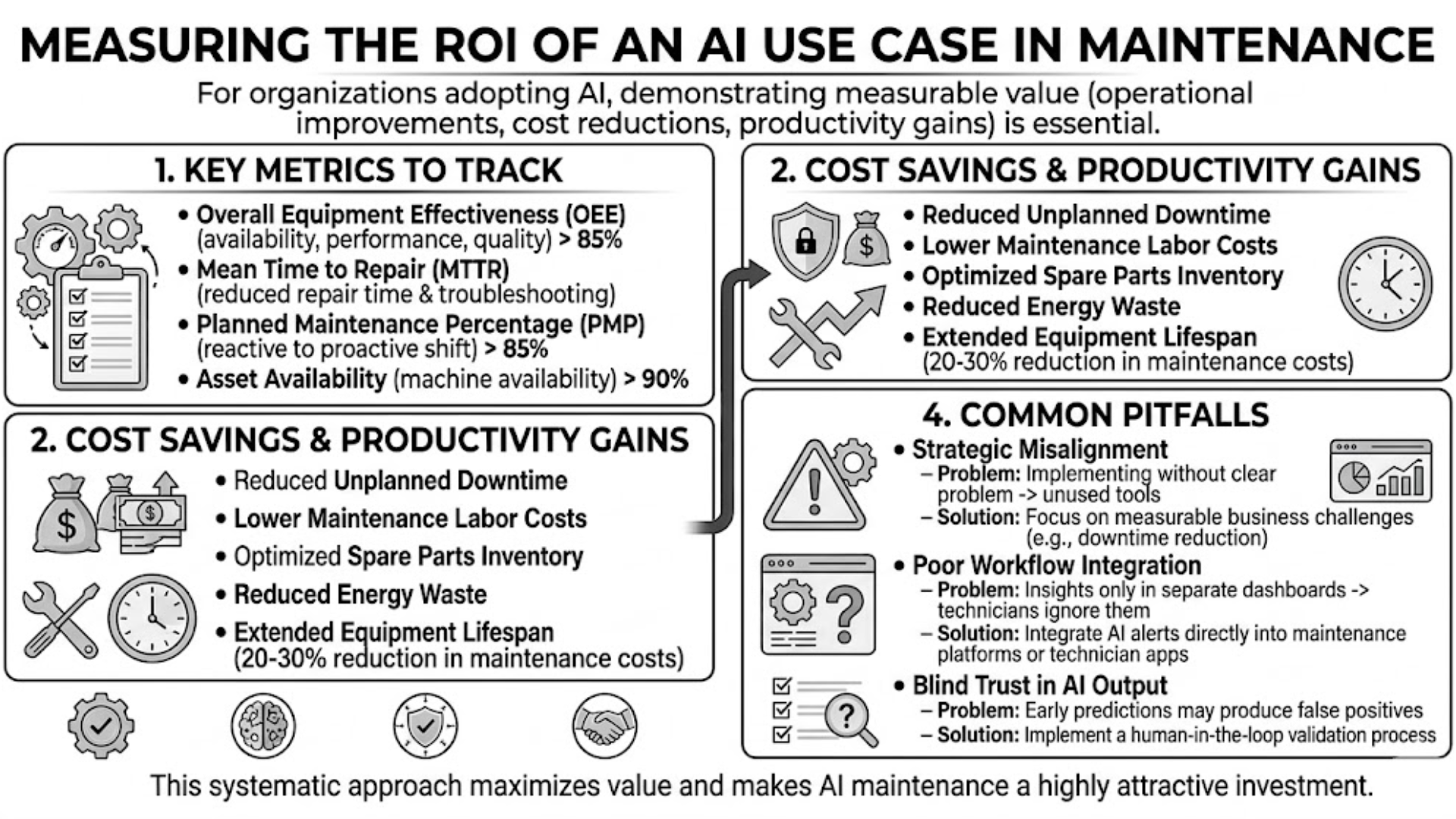
For organizations adopting an AI use case in maintenance, demonstrating measurable business value is essential. Executives typically evaluate AI initiatives based on operational improvements, cost reductions, and productivity gains.
To prove ROI, companies should track key performance indicators before and after implementation to measure the real impact of AI-driven maintenance strategies.
Key Metrics to Track
Several industrial KPIs help measure the success of an AI use case in maintenance:
- Overall Equipment Effectiveness (OEE): Combines availability, performance, and quality. Leading factories aim for OEE above 85%.
- Mean Time to Repair (MTTR): AI-powered diagnostics help reduce repair time and speed up troubleshooting.
- Planned Maintenance Percentage (PMP): Measures the shift from reactive to proactive maintenance, with successful programs reaching 85% or higher.
- Asset Availability: AI predictive maintenance can increase machine availability to over 90%.
These metrics clearly show how AI improves operational reliability.
Cost Savings and Productivity Gains
The financial ROI of an AI use case in maintenance is calculated by comparing operational savings with AI implementation costs.
Typical benefits include:
- Reduced unplanned downtime
- Lower maintenance labor costs
- Optimized spare parts inventory
- Reduced energy waste
- Extended equipment lifespan
Many companies report 20–30% reductions in maintenance costs after implementing predictive maintenance solutions.
Real-World Results
Organizations that deploy predictive maintenance through platforms like IBM Maximo or SAP ERP often see strong returns.
In many cases, companies achieve:
- Up to 70% fewer unexpected equipment failures
- 40% longer asset lifespans
- Average ROI exceeding 200% over the system lifecycle
These outcomes make AI maintenance strategies a highly attractive investment.
Common Pitfalls in AI Maintenance Implementation
Despite the benefits, some AI use case in maintenance projects fail due to avoidable mistakes.
Strategic misalignment
Implementing AI without a clear operational problem often results in unused tools.
Solution: Focus AI initiatives on measurable business challenges such as downtime reduction.
Poor workflow integration
If AI insights exist only in separate dashboards, technicians may ignore them.
Solution: Integrate AI alerts directly into maintenance platforms or technician apps.
Blind trust in AI output
Early AI predictions may produce false positives.
Solution: Implement a human-in-the-loop validation process before executing major maintenance decisions.
Future Trends of AI Use Case in Maintenance
Over the next decade, the AI use case in maintenance will evolve from predictive analytics to increasingly autonomous maintenance systems.
The Rise of Autonomous Maintenance
One key technology driving this shift is the Digital Twin, which creates real-time virtual models of equipment. These models allow AI systems to simulate machine behavior and detect potential failures before they occur.
At the same time, Edge AI will enable machines to process data locally, allowing real-time responses to operational anomalies without relying on cloud processing.
Future AI maintenance ecosystems may include:
- Automated repair scheduling
- Predictive spare parts ordering
- Robotic inspection systems
- Real-time monitoring of industrial assets
Preparing for the Future
To stay competitive, organizations must treat AI as core operational infrastructure rather than a temporary experiment.
Companies should focus on:
- Building strong industrial data systems
- Implementing scalable AI platforms early
- Training maintenance teams to work alongside AI technologies
As AI adoption accelerates, businesses that combine data infrastructure, skilled teams, and predictive maintenance systems will gain a significant competitive advantage.
Conclusion
Artificial intelligence is transforming how organizations approach maintenance. By applying technologies like machine learning and predictive analytics, businesses can move beyond reactive repairs toward smarter, data-driven maintenance strategies.
For organizations considering AI adoption, the first step is to evaluate existing maintenance data and identify critical assets where downtime has the greatest impact. Starting with a focused pilot program and scaling gradually allows businesses to validate ROI while building internal expertise.
Companies that adopt AI-driven maintenance early will be better positioned to improve reliability, efficiency, and long-term competitiveness.