
Financial services today run on APIs. From digital payments and mobile banking to fraud detection and real-time credit scoring, APIs are the backbone of modern BFSI infrastructure. Yet as API ecosystems grow, ensuring reliability, security, and performance becomes increasingly complex.
API testing platforms help BFSI organizations ensure APIs perform as expected under real-world conditions while maintaining strict regulatory compliance. With increasing adoption of API-first architectures, testing is no longer optional — it is a strategic requirement.
TL;DR
- APIs power core banking, payments, insurance, and fintech ecosystems
- API testing platforms improve reliability, performance, and compliance
- BFSI organizations require enterprise-grade security and scalability testing
- Choosing the right QA partner significantly reduces integration and operational risks
What Are API Testing Platforms?
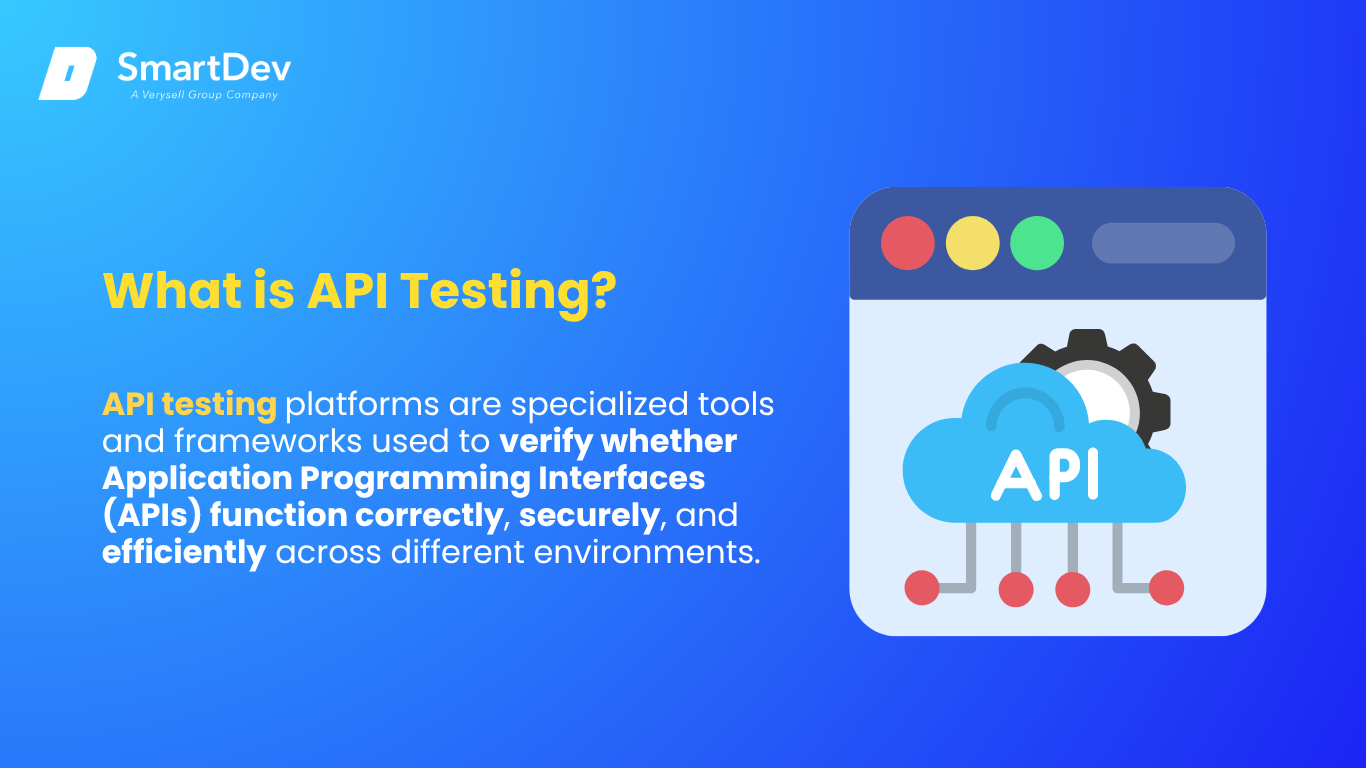
API testing platforms are specialized tools and frameworks used to verify whether Application Programming Interfaces (APIs) function correctly, securely, and efficiently across different environments. APIs act as the communication bridge between systems, enabling applications to exchange data and trigger actions in real time. In the BFSI sector, APIs support critical services such as payment processing, identity verification, credit scoring, and account management. Because these services directly affect financial transactions and customer trust, ensuring API reliability is essential.
 API Testing vs UI Testing
 API Testing vs UI Testing
Unlike UI testing, which focuses on how applications appear and behave for end users, API testing evaluates the core business logic and system performance behind the interface. It validates how systems communicate with each other, ensuring data flows correctly across applications, databases, and third-party services.
API testing allows teams to detect defects earlier in the development lifecycle, reducing the cost and complexity of fixing issues later. This is particularly important in BFSI environments, where errors may lead to financial loss, regulatory penalties, or damaged customer trust.
Common Types of API Testing
API testing platforms typically support multiple testing methods to ensure system reliability and resilience:
- Functional testing verifies that API endpoints return accurate responses based on defined requests
- Performance testing measures response speed, stability, and scalability under different load conditions
- Security testing identifies vulnerabilities such as broken authentication, injection risks, or data leaks
- Integration testing ensures APIs work smoothly across microservices, legacy systems, and third-party platforms
- Regression testing confirms that system updates do not negatively affect existing functionality
Together, these testing layers help maintain consistency and reliability across complex financial ecosystems.
Role of API-First Architecture in Modern Enterprises
As digital ecosystems grow more complex, many organizations adopt an API-first strategy to improve scalability and interoperability. API-first design prioritizes the development of standardized APIs before building applications, enabling faster integrations and reducing long-term technical debt.
Organizations modernizing legacy infrastructure often rely on principles explained in API-first AI integration to existing systems without disruption, where APIs enable new capabilities without interrupting existing operations. Likewise, How API-first is shaping modern business demonstrates how API-driven ecosystems improve agility and accelerate innovation across industries.
Why API Testing Matters for System Reliability
Robust API testing helps organizations ensure systems remain stable across distributed environments. It reduces downtime risks, improves interoperability between services, and ensures consistent performance under real-world conditions.
According to IBM’s overview of API testing, structured API validation plays a key role in maintaining reliability, improving service availability, and supporting secure data exchange across enterprise platforms.
For BFSI organizations managing high transaction volumes and sensitive financial data, API testing platforms provide the technical foundation needed to build secure, scalable, and future-ready digital services.
Why API Efficacy Matters in the BFSI Sector
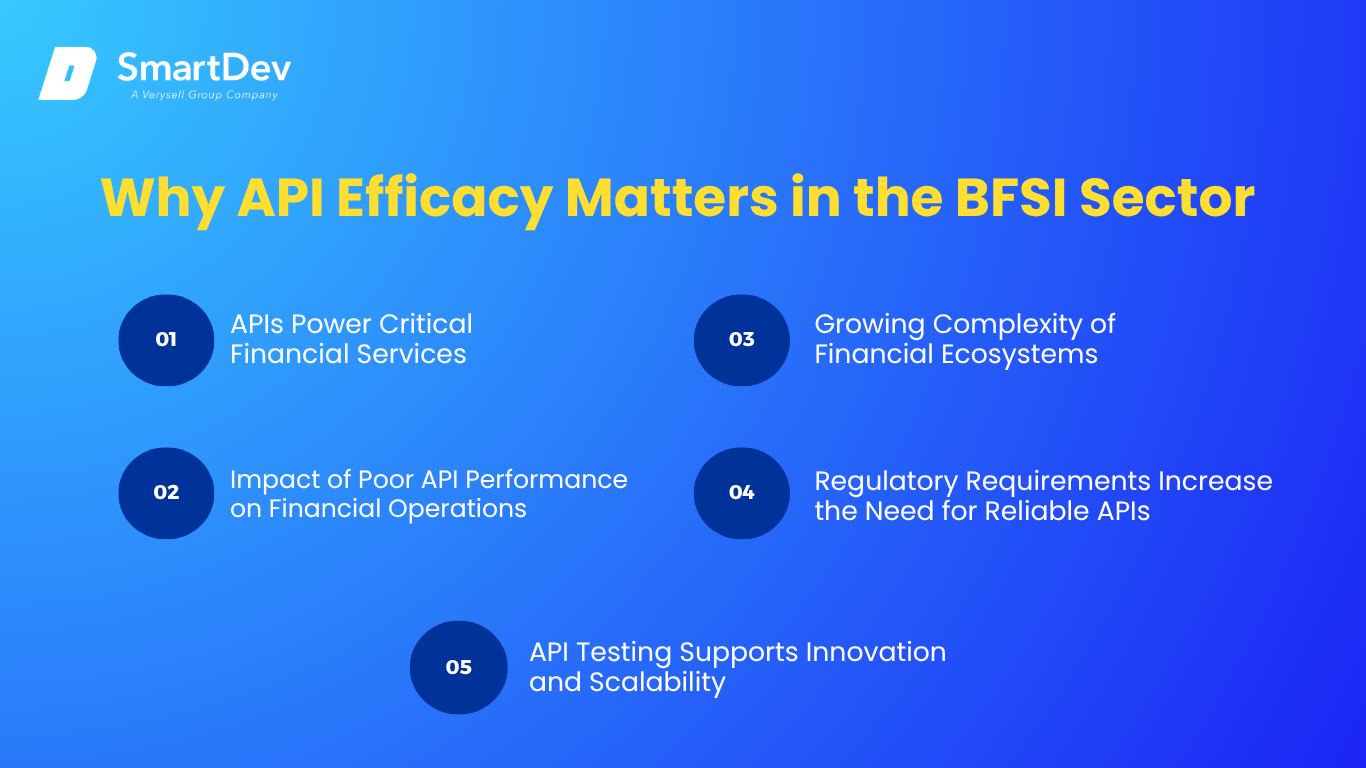
The BFSI sector operates in a high-risk, highly regulated environment where even minor API failures can result in financial losses, compliance violations, or reputational damage. APIs act as the digital infrastructure connecting banking platforms, payment services, insurance systems, and fintech ecosystems. When APIs fail to perform reliably, the entire service experience can be disrupted.
Ensuring high API efficacy allows financial institutions to maintain secure transactions, deliver seamless customer experiences, and meet strict regulatory requirements.
APIs Power Critical Financial Services
 APIs Power Critical Financial Services
Modern financial services rely heavily on APIs to deliver real-time functionality across multiple channels. APIs enable communication between mobile apps, internal databases, third-party fintech providers, and cloud-based systems.
Common BFSI use cases supported by APIs include:
- Digital banking platforms that allow customers to transfer funds and manage accounts
- Payment gateways that process real-time transactions securely
- Open banking integrations that allow secure sharing of financial data
- Insurance claim processing systems that automate verification workflows
- Fraud detection engines that analyze behavioral patterns instantly
- Financial data aggregation platforms that consolidate information across providers
As financial services continue to digitize, the number of APIs supporting these services continues to grow, increasing system complexity and integration dependencies.
Impact of Poor API Performance on Financial Operations
Poor API performance can directly affect operational efficiency and customer satisfaction. Because financial transactions often occur in real time, delays or inaccuracies can lead to significant disruptions.
Common risks associated with ineffective APIs include:
- Delayed transactions that interrupt customer payments or transfers
- Incorrect financial calculations that affect reporting accuracy
- Data exposure risks caused by weak authentication mechanisms
- Service downtime that prevents customers from accessing banking services
- Regulatory non-compliance resulting from inadequate security controls
Even short service interruptions can reduce customer confidence, particularly in industries where reliability is essential.
Growing Complexity of Financial Ecosystems
Financial institutions increasingly rely on distributed architectures built on microservices, cloud environments, and third-party integrations. APIs serve as the connectors between these systems, ensuring accurate and secure data exchange.
However, as systems become more interconnected, maintaining consistent API performance becomes more challenging. Changes in one system may affect multiple dependent services, increasing the risk of integration failures.
Continuous API testing helps organizations detect performance issues early and ensure compatibility across systems.
Regulatory Requirements Increase the Need for Reliable APIs
BFSI organizations must comply with strict regulatory standards that govern data protection and transaction security. Requirements such as PCI DSS, PSD2, GDPR, and ISO 20022 require organizations to maintain strong security and data validation processes.
API testing supports compliance by ensuring that authentication, encryption, and data handling processes meet regulatory expectations. Without proper testing, vulnerabilities may expose sensitive financial information or create audit risks.
Organizations looking to strengthen testing frameworks can explore best practices in software testing methodologies for BFSI, which highlights strategies for maintaining compliance while improving software quality.
API Testing Supports Innovation and Scalability
Reliable APIs enable financial institutions to introduce new digital services more quickly while maintaining operational stability. As organizations adopt AI, open banking capabilities, and real-time analytics, APIs must support increased data volume and processing complexity.
API testing platforms help ensure systems remain stable as new features are introduced. Automated testing frameworks allow teams to validate performance continuously, reducing the risk of system failures.
Ultimately, API efficacy is not only a technical requirement but also a strategic capability that allows BFSI organizations to innovate confidently, scale services efficiently, and maintain customer trust in an increasingly competitive digital landscape.
Common API Challenges Faced by BFSI Firms
Financial institutions operate complex digital ecosystems where APIs must remain secure, reliable, and compliant. Below are the most common challenges BFSI organizations face when managing APIs.
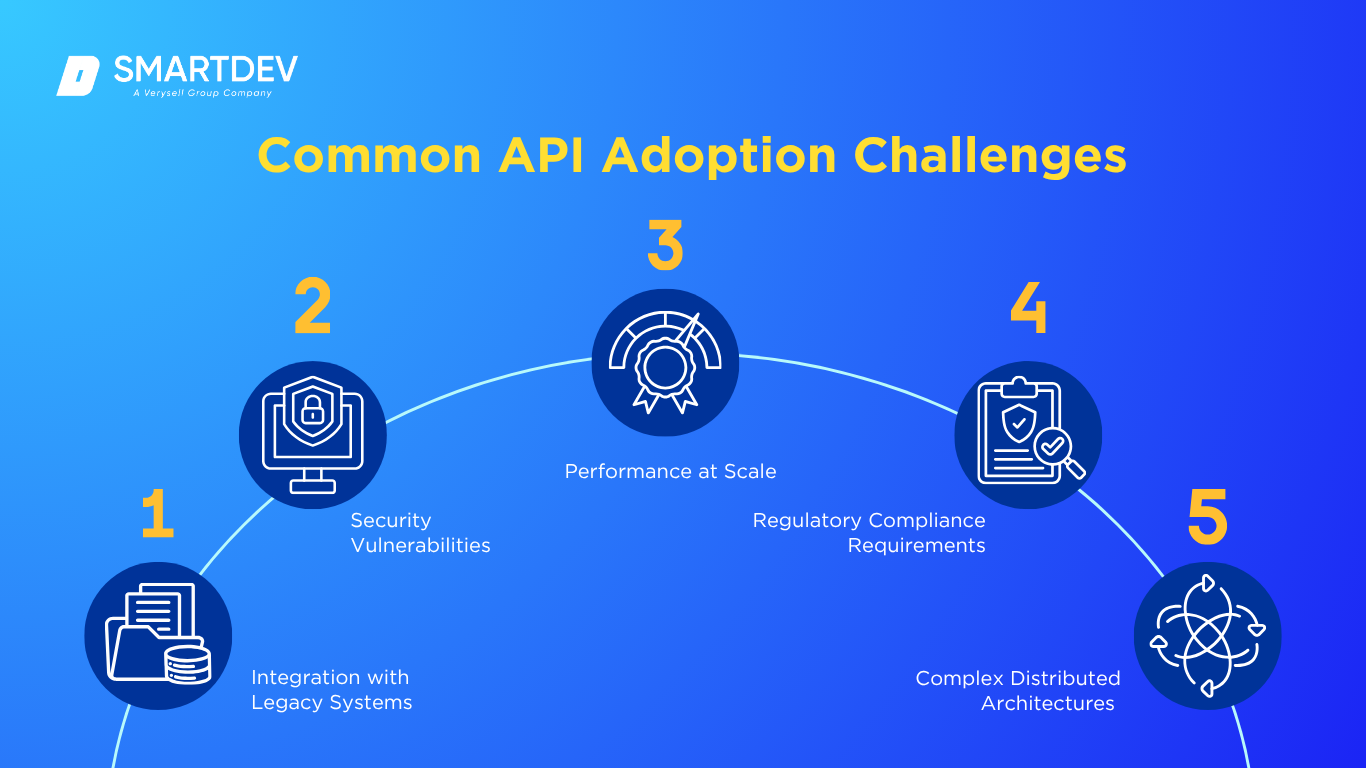
1. Integration with Legacy Systems
 1. Integration with Legacy Systems
Many banks and insurers still rely on legacy core systems that were not designed for modern API architectures. Connecting older infrastructure with cloud-native applications requires careful validation to ensure compatibility and data accuracy. Without proper integration testing, organizations risk service disruptions or inconsistent data flows.
2. Security Vulnerabilities
APIs expose sensitive financial data, making them frequent targets for cyberattacks. Weak authentication, poor encryption, or improper access controls can lead to data breaches or unauthorized transactions. Security testing helps prevent risks such as injection attacks, broken authentication, and data exposure. Learn more in best practices for automated security testing in BFSI.
3. Performance at Scale
Financial APIs must handle high transaction volumes without latency or downtime. Poorly optimized APIs may slow down payment processing, digital banking services, or trading platforms. Performance testing ensures APIs remain stable and responsive during peak usage periods.
4. Regulatory Compliance Requirements
BFSI organizations must comply with strict standards such as PSD2, PCI DSS, GDPR, and ISO 20022. APIs must ensure secure data handling, strong authentication, and accurate reporting. Continuous testing helps organizations maintain compliance and avoid legal or financial penalties.
5. Complex Distributed Architectures
Modern financial systems often involve microservices, cloud platforms, and third-party integrations. Managing multiple interconnected APIs increases the risk of compatibility issues and service failures. According to TestingXperts’ API testing insights, structured testing is essential to reduce integration risks and maintain business continuity.
Key Features to Look for in API Testing Platforms for BFSI
Selecting the right API testing platform is critical for ensuring reliability, security, and scalability in BFSI environments. Financial institutions require testing tools that can support complex architectures, meet strict compliance requirements, and maintain high performance under heavy workloads. Below are the key capabilities organizations should evaluate when choosing an API testing platform.
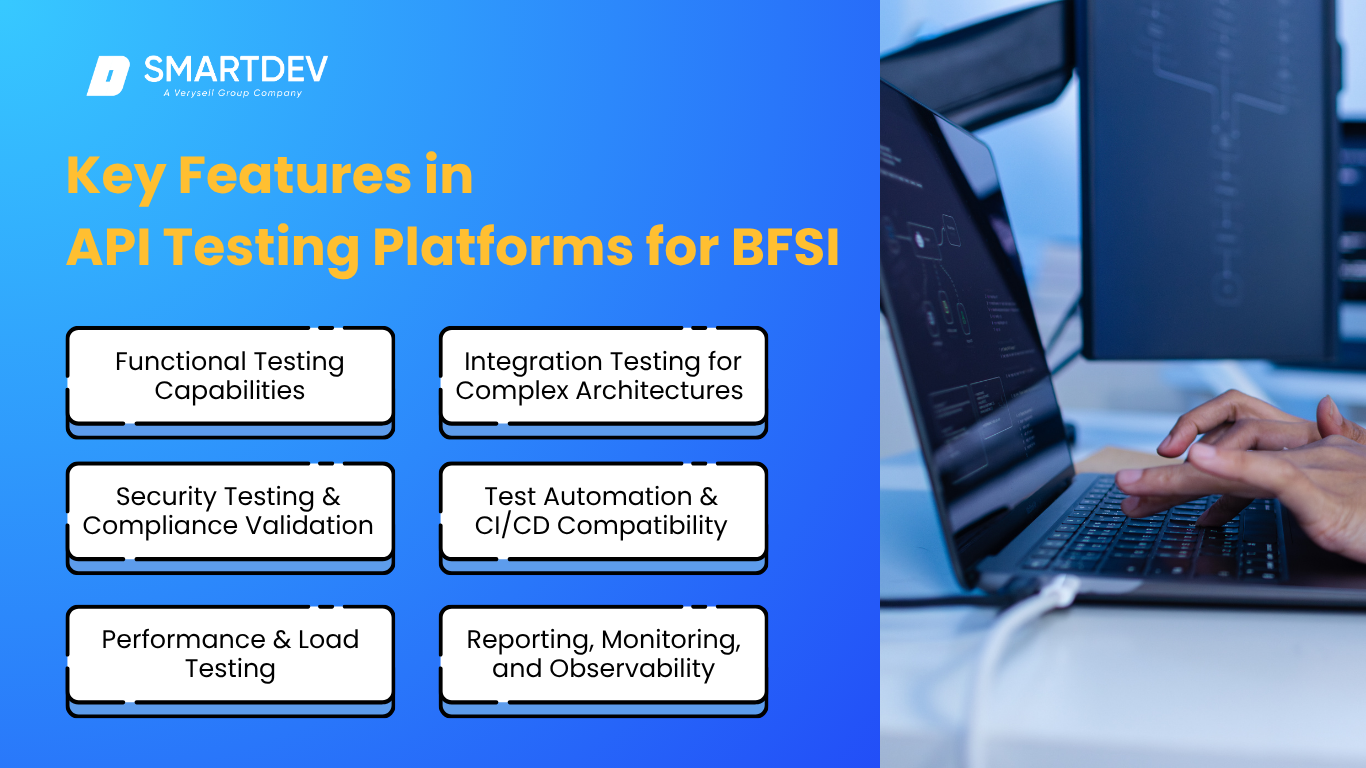
1. Functional Testing Capabilities
 1. Functional Testing Capabilities
Functional testing ensures APIs return accurate and consistent responses based on defined requests. This includes validating endpoints, input parameters, output formats, and business logic. Strong functional testing capabilities help detect errors early and ensure APIs behave correctly across different scenarios.
2. Security Testing & Compliance Validation
Security is a top priority in financial services. API testing platforms should identify vulnerabilities such as weak authentication, improper authorization, and data exposure risks. Built-in compliance validation helps organizations meet regulatory standards such as GDPR and PCI DSS. Implementing security-focused QA strategies supports safe data exchange across systems.
3. Performance & Load Testing
Financial APIs must handle high transaction volumes without performance degradation. Performance and load testing simulate real-world traffic conditions to evaluate response times, system stability, and scalability. These capabilities help identify bottlenecks before deployment and ensure consistent service availability.
4. Integration Testing for Complex Architectures
BFSI systems often involve multiple microservices, cloud platforms, and third-party vendors. Integration testing ensures APIs function correctly across interconnected environments. This reduces compatibility issues and ensures accurate data exchange between internal and external systems.
5. Test Automation & CI/CD Compatibility
Automation allows teams to execute tests continuously throughout the development lifecycle. API testing platforms that integrate with CI/CD pipelines help accelerate release cycles while maintaining software quality. Automation also reduces manual effort and improves testing consistency.
6. Reporting, Monitoring, and Observability
Advanced reporting and observability features provide visibility into API performance, error rates, and system behavior. These insights help teams quickly identify issues, optimize performance, and maintain system reliability. Strong monitoring capabilities support proactive issue resolution and long-term scalability.
Comparison of Leading API Testing Platforms for BFSI
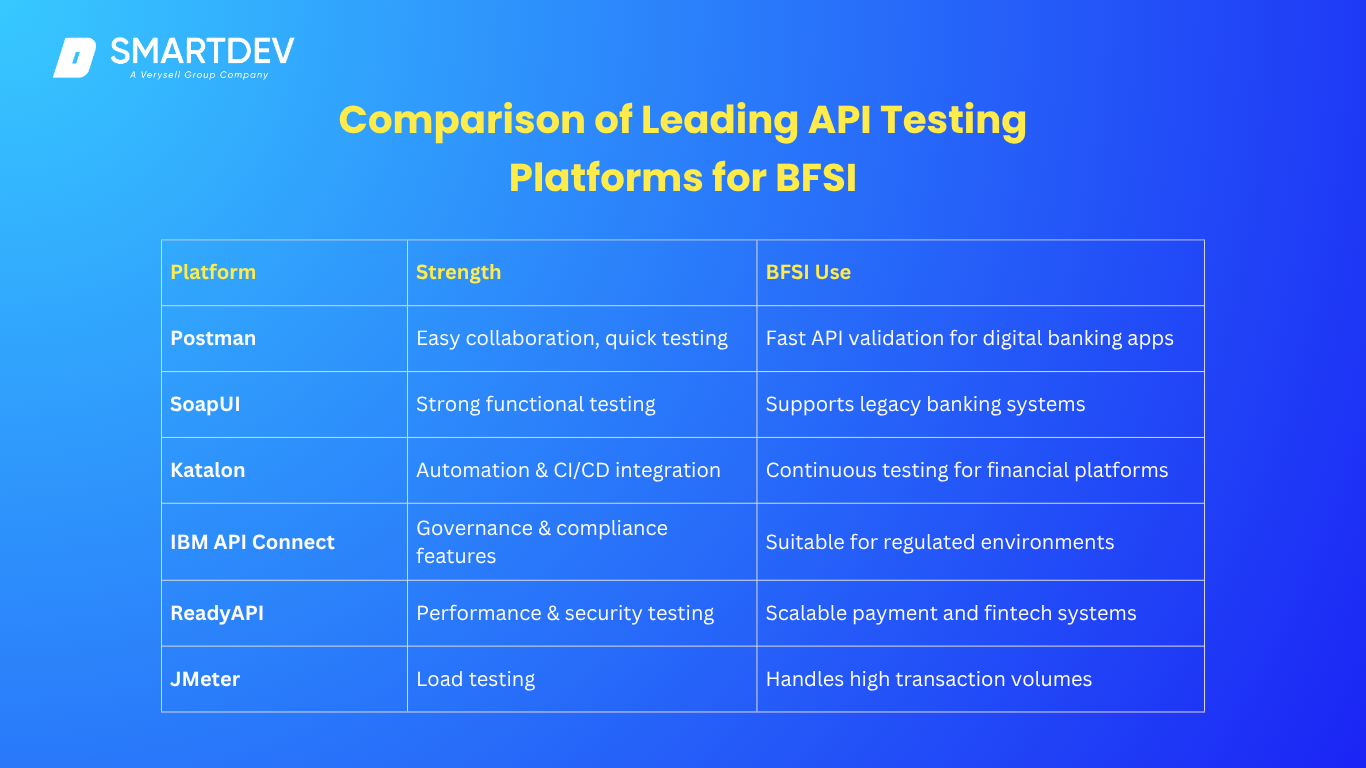
Choosing the right API testing platform is essential for BFSI organizations aiming to ensure high system reliability, regulatory compliance, and seamless integration across complex digital ecosystems. Each testing platform offers different strengths depending on technical requirements, team maturity, and infrastructure complexity. Below is a comparison of widely used API testing tools that support financial services environments.
1. Postman – Collaborative API Testing for Agile Teams
 1. Postman – Collaborative API Testing for Agile Teams
Postman is one of the most widely adopted API testing platforms due to its intuitive interface and strong collaboration features. It allows development and QA teams to easily create, share, and manage API test collections across environments.
For BFSI organizations, Postman enables quick validation of API responses and helps ensure consistency across distributed services. Its collaboration features make it suitable for teams working on digital banking applications or fintech products that evolve frequently.
Learn more about modern API-first environments that benefit from collaborative testing in How API-first is shaping modern business.
2. SoapUI – Advanced Functional Testing for Enterprise Systems
SoapUI is known for its strong functional testing capabilities and ability to handle complex enterprise-level APIs. It supports both REST and SOAP services, making it highly suitable for organizations working with legacy infrastructure.
Many financial institutions still operate on legacy systems that require compatibility with modern API services. SoapUI helps validate data accuracy, response logic, and interoperability between older platforms and newer microservices.
Because BFSI ecosystems often include legacy core banking systems, SoapUI is frequently used to ensure stable communication between traditional and modern architectures.
3. Katalon – Automation-First Testing for CI/CD Pipelines
Katalon focuses on automation-driven testing and integrates well with CI/CD pipelines. Its automation-first approach allows teams to run continuous tests throughout the development lifecycle, helping detect defects early.
Katalon supports scalable testing strategies, making it suitable for organizations that prioritize faster release cycles while maintaining quality assurance standards. BFSI firms benefit from automated regression testing when frequently updating financial applications or integrating new features.
Organizations implementing automation testing strategies can explore insights in automation testing in BFSI environments.
4. IBM API Connect – Enterprise-Grade Governance and Compliance
IBM API Connect provides enterprise-level API lifecycle management, including built-in testing tools designed for regulated industries. It offers strong governance features, security validation, and compliance monitoring capabilities.
For BFSI organizations operating under strict regulatory frameworks, IBM API Connect helps ensure APIs meet standards related to data privacy and transaction security. Its testing features support consistent API performance while maintaining policy enforcement.
More details about enterprise API testing capabilities can be found in IBM’s API testing overview.
5. ReadyAPI – Performance and Security Testing for Scalable Systems
ReadyAPI offers advanced capabilities for performance testing, security validation, and functional automation. It is designed for teams managing large-scale API ecosystems that require consistent reliability.
ReadyAPI enables testers to simulate real-world traffic loads, detect vulnerabilities, and ensure APIs perform efficiently across different environments. BFSI organizations use ReadyAPI to validate scalability for payment systems, insurance platforms, and financial analytics tools.
6. JMeter – Load Testing for High-Transaction Financial APIs
JMeter is widely used for load and stress testing, helping organizations evaluate API performance under heavy workloads. It allows teams to simulate large volumes of concurrent users and analyze how APIs behave under pressure.
Financial services platforms must ensure stable performance during peak usage periods, such as payment processing spikes or trading activity surges. JMeter helps identify performance bottlenecks early, reducing the risk of downtime.
Testing platforms capable of handling high transaction volumes are critical for maintaining service continuity in digital financial environments.
Explore how SmartDev partners with BFSI teams through a focused AI sprint to validate use cases, align stakeholders, and define a clear path forward before AI development begins.
SmartDev helps BFSI organizations clarify AI use cases and assess feasibility, enabling confident decisions and reducing risks before committing to AI development.
Learn how SmartDev accelerates AI initiatives, ensuring rapid deployment and reduced time to market.
Strengthen Your BFSI Security Testing with UsHow API Testing Enhances API Efficacy in BFSI
API testing plays a critical role in ensuring financial systems operate reliably, securely, and efficiently. As BFSI organizations continue expanding digital services, APIs must handle complex integrations, large transaction volumes, and strict regulatory requirements.
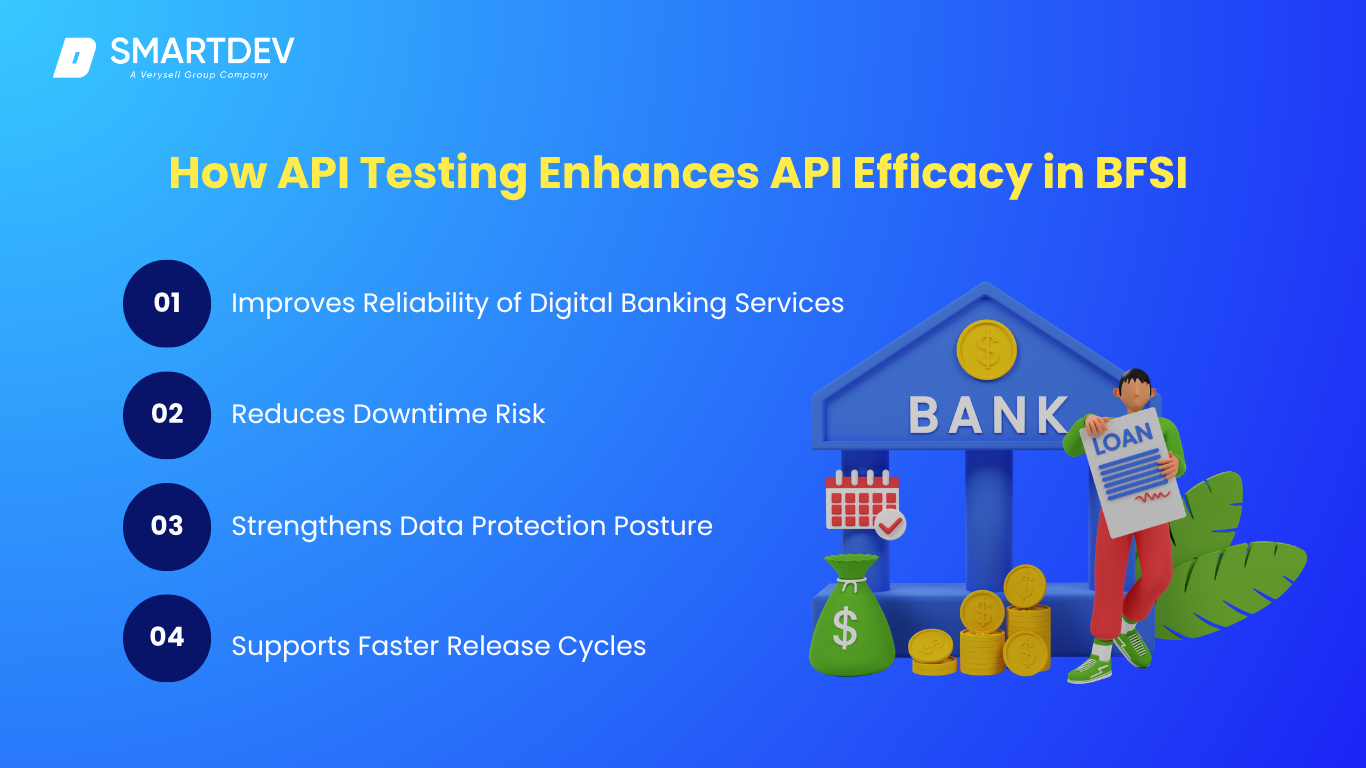
1. Improves Reliability of Digital Banking Services
 1. Improves Reliability of Digital Banking Services
Digital banking platforms rely heavily on APIs to support core functionalities such as payments, account management, identity verification, and transaction processing. Any failure in API communication can interrupt services and negatively impact customer trust.
API testing validates that endpoints respond accurately across different conditions, ensuring systems remain stable even when processing complex transactions. Reliable APIs allow financial institutions to deliver consistent digital experiences and maintain customer confidence in online services.
Organizations implementing API-first architectures often achieve higher reliability due to standardized integration approaches. Learn more about how modern architectures support seamless connectivity in API-first AI integration to existing systems.
2. Reduces Downtime Risk
System downtime can disrupt financial transactions, delay payment processing, and affect customer experience. API testing helps identify performance bottlenecks and system vulnerabilities before deployment.
Load testing and stress testing simulate real-world usage conditions, allowing teams to detect potential failures early. Continuous testing ensures APIs remain stable even during peak usage periods, such as high trading activity or seasonal transaction spikes.
Reducing downtime risk is particularly important in BFSI environments where service availability directly affects business performance and brand reputation.
3. Strengthens Data Protection Posture
Financial APIs process highly sensitive data, including account information, payment credentials, and personal identification records. API testing helps ensure secure authentication, authorization, and data encryption mechanisms function correctly.
Security testing identifies vulnerabilities that could expose data or allow unauthorized access. Strong API security validation supports compliance with regulations such as GDPR and PCI DSS, reducing legal and operational risks.
Organizations can explore detailed security-focused QA strategies in best practices for automated security testing in BFSI.
4. Supports Faster Release Cycles
Modern financial institutions continuously release new digital features to remain competitive. API testing platforms that integrate with CI/CD pipelines enable teams to validate functionality automatically throughout the development lifecycle.
Automation reduces manual testing effort and allows teams to detect issues earlier, accelerating deployment timelines without compromising quality. Faster release cycles help BFSI organizations respond quickly to market demands while maintaining system reliability.
A broader overview of automated testing approaches can be found in automation testing in BFSI.
5. Enables Scalable AI-Driven Services
As financial institutions adopt AI-powered analytics, fraud detection, and personalization engines, APIs must support increasingly complex data processing requirements. API testing ensures infrastructure can scale efficiently as new AI-driven capabilities are introduced.
Well-tested APIs enable stable integration between AI models, data pipelines, and enterprise platforms. This allows organizations to deploy intelligent services with confidence while maintaining consistent performance.
Learn more about considerations for enterprise AI integration in OpenAI vs Claude vs fine-tuning for enterprise compliance.
Best Practices for API Testing in BFSI Environments
Effective API testing in BFSI requires more than simply validating endpoints. Financial institutions must ensure APIs remain secure, scalable, and compliant across complex digital ecosystems. The following best practices help organizations strengthen API reliability while reducing operational and regulatory risks.
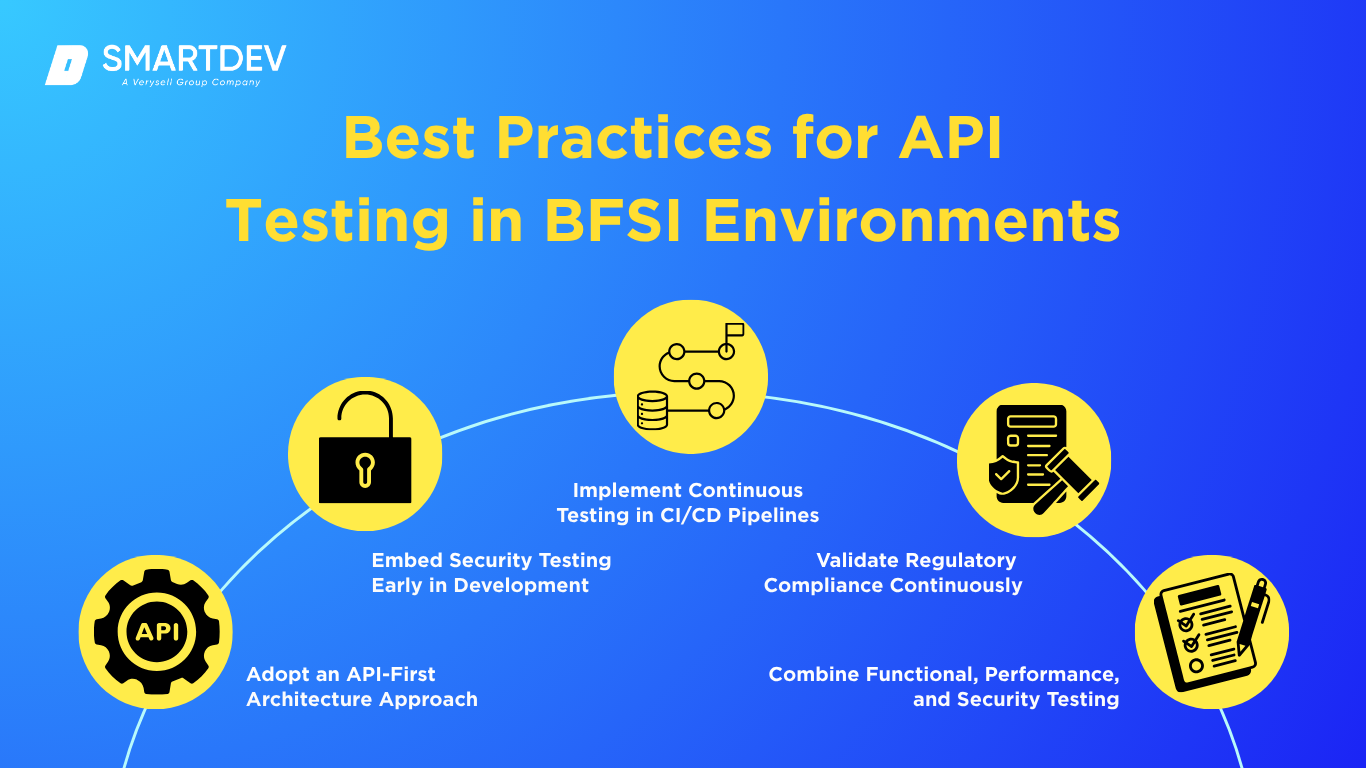
1. Adopt an API-First Architecture Approach
 1. Adopt an API-First Architecture Approach
An API-first approach ensures APIs are designed as foundational building blocks before applications are developed. This strategy improves consistency across systems, simplifies integrations, and supports long-term scalability.
In BFSI environments, where multiple platforms must interact seamlessly, API-first design enables faster deployment of new services such as mobile banking features, payment gateways, and data-sharing capabilities. Standardized API structures also reduce technical debt and improve maintainability.
Organizations modernizing legacy infrastructure often leverage API-first strategies to integrate new technologies without disrupting existing operations, as explained in API-first AI integration to existing systems without disruption. This approach allows financial institutions to gradually evolve their architecture while maintaining service continuity.
2. Embed Security Testing Early in Development
Security should be integrated into every stage of the API development lifecycle. Embedding security testing early helps identify vulnerabilities before they become costly risks.
Financial APIs must protect sensitive data such as transaction details, personal identity information, and payment credentials. Early validation of authentication protocols, encryption methods, and access controls reduces the likelihood of breaches.
Shift-left security testing helps development teams detect issues earlier and strengthen overall system resilience. Organizations can explore recommended approaches in best practices for automated security testing in BFSI, which highlights techniques for improving API protection.
3. Implement Continuous Testing in CI/CD Pipelines
Continuous integration and continuous delivery (CI/CD) pipelines allow organizations to release updates more frequently while maintaining quality assurance standards. API testing platforms integrated into CI/CD workflows enable teams to automatically validate performance, functionality, and security at every stage of development.
Continuous testing reduces manual effort and ensures consistent validation across different environments. This approach helps BFSI firms deliver digital features faster without compromising reliability.
A broader overview of automation testing approaches can be found in automation testing in BFSI environments.
4. Validate Regulatory Compliance Continuously
Financial institutions must comply with regulatory frameworks such as PCI DSS, PSD2, GDPR, and ISO 20022. API testing helps ensure compliance requirements are consistently met as systems evolve.
Continuous validation ensures data handling, authentication, and transaction processes align with regulatory expectations. Automated compliance checks reduce the risk of violations and simplify audit preparation.
Organizations evaluating QA partners often prioritize providers with strong compliance expertise. Key selection considerations are discussed in how to select the right BFSI testing partner.
5. Combine Functional, Performance, and Security Testing
Comprehensive API testing strategies should combine multiple testing approaches rather than relying on a single method. Functional testing ensures APIs behave correctly, performance testing validates system scalability, and security testing protects sensitive data.
Combining these testing layers provides a holistic view of system performance and helps organizations identify risks early. Integrated testing approaches improve reliability, reduce downtime, and ensure APIs support evolving business requirements.
More insights into testing methodologies can be explored in software testing methodologies and best practices for BFSI.
Why BFSI Firms Choose SmartDevfor API Testing
Financial institutions require a technology partner that understands both the technical complexity of APIs and the strict regulatory environment of the BFSI sector. SmartDev combines domain expertise, AI-driven accelerators, and compliance-focused QA practices to help organizations deliver reliable and secure API ecosystems.
 Deep BFSI Expertise with API-First Integration Approach
SmartDev brings strong domain knowledge in BFSI systems, enabling teams to design and validate APIs that meet industry-specific requirements. With experience supporting digital banking, fintech platforms, and financial data systems, SmartDev understands the importance of reliability, security, and interoperability.
Through an API-first integration strategy, SmartDev helps organizations modernize legacy systems without disrupting existing operations. This approach supports scalable architecture design while ensuring seamless connectivity across distributed environments. Learn more about SmartDev’s approach to modernization in API-first AI integration to existing systems without disruption.
AI-Powered Testing Accelerators for Faster and More Reliable Delivery
SmartDev leverages AI-powered accelerators to enhance testing efficiency and improve defect detection accuracy. Automated regression testing frameworks enable teams to validate API functionality continuously, reducing manual effort and accelerating release cycles.
AI-driven testing capabilities allow organizations to scale QA processes while maintaining consistent performance across complex API ecosystems. These accelerators support faster deployment timelines and improve overall system reliability.
Explore how SmartDev applies automation to financial testing environments in automation testing in BFSI: accelerating quality at scale.
Compliance-Aware Security Testing and Scalable Architecture Support
SmartDev’s QA workflows prioritize security validation and regulatory compliance, ensuring APIs meet industry standards such as PCI DSS, GDPR, and PSD2. Security-focused testing frameworks help detect vulnerabilities early and protect sensitive financial data.
SmartDev also supports legacy modernization initiatives by enabling scalable testing architectures that adapt to evolving business requirements. This ensures APIs remain stable as organizations expand digital services or adopt AI-driven solutions.
Organizations can learn more about secure QA practices in best practices for automated security testing in BFSI.
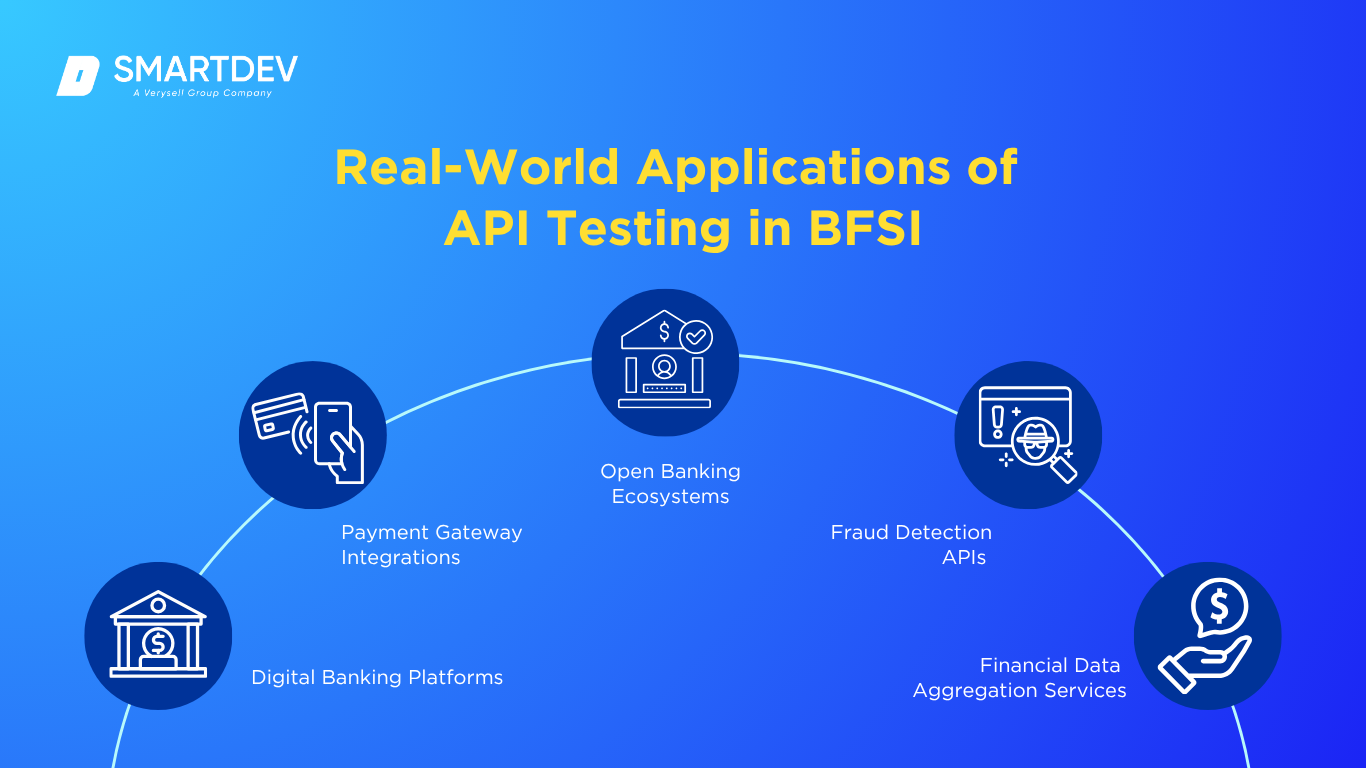
Real-World Applications of API Testing in BFSI
API testing plays a crucial role in ensuring financial systems operate accurately, securely, and consistently across complex digital ecosystems. In the BFSI sector, APIs power core services that directly impact customer experience, operational efficiency, and regulatory compliance. Below are key real-world applications where API testing helps ensure system reliability and performance.
1. Digital Banking Platforms
 1. Digital Banking Platforms
Digital banking applications rely heavily on APIs to support account management, fund transfers, bill payments, and user authentication. API testing ensures these services function correctly across web and mobile channels while maintaining fast response times.
Functional testing validates transaction logic, while performance testing ensures the system can handle high volumes of concurrent users. Security testing also ensures sensitive customer data remains protected throughout the process. Reliable APIs help banks provide seamless digital experiences while maintaining customer trust.
2. Payment Gateway Integrations
Payment gateways process real-time financial transactions between customers, merchants, and financial institutions. APIs must ensure accurate transaction processing, fast response times, and secure communication between systems.
API testing helps validate payment workflows, error handling mechanisms, and transaction confirmation processes. Performance testing ensures payment systems remain stable during peak usage periods such as promotional campaigns or seasonal demand spikes. Ensuring stable payment APIs helps prevent failed transactions and revenue loss.
3. Open Banking Ecosystems
Open banking initiatives allow financial institutions to securely share data with authorized third-party providers through standardized APIs. This enables fintech companies to build innovative services such as budgeting tools, lending platforms, and financial analytics solutions.
API testing ensures data is shared securely and consistently across multiple systems while maintaining compliance with regulations such as PSD2. Integration testing helps validate compatibility between banks and external providers, reducing risks associated with data inconsistencies or service disruptions.
4. Fraud Detection APIs
Fraud detection systems rely on APIs to analyze transaction patterns and identify suspicious activities in real time. These APIs must process large volumes of data quickly while maintaining high accuracy.
API testing helps ensure fraud detection engines can handle real-time data streams and integrate smoothly with transaction processing systems. Performance validation ensures the system responds instantly to potential threats, helping financial institutions prevent fraudulent activities before they occur.
5. Financial Data Aggregation Services
Financial data aggregation platforms collect information from multiple banking systems to provide consolidated insights for users or organizations. APIs enable secure data retrieval, synchronization, and reporting across different financial institutions.
API testing ensures data accuracy, consistency, and security when aggregating information from various sources. Integration testing helps validate compatibility between multiple APIs, while security testing ensures sensitive data remains protected during transmission.
Future Trends in API Testing for Financial Services
API testing in BFSI is increasingly shaped by AI and automation. AI-driven test case generation helps teams create smarter test scenarios faster, improving coverage while reducing manual effort. At the same time, synthetic test data enables realistic testing without exposing sensitive customer information, helping organizations maintain compliance with privacy regulations. Autonomous testing workflows are also emerging, allowing test scripts to automatically adapt when APIs change, improving efficiency and reducing maintenance effort.
Financial institutions are also adopting API observability platforms to monitor performance and detect issues in real time. Another key trend is shift-left security testing, where security validation is integrated earlier in the development lifecycle. This approach helps teams identify vulnerabilities sooner, reduce risks, and build more resilient API ecosystems that support scalable digital financial services.
Conclusion
API testing platforms play a vital role in ensuring APIs operate reliably, securely, and efficiently across BFSI ecosystems. As financial services increasingly depend on interconnected systems, APIs must support high transaction volumes, strict regulatory requirements, and seamless integrations with third-party platforms. A strong API testing strategy helps organizations reduce downtime risks, strengthen data protection, and maintain consistent performance across digital banking, payments, and fintech services.
By adopting modern testing practices and selecting the right technology partner, BFSI firms can accelerate innovation while maintaining compliance and operational stability. With deep domain expertise, AI-powered accelerators, and compliance-aware QA frameworks, SmartDev helps financial institutions build scalable API architectures that support long-term digital transformation and deliver secure, high-quality customer experiences.