

Kurz zusammengefasst
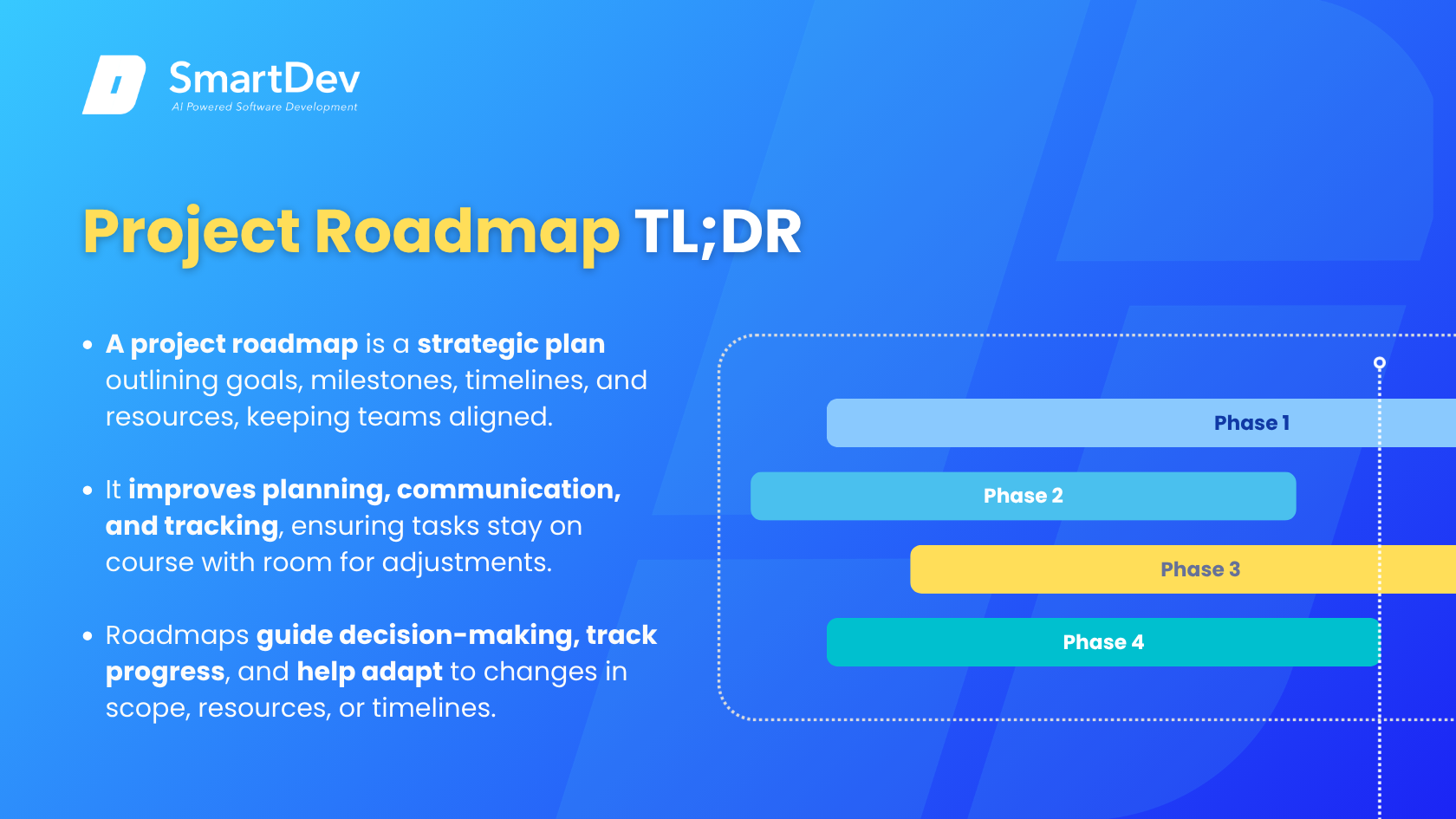
- A project roadmap is a high-level strategic plan that outlines a project’s goals, milestones, timelines, and resources, helping teams stay aligned and focused.
- It improves planning, communication, and tracking, ensuring that everyone understands their roles and tasks, and can adjust as needed.
- Roadmaps guide decision-making, facilitate real-time tracking, and keep the project on course by accommodating changes in resources, scope, or timelines.
What Is Project Roadmap?
A project roadmap is a strategic plan that outlines the goals, objectives, key milestones, timelines, and resources required to complete a project successfully. It serves as a high-level visual guide that shows the major phases of a project, helping teams and stakeholders understand the project’s direction, timeline, and progress.
Project roadmaps typically include key dates, deliverables, and deadlines, alongside a breakdown of tasks and dependencies. They are often used by project managers to communicate the plan and ensure that everyone involved is aligned and understands the project’s goals.
A good project roadmap is flexible and adaptable, able to accommodate changes in the project scope, timeline, and resources. It’s essential for guiding the execution of the project and ensuring it stays on track to achieve its Ziele.
Why Project Roadmaps Matter for Businesses?
Project roadmaps are invaluable tools for businesses, offering a clear structure and alignment across teams. Here’s why they’re so critical:
1. Enhanced Project Planning and Clarity
2. Improved Communication and Collaboration
3. Tracking Progress and Adjusting Plans
4. Facilitates Entscheidungsfindung
A roadmap provides clear insight into dependencies, risks, and bottlenecks, enabling decision-makers to make informed choices regarding resource allocation, timelines, and scope adjustments.
How Does a Project Roadmap Work?
A project roadmap isn’t a one-size-fits-all document; it’s a dynamic guide that should reflect the needs and complexities of the specific project. Typically, the process of creating a project roadmap follows these key steps:
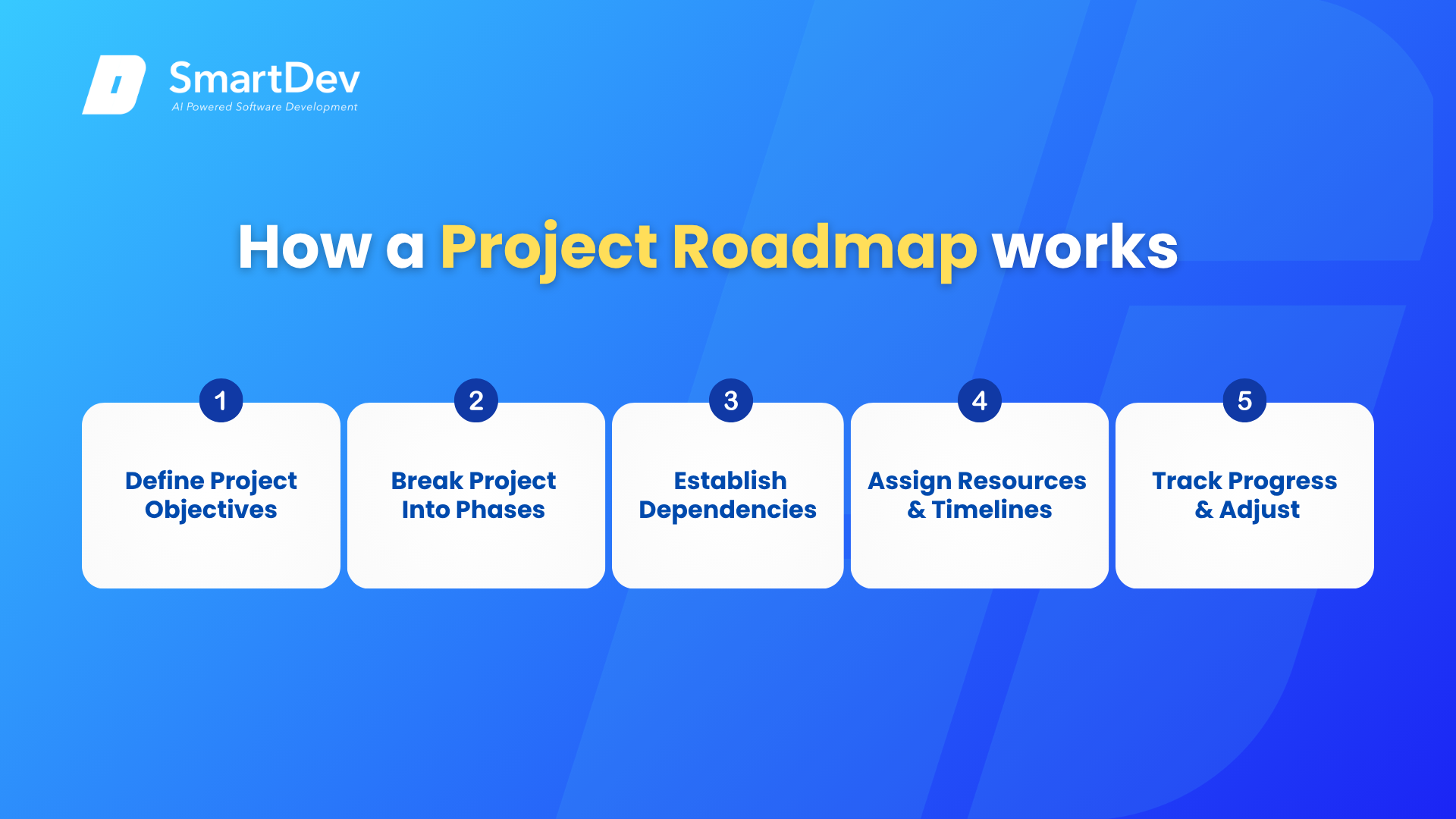
1. Define Project Objectives
The first step in creating a project roadmap is to define the main goals of the project. These objectives set the foundation for the entire roadmap. Whether it’s completing a product development cycle, launching a marketing campaign, or implementing new software within an organization, the roadmap will center around these objectives. Clear goals help ensure that the team stays focused on what truly matters, reducing the risk of scope creep or misguided efforts.
2. Break the Project Into Phases
Once the objectives are defined, the project is broken down into major milestones and phases. This is where the high-level plan starts to take shape. Each phase represents a key stage of the project, and each will have its own set of tasks that need to be completed. Dividing the project into phases allows for easier management and tracking. With each phase tied to a specific goal or milestone, the roadmap allows teams to focus on one segment at a time, making large projects feel more manageable.
3. Establish Dependencies
Project tasks are rarely independent, they often rely on other tasks being completed first. Establishing these dependencies within the roadmap ensures that teams understand the order in which tasks need to be completed. For example, a website redesign project may require content creation before design work can begin. By clearly identifying these dependencies, the roadmap helps avoid bottlenecks and ensures the smooth progression of tasks. It also makes it easier to prioritize tasks when resources are limited.
4. Assign Resources and Timelines
With tasks and dependencies in place, the next step is assigning resources and timelines. For each task or milestone, it’s crucial to allocate the necessary resources (people, budget, tools, etc.) and set deadlines. This ensures that every part of the project is properly supported and that timelines are realistic. The timeline serves as a reference point for the entire team and helps keep everyone focused on hitting deadlines.
5. Track Progress and Adjust
The final step is to monitor progress and adjust the roadmap as necessary. As the project progresses, regular check-ins and updates to the roadmap will be necessary to ensure the project stays on course. If issues arise, such as delays or the need for additional resources, the roadmap can be updated to reflect changes. By revisiting the roadmap throughout the project, project managers can ensure everything stays aligned with the project’s goals and objectives.
Related Terms
1. Project Management
Project management is the process of planning, organizing, and overseeing the execution of a project to meet specific goals within a set timeline and budget. It encompasses everything from setting clear objectives to managing resources and ensuring timely delivery.
2. Gantt Chart
A Gantt chart is a visual representation of a project’s schedule that outlines tasks, their durations, and dependencies. It’s a helpful tool for tracking project progress and identifying potential delays.
3. Agile Methodology
Agile methodology is a flexible, iterative approach to project management that emphasizes incremental progress, regular feedback, and adaptation. It focuses on delivering small, manageable chunks of work and continuously refining the project based on real-time input.