E-Einkauf is rapidly evolving, and customer expectations are shifting faster than businesses can keep up. As technology advances, AI in ecommerce is becoming a cornerstone for enhancing customer experiences. No longer just a tool for automation, AI is now a driver of personalization, predictive analytics, and intelligent customer support that shape the way consumers interact with brands online.
In this blog, we dive into how AI in ecommerce is transforming the shopping journey, making it faster, smarter, and more personalized. These insights are based on a conversation from our recent Ctrl Shifter Podcast, where Prasanna, a leader in global digital commerce transformation, shared his perspective on the role of AI in reshaping ecommerce.
Let’s take a closer look at how AI is revolutionizing customer experiences in ecommerce platforms, with key highlights from Prasanna’s expert insights.
-
What is AI in Ecommerce?
AI in ecommerce is central to how brands understand and engage with customers. It allows businesses to predict customer needs and anticipate behavior, ensuring that the shopping experience feels more personalized and relevant.
- Predicts Customer Behavior: AI analyzes past interactions to anticipate future needs, offering a more tailored shopping experience.
- Shifts from Reactive to Proactive: AI doesn’t just react to customer behavior; it proactively engages users by suggesting products they may be interested in.
Als Prasanna explained during the podcast, “Every project starts with understanding who benefits and what value it creates.” By leveraging AI, businesses can understand customer preferences, reducing friction in the buying process.
-
AI in Ecommerce: Powering Hyper-Personalization
Personalization has always been a goal for online retailers, but AI takes it to the next level by offering hyper-personalization – dynamic experiences that are tailored to everyone based on real-time data, context, and user behavior.
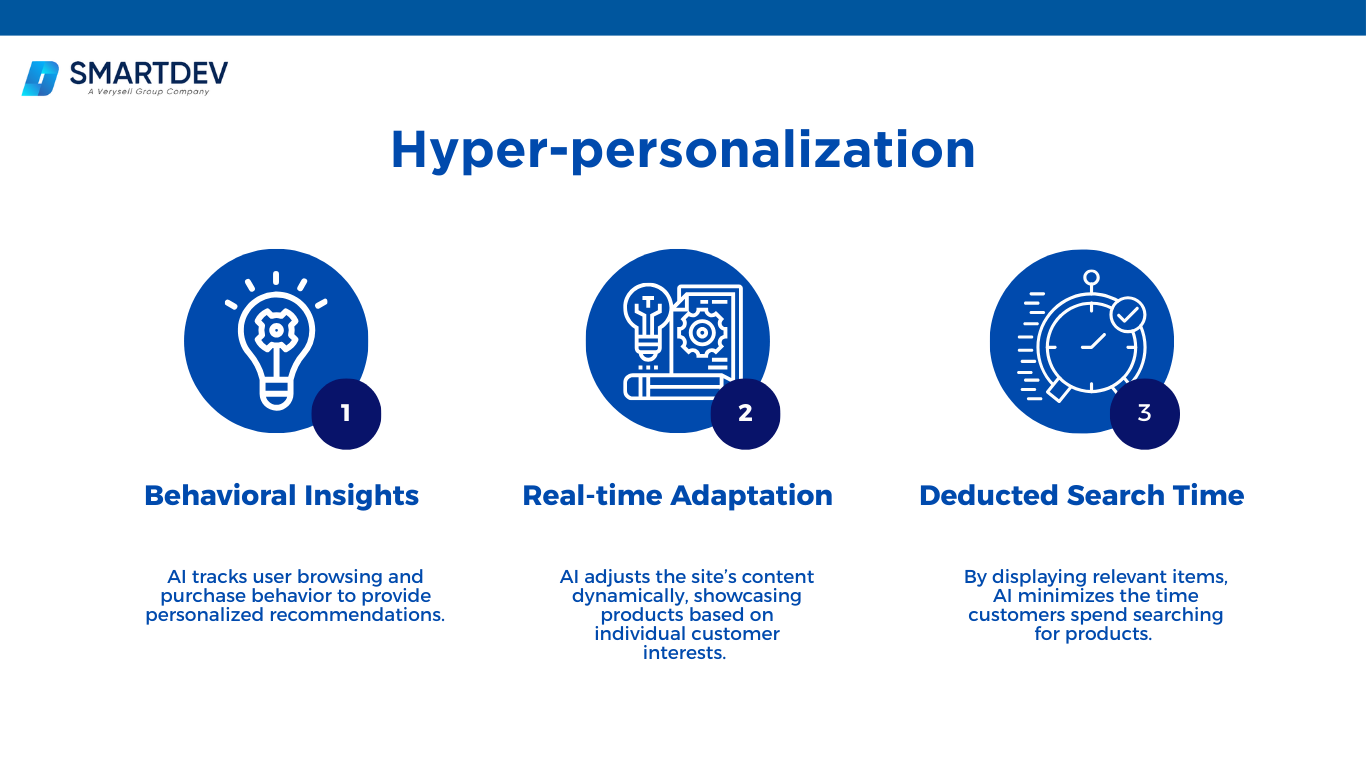
- Behavioral Insights: AI tracks user browsing and purchase behavior to provide personalized recommendations.
- Real-Time Adaptation: AI adjusts the site’s content dynamically, showcasing products based on individual customer interests.
- Reduces Search Time: By displaying relevant items, AI minimizes the time customers spend searching for products.
Prasanna shared, “It’s all about cutting the time customers spend searching.” By understanding browsing habits and purchase history, AI helps reduce the time customers spend navigating ecommerce sites, creating a more seamless shopping experience.
-
AI in Ecommerce: Enhancing the Shopping Journey
AI doesn’t just improve personalization – it also simplifies and enhances the overall shopping journey. From intelligent search functionalities to AI-powered virtual assistants, AI is helping businesses offer a seamless and intuitive experience.
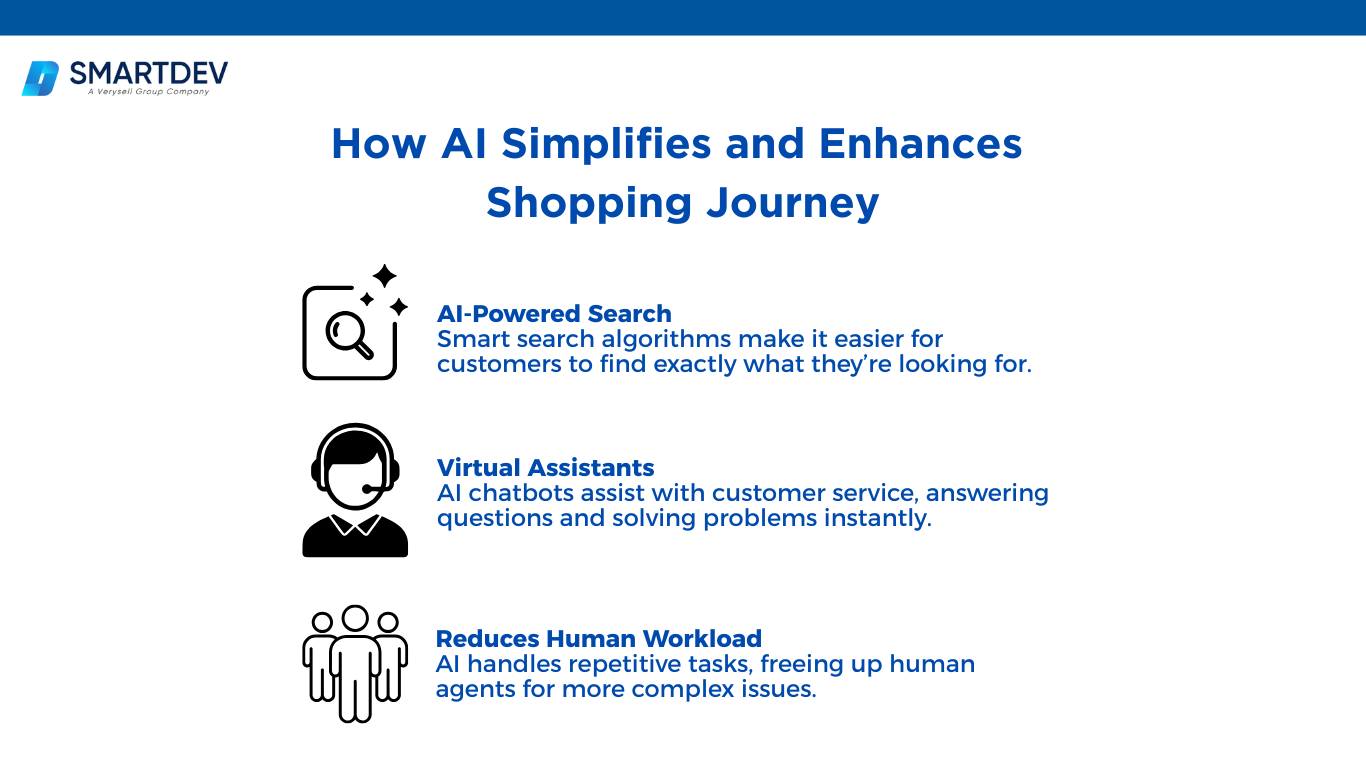
- AI-Powered Search: Smart search algorithms make it easier for customers to find exactly what they’re looking for.
- Virtuelle Assistenten: KI-Chatbots assist with customer service, answering questions and solving problems instantly.
- Reduces Human Workload: AI handles repetitive tasks, freeing up human agents for more complex issues.
Prasanna emphasized the importance of solving real customer problems with AI, stating, “Don’t build AI for the sake of AI. Solve real problems.” By identifying and addressing pain points, AI improves the customer experience, making it faster and more efficient.
-
AI in Ecommerce: Building Trust with Security and Support
Trust is a key factor in customer experience, especially in online transactions. As ecommerce grows, so do concerns about privacy and security. Fortunately, AI in ecommerce is helping businesses tackle these issues head-on by preventing fraud and ensuring secure transactions.
- Betrugserkennung: AI analyzes transaction data to detect suspicious activities and prevent fraud in real time.
- Secure Transactions: AI improves security by verifying transactions and monitoring potential security threats.
- Kundenservice: AI handles routine inquiries, providing quick answers to common questions, enhancing the customer’s sense of security.
AI technologies such as maschinelles Lernen help detect Betrug by analyzing vast amounts of transaction data. As Prasanna put it, “Garbage in, garbage out. Data handling is everyone’s job.” Proper governance ensures both the customer’s privacy and the integrity of the business.
-
The Future of AI in Ecommerce: Autonomous Systems and Human Collaboration
 As AI continues to evolve, it will take on even more autonomous roles within ecommerce platforms. Prasanna pointed out, “The next evolution is agentic AI – autonomous systems capable of completing tasks and making decisions on behalf of customers.” Diese AI systems will be able to interact with customers in real time, predict future behaviors, and even manage inventory and pricing autonomously.
- Autonomous Systems: AI systems will handle product recommendations, pricing decisions, and more, all in real-time.
- Human Collaboration: Even as AI becomes more autonomous, human oversight will remain crucial for Genauigkeit and trust.
- Gesteigerte Effizienz: With AI handling more tasks, ecommerce businesses will see increased Effizienz and faster decision-making.
The best ecommerce businesses will find ways to blend AI-driven automation with human guidance, ensuring that the customer experience remains personalized, accurate, and trustworthy.
Abschluss
AI in ecommerce is no longer just a trend – it’s the future of customer experience. From personalized recommendations to intelligent customer support, AI is helping businesses meet and exceed customer expectations. As Prasanna said, “AI should be seen as an opportunity, not a threat.” By embracing AI, ecommerce leaders can shape the next generation of online shopping, creating seamless, intuitive, and secure experiences for their customers.
The transformation is already underway, and businesses that adapt to these changes early will stay ahead of the competition. To learn more about how AI is transforming ecommerce, check out the Ctrl Shifter Podcast featuring Prasanna for more in-depth insights into the future of digital commerce.