
1. Introduction: The Importance of Reputation & References in IT Outsourcing
In IT outsourcing, selecting the right vendor is a critical decision that can impact the success of your business for years to come. While technical capability, service delivery, and financial stability are often discussed in vendor evaluation, reputation and references are just as important. They provide insight into how the vendor has performed in the past and whether they are likely to meet your expectations in the future.
Reputation and references can offer valuable, real-world evidence of a vendor’s ability to deliver quality services, adhere to deadlines, and maintain customer satisfaction. These aspects not only help build trust but also reduce the risk of operational disruptions or poor service delivery.
To make sure you are thoroughly assessing these elements, using a structured approach like the IT Outsourcing Due Diligence Checklist is invaluable. This checklist helps guide the evaluation process by ensuring that reputation and references are given the attention they deserve, minimizing risks and maximizing the potential for a successful outsourcing partnership.
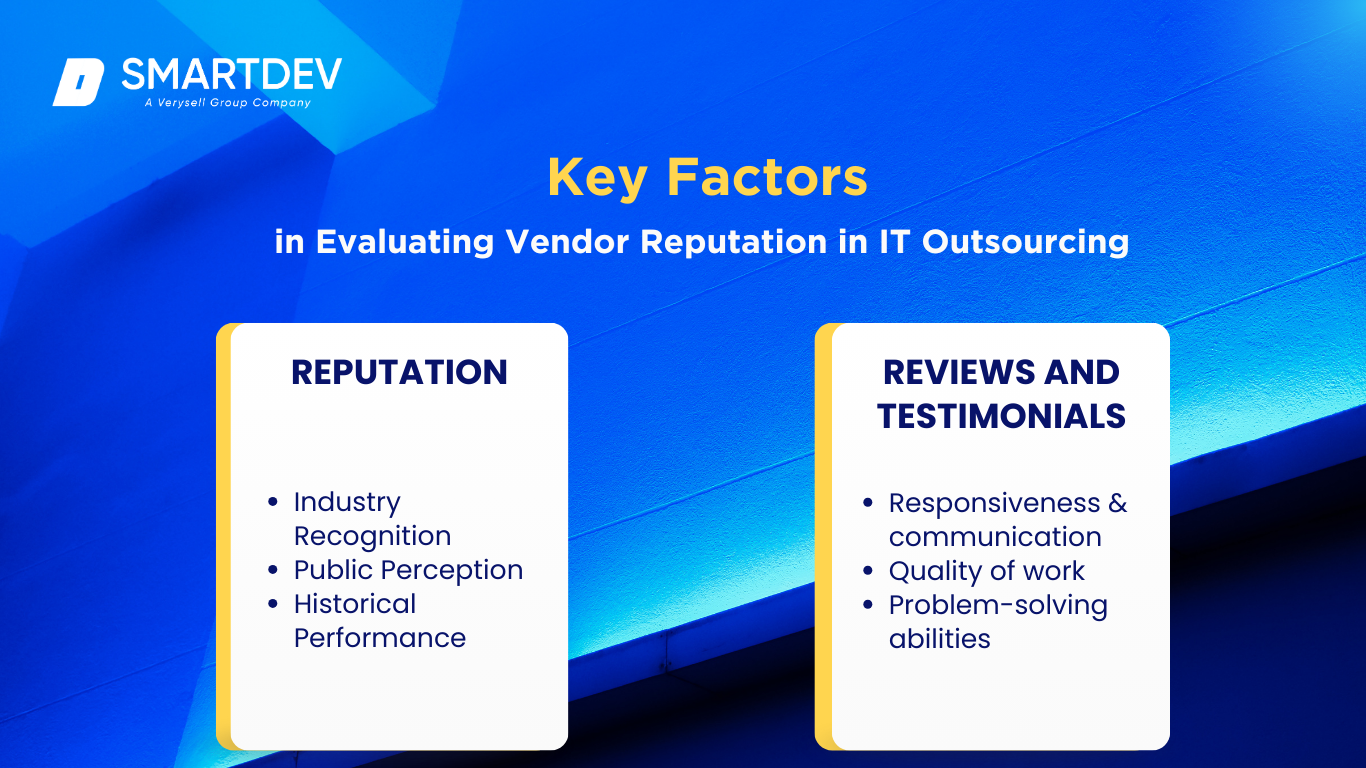
2. Key Factors in Evaluating Vendor Reputation in IT Outsourcing
Reputation: What Makes a Vendor Reliable and Trustworthy?
A vendor’s reputation is often the first thing businesses look at when evaluating potential outsourcing partners. Reputation is built over time through consistent performance, customer satisfaction, and industry recognition. A reputable IT outsourcing vendor will have a proven track record of delivering on promises, meeting deadlines, and addressing customer concerns efficiently.
Key factors to assess include:
- Industry Recognition: Has the vendor received any industry awards or accolades? Recognition from trusted industry bodies signals that the vendor is respected in their field and has established credibility.
- Public Perception: What do industry experts and the media say about the vendor? Positive coverage can be an indicator of a vendor’s reliability.
- Historical Performance: How has the vendor performed with other clients? Are there any significant service interruptions, complaints, or issues in their past?
How to Assess the Vendor’s Industry Recognition and Awards
Industry recognition is an asset for any IT outsourcing vendor. Look for evidence that the vendor has been acknowledged by third-party entities such as professional associations, business publications, or certification bodies. Awards, certifications, and positive media mentions not only highlight the vendor’s competence but also indicate that they are committed to maintaining high standards in their service delivery.
The Role of Client Reviews and Testimonials in Vendor Evaluation
Client reviews and testimonials play a huge role in evaluating a vendor’s reputation. They provide insight into how the vendor interacts with clients, addresses challenges, and meets expectations. Testimonials offer firsthand accounts of the vendor’s capabilities, while reviews on independent platforms (such as G2, Trustpilot, or Clutch) provide a broader view of the vendor’s performance across multiple projects and clients.
Look for vendors who are consistently praised for their:
- Responsiveness and communication: Effective communication is key to successful outsourcing.
- Quality of work: High-quality service that meets or exceeds expectations.
- Problem-solving abilities: How does the vendor handle challenges, and how quickly do they resolve issues?
3. How to Use the IT Outsourcing Due Diligence Checklist to Evaluate Vendor Reputation & References
The IT Outsourcing Due Diligence Checklist simplifies the process of evaluating a vendor’s reputation and references. By breaking down the key elements into actionable items, the checklist ensures that businesses focus on the most critical aspects when assessing a vendor’s reputation.
The Checklist as a Tool for Streamlining Vendor Evaluation
The due diligence checklist ensures that you evaluate the vendor’s reputation systematically. It prompts you to ask the right questions, such as:
- What industry awards or certifications does the vendor hold?
- How do previous clients rate their experience with the vendor?
- Are there any patterns of complaints or service failures?
Identifying Red Flags in Vendor Reputation with the Due Diligence Checklist
A good due diligence checklist will also help you identify potential red flags. For example, if a vendor has multiple unresolved complaints or a history of poor service delivery, these could be indicators of systemic issues. The checklist helps you spot these early, saving you from the risk of choosing a vendor that could lead to service disruptions, data security issues, or legal problems.
Key Questions to Ask When Checking References
When speaking to vendor references, ask specific questions to gauge the vendor’s reliability:
- Did the vendor meet deadlines consistently?
- How well did they manage communication during the project?
- Were there any issues during the project, and how were they resolved?
- Would you recommend this vendor to other businesses?
4. How Vendor Reputation & References Impact the Success of IT Outsourcing Partnerships
The Long-Term Benefits of Partnering with a Reputable Vendor
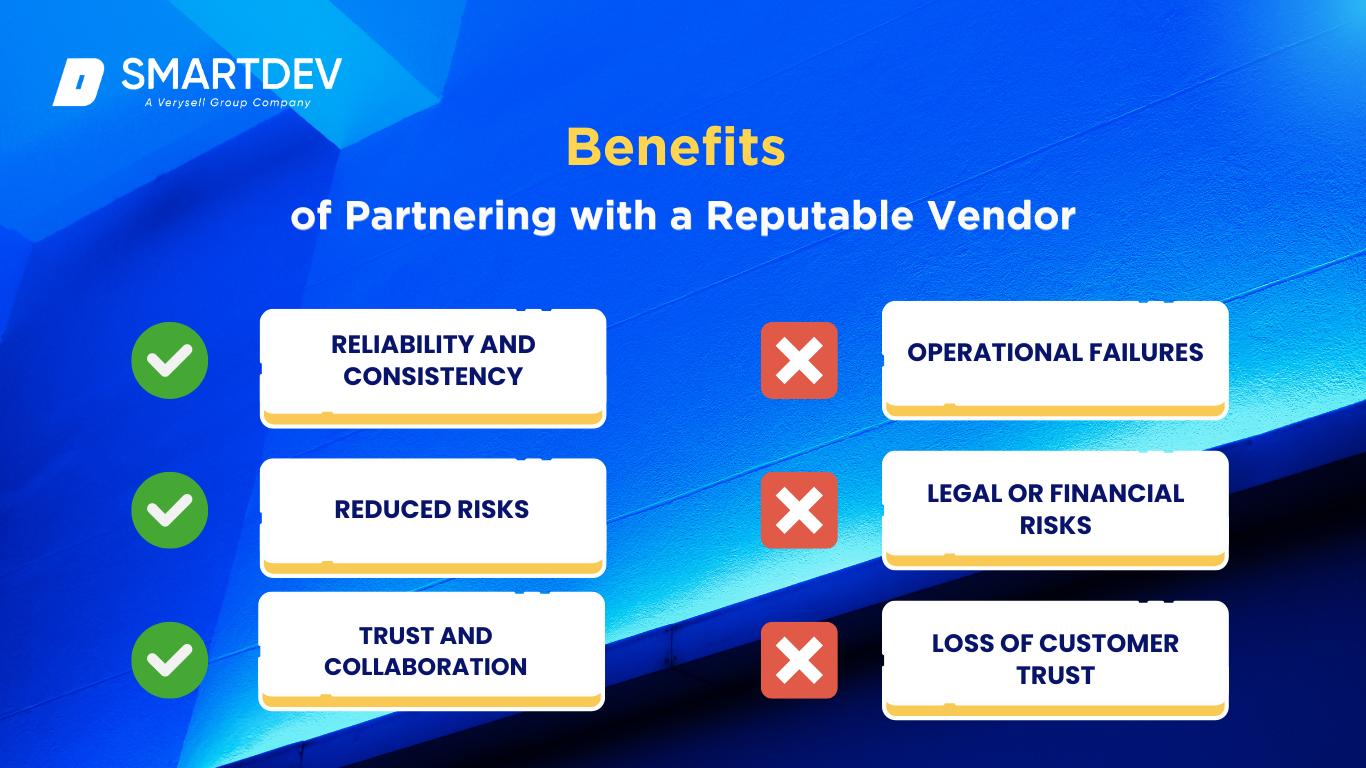
Partnering with a reputable vendor provides significant long-term benefits. These include:
- Reliability and consistency: A vendor with a strong reputation will likely deliver high-quality services consistently, minimizing disruptions and delays.
- Reduced risks: A reputable vendor is less likely to have hidden issues, such as financial instability or poor service delivery practices, that could disrupt your business operations.
- Trust and collaboration: A vendor with a proven track record of success will likely be more proactive in solving problems and ensuring smooth collaboration, helping your business achieve its goals.
Why Poor Vendor Reputation Can Lead to Outsourcing Failures
Conversely, partnering with a vendor with a poor reputation can result in significant failures, such as:
- Operational failures: Missed deadlines, subpar service quality, and communication breakdowns can create bottlenecks in your business operations.
- Legal or financial risks: A vendor with a poor reputation may not comply with legal or regulatory standards, leading to fines, penalties, or reputational damage.
- Loss of customer trust: If a vendor fails to deliver as promised, it can harm your relationship with customers and hurt your brand’s reputation.
How Strong References Ensure Reliability and Service Quality
Strong, positive references are a key indicator of a vendor’s ability to meet expectations. References can provide insight into how the vendor performs under real-world conditions. The best references will be able to speak not only about the vendor’s technical capabilities but also their approach to problem-solving, communication, and customer support.
5. The Role of References in Mitigating IT Outsourcing Risks
How References Help Validate Vendor Claims and Assess Performance
References are one of the most reliable tools for mitigating outsourcing risks. They allow you to validate the claims the vendor makes about their capabilities, such as their ability to meet deadlines or deliver specific IT services. References also provide a real-world perspective on how the vendor handles challenges, resolves conflicts, and works with clients.
Ensuring Vendor Reliability with Detailed References
A good reference goes beyond general praise; it provides specific examples of the vendor’s past performance. Look for references that can speak in detail about the vendor’s strengths, weaknesses, and the vendor’s approach to working with clients.
Using the IT Outsourcing Due Diligence Checklist to Cross-Check References
The due diligence checklist ensures that you do not miss any important steps in the process of checking references. It helps you track whether references are consistent with the information provided by the vendor. If you find discrepancies between what the vendor claims and what their references report, it may be time to reconsider your choice.
6. Conclusion:
In conclusion, reputation and references play a vital role in ensuring the success of your IT outsourcing partnerships. By thoroughly evaluating these factors using a structured approach, such as the IT Outsourcing Due Diligence Checklist, you can make more informed decisions and avoid the risks associated with unreliable vendors.
Strong references and a solid reputation help mitigate risks and ensure that your vendor can deliver high-quality, reliable services that align with your business goals. When using the due diligence checklist, be sure to prioritize these elements to ensure a successful long-term partnership.
At SmartDev, we understand the importance of building strong, reliable partnerships. That’s why we’ve created our own IT Outsourcing Due Diligence Checklist to help businesses evaluate IT outsourcing vendors effectively. Download the checklist today and make sure you’re partnering with a vendor that has a proven track record of success.