
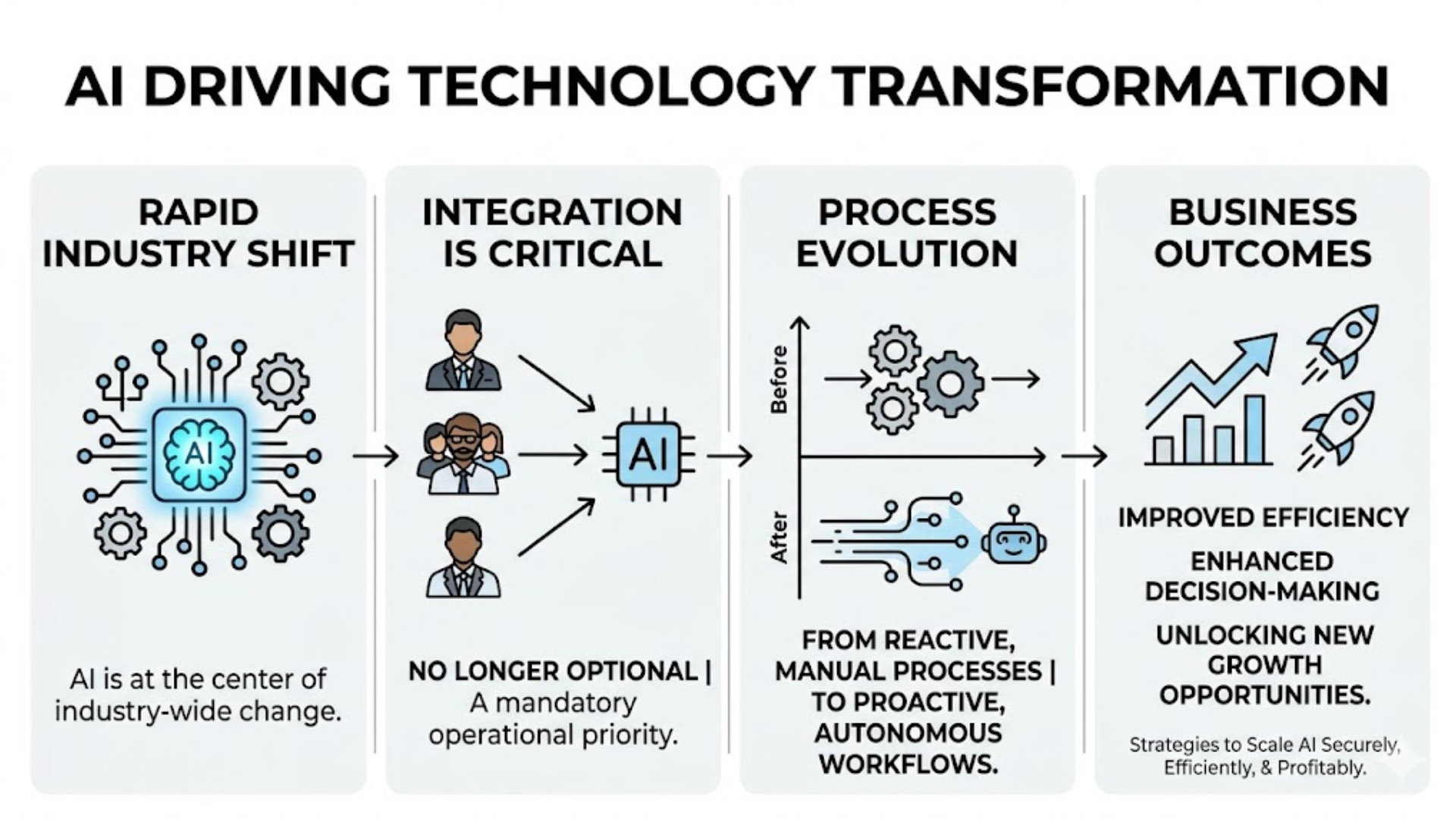
The technology industry is undergoing rapid and unprecedented transformation, and AI in Technology is at the center of this shift. As artificial intelligence continues to mature, it is not only reshaping how systems operate but also redefining how businesses compete. Therefore, for IT leaders, software engineering teams, and enterprise architects, integrating AI is no longer optional. Instead, it has become a critical operational priority to maintain relevance in an increasingly competitive market.
Moreover, AI in Technology is enabling a transition from reactive, manual processes to proactive and autonomous workflows. As a result, organizations can improve efficiency, enhance decision-making, and unlock new growth opportunities. In this guide, we will explore how intelligent systems are driving this transformation. In addition, we will provide actionable strategies to help businesses scale AI capabilities securely, efficiently, and profitably.
Understanding AI in Technology: Foundations and Strategic Importance
What is AI in Technology? Core Concepts Explained
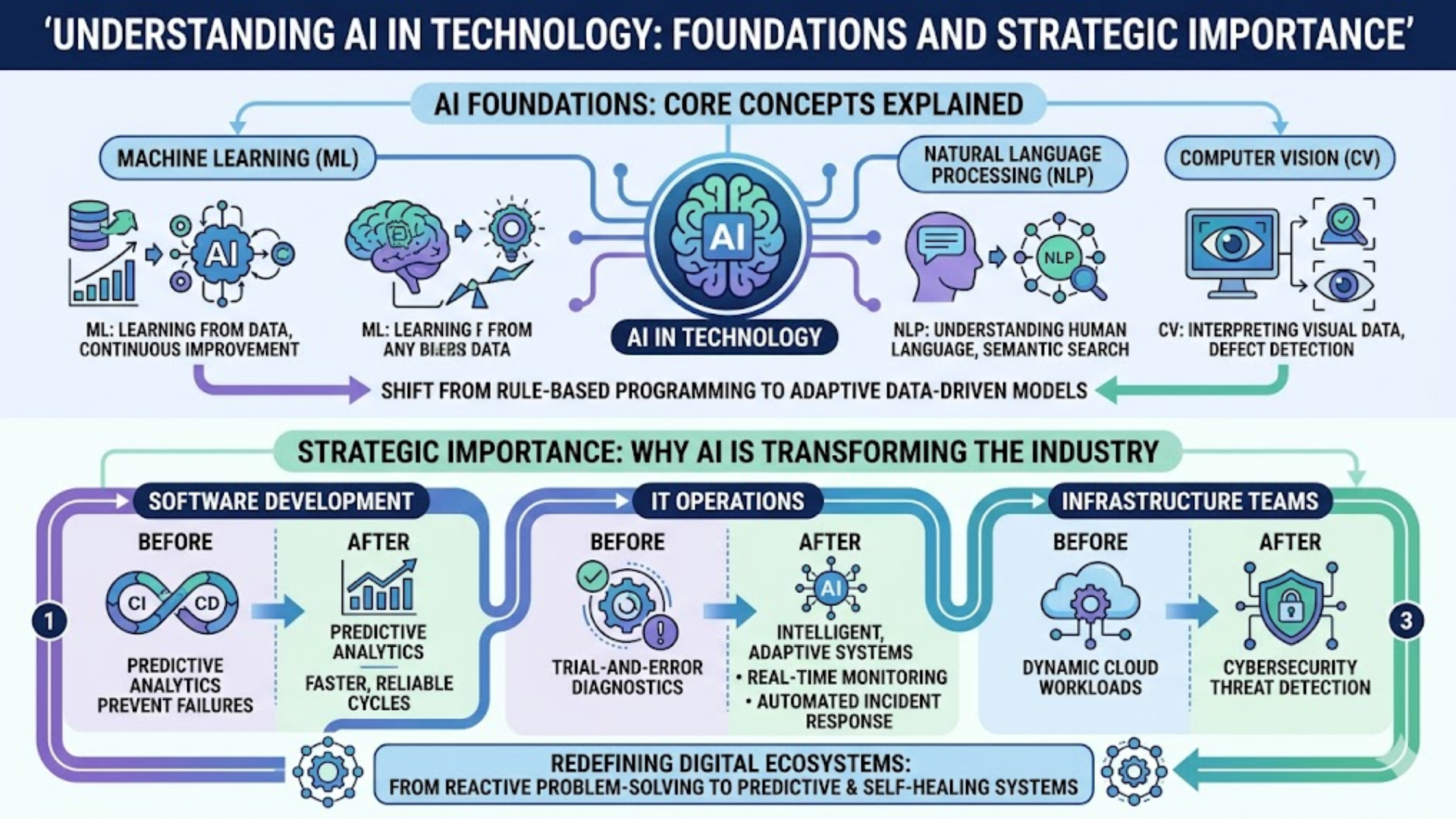
AI in Technology refers to advanced computing systems designed to perform complex cognitive tasks that typically require human intelligence. These tasks include learning from data, recognizing patterns, reasoning under uncertainty, and making autonomous decisions. As a result, AI is transforming traditional software development approaches by shifting from rigid, rule-based programming to adaptive, data-driven models.
At the core of AI in Technology are several foundational technologies. First, Machine Learning (ML) enables systems to process vast datasets and continuously improve performance without explicit programming. In addition, Natural Language Processing (NLP) allows machines to understand and generate human language, which supports applications such as automated coding, semantic search, and conversational interfaces. Furthermore, Computer Vision (CV) empowers systems to interpret visual data using deep neural networks. Consequently, it plays a crucial role in areas like defect detection, infrastructure monitoring, and spatial computing.
Why AI in Technology Is Transforming the Industry
The impact of AI in Technology is rapidly expanding across the entire tech ecosystem. Initially, AI functioned as a supportive tool for human teams. However, it is now evolving into a core platform that can autonomously manage complex workflows. Therefore, organizations are increasingly leveraging AI to enhance both speed and accuracy in their operations.
For example, in software development, AI in Technology is reshaping CI/CD pipelines by introducing predictive analytics. These systems can identify anomalies in code and prevent deployment failures before they occur. As a result, development cycles become faster and more reliable. Meanwhile, in IT operations, AI replaces traditional trial-and-error diagnostics with intelligent, adaptive systems. In particular, it enables real-time monitoring, automated incident response, and proactive system optimization.
Moreover, infrastructure teams use AI in Technology to dynamically manage cloud workloads, detect cybersecurity threats, and predict hardware failures. Consequently, this shift allows organizations to move from reactive problem-solving to predictive and self-healing systems. In the long run, AI in Technology is not just improving efficiency, it is fundamentally redefining how digital ecosystems are designed, built, and managed.
Key statistics or trends highlighting AI adoption in the Technology Industry
The economic velocity and widespread adoption of AI within the technology sector are clearly reflected in global market intelligence and enterprise investment data. The financial implications point toward massive compounding returns for early adopters.
| AI Adoption Metric | Industry Statistic | Implications for the Technology Sector |
| Global Economic Impact |
Projected to yield a cumulative impact of $22.3 trillion by 2030. |
AI represents approximately 3.7% of the projected global GDP, acting as a massive productivity multiplier. |
| Return on Investment (ROI) Multiplier |
Every $1 spent on AI solutions generates $4.90 in the global economy. |
Investments in AI infrastructure and software are not sunk costs but high-yield revenue accelerators. |
| Voice AI Market Growth |
Expanding from $2.4 billion in 2024 to $47.5 billion by 2034. |
Demonstrates a 34.8% CAGR, reflecting a massive shift toward automated, voice-enabled customer and operational support. |
| Inference Cost Reduction |
Dropped over 280-fold between late 2022 and late 2024. |
The barriers to deploying highly capable enterprise models are collapsing, democratizing access to advanced AI. |
| Hardware Efficiency Gains |
Energy efficiency has improved by 40% annually. |
Rapid advancements allow for more complex computations with a comparatively smaller carbon footprint. |
Key Business Advantages of AI in Technology for Modern Enterprises
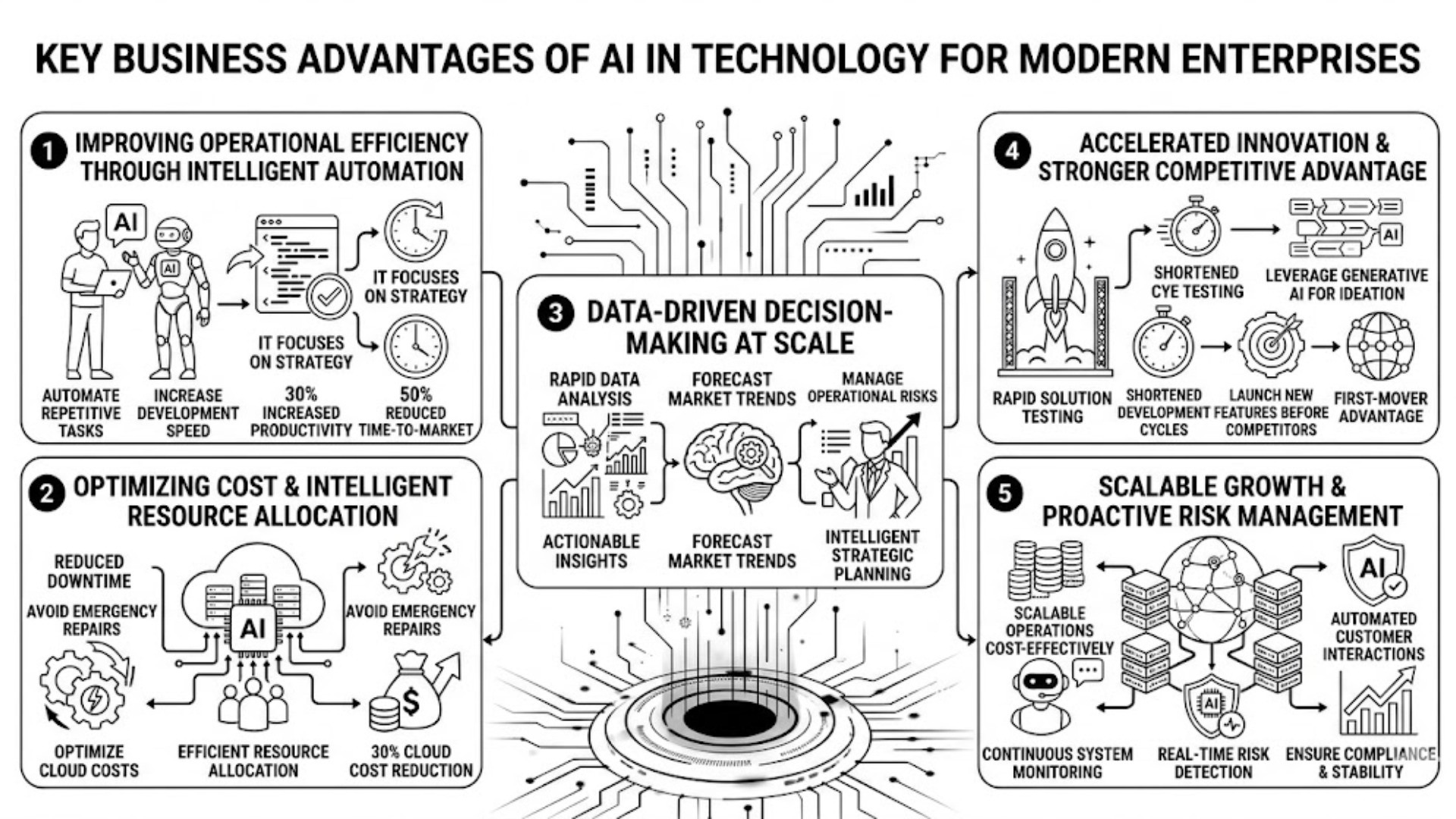
The adoption of AI in Technology is delivering measurable and compounding business value across the tech industry. As organizations integrate AI into their core architecture, they are not only improving performance but also redefining cost structures and growth potential. Therefore, understanding these benefits is essential for any company aiming to stay competitive in a digital-first economy.
Improved Operational Efficiency Through Intelligent Automation
First and foremost, AI in Technology enhances operational efficiency by automating repetitive and time-consuming tasks. Traditionally, software teams spent significant hours on manual code reviews, debugging, and boilerplate development. However, AI-powered tools now streamline these processes with greater speed and accuracy.
In addition, infrastructure management benefits significantly from automation. AI systems can handle server provisioning, patch updates, and real-time monitoring without constant human intervention. As a result, IT teams can shift their focus toward strategic initiatives instead of routine maintenance. Consequently, many organizations report up to a 30% increase in developer productivity and a 50% reduction in time-to-market.
Cost Optimization and Smarter Resource Allocation
Another major advantage of AI in Technology is its ability to reduce operational costs while optimizing resource usage. By leveraging predictive analytics, AI can anticipate hardware failures before they happen. Therefore, businesses can minimize downtime and avoid expensive emergency repairs.
Moreover, AI plays a critical role in cloud optimization. It dynamically adjusts computing resources based on real-time demand, which helps prevent over-provisioning. As a result, companies can significantly reduce cloud expenses while maintaining optimal system performance. In the long run, this leads to a more sustainable and cost-efficient infrastructure.
Data-Driven Decision-Making at Scale
In today’s data-rich environment, AI in Technology enables organizations to make faster and more accurate decisions. Instead of relying on intuition, companies can now use AI to process vast amounts of structured and unstructured data in seconds. Consequently, leaders gain access to actionable insights that were previously impossible to extract manually.
For example, predictive models can forecast market trends, optimize product roadmaps, and identify operational risks early. Furthermore, AI enhances strategic planning by providing evidence-based recommendations. As a result, businesses can allocate resources more effectively and improve overall performance.
Faster Innovation and Stronger Competitive Advantage
Innovation speed is a key differentiator in the technology sector, and AI in Technology significantly accelerates this process. By using AI-driven tools, companies can rapidly prototype solutions, test system integrations, and analyze user behavior patterns. Therefore, development cycles become shorter and more efficient.
Additionally, generative AI supports ideation and automated quality assurance, which helps teams deliver high-quality products faster. As a result, organizations can launch new features ahead of competitors and capture market share early. This first-mover advantage is often difficult for slower, traditional companies to overcome.
Scalable Growth and Proactive Risk Management
Finally, AI in Technology enables businesses to scale operations without a proportional increase in human resources. Unlike traditional models, AI-driven systems can handle exponential growth in data and user demand. For instance, AI-powered virtual assistants and automated support systems can manage large volumes of customer interactions seamlessly.
At the same time, AI enhances risk management by continuously monitoring systems for potential threats and compliance issues. Consequently, organizations can detect vulnerabilities in real time and respond proactively. This not only improves security but also ensures stable and scalable growth across global markets.
Key Challenges of AI in Technology Adoption
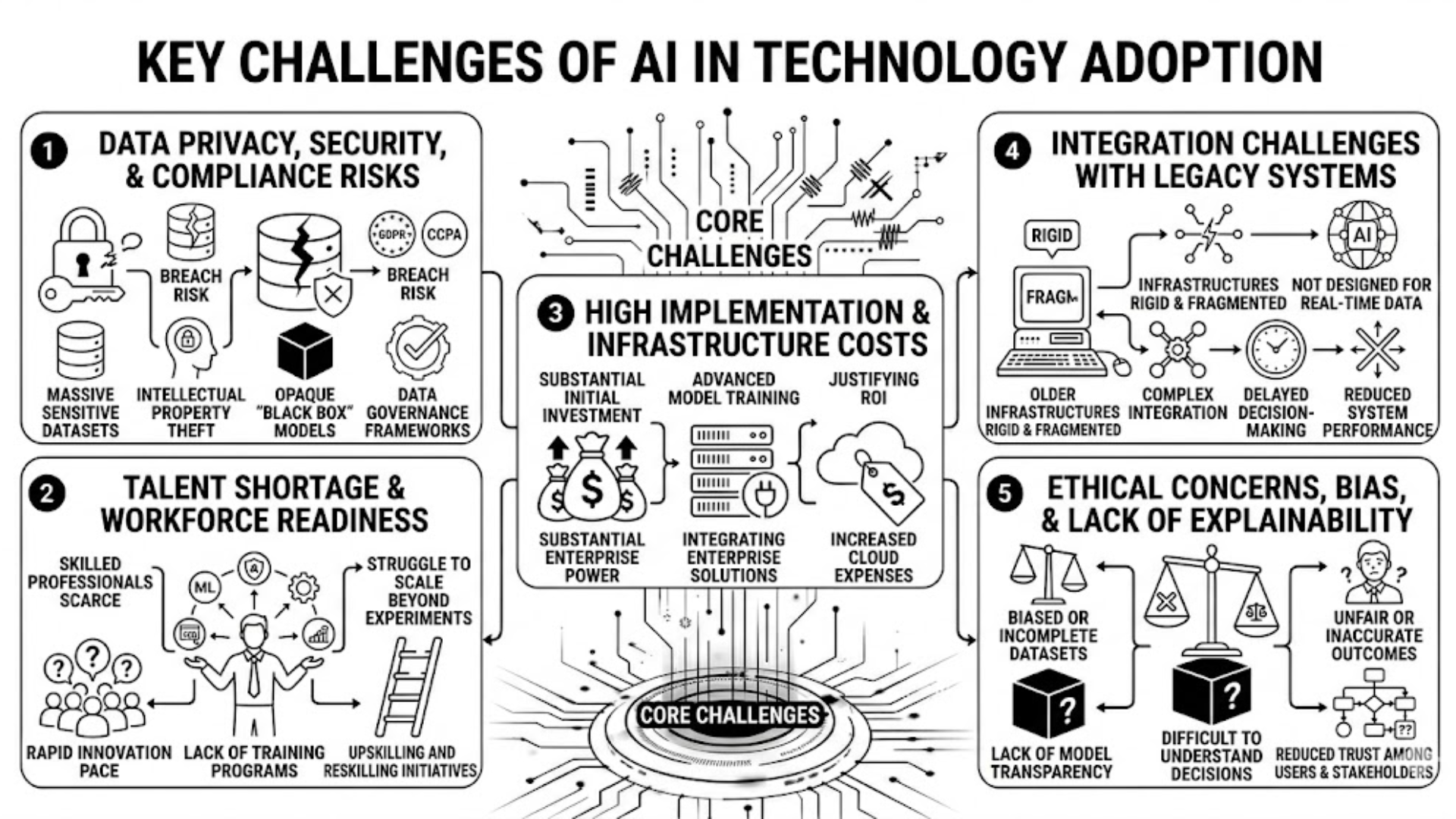
While AI in Technology delivers significant business value, its implementation is far from seamless. In reality, organizations must overcome multiple technical and organizational barriers to unlock its full potential. Therefore, understanding these challenges is essential for building a sustainable and scalable AI strategy.
Data Privacy, Security, and Compliance Risks
One of the most critical concerns in AI in Technology is data privacy and security. AI systems require massive datasets, including sensitive information such as personal data, proprietary code, and financial records. As a result, the risk of data breaches and intellectual property theft increases significantly.
Moreover, organizations must comply with strict global regulations like GDPR and CCPA. However, ensuring compliance becomes more complex when working with opaque “black box” AI models. Therefore, companies must invest heavily in secure data pipelines and governance frameworks to mitigate these risks.
Talent Shortage and Workforce Readiness
Another major barrier to AI in Technology adoption is the shortage of skilled professionals. AI development requires expertise in machine learning, cybersecurity, and software engineering. However, the current talent pool cannot keep up with the rapid pace of innovation.
As a result, many organizations struggle to move beyond small-scale AI experiments. In addition, without proper training programs, existing teams may lack the skills needed to deploy and manage AI systems effectively. Therefore, companies must prioritize upskilling and reskilling initiatives to bridge this gap and ensure long-term success.
High Implementation and Infrastructure Costs
Although AI in Technology can reduce costs over time, the initial investment is often substantial. For example, training advanced AI models or integrating enterprise-grade AI solutions requires significant capital. Furthermore, AI systems demand high computational power, which increases cloud and infrastructure expenses.
Consequently, many businesses face challenges in justifying the return on investment (ROI). However, with a well-defined strategy and phased implementation, organizations can gradually offset these costs and achieve long-term financial benefits.
Integration Challenges with Legacy Systems
In many enterprises, legacy systems present a significant obstacle to AI in Technology adoption. Older infrastructures are often fragmented, rigid, and not designed to support real-time data processing. Therefore, integrating modern AI solutions into these environments can be highly complex.
As a result, AI systems may fail to access the complete data needed for accurate decision-making. In addition, integration issues can lead to delays, increased costs, and reduced system performance. To address this, organizations must modernize their architecture and adopt more flexible, cloud-native solutions.
Ethical Concerns, Bias, and Lack of Explainability
Finally, ethical considerations play a crucial role in the adoption of AI in Technology. AI models are only as reliable as the data they are trained on. Therefore, biased or incomplete datasets can lead to unfair or inaccurate outcomes.
Furthermore, many AI systems lack transparency, making it difficult to understand how decisions are made. This lack of explainability can reduce trust among users, stakeholders, and regulators. Consequently, organizations must implement responsible AI practices, including bias monitoring, model auditing, and transparent decision-making frameworks.
Core Use Cases of AI in Technology Driving Digital Transformation
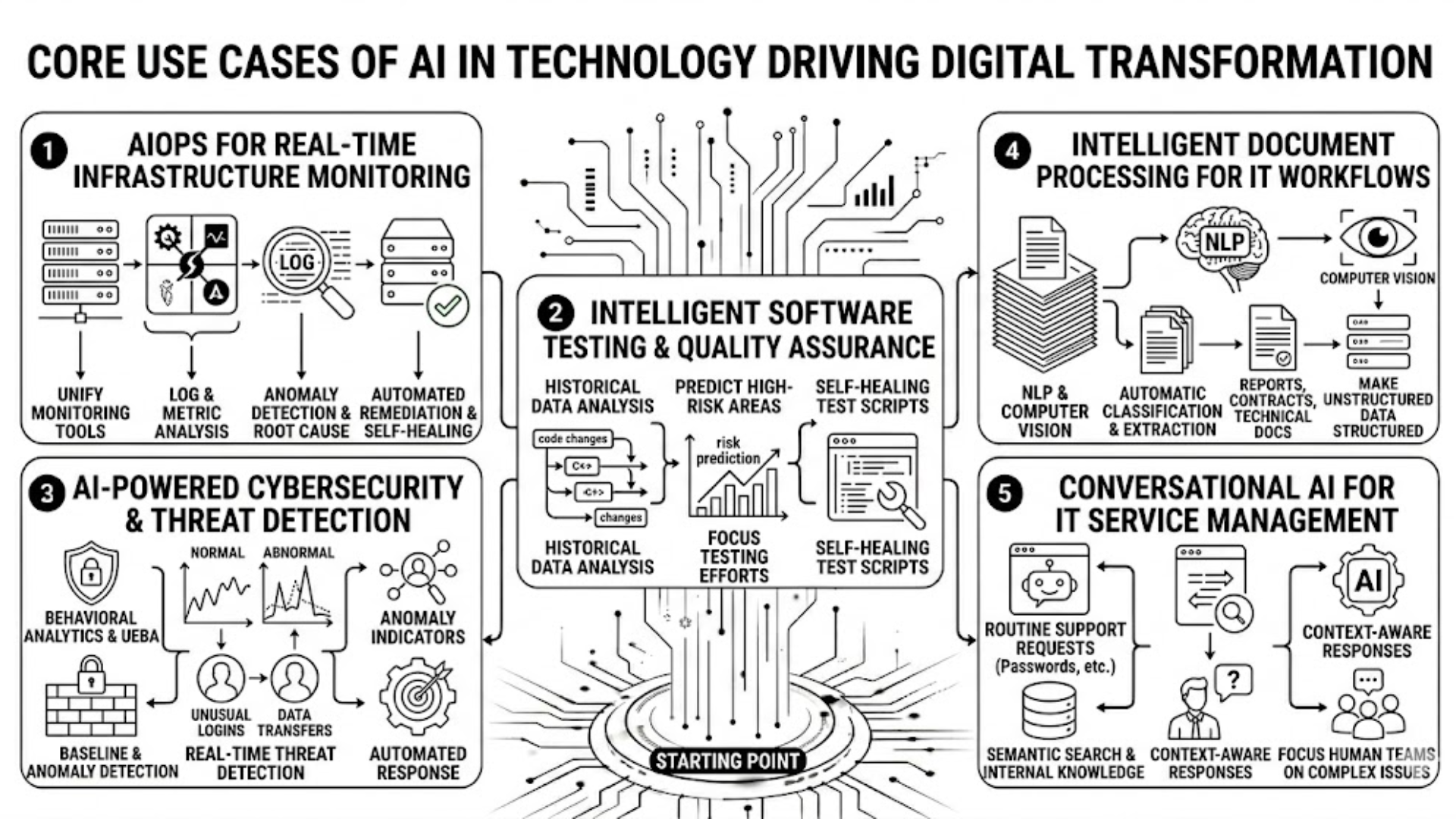
To fully unlock the value of AI in Technology, organizations must focus on practical, high-impact use cases. These foundational applications not only deliver immediate efficiency gains but also build the groundwork for more advanced AI adoption. Therefore, the following use cases represent the most critical starting points for technology-driven enterprises.
AIOps for Real-Time Infrastructure Monitoring
First, AI in Technology is transforming IT operations through AIOps (Artificial Intelligence for IT Operations). By leveraging machine learning, AIOps platforms consolidate multiple monitoring tools into a unified system. As a result, organizations gain a centralized and intelligent view of their infrastructure.
Moreover, these systems continuously analyze logs, metrics, and network traffic in real time. Consequently, they can detect anomalies, identify root causes, and eliminate false alerts. In addition, AIOps enables automated remediation, which allows systems to resolve issues without human intervention. Ultimately, this creates self-healing infrastructures that are faster and more reliable than traditional monitoring approaches.
Intelligent Software Testing and Quality Assurance
Another key application of AI in Technology is in software testing and quality assurance. Traditionally, QA processes relied heavily on manual test scripts, which were time-consuming and difficult to maintain. However, AI introduces dynamic, data-driven testing strategies.
For instance, machine learning models can analyze historical code changes to predict high-risk areas in an application. Therefore, teams can focus testing efforts where failures are most likely to occur. Furthermore, AI enables self-healing test scripts that automatically adapt to UI changes. As a result, QA teams can significantly reduce maintenance efforts while improving overall software reliability.
AI-Powered Cybersecurity and Threat Detection
Cybersecurity is another domain where AI in Technology delivers substantial impact. Traditional security systems often rely on predefined rules, which makes them ineffective against evolving threats. In contrast, AI-driven platforms use behavioral analytics to detect anomalies in real time.
Specifically, techniques like User and Entity Behavior Analytics (UEBA) allow systems to establish a baseline of normal activity. Consequently, even subtle deviations—such as unusual login patterns or unexpected data transfers can be detected instantly. Moreover, AI systems can automatically respond to threats by isolating affected components. Therefore, organizations can prevent attacks before they cause significant damage.
Intelligent Document Processing for IT Workflows
In addition, AI in Technology enhances efficiency through Intelligent Document Processing (IDP). Technology companies often manage large volumes of unstructured data, including reports, contracts, and technical documentation. Without AI, extracting value from this data is both time-consuming and error-prone.
However, by combining Natural Language Processing and Computer Vision, AI systems can automatically read, classify, and extract key information from documents. As a result, unstructured data becomes structured and searchable. This not only reduces administrative workload but also improves decision-making by making critical information easily accessible.
Conversational AI for IT Service Management
Finally, AI in Technology is reshaping IT service management through conversational AI. AI-powered chatbots and virtual assistants can handle a large volume of routine support requests. For example, they can assist with password resets, access provisioning, and basic troubleshooting.
Furthermore, these systems use semantic search to provide accurate and context-aware responses from internal knowledge bases. As a result, response times are significantly reduced. In addition, human IT teams can focus on more complex issues instead of repetitive tasks. Ultimately, this leads to improved service quality and more efficient resource allocation.
Advanced Applications of AI in Technology Across Specialized Domains
While foundational use cases establish the baseline, the real power of AI in Technology becomes evident in highly specialized applications. These advanced implementations demonstrate how deeply AI is embedded into complex, high-stakes environments across the technology industry.
Generative AI in Semiconductor Design (EDA)
One of the most sophisticated applications of AI in Technology lies in semiconductor design through Electronic Design Automation (EDA). Designing modern chips involves managing billions of transistors and extremely intricate circuit layouts. Therefore, even minor inefficiencies can significantly impact performance and cost.
To address this, generative AI models, especially customized large language models are now integrated into the design process. These systems analyze massive repositories of hardware design data, recommend optimized circuit layouts, and assist in debugging and testing. As a result, engineers can handle complexity more efficiently and reduce development cycles.
A notable example is NVIDIA, which developed its internal AI model ChipNeMo. This system supports engineers by automating design workflows, generating code, and analyzing bugs. Consequently, AI in Technology is not only accelerating chip development but also powering the next generation of AI hardware itself.
Agentic AI in Telecommunications Network Optimization
Another cutting-edge application of AI in Technology is found in telecommunications. Modern networks must handle massive volumes of data due to the rapid expansion of 5G and IoT devices. Therefore, traditional network management approaches are no longer sufficient.
Agentic AI introduces a new paradigm by acting as an autonomous decision-maker rather than a passive analytical tool. It continuously monitors network conditions, predicts congestion, and dynamically reallocates resources in real time. In addition, it can automatically resolve network issues without human intervention.
For example, China Mobile is actively adopting autonomous network models. As a result, the company is moving toward “zero-touch operations,” where AI handles routine management tasks. This shift allows telecom providers to reduce operational costs while improving network reliability and scalability.
Context-Aware Code Generation and CI/CD Automation
In software engineering, AI in Technology is transforming how code is written, tested, and deployed. Developers are moving beyond simple auto-complete tools to advanced AI systems that understand the full context of a codebase. Therefore, AI can generate entire features based on natural language prompts.
These systems analyze existing architecture, ensure compatibility, and even identify potential security vulnerabilities before deployment. As a result, development becomes faster, more consistent, and less error-prone.
Popular tools such as GitHub Copilot and Amazon CodeWhisperer are now essential in modern development workflows. Additionally, platforms like Snyk leverage AI to detect vulnerabilities with significantly improved speed and accuracy.
Moreover, companies like Google have reported that a substantial portion of their code is now generated by AI. Consequently, AI in Technology is fundamentally reshaping the role of software engineers and redefining the future of development.
Let’s uncover whether deploying edge-based Small Language Models (SLMs) or centralized hyperscale AI delivers the best ROI for your enterprise.
SmartDev helps enterprises evaluate and deploy intelligent infrastructure solutions that dynamically scale workloads, automate server provisioning, and predict hardware failures without compromising system security or compliance.
Compare cost drivers, optimize your AI budget, and choose the strategy that maximizes ROI with SmartDev’s enterprise AI architecture and implementation expertise.
Talk to an AI Strategy ExpertReal-World Examples of AI in Technology Delivering Measurable Impact
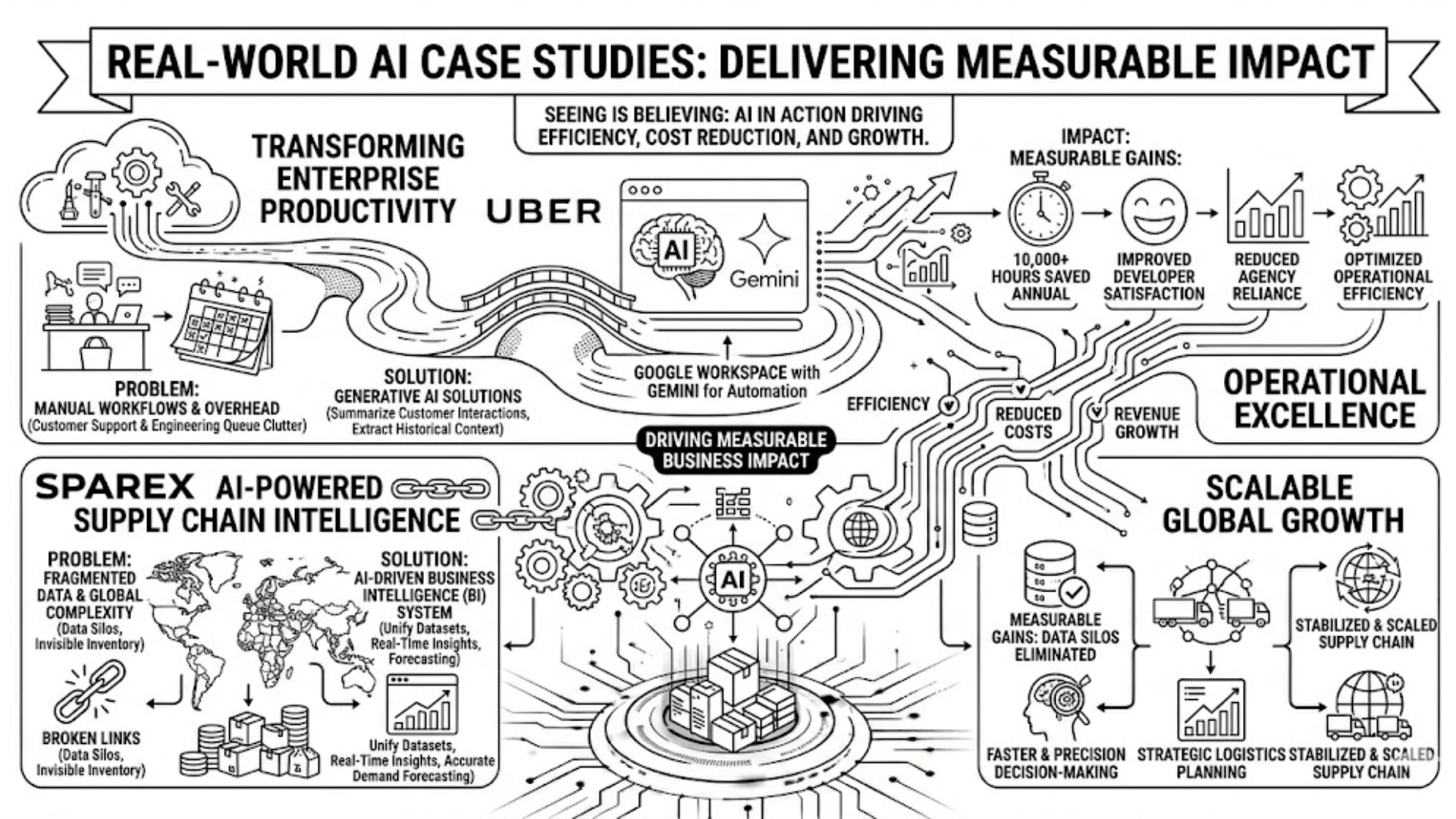
To fully understand the value of AI in Technology, it is essential to look at real-world implementations. These case studies clearly demonstrate how AI drives efficiency, reduces costs, and accelerates revenue growth across different business functions.
Uber: Transforming Enterprise Productivity with AI
A leading example of AI in Technology adoption is Uber. The company implemented advanced generative AI solutions across its global operations to streamline workflows and reduce administrative overhead.
Specifically, Uber integrated AI tools capable of summarizing customer interactions and extracting relevant context from historical data. As a result, both customer support teams and engineers gained faster access to critical information. In addition, Uber leveraged Google Workspace enhanced with Gemini to automate internal processes.
Consequently, the company eliminated over 10,000 hours of manual work annually. Moreover, this implementation improved developer satisfaction, reduced reliance on external agencies, and significantly optimized operational efficiency.
Sparex: AI-Powered Supply Chain Intelligence
Another compelling case of AI in Technology is Sparex. Managing tens of thousands of products across multiple countries created major challenges in data visibility and inventory control.
However, by deploying an AI-driven Business Intelligence system, Sparex was able to unify fragmented datasets and gain real-time insights. Therefore, the company could accurately forecast demand and optimize inventory distribution across its global network.
As a result, data silos were eliminated, and decision-making became faster and more precise. In addition, leadership teams gained the ability to execute strategic logistics planning with confidence. Ultimately, AI in Technology enabled Sparex to stabilize and scale its supply chain operations effectively.
Optifai: Accelerating SaaS Revenue with AI Insights
In the SaaS sector, AI in Technology is playing a critical role in revenue optimization. Optifai provides a strong example of how AI can transform sales performance.
By integrating AI into sales pipelines, Optifai enables organizations to analyze buyer intent, predict deal outcomes, and automate key workflows. As a result, sales teams can prioritize high-value opportunities and reduce inefficiencies in the deal cycle.
Furthermore, AI-driven insights allow businesses to refine their go-to-market strategies and improve conversion rates. Consequently, companies leveraging these tools experience faster revenue growth and more predictable sales performance.
| SaaS Performance Metric | Before AI Integration (Q2 2024) | After AI Integration (Jan 2025) | Net Change & Impact |
| Total Annual Recurring Revenue (ARR) | $12.0 Million | $15.2 Million |
+$3.2 Million (+27% Growth) |
| Average Deal Cycle Duration | 60 Days | 47 Days |
-22% Reduction in Sales Time |
| Demo to Close Conversion Rate | 30% | 43% |
+43% Increase in Closing Efficacy |
| Deals Closed per Rep (Quarterly) | 3.5 Deals | 6.6 Deals |
+89% Increase in Sales Velocity |
These meticulously tracked metrics prove definitively that AI in the technology sector is not merely a backend cost-cutting measure; it is a primary, highly aggressive driver of top-line revenue expansion and market capture.
Emerging Innovations of AI in Technology Shaping the Future
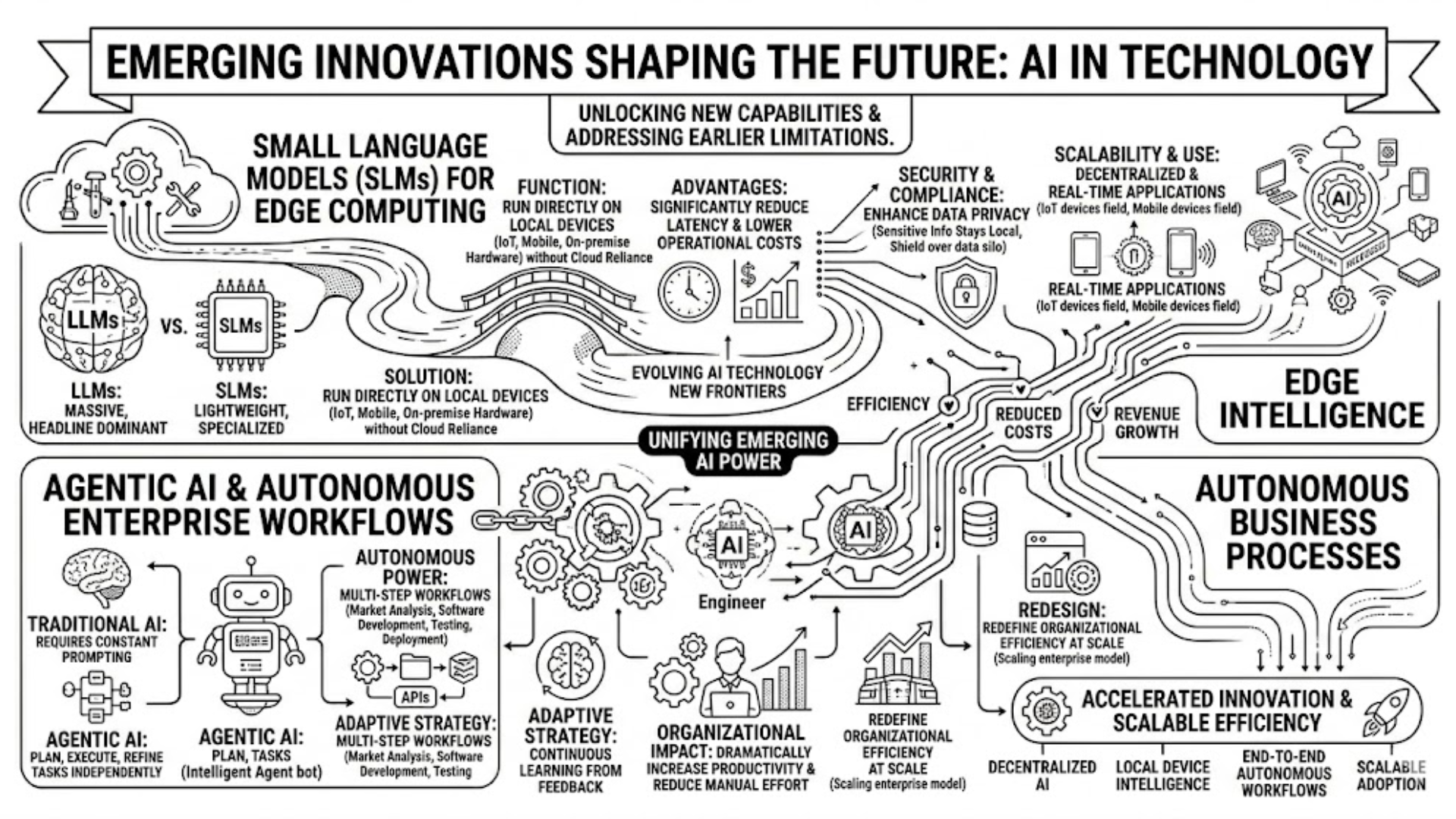
As AI in Technology continues to evolve, new innovations are emerging that address the limitations of earlier systems while unlocking entirely new capabilities. In particular, advancements such as Small Language Models and Agentic AI are redefining how enterprises deploy and scale artificial intelligence.
Small Language Models (SLMs) for Edge Computing
While large-scale models dominate headlines, AI in Technology is increasingly shifting toward more efficient alternatives like Small Language Models (SLMs). Unlike massive Large Language Models (LLMs), SLMs are lightweight, specialized, and optimized for specific tasks. Therefore, they can run directly on local devices rather than relying on cloud infrastructure.
As a result, SLMs significantly reduce latency and operational costs. In addition, they enhance data privacy because sensitive information does not need to be transmitted to external servers. This is especially important in industries with strict compliance requirements, such as finance and healthcare.
Moreover, AI in Technology benefits from the scalability of SLMs in edge environments. For example, enterprises can deploy AI capabilities across IoT devices, mobile systems, and on-premise hardware with minimal infrastructure overhead. Consequently, SLMs are becoming a key driver of decentralized and real-time AI applications.
Agentic AI and Autonomous Enterprise Workflows
Another breakthrough in AI in Technology is the rise of Agentic AI, systems designed to operate autonomously with minimal human intervention. Unlike traditional AI, which requires constant prompting, Agentic AI can plan, execute, and refine complex tasks independently.
For instance, these intelligent agents can interact directly with enterprise systems and APIs. Therefore, they are capable of handling multi-step workflows such as market analysis, software development, testing, and deployment. In addition, Agentic AI continuously learns from feedback and adapts its strategies over time.
As a result, organizations can dramatically increase productivity while reducing manual effort. Furthermore, AI in Technology enables a shift in how teams operate, where a single engineer can oversee processes that previously required entire departments. This not only accelerates innovation but also redefines organizational efficiency at scale.
How to Implement AI in Technology Successfully
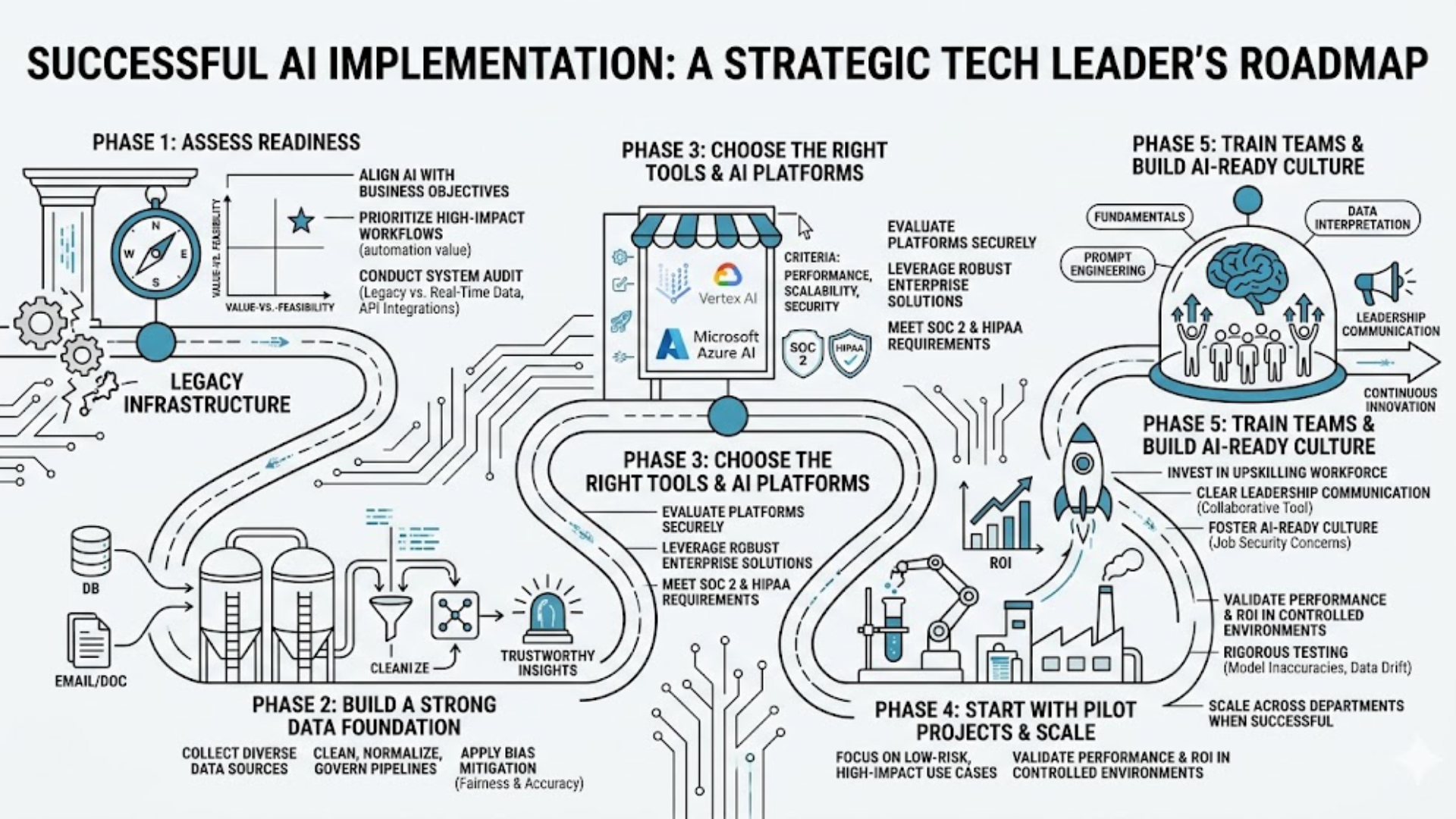
Implementing AI in Technology requires a structured, strategic approach rather than isolated experiments. Therefore, organizations must follow a clear roadmap to ensure scalable, secure, and value-driven adoption. Below are the essential phases technology leaders should prioritize.
Assess Readiness for AI Adoption
First, successful AI in Technology implementation begins with a thorough readiness assessment. Organizations must align AI initiatives directly with core business objectives. In particular, leaders should identify high-friction workflows where automation can deliver immediate value.
Moreover, it is critical to evaluate existing infrastructure. Legacy systems, especially monolithic architectures, may not support real-time data processing or API integrations required by AI. Therefore, companies should conduct a comprehensive system audit before moving forward.
In addition, prioritizing use cases through a value-versus-feasibility matrix helps avoid costly misalignment. As a result, businesses can focus on initiatives that deliver measurable impact instead of pursuing “solution-first” approaches.
Build a Strong Data Foundation
Next, AI in Technology depends heavily on data quality. AI models are only as reliable as the data they are trained on. Therefore, organizations must establish a robust and well-governed data pipeline.
This process includes collecting data from multiple sources, such as structured databases and unstructured content like emails or documents. Then, teams must clean and normalize the data to ensure consistency. Furthermore, bias mitigation techniques should be applied to improve fairness and accuracy.
As a result, a strong data foundation ensures that AI systems generate trustworthy and actionable insights. Without it, even the most advanced models will produce unreliable outcomes.
Choose the Right Tools and AI Platforms
Selecting the right tools is another critical step in AI in Technology adoption. The current AI ecosystem is highly diverse, so organizations must evaluate platforms based on performance, scalability, and security.
For example, enterprise solutions like Google Vertex AI and Microsoft Azure AI offer robust infrastructure and integration capabilities. These platforms allow businesses to combine proprietary data with pre-trained models securely.
Additionally, companies should consider compliance requirements such as SOC 2 and HIPAA. Therefore, choosing a platform that meets these standards is essential for enterprise deployment.
Start with Pilot Projects and Scale
Instead of deploying AI across the entire organization at once, companies should begin with small-scale pilot projects. This approach reduces risk and allows teams to validate performance in controlled environments.
During this phase, AI in Technology should focus on low-risk, high-impact use cases. In addition, teams can apply rigorous testing methods to identify potential issues such as model inaccuracies or data drift.
Once the pilot demonstrates clear ROI and consistent performance, organizations can scale AI solutions across departments. Consequently, this phased approach ensures stability and long-term success.
Train Teams and Build an AI-Ready Culture
Finally, people play a crucial role in the success of AI in Technology. Without proper training, even the best AI systems will fail to deliver value. Therefore, organizations must invest in upskilling their workforce.
Engineers and IT teams should be trained in AI fundamentals, prompt engineering, and data interpretation. Moreover, leadership must communicate clearly about the role of AI to reduce concerns about job displacement.
As a result, companies can foster a culture where AI is seen as a collaborative tool rather than a threat. In the long term, this mindset is essential for sustainable adoption and continuous innovation.
Measuring the ROI of AI in Technology Effectively
To evaluate the true impact of AI in Technology, organizations must adopt a dual approach. On one hand, they need to measure the technical performance of AI models. On the other hand, they must assess the real business outcomes generated by these systems. Therefore, focusing only on adoption metrics is not enough – what truly matters is measurable value.
Key Metrics to Track AI Success
Many companies mistakenly rely on surface-level indicators such as usage rates or the number of AI-generated outputs. However, AI in Technology delivers value through deeper operational improvements. As a result, organizations should prioritize outcome-based metrics.
For example, engineering teams can track Pull Request (PR) throughput to measure how quickly code is reviewed and merged. In addition, total software development cycle time provides insight into overall efficiency gains. Furthermore, metrics such as code change failure rate help evaluate the reliability and stability of AI-assisted development.
Another critical metric is the number of engineering hours saved. By automating repetitive tasks, AI in Technology allows teams to focus on higher-value activities like system architecture and innovation. Consequently, this shift directly contributes to productivity and long-term growth.
Evaluating Model Performance and Accuracy
Beyond business metrics, it is equally important to assess the technical health of AI models. Different types of AI in Technology require different evaluation methods. Therefore, data science teams must continuously monitor model performance using appropriate metrics.
For instance, classification models are often evaluated using precision, recall, and F1-score. Meanwhile, regression models rely on metrics such as mean absolute error (MAE) or root mean square error (RMSE). In addition, real-time monitoring is essential to detect issues like model drift or performance degradation over time.
Moreover, organizations should implement continuous validation processes to ensure models remain accurate as new data is introduced. As a result, AI systems can maintain consistent performance in dynamic environments.
Linking AI Performance to Business Outcomes
Finally, the most important step in measuring AI in Technology ROI is connecting technical metrics to financial results. For example, faster development cycles can lead to quicker product launches and increased revenue. Similarly, improved system reliability reduces downtime costs and enhances customer satisfaction.
Therefore, organizations should establish clear KPIs that link AI performance directly to business goals. In addition, regular reporting and analysis help ensure that AI initiatives remain aligned with strategic objectives.
| AI Model Architecture | Key Performance Metric | Purpose and Business Value of Measurement |
| Classification Models (e.g., Threat Detection) | Precision & Recall |
Ensures the system produces minimal false positives while successfully catching all actual security threats. |
| Classification Models | F1 Score |
Acts as the golden standard, providing a highly balanced assessment of the model’s overall predictive accuracy. |
| Regression Models (e.g., Server Load Forecasting) | Mean Absolute Error (MAE) |
Measures the exact mathematical variance between the AI’s predicted forecasts and the actual real-world outcomes. |
| Natural Language Processing (e.g., Chatbots) | BLEU & Perplexity |
Accurately assesses the fluency, coherence, and conversational accuracy of language models. |
Cost Savings Achieved Through Automation
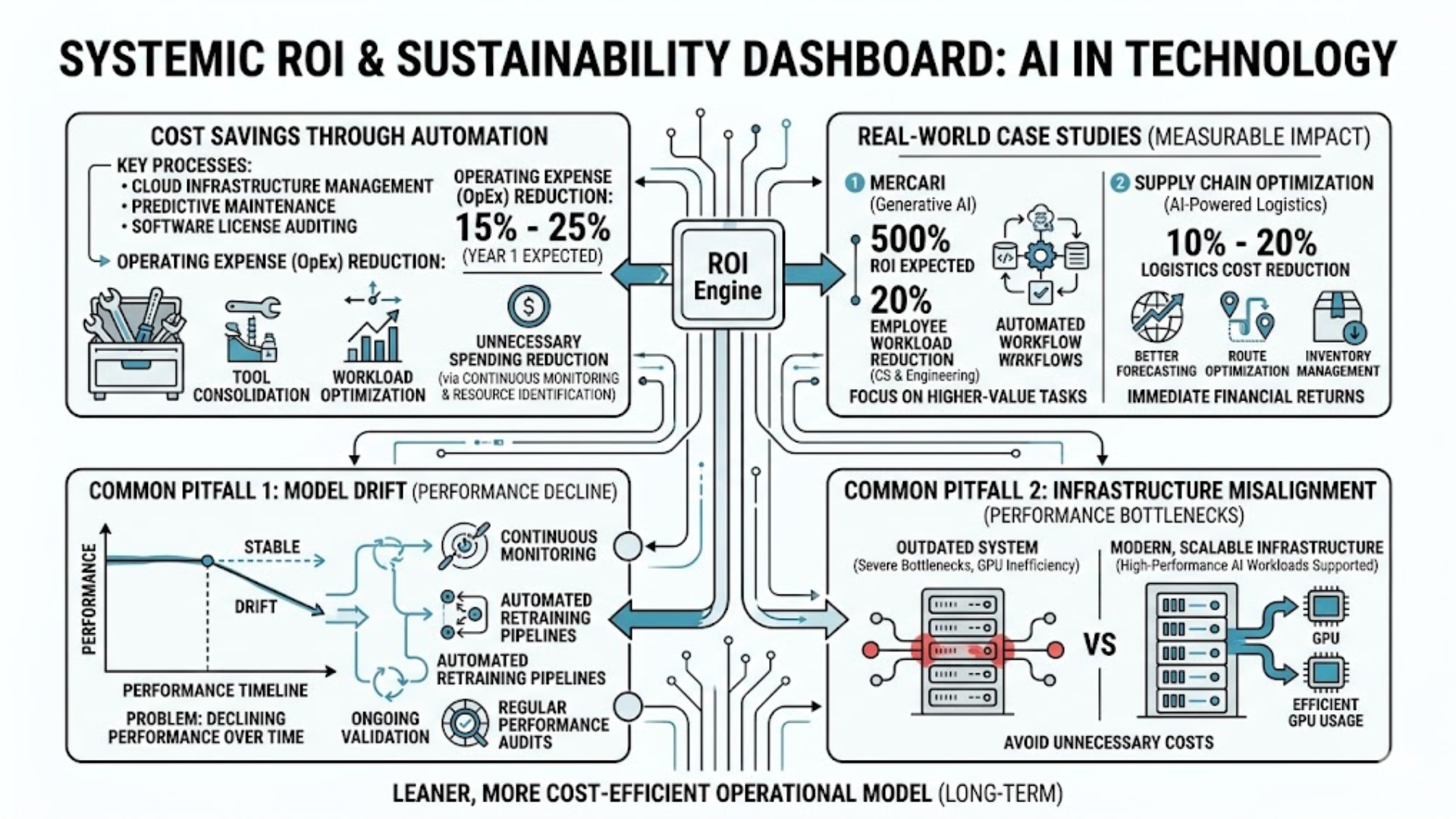
One of the most tangible benefits of AI in Technology is the significant reduction in operational costs. When organizations automate routine processes such as cloud infrastructure management, predictive maintenance, and software license auditing, they can eliminate inefficiencies at scale.
As a result, enterprise IT teams often achieve operating expense (OpEx) reductions of 15% to 25% within the first year. Moreover, AI continuously monitors system usage and identifies redundant resources. Therefore, companies can consolidate tools, optimize workloads, and reduce unnecessary spending. In the long term, this creates a leaner and more cost-efficient operational model.
Real-World Case Studies Demonstrating ROI
The financial impact of AI in Technology becomes even clearer when examining real-world deployments. For example, Mercari has implemented advanced generative AI across its customer service and engineering operations.
By automating user interactions and streamlining internal workflows, Mercari expects an impressive 500% return on investment. In addition, the company has reduced employee workload by approximately 20%, allowing teams to focus on higher-value tasks.
Similarly, organizations that apply AI in Technology to supply chain optimization report 10–20% reductions in logistics costs. This is achieved through better demand forecasting, route optimization, and inventory management. Consequently, AI not only improves efficiency but also delivers immediate financial returns.
Common Pitfalls in AI ROI and How to Avoid Them
Despite these benefits, achieving consistent ROI from AI in Technology is not guaranteed. One major challenge is model drift, where AI performance declines over time as real-world data changes. Therefore, without continuous monitoring and retraining, even high-performing models can become inaccurate and unreliable.
To mitigate this risk, organizations must implement automated retraining pipelines and ongoing validation processes. In addition, regular performance audits ensure that models remain aligned with current data patterns.
Another common issue is infrastructure misalignment. For instance, deploying compute-intensive AI models on outdated systems can lead to severe bottlenecks. As a result, GPUs may not receive data efficiently, causing performance drops and increased energy consumption.
Therefore, businesses should invest in modern, scalable infrastructure that supports high-performance AI workloads. By doing so, they can avoid unnecessary costs and fully realize the benefits of AI in Technology.
Future Trends of AI in Technology Shaping the Next Decade
As innovation accelerates, AI in Technology is set to redefine how the entire industry operates. Over the next decade, advancements in autonomy, efficiency, and scalability will fundamentally transform enterprise systems. Therefore, businesses must prepare for a future where AI is not just a tool, but a core operational driver.
Predictions for AI in Technology by 2030
By 2030, AI in Technology will shift from assistive tools to fully autonomous systems. Instead of relying on copilots that require constant human input, organizations will increasingly deploy intelligent AI agents. These systems will be capable of reasoning, planning, and executing complex workflows independently.
For example, in software development, AI will move beyond generating code snippets. It will be able to design system architectures, run automated testing, and deploy applications without manual intervention. As a result, developers will transition into strategic roles, focusing on oversight, validation, and high-level decision-making.
At the same time, AI in Technology will evolve in terms of infrastructure. Current limitations related to compute power and energy consumption are driving innovation in more efficient models. Consequently, Small Language Models (SLMs) will become more powerful and widely adopted.
This shift will push AI processing from centralized cloud environments to decentralized edge devices. Therefore, industries such as IoT, telecommunications, and robotics will benefit from real-time, low-latency intelligence. Ultimately, this will democratize access to AI, enabling faster and more responsive systems across the globe.
How Businesses Can Stay Ahead in an AI-Driven World
To remain competitive, organizations must take a proactive approach to AI in Technology adoption. First, they should build flexible and scalable digital infrastructures. In particular, adopting API-first architectures allows seamless integration of new AI models as they emerge.
Moreover, companies need to move away from rigid legacy systems. These outdated infrastructures limit the ability to deploy advanced AI solutions. Therefore, modernization is essential for long-term success.
In addition, businesses should embrace agile product development strategies. This ensures that teams can quickly adapt to evolving technologies and market demands. As a result, organizations can continuously innovate without major disruptions.
Equally important is investing in people. Companies must foster a culture of continuous learning and AI fluency. By training employees to work effectively with AI systems, businesses can maximize productivity and innovation.
Conclusion
The rise of AI in Technology marks a fundamental shift in how the technology industry operates, from automating core processes like testing and IT operations to enabling advanced applications in areas such as semiconductor design and autonomous networks. Although challenges like data privacy, high costs, and talent shortages remain, the proven benefits ranging from significant cost savings to up to 500% ROI, clearly demonstrate that AI is now a critical driver of innovation and competitive advantage.
For businesses, the priority is clear: act early and strategically. By assessing readiness, identifying high-impact use cases, and launching focused pilot projects, organizations can validate both technical performance and business value. Ultimately, those who embrace AI in Technology today will be best positioned to lead the market, while those who delay risk falling behind in an increasingly AI-driven future.