

What is Data Security?
 Data security is a set of practices and technologies designed to protect sensitive data from unauthorized access, corruption, or theft. It encompasses a variety of measures such as encryption, access control, and secure storage to ensure that data is kept safe and can only be accessed by authorized individuals. With the increasing amount of data generated in today’s digital landscape, data security has become a fundamental concern for businesses of all sizes. Whether it’s personal information, financial records, or intellectual property, ensuring the protection of this data is crucial.
Why is Data Security Important for Businesses?
Data security plays a pivotal role in business operations for several reasons:
- Protection from Cyber Attacks: Businesses are constantly at risk of cyberattacks such as data breaches, ransomware, and phishing attacks. A compromised data breach can lead to significant financial and reputational damage.
- Legal and Regulatory Compliance: Many industries are governed by data protection regulations such as the GDPR (General Data Protection Regulation) and CCPA (California Consumer Privacy Act). Failure to comply can lead to hefty fines and legal issues.
- Maintaining Customer Trust: Consumers trust businesses with their personal and financial information. If that trust is broken due to poor data security practices, a company can lose customers and experience severe damage to its reputation.
- Protecting Intellectual Property: For many businesses, data is their most valuable asset. Protecting intellectual property, trade secrets, and sensitive business information is vital to maintaining a competitive edge.
Who Needs to Implement Data Security Measures?
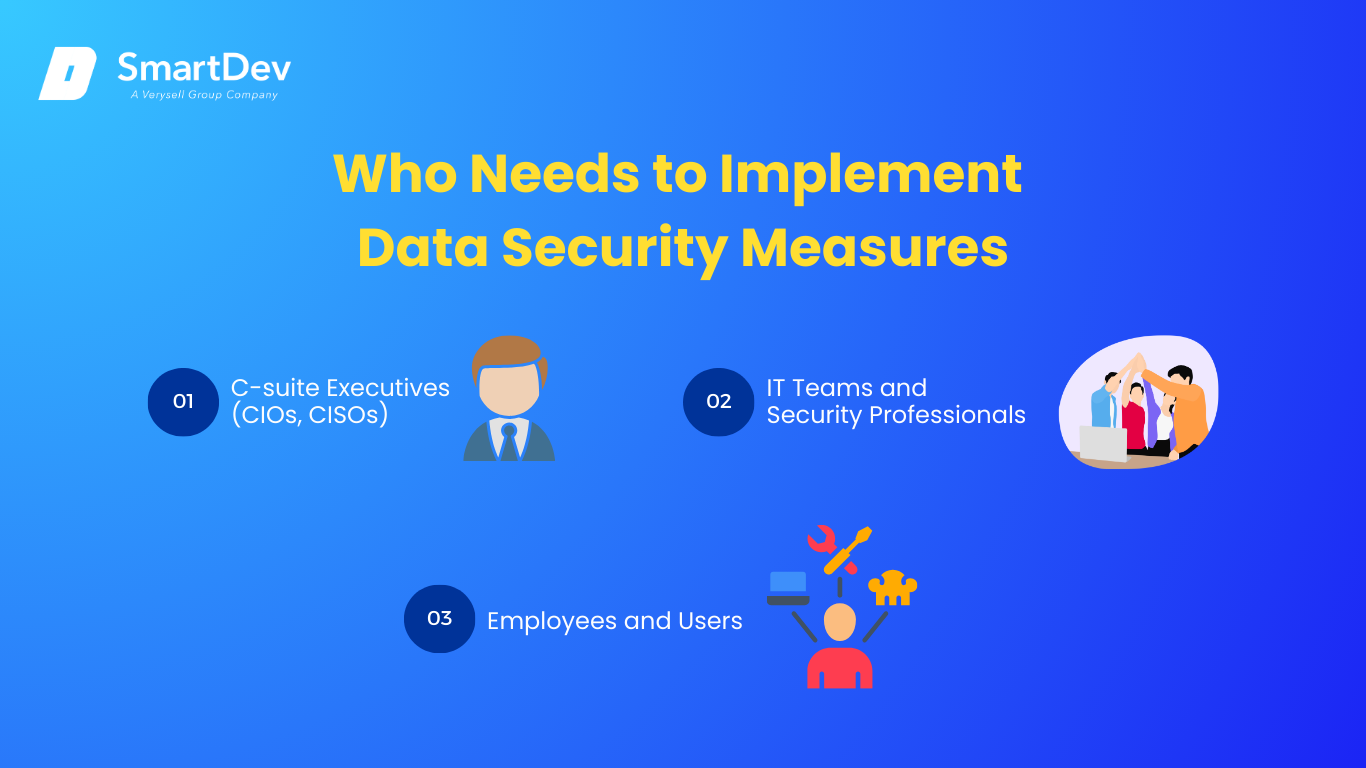 Data security is everyone’s responsibility within an organization. However, certain roles typically bear the most responsibility:
- C-suite Executives (CIOs, CISOs): The Chief Information Officer (CIO) or Chief Information Security Officer (CISO) typically leads an organization’s data security initiatives. They are responsible for establishing security policies, overseeing compliance, and responding to security threats.
- IT Teams and Security Professionals: These employees ensure the day-to-day implementation of data protection measures, including the configuration of security tools, monitoring data flow, and patching vulnerabilities.
- Employees and Users: Employees at all levels also have a role to play in data security. This includes following company policies on password management, recognizing phishing attempts, and using secure networks when accessing sensitive data.
When to Begin Thinking About Data Security in a Business?
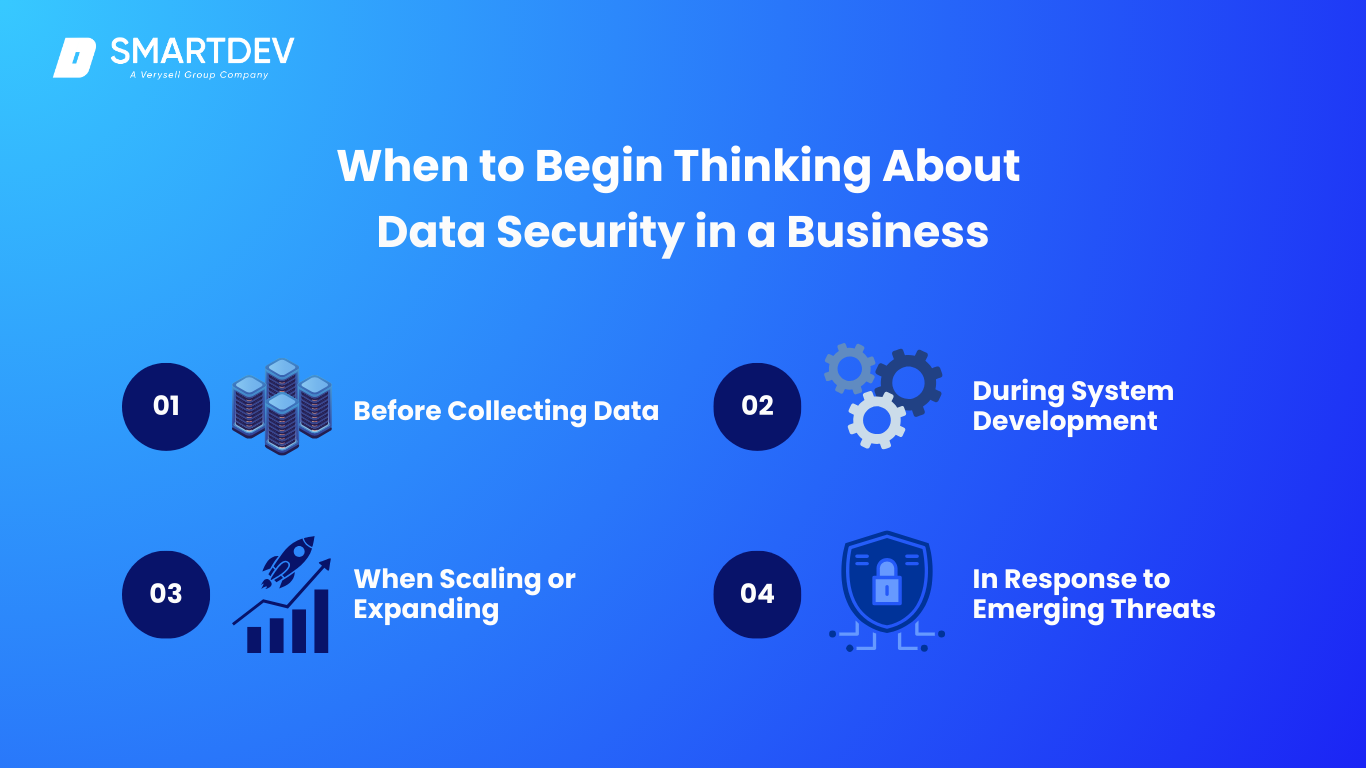 Data security should be integrated into business operations from the very beginning. In fact, data security should be a priority even before a business handles any data. Here’s when it matters most:
- Before Collecting Data: When planning to collect or process personal or sensitive information, businesses should have data security measures in place. This includes deciding on the type of data to collect, encryption standards, and data retention policies.
- During System Development: As new IT systems, applications, or databases are being developed, security should be built into the architecture from the start, also known as “security by design.”
- When Scaling or Expanding: As businesses grow and expand, they often accumulate more data. A scalable and secure infrastructure must be in place to handle the increased volume and complexity of the data.
- In Response to Emerging Threats: With new cybersecurity threats emerging regularly, it is important to continually evaluate and upgrade security measures to adapt to these threats.
Related Terms in Data Security
- Contrôle d'accès :
Access control involves managing who can access specific resources or data within an organization. It ensures that only authorized users can view or modify sensitive information, reducing the risk of unauthorized access or data breaches. - Cryptage des données :
Data encryption is the process of converting sensitive data into a coded form to prevent unauthorized access. Only those with the decryption key can access the original data, ensuring data confidentiality and integrity, especially when data is transmitted or stored. - Tests de pénétration :
Penetration testing is a security measure used to identify vulnerabilities in a system. Ethical hackers simulate attacks on the system to find potential weaknesses before malicious actors can exploit them, helping to improve the overall security posture.
Conclusion
Data security is not just a technological concern but a critical business strategy. From the moment data is collected to when it is stored and accessed, strong data security practices must be implemented to safeguard it. Whether it’s protecting sensitive customer data, intellectual property, or ensuring compliance with regulations, businesses must take proactive steps to keep their data secure. Understanding and adopting data security measures from the start is essential to preventing security breaches, ensuring trust, and maintaining business success in the digital age.