
TL;DR
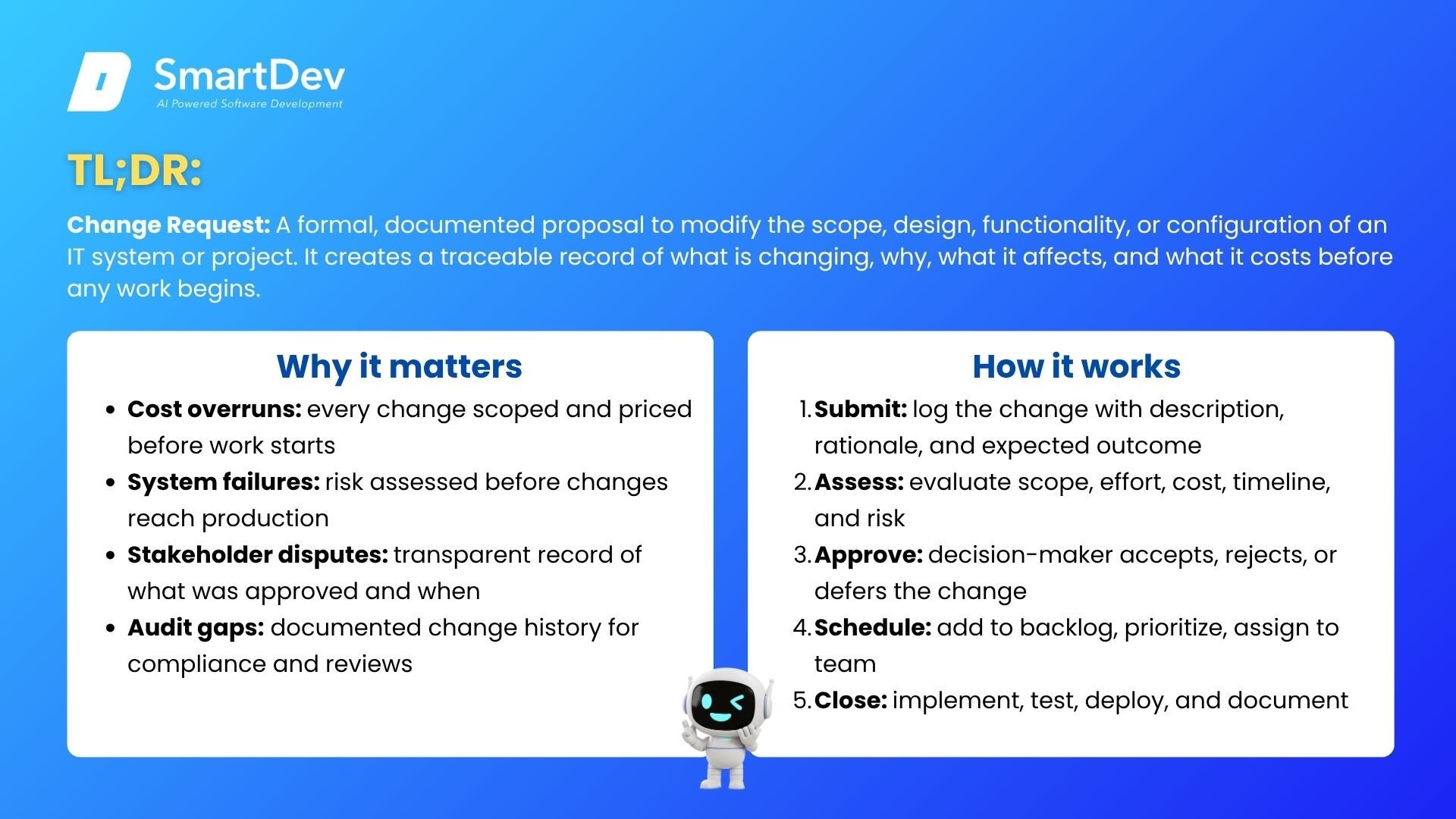
- A Change Request is a formal proposal to alter a project’s scope, system configuration, or software functionality in a controlled, documented way.
- Without a proper change request process, projects suffer from scope creep, budget overruns, and undocumented system changes that create risk.
- A well-managed change request process ensures every change is assessed, approved, and tracked before it is implemented.
Change Requests are part of everyday life in IT projects and operations. Requirements evolve, stakeholders change their minds, and new business needs emerge mid-project. Without a structured process to manage these changes, projects spiral out of control. This article explains what a Change Request is, how the process works, and when to use it.
What is a Change Request?
A Change Request is a formal, documented proposal to modify the scope, design, functionality, or configuration of a software application, IT system, or project deliverable. It creates a structured, traceable record of what change is being proposed, why it is needed, what it will affect, and what it will cost, before any work begins on implementing it.
Change Requests are used in two primary contexts in IT:
- Software development: A stakeholder requests a new feature, modification to an existing feature, or removal of functionality outside the original project scope
- IT operations and ITSM (IT Service Management): A change to production infrastructure, configurations, or systems that needs to be risk-assessed and approved before it goes live
In enterprise environments, Change Requests are evaluated by a Change Advisory Board (CAB), a cross-functional group that assesses risk, priority, and resource impact before approving or rejecting proposed changes.
Pourquoi c'est important pour les entreprises
Unmanaged changes are one of the leading causes of IT project overruns and production incidents. When changes happen informally or without documentation, costs grow invisibly, systems break in unexpected ways, and accountability disappears. A formal Change Request process puts structure around change so it can be planned, costed, and controlled.
- Reduce project cost overruns by ensuring every change is scoped, estimated, and approved before any work is done on it
- Protect system stability by requiring risk assessment before changes reach production environments where failures affect real users
- Improve stakeholder alignment by creating a transparent record of all requested, approved, and rejected changes that all parties can refer to
- Accelerate future audits and reviews by maintaining a documented change history that satisfies regulatory, security, and contractual requirements
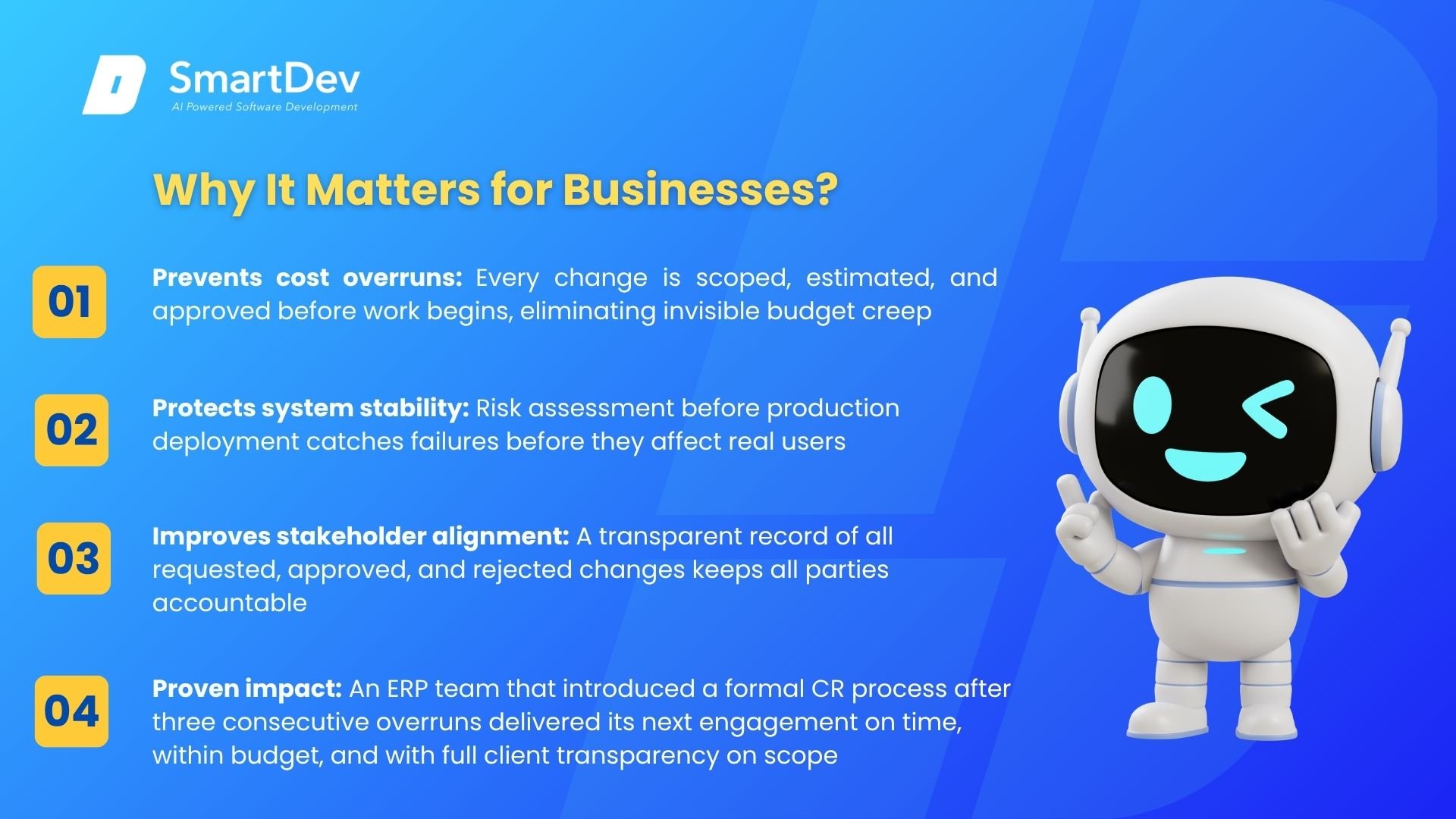
For example, a software development team working on an ERP (Enterprise Resource Planning) implementation introduced a formal Change Request process after three consecutive project overruns. In the following engagement, all out-of-scope requests were logged, assessed, and priced before approval. The project was delivered on time and within the original budget, with full transparency for the client on what was included and what was added.
How Does a Change Request Work?
- Submit the request: A stakeholder, team member, or client formally logs the proposed change, describing what needs to change, why it is needed, and what business outcome it supports.
- Impact assessment: The project manager or technical lead evaluates the change for scope impact, effort required, cost, timeline implications, and any risk to existing functionality or systems.
- Review and approval: The assessed change is presented to the relevant decision-maker (project sponsor, CAB, or client) with a recommendation. It is either approved, rejected, or deferred to a later phase.
- Prioritize and schedule: Approved changes are added to the project backlog or IT change calendar, prioritized against existing work, and assigned to the appropriate team for implementation.
- Implement, test, and close: The change is built and tested in a controlled environment, verified against the original request, deployed, and formally closed with updated documentation.
The result is a controlled, auditable record of every change made to a system or project, giving management full visibility into what was changed, when, and why.
When to Use a Change Request?
A formal Change Request should be raised in these situations:
- A stakeholder wants to add, modify, or remove functionality that was not included in the original project scope or contract
- A business rule, regulation, or integration requirement has changed and the system must be updated to reflect it
- A production system needs a configuration change, software update, or infrastructure modification that could affect availability or security
- A bug fix requires changes that extend beyond the original agreed defect resolution scope
When a formal Change Request may not be necessary:
- The change is a minor cosmetic adjustment clearly within the original scope and requires no additional time or budget
- Your team uses continuous delivery with a rapid iteration model where small changes are deployed frequently without formal gates
Autres termes associés
Technical Proposal: A document that defines the technical approach, scope, timeline, and cost for a software or IT engagement before work begins. Change Requests emerge precisely when delivered scope diverges from what the Technical Proposal originally defined, making the proposal the baseline against which every CR is measured.
Waterfall Development: A sequential software development model where each phase is completed fully before the next one begins. Formal Change Request processes originated in Waterfall environments, where modifying scope mid-project carries high cost and risk due to the lack of iterative flexibility.
Développement agile: An iterative software delivery approach that incorporates feedback and evolving requirements through short development cycles. Agile handles many small changes through backlog refinement and sprint planning, but formal Change Requests remain necessary in Agile contexts when changes affect budget, contract scope, or third-party dependencies.