
TL;DR
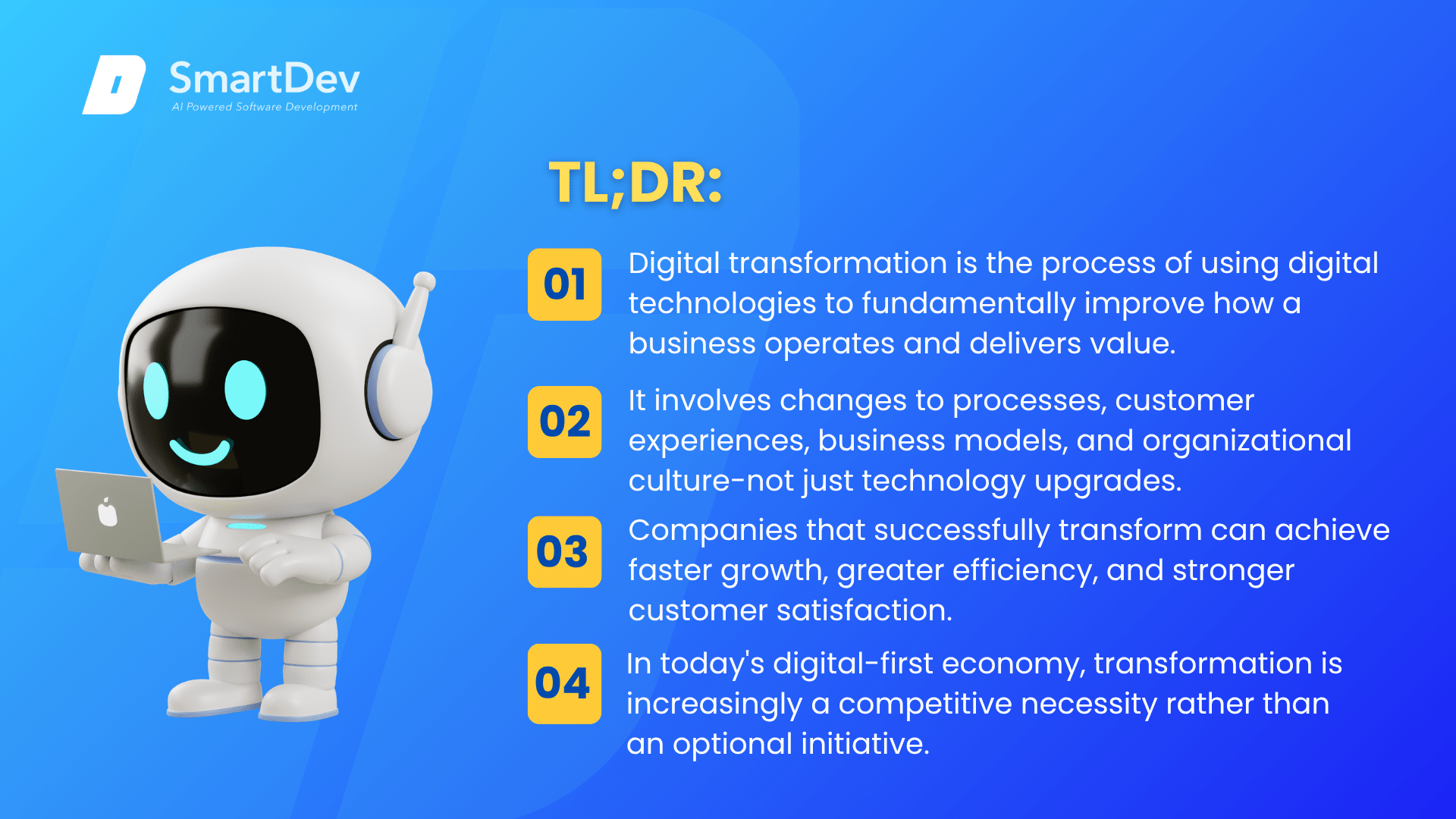
- Digital transformation is the process of integrating digital technology across all areas of a business to fundamentally change how it operates and delivers value to customers.
- It is not simply a technology upgrade but a strategic, organization-wide shift in culture, processes, and platforms that determines long-term competitiveness.
- Organizations that successfully execute digital transformation report 47% faster revenue growth and 38% improvement in operational efficiency compared to those that fall behind.
Digital transformation is one of the most consequential decisions a business leader will make. It reshapes how your organization operates, serves customers, and competes in a market where digital-first expectations are now the baseline. This article explains what digital transformation is, who undertakes it, and what it costs to execute effectively.
What is Digital Transformation?
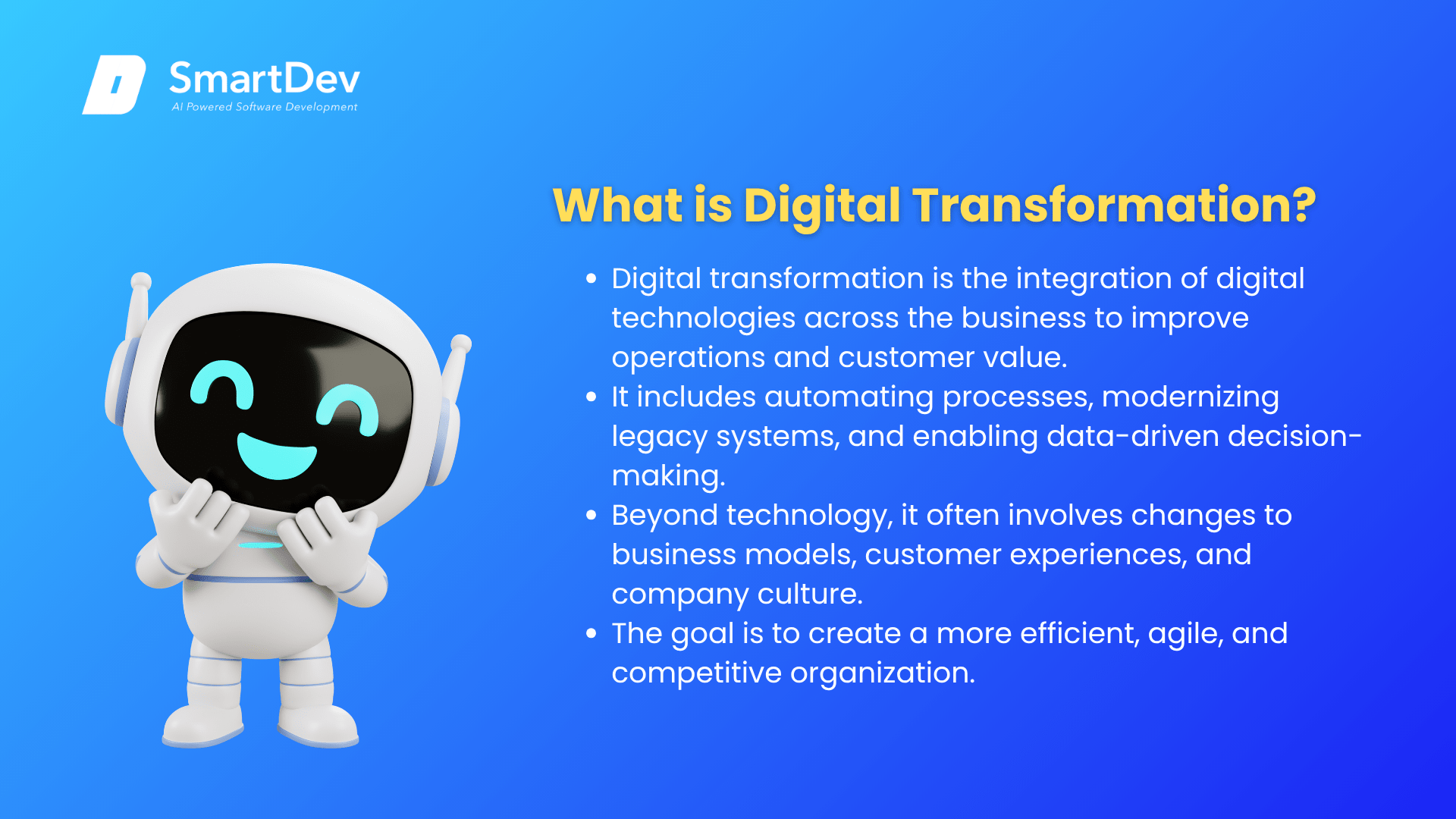
Digital transformation is the integration of digital technology into all areas of a business, fundamentally changing how the organization operates and delivers value to customers. It goes beyond adopting new software or moving to the cloud. It is a comprehensive, ongoing shift in how people work, how processes run, and how technology enables the business to compete.
Digital transformation typically spans four interconnected domains:
- Process transformation: Automating and streamlining manual, paper-based, or inefficient workflows using digital tools to reduce costs and improve speed and accuracy.
- Business model transformation: Shifting revenue streams or service delivery methods enabled by digital capabilities, such as moving from product sales to subscription models or launching digital products alongside physical ones.
- Customer experience transformation: Using data and digital channels to deliver faster, more personalized interactions that meet rising customer expectations for responsiveness and self-service.
- Cultural transformation: Building the organizational mindset, skills, and ways of working needed to sustain continuous digital change rather than treating it as a one-time project.
Pourquoi c'est important pour les entreprises
Digital transformation is no longer a choice for most businesses. Customer expectations have shifted toward digital-first experiences across every industry. Competitors who have transformed their operations can serve customers faster, at lower cost, with greater consistency. Businesses that delay transformation face a widening gap that becomes increasingly expensive to close.
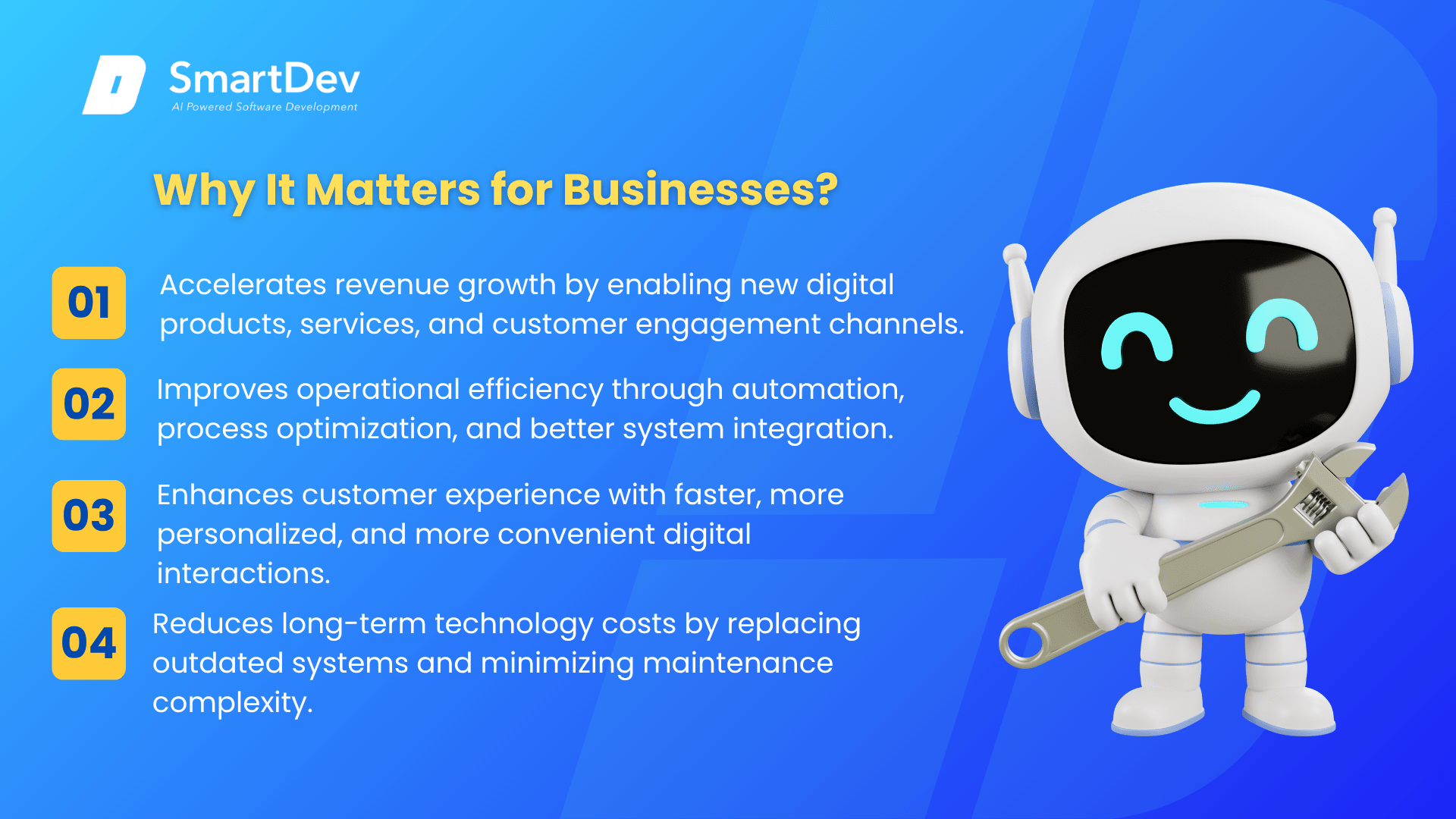
- Accelerate revenue growth: Organizations successfully executing digital transformation report 47% faster revenue growth compared to digital laggards, driven by new digital channels, faster product delivery, and improved customer retention.
- Improve operational efficiency: Automating manual processes and integrating disconnected systems reduces operational costs, eliminates duplication, and frees employees to focus on higher-value work.
- Increase customer satisfaction: Research shows a 52% improvement in customer satisfaction scores among companies that have transformed their customer-facing digital capabilities, driven by faster responses and more personalized experiences.
- Reduce technology costs over time: Modernizing legacy infrastructure through transformation reduces the mounting cost of maintaining outdated systems, security vulnerabilities, and integration complexity.
For example, a mid-sized logistics company implemented digital transformation across its operations by replacing paper-based tracking with a unified digital platform, automating customer notifications, and giving drivers mobile tools for real-time updates. Within 18 months, customer complaint rates dropped by 35% and operational costs per delivery fell by 18%.
Who Undertakes Digital Transformation?
Digital transformation is relevant across virtually every industry and company size, but the specific drivers and priorities vary:
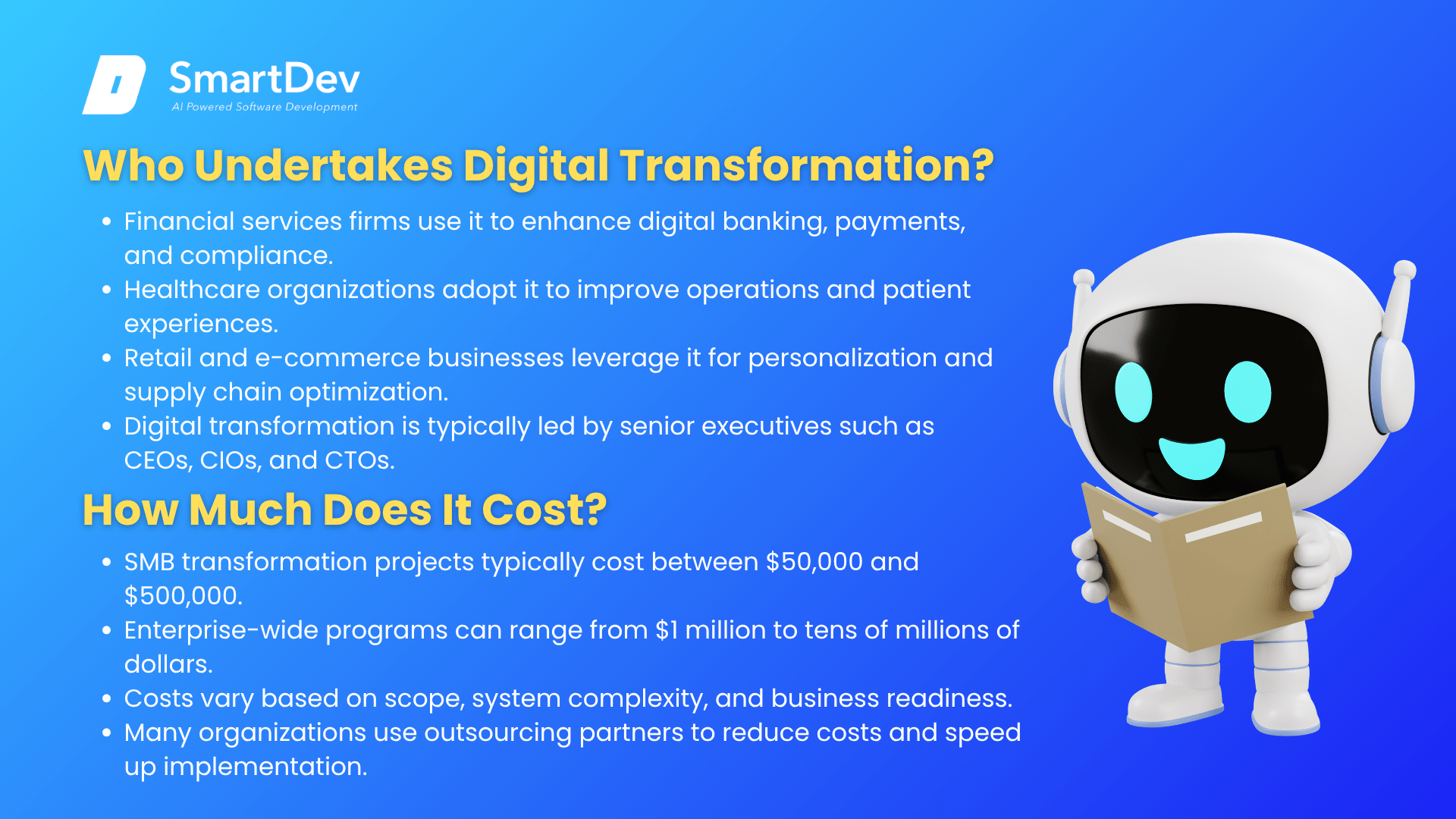
- Financial services: Banks, insurers, and payment companies transform to meet customer demand for digital banking, reduce branch infrastructure costs, and compete with fintech challengers who started digital-first.
- Soins de santé : Hospitals and healthcare providers transform to improve patient experiences through digital scheduling and telemedicine, reduce administrative burden, and enable data-driven clinical decision support.
- Retail and e-commerce: Retailers transform to integrate online and in-store experiences, enable personalization at scale, and optimize supply chains through real-time data and automation.
- Fabrication: Industrial companies transform through smart factory technologies, IoT-connected equipment, and digital supply chain visibility to reduce downtime and improve quality.
Within organizations, digital transformation is typically driven by the CEO, CTO, or Chief Digital Officer, with execution spanning IT, operations, HR, and customer-facing teams. Many businesses partner with IT outsourcing firms or specialist consultancies to accelerate transformation while building internal digital capabilities in parallel.
How Much Does Digital Transformation Cost?
Digital transformation investment varies enormously based on the scope, starting point, and ambition of the program:
- Small to mid-sized businesses: Focused transformation programs targeting one or two core processes, such as automating customer onboarding or replacing a legacy ERP system, typically cost $50,000 to $500,000 including technology, implementation, and change management.
- Large enterprise programs: Comprehensive enterprise transformation spanning multiple business units, systems, and geographies ranges from $1 million to tens of millions over three to five years, depending on the complexity of existing systems and the breadth of change required.
- Outsourcing versus in-house delivery: Many organizations partner with IT outsourcing providers for transformation delivery, which typically reduces total cost by 30 to 50% compared to building equivalent in-house capabilities, while also accelerating time to value through access to pre-built expertise and methodologies.
The most critical cost insight is that the cost of NOT transforming, measured in lost revenue, declining market share, and escalating legacy maintenance, typically exceeds the investment in transformation within three to five years for most organizations operating in competitive markets.
Autres termes associés
Cloud Native Development: An approach to building software specifically for cloud environments that is a key technical enabler of digital transformation, allowing organizations to deploy and scale new digital capabilities rapidly and cost-effectively.
Enterprise Architecture: The discipline of aligning an organization’s technology systems, processes, and data structures with its business goals, forming the strategic blueprint that guides digital transformation decisions and priorities.
Technical Debt: The accumulated cost of poor technology decisions and deferred modernization that enterprise architecture programs are specifically designed to identify, quantify, and systematically reduce through structured rationalization and modernization planning.