TL;DR
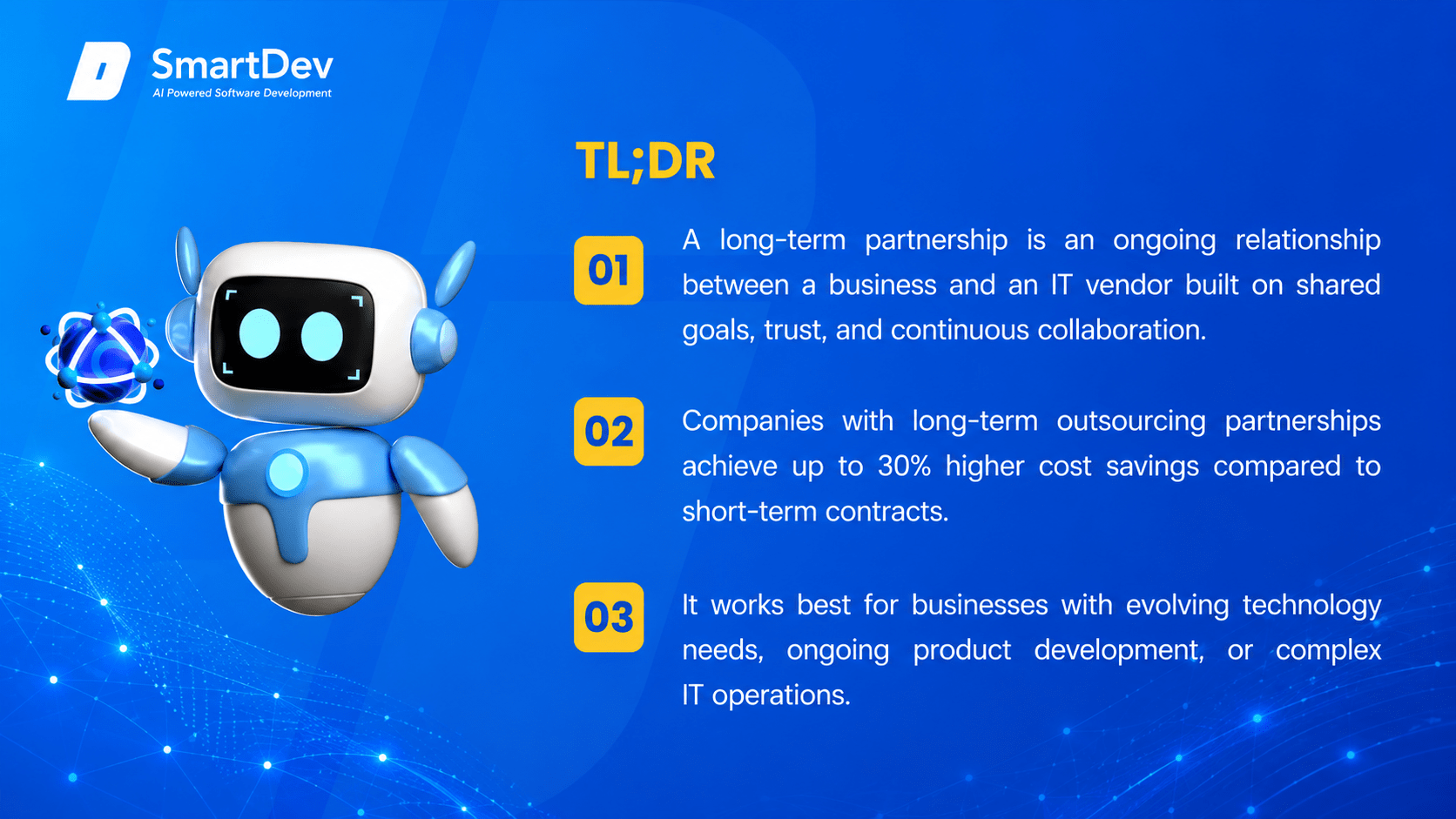
- A long-term partnership is an ongoing relationship between a business and an IT vendor built on shared goals, trust, and continuous collaboration.
- Companies with long-term outsourcing partnerships achieve up to 30% higher cost savings compared to short-term contracts.
- It works best for businesses with evolving technology needs, ongoing product development, or complex IT operations.
A long-term partnership in IT outsourcing is a strategic commitment between a client and a vendor that extends well beyond a single project. Unlike one-off engagements, it creates a foundation for sustained collaboration, shared accountability, and measurable business growth. This article explains what it means, why it matters, and how to make it work for your organization.
What is a Long-term Partnership?
A long-term partnership is an ongoing, structured relationship between a business and an IT service provider designed to deliver continuous value over months or years. It goes beyond a transactional arrangement, turning your vendor into an extension of your own team. Over time, the partner becomes deeply familiar with your systems, processes, team culture, and business goals.
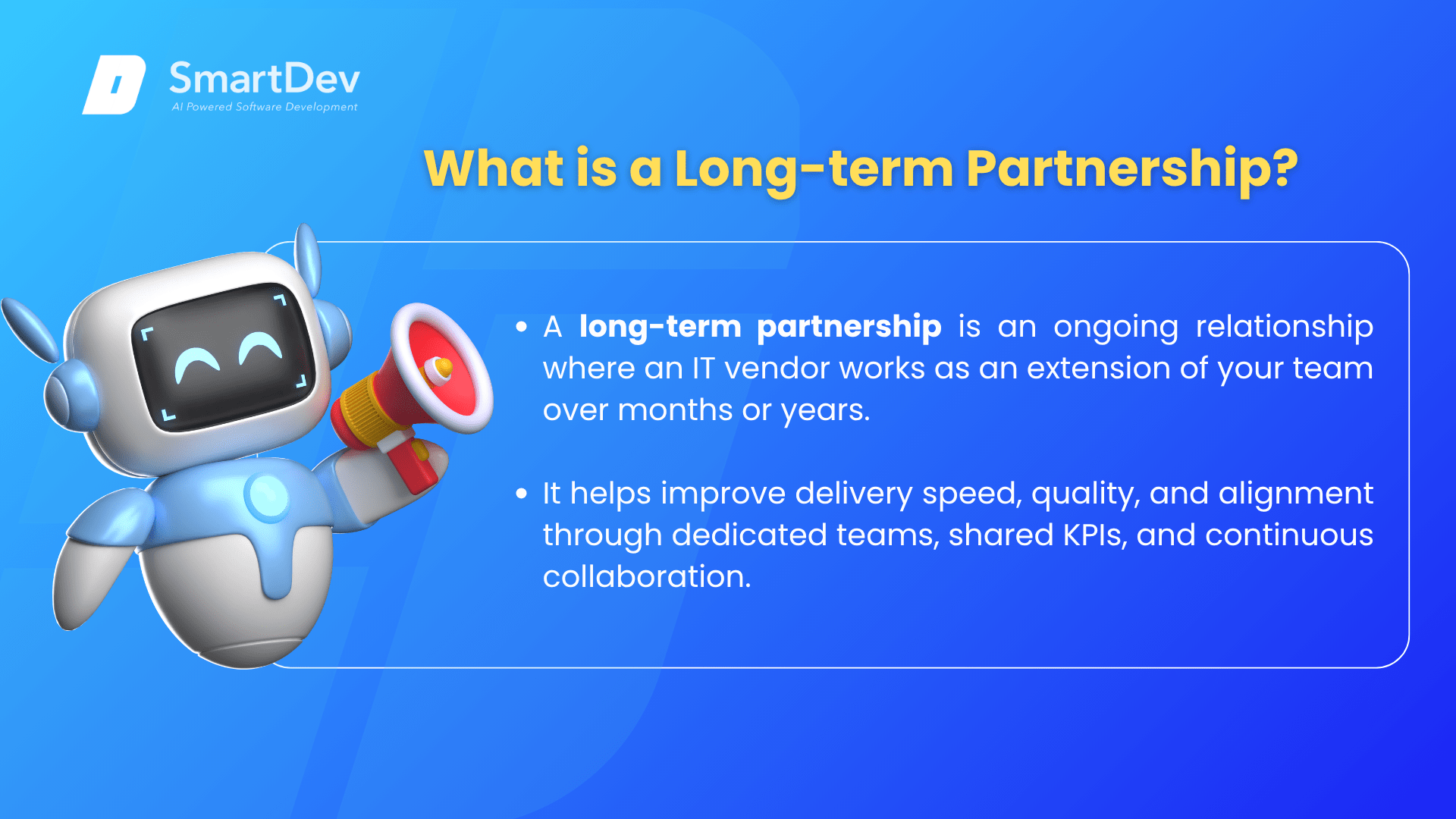
This alignment enables faster delivery, fewer handover issues, and a consistently higher quality of output. Long-term partnerships typically include dedicated teams, regular performance reviews, and evolving scopes of work that adapt as your business grows. The relationship is governed by shared KPIs and regular communication rhythms rather than isolated project briefs. In the IT outsourcing context, this can span software development, managed services, QA, data engineering, or any combination of technical capabilities.
Pourquoi c'est important pour les entreprises
Many companies waste significant time and money repeatedly re-onboarding new vendors, re-explaining requirements, and managing quality inconsistencies. A long-term partnership eliminates this friction and turns your vendor into a strategic asset.
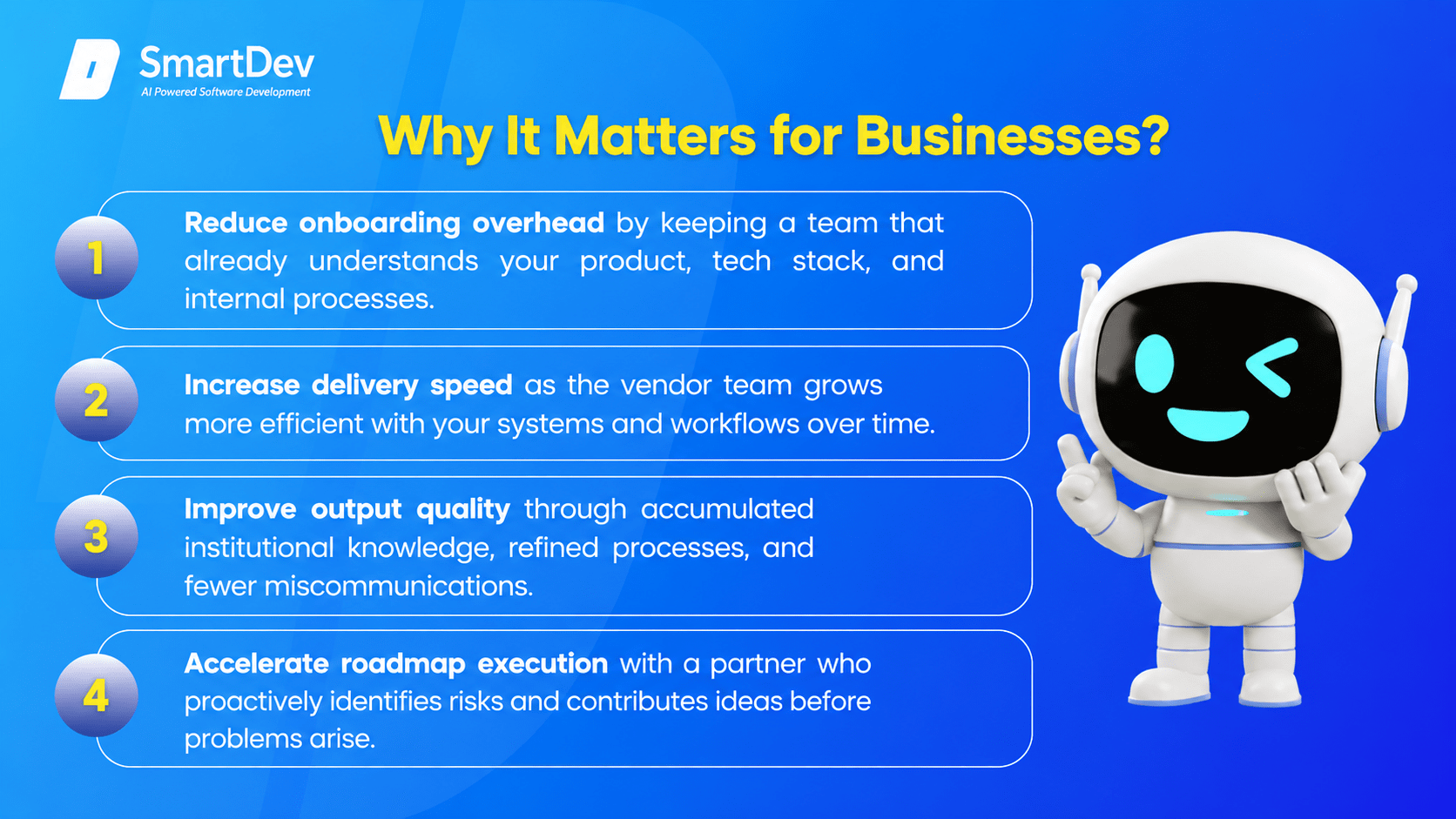
- Reduce onboarding overhead by keeping a team that already understands your product, tech stack, and internal processes.
- Increase delivery speed as the vendor team grows more efficient with your systems and workflows over time.
- Improve output quality through accumulated institutional knowledge, refined processes, and fewer miscommunications.
- Accelerate roadmap execution with a partner who proactively identifies risks and contributes ideas before problems arise.
For example, a mid-sized SaaS company that moved from project-based outsourcing to a long-term engagement with a dedicated development team saw its release cycle cut by 40% within two years. The vendor team, now deeply familiar with the product architecture, could scope and deliver features in days rather than weeks. Support ticket volume also dropped significantly due to improved code quality and better alignment with user needs.
How Does It Work?
- Discovery and alignment — Both parties agree on business goals, KPIs, communication rhythms, tools, and escalation paths before work begins.
- Team formation — A dedicated team is assembled, onboarded, and integrated into the client’s workflows, tools, and culture.
- Ongoing delivery — Work is organized into sprints or continuous support models with regular reviews and clear deliverables.
- Relationship governance — Quarterly business reviews assess performance, adjust scope, and confirm strategic alignment.
- Continuous improvement — Both sides invest in process optimization, training, and technology upgrades over time to increase value.
The result is a vendor relationship that functions more like an extended internal team than an outside contractor. Both parties develop a shared language, shared accountability, and a genuine interest in each other’s success.
When to Use a Long-term Partnership?
A long-term partnership is the right choice in several situations:
- Your product requires ongoing development, updates, and maintenance that extends beyond a single launch.
- You need a dedicated tech team but lack the capacity or budget to hire and retain in-house talent.
- Your business is scaling quickly and needs a flexible, reliable partner to keep pace with demand.
- You value knowledge continuity and want to avoid the cost and risk of frequent vendor switching.
When NOT to use it:
- For isolated, one-time projects with a clearly defined scope and no expected follow-on work.
- When your internal teams can handle delivery without external support and budget is limited.
Autres termes associés
Employee retention: An organization’s ability to keep its employees engaged and employed over a sustained period.
Revenue share model: A contractual structure where two or more business parties agree to split earned revenue in defined proportions rather than exchanging a fixed fee or hourly rate.
Key Performance Indicators (KPIs): Quantifiable metrics that measure how effectively an organization, team, or system is achieving its most important objectives.