
En bref :
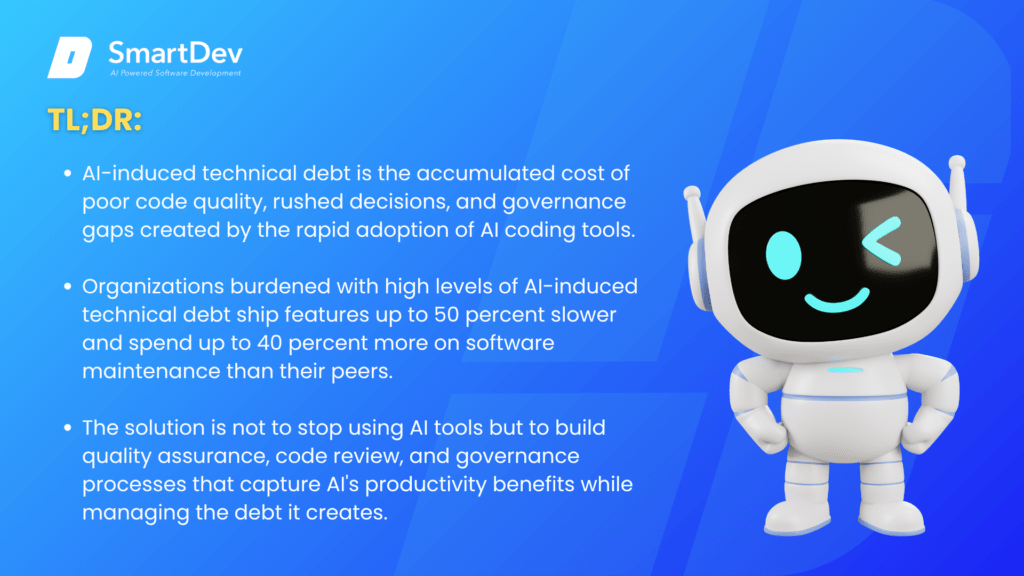
- AI-induced technical debt is the accumulated cost of poor code quality, rushed decisions, and governance gaps created by the rapid adoption of AI coding tools.
- Organizations burdened with high levels of AI-induced technical debt ship features up to 50 percent slower and spend up to 40 percent more on software maintenance than their peers.
- The solution is not to stop using AI tools but to build quality assurance, code review, and governance processes that capture AI’s productivity benefits while managing the debt it creates.
AI coding tools have made it faster than ever to write software. They have also made it faster than ever to write software that no one fully understands and no one can easily maintain. AI-induced technical debt is the growing bill that arrives when speed of generation outpaces quality of engineering, and it is quietly eroding the productivity gains that enterprises expected from AI adoption.
What Is Technical Debt (AI-Induced)?
Technical debt is a concept from software engineering describing the future cost incurred by choosing a quick, convenient solution today instead of a more robust, maintainable one. AI-induced technical debt is the specific category of technical debt created by the rapid, often ungoverned adoption of AI code generation tools and AI-assisted development practices.
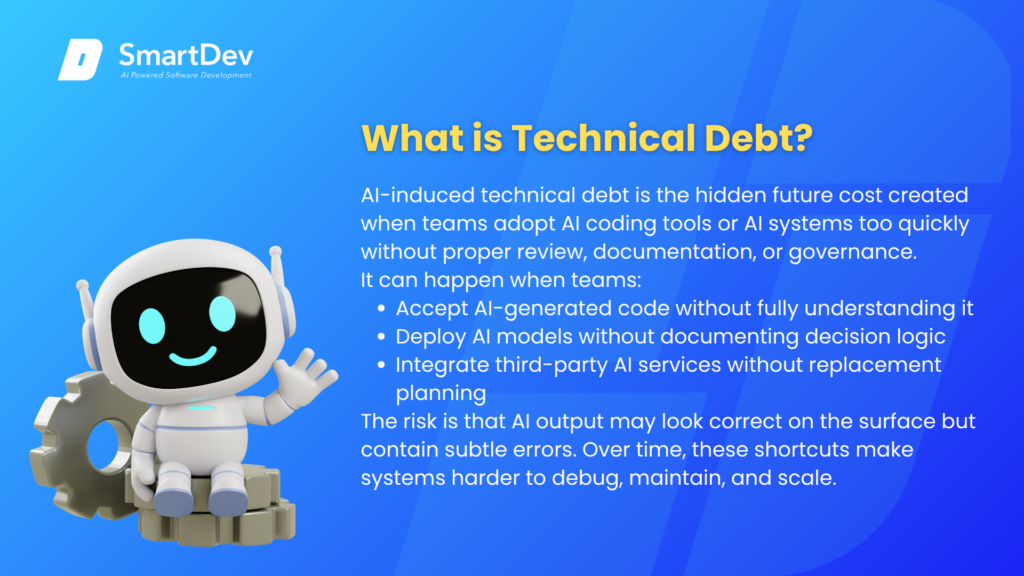
When a developer accepts an AI-generated code suggestion without fully understanding it, when a team deploys an AI model with no documentation of its decision logic, or when an organization integrates a third-party AI service without planning for replacement, they are accumulating AI-induced technical debt. Each shortcut feels small in the moment but compounds over time into a significant drag on engineering velocity and system reliability.
This type of debt has unique characteristics compared to traditional technical debt. AI-generated code can be syntactically correct and superficially coherent while containing subtle logical errors that only surface under specific conditions. Debugging code that was generated rather than written requires understanding both the error and the context in which the AI produced it, a task that research shows takes longer than debugging code written by a human.
Pourquoi c'est important pour les entreprises
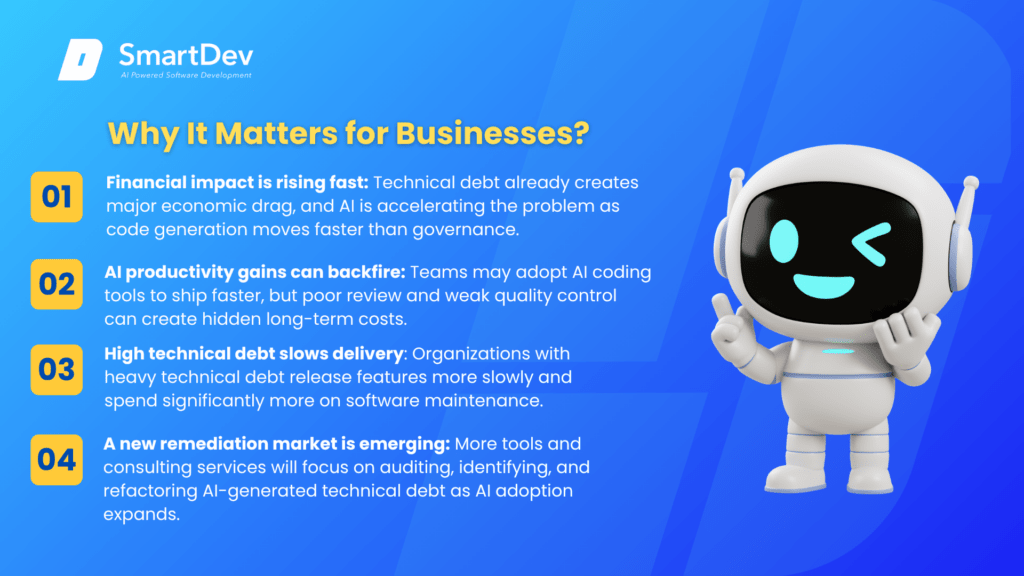
The financial stakes of AI-induced technical debt are growing rapidly. Technical debt broadly represents a $2.4 trillion drag on the US economy. AI’s contribution to this figure is accelerating because the speed at which AI tools generate code far exceeds the speed at which organizations have built governance practices to manage the quality of that code.
Organizations with high levels of technical debt ship features 50 percent slower than peers with well-maintained codebases and spend 40 percent more on software maintenance. For enterprises that invested in AI coding tools expecting productivity gains, this is the hidden cost that often appears on the other side of the ledger.
Gartner has predicted that a new remediation market will emerge specifically for tools and consulting services that audit, identify, and refactor AI-generated technical debt. The 2026 forecast suggests that the technical debt level will increase to moderate or high for 75 percent of organizations due to the rapid expansion of AI usage across software development.
How Much Does It Cost?
Direct costs of AI-induced technical debt include the engineering time required to debug, refactor, and document AI-generated code that was not properly reviewed at the time of creation. Research indicates that developers spend more time fixing AI-generated bugs than they would have spent writing the equivalent code from scratch, particularly for complex, interconnected business logic.
AI technical debt can consume up to 30 percent of AI project budgets through rework and governance gaps. For a $1 million AI development project, this implies $300,000 in unplanned rework costs. Spread across an enterprise running dozens of AI initiatives simultaneously, these costs accumulate into a significant and often unmeasured drain on technology investment returns.
Indirect costs include delayed product releases, increased security vulnerabilities in poorly understood code, and higher rates of production incidents. Each incident in a complex system built partly on AI-generated code that no single developer fully comprehends takes longer to diagnose and resolve than incidents in well-documented, human-authored systems.
How to Manage AI-Induced Technical Debt?
Prevention is more cost-effective than remediation. Establishing clear engineering standards for AI-generated code, including mandatory human review, documentation requirements, and test coverage thresholds, captures productivity benefits while preventing the quality shortcuts that create debt. AI tools should be treated as contributors whose output requires the same scrutiny as any external code contribution, not as infallible generators whose suggestions can be accepted without verification.
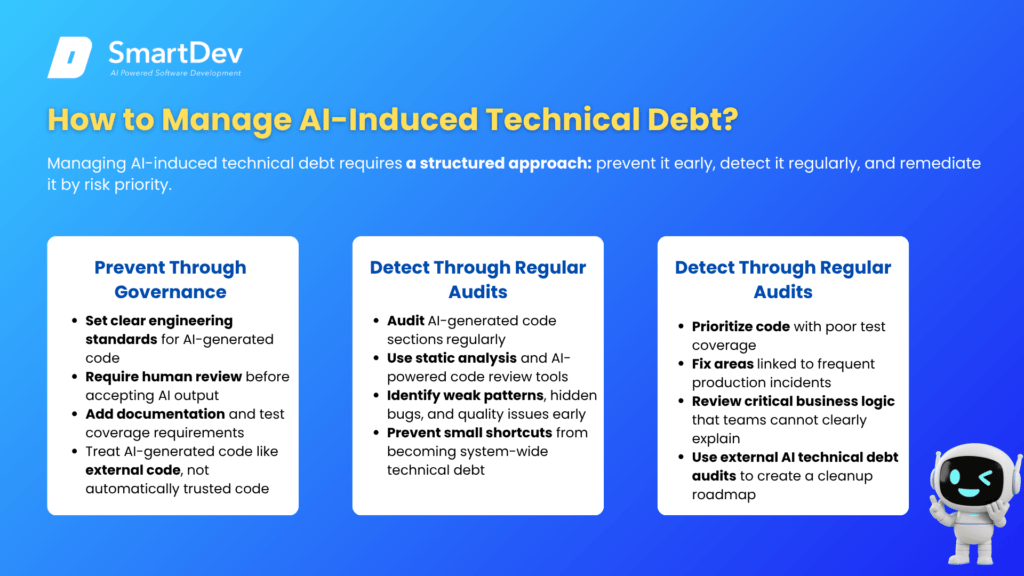
Regular code audits specifically targeting AI-generated sections of the codebase help identify accumulating debt before it becomes a systemic problem. Modern static analysis tools and AI-powered code review platforms can flag patterns associated with AI-generated code quality issues, making audits more efficient than manual review alone.
For organizations that have already accumulated significant AI-induced technical debt, a phased remediation program prioritizes the highest-risk sections of the codebase first: areas with poor test coverage, high production incident rates, or critical business logic that no team member can confidently explain. IT outsourcing providers increasingly offer AI technical debt audits as a standalone service, providing an independent assessment of debt levels and a remediation roadmap.
Autres termes associés
- Code Review is the practice of having one or more engineers examine code before it is merged into the main codebase. Maintaining rigorous code review processes for AI-generated code is the primary preventive measure against the accumulation of AI-induced technical debt.
- Refactoring is the process of restructuring existing code without changing its external behavior, with the goal of improving readability, maintainability, and performance. Refactoring AI-generated code sections is the primary remediation strategy for organizations addressing existing technical debt.
- AI Slop is low-quality, generic, or unchecked AI-generated output that looks acceptable but lacks accuracy, depth, or real value. In software, AI slop can create messy code, weak documentation, shallow tests, and hidden logic errors. Over time, this becomes technical debt because teams must spend more effort fixing, reviewing, and rebuilding poor AI-assisted work.