
TL;DR
- Unit testing is the practice of writing automated tests for the smallest individual pieces of code to verify they work correctly in isolation before being integrated into the larger system.
- Catching defects at the unit level is 6 to 100 times cheaper than fixing the same defects after they reach production, making unit testing one of the highest-ROI quality practices in software development.
- For business leaders evaluating software vendors, the presence of comprehensive unit test suites is a reliable indicator of engineering discipline and code maintainability.
A software system is only as reliable as its individual components. Unit testing verifies that each component works correctly before it is assembled into the larger system, creating a safety net that catches errors at the point of origin rather than after they have cascaded through multiple layers of functionality. This early detection is both faster and far less expensive than finding the same problems in production.
What is Unit Testing?
Unit testing is the practice of writing and running automated tests for individual, isolated units of code (typically a single function, method, or class) to verify that each unit produces the correct output for a given set of inputs, catching defects at the smallest granularity before they affect the broader system.
A “unit” is the smallest meaningful piece of testable code. In a backend system, a unit might be a function that calculates a discount percentage, validates an email address, or formats a date. The unit test for that function provides a set of input values and asserts that the function produces exactly the expected output. If the function’s behavior changes in a way that breaks the assertion, the test fails and the developer is notified immediately.
Unit tests are almost always automated, meaning they run without human intervention as part of the development workflow. Modern development teams run their full unit test suite every time code is committed, ensuring that any code change that breaks existing functionality is detected within minutes rather than days or weeks later during integration or manual testing.

Pourquoi c'est important pour les entreprises
Defects caught during unit testing cost a fraction of what the same defects cost when discovered in production. According to IBM research, the cost of fixing a bug in production is 6 to 100 times higher than fixing it when first written. Unit testing is the practice that catches the most defects at the lowest possible cost.
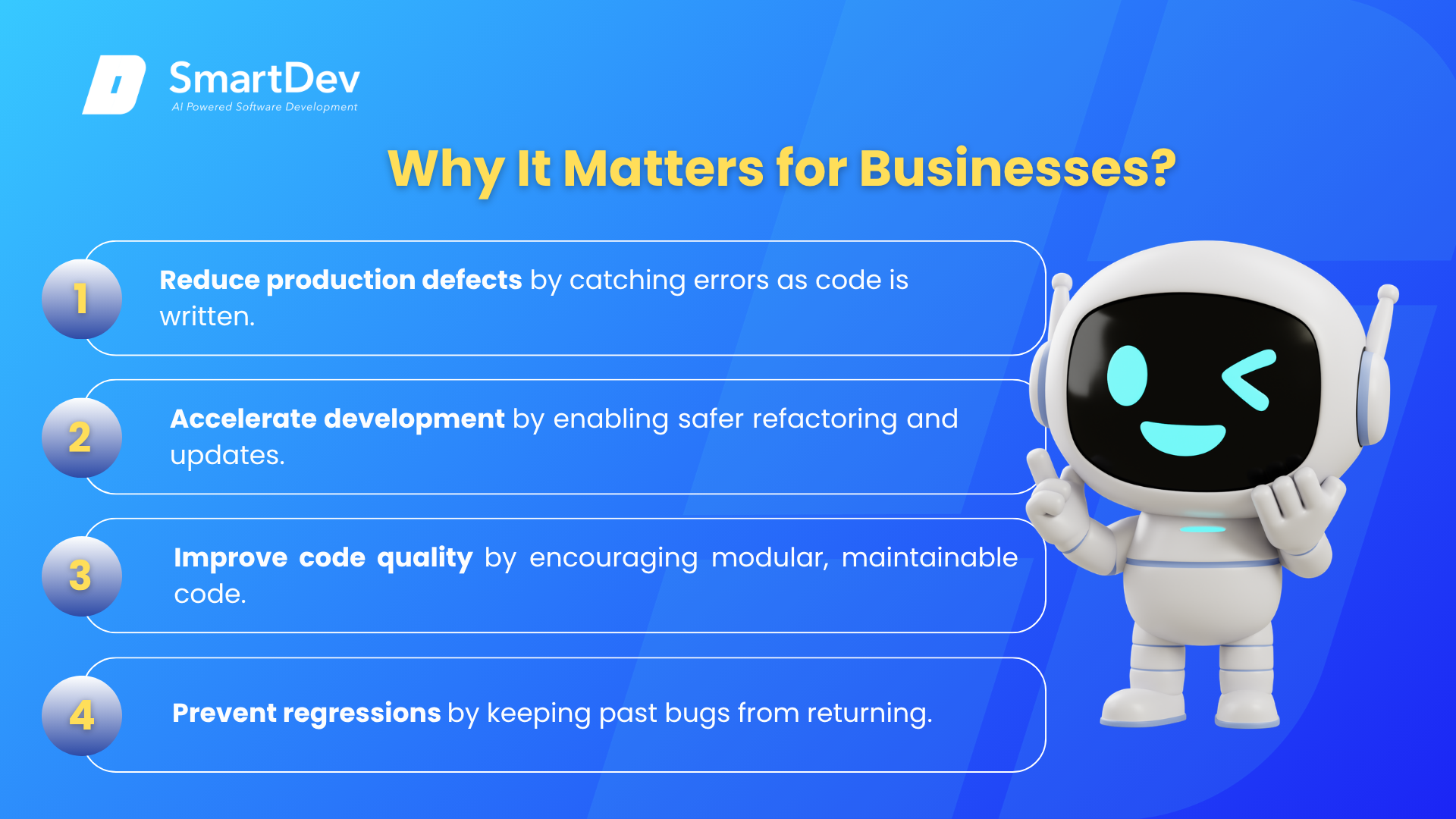
- Reduce production defects by catching logic errors, boundary condition failures, and regressions at the moment code is written, before they compound into larger system failures.
- Accelerate development velocity over time by allowing engineers to refactor and extend code with confidence, knowing that the test suite will alert them immediately if a change breaks existing behavior.
- Improve code quality by incentivizing modular, well-structured code: code that is difficult to unit test is almost always code that is difficult to maintain, extend, and debug.
- Protect future development through regression prevention: every unit test written today guards against future developers inadvertently reintroducing the same bug when they modify the code.
For example, a financial services company that added unit testing discipline to its development process reduced its post-release defect rate by 40% in the first two quarters. More significantly, its average time to identify the root cause of production issues dropped from 4.2 hours to 47 minutes, because the test suite provided a map of exactly which component had failed and under what conditions.
How Does Unit Testing Work?
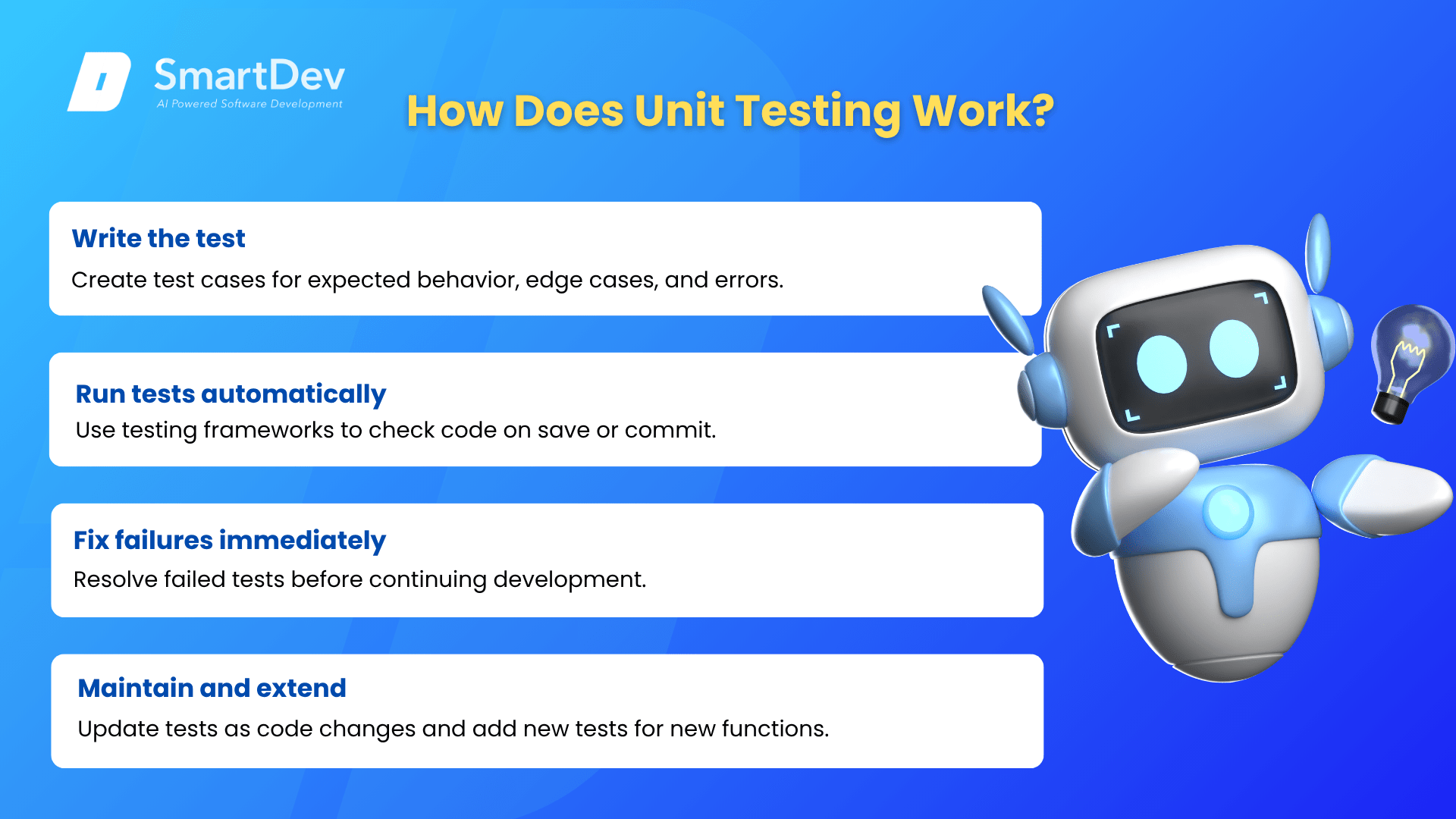
- Write the Unit Test: For each function or method being developed, the engineer writes one or more test cases covering the expected behavior. Each test provides specific inputs and asserts that the output matches the expected result. Tests should cover normal operation, boundary conditions, and error scenarios.
- Run Tests Automatically: Tests are integrated into the development workflow, typically running automatically when code is saved or committed. A testing framework (such as JUnit for Java, pytest for Python, or Jest for JavaScript) executes all tests and reports which pass and which fail.
- Fix Failures Immediately: When a test fails, the developer investigates and fixes the issue before moving on. Allowing failing tests to accumulate defeats the purpose of unit testing and creates a backlog of unresolved defects that grows harder to address over time.
- Maintain and Extend: As the codebase grows, the test suite grows with it. Tests are updated when behavior intentionally changes and new tests are added for each new function, ensuring coverage keeps pace with the code.
The result is a codebase where every component has been verified to work correctly in isolation, where regressions are caught within minutes of being introduced, and where engineers can make changes with confidence rather than anxiety.
When to Use Unit Testing?
- Write unit tests alongside every new function or class as a standard part of the development process, not as a phase that follows development.
- Write unit tests before fixing any bug: first write a test that reproduces the bug, verify it fails, then fix the bug and confirm the test now passes. This prevents the same bug from being reintroduced silently.
- Prioritize unit testing for business-critical logic such as pricing calculations, compliance rules, data transformations, and authentication flows, where errors have significant business or legal consequences.
- Avoid relying on manual testing as a substitute for unit tests for logic that changes frequently, as manual re-verification of every scenario after each change is unsustainable at any reasonable development pace.

Autres termes associés
Technical Proposal: Acts as a foundational document in Business-to-Business (B2B) deals.
Issue Tracking: The process of recording, managing, and resolving problems that arise in software, IT operations, or any business project.
Software Development Lifecycle (SDLC): The delivery framework within which unit testing is embedded as a continuous activity throughout development, rather than a phase that occurs after coding is complete.