
What is AI Security & Compliance?
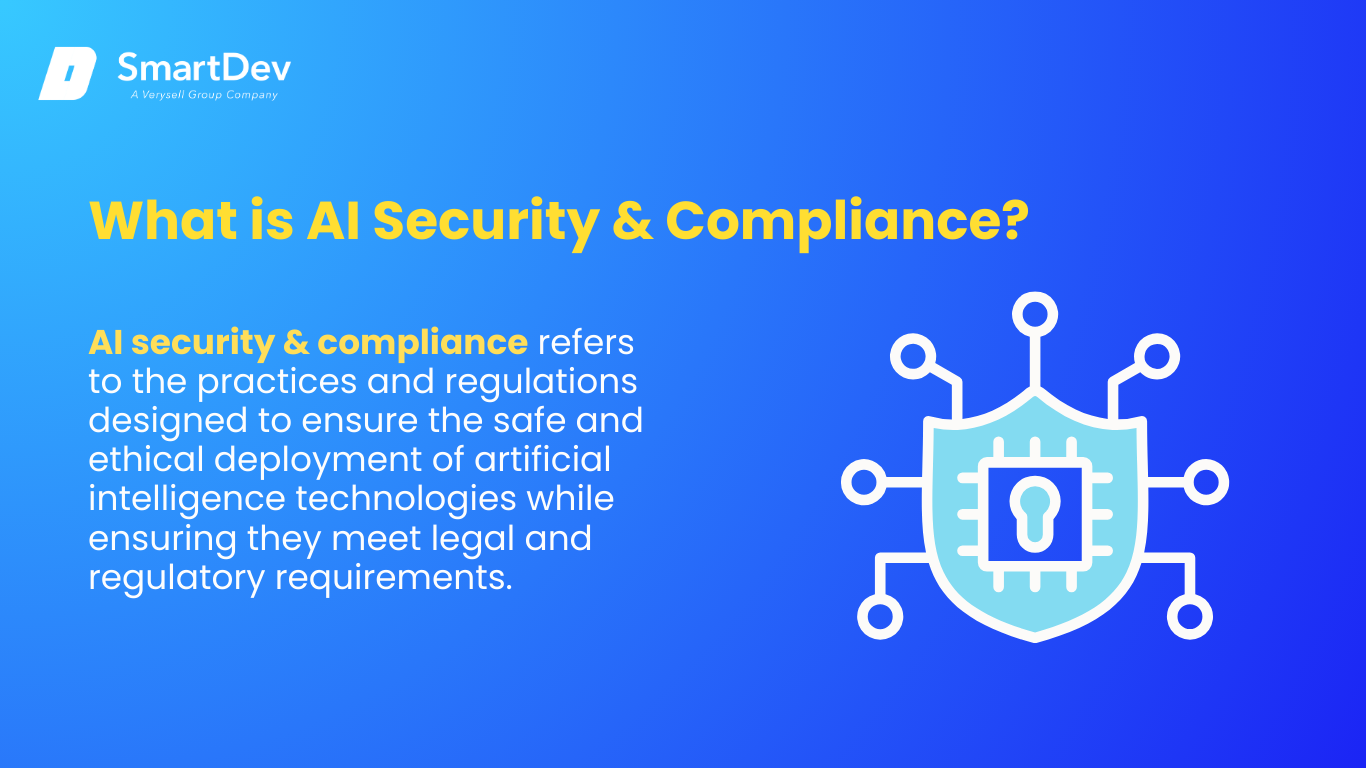 AI security & compliance refers to the practices and regulations designed to ensure the safe and ethical deployment of artificial intelligence technologies while ensuring they meet legal and regulatory requirements. As AI systems become more integrated into business operations, it’s crucial to address both the risks AI poses and the need for compliance with various standards and laws. AI security focuses on protecting AI systems from cyber threats, data breaches, and adversarial attacks, while AI compliance ensures that the use of AI adheres to privacy, fairness, and accountability standards.
With the rapid development and use of AI across industries, businesses must prioritize securing AI systems from potential vulnerabilities while ensuring they comply with regulations like GDPR, CCPA, and other industry-specific requirements.
Why is AI Security & Compliance Important for Businesses?
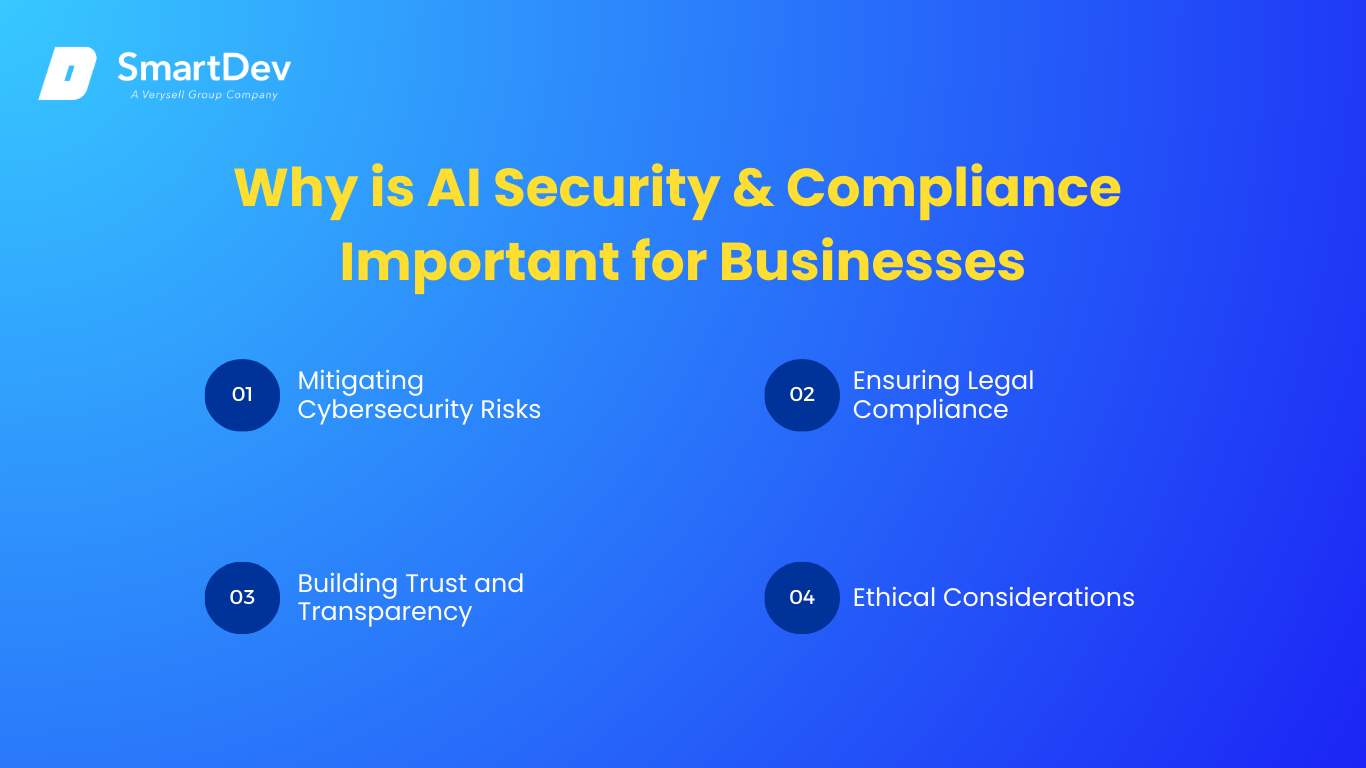
- Mitigating Cybersecurity Risks: AI systems can be a target for cyber-attacks such as data poisoning, adversarial attacks, and model theft. Securing AI systems ensures that they remain robust against these threats and continue to deliver accurate results.
- Ensuring Legal Compliance: As AI continues to revolutionize industries, legal frameworks governing its use are evolving. Regulations like the EU’s GDPR, California’s CCPA, and sector-specific guidelines (e.g., healthcare and finance) require businesses to comply with strict data privacy and ethical guidelines when using AI. Failure to meet these requirements can result in severe penalties.
- Building Trust and Transparency: Trust in AI systems is critical. Businesses need to demonstrate transparency in how AI algorithms make decisions and how data is handled. This transparency builds customer trust and can be essential in industries that handle sensitive data like finance, healthcare, and insurance.
- 倫理的な考慮: AI’s role in decision-making processes has raised ethical concerns. AI systems can inadvertently perpetuate biases in hiring, lending, and healthcare decisions. Compliance with ethical standards ensures fairness, avoids discrimination, and enhances the credibility of AI systems.
Who Needs to Ensure AI Security & Compliance?
 AI security & compliance is a shared responsibility that requires coordination across multiple roles within an organization. Key stakeholders include:
- C-suite Executives (CISO, CIO): The Chief Information Security Officer (CISO) and Chief Information Officer (CIO) play an integral role in the development and implementation of AI security policies. They are responsible for overseeing security measures, ensuring compliance, and aligning AI strategies with business goals.
- AI and Data Scientists: Data scientists, AI developers, and machine learning engineers are responsible for building and implementing secure AI models. These professionals must ensure that AI systems are free from biases, robust against attacks, and in compliance with legal frameworks. This may involve conducting regular audits and performance evaluations of AI models.
- Compliance Officers and Legal Teams: These teams ensure that AI systems comply with industry-specific laws and regulations. They work closely with technical teams to establish compliance protocols and assist in auditing AI systems for regulatory alignment.
- Employees and End Users: Every employee has a role to play in fostering AI security. For instance, those working with AI systems need to follow secure data-handling practices, and end users must be aware of potential security risks when interacting with AI-driven tools.
When Should Businesses Focus on AI Security & Compliance?
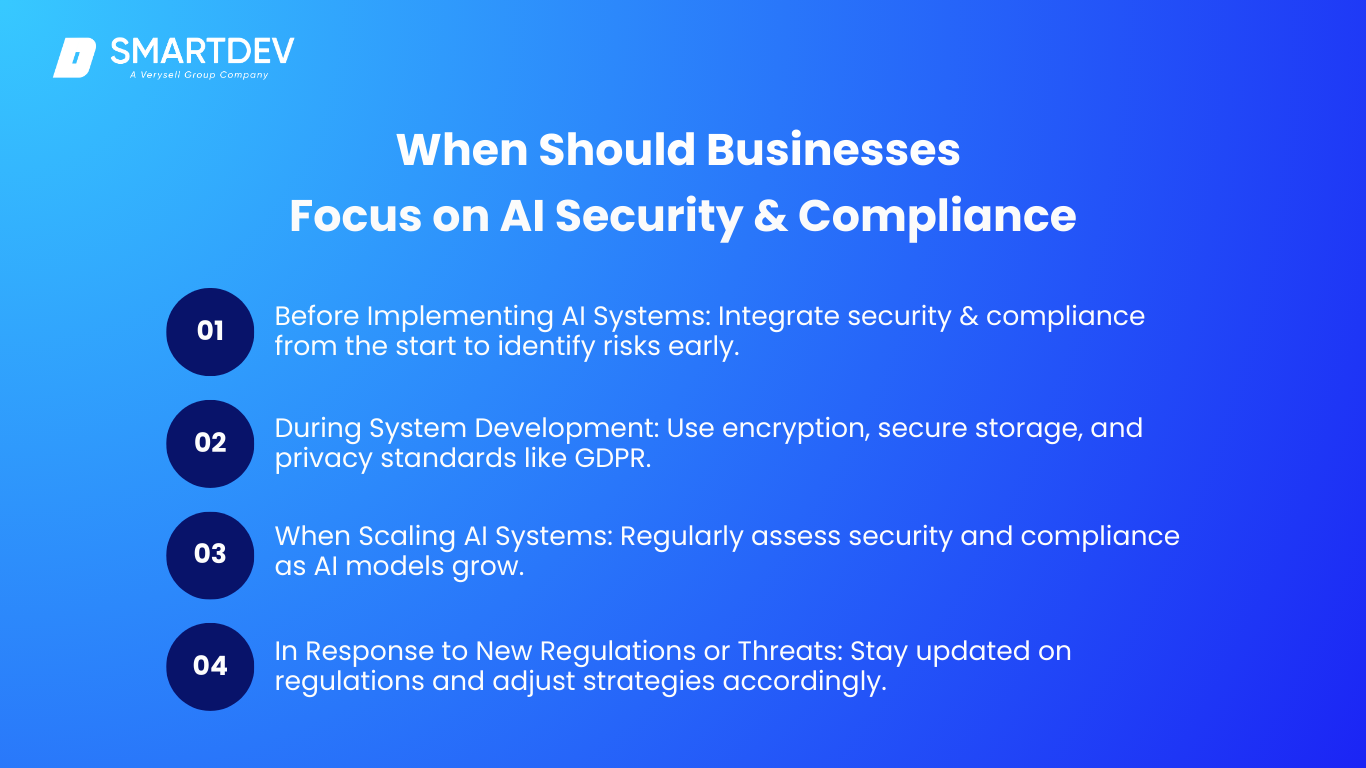 AI security and compliance are not afterthoughts but integral parts of AI system development from the outset. Here’s when businesses should prioritize these measures:
- Before Implementing AI Systems: AI security & compliance need to be considered in the early stages of an AI project, from data collection and system design to deployment. This helps identify potential risks early and ensures that security controls are integrated from the start.
- During System Development: Security and compliance should be part of the development process. Developers and data scientists must incorporate security measures like encryption, secure data storage, and model integrity checks while adhering to privacy standards such as GDPR.
- When Scaling AI Systems: As AI models scale to handle more data or perform more complex tasks, they can become more susceptible to attacks and compliance challenges. Scaling AI systems without reviewing security and compliance could lead to vulnerabilities. Businesses must continuously assess and improve AI security measures as their systems evolve.
- In Response to New Regulations or Threats: Laws and regulations around AI security and privacy are evolving, and new threats are emerging. Organizations should stay informed about updates in regulatory requirements and AI security threats, and adjust their strategies accordingly to remain compliant.
Related Terms in AI Security & Compliance
- AI Governance:
AI governance refers to the policies and practices organizations follow to ensure AI is developed and used responsibly, with a focus on transparency, fairness, and accountability. It helps ensure that AI systems align with security and compliance standards while preventing biases and unethical use.
- Responsible AI:
Responsible AI is the development and deployment of AI technologies in an ethical manner, ensuring fairness, transparency, and respect for privacy. It focuses on reducing bias and ensuring AI decisions are made without harm to individuals or groups, promoting trust in AI systems.
- AI Model Deployment & Monitoring:
AI model deployment & monitoring involves the process of integrating AI models into production environments and continuously tracking their performance. It ensures that models remain secure, effective, and compliant with regulatory requirements throughout their lifecycle.
結論
As businesses continue to adopt AI across industries, the need for AI security and compliance becomes ever more pressing. Securing AI systems against cyber threats, ensuring they comply with evolving regulations, and addressing ethical concerns are crucial for safeguarding data, maintaining trust, and ensuring the responsible use of AI. By implementing AI security and compliance practices early in the process, businesses can avoid costly mistakes, mitigate risks, and build AI systems that are both secure and compliant. With the right strategies, businesses can harness the full potential of AI while protecting their data, assets, and reputation.