

Cyber threats are evolving fast, shifting from manual attacks to automated, large-scale operations. To keep up, businesses must rethink how they approach security. This is where AI use cases in security become critical.
AI helps organizations detect threats in real time, reduce alert fatigue, and strengthen their overall defense systems. From automating threat detection to improving incident response, AI enables security teams to move from reactive to proactive protection.
In this guide, we explore the most impactful AI use cases in security, along with their business value, real-world applications, and future potential.
What is AI and Why Does It Matter in Security?
Definition of AI and Its Core Technologies
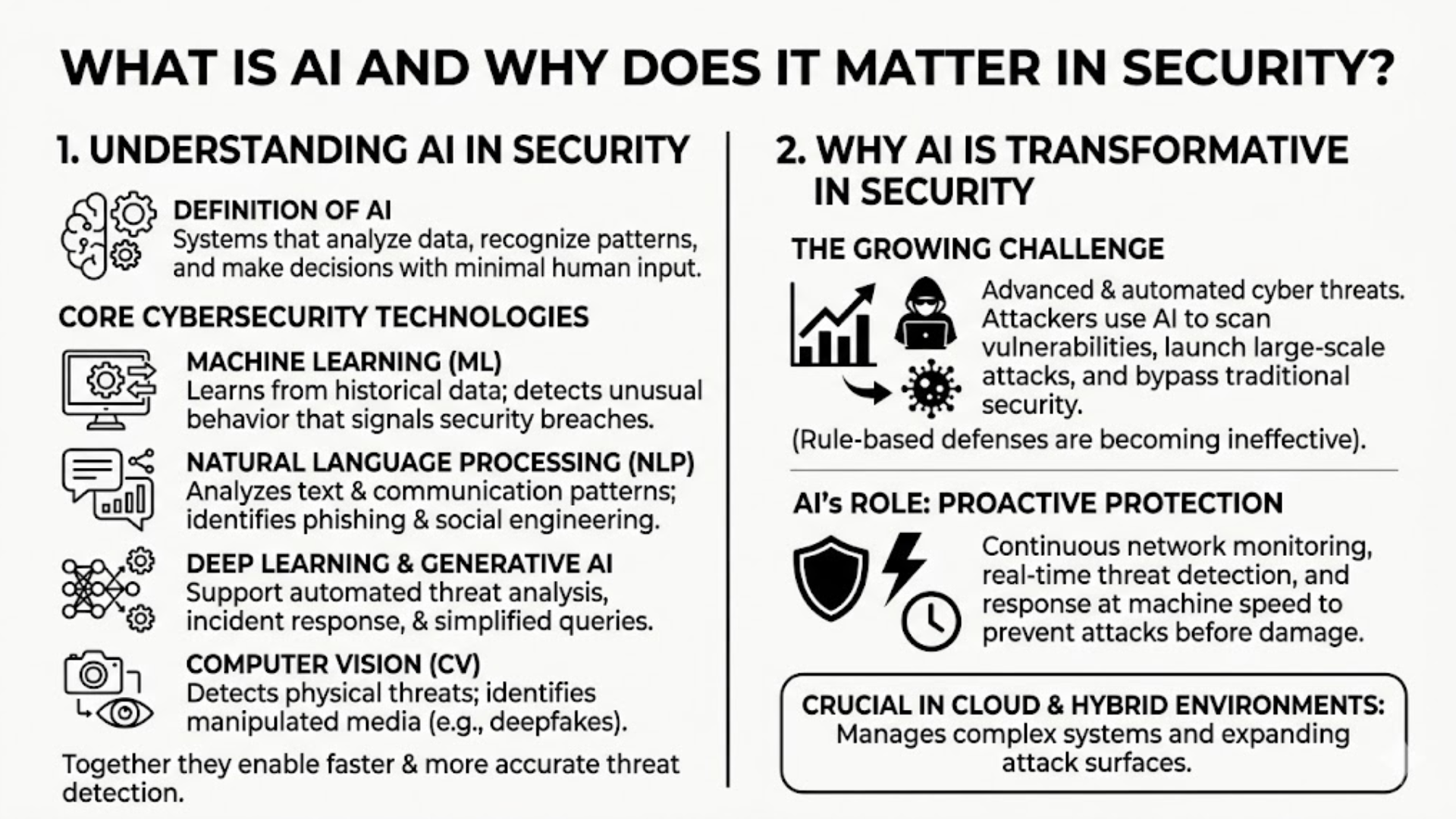
Artificial intelligence refers to systems that can analyze data, recognize patterns, and make decisions with minimal human input. In cybersecurity, AI is powered by core technologies such as machine learning, natural language processing (NLP), deep learning, and computer vision.
Machine learning enables systems to learn from historical data and detect unusual behavior that may signal a security breach. NLP helps analyze text and communication patterns to identify phishing attempts and social engineering attacks. Deep learning and generative AI support automated threat analysis, incident response, and simplified query handling. Computer vision expands these capabilities by detecting physical threats or identifying manipulated media such as deepfakes.
Together, these technologies form the foundation of modern AI use cases in security, allowing organizations to detect and respond to threats faster and more accurately.
The Growing Role of AI in Transforming Security
The role of AI in security is growing rapidly as cyber threats become more advanced and automated. Attackers are now using AI to scan for vulnerabilities, launch large-scale attacks, and bypass traditional security systems. This makes conventional, rule-based defenses increasingly ineffective.
To keep up, organizations are adopting AI use cases in security to move toward proactive protection. AI systems can monitor networks continuously, detect threats in real time, and respond at machine speed. This allows businesses to prevent attacks before they cause serious damage.
This shift is especially important in cloud and hybrid environments, where systems are more complex and attack surfaces continue to expand.
Key Statistics or Trends Highlighting AI Adoption in Security
The adoption of AI in security is accelerating as organizations face growing pressure to strengthen their defenses. The global AI in cybersecurity market is expected to grow significantly in the coming years, driven by increasing demand for automation and real-time threat detection.
At the same time, businesses are dealing with a shortage of skilled security professionals. This makes AI-powered solutions essential for scaling operations and maintaining effective protection.
As a result, AI use cases in security are becoming a core part of modern cybersecurity strategies, helping organizations reduce risks, improve efficiency, and stay ahead of evolving threats.
| Market Metric | 2024 Valuation | Future Projection | CAGR / Growth Rate |
| Global AI in Cybersecurity Market | USD 25.35 Billion | USD 93.75 Billion (2030) |
24.4% (2025-2030) |
| Total Global AI Market Size | USD 638.23 Billion | USD 3,680.47 Billion (2034) |
19.20% (2025-2034) |
| Worldwide AI Spending | USD 83.67 Billion (App Software) | USD 1.5 Trillion (Total, 2025) |
N/A |
Business Benefits of AI in Security
The adoption of artificial intelligence is transforming how organizations approach cybersecurity. Today, AI use cases in security deliver measurable improvements across efficiency, cost, decision-making, and long-term competitiveness.
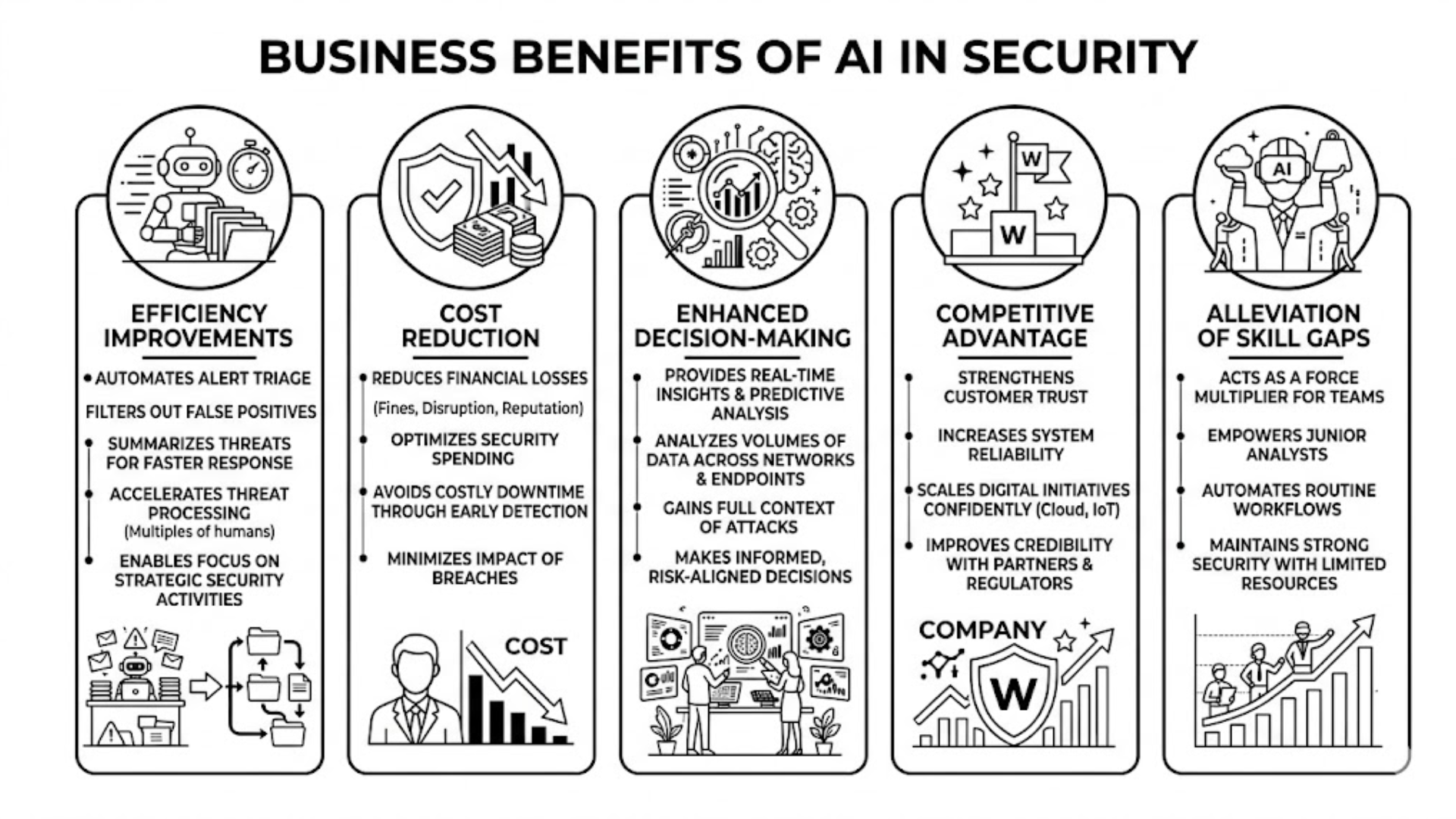
Efficiency Improvements
Traditional security operations often struggle with alert fatigue, where analysts must process thousands of alerts daily from multiple systems. This overload slows down response time and increases the risk of missing critical threats.
AI solves this problem by automating alert triage, filtering out false positives, and prioritizing high-risk incidents. It can also summarize threats and provide actionable insights, allowing teams to respond faster and more effectively.
By automating repetitive tasks, AI use cases in security significantly reduce the workload on security teams. In many cases, AI-powered systems can process and analyze threats several times faster than human analysts, enabling teams to focus on more strategic security activities.
Cost Reduction
Cyberattacks can lead to significant financial losses, including regulatory fines, operational disruption, and reputational damage. Preventing these incidents is far more cost-effective than responding after the damage is done.
AI helps reduce these costs by detecting threats early and enabling faster containment. Organizations that adopt AI use cases in security can minimize the impact of breaches and avoid costly downtime.
In addition, AI reduces the need for large teams to manually monitor systems, helping businesses optimize their security spending while maintaining strong protection.
Enhanced Decision-Making Capabilities
AI enhances decision-making by providing real-time insights and predictive analysis. It continuously analyzes large volumes of data across networks, cloud systems, and endpoints to identify patterns and potential threats.
This allows security teams to understand the full context of an attack and respond more effectively. Instead of reacting to isolated alerts, teams can make informed decisions based on a complete view of the threat landscape.
With AI use cases in security, organizations can reduce response times and ensure that actions are aligned with the actual level of risk.
Competitive Advantage
Strong cybersecurity is no longer just a technical requirement but a business differentiator. Companies that invest in AI-driven security can protect customer data more effectively, maintain higher system reliability, and build stronger trust with clients.
By leveraging AI use cases in security, organizations can confidently scale digital initiatives such as cloud adoption or IoT deployment without increasing risk.
Additionally, demonstrating advanced security capabilities supported by AI can improve credibility with partners, customers, and regulators, giving businesses a clear competitive edge.
Alleviation of Workforce Skill Gaps
The cybersecurity industry is facing a global shortage of skilled professionals, making it difficult for organizations to manage complex security environments.
AI helps bridge this gap by acting as a force multiplier for existing teams. It enables less experienced analysts to perform advanced tasks such as threat analysis or query generation through automation and natural language interfaces.
By automating a large portion of routine workflows, AI use cases in security allow organizations to maintain strong security operations even with limited human resources, ensuring stability and scalability in the long term.
Challenges Facing AI Adoption in Security
While AI use cases in security bring significant benefits, implementing AI in cybersecurity is not without challenges. Organizations must address a range of technical, operational, and ethical issues to fully unlock its potential.
Data Privacy and Security Concerns
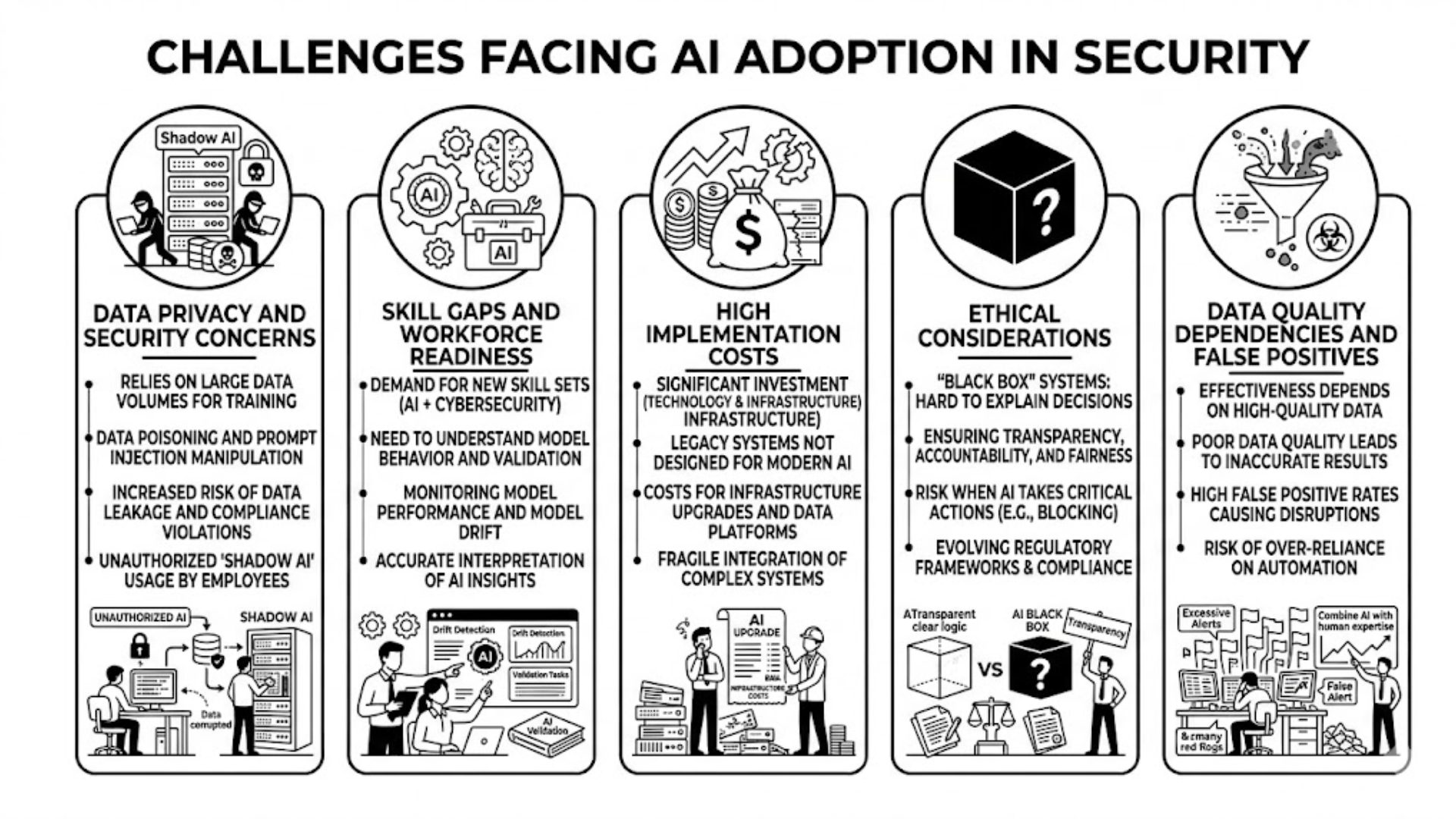
AI systems rely on large volumes of data for training and continuous improvement. This creates new risks, as centralized datasets become attractive targets for cyberattacks.
Threats such as data poisoning and prompt injection can manipulate AI models, leading to incorrect threat detection or exposing sensitive information. In addition, the rise of unauthorized AI usage by employees, often called Shadow AI, increases the risk of data leakage and compliance violations.
To safely deploy AI use cases in security, organizations must implement strict data governance, access control, and monitoring mechanisms.
Skill Gaps and Workforce Readiness
Although AI helps reduce manual workload, it also introduces a demand for new skill sets. Organizations now need professionals who understand both cybersecurity and AI systems, including model behavior, risk management, and validation processes.
Security teams must be able to monitor model performance, detect issues such as model drift, and interpret AI-generated insights accurately. Without proper expertise, AI systems can be misconfigured or misinterpreted, increasing security risks instead of reducing them.
This makes workforce readiness a critical factor in successfully implementing AI use cases in security.
High Implementation Costs
Deploying AI in security requires significant investment, not only in technology but also in infrastructure and integration. Many organizations operate on legacy systems that are not designed to support modern AI capabilities.
As a result, businesses often need to upgrade their infrastructure, integrate fragmented systems, and invest in data platforms before AI can be effectively implemented. These additional costs can slow down adoption, especially for smaller organizations.
Despite the long-term value of AI use cases in security, the initial investment remains a key barrier.
Ethical Considerations
AI systems, especially those based on deep learning, often operate as black boxes, making it difficult to explain how decisions are made. This creates challenges when AI takes critical actions, such as blocking transactions or isolating systems.
Organizations must ensure transparency, accountability, and fairness in their AI models. Regulatory frameworks are also evolving, requiring businesses to demonstrate responsible AI usage and compliance with data protection laws.
Addressing these concerns is essential for building trust and ensuring sustainable adoption of AI use cases in security.
Data Quality Dependencies and False Positives
The effectiveness of AI depends heavily on the quality of data it is trained on. Poor data quality, fragmented systems, or lack of context can lead to inaccurate results and high false positive rates.
If not properly managed, AI systems can generate excessive alerts or even misidentify threats, causing unnecessary disruptions. Over-reliance on automation without human oversight can further increase these risks.
To maximize the value of AI use cases in security, organizations must maintain high-quality data pipelines and combine AI with human expertise for better decision-making.
Core AI Use Cases in Security
The foundation of modern cybersecurity lies in the effective deployment of AI use cases in security that strengthen overall defense systems. These core applications focus on building intelligent, scalable security infrastructures that can protect complex digital environments across industries.
Predictive Analytics for Threat Prevention
One of the most powerful AI use cases in security is predictive analytics. Instead of reacting to attacks after they occur, AI enables organizations to anticipate and prevent threats in advance.
By analyzing historical attack data, threat intelligence feeds, and internal system activity, AI can identify patterns and predict potential vulnerabilities. This allows security teams to prioritize risks, strengthen weak points, and apply patches before attackers exploit them.
This proactive approach significantly reduces the likelihood of successful cyberattacks and improves overall security resilience.
User and Entity Behavior Analytics (UEBA) and Anomaly Detection
AI plays a critical role in detecting unusual behavior across users and systems. Unlike traditional security tools that rely on predefined rules, AI builds a baseline of normal activity and continuously monitors for deviations.
For example, if a user suddenly accesses sensitive data at unusual times or if there is unexpected movement across systems, AI can flag these behaviors as potential threats.
These AI use cases in security are especially effective in identifying insider threats, compromised accounts, and zero-day attacks that are often missed by conventional solutions.
Security Orchestration, Automation, and Response (SOAR)
Another key application of AI use cases in security is automation through SOAR platforms. AI enables systems to not only detect threats but also respond to them instantly without human intervention.
When a threat is identified, AI-driven systems can automatically isolate affected devices, block malicious access, update firewall rules, and generate incident reports.
This rapid response reduces the time attackers have to spread within a system, minimizing potential damage and improving overall incident management efficiency.
Continuous Vulnerability Management and Risk Prioritization
AI also enhances how organizations manage vulnerabilities across their systems. Modern IT environments are complex, often spanning on-premises infrastructure, cloud platforms, and third-party applications.
AI can continuously scan these environments to detect weaknesses such as outdated software, misconfigurations, or exposed assets. More importantly, it can prioritize these vulnerabilities based on risk level and potential impact.
By leveraging AI use cases in security, organizations can focus on fixing the most critical issues first, ensuring a more effective and efficient approach to risk management.
Ready to reduce your customer query backlog by 90% and lower operational costs by 23%?
SmartDev helps enterprises deploy intelligent chatbots that resolve routine queries instantly and improve first-call resolution rates without losing the human touch.
Optimize your support budget and choose the AI strategy that maximizes your ROI with SmartDev’s expertise.
Talk to an AI Strategy ExpertSpecific Applications of AI in Security
Building on core capabilities, AI use cases in security are now applied to highly specific domains to address targeted cyber threats. These applications demonstrate how AI can protect different layers of modern IT environments, from endpoints to cloud systems and user identities.
Endpoint Security and Ransomware Containment
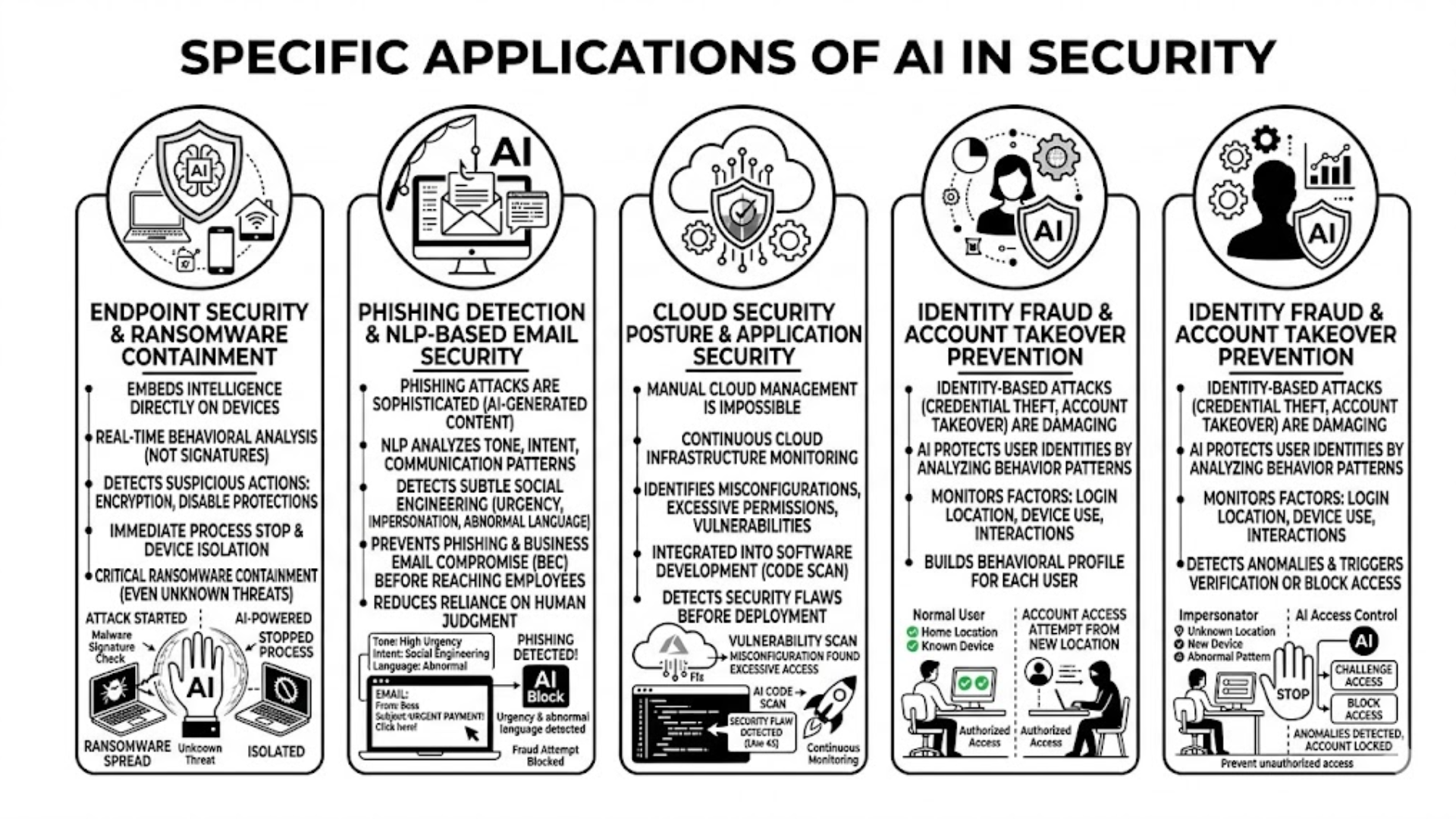
Endpoints such as laptops, mobile devices, and IoT systems are often the first entry points for cyberattacks. AI enhances endpoint security by embedding intelligence directly on devices, allowing real-time analysis of behavior and system activity.
Instead of relying on known malware signatures, AI can detect suspicious actions such as unusual file encryption or attempts to disable system protections. When these behaviors are identified, the system can immediately stop the process and isolate the affected device.
This is one of the most critical AI use cases in security, as it enables organizations to contain ransomware attacks instantly, even when dealing with previously unknown threats.
Phishing Detection and NLP-Based Email Security
Email remains one of the most common attack vectors, and phishing attacks are becoming increasingly sophisticated with the help of AI-generated content.
To counter this, AI-powered email security systems use natural language processing to analyze not just links or sender domains, but also tone, intent, and communication patterns. This allows them to detect subtle signs of social engineering, such as urgency, impersonation, or abnormal language use.
These AI use cases in security help organizations prevent phishing attacks, business email compromise, and fraud attempts before they reach employees, reducing reliance on human judgment alone.
Cloud Security Posture Management and Application Security
As businesses move to cloud environments, managing security manually becomes nearly impossible. AI helps monitor cloud infrastructure continuously, identifying misconfigurations, excessive access permissions, and potential vulnerabilities.
In addition, AI is increasingly integrated into software development processes. It can scan code during development, detect security flaws, and identify risks before applications are deployed.
These AI use cases in security ensure that both infrastructure and applications remain secure, even in complex, fast-changing environments.
Identity Fraud and Account Takeover Prevention
Identity-based attacks, such as credential theft and account takeover, are among the most damaging types of cyber threats. AI helps protect user identities by analyzing behavior patterns and detecting anomalies.
By monitoring factors such as login location, device usage, and interaction patterns, AI can build a behavioral profile for each user. If unusual activity is detected, the system can trigger additional verification steps or block access entirely.
This is one of the most impactful AI use cases in security, as it prevents unauthorized access and protects sensitive data without disrupting legitimate users.
Examples of AI in Security
The real value of artificial intelligence becomes clear when looking at how AI use cases in security are applied in real-world environments. Leading technology providers and global enterprises are already leveraging AI to improve threat detection, response speed, and overall security performance.
Real-World Case Studies
Darktrace is a strong example of how AI is transforming cybersecurity. Its platform uses machine learning to build a “digital immune system” that learns normal behavior across an organization. By continuously monitoring activity, it can detect subtle anomalies such as slow data exfiltration or insider threats that traditional tools often miss. This allows organizations to respond to threats early, before serious damage occurs.
Microsoft is also advancing AI use cases in security through its Security Copilot solution. By integrating generative AI into its ecosystem, Microsoft enables security teams to analyze incidents faster, understand complex threats, and automate reporting. Security analysts can use natural language prompts to investigate attacks, generate insights, and even produce detailed incident reports, improving both speed and accuracy in decision-making.
In the financial sector, companies like Mastercard use AI to monitor millions of transactions in real time. AI models analyze behavioral patterns and detect anomalies that may indicate fraud or account takeover attempts. This allows financial institutions to prevent fraud while maintaining a seamless experience for legitimate users.
These examples highlight how AI use cases in security are not just theoretical concepts but practical solutions delivering measurable business value across industries.
Success metrics and outcomes
The quantitative impact of these AI deployments is substantial, directly improving the efficiency of the security operations center.
| AI Implementation Case Study | Measurable Outcome / Success Metric | |
| Generative AI in Live Operations | Reduced overall incident resolution times by an average of 30.13%. | |
| Microsoft Security Copilot (Phishing Triage) | SOC analysts triaged complex phishing alerts up to 550% faster. | |
| Microsoft Defender Experts (Reporting) | Achieved 90% time savings in consolidating attack data into incident summaries. | |
| Microsoft Security Copilot (User Satisfaction) | 93% of analysts expressed a desire to use Copilot for future tasks; 86% reported improved work quality. |
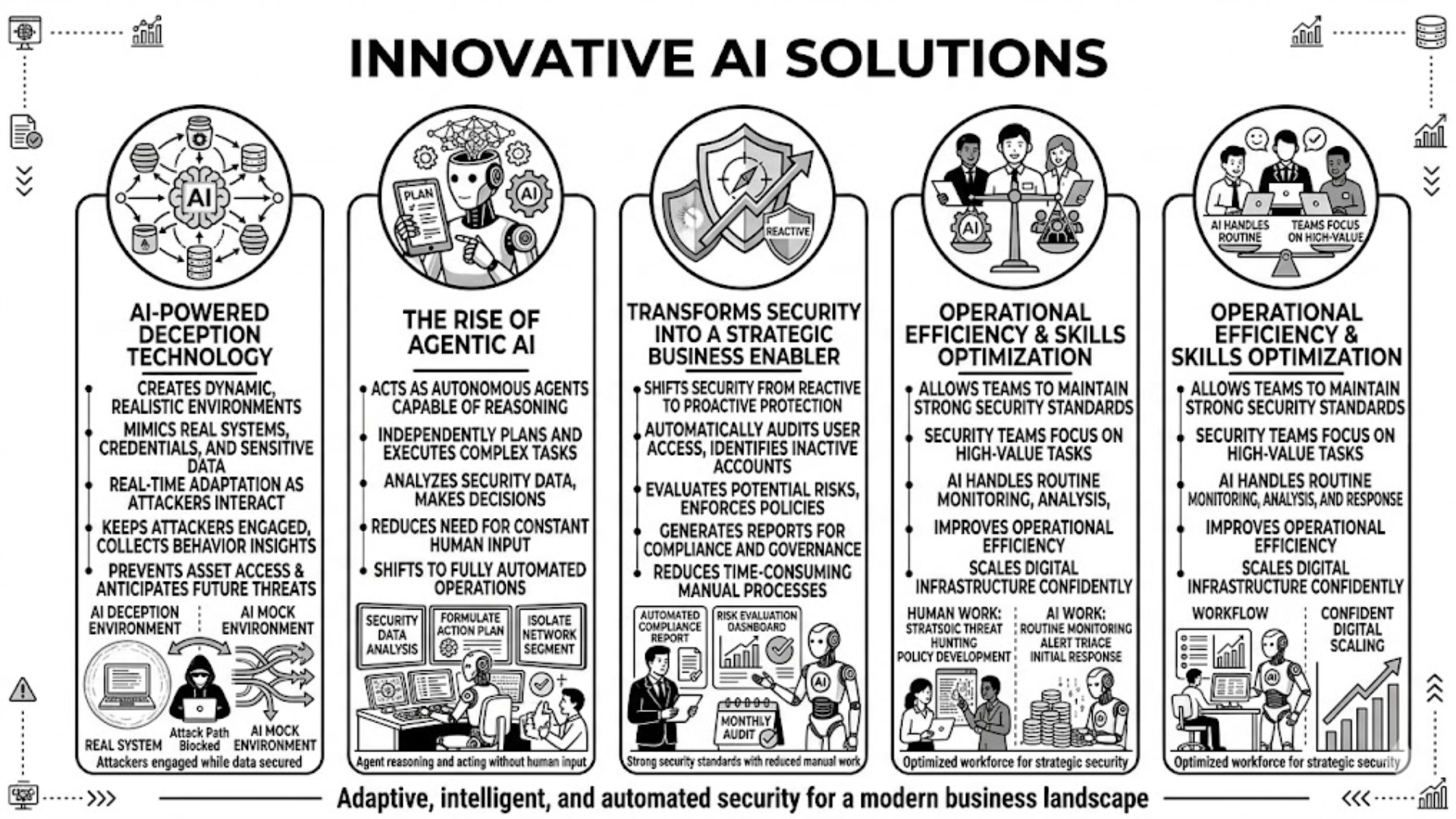
Innovative AI Solutions
The evolution of cybersecurity is being driven by new, advanced technologies that are redefining how organizations approach protection. These emerging AI use cases in security go beyond traditional defense methods, enabling more adaptive, intelligent, and automated security systems.
Emerging AI Technologies Being Applied in Security
One of the most innovative developments is AI-powered deception technology. Unlike traditional honeypots, which are static and easy to detect, AI can create dynamic, realistic environments that mimic real systems, user credentials, and sensitive data.
When attackers interact with these environments, AI continuously adapts the setup in real time, keeping attackers engaged while collecting valuable insights into their behavior and attack methods. This approach not only prevents access to real assets but also helps organizations understand and anticipate future threats.
Another breakthrough is the rise of agentic AI. These systems go beyond simple automation by acting as autonomous agents capable of reasoning, planning, and executing complex tasks independently.
In the context of AI use cases in security, agentic AI can analyze security data, make decisions, and take action without requiring constant human input. This represents a major shift toward fully automated security operations.
How These Solutions Are Transforming Business Operations
These advanced AI use cases in security are transforming security from a reactive function into a proactive and strategic business enabler.
For example, agentic AI can automatically audit user access, identify inactive accounts, evaluate potential risks, and enforce security policies without manual intervention. It can also generate reports for compliance and governance teams, reducing the need for time-consuming manual processes.
This level of automation allows organizations to maintain strong security standards while improving operational efficiency. Security teams can focus on high-value tasks, while AI handles routine monitoring, analysis, and response.
As a result, businesses can scale their digital infrastructure with confidence, knowing that their security systems are continuously learning, adapting, and protecting against evolving threats.
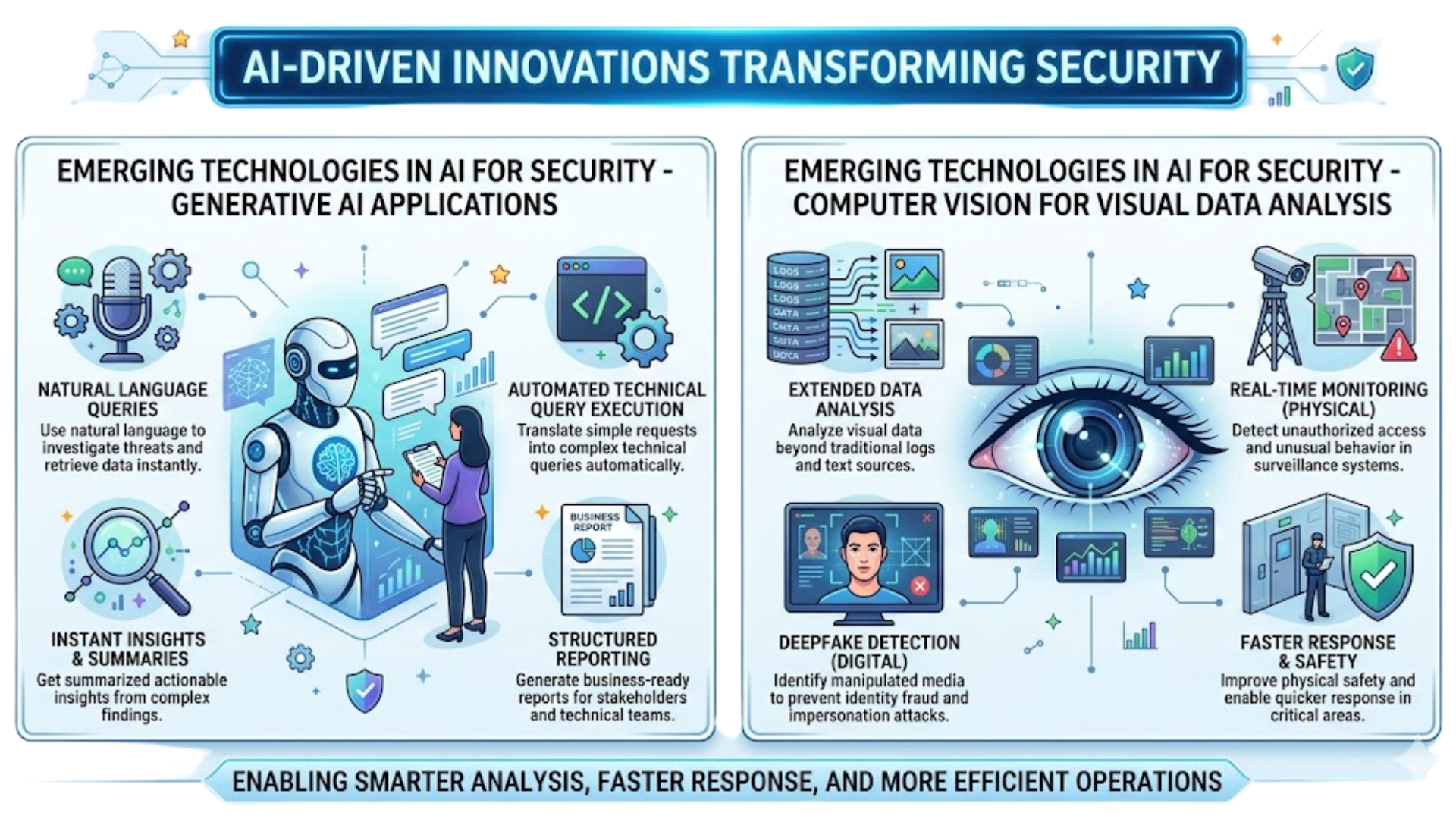
AI-Driven Innovations Transforming Security
The rapid evolution of cybersecurity is being powered by advanced technologies that redefine how organizations process and act on security data. These innovations are expanding the scope of AI use cases in security, enabling smarter analysis, faster response, and more efficient operations across both digital and physical environments.
Emerging Technologies in AI for Security
Generative AI Applications
Generative AI is transforming how security teams interact with complex systems. Instead of relying on specialized query languages, analysts can now use natural language to investigate threats, retrieve data, and generate insights instantly.
For example, a simple request such as identifying unusual traffic patterns can be translated by AI into technical queries, executed automatically, and summarized in a clear, actionable format.
In addition, generative AI supports automated reporting by converting technical findings into structured, business-ready reports. This makes it easier for organizations to communicate security incidents to both technical teams and executive stakeholders.
These capabilities represent some of the most practical AI use cases in security, improving both productivity and accessibility within security operations.
Computer Vision for Visual Data Analysis
Computer vision extends AI capabilities beyond traditional data sources such as logs and text. It enables organizations to analyze visual data in real time, supporting both physical and digital security.
In physical environments, AI can monitor surveillance systems to detect unauthorized access, unusual behavior, or potential security breaches. This allows for faster response and improved safety in critical facilities.
In digital environments, computer vision plays a key role in detecting manipulated media such as deepfakes. By analyzing visual inconsistencies and patterns, AI can help prevent identity fraud and sophisticated impersonation attacks.
These AI use cases in security are becoming increasingly important as threats expand beyond traditional cyber boundaries.
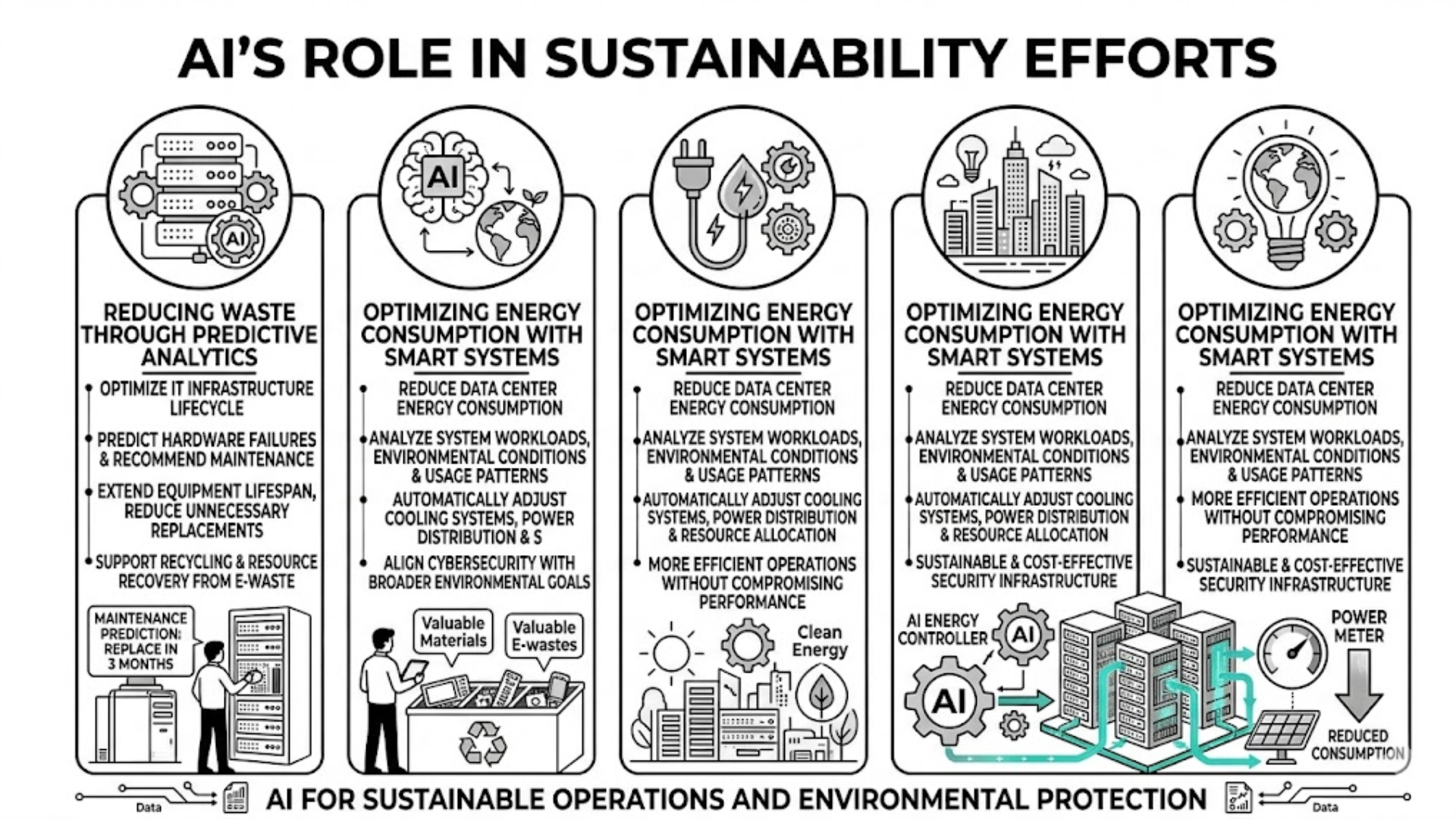
AI’s Role in Sustainability Efforts
As AI adoption grows, organizations are also facing challenges related to energy consumption and environmental impact. However, AI itself is helping address these issues by enabling more efficient and sustainable operations.
Reducing Waste Through Predictive Analytics
AI can optimize the lifecycle of IT infrastructure by predicting hardware failures and recommending maintenance before issues occur. This helps organizations extend the lifespan of equipment and reduce unnecessary replacements.
In addition, AI can support recycling and resource recovery processes by identifying valuable components within electronic waste. This contributes to more sustainable IT operations while reducing environmental impact.
These sustainability-focused AI use cases in security allow organizations to align cybersecurity with broader environmental goals.
Optimizing Energy Consumption with Smart Systems
Data centers that support AI and security operations consume significant amounts of energy. AI helps reduce this consumption by optimizing how infrastructure is managed.
By analyzing system workloads, environmental conditions, and energy usage patterns, AI can automatically adjust cooling systems, power distribution, and resource allocation. This leads to more efficient operations without compromising performance.
In some cases, AI-driven optimization can significantly reduce energy consumption, making security infrastructure more sustainable and cost-effective.
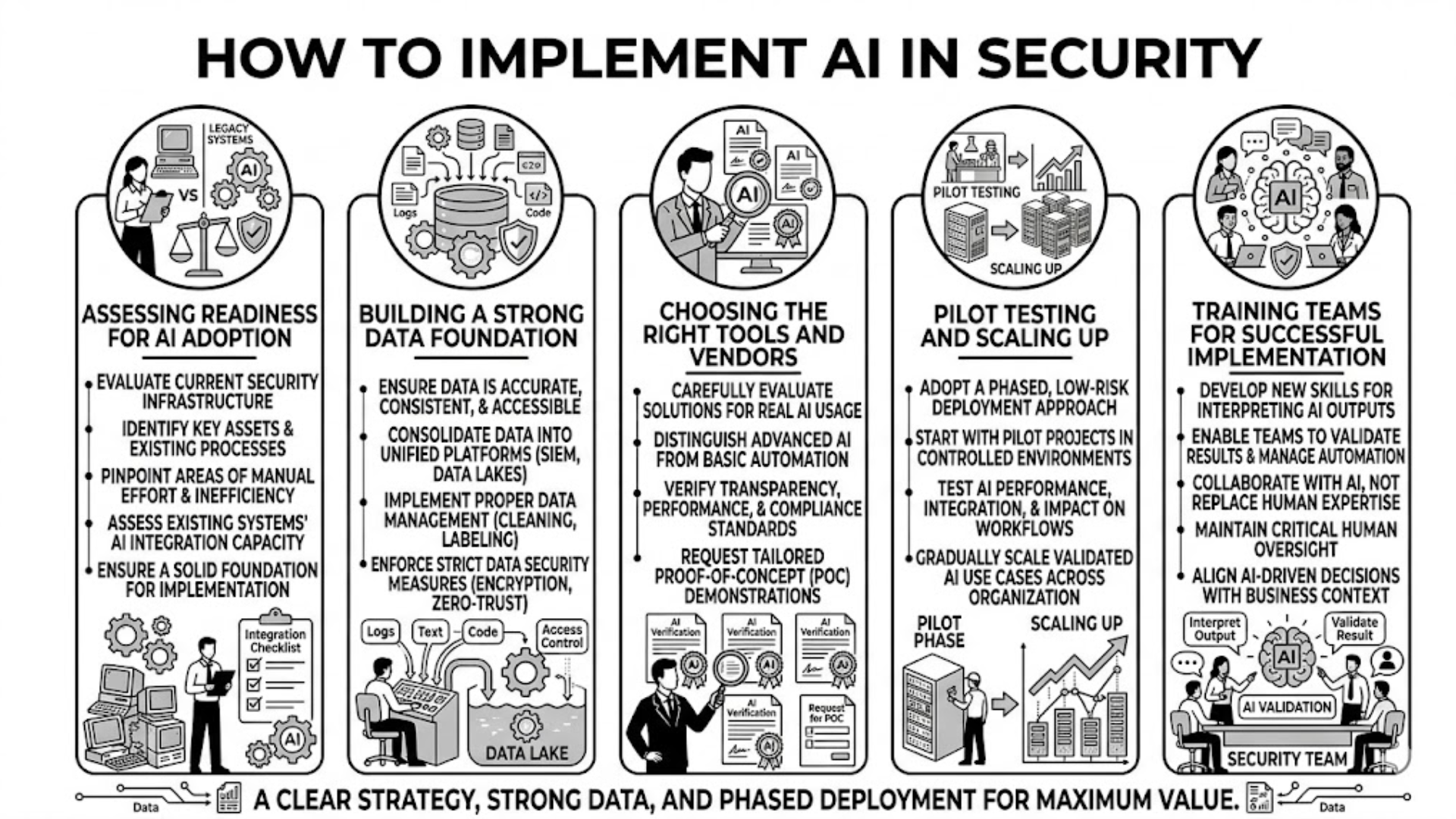
How to Implement AI in Security
Implementing AI successfully requires more than just adopting new tools. To fully leverage AI use cases in security, organizations need a clear strategy, strong data foundations, and a phased approach that minimizes risk while maximizing value.
Assessing Readiness for AI Adoption
Before deploying AI, organizations must evaluate their current security infrastructure and readiness. This includes identifying key assets, understanding existing security processes, and pinpointing areas where manual effort creates inefficiencies.
It is also important to assess whether existing systems can support AI integration. Legacy systems without proper connectivity or processing capabilities may limit the effectiveness of AI solutions.
A clear readiness assessment ensures that AI use cases in security are implemented on a solid foundation, avoiding wasted investment and failed deployments.
Building a Strong Data Foundation
Data is the backbone of any AI system. To enable effective AI use cases in security, organizations must ensure that their data is accurate, consistent, and accessible.
This involves consolidating data from different sources into unified platforms such as data lakes or SIEM systems. Proper data management practices, including cleaning, labeling, and access control, are essential to improve model performance.
At the same time, organizations must enforce strict data security measures, such as encryption and zero-trust access policies, to protect sensitive information and maintain compliance.
Choosing the Right Tools and Vendors
Selecting the right technology partner is critical for successful implementation. With many vendors claiming AI capabilities, organizations must carefully evaluate solutions based on transparency, performance, and compliance standards.
It is important to verify whether a solution uses advanced AI models or simply applies basic automation. Requesting proof-of-concept demonstrations tailored to specific business needs can help validate effectiveness.
Choosing the right partner ensures that AI use cases in security deliver real value rather than becoming costly experiments.
Pilot Testing and Scaling Up
AI should not be deployed across the entire organization at once. A phased approach is essential to reduce risk and ensure smooth integration.
Organizations should begin with pilot projects in controlled environments, testing how AI performs in real scenarios. This includes evaluating accuracy, integration with existing systems, and impact on workflows.
Once validated, these AI use cases in security can be scaled gradually across the organization, ensuring stability and long-term success.
Training Teams for Successful Implementation
Adopting AI requires a shift in how security teams operate. Employees need to develop new skills to work effectively with AI systems, including interpreting outputs, validating results, and managing automated processes.
Training programs should focus on enabling teams to collaborate with AI, rather than replacing human expertise. Human oversight remains critical to ensure that AI-driven decisions align with business context and risk tolerance.
By investing in workforce development, organizations can fully unlock the potential of AI use cases in security and build a more resilient security operation.
Measuring the ROI of AI in Security
Determining the Return on Investment (ROI) for artificial intelligence in cybersecurity is inherently complex, as it requires quantifying security incidents that were successfully prevented. However, organizations can establish concrete frameworks to measure the financial and operational efficacy of their AI deployments.
Key Metrics to Track Success
Security operations must transition to tracking highly specific Key Performance Indicators (KPIs) before and after AI implementation to prove operational velocity.
| AI Use Case Focus | Primary Telemetry Inputs | Key Performance Indicators (KPIs) to Track |
| SOC Triage & GenAI Summarization | SIEM/XDR alerts, endpoint telemetry |
Analyst minutes per case, queue age, Mean Time to Acknowledge (MTTA) |
| Anomaly Detection & UEBA | Authentication logs, DNS/HTTP traffic |
False Positive Rate (FPR), detection latency, precision and recall metrics |
| Vulnerability & Patch Mgmt | CI/CD scans, asset criticality data |
Mean Time to Patch, critical exposures closed, time exposed |
| Identity Fraud & ATO Prevention | Identity Provider (IdP) data, risk signals |
ATO blocks, false decline rate, step-up authentication rate |
Cost Savings Achieved Through Automation
One of the most immediate benefits of AI use cases in security is cost reduction through automation. AI can handle a large portion of repetitive tasks such as monitoring logs, triaging alerts, and generating reports.
By automating routine workflows, organizations can reduce the need for large security teams while maintaining strong protection. This allows businesses to manage increasing threat volumes without significantly increasing operational costs.
In addition, AI helps prevent costly security breaches. Early detection and automated response reduce the likelihood of incidents escalating into major financial losses. Many organizations report significant cost savings when AI is integrated into their security operations.
Case Studies Demonstrating ROI
Real-world implementations highlight the value of AI use cases in security. For example, organizations using AI-powered security tools have seen improvements in response time, efficiency, and overall productivity.
In enterprise environments, AI-assisted systems enable security teams to complete complex tasks faster and with greater accuracy. This allows less experienced staff to perform at a higher level, reducing the need for additional hiring and improving team performance.
These outcomes demonstrate that AI not only enhances security but also maximizes the return on existing resources.
Common Pitfalls and How to Avoid Them
Despite the benefits, achieving ROI from AI use cases in security requires careful planning. One common mistake is failing to establish clear baseline metrics before implementation. Without a starting point, it becomes difficult to measure improvement.
Another challenge is over-reliance on AI without proper monitoring. AI systems require continuous updates and data validation to maintain accuracy. Without this, performance may decline over time, leading to false positives or missed threats.
To ensure long-term success, organizations should combine AI with human oversight, regularly evaluate performance, and continuously refine their models. This approach helps maintain both security effectiveness and sustainable ROI.
Future Trends of AI in Security
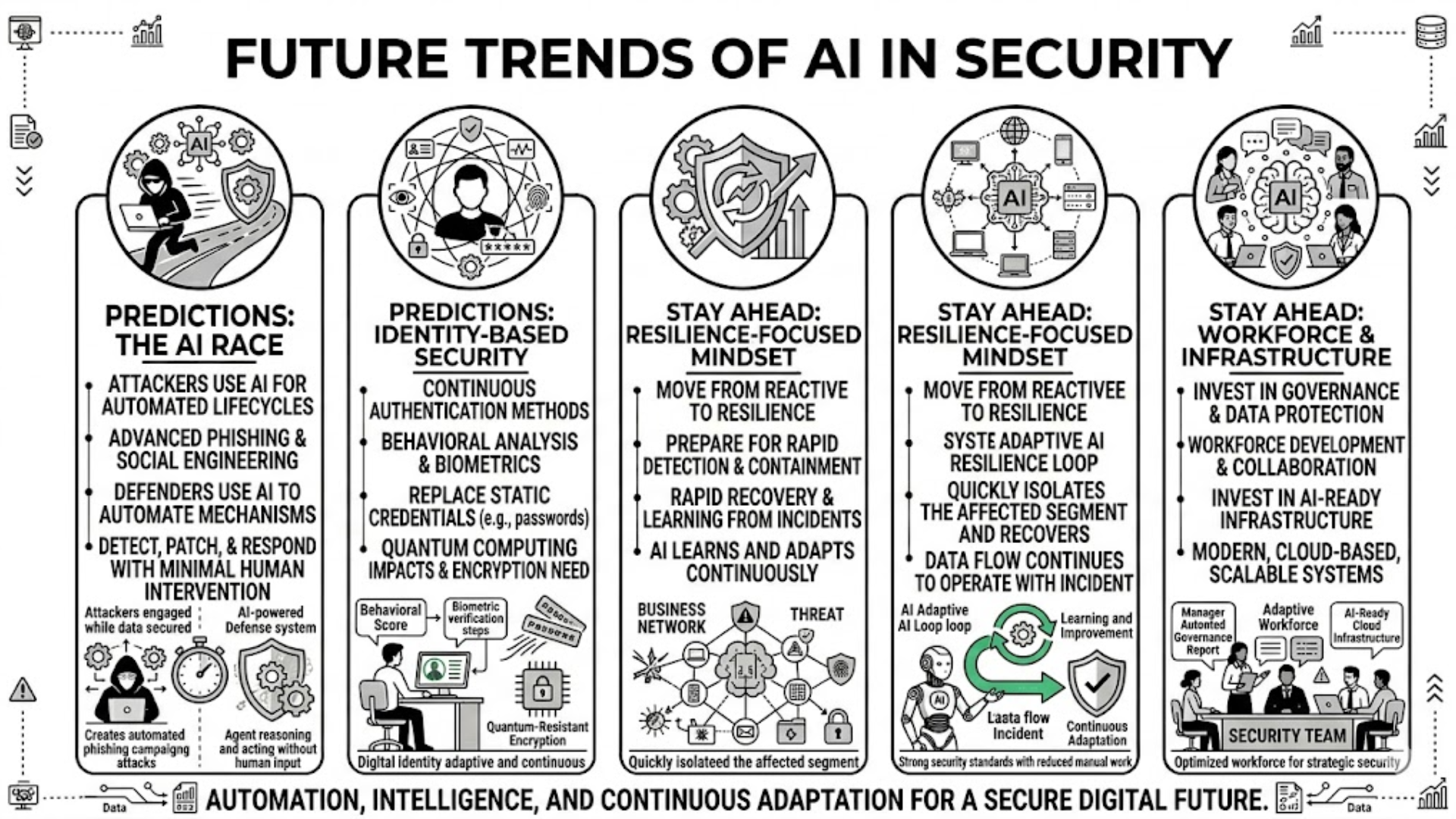
As cyber threats continue to evolve, AI use cases in security will play an even more critical role in shaping how organizations defend against increasingly sophisticated attacks. The future of cybersecurity will be defined by automation, intelligence, and continuous adaptation.
Predictions for the Next Decade
Over the next decade, cybersecurity is expected to become a highly dynamic environment driven by AI on both sides. Attackers will increasingly use AI to automate the entire attack lifecycle, from identifying vulnerabilities to launching targeted and scalable attacks.
This includes more advanced phishing campaigns, AI-generated social engineering, and automated intrusion techniques that can adapt in real time.
To respond, organizations will rely heavily on AI use cases in security to automate defense mechanisms. AI systems will be able to detect threats, apply patches, and respond to incidents with minimal human intervention.
At the same time, the concept of traditional network security will continue to shift. Identity-based security will become the primary focus, with continuous authentication methods such as behavioral analysis and biometrics replacing static credentials like passwords.
Emerging technologies such as quantum computing may also impact cybersecurity, requiring new encryption methods and more advanced AI-driven protection strategies.
How Businesses Can Stay Ahead of the Curve
To remain competitive and secure, organizations must proactively adapt to these changes. Investing in modern, AI-ready infrastructure is a critical first step. Cloud-based and scalable systems provide the flexibility needed to support advanced security capabilities.
Businesses should also move from a reactive mindset to a resilience-focused approach. Instead of assuming that attacks can always be prevented, organizations need to prepare for rapid detection, containment, and recovery.
Adopting AI use cases in security allows companies to build systems that can continuously learn and adapt to new threats, improving long-term security performance.
In addition, organizations must invest in governance, data protection, and workforce development. Ensuring that teams understand how to work alongside AI systems is essential for maintaining both effectiveness and control.
By combining technology, strategy, and skilled talent, businesses can stay ahead of evolving threats and build a more secure digital future.
Conclusion
AI use cases in security are becoming essential as cyber threats grow more complex and automated. From threat detection and response to fraud prevention and system optimization, AI helps organizations improve efficiency, reduce costs, and strengthen overall security. While challenges such as data quality and governance remain, businesses that adopt AI early will gain a clear advantage in building resilient and scalable defense systems.
To stay ahead, organizations should start by assessing their readiness, improving data infrastructure, and identifying key areas where AI can deliver value. Adopting AI use cases in security is no longer optional but a critical step toward protecting digital assets and ensuring long-term business continuity.