
TL;DR:
- Autonomous Coding is AI-driven software development where AI agents plan, write, test, and deploy code with minimal human input.
- It reduces manual coding time by 30-50% and allows engineering teams to handle far larger workloads without scaling headcount.
- Most enterprises adopt autonomous coding for well-defined, repetitive tasks, while keeping humans in the loop for architecture and critical decisions.
Autonomous Coding represents the next leap in AI-powered software development. Rather than just suggesting lines of code, autonomous systems plan entire features, write the implementation, run tests, and submit the results for review. For business leaders managing engineering costs and delivery timelines, this is a development you need to understand now.
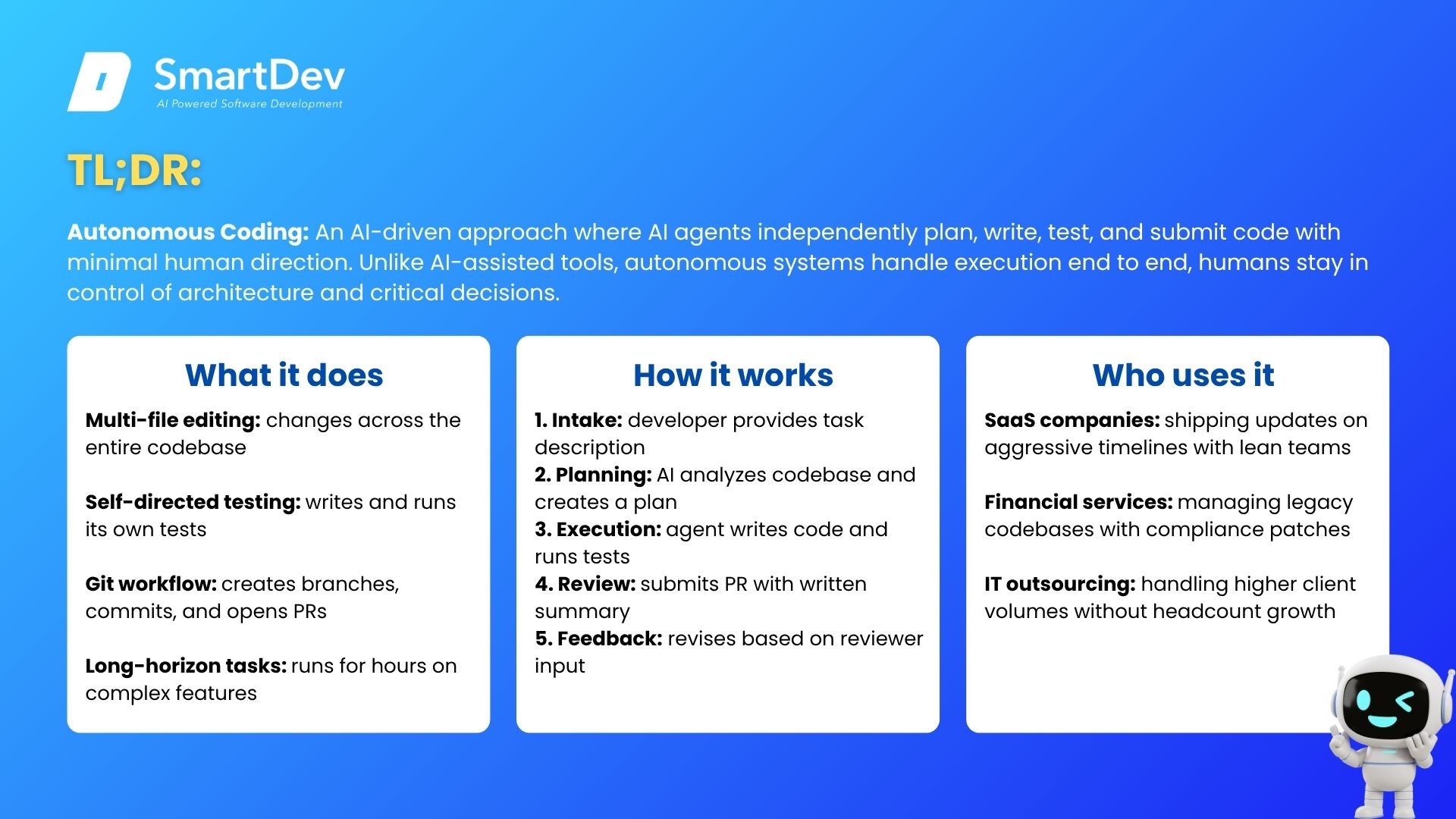
What is Autonomous Coding?
Autonomous Coding is an AI-driven approach to software development in which AI agents independently plan, write, test, and submit code with minimal human direction or real-time supervision.
Unlike AI-assisted engineering, where developers accept or reject AI suggestions in real time, autonomous coding systems operate over longer periods without constant human input. A developer or product manager provides high-level instructions (for example, “build a user authentication module”) and the AI agent handles the execution end to end, creating files, writing tests, managing version control, and surfacing the finished work for human review.
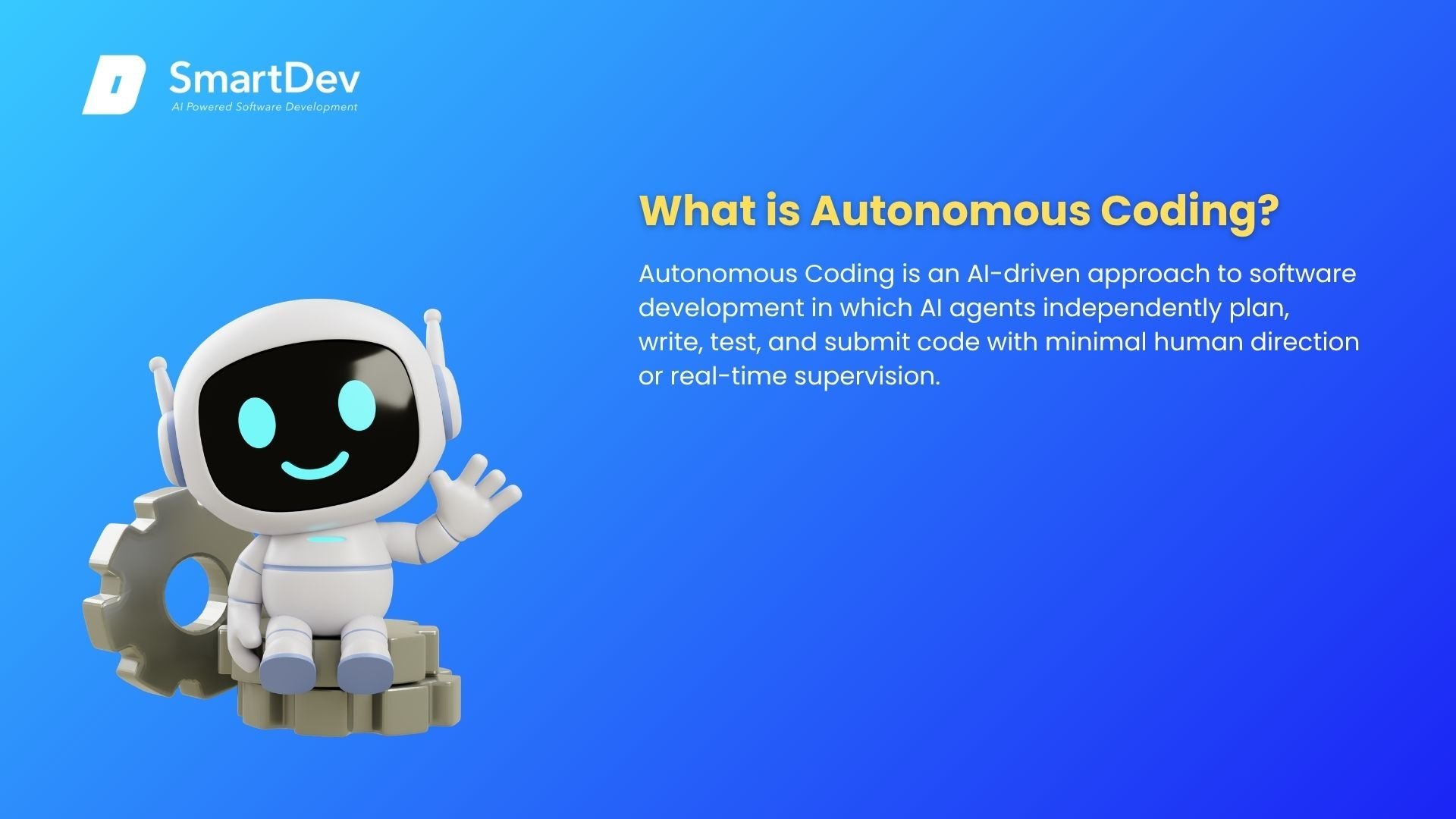
Key characteristics of autonomous coding systems include:
- Multi-file editing: The AI can make coordinated changes across an entire codebase, not just a single file or function.
- Self-directed testing: Autonomous agents write and run their own tests, catching bugs before presenting results to human reviewers.
- Git workflow management: AI agents create branches, commit changes, and open pull requests automatically following standard engineering workflows.
- Long-horizon execution: Tasks that previously required days of developer time can now be handled by AI agents running for minutes or hours.
なぜ企業にとって重要なのか
Autonomous Coding addresses one of the most persistent bottlenecks in technology organizations: the shortage of skilled developers and the rising cost of scaling engineering capacity.
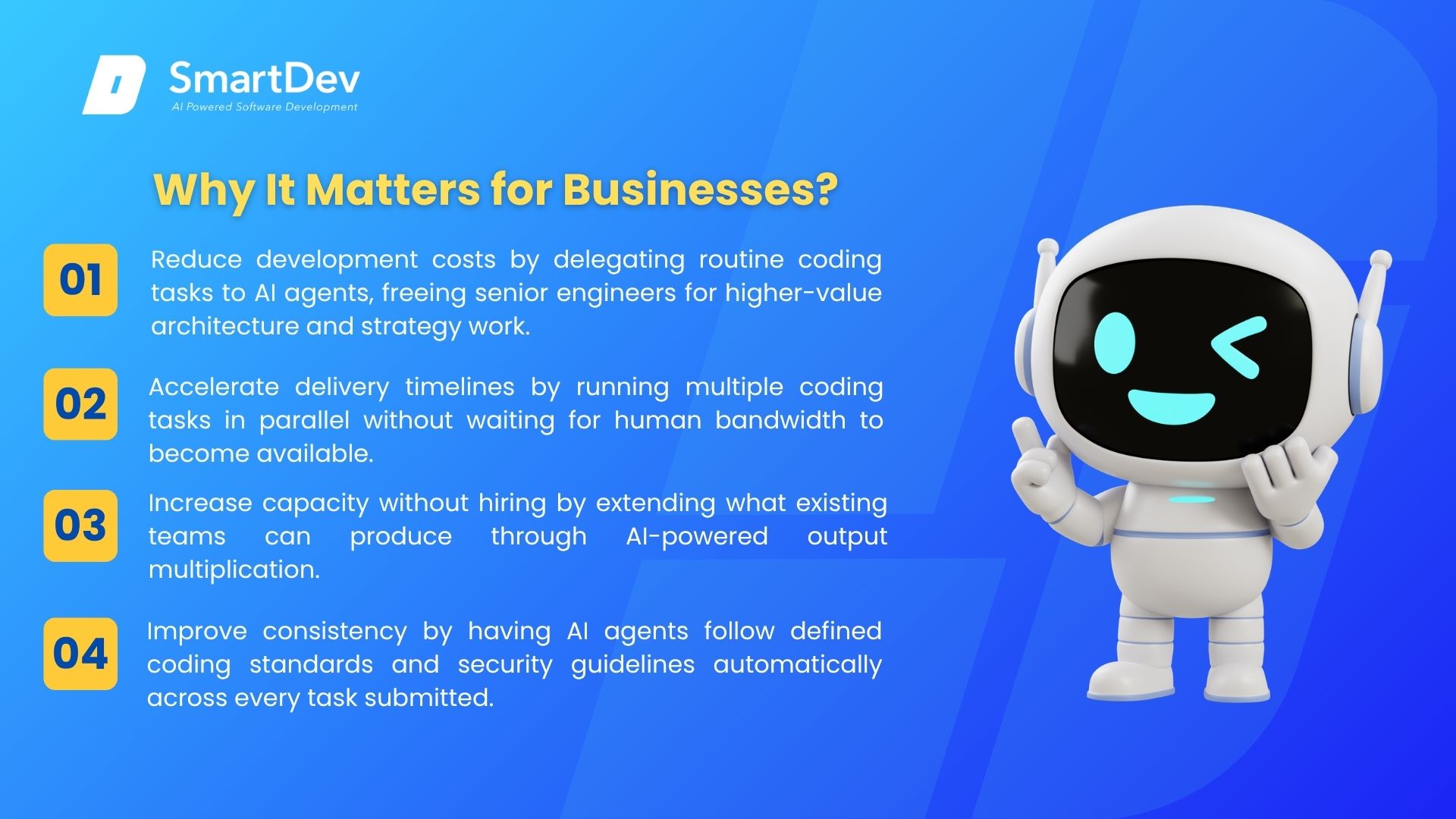
- Reduce development costs by delegating routine coding tasks to AI agents, freeing senior engineers for higher-value architecture and strategy work.
- Accelerate delivery timelines by running multiple coding tasks in parallel without waiting for human bandwidth to become available.
- Increase capacity without hiring by extending what existing teams can produce through AI-powered output multiplication.
- Improve consistency by having AI agents follow defined coding standards and security guidelines automatically across every task submitted.
For example, a fintech company that deployed autonomous coding agents for its backend API development reduced bug fix turnaround from three days to under four hours. The agents handled routine fixes overnight, and the engineering team reviewed results each morning, cutting sprint backlogs by 40% within the first quarter. That kind of productivity shift changes what a team of 10 engineers can deliver compared to a team without autonomous tools.
How Does Autonomous Coding Work?
- Task intake: A developer or product manager provides a plain-language task description or a structured specification. The more detail provided, the better the agent’s output.
- Planning: The AI agent analyzes the existing codebase, identifies relevant files, and creates a step-by-step implementation plan before writing any code.
- Execution: The agent writes the code across multiple files, running internal tests after each significant change to verify correctness as it works.
- Review submission: The agent commits the code, opens a pull request, and provides a written summary of what was built and why, ready for human review.
- Feedback loop: If the reviewer requests changes, the agent incorporates the feedback and submits a revised version, with each iteration improving output quality.
The result is a scalable, repeatable development process where human engineers act as architects and reviewers rather than hands-on coders for every task in the backlog.
Who Uses Autonomous Coding?
Autonomous Coding is primarily adopted by technology-driven organizations with substantial software development workloads and a need to scale output without proportionally growing their engineering teams.
High-adoption industries include:
- SaaS companies that need to ship product updates on aggressive timelines with lean engineering teams.
- Financial services firms managing large legacy codebases requiring continuous updates, compliance patches, and security fixes.
- IT outsourcing providers that use autonomous coding to handle higher client volumes without equivalent headcount increases.
Within organizations, autonomous coding is championed by CTOs and VP of Engineering roles who see it as a force multiplier for their teams, and by CFOs who view it as a way to contain rising engineering labor costs. Product managers are also key stakeholders, as faster coding cycles mean shorter time to market and more responsive feature delivery for customers.
その他の関連用語
AIエージェント: A software system that uses artificial intelligence to analyze data, make decisions, and perform tasks automatically to achieve a specific goal. AI Agents are the core execution units in Autonomous Coding. They are what plan, write, test, and submit code end to end without requiring a developer to supervise each individual step.
AI Assisted Engineering: A development approach where AI tools support human engineers in real time by suggesting code, flagging errors, and speeding up routine tasks while the developer retains direct control. AI Assisted Engineering is the stage most development teams reach before Autonomous Coding. Understanding the difference matters because the two require different workflows, oversight models, and trust levels from the engineering team.
AI Code Explanation: The ability of an AI system to read existing code and produce clear, accurate explanations of what it does and why. AI Code Explanation works alongside Autonomous Coding to keep human engineers in the loop. When an agent produces a significant block of new code, explanation capabilities help reviewers understand and verify the output quickly rather than reading through it line by line.