
TL;DR
- Unintentional exposure of sensitive data to unauthorized parties.
- Differs from breach: leakage is accidental, breach is deliberate attack. Due to data leakage, it is caused by human error, misconfiguration, or vulnerability.
- Preventable through DLP tools, policies, and access controls. Besides, unintentional exposure of sensitive data due to human error or misconfiguration.
What is Data Leakage?
Data leakage is the unintentional exposure of confidential information including customer records, intellectual property, financial data, or trade secrets to unauthorized parties. It differs from a data breach: a breach is a targeted attack, while leakage is accidental exposure caused by negligence, misconfiguration, or process failures.
Data leakage can occur in several ways. An employee might email sensitive documents to the wrong recipient or upload confidential files to a public cloud storage folder. A misconfigured database might expose customer records. Unpatched software vulnerabilities could allow unauthorized access. A developer might accidentally commit API keys to a public repository. Employees leaving might copy customer lists to personal devices.
なぜ企業にとって重要なのか
Every organization stores sensitive data that competitors would pay for or criminals could exploit. Data leakage doesn’t require skilled hackers; it only requires one employee with access and a moment of inattention. The consequences cascade across compliance, finance, and reputation.
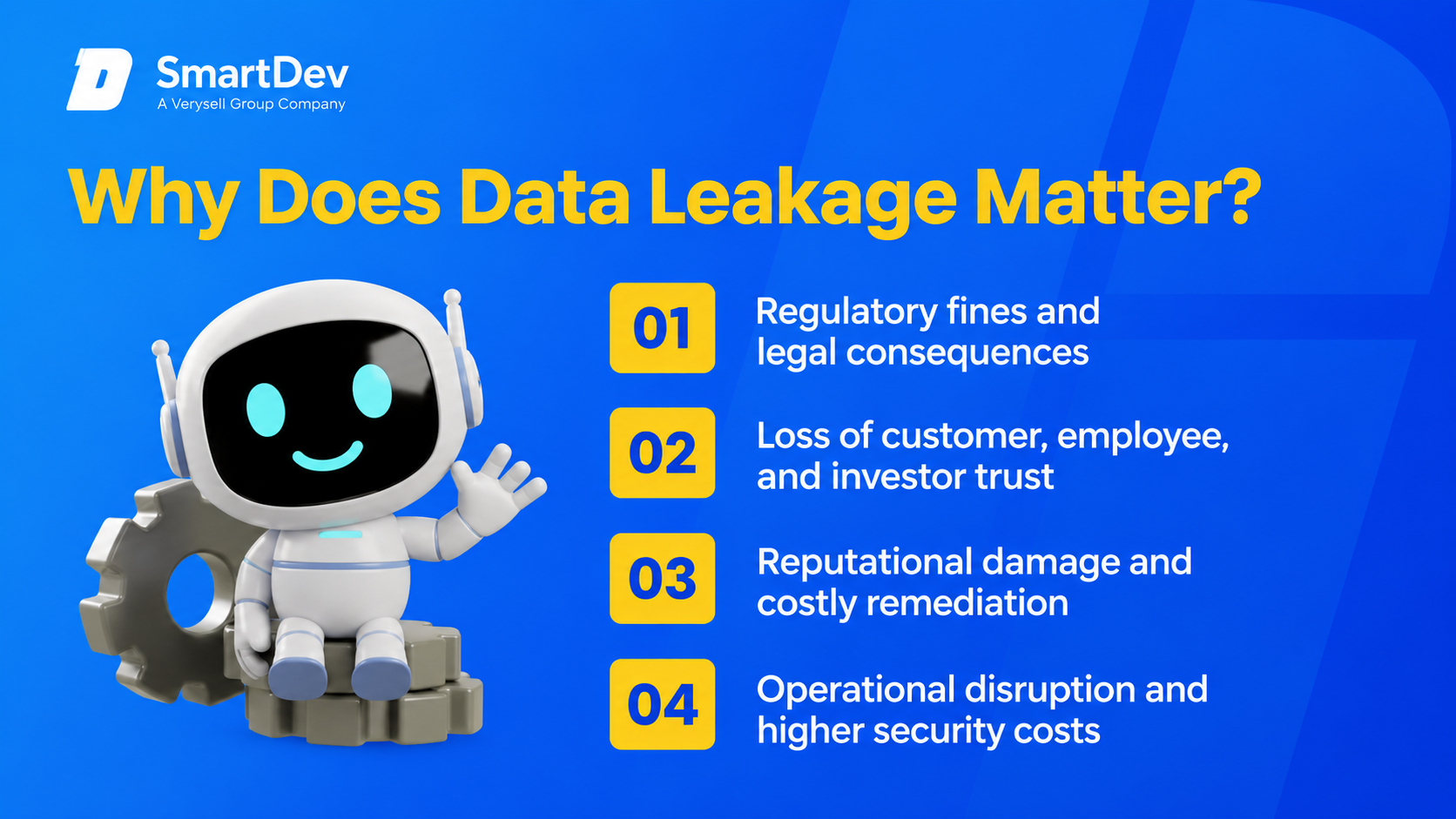
Data leakage threatens your business by creating compliance violations (HIPAA violations cost up to 1.5 million dollars per incident, GDPR fines reach 4 percent of global revenue), exposing intellectual property to competitors, damaging customer trust (customers switch to competitors after learning their data wasn’t protected), and requiring costly incident response. A healthcare provider discovered patient records accessible through an unsecured backup server. The organization paid 2.3 million dollars in fines and lost 18 percent of customers.
How Does Data Leakage Happen?
Most data leakage stems from preventable human error and configuration mistakes. Human error causes over 60 percent of leakage incidents when employees send confidential emails to wrong recipients or use insecure communication channels. Misconfigured systems expose cloud storage buckets and databases when default settings allow public access. Unpatched vulnerabilities leave known security holes open. Poor access controls give too many employees access to sensitive data they don’t need. Insecure passwords and hardcoded credentials provide data access without audit trails.
The result is that sensitive data gradually escapes through a thousand small openings, each seemingly minor but collectively catastrophic.
How Much Does Data Leakage Cost?
The average cost of a data leakage incident is 4.2 million dollars. Three major cost factors drive these numbers: regulatory fines and legal liability calculated as percentages of revenue, remediation and incident response costs between 200,000 and 800,000 dollars per incident, and customer loss where organizations typically lose 15 to 25 percent of customers.
A mid-market company with 50,000 customer records faces 2.5 to 5 million dollars in total cost if leakage occurs. Implementing Data Loss Prevention (DLP) tools costs 30,000 to 100,000 dollars annually, representing 2 to 4 years of preventive investment per incident avoided.
その他の関連用語
- Data Loss Prevention (DLP): Software and policies that identify, monitor, and stop transmission of sensitive data outside your organization.
- Data Breach: A deliberate cyberattack where malicious actors gain unauthorized access and steal data.
- Cybersecurity: The broader field of protecting digital systems, networks, and data from theft, damage, or unauthorized access