In today’s fast-moving business world, success depends as much on who you work with as what you do. The rise of complex supply chains, outsourced technology, and global partnerships means that managing vendor relationships is no longer a back-office function – it’s a strategic priority.
Vendor Relationship Management (VRM) is about more than keeping vendors in check; it’s about creating partnerships that fuel innovation, reduce risks, and drive shared growth.

Why Vendor Relationship Management Matters
Vendor relationships used to be transactional—focused on price negotiations, timely delivery, and compliance. But in the digital era, where speed, reliability, and innovation determine success, businesses need more than suppliers. They need collaborators.
A well-structured vendor relationship management strategy helps companies build trust, strengthen accountability, and uncover opportunities for innovation. It ensures that vendors are aligned with the company’s mission and goals, making them an extension of the organization rather than just a cost line on a spreadsheet.
When done right, vendor relationship management builds relationships that are flexible in the face of disruption and powerful in driving competitive advantage. According to research in supply chain collaboration, retailers focused on improving supplier collaboration saw a 20% increase in revenue, demonstrating the tangible impact of strong partnerships.
What Vendor Relationship Management Really Means
Vendor Relationship Management is a strategic approach to building, nurturing, and optimizing long-term partnerships with external suppliers. It goes beyond procurement and contract management to focus on collaboration, communication, and continuous improvement.
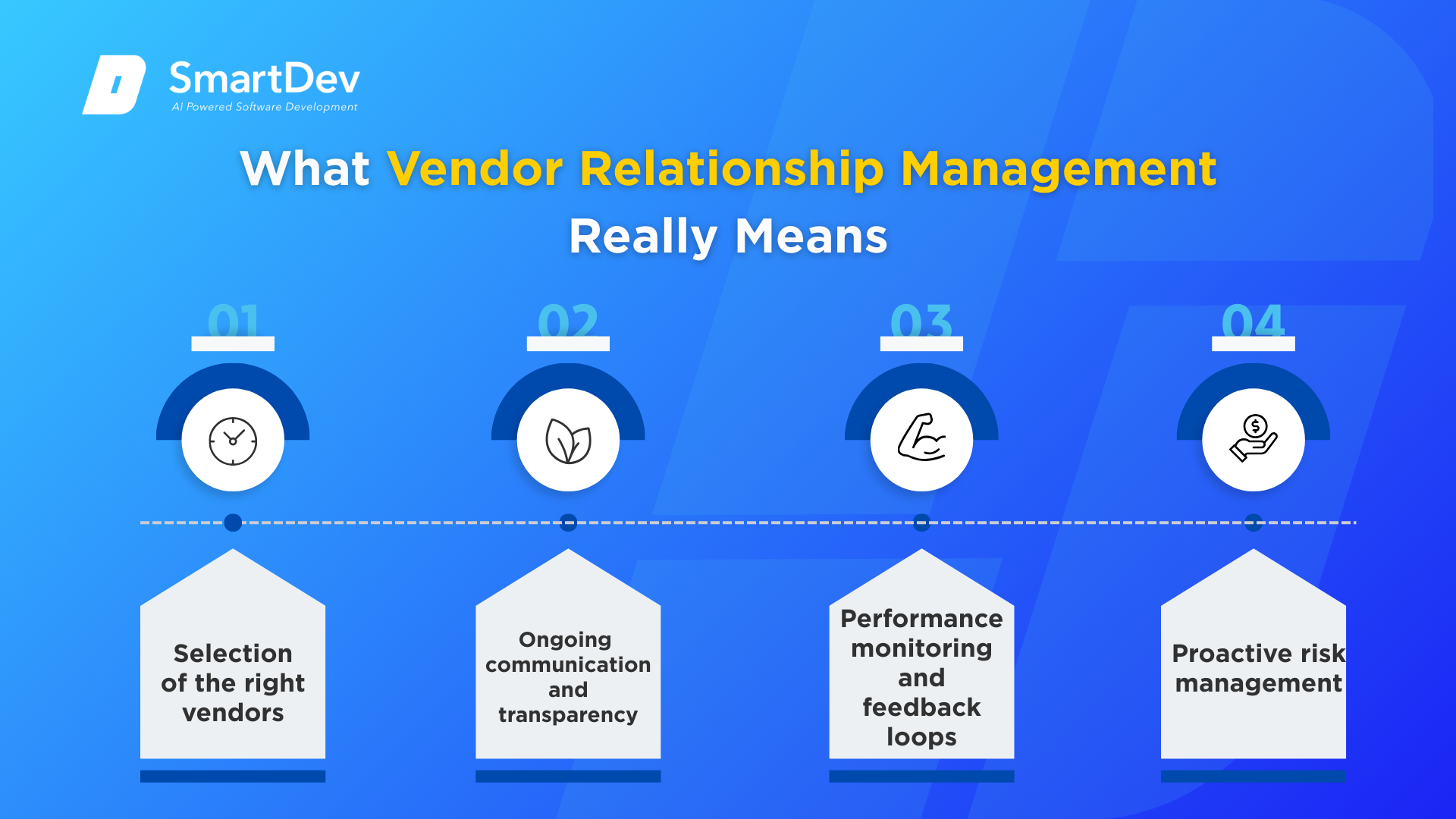
A mature vendor relationship management framework includes:
-
Selection of the right vendors, based not only on cost but also on capability, culture, and strategic alignment. Research shows that vendor selection should include key criteria such as quality, reliability, experience, scalability, pricing, financial stability, risk management, regulatory compliance, and cultural fit.
-
Ongoing communication and transparency that ensures both sides stay aligned on goals and expectations. Supply chain collaboration studies show that 50% of organizations are prioritizing sharing more information with suppliers to enhance transparency and trust.
-
Performance monitoring and feedback loops to track progress, solve issues early, and encourage improvement.
-
Proactive risk management to anticipate challenges and protect business continuity.
These components ensure that vendor relationships become an active source of innovation, not just an operational necessity.
How Vendor Relationship Management Differs from Traditional Vendor Management
Traditional vendor management is about control—setting strict terms, monitoring performance, and minimizing cost. Vendor relationship management is about collaboration, building trust, encouraging co-creation, and delivering long-term value.
The old model sees vendors as replaceable; the vendor relationship management model sees them as partners.
In traditional setups, once a deal is signed, communication often fades until something goes wrong. Vendor relationship management replaces that with continuous dialogue, allowing both sides to adapt quickly as market or business conditions change. This shift creates relationships that are more resilient and forward-looking—where success is measured not just by cost savings but by strategic outcomes.
Trust-based business relationships enable partners to move away from adversarial attitudes, leading to significantly better outcomes and more collaborative relationships that stay aligned with overarching business objectives.
The Core of Successful Vendor Relationship Management
Building a high-performing vendor relationship takes structure and care. The process typically begins with careful vendor selection, ensuring cultural fit and technical capability. Once a vendor is onboarded, clear expectations and shared goals are defined.
Ongoing performance monitoring keeps both sides accountable, while regular communication builds trust and ensures early resolution of issues. Finally, risk management acts as a safeguard, identifying vulnerabilities and maintaining operational stability.
In essence, vendor relationship management is about nurturing an ecosystem of vendors who understand your business, share your ambitions, and grow alongside you. Supply chain partnerships that involve integrated decision-making and collaborative engagement create more resilient, efficient, and adaptable networks.
The Real Benefits of Vendor Relationship Management
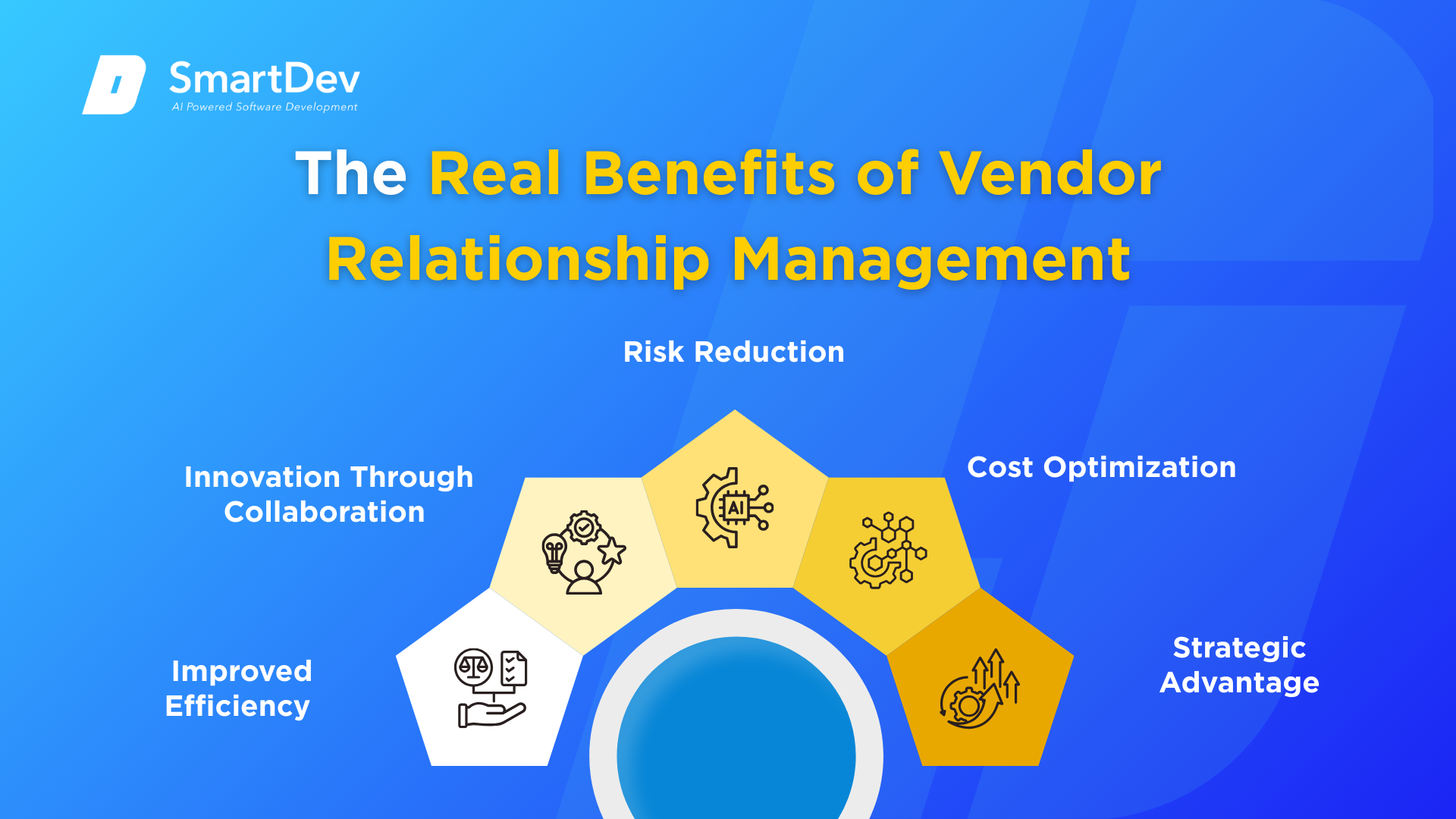
Companies that embrace vendor relationship management see measurable improvements across multiple fronts.
Improved Efficiency – Clear communication and shared systems reduce misunderstandings and delays, streamlining operations from procurement to delivery.
Innovation Through Collaboration – When vendors are treated as partners, they bring new ideas, technologies, and solutions that enhance products and processes.
Risk Reduction – Strong relationships make it easier to anticipate disruptions, manage compliance, and ensure continuity when challenges arise.
Cost Optimization – While Vendor Relationship Management isn’t purely about price, stronger relationships often lead to more favorable terms, discounts, and shared cost-saving initiatives.
Strategic Advantage – Well-managed vendors become an extension of your internal teams, allowing your business to respond faster to opportunities and market shifts. Supply chain partnerships also reduce waste through improved forecasting and better coordination, ensuring inventory aligns with actual needs.
What Happens When Vendor Relationship Management Is Ignored
Ignoring vendor relationship management can lead to fragmented communication, performance inconsistencies, and unnecessary risk exposure. Without structured management, vendors operate in silos, innovation stalls, and accountability fades.
Organizations that rely solely on transactional relationships often face misaligned expectations, frequent disputes, and inefficiencies that erode trust and profitability. In contrast, businesses that invest in strong vendor relationship management practices build reliability, adaptability, and long-term success.
Best Practices for Effective Vendor Relationship Management
Every great partnership starts with the right approach. To make vendor relationship management work, businesses should:
- Build trust through transparency. Maintain open communication and share information freely to align on priorities and expectations. Research emphasizes that transparency about pricing, delivery timelines, and potential challenges is essential for building strong partnerships.
- Set mutual goals. Collaborate with vendors on outcomes, not just outputs, ensuring both sides win. Aligning objectives and interests is a critical first step in establishing trust between business partners.
- Review performance regularly. Consistent evaluation drives improvement and accountability. Use weighted vendor selection criteria and scorecards to assess vendors against key performance indicators.
- Be flexible and fair. Adapt to changing circumstances and foster goodwill by supporting vendorswhen challenges arise.
- Invest in relationships. Treat vendors as an integral part of your ecosystem, because they are. Strategic collaboration initiatives aimed at enhancing supply chain resilience and strengthening supplier relationships lead to better performance and reduced risk.
Insights from Ctrl + Shifter Podcast
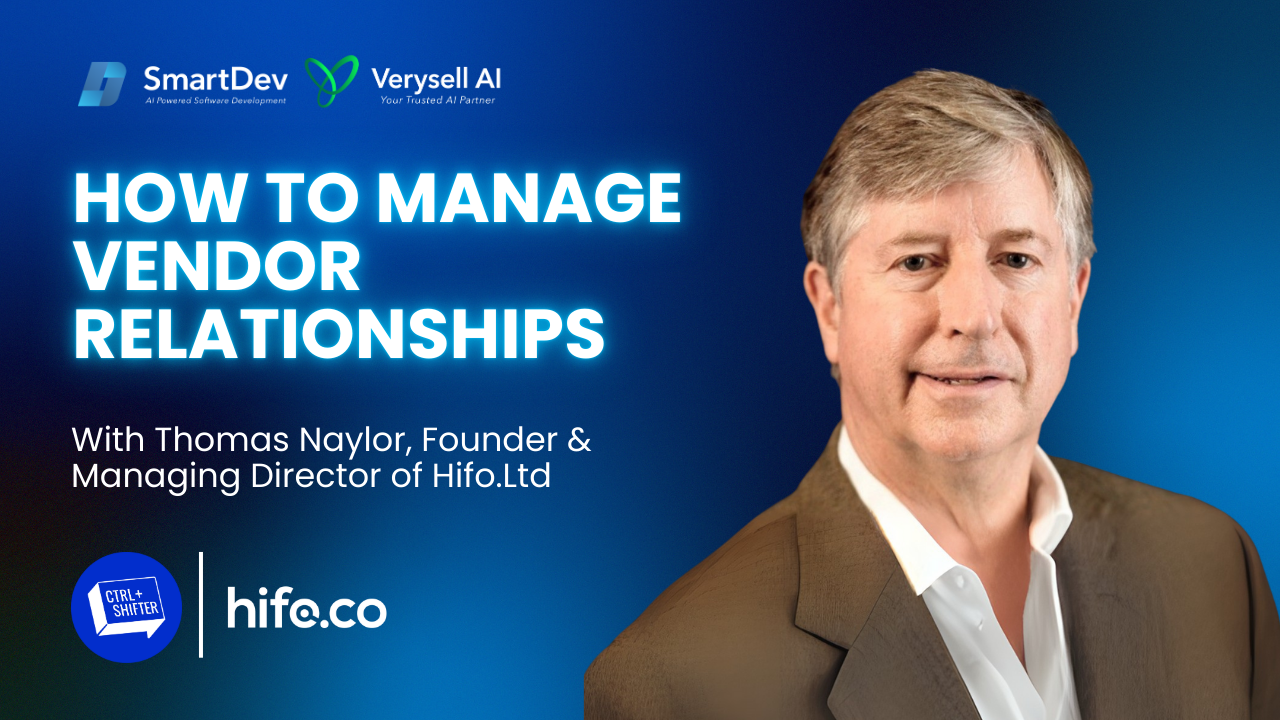
In Episode 3 of Ctrl + Shifter, Thomas Naylor, founder of HIFO, discussed what truly makes vendor partnerships thrive. With over 25 years of experience leading IT transformation and digital due diligence—from Seagram to Universal Music Group—Naylor has seen firsthand that great vendor relationships are built on clarity, fairness, and trust.
Reflecting on his journey, he explained how major technology projects succeed only when vendors and clients operate as one team. According to Naylor, “You have to be a safe pair of hands that people can trust. Transparency and respect are what keep partnerships alive through complexity.”

Naylor also introduced HIFO, a vendor discovery platform designed to simplify vendor research and selection. Instead of spending weeks searching through scattered information or relying on potentially biased reviews, companies can now compare vendors side by side, understand their strengths, and make informed choices. HIFO provides concise, immediately understandable company profiles that allow for complete listings of providers, making it easier for buyers to discover and compare the right vendors. “The best vendors want to be compared,” he said. “They know they’ll stand out when buyers have the right visibility.”
His perspective highlights a crucial truth: Vendor management is not about control, it’s about connection. Businesses that prioritize collaboration and communication build relationships that endure and evolve, even in rapidly changing markets.
Choosing the Right Vendor Management Platform
To implement effective vendor relationship management, many organizations turn to supplier relationship management (SRM) software. These platforms streamline vendor onboarding, centralize supplier data, and automate performance monitoring. Key features include:
-
Vendor lifecycle management and automated onboarding workflows
-
Centralized contract management and storage
-
Performance tracking with customizable KPIs and scorecards
-
Risk monitoring and compliance management
-
Supplier portals for self-service document management
Platforms like SAP Ariba, Coupa, and Gatekeeper provide enterprise-level solutions for organizations managing complex vendor ecosystems.
Conclusion – From Vendors to Partners
Vendor Relationship Management isn’t just a process—it’s a mindset. When companies treat vendors as partners rather than providers, they unlock new levels of performance, innovation, and resilience.
 As Thomas Naylor’s insights remind us, successful vendor relationships depend on transparency, shared goals, and mutual respect. Whether through structured frameworks or digital platforms like HIFO, the future of vendor management lies in collaboration.
In a world defined by interdependence, the strongest businesses will be those that build not just contracts—but true partnerships.
Listen to the full Episode 3 of the Ctrl + Shifter podcast featuring Thomas Naylor now to discover more about vendor relationship management and its values.