요약
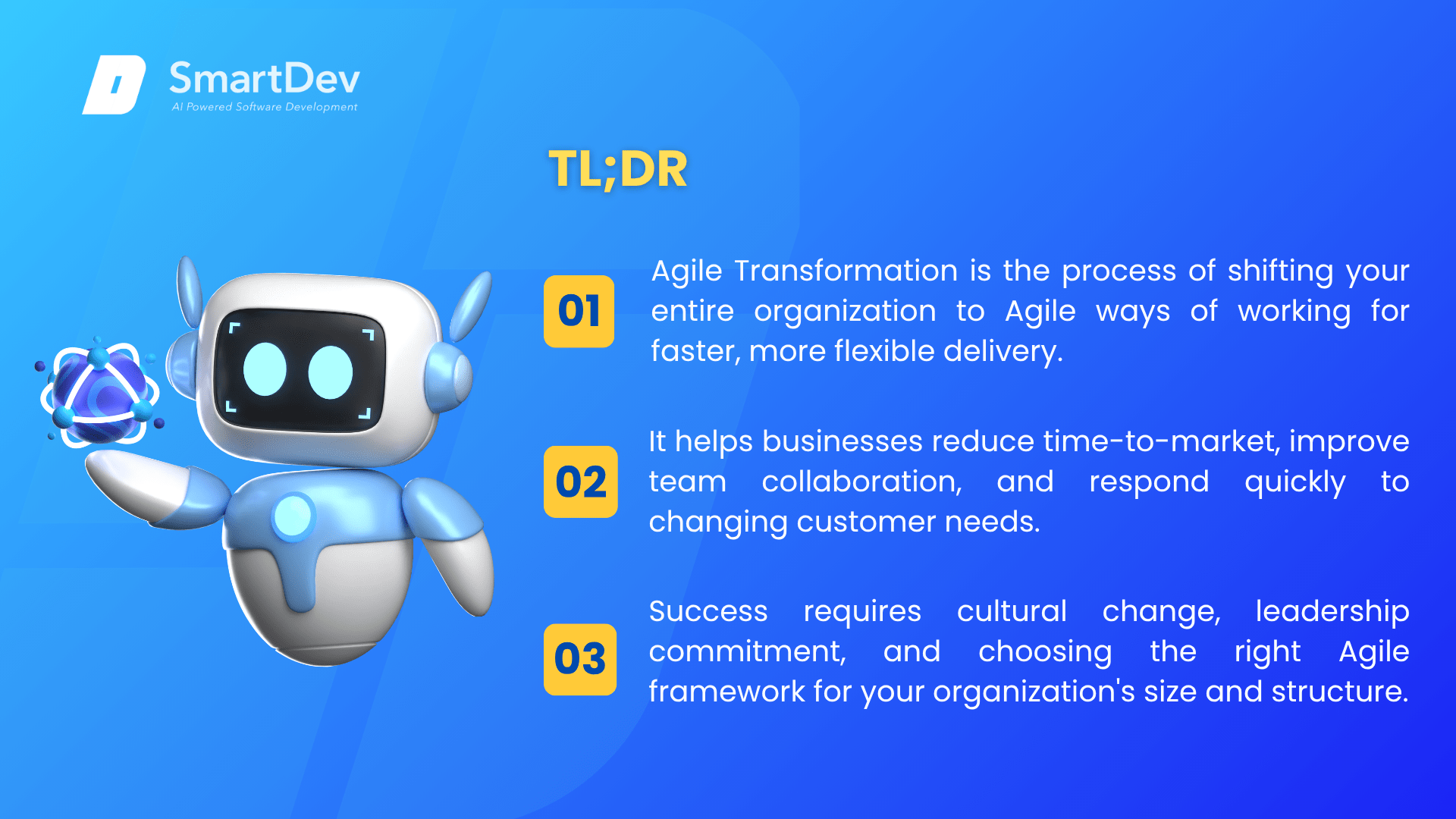
- Agile Transformation is the process of shifting your entire organization to Agile ways of working for faster, more flexible delivery.
- It helps businesses reduce time-to-market, improve team collaboration, and respond quickly to changing customer needs.
- Success requires cultural change, leadership commitment, and choosing the right Agile framework for your organization’s size and structure.
Agile Transformation is one of the most impactful shifts in modern business management. Companies across industries are adopting it to stay competitive, deliver software faster, and align IT teams with business goals. This article explains what it means, why it matters, and how to approach it effectively.
What is Agile Transformation?
Agile Transformation is the process of adopting Agile principles, practices, and culture across an entire organization to improve speed, flexibility, and collaboration in how work gets done. It is not about applying Agile to a single team or one project. The goal is to change how the whole company plans, executes, and responds to change at every level.
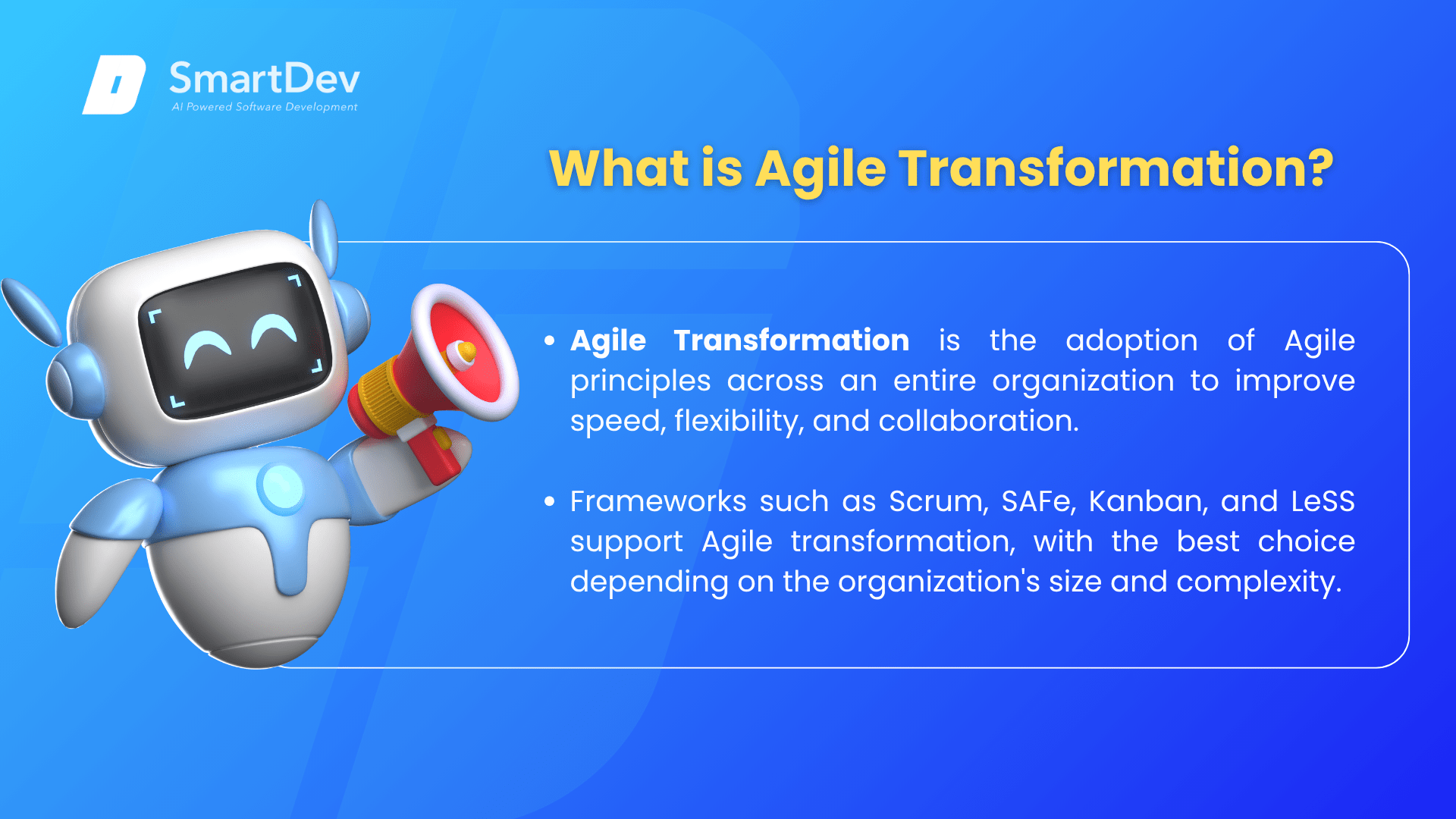 Several Agile frameworks are commonly used in transformation efforts:
- Scrum: Work is divided into short cycles called sprints, typically two weeks long, with clear ownership and daily check-ins
- SAFe (Scaled Agile Framework): Designed for large enterprises that need to coordinate multiple Agile teams simultaneously
- Kanban: Focuses on visualizing work in progress and limiting task overload to keep delivery steady
- LeSS (Large-Scale Scrum): Applies Scrum principles across bigger, multi-team organizations without heavy overhead
The right framework depends on your company size, team structure, and the complexity of your product or service.
Why It Matters for Businesses?
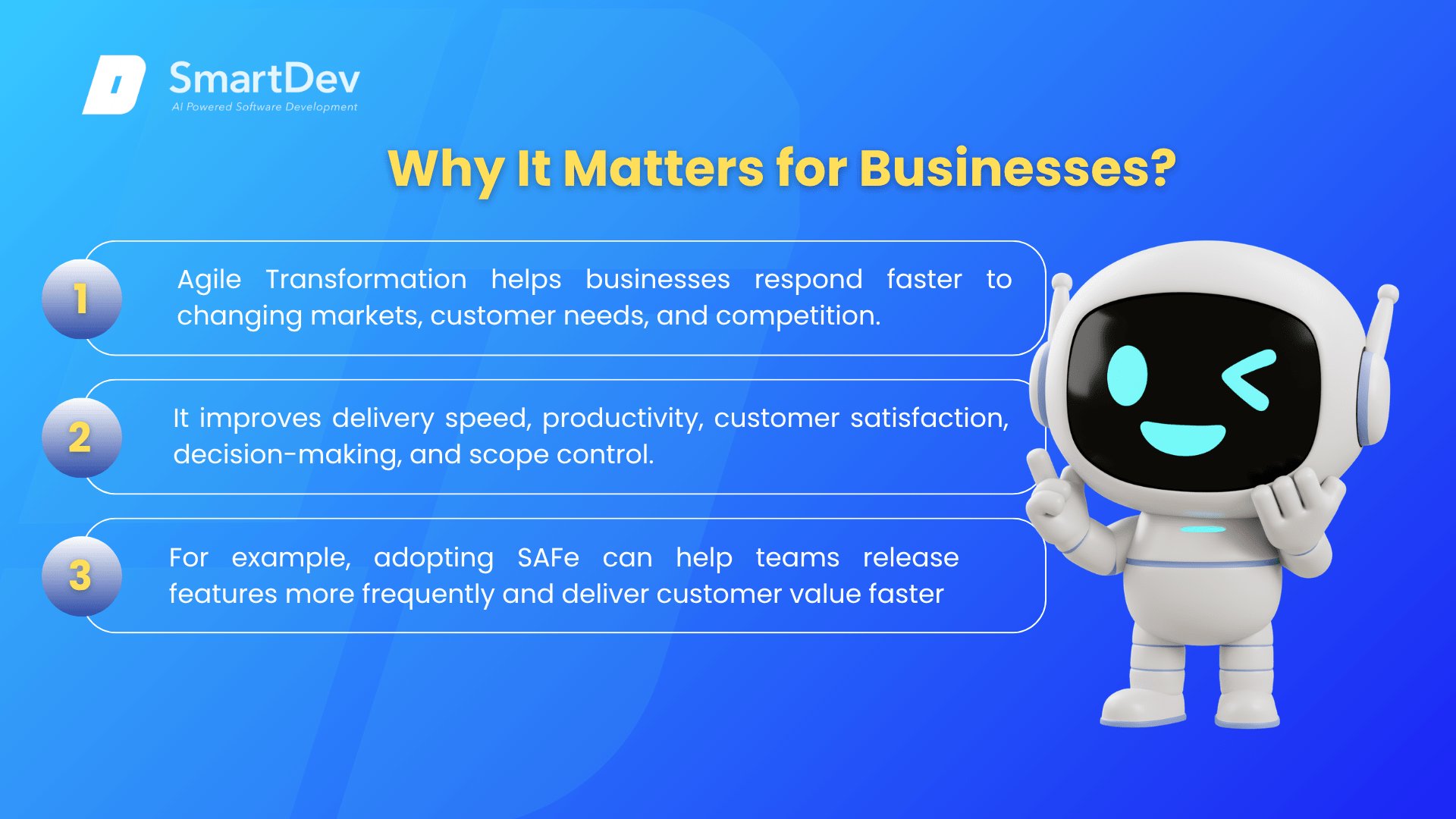
Traditional project management methods can be too slow and rigid for today’s markets. When customer needs change, competitors launch new features, or economic conditions shift, businesses need to respond in days, not months. That gap between demand and delivery is where Agile Transformation creates real value.
- Reduce time-to-market by breaking large projects into small, deliverable increments that ship frequently
- Increase team productivity through clearer priorities, shorter feedback loops, and fewer approval bottlenecks
- Improve customer satisfaction by incorporating real user feedback into every development cycle
- Accelerate decision-making by pushing authority closer to the teams doing the actual work
- Protect against scope creep by keeping work visible and adjusting priorities each sprint based on business value
For example, a mid-sized software company that adopted SAFe across its 12 development teams reported a 40% improvement in release frequency within the first year. Teams delivered working features every two weeks instead of every quarter, giving leadership better visibility and customers more value, faster.
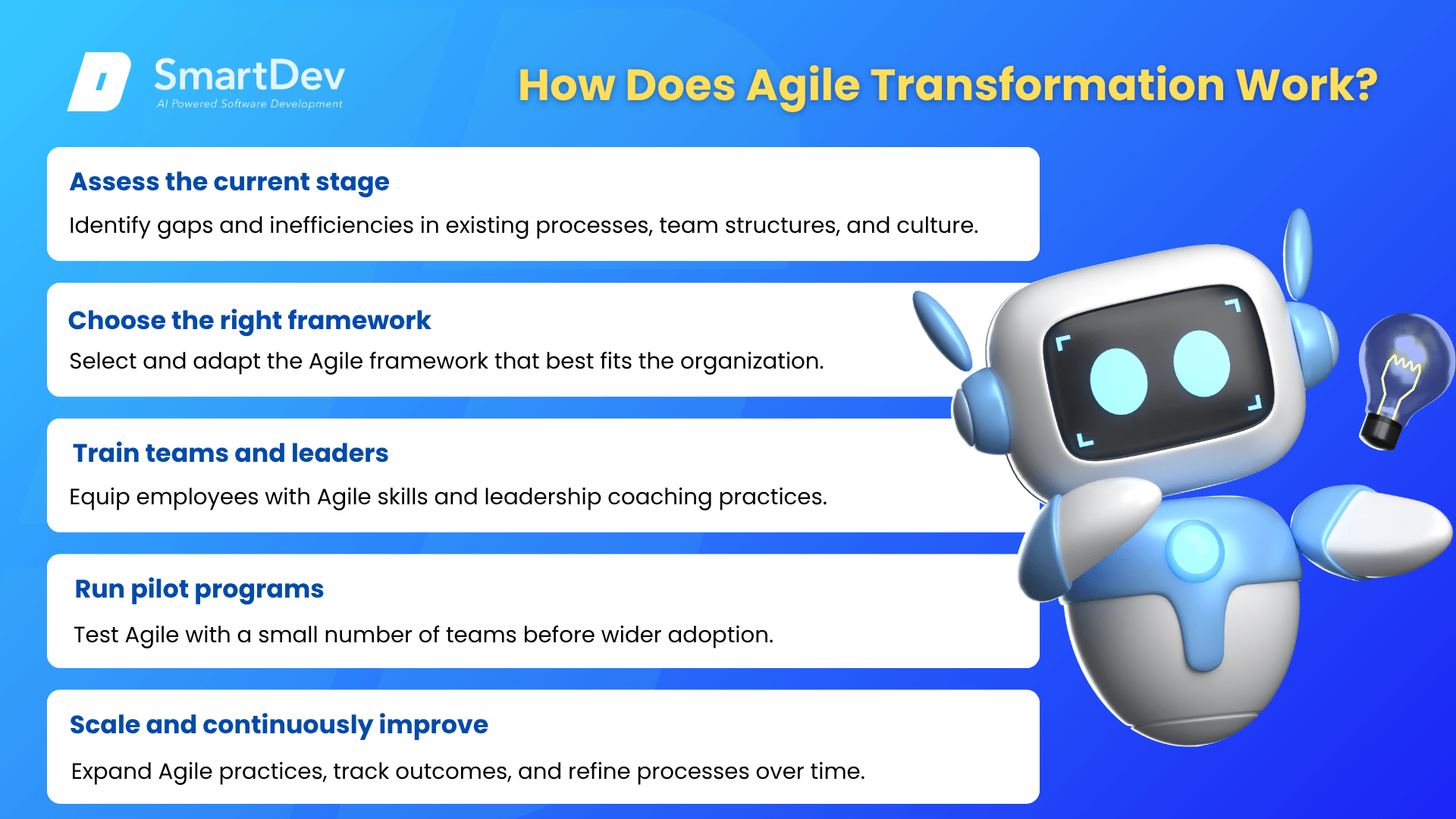
How Does Agile Transformation Work?
- Assess the current state: Leaders evaluate existing processes, team structures, and culture to identify where Agile practices are missing or causing friction.
- Choose the right framework: Based on company size and complexity, the most suitable Agile framework is selected and tailored to fit the organization’s specific needs.
- Train teams and leaders: Employees at all levels receive structured training. Leaders learn to shift from directing to coaching. Teams learn to self-organize and take ownership of delivery.
- Run pilot programs: One or two teams begin working under the new model first, generating early learnings before the transformation scales company-wide.
- Scale and continuously improve: Success metrics are tracked, retrospectives are held regularly, and the operating model is refined as more teams adopt Agile ways of working.
The result is an organization that can adapt and deliver consistently, regardless of what changes in the market or with your customers.
When to Use Agile Transformation?
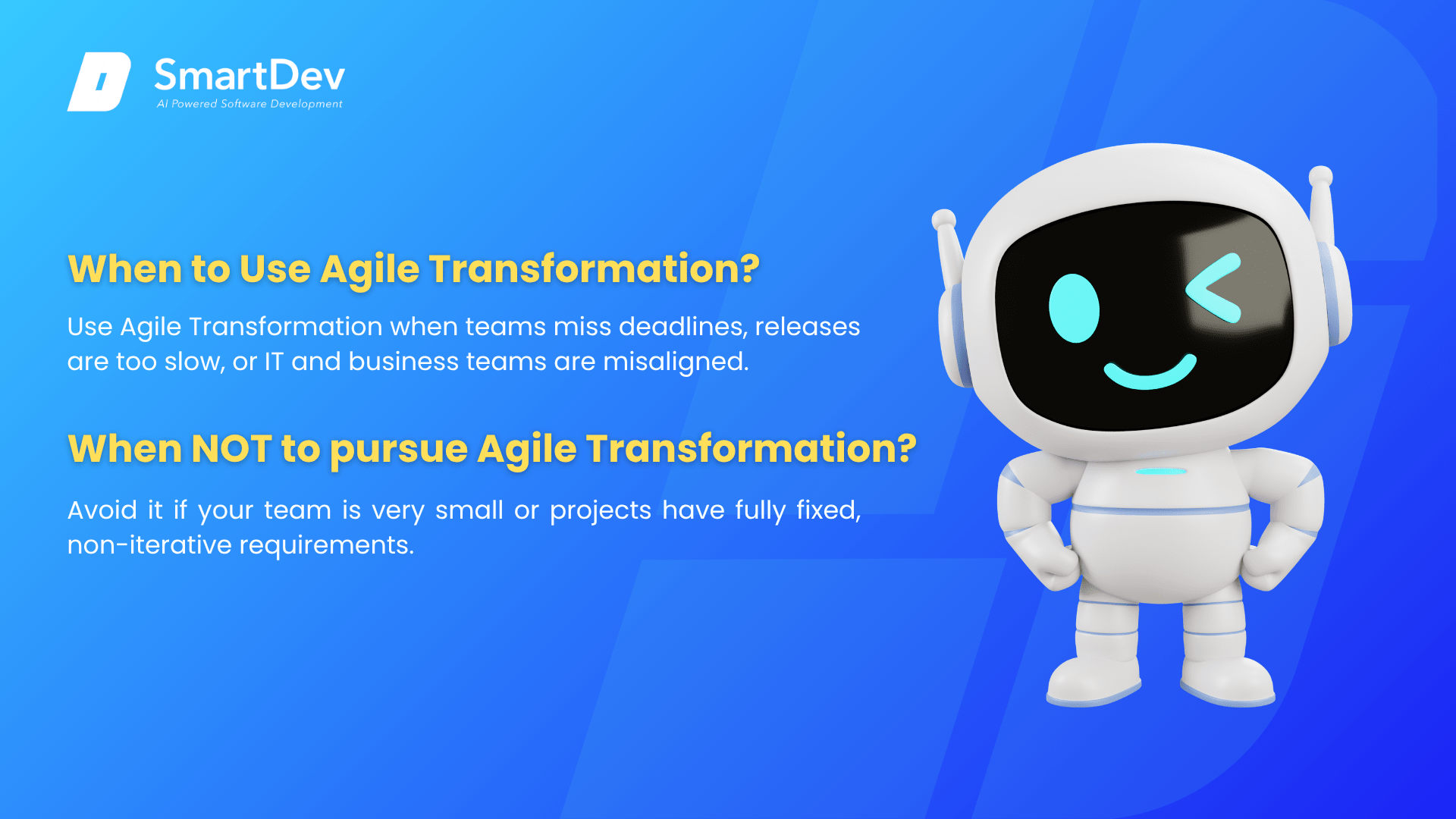
Agile Transformation delivers the most value in specific business situations:
- Your teams are missing deadlines or delivering products that do not match what customers actually need
- Software releases happen too infrequently, leaving you behind competitors who ship and iterate faster
- You are scaling a development function and need a shared operating model across multiple teams
- Your IT and business teams are misaligned, leading to wasted effort, rework, and missed priorities
When NOT to pursue Agile Transformation:
- Your organization is very small (under 10 people) and informal communication already works effectively
- Your projects have fully fixed requirements and regulatory constraints that prevent iterative, incremental delivery
 Other Related Terms
- Data Encryption: The process of converting readable data (plaintext) into an encoded format (ciphertext) using mathematical algorithms, ensuring that only authorized users with the correct decryption key can access the original information.
- Delivery Management: The practice of planning, coordinating, and overseeing the successful delivery of products or services from initial concept to final release.
- Token: A small unit of text that an AI language model processes as a single element, typically representing a word fragment, a whole short word, or a punctuation mark.