

1. Introduction: The Growing Importance of Influencer Marketing in Fintech
Influencer marketing has proven to be a game-changer in the world of digital marketing, not just for traditional consumer goods but also for the financial services and fintech sectors. While fintech has historically relied on traditional advertising (TV, print, and even digital ads) to reach customers, social media influencers have emerged as powerful figures capable of driving engagement, fostering brand trust, and helping fintech companies effectively connect with younger, digitally-savvy consumers.
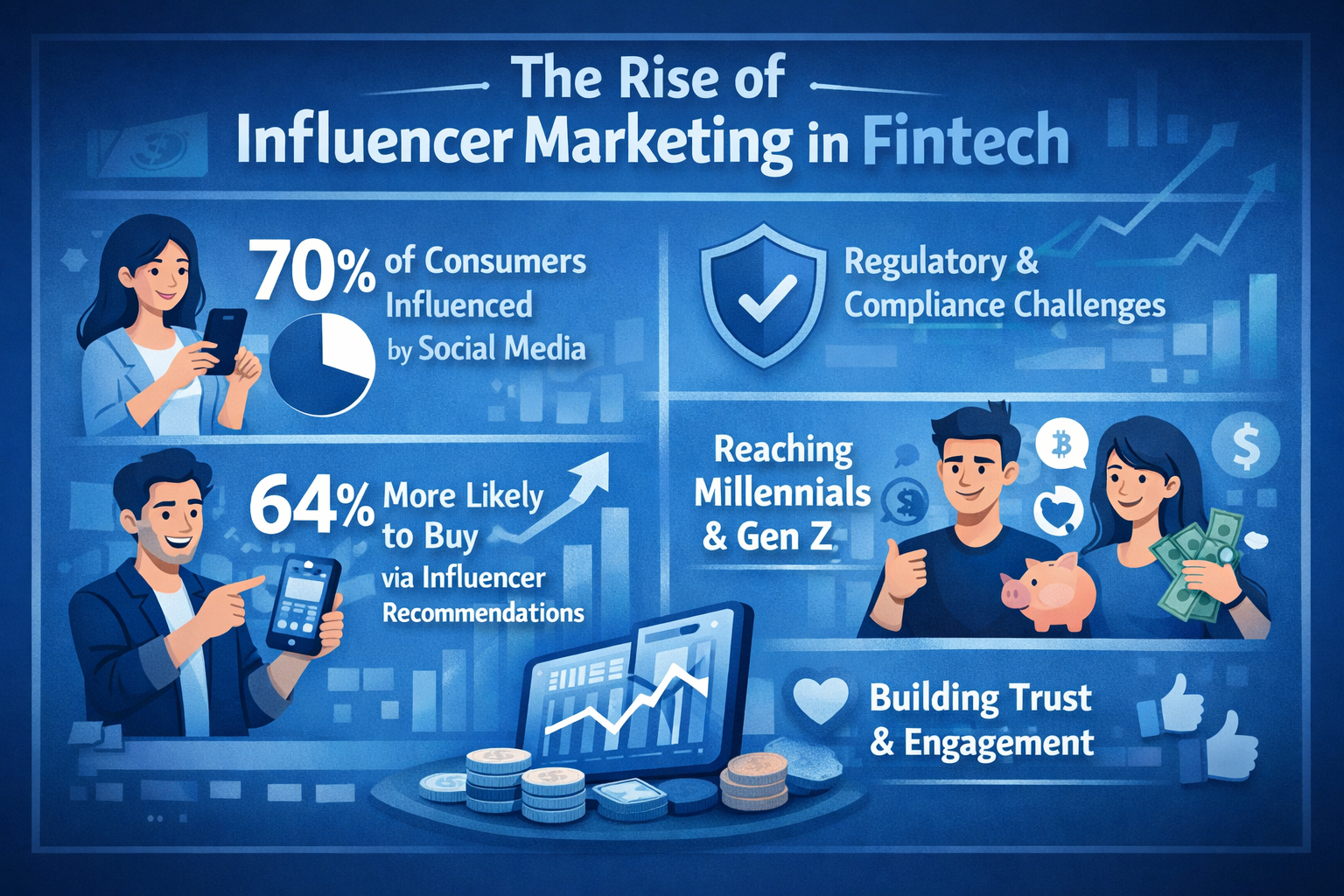
According to Scientific Research Publishing, 70% of consumers report that social media influences their purchasing decisions. This trend has made influencer marketing essential for fintech brands looking to build credibility and reach younger demographics who value authenticity and trust over conventional advertising methods.
However, despite its effectiveness, fintech marketers face a unique set of challenges when selecting influencers. The heavily regulated nature of the financial industry means that influencer partnerships must adhere to strict compliance standards to avoid potential legal issues or brand damage.
1.1 The Surge of Influencer Marketing in E-Commerce
In the world of e-commerce, particularly within the fintech and financial services industries, the rise of social media-driven purchasing has had a profound impact. Research from TechWyse found that 90% of consumers say social media influences their purchase decisions, while 64% are more likely to purchase a product when an influencer recommends it.
In fintech, this phenomenon is no different. Influencers have become key players in promoting financial products, investment services, and financial education tools. Brands in fintech, especially those targeting millennials and Gen Z, recognize the value of influencer partnerships in gaining trust, fostering consumer engagement, and driving conversion rates. This shift to influencer-driven marketing is evident in the rise of fintech influencers on platforms like Instagram, TikTok, and YouTube.
For example, FinTech Trends reports that influencer marketing is becoming increasingly important as brands look for trustworthy and relatable personalities to drive consumer action. The fact that 80% of consumers are more likely to engage with brands that use influencers they trust speaks volumes about the effectiveness of these partnerships.
1.2 Challenges in Selecting the Right Influencers for Retail Campaigns
While influencer marketing offers incredible potential for fintech brands, it also comes with its set of challenges. Fintech marketers need to navigate a highly regulated environment, ensuring that influencer collaborations meet the necessary compliance standards. Influencer marketing in fintech is not just about audience size – it’s about ensuring that influencers match the brand’s values and their audience aligns with the target demographic.
Managing Large Volumes of Influencers
With the increasing number of influencers on platforms like Instagram and TikTok, it’s easy for brands to get lost in the sheer volume of potential partners. The fintech industry, in particular, deals with influencers across multiple niches such as investment, personal finance, crypto, and financial literacy. This makes it difficult for marketing teams to identify influencers who will authentically resonate with their target market.
2. Understanding the AI-Powered Marketing Influencer Matching System
SmartDev’s AI-powered Marketing Influencer Matching System is the solution to these challenges. It offers fintech brands a powerful way to automate the influencer selection process while ensuring compliance with industry regulations. By leveraging machine learning and natural language processing (NLP), the system helps match fintech campaigns with influencers whose audiences and content are aligned with the brand’s message and compliance standards.
2.1 What is the AI-Powered Influencer Matching System?
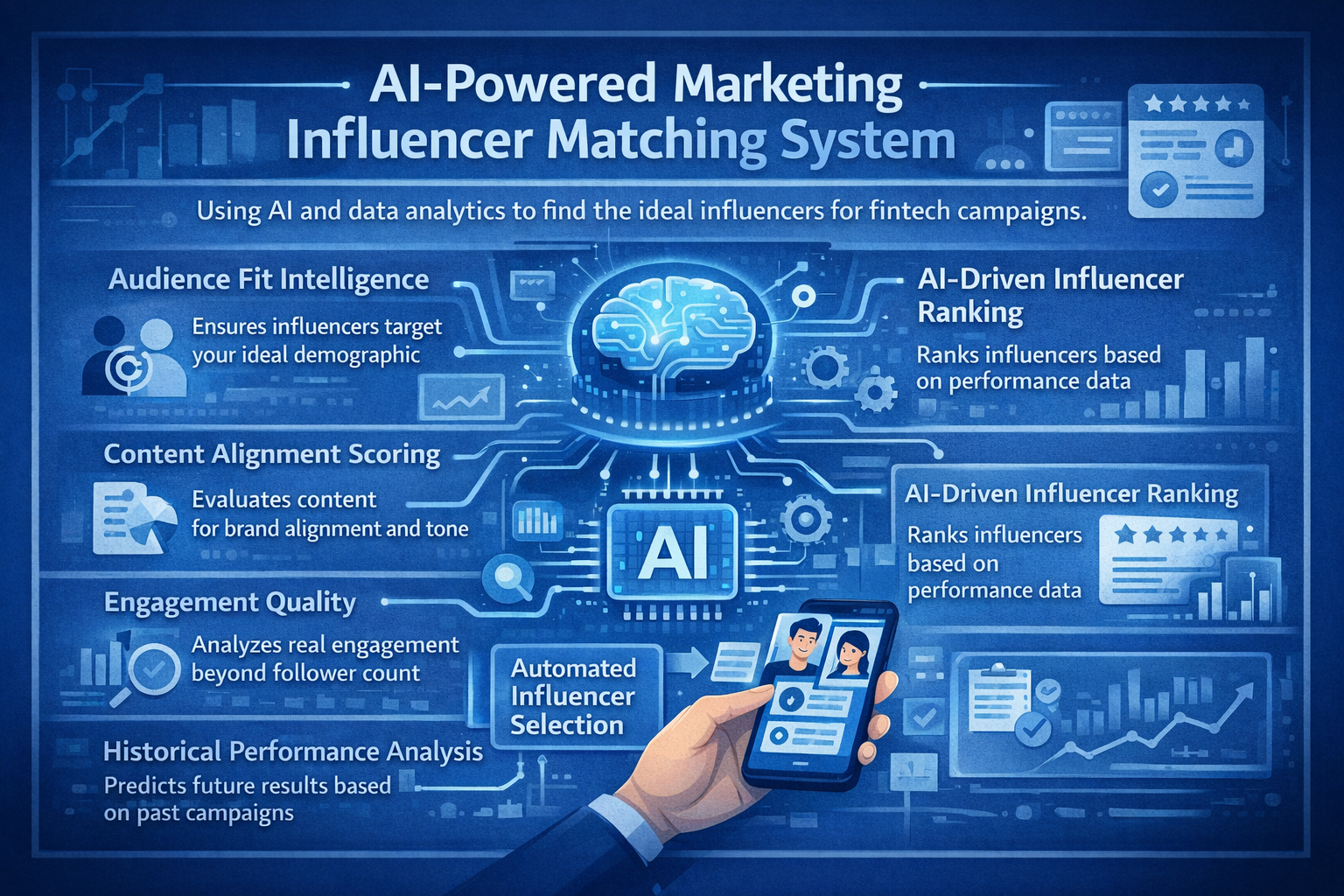
The AI-powered influencer matching system uses advanced data analytics to evaluate a range of factors such as audience demographics, engagement quality, and content alignment with the brand’s goals. SmartDev’s solution automates the process of identifying the best-fit influencers by considering performance data, ensuring that each selection is grounded in data and predicted outcomes.
- Audience Fit Intelligence: The system ensures influencers’ followers match the brand’s target market.
- Content Alignment Scoring: It evaluates the influencer’s content for tone, themes, and overall message alignment with the brand.
- Engagement Quality: The system goes beyond follower count to evaluate whether an influencer’s audience is actively engaging with their content.
By focusing on data-driven insights, the system helps fintech marketers quickly identify influencers who can boost engagement, enhance brand credibility, and maximize ROI.
2.2 How Does the System Analyze and Rank Influencers?
SmartDev’s AI-driven influencer ranking system helps fintech brands prioritize influencers based on their predicted performance for a campaign. The AI uses machine learning models and performance data to evaluate influencers on multiple metrics:
- Audience Relevance: The system ensures that an influencer’s audience aligns with the brand’s target market based on age, location, interests, and behavior.
- Content Quality: By analyzing an influencer’s posts, the system determines whether their content fits the brand’s tone, values, and compliance requirements.
- Historical Performance: The system looks at past influencer campaigns to predict future performance, factoring in conversion rates, engagement levels, and brand alignment.
This predictive, data-driven ranking system allows fintech marketers to select influencers who are most likely to deliver results, minimizing guesswork and increasing campaign efficiency.
3. Compliance Challenges in Fintech Marketing
Fintech marketing operates in a highly regulated environment, which presents unique challenges when it comes to working with influencers. Financial services and fintech brands must adhere to a variety of rules and regulations set by governing bodies to protect consumer interests and maintain trust. These regulations, along with the need to avoid potential legal issues, significantly shape how fintech brands approach influencer marketing.
In this section, we will explore the key compliance challenges that fintech marketers face, from regulatory scrutiny to ensuring brand safety and managing ethical concerns in influencer partnerships.
3.1 Regulatory Scrutiny in the Financial Sector
The financial sector is heavily regulated to ensure that consumer interests are protected, financial markets remain stable, and companies act with transparency and fairness. As fintech brands look to leverage influencer marketing to grow their audience and drive sales, they must navigate a complex web of regulations that govern how they advertise and engage with consumers.
Overview of Financial Regulations like MiFID II, GDPR, and FINRA
Several key regulations affect the way fintech brands can use influencers in their marketing campaigns:
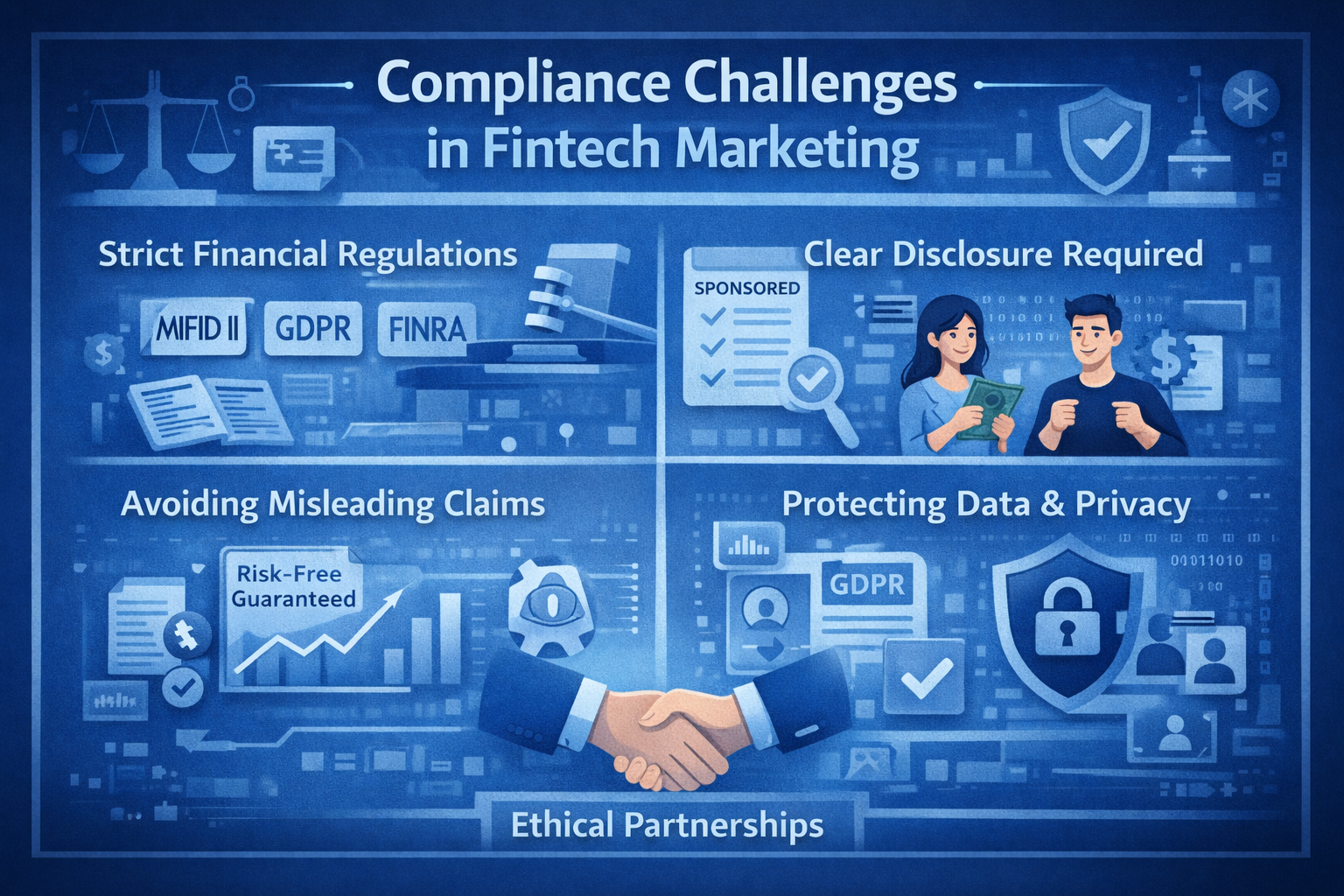
- MiFID II (Markets in Financial Instruments Directive II): A European Union regulation that governs financial markets, ensuring transparency and fairness in financial transactions. MiFID II also regulates the marketing and communication of financial products and investment services. Influencers promoting fintech products must ensure that their messaging adheres to these regulations, which are designed to protect consumers from misleading claims and prevent conflicts of interest.
- GDPR (General Data Protection Regulation): GDPR regulates how companies handle personal data in the EU. Influencers who work with fintech companies must be cautious about sharing personal information with their audiences, ensuring that they comply with GDPR’s strict guidelines on data protection, consumer consent, and transparency.
- FINRA (Financial Industry Regulatory Authority): In the U.S., FINRA oversees broker-dealers and enforces rules on advertising and marketing communications. For fintech brands that are regulated by FINRA, influencer content must comply with advertising rules to ensure that all claims are accurate and substantiated.
How Regulations Impact the Way Fintech Brands Approach Marketing
These regulations significantly influence how fintech brands select influencers and structure their marketing campaigns. Here are a few ways in which compliance affects influencer marketing:
- Restricted Content: Influencers are not allowed to make exaggerated claims or promises that are misleading or not backed by facts. For example, claiming that a financial product is “risk-free” or “guaranteed” would violate MiFID II or FINRA advertising rules.
- Data Privacy: Influencers must ensure that any data they collect from followers (such as emails or personal preferences) is done in compliance with GDPR. This includes obtaining consent before sharing data and maintaining strict confidentiality.
- Clear Disclosures: Influencers must adhere to regulations by clearly disclosing when their posts are sponsored. This transparency helps maintain trust with their audience and ensures compliance with advertising laws.
As influencer marketing grows in the fintech industry, understanding these regulatory frameworks and working within them is crucial to avoid costly legal issues and maintain consumer trust.
3.2 Ensuring Brand Safety and Trust in Influencer Partnerships
Fintech brands deal with sensitive consumer information and financial products that require an extra layer of trust and credibility. Unlike other industries, the stakes are much higher in the financial services sector, and maintaining a safe, trustworthy image is essential. Partnering with the right influencers is key to ensuring brand safety and trust.
Importance of Trust in Fintech Marketing Campaigns
Consumers place a high level of trust in financial services, and any hint of misleading information or lack of transparency can cause irreparable harm to a brand’s reputation. When influencers promote a fintech product, they are not just endorsing the product but also the values and reputation of the brand.
- Trust is crucial when working with influencers, as missteps in communication or misalignment with brand values can result in backlash or consumer disengagement.
- In the fintech sector, where financial security is paramount, authenticity and credibility are everything. Influencers who are perceived as genuine and have a strong rapport with their audience are more likely to drive trust and engagement.
Avoiding Conflicts of Interest and Maintaining Transparency
Ensuring that influencers adhere to strict ethical standards is essential for maintaining brand safety. Fintech brands must ensure that their influencer partners:
- Disclose paid partnerships clearly, as required by advertising standards.
- Avoid endorsing competing products or providing conflicting information that could damage the brand’s reputation.
- Are transparent about sponsored content and don’t mislead their audience about the product or its benefits.
SmartDev’s AI-powered influencer matching system helps brands select influencers who align with the brand’s values and audience while ensuring compliance with advertising guidelines. The system uses data analytics to match authentic influencers who have a track record of delivering credible and trustworthy content.
3.3 Managing Legal and Ethical Concerns with Influencer Partnerships
Legal and ethical concerns are a significant consideration when working with influencers, especially in regulated industries like fintech. Ensuring that influencers comply with advertising laws, financial regulations, and ethical guidelines is critical for protecting both the brand and the consumer.
The Role of Disclosure and Advertisement Transparency
To maintain trust and transparency, clear disclosure of sponsored content is crucial. Both FINRA and FTC (Federal Trade Commission) regulations mandate that influencers disclose when content is sponsored or paid. Failure to do so can lead to legal repercussions, damage to the brand’s reputation, and loss of consumer trust.
- SmartDev’s AI solution ensures that influencers in fintech campaigns provide the necessary disclosures and align with advertising guidelines, reducing the risk of legal violations.
Ensuring Influencers Adhere to Legal and Ethical Guidelines
Influencers must not only follow legal rules but also uphold ethical standards. For example:
- Avoiding deceptive practices such as making false claims about financial products or services.
- Honoring confidentiality agreements and ensuring that sensitive consumer data is protected.
- Providing transparent information about financial products to ensure that their audience is making informed decisions.
SmartDev’s system supports fintech companies by automating influencer selection, ensuring that influencers are compliant with industry regulations and that they adhere to ethical standards. This reduces the risk of any legal or ethical issues arising during campaigns.
Explore how SmartDev partners with BFSI teams through a focused AI sprint to validate use cases, align stakeholders, and define a clear path forward before AI development begins.
SmartDev helps BFSI organizations clarify AI use cases and assess feasibility, enabling confident decisions and reducing risks before committing to AI development.
Learn how SmartDev accelerates AI initiatives, ensuring rapid deployment and reduced time to market.
Build Your AI Chatbot With Us4. How SmartDev’s AI-Powered Influencer Matching System Addresses Compliance
SmartDev’s AI-powered Influencer Matching System is a game-changer for fintech brands trying to navigate the challenges of compliance-driven marketing. This system is designed to ensure that influencers align with regulatory standards, audience demographics, and ethical guidelines while promoting financial products or services. By automating the influencer selection and compliance checking processes, it reduces the risks associated with manual influencer vetting.
4.1 Streamlining Influencer Selection with Data-Driven Insights
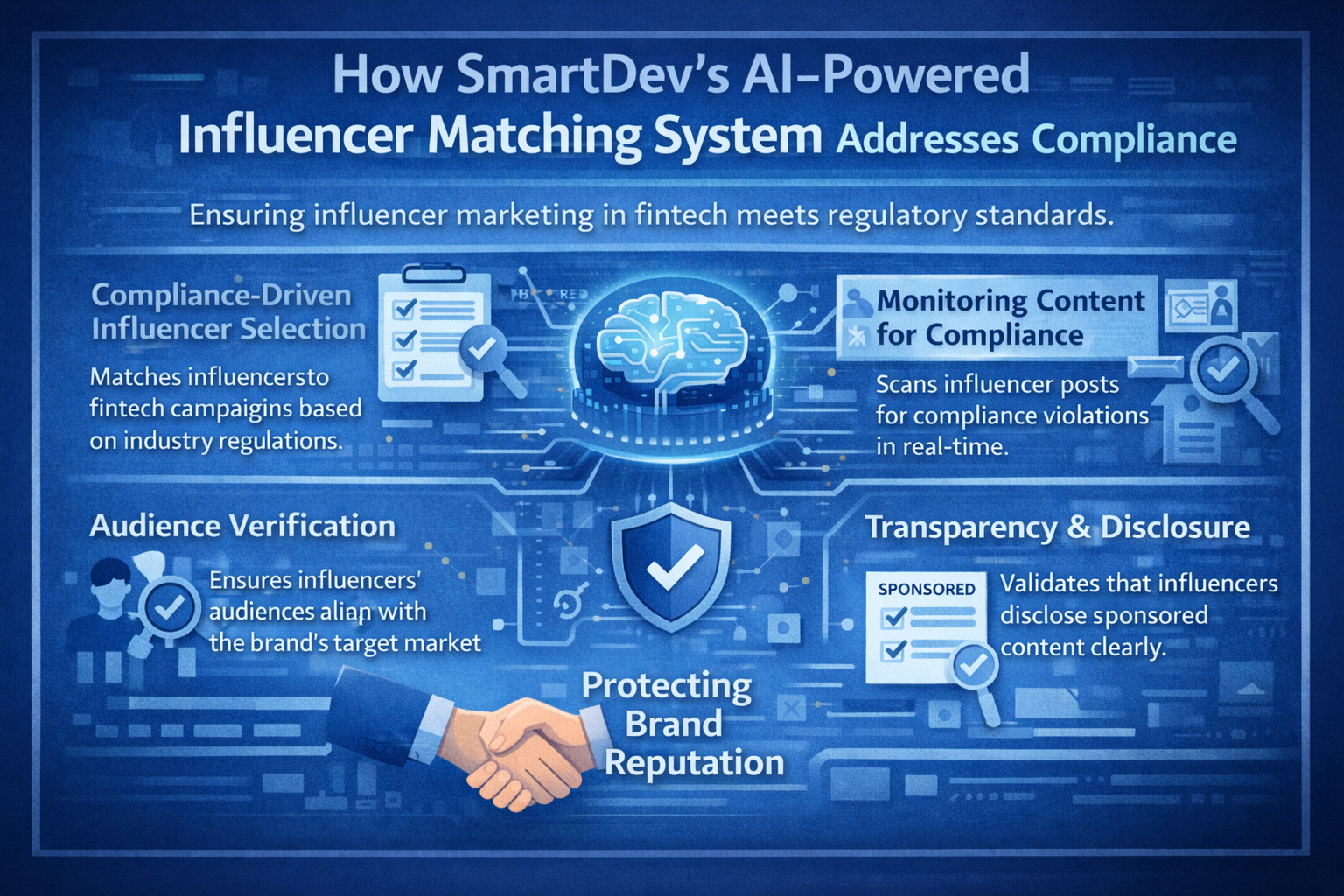
The first step to ensuring a successful influencer marketing campaign is identifying the right influencers – and SmartDev’s AI system does this by automating the selection process and matching influencers based on compliance requirements and brand alignment.
Matching Influencers Based on Compliance Requirements
SmartDev’s AI solution matches influencers with campaigns based on compliance rules that are critical for the fintech industry. For instance:
- MiFID II mandates that financial marketing must be clear, fair, and not misleading. The system ensures that influencers do not make false claims about a product, and that they stay within the bounds of the regulation.
- GDPR compliance is ensured by automatically verifying that influencers are not collecting or sharing personal data without consent.
Through AI, SmartDev verifies that influencers comply with these legal requirements while matching them to the right fintech campaigns. This ensures that the influencer’s content aligns with both the brand’s goals and industry regulations.
Using AI to Validate the Authenticity of Influencers’ Claims and Audience Demographics
Authenticity is paramount in influencer marketing, especially in the fintech sector. SmartDev’s system checks influencers’ audience demographics, ensuring they match the brand’s target market. This data-driven approach eliminates human bias and error, making influencer selection more precise and compliant.
In fintech, where misinformation can lead to legal trouble and damage to the brand’s credibility, SmartDev’s AI system ensures that only authentic influencers with a genuine following are selected, ensuring higher trust with the audience.
4.2 Automating Compliance Checks for Influencer Content
Once an influencer is selected, ensuring that their content adheres to compliance guidelines is essential. SmartDev’s AI-powered system doesn’t just match influencers; it continuously monitors their content to ensure real-time compliance.
Ensuring Influencer Content Meets Regulatory Standards
SmartDev uses Natural Language Processing (NLP) and machine learning algorithms to scan influencer posts for compliance violations. It checks that:
- All content is truthful, transparent, and aligned with the regulatory standards (such as MiFID II and FINRA).
- Influencers are disclosing sponsored content and ensuring advertisement transparency (per FTC guidelines).
This automated monitoring minimizes the risk of compliance violations during the campaign, and it helps fintech brands ensure that all influencer content remains aligned with industry regulations throughout the campaign’s duration.
Real-Time Monitoring of Influencer Posts for Compliance Violations
With SmartDev’s system, fintech marketers no longer need to manually monitor influencer posts. The AI solution performs real-time checks, flagging any content that might violate compliance regulations or brand guidelines. If an influencer inadvertently posts non-compliant content, the system will alert the marketing team to make quick adjustments, ensuring that the campaign remains compliant.
4.3 Enhancing Brand Integrity and Compliance with SmartDev’s System
Brand integrity and consumer trust are especially crucial in fintech, where even the smallest misstep in compliance can have severe consequences. SmartDev’s AI solution not only streamlines influencer matching and content monitoring but also enhances long-term brand integrity by ensuring that influencer campaigns adhere to compliance standards from start to finish.
How AI Supports Continuous Compliance Throughout the Campaign
SmartDev’s AI-powered system ensures that compliance is maintained throughout the entire campaign cycle. From the initial influencer selection to the final post-campaign analytics, the system helps fintech brands stay on top of:
- Content compliance: Ensuring influencers stick to brand guidelines.
- Data privacy: Monitoring data-sharing practices to ensure they follow GDPR.
- Advertising standards: Ensuring that all disclosures and content meet legal guidelines.
Building Brand Trust Through Ethical Influencer Partnerships
Maintaining brand trust is especially critical in fintech where consumers are highly cautious about sharing personal or financial information. By using influencers who adhere to ethical standards and legal compliance, SmartDev helps brands build trust with their target audience, demonstrating that they prioritize consumer protection and regulatory integrity.
5. How Fintech Companies Can Leverage SmartDev’s AI Solution to Scale Influencer Marketing
To successfully scale influencer marketing in fintech, brands must integrate AI solutions that provide both compliance and performance optimization. Here’s how fintech companies can leverage SmartDev’s AI system:
5.1 Integrating AI Matching Systems with Existing Marketing Platforms
SmartDev’s AI solution seamlessly integrates with existing CRM systems, social media platforms, and marketing tools. By syncing data across platforms, brands can efficiently match influencers with their target audience and track campaign success in real-time. This integration ensures that the influencer matching process is quick, compliant, and data-driven.
5.2 Training Teams and Building Trust in AI-Powered Decisions
To maximize the effectiveness of the AI-powered system, fintech companies need to ensure that marketing teams are trained in how to use the system. By understanding how AI outputs work, marketers can confidently adopt data-driven insights and make better influencer selection decisions. Encouraging teams to trust AI recommendations ensures that campaigns remain compliant while driving better engagement and sales.
5.3 The Future of Influencer Marketing: Scaling with AI
The future of influencer marketing in fintech is undoubtedly tied to AI. As consumer behavior evolves, AI systems will continue to help fintech brands adapt to new trends and ensure that campaigns remain compliant and effective. Retailers must be prepared for the long-term impact of AI by investing in scalable influencer marketing strategies that can grow with the business.
Conclusion: Empowering Fintech Brands with AI for Compliant Influencer Marketing
The power of AI-driven influencer matching lies in its ability to help fintech brands navigate compliance challenges while simultaneously optimizing campaign performance. SmartDev’s AI-powered system offers a solution that not only matches influencers to campaigns but also ensures that those collaborations stay within regulatory boundaries.
As fintech companies look to scale their influencer marketing efforts, embracing AI will be key to staying competitive, ensuring compliance, and driving better engagement and higher ROI.