
TL, DR:
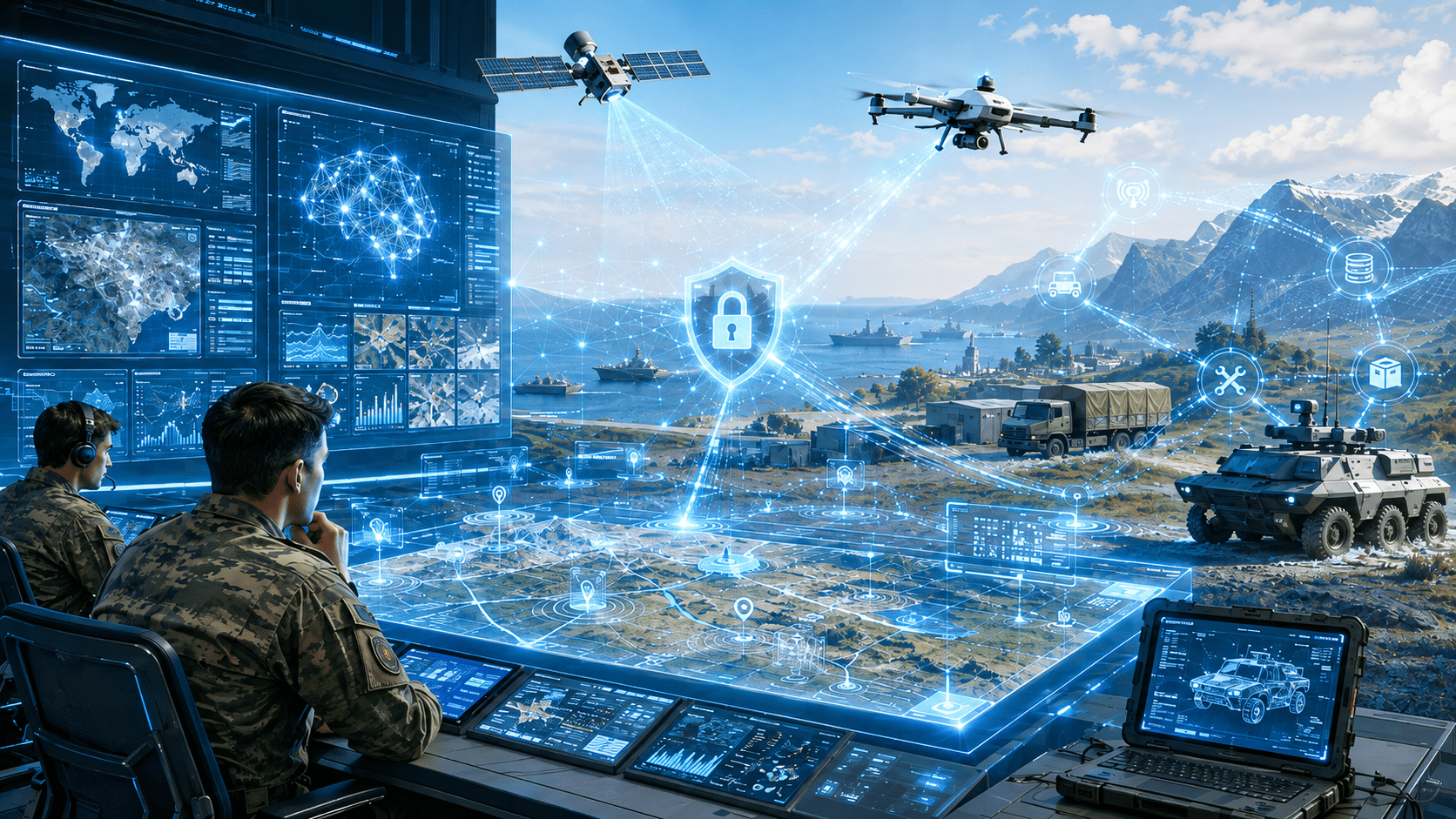
- Military AI concentrates in seven mission functions: intelligence, surveillance, cyber defense, logistics, training, command support, and autonomous systems – not combat decision-making itself.
- U.S. policy under DoD Directive 3000.09 requires human judgment over the use of force for autonomous and semi-autonomous weapon systems, distinguishing decision support from full autonomy.
- Predictive maintenance is one of the lowest-risk, highest-value entry points, as shown by the U.S. Air Force’s PANDA program, which now supports multiple aircraft fleets.
- Intelligence and surveillance use cases, exemplified by the National Geospatial-Intelligence Agency’s Maven work, rely on human-in-the-loop review rather than autonomous target selection.
- Governance is not optional: data quality, cybersecurity of models and pipelines, accountability, interoperability, and workforce readiness must be addressed across the AI lifecycle.
- Deployment should follow a staged path – define the mission problem, assess readiness, prioritize by value and risk, pilot with clear success criteria, then scale under governance.
- Measuring success requires a balanced scorecard of mission-effectiveness, operational-efficiency, and risk/governance metrics, not cost savings alone.
Introduction
This guide explains how defense organizations use artificial intelligence responsibly in 2026. It takes a practical, governance-first approach to military AI adoption.
Military organizations process vast amounts of intelligence, logistics, and sensor data under constant time pressure. AI helps analysts, commanders, and maintenance teams process that information faster. However, organizations must maintain accountable human oversight throughout every stage.
This guide explains what military AI means and where it delivers value today. It also explores how defense organizations can adopt AI responsibly. Specifically, it covers seven operational use-case categories, supporting technologies, measurable benefits, governance requirements, real-world public programs, and a staged deployment approach. Throughout the guide, the focus remains on mission outcomes, responsible governance, and human accountability rather than speculative capability claims.
1. What Is AI in the Military?
Military AI refers to data-driven systems that support perception, prediction, classification, planning, and task execution across defense functions. It includes machine learning, computer vision, natural language processing, generative AI, robotics, and edge AI deployed for intelligence, logistics, cyber, training, and command support.
These technologies assist human judgment; they do not replace it. Automation and autonomy are related but distinct concepts, and understanding the difference matters for safety, accountability, and lawful use throughout a system’s lifecycle.
Core military AI technologies
A small set of technologies underpins nearly every military AI application. Each maps to an observable function rather than a generic buzzword.
| Technology | Typical military function |
|---|---|
| Machine learning & predictive analytics | Forecasting equipment failure, demand, and mission-relevant trends |
| Computer vision & geospatial analysis | Interpreting satellite, drone, and sensor imagery for object and pattern detection |
| Natural language processing & generative AI | Summarizing reports, drafting briefings, and synthesizing multi-source text |
| Robotics, autonomous systems & edge AI | Navigation, sensing, and task execution for uncrewed platforms in constrained environments |
Where AI fits in defense operations
AI applies across intelligence, surveillance, logistics, cyber defense, training, maintenance, and command support. Many of the highest-value applications are non-kinetic operational support functions rather than combat systems, which is where most defense organizations should start.
AI, automation, and autonomy: key distinctions
Decision support tools present information and recommendations while a human makes the final call. Automated workflows execute predefined steps without ongoing human input for routine, low-risk tasks. Autonomous functions can sense, decide, and act within defined bounds, and the level of appropriate human control scales with operational risk.
These levels are often described as human-in-the-loop, human-on-the-loop, and human-out-of-the-loop. U.S. policy (DoD Directive 3000.09) defines semi-autonomous, human-supervised autonomous, and autonomous weapon systems primarily by the operator’s role in target selection and engagement, not by technological sophistication. Every system, regardless of category, must be designed to let commanders and operators exercise appropriate human judgment over the use of force.
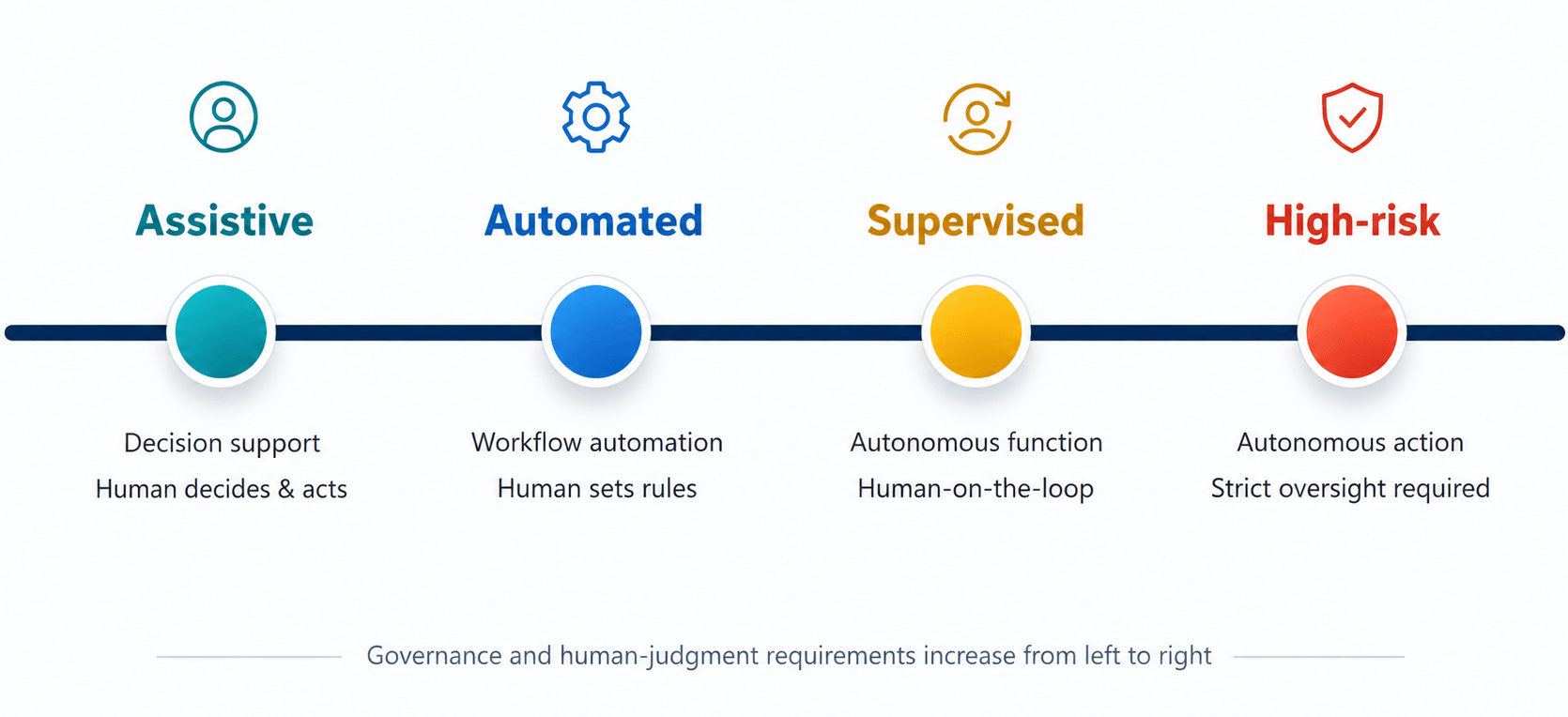
The spectrum shows how AI autonomy increases across four stages, while human responsibility and governance requirements increase alongside it.
- Assistive: AI supports decision-making by providing recommendations, but humans make every decision and carry out every action.
- Automated: AI executes predefined workflows based on human-defined rules. Humans design the process and monitor outcomes rather than each task.
- Supervised: AI performs specific functions independently, while humans remain “on the loop” to oversee performance and intervene when necessary.
- High-risk: AI can take autonomous actions in mission-critical situations. Because failures may have severe consequences, these systems require the highest level of oversight, accountability, testing, and auditability.
As AI moves from assistive tools to autonomous systems, organizations must shift from simply reviewing outputs to establishing robust governance frameworks that ensure transparency, human accountability, and continuous oversight.
Takeaway: Military AI is a portfolio of assistive technologies, not a single autonomous system. Understanding where a given application sits on the human-control spectrum is the first step in scoping its governance needs.
2. AI Military Use Cases at a Glance
Before examining each use case in depth, it helps to see the full picture. Defense organizations organize military AI around seven mission functions, each with distinct data needs, oversight requirements, and risk profiles.
Use-case map by mission function
| Mission function | AI capability | Primary objective | Human oversight consideration |
|---|---|---|---|
| Intelligence & situational awareness | Multi-source data fusion, pattern detection | Faster, better-informed analysis | Analyst reviews flagged items before action |
| Surveillance & reconnaissance | Computer vision on imagery and video | Detect and track patterns at scale | Human confirms before escalation |
| Cyber defense | Anomaly detection, threat triage | Faster incident response | Analysts validate and authorize response |
| Logistics & predictive maintenance | Forecasting, route and readiness optimization | Higher availability, lower downtime | Maintainers approve action from alerts |
| Training & simulation | Adaptive scenarios, synthetic environments | Personalized, scalable readiness | Instructors evaluate transfer to real conditions |
| Command decision support | Data fusion, course-of-action modeling | Clearer options under uncertainty | Commander retains final authority |
| Autonomous & robotic systems | Navigation, sensing, task execution | Reduce human exposure to risk | Escalation and control paths defined by policy |
Use-case comparison framework
Not every use case deserves equal priority. A simple planning model weighs mission value against data readiness, integration complexity, operational risk, and the human-oversight requirement each use case carries. This framework supports prioritization; it is not a universal scoring formula.
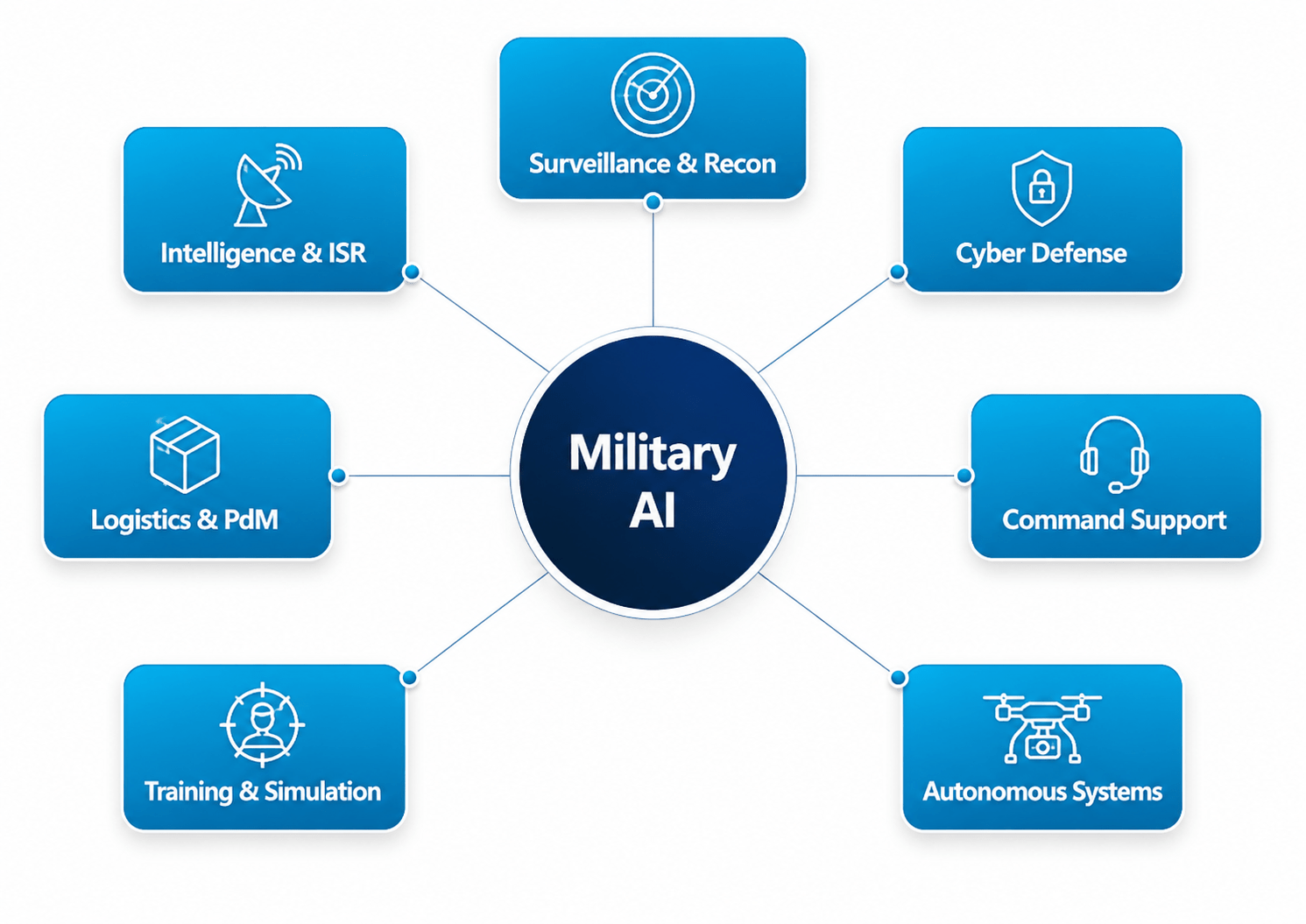
Military AI is not a single technology or weapon system. Instead, it is a shared capability supporting multiple mission functions across defense operations. The central hub represents common AI technologies that enable different operational domains.
- Intelligence & ISR: Analyze and interpret intelligence data.
- Surveillance & Reconnaissance: Detect, identify, and track targets.
- Cyber Defense: Identify threats and strengthen cyber resilience.
- Logistics & Predictive Maintenance: Improve equipment readiness and maintenance planning.
- Command Support: Assist operational planning and decision-making.
- Training & Simulation: Enhance mission preparation through realistic simulations.
- Autonomous Systems: Enable independent platform operations.
Although each function serves a different mission, they rely on many of the same AI capabilities. This shared foundation requires consistent governance, security, and lifecycle management across all deployments.
Takeaway: The main uses of AI in the military are intelligence analysis, surveillance, cyber defense, logistics and predictive maintenance, training, command decision support, and autonomous systems, each requiring its own oversight model.
3. Core AI Use Cases in Military Operations
Each use case below follows the same structure: what the technology does, its human role, its limitations, and how organizations measure it. Claims stay conservative, and none imply automated targeting or unsupervised battlefield action.
Intelligence analysis and situational awareness
AI supports intelligence analysis by fusing satellite imagery, sensor feeds, and reports, then applying pattern detection to prioritize items for human review. This reduces the manual burden of processing high-volume data streams during time-sensitive operations.
False positives, incomplete data, and bias remain real limitations. Verification steps, including analyst review before any action, are essential parts of a responsible workflow, not optional add-ons.
Explore related capability in SmartDev’s guide to AI use cases in federal government, which covers data fusion patterns applicable across public-sector missions.
Surveillance, reconnaissance, and target detection
Computer vision helps identify patterns or objects across large volumes of imagery and video, an approach the National Geospatial-Intelligence Agency describes as part of its Maven-derived GEOINT workflows, which detect, identify, and characterize objects in imagery to support analysts rather than to act independently. Detection, classification, tracking, and human confirmation are distinct steps, and outputs require validation before any operational use.
For context on how computer vision supports visual analytics in adjacent public-safety domains, see SmartDev’s guide to AI use cases in law enforcement.
Cybersecurity and cyber defense
AI helps triage security signals at scale, flagging anomalies across networks so analysts can prioritize the most urgent threats first. At the same time, the AI models and data pipelines themselves can become attack targets, which requires defensive value and adversarial risk to be addressed together.
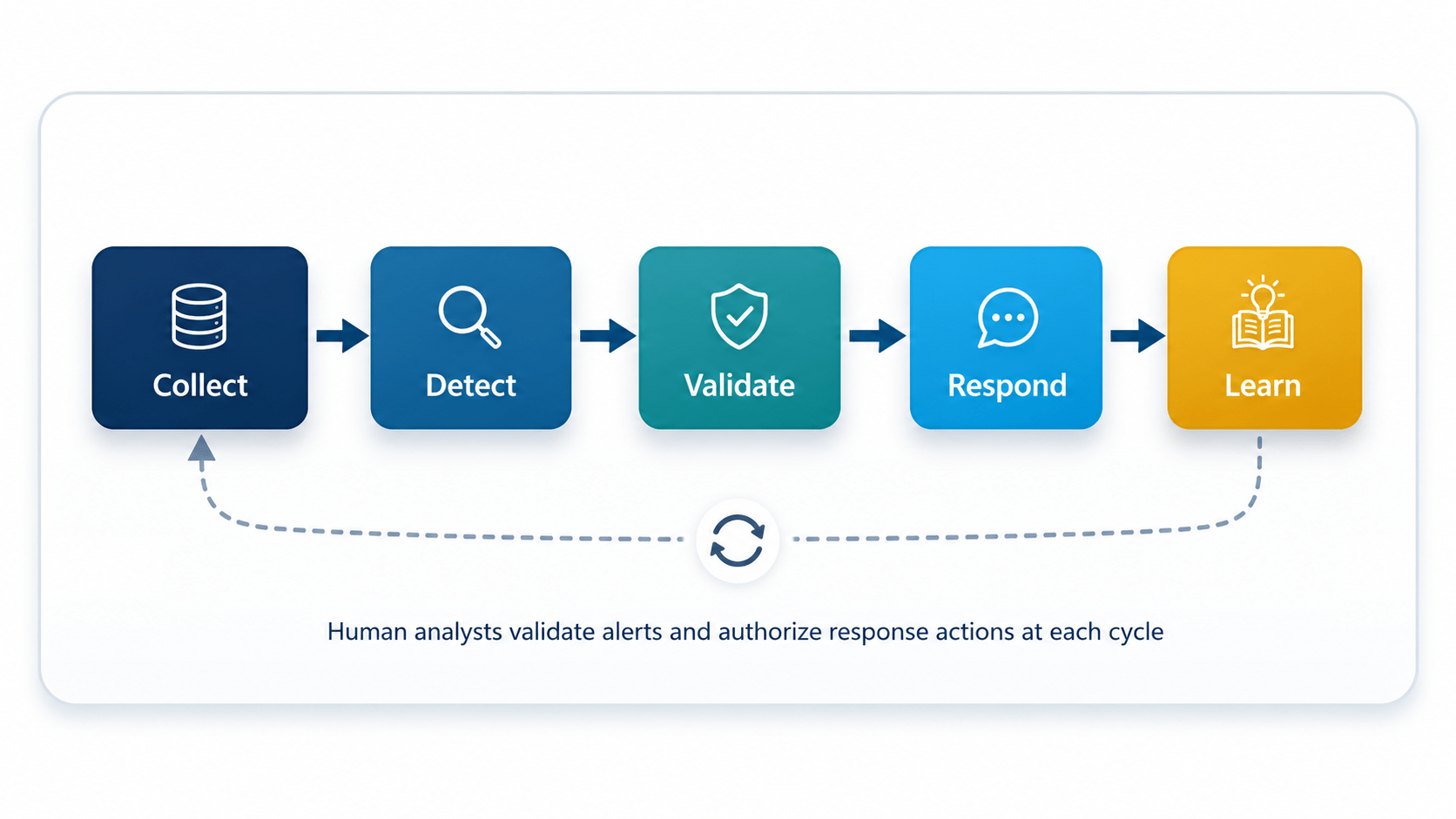
AI strengthens military cyber defense by processing large volumes of security data and identifying threats faster than manual analysis. However, AI systems also introduce new attack surfaces because adversaries can target models, training data, or inference pipelines. As a result, effective cyber defense must protect both operational networks and the AI systems supporting them.
- Collect: Gather logs, network traffic, endpoint telemetry, and threat intelligence from multiple sources.
- Detect: Use AI to identify anomalies, suspicious behaviors, and potential cyber threats.
- Validate: Human analysts review AI-generated alerts, confirm findings, and authorize response actions.
- Respond: Contain threats through actions such as blocking malicious activity, isolating affected systems, or initiating incident response procedures.
- Learn: Feed validated outcomes back into detection models to improve future performance and adapt to evolving threats.
The process forms a continuous feedback loop rather than a linear workflow. Human oversight remains essential throughout the lifecycle to validate AI recommendations, reduce false positives, and ensure response decisions remain accountable.
For a deeper look at AI-driven threat detection patterns, see SmartDev’s guide to AI use cases in cybersecurity and its companion guide to AI use cases in security.
Logistics, supply chains, and predictive maintenance
AI in military logistics is used to forecast demand, plan routes, and predict maintenance needs for vehicles, aircraft, and equipment before failures occur. This is a comparatively lower-risk, high-value area once data quality, system integration, and accountability are in place.
The U.S. Air Force’s Rapid Sustainment Office applies this approach through its Condition-Based Maintenance Plus program, using aircraft sensor data and maintenance history to flag likely component failures before they cause unplanned downtime. Outcomes are tied to measurable indicators: availability, downtime, forecast accuracy, and resource use.
SmartDev’s broader analysis of AI predictive maintenance in manufacturing outlines the same reactive-to-predictive shift applicable to defense fleets.
Training, simulation, and mission rehearsal
AI can adapt training scenarios, provide personalized feedback, and support after-action analysis in synthetic environments. Adaptive simulations let trainees repeat scenarios under varying conditions without the cost or risk of live exercises.
Simulated environments do not fully replicate real-world conditions, however. Readiness claims based purely on simulation performance need careful, evidence-based framing rather than assumed transfer to live operations.
Command decision support
Can AI make military decisions? The direct answer is no: AI can summarize information, prioritize options, and model courses of action, but the commander retains authority and accountability. Decision support is not decision replacement.
A useful decision-support checklist includes confidence level, source quality, alternative options considered, uncertainty range, an override path, and a logging record. These elements guard against automation bias, where operators over-trust system outputs without question.
Autonomous and robotic systems
Uncrewed aerial, ground, maritime, and support systems use AI for navigation, sensing, and task execution. Applications include logistics support and monitoring, and governance requirements scale with each system’s level of operational risk.
Under DoD Directive 3000.09, autonomous and semi-autonomous weapon systems must be designed so commanders and operators can exercise appropriate human judgment over any use of force. This requirement reuses the human-control spectrum introduced in Section 1 and links it directly to safety and legal accountability.
Takeaway: Across all seven use cases, the same pattern repeats: AI narrows down what deserves human attention, in analysis, imagery, threat signals, maintenance alerts, training feedback, or courses of action, while a trained person still confirms, decides, and stays accountable for the outcome.
4. Benefits and Operational Outcomes of Military AI
Key benefits of AI in the military include faster analysis, better equipment readiness, reduced exposure to high-risk tasks, more adaptive training, and stronger cyber resilience, but only when deployment conditions such as data quality and human oversight are met.
| Use case | Potential operational outcome | How it is measured |
|---|---|---|
| Intelligence analysis | Faster, more thorough situational awareness | Analysis turnaround time, coverage of data sources |
| Surveillance | Broader monitoring without proportional staff growth | Detection accuracy, false-positive rate |
| Predictive maintenance | Higher equipment availability | Downtime, unplanned failure rate |
| Training & simulation | More adaptive, scalable readiness building | Scenario throughput, after-action insight quality |
| Cyber defense | Faster threat triage and response | Time to detect, time to respond |
Takeaway: Benefits are real but conditional, they depend on data readiness, integration quality, and sustained human oversight, not on the technology alone.
5. Risks, Governance, and Responsible Use
What are the main risks of military AI? Data integrity, cybersecurity, bias, interoperability, human oversight gaps, and legal or ethical obligations must be addressed throughout a system’s lifecycle, not just at deployment.
Data quality, bias, and contested information
AI systems reflect the data they are trained on. Incomplete, outdated, or unrepresentative datasets can produce misleading outputs, particularly in fast-moving or contested information environments. Provenance tracking and ongoing validation reduce this risk.
Cybersecurity, adversarial AI, and model compromise
Models, training data, and inference pipelines can be attacked, poisoned, or manipulated. Protecting these assets requires the same rigor applied to other critical defense systems, including access controls and continuous monitoring.
Accountability and meaningful human control
Clear decision rights, override procedures, and traceability define meaningful human control. Without these, responsibility for a system’s actions becomes ambiguous – a problem regulators and researchers have flagged repeatedly in reviews of autonomy policy.
Interoperability, legacy systems, and data governance
Many defense organizations run legacy systems that were not designed for AI integration. Classification boundaries, access controls, and data governance frameworks must be resolved before AI can operate reliably across those systems. SmartDev’s guide to technical governance outlines the policies, roles, and controls this requires.
Workforce readiness, training, and operator trust
Operators need to understand a system’s functioning, capabilities, and limitations under realistic conditions, including how adversaries might try to deceive it. Usability, explainability, and structured training drive adoption and trust.
Legal, ethical, and policy considerations
Rules of engagement and applicable legal frameworks vary by jurisdiction and mission context, so this guide does not offer legal advice. The International Committee of the Red Cross has urged states to adopt legally binding limits on autonomous weapon systems, citing risks to civilian protection and compliance with international humanitarian law. Auditability, traceability, and defined escalation requirements support lawful and accountable use.
SmartDev’s guide to ethical AI development and business-oriented guide to responsible AI both examine accountability questions relevant to high-stakes deployments, alongside SmartDev’s guide to AI bias and fairness.
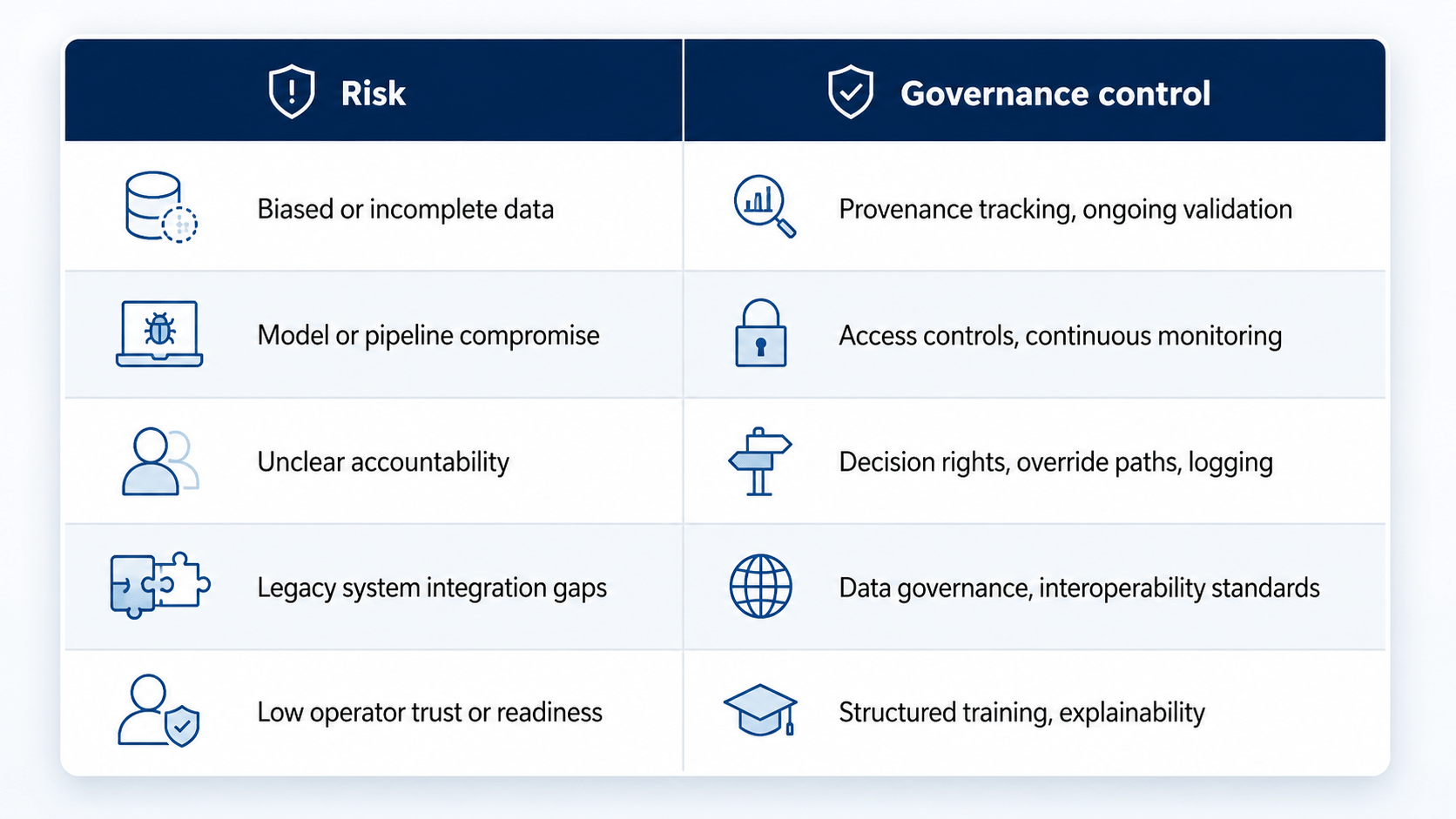
Effective military AI governance depends on matching each operational risk with a practical control. Rather than relying on broad policy statements, the matrix shows how specific governance measures reduce identifiable risks throughout the AI lifecycle.
- Biased or incomplete data: Provenance tracking and continuous validation help ensure training and operational data remain accurate, representative, and trustworthy.
- Model or pipeline compromise: Access controls and continuous monitoring reduce the risk of unauthorized changes, model tampering, or malicious attacks.
- Unclear accountability: Clearly defined decision rights, human override mechanisms, and audit logs establish responsibility for AI-assisted decisions.
- Legacy system integration gaps: Data governance and interoperability standards improve compatibility between AI systems and existing defense infrastructure.
- Low operator trust or readiness: Structured training and explainability help personnel understand AI recommendations, increasing confidence and supporting informed human judgment.
Together, these controls demonstrate that effective AI governance requires targeted operational safeguards. Each control addresses a specific source of risk, making governance measurable, auditable, and easier to implement in practice.
Takeaway: Every major military AI risk maps to a specific, actionable control, governance is a design requirement, not an afterthought.
6. Real-World Military AI Examples
Examples of military AI include programs with public documentation and defined evaluation criteria. Anecdotal claims without a clear source, scope, and measurement method are excluded from this section by design.
How to evaluate a military AI case study
A credible case study needs five elements: mission context, the AI capability and the human operator’s role, available public evidence, known limitations, and a clear source. If a claimed result cannot be substantiated, the initiative is described without unverified performance numbers.
Project Maven and intelligence-analysis workflows
Project Maven began in 2017 as the Pentagon’s initial effort to apply computer vision to full-motion video from drones. Its geospatial-intelligence functions now sit with the National Geospatial-Intelligence Agency, which uses the resulting computer vision capabilities to detect, identify, and characterize objects in imagery across multiple analytic workflows. The program was framed from the outset as human-in-the-loop decision support rather than an autonomous weapons platform, with analysts reviewing and confirming detections.
AI-enabled cyber defense programs
Government cybersecurity guidance broadly recommends AI-assisted anomaly detection and triage for network monitoring, an approach mirrored across public and private-sector cyber operations. Public documentation on defense-specific cyber AI programs remains limited, so this guide describes the pattern rather than citing unverified response-time figures.
AI for border, maritime, or perimeter surveillance
Surveillance applications of AI in defense and public-safety contexts typically combine computer vision with sensor fusion to flag activity for human review, following the same detection-then-verification pattern described in Section 3.2. Public, attributable examples in this area tend to emphasize monitoring efficiency over autonomous decision-making.
AI-enabled logistics and predictive maintenance
The U.S. Air Force’s Rapid Sustainment Office designated its Predictive Analytics and Decision Assistant (PANDA) as the official system of record for Condition-Based Maintenance Plus. The program ingests aircraft sensor data and maintenance history to flag likely component failures before they occur, supporting readiness across multiple aircraft platforms.
Lessons from defense AI deployments
Across these examples, a consistent pattern emerges: data readiness, sustained human oversight, careful system integration, structured testing, and workforce adoption determine whether a program scales successfully. Programs that skip any of these steps struggle regardless of the underlying model’s technical quality.
Takeaway: The strongest public examples of military AI – Maven-derived intelligence workflows and Air Force predictive maintenance – succeed because they pair a defined mission problem with clear human oversight, not because of raw model capability.
7. Emerging Technologies Shaping Military AI
Generative AI, multimodal systems, edge AI, federated learning, and agentic workflows may influence defense operations going forward, but maturity and operational suitability vary widely across these technologies. Treating them as a single category obscures real differences in readiness, risk, and near-term value.
| Technology | Maturity | Notes |
|---|---|---|
| Generative AI for synthesis and drafting | Emerging | Useful for report and briefing support; requires human review of outputs |
| Computer vision & multi-sensor fusion | Established | Deployed today across intelligence and surveillance workflows |
| Edge AI for constrained environments | Developing | Enables processing without reliable connectivity; hardware constraints remain |
| Agentic systems | Emerging | Opportunities exist alongside significant control and safety questions |
| Privacy-preserving & federated learning | Developing | Supports data-sharing across classification boundaries without centralizing raw data |
Generative AI for reporting, synthesis, and planning support
Generative AI can draft intelligence summaries, translate open-source material, and structure planning documents from fragmented inputs, cutting the time analysts spend on first drafts. The technology introduces its own risk profile, however: outputs can read as authoritative while containing fabricated details, a failure mode usually called hallucination. Any generative AI workflow in a defense context needs a mandatory human review step, source citation requirements, and a clear boundary between drafting assistance and authoritative reporting.
Multimodal systems and sensor fusion
Multimodal AI combines imagery, text, radar, and other sensor types into a single analytic picture instead of processing each stream separately. This is the most mature category on the table, building directly on the computer vision and data fusion capabilities already described in Section 3.1 and 3.2. The next wave of maturity involves fusing more sensor types at lower latency, which raises the bar for infrastructure and bandwidth rather than for the underlying model itself.
Edge AI for degraded and disconnected environments
Edge AI runs inference on local hardware rather than depending on a constant connection to centralized compute. This matters for military use because operations frequently occur in areas with limited, contested, or intermittent connectivity, where cloud-dependent AI simply cannot function. The trade-off is a smaller, less capable model running on constrained hardware, so organizations should test edge deployments under realistic bandwidth and power conditions rather than lab conditions alone.
Agentic systems and multi-step automation
Agentic systems can plan and execute multi-step tasks with limited ongoing human input, chaining together retrieval, analysis, and action steps. In defense contexts, this raises the stakes on the control questions introduced in Section 1: every agentic workflow needs explicit boundaries on what actions it can take autonomously, clear escalation triggers, and a way to audit each step it performed. SmartDev’s guides on building AI agents and AI models versus AI agents describe how commercial agentic systems are designed with these guardrails and human-in-the-loop controls – principles that carry over directly to defense settings, where the cost of an unchecked action is far higher.
Privacy-preserving and federated learning
Federated learning allows models to train across multiple data sources without moving raw data into one central location, which is valuable when information sits behind different classification levels or belongs to different services and coalition partners. It supports collaboration across data boundaries, but it adds engineering complexity and typically converges more slowly than training on a single pooled dataset.
How to evaluate a new technology before adoption
Before piloting any emerging technology, defense organizations should ask five questions: what mission problem does it solve that current tools cannot, what data and infrastructure does it require, what new risks does it introduce, how would a failure be detected, and what would responsible rollback look like. A technology that cannot answer these questions clearly is not ready for a live pilot, regardless of how promising its underlying research appears.
Takeaway: Emerging technologies expand what may become possible, but current deployments should distinguish established, deployed capability from developing or speculative capability, and each category carries a distinct risk profile that a single maturity label cannot capture.
8. How to Implement AI in a Military or Defense Organization
How should an organization begin? Start with a mission problem, assess data and security readiness, prioritize use cases, run governed pilots, measure outcomes, and scale only when evidence supports it. The seven steps below expand on each stage of that path.
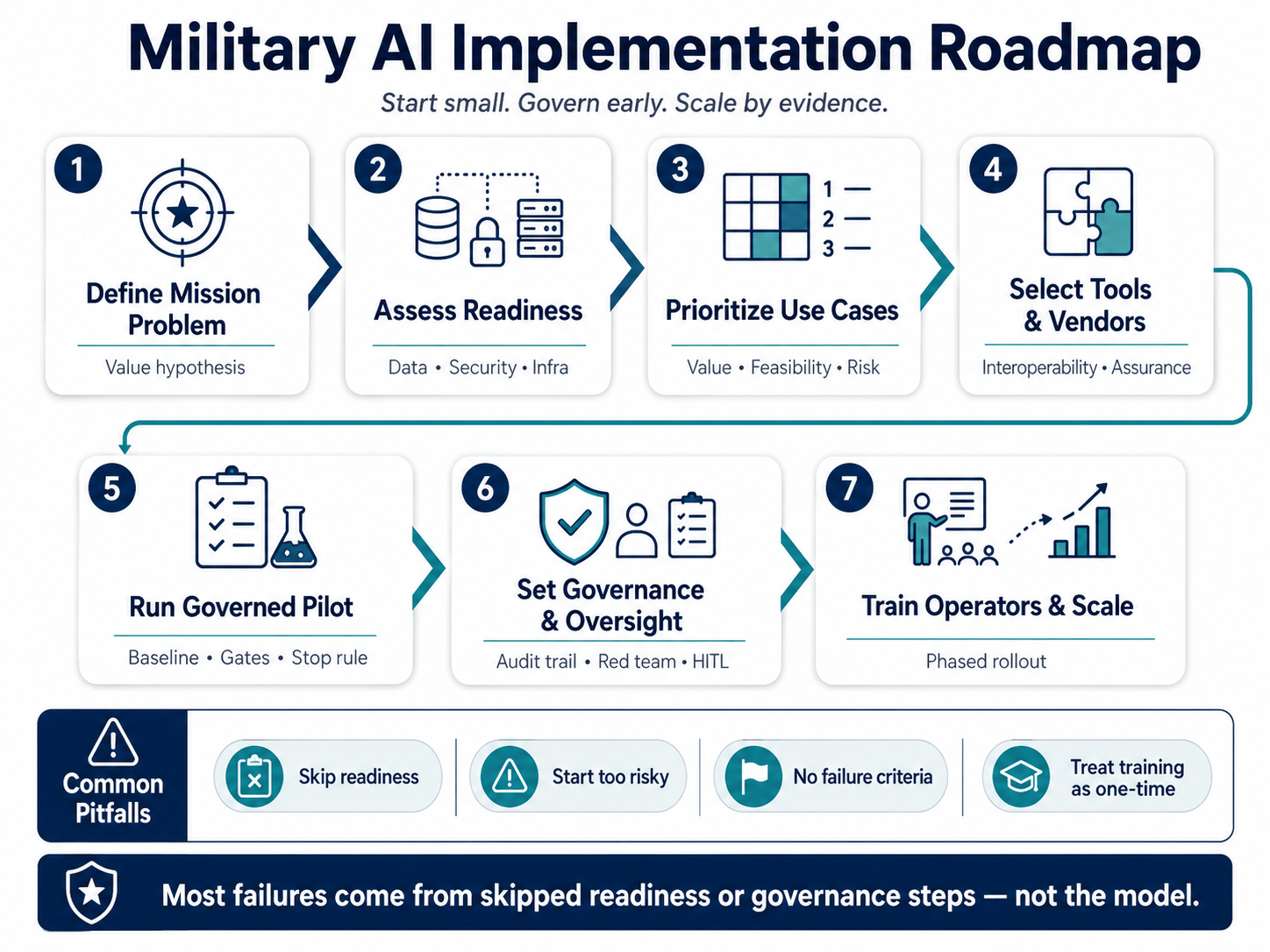
Step 1: Define the mission problem and value hypothesis
Every credible initiative starts with a concrete operational problem, not a technology in search of a use case. Write down the current baseline, the intended users, operational constraints, and the specific success measures the initiative must hit. If a team cannot state what “better” looks like in measurable terms, the project is not ready to move past this step.
Step 2: Assess data, security, and infrastructure readiness
Data quality and governance determine more implementation outcomes than model choice does. This step should map data quality and completeness, existing governance policies, system interfaces, classification boundaries, access controls, and hosting or compute constraints. Gaps found here, not the algorithm, are the most common reason defense AI pilots stall.
Step 3: Prioritize use cases by value, feasibility, and risk
Organizations should apply the decision matrix from Section 2. They should rank use cases by mission value, data readiness, integration complexity, and operational risk. Generally, organizations new to military AI achieve stronger early returns from lower-risk applications. For example, predictive maintenance offers a practical starting point. In contrast, high-risk, high-autonomy applications require greater maturity and governance.
Step 4: Select tools, vendors, and integration approaches
Evaluation criteria should extend beyond feature lists alone. Organizations should assess interoperability, assurance evidence, lifecycle support commitments, and responsible AI practices. Furthermore, vendors should support explainability, audit logging, and human-override design. Otherwise, organizations should treat them as governance risks despite strong technical performance.
Step 5: Pilot with measurable success criteria
A well-designed pilot begins with a quantified baseline and realistic test conditions. It also defines explicit failure criteria before deployment. In addition, it includes safeguards and scheduled review gates before expanding scope. However, pilots without predefined failure criteria often continue too long. As a result, teams keep investing after the evidence no longer supports further deployment.
Step 6: Establish governance, testing, and human-oversight controls
Organizations should build governance into the pilot from the beginning. They should not bolt it on afterward. At a minimum, the pilot should include audit trails for system decisions and human interventions. It should also evaluate controls against the risk-to-control matrix. In addition, higher-risk applications require red-teaming and defined escalation paths. Finally, organizations should assign a clear owner for the system’s outputs.
Step 7: Train operators and scale responsibly
Organizations should scale AI based on operator competence, adoption feedback, and monitored performance. They should not rely on fixed deployment dates. Instead, they should expand deployment in controlled stages. They can scale by unit, mission set, or geographic region. This approach helps organizations identify integration and trust issues before full deployment.
Common implementation pitfalls to avoid
Organizations often repeat the same implementation mistakes. They skip the readiness assessment in Step 2. They also choose a high-risk use case for the first pilot. Some deploy AI without defining failure criteria in advance. Others treat training as a one-time activity instead of an ongoing process. Fortunately, organizations can avoid each of these pitfalls by following the staged approach outlined above.
SmartDev’s AI consulting services and AI and machine learning development services support exactly this kind of staged, governed adoption path, from readiness assessment through pilot and scale.
Takeaway: A staged, evidence-based rollout – not a single large deployment – is what separates military AI programs that scale from those that stall after the pilot phase, and most failures trace back to a skipped readiness or governance step rather than the technology itself.
9. Measuring Outcomes and ROI
How is military AI success measured? Measurement should combine mission effectiveness, operational efficiency, reliability, risk, governance, and lifecycle cost, never cost savings in isolation. A single productivity figure cannot capture whether a defense AI program is actually working as intended.
Building a measurement framework before deployment
The most reliable measurement frameworks are built before a pilot begins, not retrofitted afterward. This means agreeing on a baseline value for every metric that matters, deciding who owns each metric, and setting a review cadence. Programs that measure success only after the fact tend to cherry-pick favorable numbers, whether or not that is the intent.
Mission-effectiveness metrics
Decision speed and quality, detection accuracy, false-positive rates, and readiness or operational availability all indicate whether AI is improving mission outcomes. These are typically lagging indicators, they confirm impact after a meaningful period of use, and short-term snapshots can be misleading if collected too early in a rollout.
Operational-efficiency metrics
Organizations should monitor downtime, delivery reliability, resource utilization, and time saved across analysis and planning workflows. Together, these metrics show whether AI reduces operational burden. However, efficiency metrics usually improve before mission-effectiveness metrics. Therefore, they provide useful early signals. Even so, organizations should not mistake early efficiency gains for validated mission success.
Risk and governance metrics
Organizations should monitor override rates, escalation events, model reliability, incident tracking, and audit completeness. Together, these metrics show whether human oversight works as intended. However, a very low override rate can have two meanings. It may reflect high model accuracy or reduced operator scrutiny. Therefore, organizations need additional metrics to distinguish between them. For example, sampled human reviews can validate a subset of accepted recommendations. SmartDev’s guide to AI use cases in risk management explores similar risk-scoring approaches in other high-stakes sectors.
Leading versus lagging indicators
Leading indicators measure whether organizations have the right conditions for success. They include data quality, operator training completion, and system uptime. In contrast, lagging indicators measure mission effectiveness and operational efficiency. They confirm whether expected outcomes actually materialize. Therefore, organizations should track both indicator types. Together, they prevent strong performance metrics from masking deteriorating underlying conditions.
| Metric category | Indicator type | Example measure |
|---|---|---|
| Data & readiness | Leading | Data completeness score, training completion rate |
| Mission effectiveness | Lagging | Detection accuracy, decision turnaround time |
| Operational efficiency | Leading/Lagging | Downtime reduction, analyst time saved |
| Risk & governance | Leading | Override rate, audit completeness, escalation response time |
Common measurement pitfalls
Unclear baseline metrics, overstated causality, selective reporting, and ignoring human or organizational costs all undermine credible measurement. Attributing a broad readiness improvement entirely to one AI tool, without accounting for other concurrent changes, is a frequent overstatement worth guarding against. A defined baseline before deployment prevents most of these problems.
Takeaway: A balanced scorecard that pairs leading indicators with lagging mission outcomes, across effectiveness, efficiency, and governance, prevents any single number from misrepresenting a program’s true value.
10. Future Outlook for AI in Military Operations
What is next for military AI? Capabilities will likely expand in data fusion, edge processing, uncrewed systems, cyber defense, and planning support, while governance and accountable judgment remain central to how these systems are used. The direction of travel is toward broader assistance, not toward removing humans from consequential decisions.
Near-term developments to monitor
Wider adoption of predictive maintenance across additional platforms, continued refinement of human-machine teaming in intelligence workflows, and expanding responsible-AI frameworks such as the DoD Responsible AI Strategy and Implementation Pathway are all active areas of near-term movement. Organizations tracking this space should watch for updated policy guidance at least as closely as they watch new model releases, since policy changes often determine what a capability can actually be used for.
Key uncertainty drivers
Several factors will shape the pace and scale of military AI adoption. These include policy clarity, testing and assurance methods for high-stakes systems. Workforce readiness and legacy infrastructure modernization also play critical roles. However, these factors rarely advance as quickly as AI research. As a result, capability often outpaces deployment maturity.
Coalition and interoperability considerations
Multinational operations add a layer of complexity beyond single-organization adoption: allied forces must align on data-sharing standards, classification handling, and, increasingly, shared expectations about human oversight and accountability for AI-assisted systems. Divergent national policies on autonomy, such as the human-judgment requirements in DoD Directive 3000.09 compared with positions advocated by bodies like the ICRC, mean interoperability is as much a policy challenge as a technical one.
What is likely to remain human-led
Target engagement authority, final command decisions, and legal accountability for the use of force are likely to remain human-led responsibilities, consistent with current U.S. and international policy positions. This is not expected to change as underlying models improve, because the requirement is rooted in accountability and legal doctrine rather than in current technical limitations alone.
Building long-term AI readiness
Long-term readiness depends on sustained investment in data infrastructure, workforce training, and governance maturity, not on any single technology breakthrough. Organizations that treat governance as a one-time compliance exercise rather than an ongoing capability will find it increasingly difficult to keep pace as more use cases and more complex systems enter service.
What organizations should do now
Regardless of how the technology landscape evolves, three priorities remain essential. First, build durable data governance instead of relying on one-off data cleanups. Second, invest in AI literacy so operators can evaluate and use AI critically. Finally, design every new system with auditability and human oversight from the beginning. This approach avoids costly retrofits and strengthens long-term governance.
Takeaway: The trajectory points toward broader AI-assisted support functions, with human-led accountability for consequential decisions holding steady rather than eroding, and readiness now matters more than predicting which specific technology wins next.
FAQ: AI in Military
What are the most common uses of AI in the military?
The most common military AI applications fall into seven mission functions. These include intelligence and situational awareness, surveillance and reconnaissance, cyber defense, logistics and predictive maintenance, training and simulation, command decision support, and autonomous or robotic systems.
How is AI used in military intelligence and surveillance?
AI combines data from satellites, drones, and sensors. It uses computer vision and pattern detection to identify objects or anomalies. Human analysts then verify the results before taking action.
Can AI make autonomous military decisions?
AI is designed to support human decision-making, not replace it. DoD Directive 3000.09 requires that autonomous and semi-autonomous weapon systems allow commanders and operators to exercise appropriate human judgment over the use of force.
What are the main risks of AI in military applications?
Main risks include biased or incomplete data, cybersecurity threats against models and pipelines, unclear accountability, legacy-system integration gaps, and workforce readiness shortfalls, alongside broader legal and ethical questions around autonomy.
How can defense organizations measure the value of AI programs?
Organizations should combine mission-effectiveness metrics, operational-efficiency metrics, and risk and governance metrics into a balanced scorecard rather than relying on a single productivity or cost figure.
Conclusion
Military AI is best understood as a portfolio of capabilities rather than a single technology. To achieve meaningful results, organizations must select the right use cases, maintain high-quality data, and embed governance throughout the AI lifecycle. However, technical performance alone does not guarantee success. Instead, organizations must also protect human accountability, operational resilience, and transparent decision-making.
Across intelligence, logistics, cyber defense, training, autonomous systems, and command support, AI delivers the greatest value when it augments human expertise rather than replaces it. Therefore, organizations should prioritize mission-driven use cases, adopt AI in carefully governed stages, and measure outcomes continuously. By following this approach, they can achieve sustainable and defensible value from military AI.
If your organization is exploring military or public-sector AI initiatives, SmartDev’s library of AI use cases across more than 30 industries provides practical implementation insights. In addition, SmartDev’s AI consulting services help assess AI readiness, design governance frameworks, and develop implementation roadmaps. Contact us to discuss how your organization can deploy AI securely, responsibly, and at scale.