

AI products are transforming how businesses operate – but technology alone does not guarantee success. The real differentiator lies in how companies help customers adopt, use, and generate value from AI solutions over time.
That’s where Customer Success becomes essential.
In the episode “Maximizing Impact with Customer Success in AI Product Companies” of the Ctrl Shifter Podcast, Petko Kashinski, Customer Success Leader at Jiminny, shares how organizations can build stronger customer relationships, improve adoption, and scale impact using AI-powered insights.
With years of experience leading revenue-generating teams, Petko highlights that Customer Success today is not just about solving problems – it is about creating continuous value across every customer interaction.
What Is Customer Success in AI Companies?
Customer Success (CS) is the function responsible for ensuring customers achieve their desired outcomes while using a product or service. Unlike traditional support teams that react to problems, Customer Success teams proactively guide customers to reach their goals.
In AI companies, this role becomes even more important. AI products often involve complex workflows, data integration, and behavioral change within organizations. Customers may not immediately know how to unlock the full value of the technology – which means companies must actively support adoption and learning.
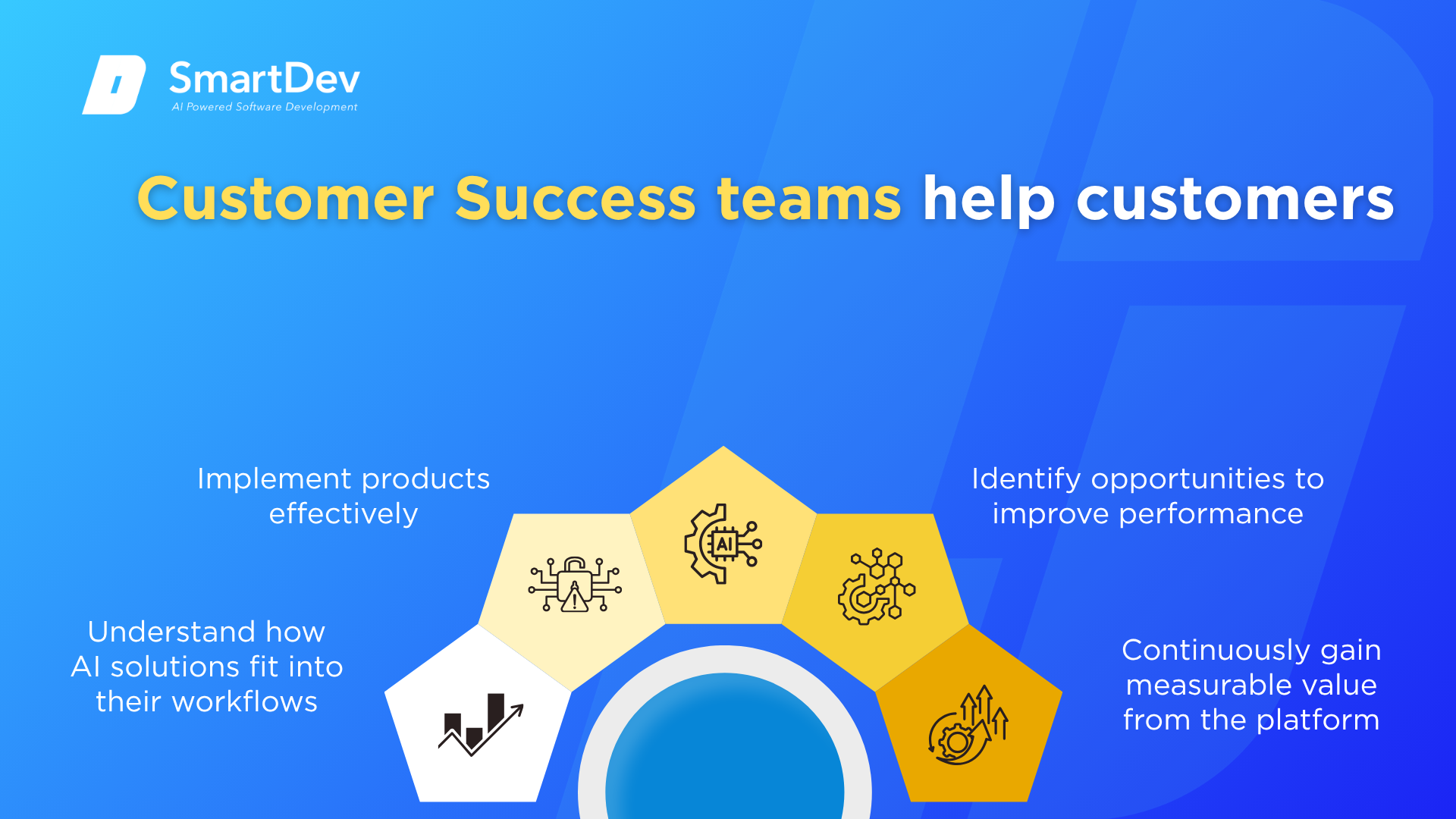
Customer Success teams help customers:
- Understand how AI solutions fit into their workflows
- Implement products effectively
- Identify opportunities to improve performance
- Continuously gain measurable value from the platform
As Petko Kashinski explains in the podcast, strong Customer Success is built by delivering meaningful value at every touchpoint, not just responding to customer requests.
Why Does Customer Success Matter in AI?
AI solutions promise efficiency, automation, and smarter decision-making. But without proper guidance, customers may struggle to fully adopt these tools or fail to connect them to real business outcomes.
Customer Success helps bridge the gap between product capabilities and actual impact. It ensures customers not only use the technology, but benefit from it.
For AI companies, this leads to:
- Higher product adoption
- Stronger long-term relationships
- Improved retention and expansion opportunities
- Better customer experience
Petko emphasizes that trust and long-term partnerships are built when Customer Success teams consistently help customers solve problems while also introducing new opportunities for improvement.
Rather than focusing only on solving immediate issues, effective CS teams think strategically about how to continuously support customer growth.
How Does Customer Success Actually Work?
Customer Success teams operate across the entire customer lifecycle – from onboarding to expansion. Their goal is to ensure customers successfully integrate the product into their daily operations.
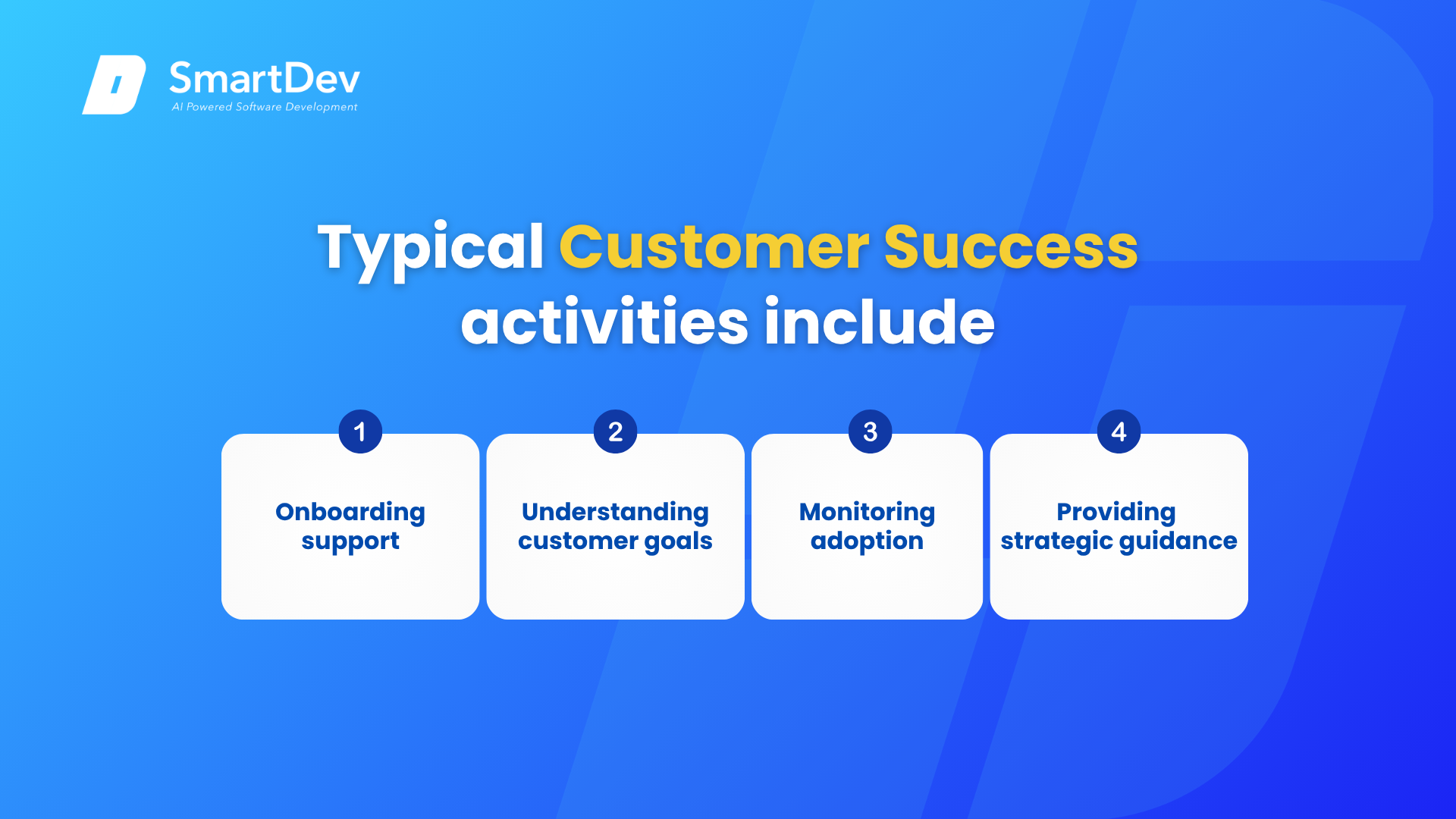
Typical Customer Success activities include:
Onboarding support
Helping customers implement the product and understand key features.
Understanding customer goals
Learning about the customer’s business objectives, challenges, and success metrics.
Monitoring adoption
Tracking how customers use the product and identifying opportunities to improve engagement.
Providing strategic guidance
Sharing best practices that help customers achieve better outcomes.
According to Petko, a proactive approach is essential. Many teams make the mistake of only reacting when customers raise issues. Instead, Customer Success teams should consistently look for ways to add additional value, even in small interactions such as follow-up emails or insights.
This proactive mindset helps build trust and positions Customer Success teams as long-term partners rather than technical support providers.
How Does AI Improve Customer Success?
AI is transforming Customer Success by enabling teams to work more efficiently while delivering more personalized experiences.
One example discussed in the podcast is conversation intelligence technology, which captures insights from customer interactions and converts them into structured data. This allows teams to better understand customer needs, detect risks, and identify opportunities for improvement.
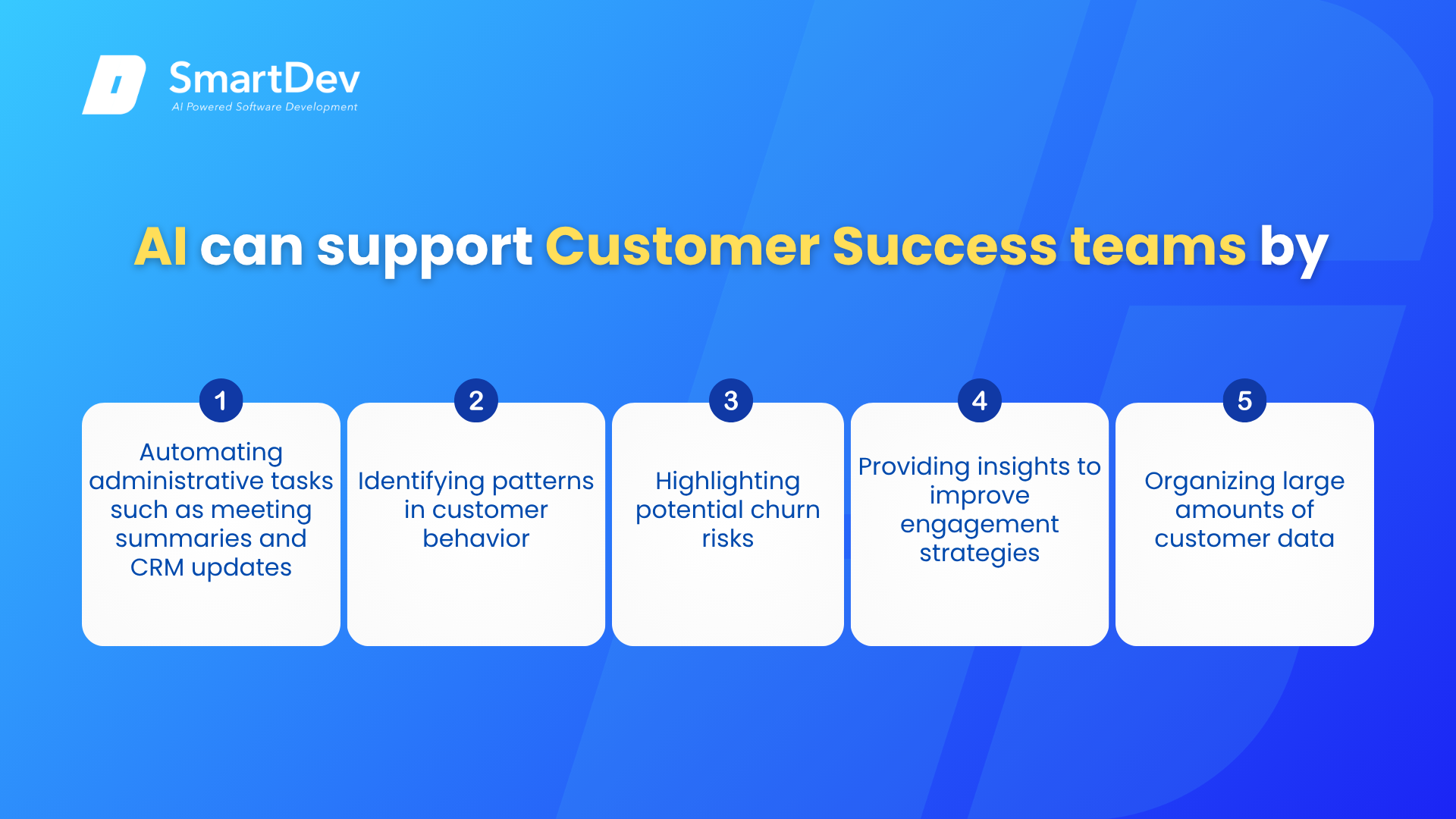
AI can support Customer Success teams by:
- Automating administrative tasks such as meeting summaries and CRM updates
- Identifying patterns in customer behavior
- Highlighting potential churn risks
- Providing insights to improve engagement strategies
- Organizing large amounts of customer data
Petko highlights that AI does not replace human relationships. Instead, it amplifies the ability of Customer Success managers to focus on high-impact activities.
When repetitive tasks are automated, teams can spend more time understanding customer needs and delivering strategic value.
However, AI effectiveness depends heavily on data quality. Organized and structured data helps AI generate more reliable insights, while poor data quality can lead to inaccurate conclusions.
What Makes a Strong Customer Success Strategy in AI Companies?
Building an effective Customer Success strategy requires more than implementing tools. It involves developing the right mindset, processes, and team culture.
Petko identifies three essential qualities for Customer Success professionals:
Adaptability
AI technologies evolve quickly, and Customer Success teams must continuously adjust to new tools and customer expectations.
Curiosity
Understanding customer business models, goals, and challenges helps teams provide more relevant and impactful recommendations.
Persistence
Building strong customer relationships takes time and continuous effort.
Coaching and continuous learning are also critical components of successful Customer Success teams. Organizations that invest in developing their teams can create stronger customer relationships and improve long-term outcomes.
Another key concept discussed in the episode is managing the balance between effort and impact. Not every task delivers equal value. Customer Success leaders must prioritize activities that generate meaningful outcomes rather than focusing only on volume of work.
By combining strong team culture with AI-powered insights, companies can create scalable Customer Success strategies that drive measurable results.
결론
Customer Success plays a critical role in helping AI companies deliver real business value. By guiding customers throughout their journey, organizations can improve adoption, strengthen relationships, and unlock long-term growth opportunities.
Insights from the Ctrl Shifter Podcast episode featuring Petko Kashinski demonstrate that successful Customer Success strategies combine human expertise with AI-powered efficiency.
AI enables teams to scale their efforts, automate repetitive tasks, and uncover valuable insights – while human understanding ensures meaningful and personalized customer relationships.
As AI continues to reshape industries, companies that invest in Customer Success will be better positioned to transform technology into lasting customer impact.