
TL;DR:
- A client discovery call is a structured conversation between a prospective client and an IT outsourcing vendor to understand the client’s needs, goals, and project context before proposing a solution.
- It is the first substantive step in the sales and scoping process, shaping the quality of the proposal and the accuracy of effort estimates.
- A well-run discovery call reduces misalignment, builds trust, and sets the foundation for a successful outsourcing engagement
Before any proposal is written or any team is assembled, both sides of an IT outsourcing relationship need to understand each other. The client discovery call is where that understanding begins. It is not a sales pitch or a technical interview — it is a structured conversation designed to surface the real business problem, the organizational context, and the expectations that will determine whether a partnership makes sense.
What is a Client Discovery Call?
A client discovery call is a scheduled conversation, typically lasting 30 to 90 minutes, between a prospective client and representatives from an IT outsourcing vendor. The primary purpose is for the vendor to gather sufficient information about the client’s business context, technology environment, project goals, and success criteria to develop an accurate and relevant proposal or solution recommendation.
Discovery calls are distinct from general sales calls. Rather than leading with the vendor’s capabilities, a well-structured discovery call prioritizes listening and asking targeted questions. The vendor’s goal is to understand the client’s situation deeply enough to determine whether they can add genuine value and, if so, how to structure an engagement that addresses the client’s specific needs.
A typical discovery call covers several key areas: the business background and strategic context driving the technology initiative, the current state of the client’s technology environment and team, the specific problem or opportunity the project is intended to address, the desired outcomes and how success will be measured, the timeline and budget parameters, any constraints or risks the client has already identified, and the decision-making process on the client’s side.
Discovery calls may be conducted at multiple stages of the sales process. An initial discovery call establishes high-level context, while a deeper technical discovery session may follow to gather the detail needed to scope a complex solution. In larger engagements, multiple stakeholders from the client side — including business owners, IT leads, and procurement — may participate in separate discovery sessions.
비즈니스에 중요한 이유
For client organizations, the discovery call is an opportunity to evaluate the vendor beyond their marketing materials. How a vendor conducts a discovery call reveals a great deal about their communication style, depth of understanding, and genuine interest in the client’s problem. Vendors who ask insightful questions, acknowledge complexity honestly, and listen more than they talk are demonstrating the qualities that matter throughout a long-term outsourcing relationship.
From the perspective of a C-level executive or IT manager, a thorough discovery process reduces the risk of a mismatched proposal. When a vendor takes the time to understand the full business context, the resulting proposal is more likely to address the actual problem, include realistic effort estimates, and propose a delivery model suited to the client’s team and working style. This reduces the time spent evaluating proposals that miss the mark and accelerates the path to a productive engagement.
Discovery calls also protect against scope surprises downstream. When requirements, constraints, and success criteria are surfaced and discussed openly during discovery, both parties enter the formal engagement with a shared baseline. This reduces the likelihood of the client receiving deliverables that technically fulfill the contract but fail to address the underlying business need.
For the vendor, a high-quality discovery call improves proposal accuracy, reduces the risk of under-scoping or over-promising, and increases the probability of a successful delivery outcome. Vendors who invest in structured discovery processes tend to win more business and retain clients longer, because their proposals reflect a real understanding of the client’s world.
Who Participates in a Client Discovery Call?
The composition of participants on both sides of a discovery call depends on the scope and complexity of the engagement being discussed. On the vendor side, discovery calls typically involve a sales or business development lead who manages the client relationship, a solutions architect or technical lead who can assess the technical feasibility of what the client is describing, and sometimes a delivery manager or practice lead who can speak to how similar engagements have been structured.
On the client side, the most productive discovery calls include the primary project sponsor or business owner who can articulate the business problem and desired outcomes, an IT lead or architect who can describe the current technology environment and integration requirements, and a procurement or vendor management representative who can speak to contracting and evaluation criteria.
Involving the right people from both sides in the discovery call significantly improves the quality of the output. When only sales representatives participate, the conversation tends to stay at a surface level. When technical and business stakeholders engage directly, it becomes possible to surface the nuances that determine whether a proposed solution will actually work.
How Does a Client Discovery Call Work?
A well-structured discovery call follows a deliberate sequence. The vendor prepares in advance by researching the client’s industry, public technology footprint, and any materials the client has shared, such as an RFP or project brief. This preparation allows the vendor to ask informed questions rather than covering basic ground that could have been answered through background research.
The call typically opens with brief introductions and an agenda overview, followed by the vendor asking structured open-ended questions to draw out the client’s context and needs. Active listening, note-taking, and probing follow-up questions are hallmarks of an effective discovery conversation. The vendor avoids launching into solution proposals until a thorough understanding of the problem has been established.
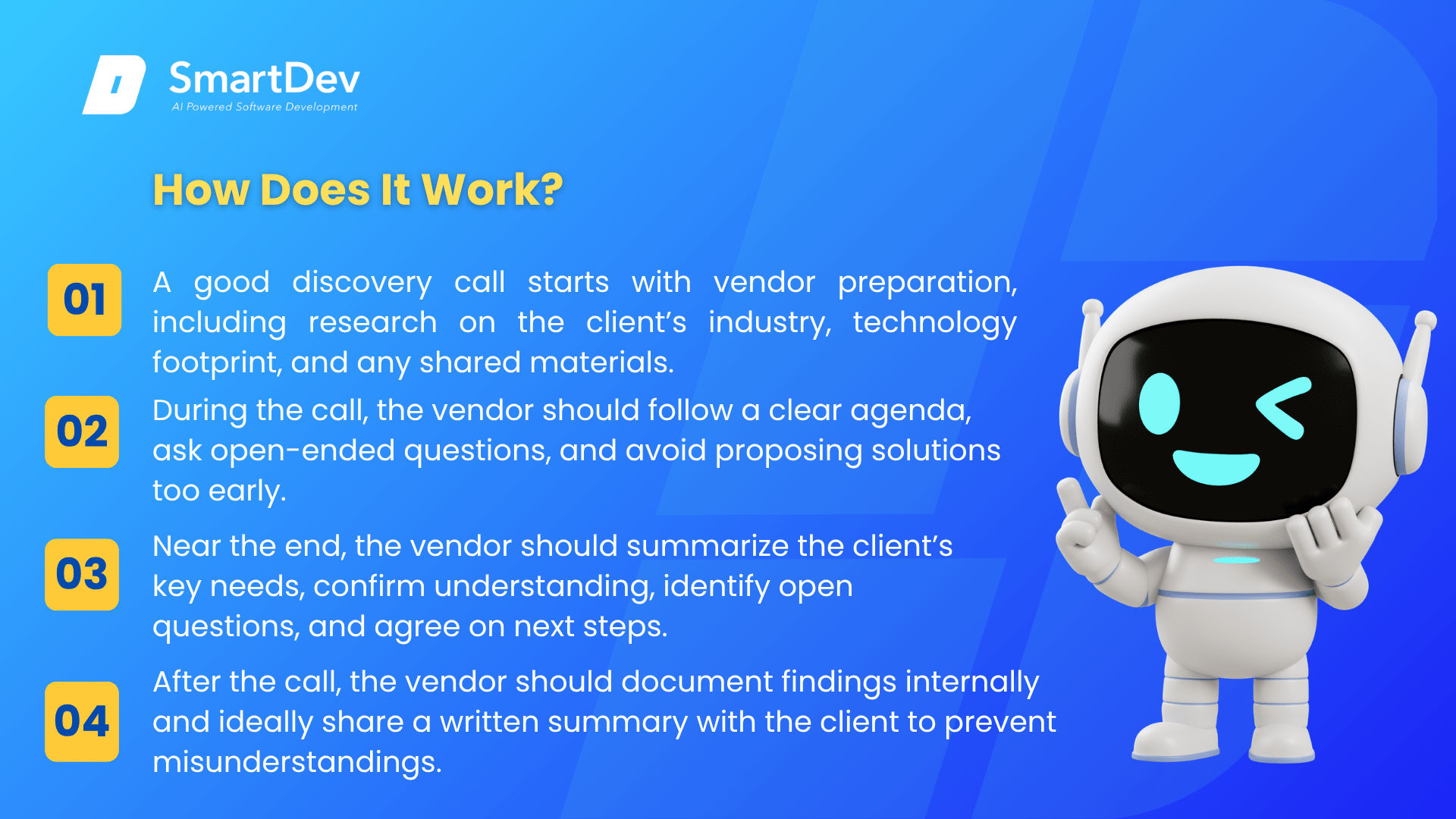
Toward the end of the call, the vendor summarizes their understanding of the client’s key needs and confirms accuracy with the client. Open questions are noted and assigned for follow-up. The vendor then outlines the next steps in the process, which typically include internal solution design and the delivery of a written proposal within an agreed timeframe.
Post-call, the vendor documents findings in an internal discovery brief that feeds into the proposal and, if the engagement proceeds, the project kickoff process. Sharing a written summary of the discovery call findings with the client is a best practice that demonstrates attentiveness and gives the client an opportunity to correct any misunderstandings before the proposal is developed.
기타 관련 용어
Vulnerability Assessment: A Vulnerability Assessment is a structured review that identifies security weaknesses in systems, applications, networks, or processes. It relates to a discovery call because the vendor may ask about current security risks, infrastructure, compliance needs, and past incidents.
Technical Architecture: Technical architecture is the blueprint of how a system is structured, including its applications, databases, APIs, infrastructure, cloud services, integrations, and security layers.
Request for Proposal (RFP): A formal document issued by a client organization inviting vendors to submit proposals for a defined project or service. An RFP often triggers a discovery call as vendors seek to clarify requirements before submitting a competitive response.