
요약
- A project charter is the formal document that officially authorizes a project to begin, defining its objectives, scope, stakeholders, and the authority of the project manager.
- It creates shared understanding and alignment before work starts, reducing the risk of scope creep, budget overruns, and stakeholder conflicts.
- Projects that begin without a charter fail at a measurably higher rate, as unclear authorization and undefined expectations create friction throughout delivery.
One of the most common causes of project failure is not technical complexity, it is the absence of aligned expectations at the start. A project charter is the document that creates that alignment. By formally defining what a project is, what it is not, who is responsible, and what success looks like, the charter gives everyone involved a shared foundation before a single line of code is written or a dollar is spent.
What is a Project Charter?
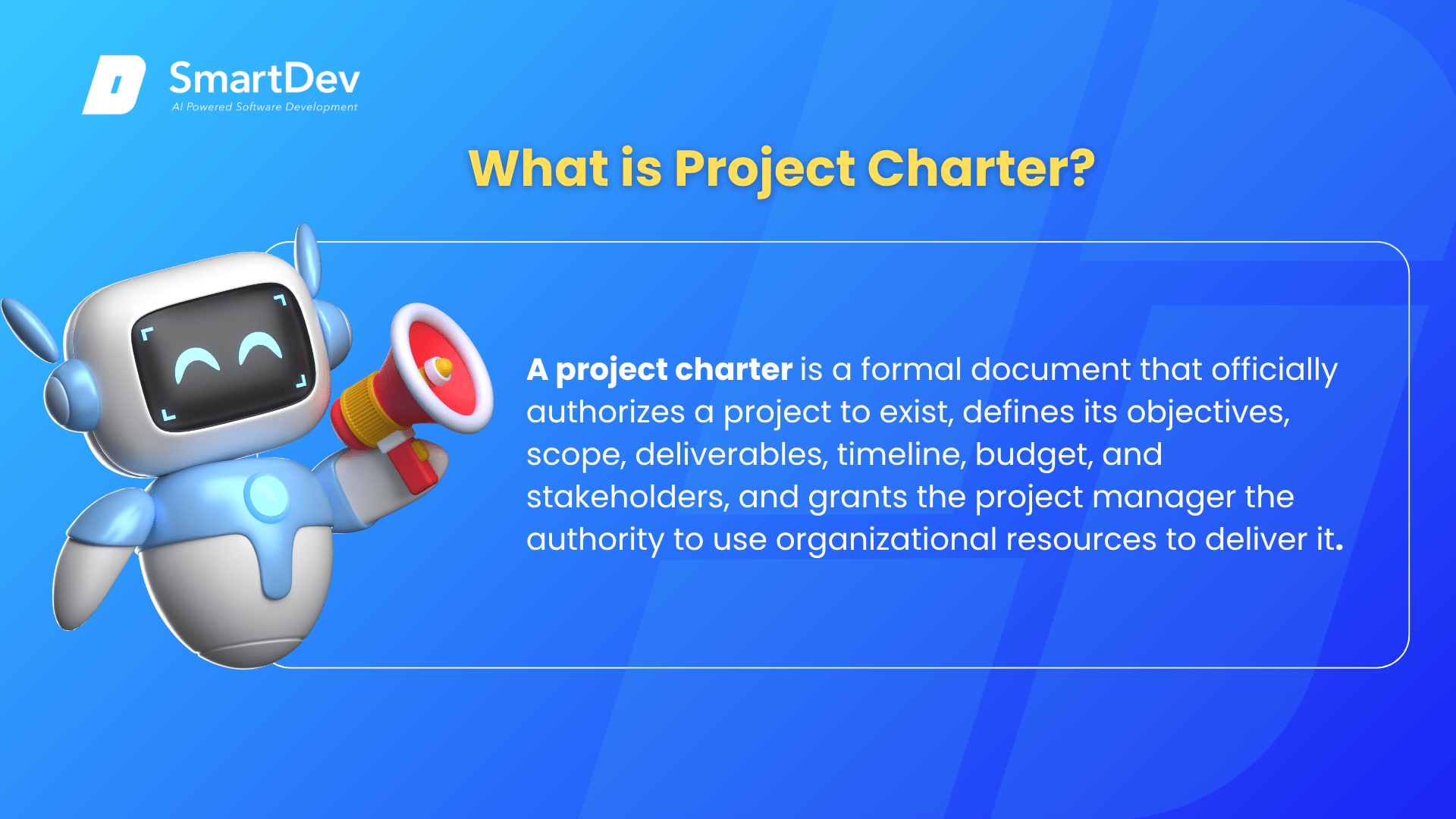
A project charter is a formal document that officially authorizes a project to exist, defines its objectives, scope, deliverables, timeline, budget, and stakeholders, and grants the project manager the authority to use organizational resources to deliver it.
According to the PMBOK Guide, the standard reference for project management, the project charter is the first document created in the project initiation phase and remains the authoritative reference for the project’s purpose throughout its lifecycle. It is typically created by or with the project sponsor, who is the senior executive or business leader responsible for funding and championing the project.
A project charter is not a detailed project plan. It is a high-level authorization document that answers the fundamental questions: Why are we doing this? What does it include? Who is responsible? What is the budget and timeline? What does success look like?
비즈니스에 중요한 이유
Scope creep, budget overruns, and stakeholder conflicts are the most common causes of project failure. A project charter directly addresses all three by establishing clear boundaries and accountability before work begins.
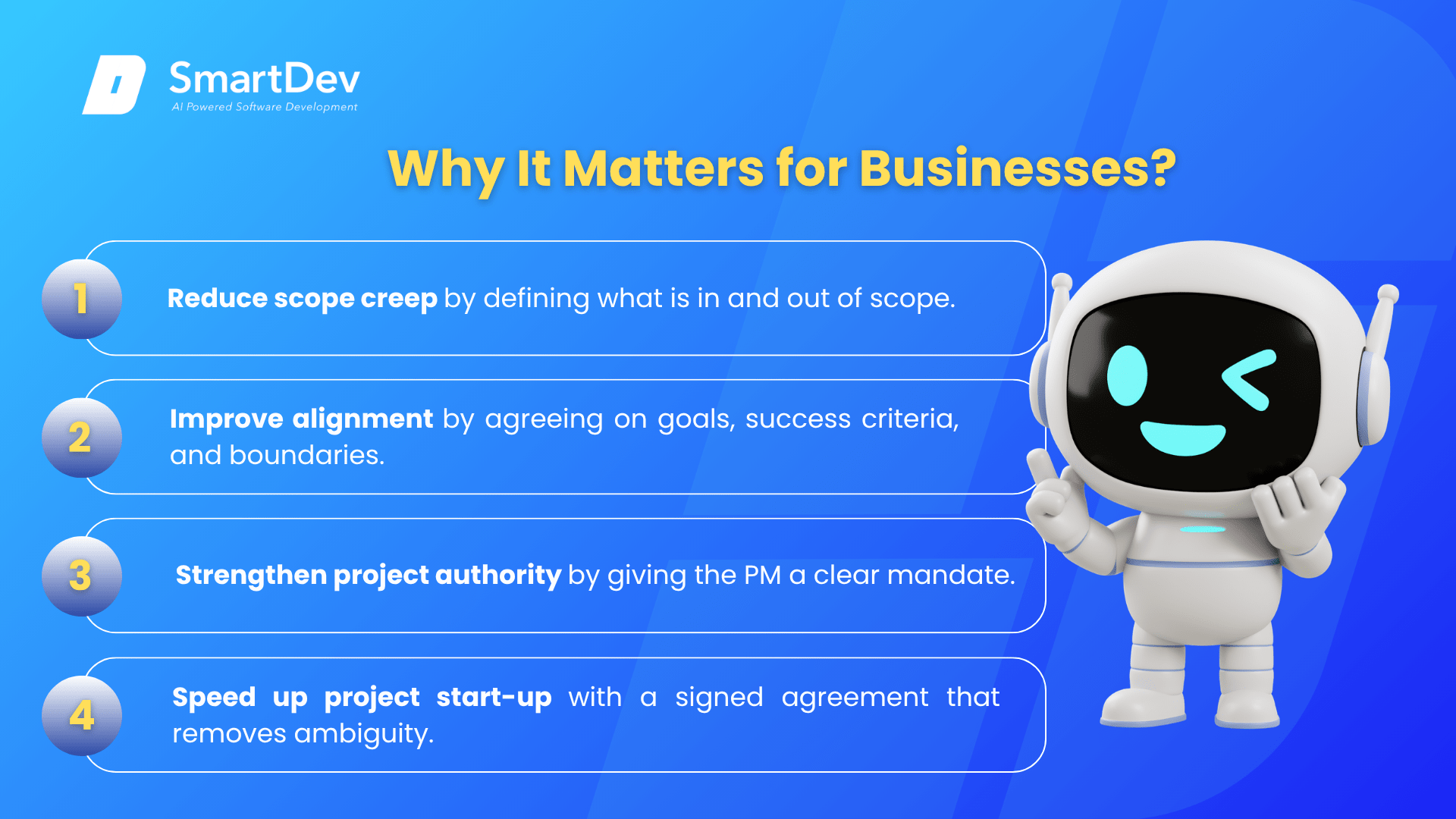
- 줄이다 scope creep by defining what is in scope and explicitly what is out of scope from the outset.
- 개선하다 stakeholder alignment by getting all relevant parties to agree on objectives, success criteria, and boundaries before commitments are made.
- 증가시키다 project manager authority by formally granting them the mandate to make decisions, allocate resources, and hold teams accountable.
- 가속하다 project start-up by replacing informal handshakes with a documented, signed agreement that removes ambiguity about who owns what.
For example, an enterprise software implementation that began with a detailed project charter and sponsor sign-off completed on time and within 5% of budget. A comparable implementation at the same company that started without a charter experienced a 60% cost overrun and a six-month delay, primarily due to unresolved disagreements about scope that were never documented at the start.
How Does a Project Charter Work?
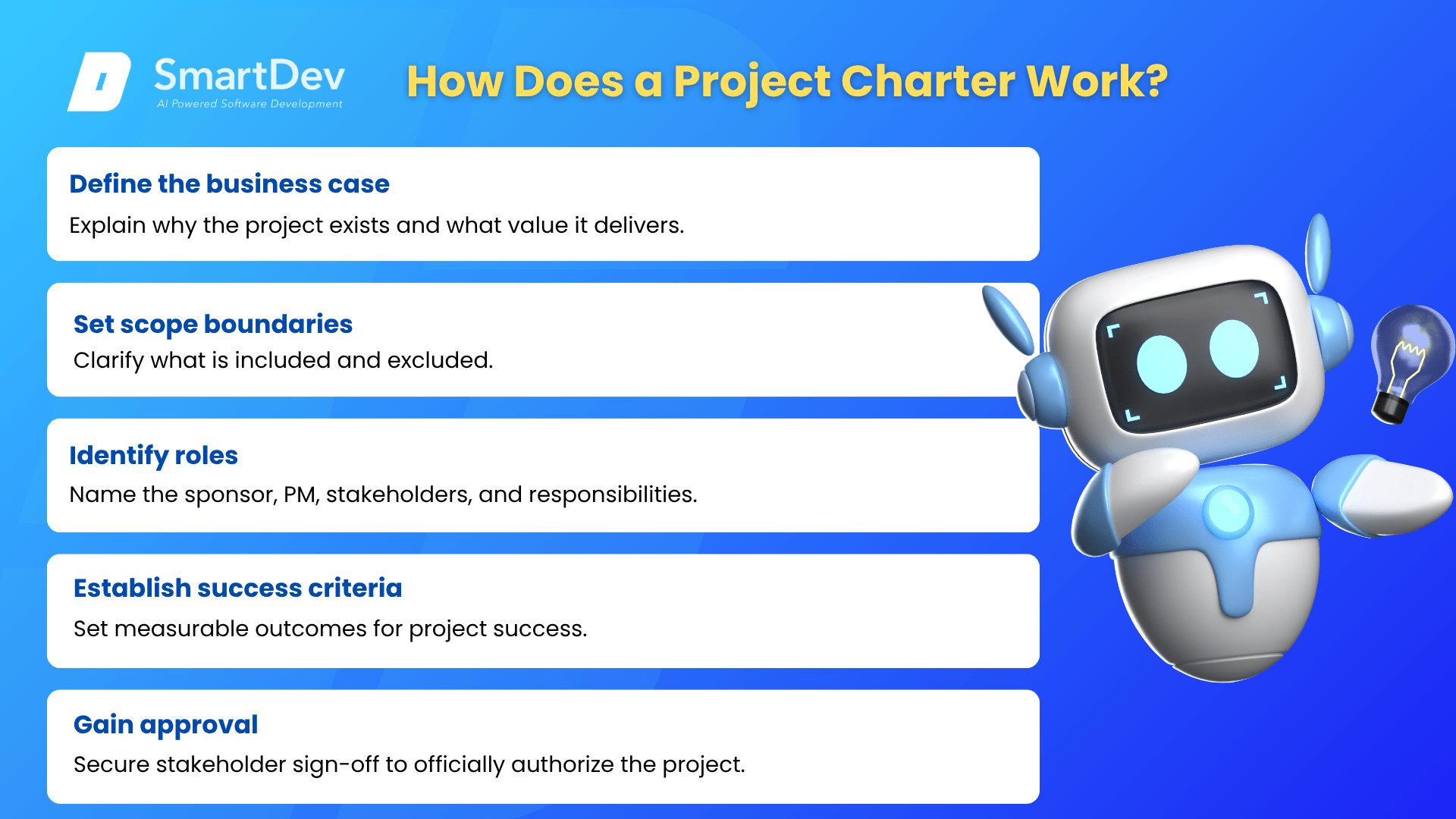
- Define the Business Case: Document why the project exists, what business problem it solves, and what value it is expected to deliver. This section justifies the investment.
- Set Scope Boundaries: Explicitly list what the project includes and, equally important, what it does not include. This prevents scope expansion without formal change control.
- Identify Stakeholders and Roles: Name the project sponsor, project manager, key stakeholders, and their respective responsibilities. Ambiguity about accountability is a project risk in itself.
- Establish Success Criteria: Define measurable outcomes that will determine whether the project succeeded. Avoid vague statements like “improve performance” in favor of specific targets.
- Gain Formal Approval: The charter is reviewed and signed by the project sponsor and key stakeholders. This signature transforms it from a draft into an official authorization.
The result is a single authoritative document that the team can return to throughout the project to resolve disputes, evaluate change requests, and keep delivery focused on the original business intent.
Who Uses a Project Charter?
Project charters are used in any organization that runs formal IT projects, software implementations, or business transformation initiatives. Enterprise IT teams use them for system implementations, cloud migrations, and infrastructure upgrades. Software development companies use them to formalize the scope and terms of client engagements. Outsourcing clients and vendors use jointly agreed charters to establish shared accountability for project delivery.
The primary users are project sponsors who authorize and fund the project, project managers who execute against the charter, and key stakeholders who must align on scope and expectations. For IT outsourcing engagements, the project charter is often incorporated into or accompanies the formal Statement of Work.
기타 관련 용어
Long-term Partnership: An ongoing, structured relationship between a business and an IT service provider designed to deliver continuous value over months or years.
System Design: The process of defining a software system’s architecture, including its components, the interactions between those components, the data models and flows, the infrastructure it runs on, and the mechanisms by which it achieves its performance, reliability, scalability, and security requirements.
Hybrid Delivery Model: An IT outsourcing structure that combines resources from two or more delivery locations – typically an onshore team in the client’s country and an offshore or nearshore team in a lower-cost location – working together on the same engagement.