
요약
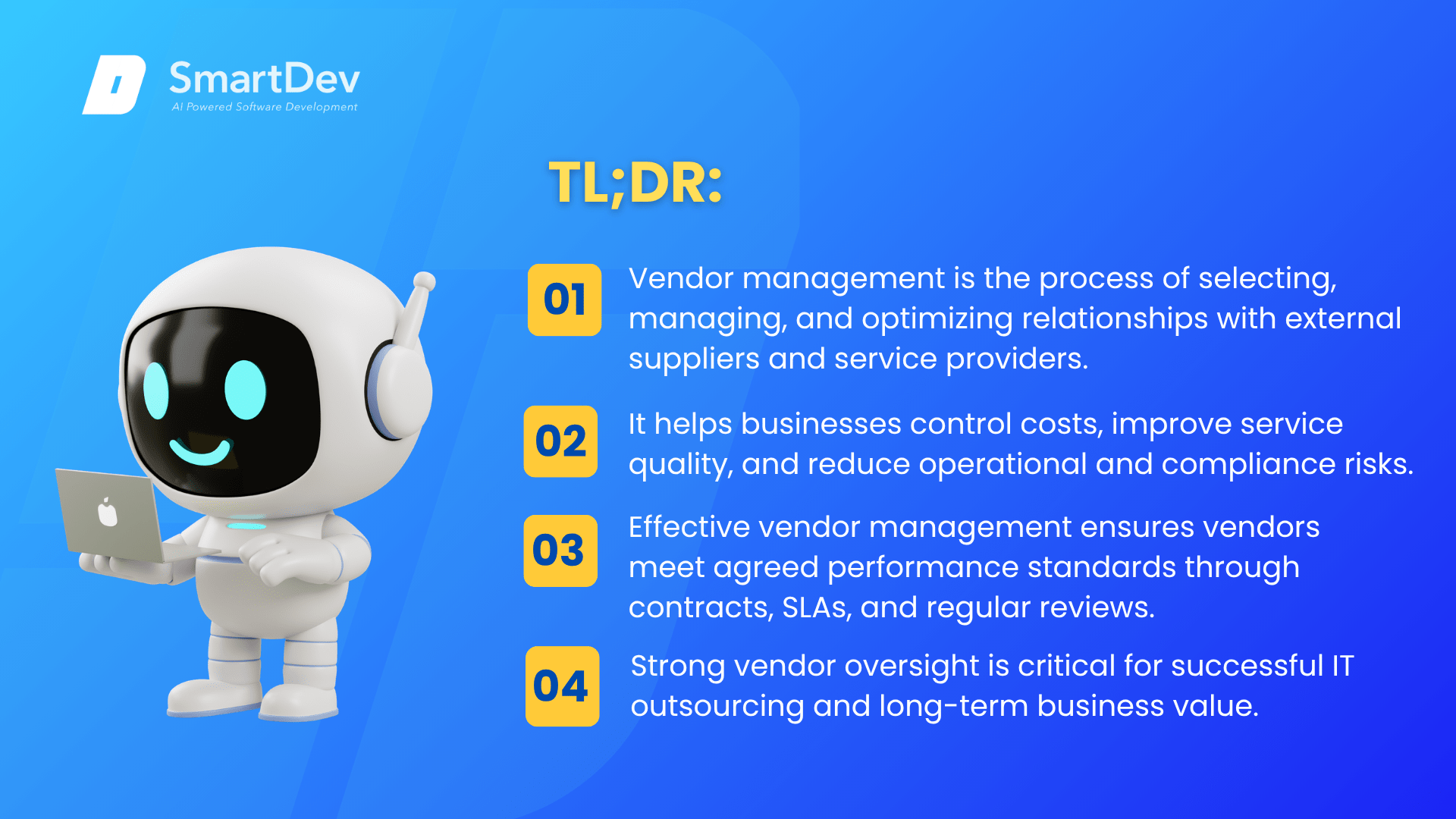
- Vendor management is the process of overseeing supplier relationships to control costs, ensure quality, and reduce risk across IT outsourcing engagements.
- Gartner defines it as the discipline that enables organizations to “control costs, drive service excellence and mitigate risks to gain increased value from vendors throughout the deal life cycle.”
- Poor vendor management is one of the leading causes of outsourcing failures, budget overruns, and missed service levels.
Vendor management is the set of processes and practices a business uses to select, contract, monitor, and optimize its relationships with external IT service providers. As IT outsourcing grows in scale and complexity, managing vendors effectively has become a critical business capability. This article explains what it involves, how it works, and what it costs to do properly.
What is Vendor Management?
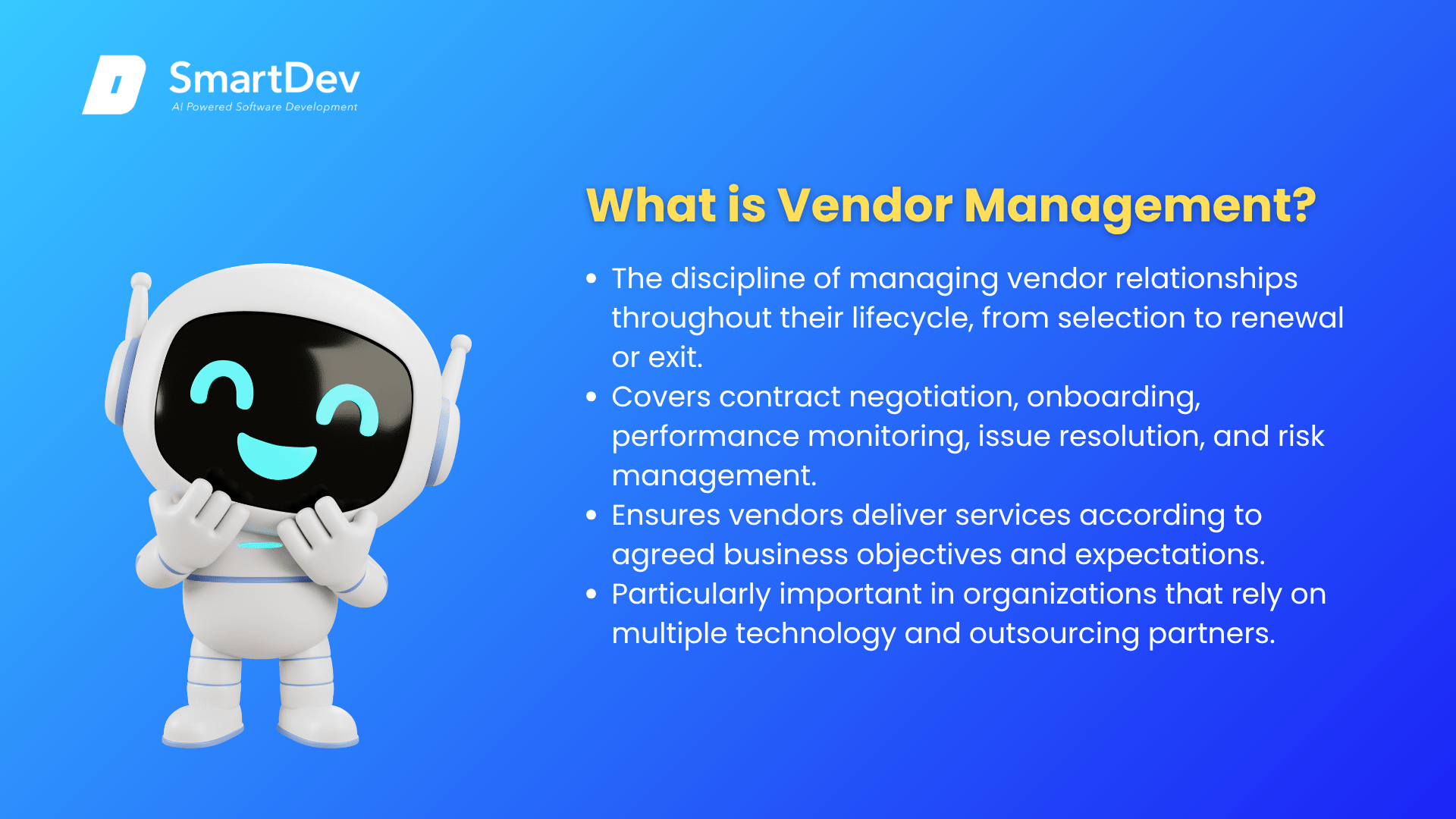
Vendor management is the organizational discipline of controlling and optimizing relationships with third-party suppliers of IT products and services. It covers the entire lifecycle of a vendor relationship: selection and onboarding, contract negotiation, performance monitoring, issue resolution, and eventual offboarding or renewal. According to Gartner, vendor management enables organizations to control costs, drive service excellence, and mitigate risks throughout the deal life cycle. In practice, this means setting clear expectations through contracts and SLAs, tracking vendor performance against defined KPIs, and managing the commercial and operational relationship on an ongoing basis. Effective vendor management is especially important when a business works with multiple vendors simultaneously, as is the case in most enterprise IT environments, where coordination, governance, and accountability must span an entire ecosystem of providers.
비즈니스에 중요한 이유
Without structured vendor management, IT outsourcing relationships drift: costs rise, quality slips, and accountability becomes unclear. The consequences range from missed deadlines to critical service outages.
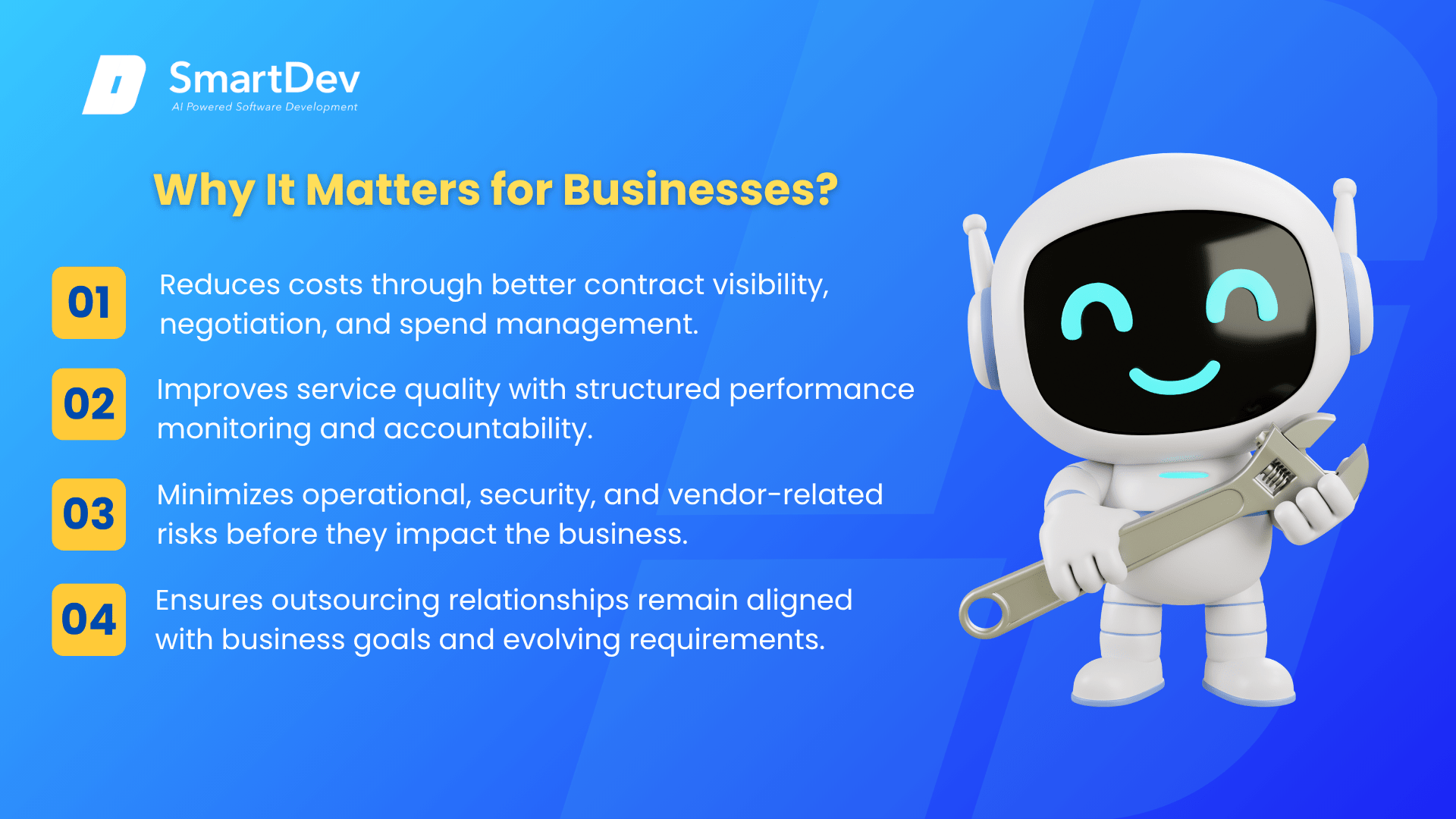
- Reduce costs by maintaining visibility into vendor spend, identifying duplication, and leveraging contract terms during renewals.
- Improve service quality through consistent performance monitoring and structured escalation paths when standards are not met.
- Protect business continuity by identifying vendor risks early, including financial instability, security gaps, or capacity constraints.
- Increase accountability with clear KPIs, SLAs, and review cadences that hold vendors to the standards agreed at contract signing.
For example, a telecommunications company with 40 active IT vendors introduced a formal vendor management program with quarterly business reviews and standardized SLA tracking. Within 18 months, average vendor performance scores improved by 22%, three underperforming contracts were renegotiated for better terms, and one high-risk vendor was replaced before a predicted service failure could impact customers.
How Does It Work?
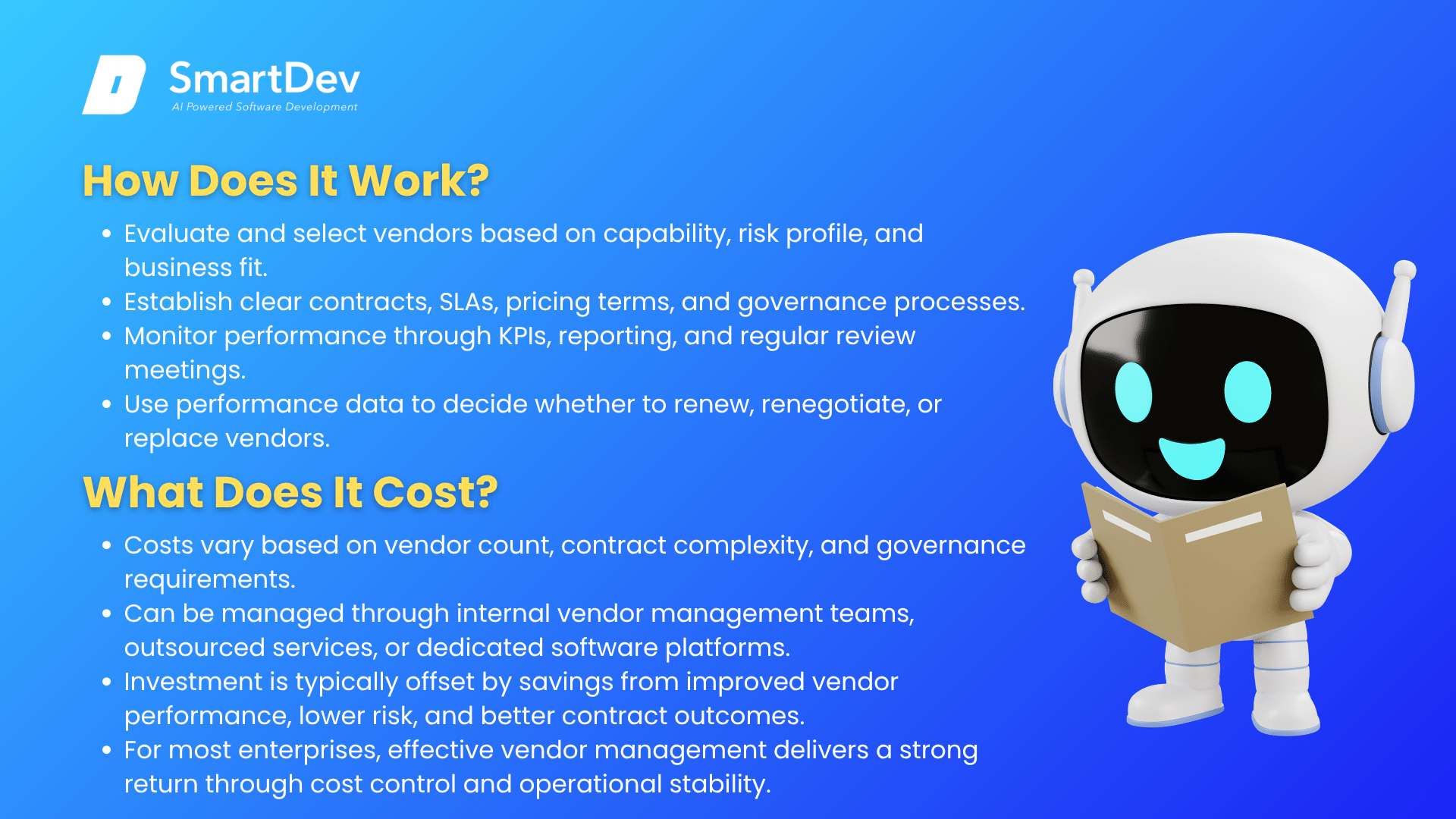
- Vendor selection — Candidates are evaluated against defined criteria covering technical capability, financial stability, security posture, and cultural fit before any contract is signed.
- Contract management — Agreements are structured with clear scope, pricing, SLAs, penalty clauses, and exit provisions to protect the business from day one.
- Onboarding — The vendor is integrated into the client’s systems, communication channels, and governance processes with a structured onboarding plan.
- Performance monitoring — Ongoing KPI tracking, regular reporting, and scheduled review meetings keep both parties aligned on expectations and outcomes.
- Renewal or exit — At contract end, performance data informs the decision to renew, renegotiate, or transition to a new vendor with minimal disruption.
The result is a set of vendor relationships that consistently deliver value, operate within agreed parameters, and remain aligned with the business’s evolving needs.
How Much Does Vendor Management Cost?
The cost of vendor management depends on the size and complexity of the vendor portfolio. Typical approaches include:
- In-house Vendor Management Office (VMO): $150,000 to $500,000+ per year in staff costs for a small to mid-sized enterprise team.
- Outsourced vendor management: $2,000 to $15,000 per month depending on the number of vendors managed and the scope of services.
- Vendor management software: $500 to $5,000 per month for platforms that automate contract tracking, performance dashboards, and risk alerts.
Key cost drivers include vendor count, contract complexity, regulatory requirements, and whether the function is handled in-house or outsourced. For most enterprises, the cost of vendor management is far outweighed by the savings it generates through better contract terms, reduced service failures, and eliminated redundant vendor spend.
기타 관련 용어
- Vendor Ecosystem: The broader network of all vendor relationships a business manages, within which vendor management practices are applied at the individual relationship level.
Agile Methodology: A flexible, iterative approach to project delivery that prioritizes collaboration, continuous feedback, and incremental progress. Agile Methodology provides the governance rhythm that keeps client and vendor aligned throughout the multi-year BOT engagement, particularly during the Operate phase when the client directs technical work but the vendor manages operations.
Strategic Technology Partnership: The highest-value tier within a vendor ecosystem, where a provider is treated as a co-invested partner rather than a transactional supplier.