
Introduction
78% of companies now use offshore development teams to access global talent pools and reduce development costs. But here’s what most hiring managers don’t realize: finding teams that deliver quality code at competitive rates while integrating seamlessly with your workflows requires a structured approach.
The stakes are high. Poor offshore hiring decisions cost companies an average of $240,000 in project delays and rework – money that could have funded an entire product launch. The difference between success and failure comes down to having a proven framework for recruitment, assessment, and onboarding.
This guide provides the step-by-step system for hiring offshore development teams that actually deliver results. You’ll get the exact assessment templates, onboarding checklists, and management strategies used by companies achieving 40-70% cost savings without sacrificing quality.

TL;DR: Your 90-Second Offshore Hiring Roadmap
Successful offshore hiring follows five critical stages:
- Define requirements clearly – Detailed specs prevent 90% of project failures
- Choose the right engagement model – Dedicated teams vs. project-based vs. hybrid
- Conduct rigorous technical assessments – Code tests that mirror real work scenarios
- Structure contracts with measurable SLAs – Milestone payments and quality gates
- Execute comprehensive onboarding – 4-week integration reduces time-to-productivity by 35%
Companies using this framework achieve 40-60% cost savings while maintaining quality standards and accelerating delivery timelines.
Why Offshore Development Teams Beat Local Hiring (It’s Not Just About Cost)
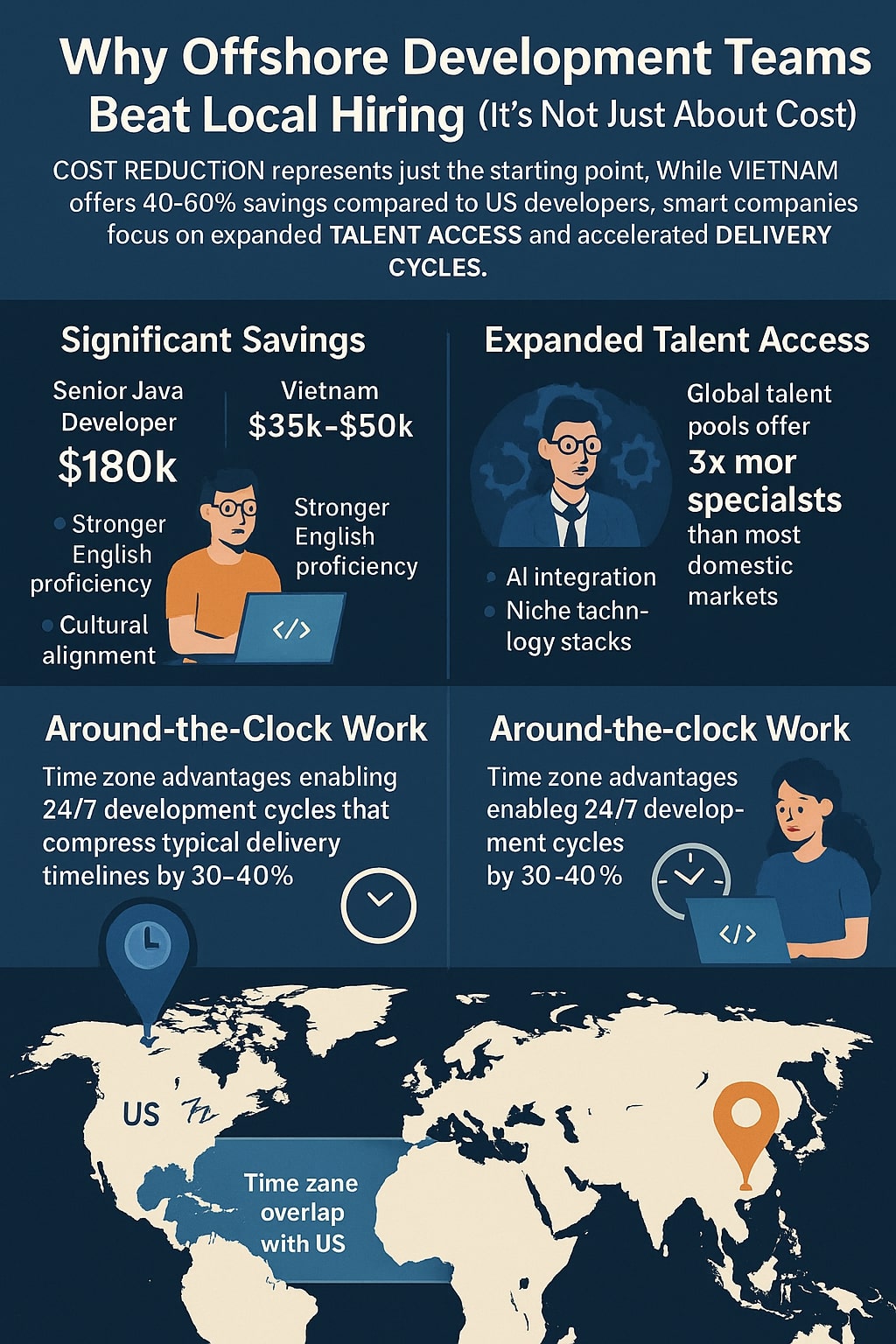
Cost reduction represents just the starting point. While Vietnam offers 40-60% savings compared to US developers, smart companies focus on expanded talent access and accelerated delivery cycles.
The math tells the story. A senior Java developer in San Francisco costs $180,000 annually (base salary). The same expertise level in Vietnam runs $35,000-50,000, but with additional benefits: stronger English proficiency than many offshore destinations and cultural alignment with Western business practices.
Access to specialized skills often matters more than cost savings. Need blockchain expertise, AI integration, or niche technology stacks? Global talent pools offer 3x more specialists than most domestic markets. This explains why fintech companies increasingly partner with offshore teams for the combination of financial regulation knowledge and cutting-edge technical skills.
Time zone advantages create genuine competitive benefits. A US company partnering with Asian development teams can literally work around the clock. Your offshore team codes while you sleep, presenting completed features for review each morning. This enables 24/7 development cycles that compress typical delivery timelines by 30-40%.
According to SmartDev’s analysis of recent client projects, the synergy of human expertise augmented by AI tools in offshore settings delivers measurable results: 40% fewer post-release bugs and 20% boost in developer productivity (based on internal client project analysis).
The Hidden Challenges That Trip Up Most Companies
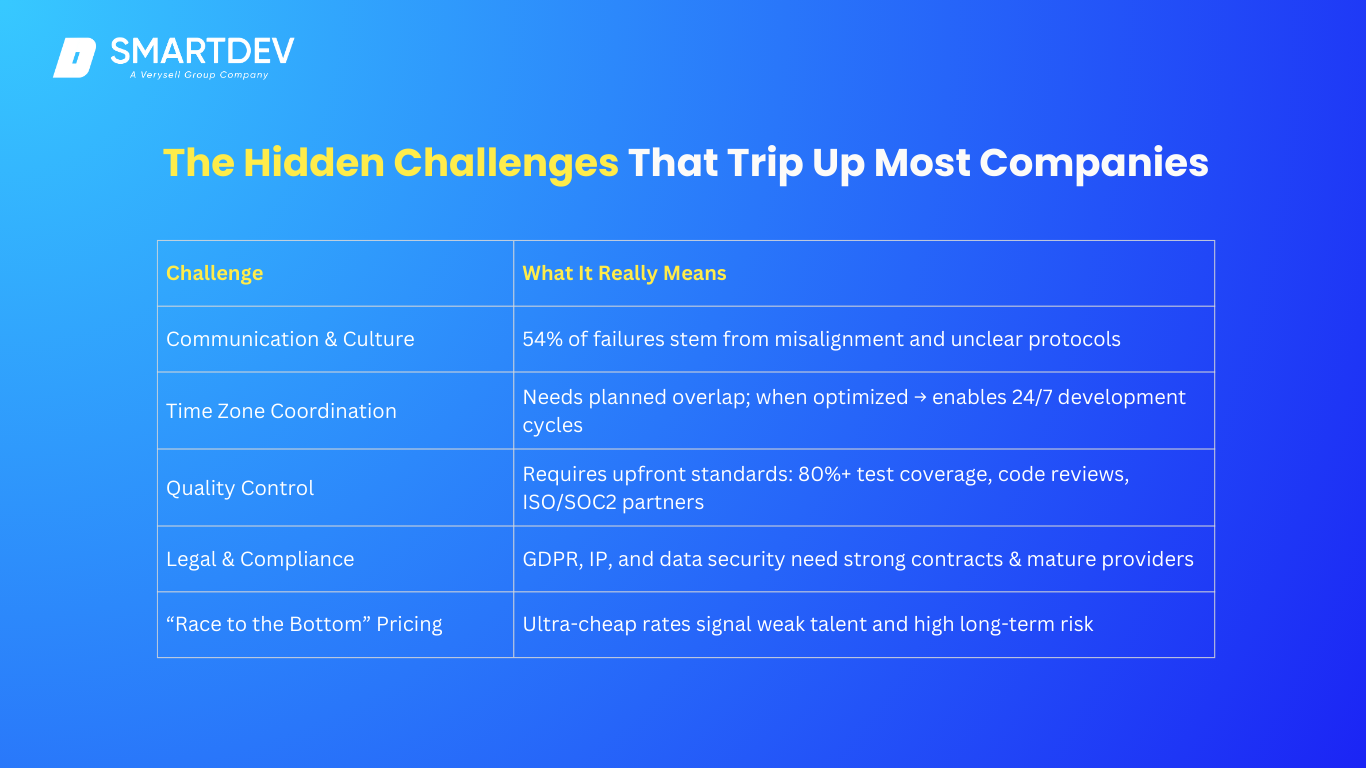 Communication barriers and cultural differences affect 54% of offshore partnerships, but these obstacles are manageable with proper preparation. Companies that struggle typically underestimate the importance of cultural alignment and communication protocol setup.
Time zone coordination requires deliberate planning. Working with teams 12 hours ahead means scheduling overlap windows for real-time collaboration. However, successful partnerships actually turn this into an advantage, creating continuous development cycles that accelerate delivery.
Quality control concerns are valid but solvable through upfront standards establishment. The key is measurable criteria. Automated testing with minimum 80% code coverage and regular code reviews prevent quality issues before they impact your product. Look for partners with ISO 27001 and SOC 2 Type II certifications – these represent proven quality management systems, not just marketing badges.
Legal and compliance complexity varies by jurisdiction. GDPR compliance, intellectual property protection, and data security require careful contract structuring. Top-tier offshore providers now maintain 100% compliance with international standards because they understand these aren’t optional considerations.
The real challenge? Avoiding the “race to the bottom” mentality. Unrealistic pricing that compromises quality signals potential problems. Quality offshore development costs more than the cheapest options but delivers exponentially better results.
Step 1: Define Your Project Requirements (The Make-or-Break Foundation)
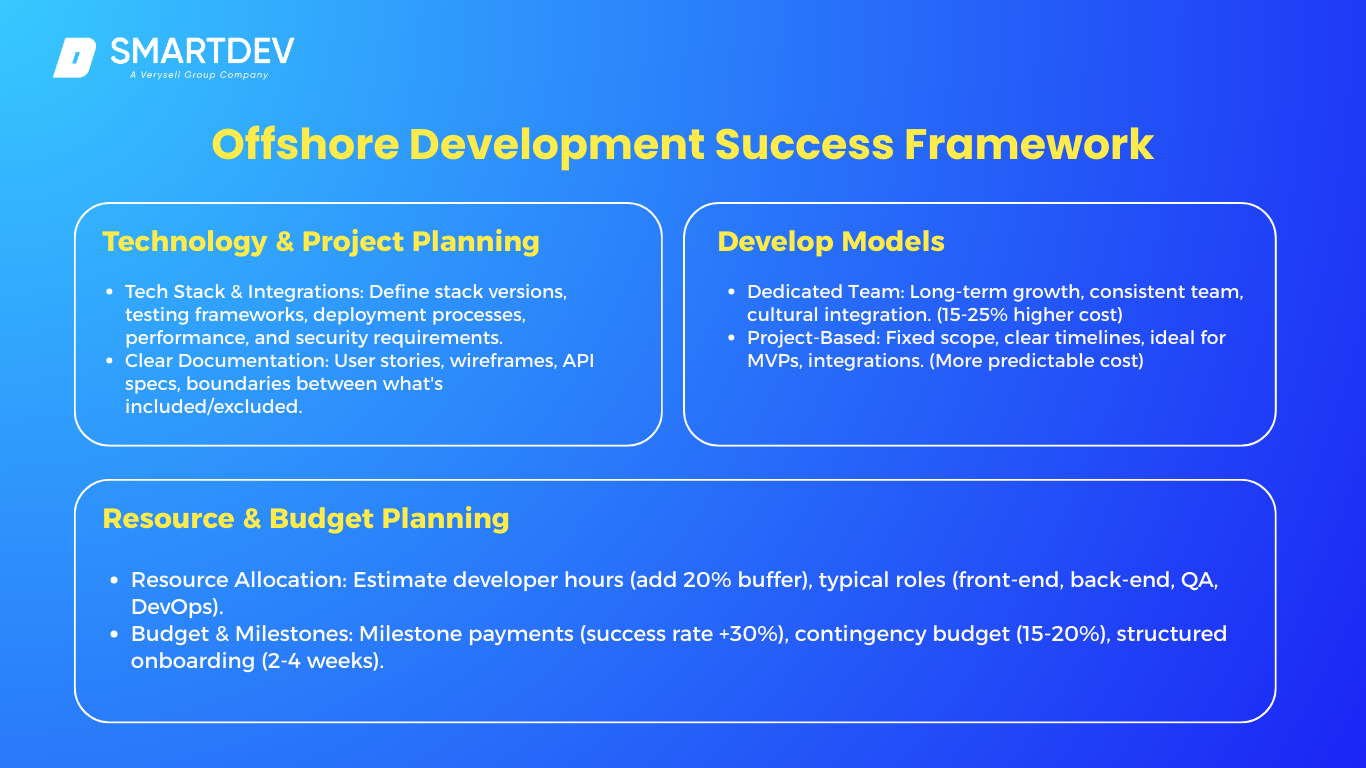 Documentation clarity determines offshore hiring success more than any other single factor. Vague requirements lead to misaligned expectations, scope creep, and delivery delays that eliminate cost advantages.
Technical Specifications That Actually Work
Start with your complete technology stack, integration requirements, and performance expectations. Don’t just list “React development” – specify:
- React version and state management approach (Redux, Context API)
- Testing frameworks and coverage requirements
- Deployment environments and CI/CD processes
- Performance benchmarks and scalability targets
- Security requirements and compliance standards
Project Scope Documentation
Define deliverables, acceptance criteria, and success metrics with surgical precision. Defining detailed project requirements upfront reduces project overruns by 40%. This means:
- Written user stories with acceptance criteria
- Wireframes and mockups for UI components
- API specifications and data models
- Clear boundaries around what’s included vs. excluded
Resource Planning That Prevents Bottlenecks
Calculate required developer hours realistically, then add 20% buffer for integration and knowledge transfer. A typical web application might need:
- 2 frontend developers (React/Angular expertise)
- 1 backend developer (API and database design)
- 1 QA engineer (automated testing focus)
- 1 DevOps specialist (deployment and monitoring)
Budget and Timeline Reality Check
Milestone-based payment models increase project delivery success by 30% because they align incentives and provide regular progress checkpoints. Include:
- Total project cost with payment milestones
- Contingency budget (typically 15-20%)
- Timeline expectations accounting for onboarding
- Structured onboarding reduces time-to-productivity by 35%, but requires 2-4 weeks of dedicated setup time
Step 2: Choose Your Offshore Development Model
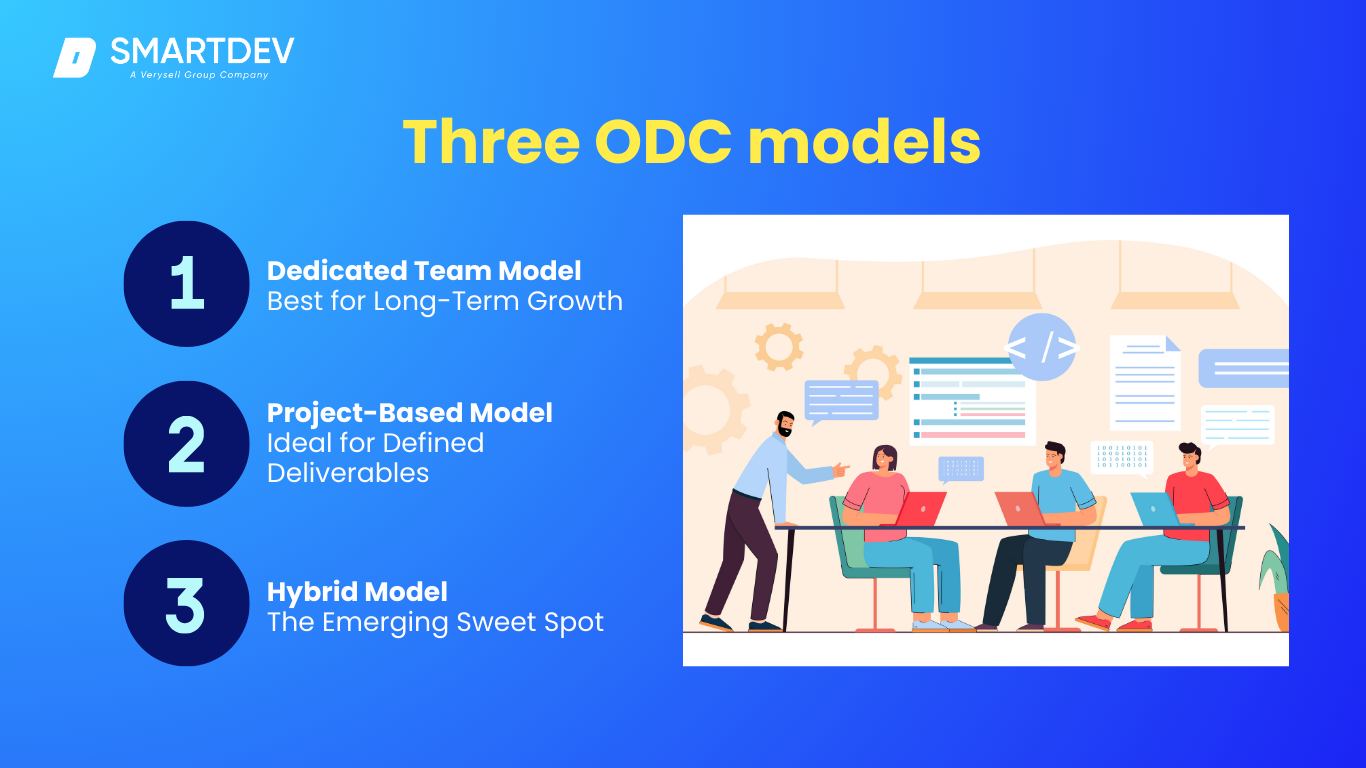
Dedicated development team models work best for long-term projects requiring consistent resource allocation. This approach treats offshore developers as extended team members rather than external contractors.
Dedicated Team Model: Best for Long-Term Growth
You hire specific developers who work exclusively on your projects. Benefits include:
- Consistent team composition and deep product knowledge
- Cultural integration over time
- Greater flexibility for evolving requirements
- Generally costs 15-25% higher than fixed-price contracts but offers superior adaptability
Project-Based Model: Ideal for Defined Deliverables
Fixed scope and timeline projects with predetermined outcomes. Works well for:
- MVPs with clear feature requirements
- System integrations with defined endpoints
- Feature additions to existing products
- Situations where requirements are thoroughly understood
Hybrid Model: The Emerging Sweet Spot
Hybrid models combining onshore and offshore resources provide adaptable solutions. Keep product management, architecture decisions, and client communication onshore while leveraging offshore teams for implementation, testing, and maintenance.
The choice depends on project complexity, timeline flexibility, and internal management capacity. Companies with strong technical leadership often prefer dedicated teams because they can provide better direction and integration.
Consider starting with a smaller engagement to test partnership compatibility before committing to larger dedicated teams. Gradual team scaling minimizes initial investment risk while providing proof-of-concept validation.
Step 3: Find Quality Development Teams (Where to Look and What to Evaluate)
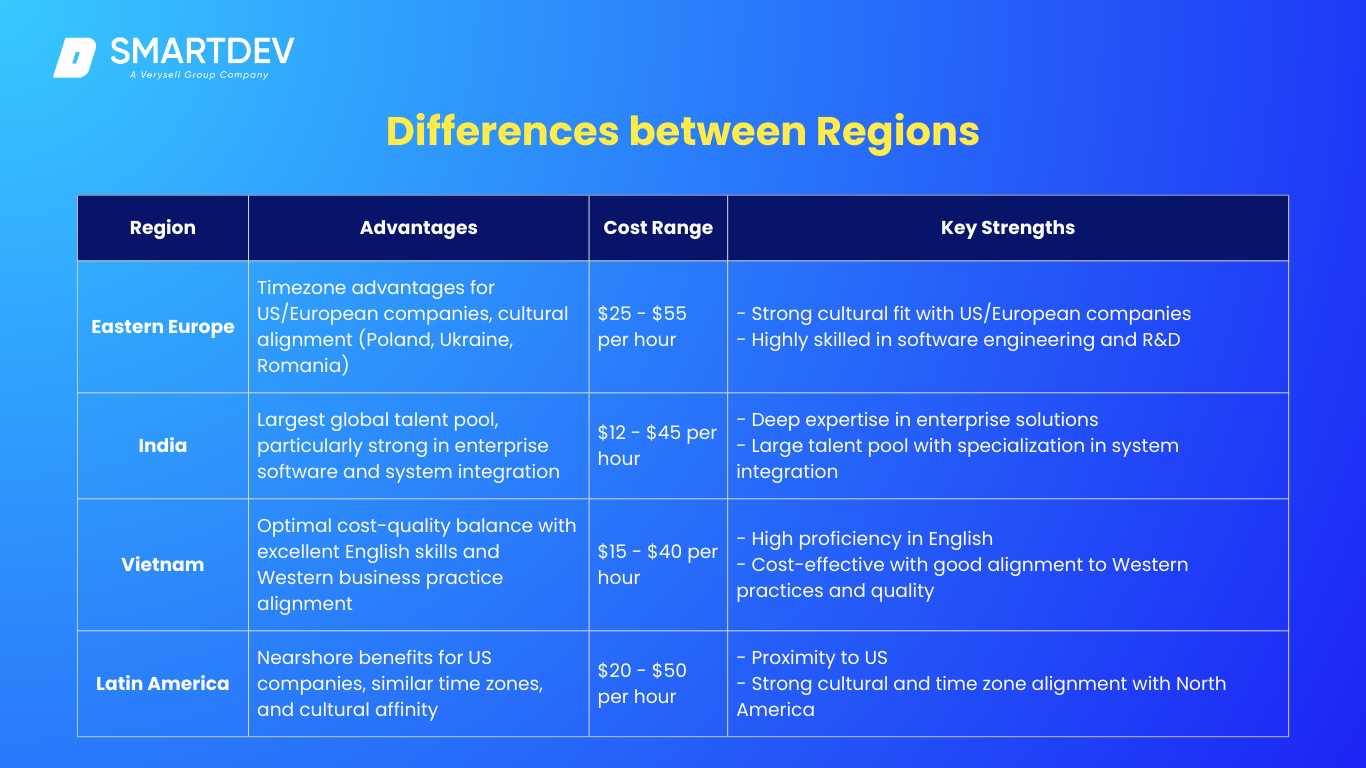
Top offshore destinations each offer distinct advantages based on your specific requirements. Vietnam provides 40-60% cost savings with strong English proficiency, making it ideal for US companies seeking Asian timezone benefits without communication barriers.
Regional Advantages by Geography
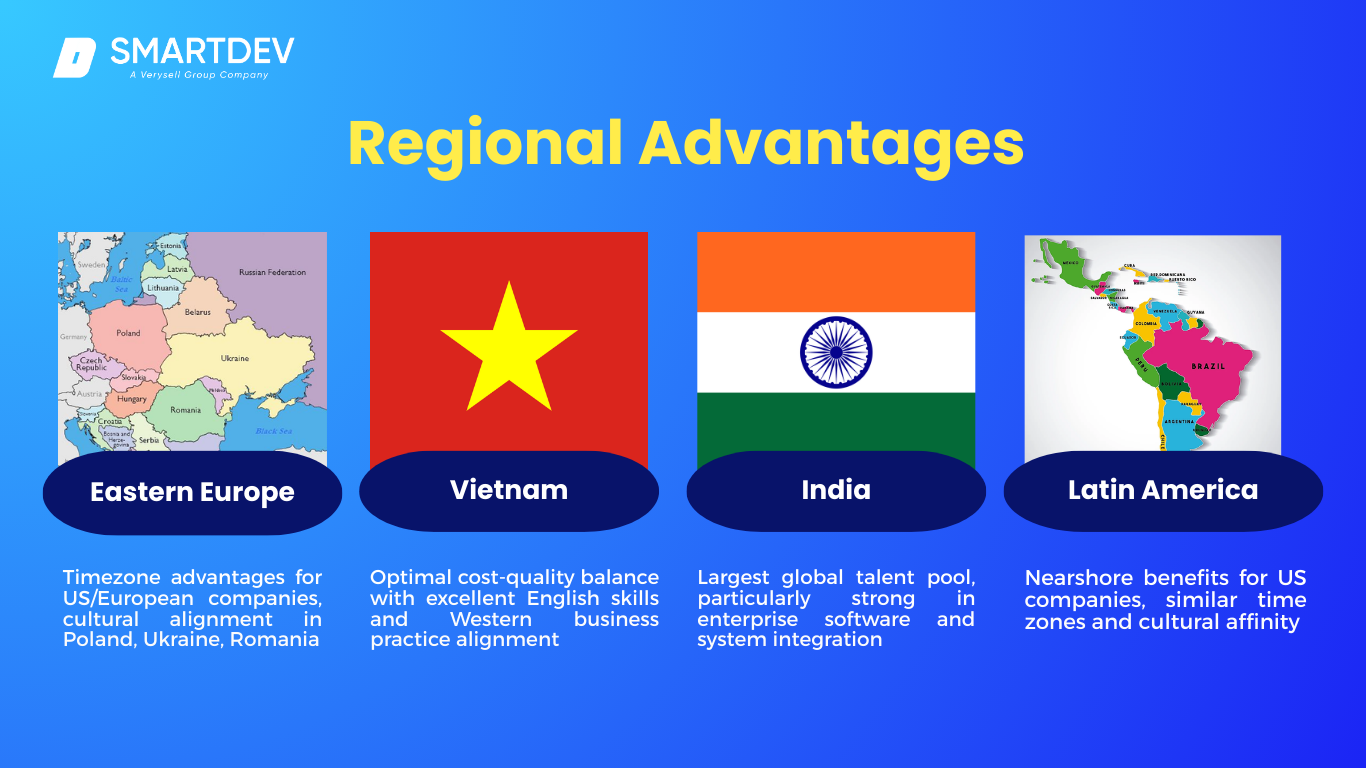
- Eastern Europe: Timezone advantages for US/European companies, cultural alignment in Poland, Ukraine, Romania
- India: Largest global talent pool, particularly strong in enterprise software and system integration
- Vietnam: Optimal cost-quality balance with excellent English skills and Western business practice alignment
- Latin America: Nearshore benefits for US companies, similar time zones and cultural affinity
Quality Evaluation Beyond Marketing Claims
Technical expertise verification through portfolio review should focus on projects similar to your requirements. Analyze:
- Code quality and architecture decisions in actual repositories
- Problem-solving approaches in complex scenarios
- Documentation standards and knowledge transfer processes
- Client retention rates and long-term partnership success
Industry certifications like ISO 27001 and SOC 2 Type II indicate serious commitment to quality and security standards. These certifications require ongoing audits and process documentation, providing confidence in operational maturity.
Red Flags That Signal Problems
Companies offering prices 50% below market rates either cut quality corners or operate unsustainably. Other warning signs include:
- Unrealistic pricing that compromises quality
- Poor communication responsiveness during initial discussions
- Generic proposals rather than tailored responses to your requirements
- Lack of transparent development processes or quality metrics
The best partners demonstrate proven track records with similar projects, maintain transparent communication throughout evaluation, and provide detailed proposals addressing your specific requirements.
Step 4: Conduct Technical Assessments That Actually Predict Success
 Step 4: Conduct Technical Assessments That Actually Predict Success
Tailored coding assessments specific to your technology stack provide the most accurate capability evaluation. Generic programming tests don’t reveal how developers handle your actual challenges, frameworks, and architectural constraints.
Design Real-World Scenario Tests
Create assessments that mirror actual work from your product:
- React applications: Component architecture, state management, API integration challenges
- Backend development: Database optimization, API design, system scalability problems
- Full-stack scenarios: End-to-end feature implementation with multiple integration points
Technical coding assessments and system design evaluations improve hiring accuracy and reduce turnover by 35% when properly structured. Balance complexity with time constraints – aim for 2-3 hour assessments demonstrating problem-solving approach rather than exhaustive knowledge.
Problem-Solving Evaluation Framework
Present scenarios requiring research, debugging, and creative solutions:
- Unfamiliar problem presentation – How do they approach research and learning?
- Debugging challenges – Can they systematically isolate and resolve issues?
- Performance optimization – Do they consider trade-offs and maintainability?
- Security implications – Are they aware of common vulnerabilities?
Architecture and System Design Testing
For senior roles, present scaling challenges and integration requirements:
- Traffic handling for 100x user growth
- Database design for complex relational data
- API architecture for mobile and web clients
- Performance optimization strategies
Look for consideration of trade-offs, security implications, and long-term maintainability factors.
Team Compatibility Assessment
Cultural fit and communication skills testing helps predict integration success:
- Collaboration style preferences and flexibility
- Communication clarity under pressure
- Response to constructive feedback
- Problem-solving explanation abilities
Structured interviews and scoring matrices incorporating technical and soft skills lead to 40% better project outcomes. Create consistent evaluation criteria that multiple team members can apply objectively.
Explore how SmartDev partners with engineering teams to build future-ready QA ecosystems—strengthening automation, enhancing accuracy and ensuring consistent quality across every digital touchpoint.
SmartDev equips organizations with end-to-end QA and testing automation capabilities, enabling them to deliver secure, scalable and AI-enhanced software that meets modern quality benchmarks.
Learn how companies accelerate QA transformation with phased AI adoption—combining strong governance, intelligent automation and performance-driven quality engineering strategies.
Start My Journey to Successful QA ProcessStep 5: Ask the Right Interview Questions
Behavioral questions reveal more about offshore team effectiveness than technical knowledge alone. Focus on communication patterns, problem-solving approaches, and cultural adaptability.

Communication Skills Assessment
Essential questions that reveal practical capabilities:
- “How do you handle communication across different time zones with stakeholders?”
- “Describe explaining complex technical concepts to non-technical team members”
- “Walk me through your approach to documenting decisions and knowledge transfer”
- “How do you ensure requirements understanding when working with remote teams?”
Process and Quality Methodology
Questions that provide insight into work standards:
- “What is your approach to code reviews and quality assurance?”
- “Describe your testing methodology and automation practices”
- “How do you handle technical debt management and code refactoring?”
- “What’s your process for staying updated with industry trends and best practices?”
Problem-Solving and Adaptability
Scenarios testing practical capabilities:
- “Walk me through debugging a performance issue in production”
- “How would you handle conflicting requirements from different stakeholders?”
- “Describe adapting to different work styles or client expectations”
- “What’s your approach when facing unfamiliar technologies or frameworks?”
Leadership Evaluation (Senior Roles)
Questions exploring mentoring and decision-making:
- “How do you approach technical debt management across multiple projects?”
- “Describe your experience leading cross-functional development projects”
- “What’s your methodology for code reviews and knowledge sharing?”
- “How do you balance technical excellence with delivery deadlines?”
Key questions focusing on communication methods, documentation practices, and quality assurance are essential for managing distributed teams effectively.
Step 6: Structure Contracts That Protect Both Parties
Service level agreements with measurable metrics create accountability and set clear expectations. Avoid vague contract language that leads to disputes about deliverables, timelines, and quality standards.

SLA Components That Actually Work
Include specific, measurable commitments:
- Response times: Critical issues within 4 hours during business hours, 24-hour response for non-critical
- Code review turnaround: 48 hours maximum for pull request reviews
- Bug fix timelines: Severity-based resolution commitments
- Availability windows: Core overlap hours for real-time collaboration
Using milestone-based payment models and SLAs increases project delivery success by 30%.
Intellectual Property and Confidentiality Protection
Ensure comprehensive coverage:
- All code, documentation, and business knowledge remains your property
- Contract clarity on IP ownership and confidentiality protects both parties
- Non-compete and non-disclosure agreements for sensitive projects
- Data handling and security compliance requirements
Payment Structure Optimization
Milestone-based compensation models balance risk and cash flow:
- 20% upfront for project initiation
- 30% after first milestone completion
- 30% at second milestone delivery
- 20% upon final acceptance
This structure maintains motivation while protecting your investment.
Pricing Model Selection Guide
Fixed-price contracts suit well-defined projects with stable requirements
Time and materials pricing works better for evolving requirements or discovery phases
Dedicated team models for long-term partnerships provide flexibility and deeper integration
Risk Mitigation Strategies
Performance-based contracts with built-in quality gates should include:
- Exit clauses for non-performance with reasonable notice periods
- Knowledge transfer protocols for transition scenarios
- Escalation procedures for dispute resolution
- Regular performance review and adjustment mechanisms
Step 7: Execute Comprehensive Onboarding (Your First Month Framework)
Week one foundation setting determines long-term partnership success through cultural alignment and context establishment. Structured onboarding reduces time-to-productivity by 35% and increases retention rates by 25%.
Week 1: Foundation and Context
Company culture introduction goes beyond mission statements:
- Decision-making processes and approval workflows
- Communication preferences and meeting culture
- Code quality standards and review processes
- Work style expectations and collaboration norms
Project context and business objectives help teams understand the “why”:
- Target users and competitive landscape analysis
- Success metrics and key performance indicators
- Product roadmap and strategic priorities
- Technical constraints and architectural decisions
Development environment setup should be completed before day one:
- Accounts, VPN access, and security credentials
- Development tools and IDE configurations
- Code repositories and branching strategies
- Testing and deployment environment access
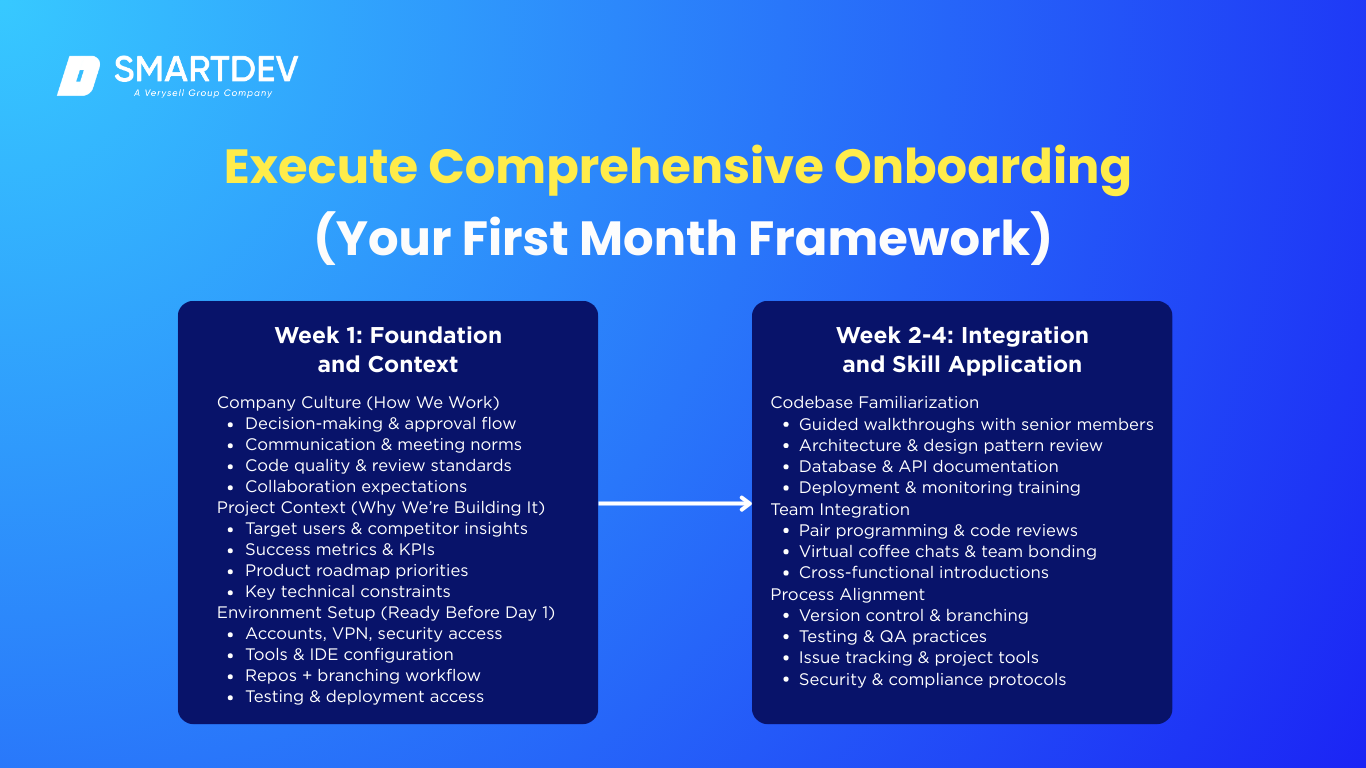
Week 2-4: Integration and Skill Application
Codebase familiarization and documentation review requires hands-on exploration:
- Guided walkthroughs with senior team members
- Architecture overview and design pattern explanation
- Database schema and API documentation review
- Deployment process and monitoring system training
Team integration through collaborative sessions:
- Pair programming sessions with existing team members
- Code review walkthroughs and feedback sessions
- Virtual coffee chats and informal relationship building
- Cross-functional project introductions
Process and methodology alignment workshops:
- Version control workflows and branching strategies
- Testing approaches and quality assurance processes
- Issue tracking and project management tools
- Security protocols and compliance requirements
SmartDev’s onboarding framework incorporates week-by-week milestones and collaborative workshops, resulting in first-month deliverables meeting 95% quality standards.
Step 8: Establish Communication Protocols That Actually Work
Daily standup meetings scheduled for optimal timezone overlap create consistent communication rhythm. 67% of organizations increased spending on collaboration tools since 2020 to facilitate remote teamwork effectively.

US-Vietnam partnerships typically schedule standups at 9 AM Vietnam time (9 PM EST previous day), allowing both teams comfortable participation. This requires flexibility from both sides but ensures direct communication.
Weekly progress reviews with stakeholder participation provide broader context:
- Demonstrations of completed work and upcoming priorities
- Discussion of potential blockers and resource needs
- Strategic direction alignment and feedback incorporation
- Risk identification and mitigation planning
Monthly strategic alignment sessions address longer-term objectives:
- Partnership effectiveness evaluation and process improvements
- Capacity planning and team scaling discussions
- Technology stack evolution and skill development needs
- Contract terms and performance metric reviews
Tool Stack Implementation
Tool stack implementation requires standardization across teams:
Project management platforms: Jira, Asana, or Monday.com for progress visibility
- Communication tools: Slack or Microsoft Teams for real-time collaboration
- Code collaboration systems: GitHub, GitLab, or Bitbucket with proper workflows
- Documentation platforms: Confluence, Notion, or GitBook for knowledge sharing
SmartDev implemented Slack, Jira, and GitHub across their offshore teams, achieving synchronized workflows and 3x faster pull request turnaround.
Cultural Bridge Building
Communication norms extend beyond tool selection:
- Regular team building activities and virtual social events
- Cross-cultural training for both onshore and offshore teams
- Clear escalation paths for communication issues
- Respect for cultural holidays and working patterns
Step 9: Monitor Performance and Ensure Quality
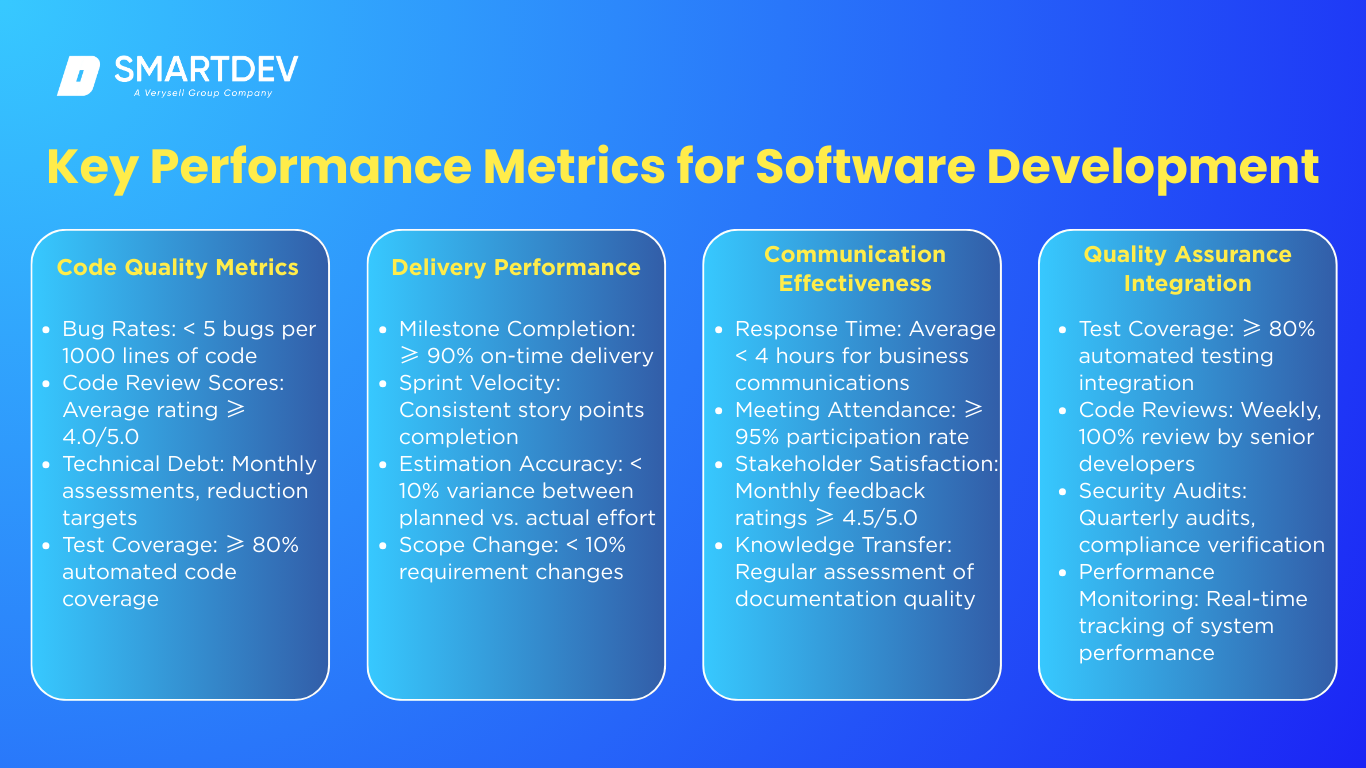
Key performance indicators must be measurable, relevant, and tracked consistently. Leading offshore teams measure KPIs such as bug rates, delivery timelines, and communication effectiveness to drive monthly performance improvements.
Code Quality Metrics That Matter
Track quantifiable quality indicators:
- Bug rates: Less than 5 bugs per 1000 lines of code
- Code review scores: Average rating above 4.0/5.0 based on complexity and maintainability
- Technical debt accumulation: Monthly assessment and reduction plans
- Test coverage: Automated testing integration with minimum 80% code coverage
Delivery Performance Tracking
Monitor project health through objective metrics:
- Milestone completion rates: Target above 90% on-time delivery
- Sprint velocity consistency: Track story points completed per sprint
- Estimation accuracy: Compare planned vs. actual effort
- Scope change frequency: Monitor requirements stability
Communication Effectiveness Measurement
Quantify collaboration quality:
- Response time averages: Target under 4 hours for business communications
- Meeting participation rates: 95% attendance at scheduled meetings
- Stakeholder satisfaction scores: Monthly surveys and feedback collection
- Knowledge transfer effectiveness: Regular assessment of documentation quality
Quality Assurance Integration
Automated testing integration with minimum 80% code coverage serves as a quality gate preventing defects from reaching production. This requires:
- Continuous integration pipelines with automated testing
- Regular code reviews by senior developers
- Security audits and compliance verification protocols
- Performance monitoring and optimization tracking
Continuous Improvement Framework
Monthly performance reviews should include:
- Actionable feedback based on measurable metrics
- Process optimization based on lessons learned
- Skills development programs for long-term team growth
- Recognition systems for outstanding performance
Step 10: Build Long-Term Success Strategies
Regular face-to-face meetings or virtual team gatherings improve offshore retention rates by 36% through relationship building and cultural integration. Investment in onboarding, documentation, and ongoing relationship management characterizes 65% of successful offshore partnerships.
Career Development and Retention
Create loyalty through growth opportunities:
- Clear advancement paths and skill development programs
- Professional development funding and training opportunities
- Recognition programs acknowledging meaningful contributions
- Performance bonuses and increased responsibility assignments
Partnership Evolution Strategy
Transform vendor relationships into strategic partnerships:
- Gradual team expansion based on proven performance minimizes risk while meeting capacity needs
- Cross-training initiatives reducing single points of failure
- Leadership development within offshore teams for sustainability
- Transitioning from vendor to strategic partner improves collaboration and business outcomes
Scaling and Growth Management
SmartDev’s gradual scaling approach with proven offshore teams enabled one client to expand development capacity seamlessly over two years while achieving $41M revenue growth.
Effective scaling requires:
- Starting with core team members and demonstrating success
- Methodical expansion rather than aggressive hiring
- Maintaining cultural integration as teams grow
- Regular assessment of management capacity and processes
Long-Term Contract Optimization
Multi-year agreements should include:
- Performance-based rate improvements
- Expanded scope opportunities based on success
- Stability provisions benefiting both parties
- Regular contract reviews and optimization
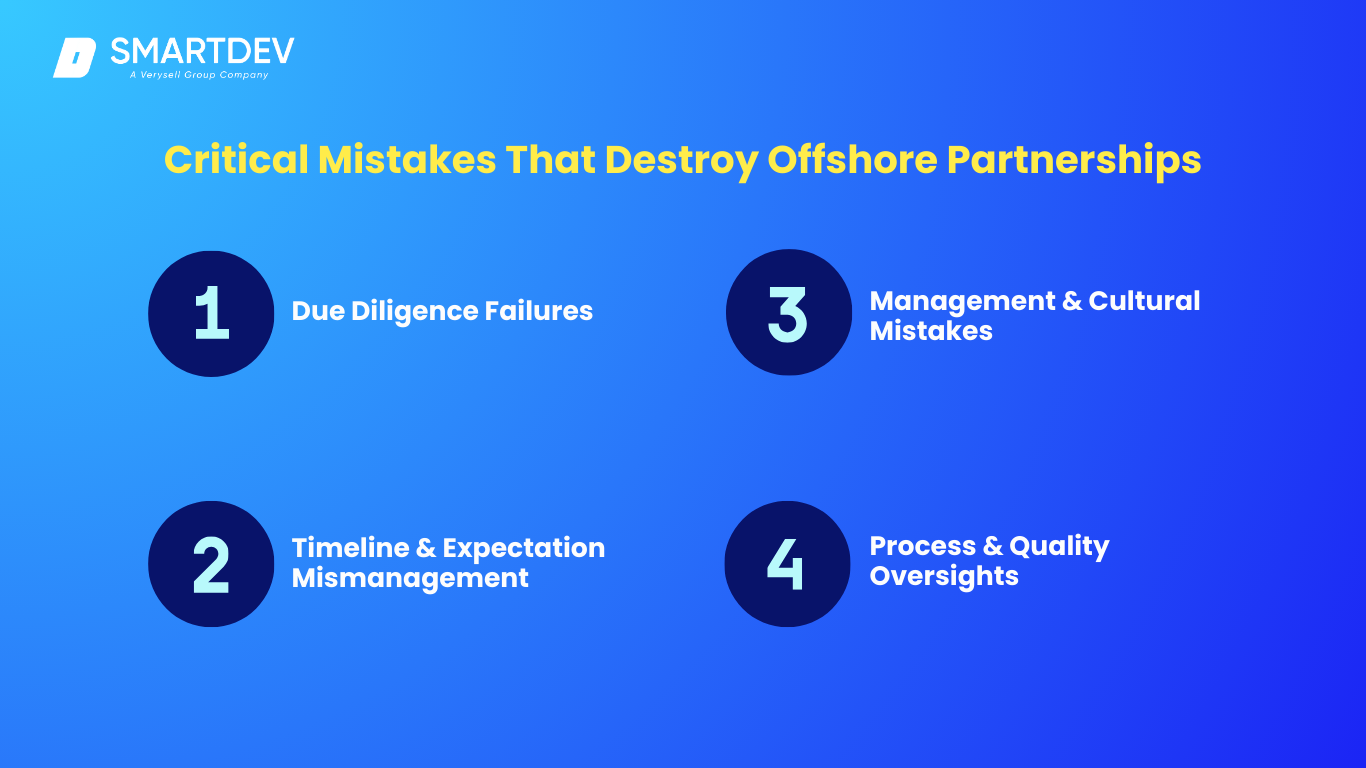
Critical Mistakes That Destroy Offshore Partnerships
Focusing solely on cost without considering quality factors leads to expensive failures. 54% of digital transformation failures result from poor vendor due diligence and unrealistic timelines, making thorough evaluation essential.
Due Diligence Failures
Insufficient due diligence on potential development partners creates avoidable risks:
- Skipping reference verification and code sample examination
- Failing to assess communication capabilities thoroughly
- Ignoring cultural compatibility and work style alignment
- Rigorous due diligence reduces failure risk by 50%
Timeline and Expectation Mismanagement
Unrealistic expectations destroy partnerships:
- Expecting immediate full productivity without onboarding investment
- Inadequate documentation and knowledge transfer processes
- Planning for 4-6 weeks of reduced productivity during integration
- Poor change management when project requirements evolve
Management and Cultural Mistakes
Micromanagement and neglecting cultural differences prove fatal to offshore productivity:
- Undermining team autonomy and destroying cost advantages
- Ignoring different work styles and communication preferences
- Treating offshore teams as disposable rather than invested partners
- Inadequate investment in team development and retention strategies
Process and Quality Oversights
Systematic failures that compound over time:
- Establishing clear change request processes for requirement modifications
- Maintaining transparent communication about scope modifications
- Planning for ongoing training and skill development programs
- Regular performance reviews and career advancement discussions
Ready to Build Your Offshore Development Team?
Building successful offshore partnerships requires systematic planning, rigorous evaluation, and ongoing investment in team integration. The companies achieving 40-60% cost savings while maintaining quality standards follow proven frameworks rather than improvising their approach.
SmartDev’s proven offshore development framework has helped over 300 companies build successful offshore partnerships. Our comprehensive talent solutions and 25-point offshore development center checklist provide everything you need for successful offshore partnerships.
Contact SmartDev today to discuss your offshore development requirements and discover how AI-powered development teams can accelerate your product launches while reducing costs.