
1. The Importance of Data Security & Compliance in IT Outsourcing
In today’s digital age, data security and regulatory compliance are more important than ever. As businesses increasingly turn to IT outsourcing for cost efficiency and scalability, the need to ensure that data security and compliance are maintained has become a critical concern.
When you outsource IT functions, you are entrusting sensitive data and business processes to a third party. Therefore, understanding how the vendor manages data protection and adheres to industry regulations is crucial. Failing to evaluate these aspects thoroughly can lead to significant risks, including data breaches, legal penalties, and loss of customer trust.
This is where a structured approach like the IT Outsourcing Due Diligence Checklist becomes invaluable. By assessing key aspects of data security and compliance, you ensure that your outsourcing partner aligns with your business’s security needs and regulatory requirements.
2. Key Aspects of Data Security & Compliance in IT Outsourcing
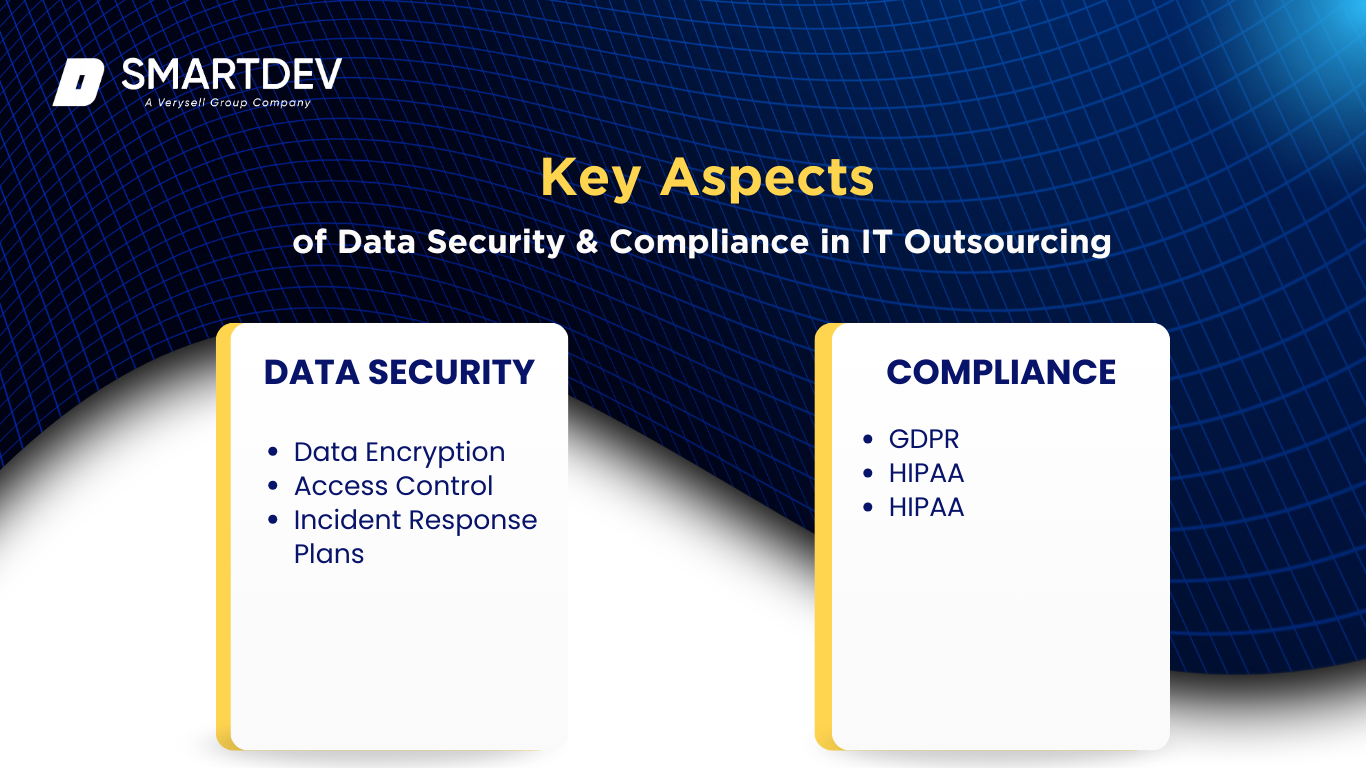
Evaluating data security and compliance in IT outsourcing involves several critical aspects. These two factors are deeply interconnected, and businesses need to carefully assess both to protect themselves from various risks. Here are the key aspects to focus on:
Data Security: Understanding the Risks and How to Mitigate Them
Data security is ensuring that sensitive information is protected from unauthorized access, loss, or theft. When outsourcing IT functions, businesses need to assess how the vendor manages and protects data throughout its lifecycle – from collection to storage, processing, and transmission.
Key considerations include:
- Data Encryption: How does the vendor encrypt sensitive data? Does the vendor use strong encryption methods for data at rest and in transit?
- Access Control: Who has access to your data, and how is that access controlled? Are there multi-factor authentication (MFA) and other security measures in place?
- Incident Response Plans: What happens if a data breach occurs? Does the vendor have a clear and comprehensive response plan?
Having a robust data security strategy in place helps mitigate the risk of cyberattacks, unauthorized access, and data leaks.
Compliance: Navigating the Regulatory Landscape in IT Outsourcing
Compliance involves ensuring that the vendor follows all applicable regulations, standards, and laws related to data protection. Depending on your industry and geographical location, there could be specific regulatory frameworks your vendor must comply with, such as:
- GDPR (General Data Protection Regulation) for businesses operating in or serving the European Union.
- HIPAA (Health Insurance Portability and Accountability Act) for healthcare-related data.
- PCI DSS (Payment Card Industry Data Security Standard) for businesses handling payment card information.
By ensuring that your IT outsourcing vendor complies with these regulations, you safeguard your business from potential fines and legal risks.
Why Both Data Security and Compliance Are Critical to Successful IT Outsourcing
Both data security and compliance are fundamental to protecting your business and maintaining trust with your clients. Data security protects the integrity and confidentiality of your data, while compliance ensures that your vendor meets legal and industry-specific requirements. Together, these elements create a robust framework that mitigates risk and ensures that sensitive data is handled appropriately throughout the outsourcing relationship.
3. How the IT Outsourcing Due Diligence Checklist Helps with Data Security & Compliance
The IT Outsourcing Due Diligence Checklist is an effective tool for ensuring that your IT outsourcing vendor adheres to best practices for both data security and compliance. The checklist provides a structured and comprehensive framework for evaluating vendors, helping you identify potential gaps or risks early in the selection process.
- Streamlining the Evaluation Process: The checklist helps you focus on the most critical factors, such as how the vendor handles data encryption, access control, and incident response. It allows you to compare vendors more easily and ensure that key security measures are in place.
- Identifying Security Gaps: By using the checklist, you can quickly identify potential vulnerabilities or areas where the vendor may not fully meet your data security and compliance requirements. This allows you to address issues proactively rather than discovering them after the contract has been signed.
- Ensuring Consistency: The checklist ensures that every vendor is evaluated according to the same set of standards, making it easier to compare vendors and ensure they meet your security and regulatory needs. This reduces subjectivity and helps you make data-driven decisions.
While the checklist doesn’t eliminate the need for thorough due diligence, it significantly improves the consistency and efficiency of the process, especially when evaluating large numbers of vendors.
4. Key Factors in Data Security & Compliance Vendor Evaluation
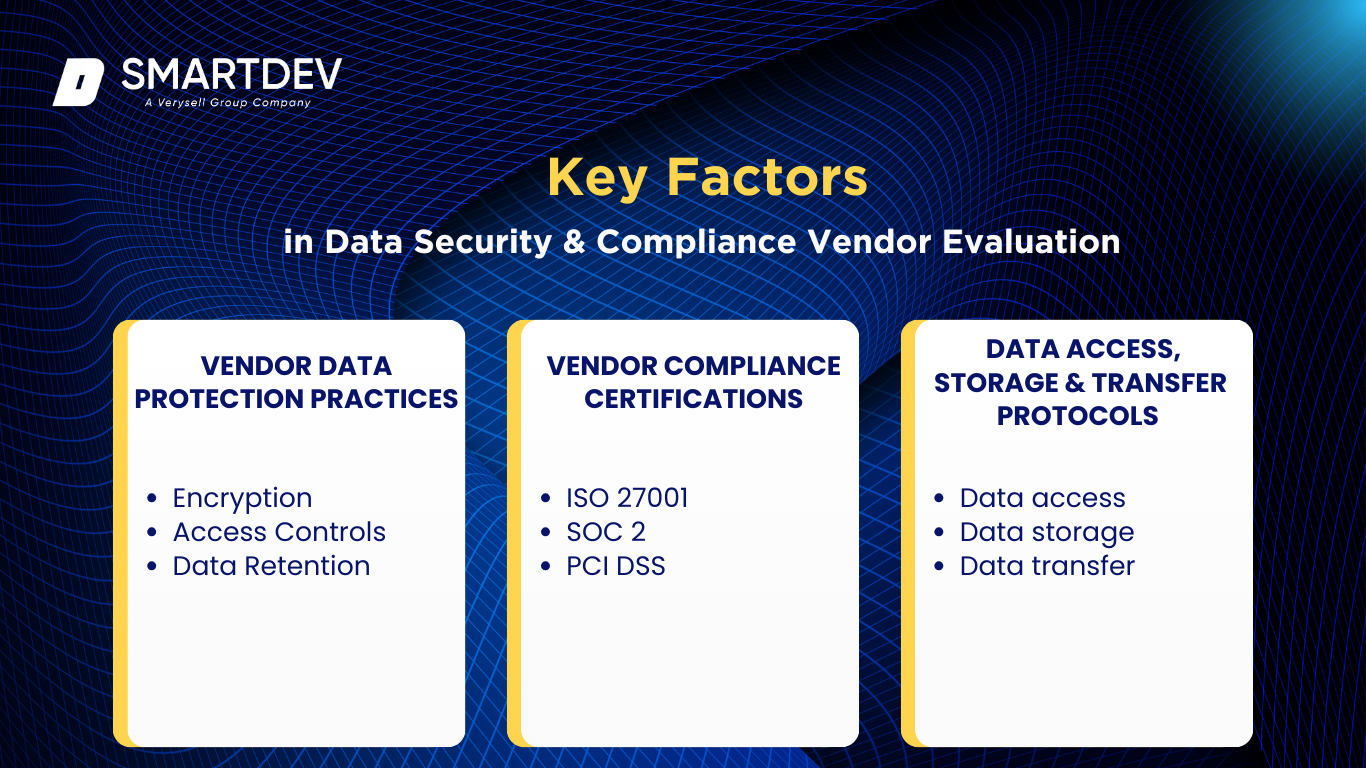
When evaluating a potential vendor’s ability to meet your data security and compliance needs, there are several key factors to focus on:
Assessing Vendor Data Protection Practices: What to Look For
Look for vendors that have strong, industry-standard data protection practices in place. This includes:
- Encryption: Ensure the vendor encrypts sensitive data both during transmission and while it is stored.
- Access Controls: Review the vendor’s access control policies to make sure only authorized personnel can access your data.
- Data Retention: How long will your data be stored? Does the vendor have clear data retention and disposal policies?
Evaluating Vendor Compliance Certifications: ISO 27001, SOC 2, PCI DSS, and More
Certifications are important indicators of a vendor’s commitment to security and regulatory compliance. Here are some critical certifications to look for:
- ISO 27001: Ensures the vendor follows best practices for information security management.
- SOC 2: Confirms that the vendor adheres to strict data privacy and security protocols.
- PCI DSS: For vendors handling payment data, ensure they are PCI DSS compliant to reduce the risk of fraud.
These certifications demonstrate that the vendor has been independently audited and meets industry standards.
Understanding Data Access, Storage, and Transfer Protocols
How does the vendor manage data? What protocols do they have in place for:
- Data access: Who can access your data, and how is access logged and monitored?
- Data storage: Where is your data stored? Is it in a secure data center with adequate protections?
- Data transfer: How is data securely transferred between systems and between you and the vendor?
By understanding these protocols, you ensure that the vendor can maintain the security and confidentiality of your data.
5. Mitigating Risks in IT Outsourcing Through Strong Data Security & Compliance Practices
When selecting an IT outsourcing vendor, ensuring data security and compliance helps mitigate several key risks, including:
- Data Breaches: By thoroughly assessing the vendor’s data protection measures, you reduce the risk of sensitive data being compromised during the outsourcing engagement.
- Regulatory Penalties: Non-compliance with regulations can result in severe fines and damage to your company’s reputation. Ensuring that the vendor complies with relevant data protection laws and industry standards reduces this risk significantly.
- Operational Disruptions: Poorly implemented data security protocols can lead to delays and interruptions in service delivery. By evaluating the vendor’s operational capability to maintain security and compliance, you ensure smooth, continuous service.
6. Conclusion
In conclusion, data security and compliance are non-negotiable factors when evaluating IT outsourcing vendors. A failure to properly assess these elements can expose your business to significant risks, including data breaches, legal penalties, and damaged client trust.
The IT Outsourcing Due Diligence Checklist is a powerful tool that helps businesses ensure vendors meet the required data security and compliance standards. By systematically evaluating vendors, businesses can mitigate risks, safeguard sensitive data, and maintain regulatory compliance.
At SmartDev, we understand the importance of choosing a secure and compliant IT outsourcing partner. That’s why we’ve developed our own IT Outsourcing Due Diligence Checklist to help businesses like yours streamline the evaluation process and select the right vendor. We encourage you to download our checklist and start your journey toward secure, compliant, and successful IT outsourcing.