
Introduction
In 2025, worker access to AI rose by 50% and expectations for scale are high: the number of enterprises with ≥ 40% projects in production is set to double in six months (Deloitte, 2026). The trend of AI workflow automation in business has been booming because it shows how business operations are optimized due to the help of AI.
Contrast with the growth of AI adoption, the numbers in the “State of AI in Business 2025” are stark: 40% of organizations said they’ve deployed AI tools, but only 5% have managed to integrate them into workflows at scale. (Forbes, 2025).
Consequently, many enterprises are falling into the “AI bubble” trap – rushing to invest in AI implementation based on hype and perceived potential, without fully evaluating operational realities, scalability, or measurable business value.
Reasons why most enterprise AI projects fail in first year
Both Gartner and McKinsey point to a set of repeated issues behind the high failure rate of enterprise AI projects.
1. Poor data quality and low data readiness
Data is the foundation of every AI system. Whether using machine learning, deep learning, generative AI, or AI agents, the system relies on data to learn, reason, predict, and produce useful outputs. However, many enterprises start AI projects before their data is ready. Their data may be incomplete, duplicated, outdated, biased, or scattered across multiple systems. This weak foundation makes the results unreliable from the start.
The issue is not just the amount of data, but also its quality and relevance. AI models learn from examples, so if the data doesn’t reflect real business conditions, it will produce inaccurate results. Enterprises need a clear data strategy before implementation. They must identify the right data sources, ensure relevance, clean datasets, and remove errors or bias through preprocessing. By prioritizing data quality, enterprises enhance AI performance and build trust in the outputs.
Data readiness requires strong governance throughout the AI lifecycle. As business conditions change, data must be monitored, updated, and improved. Without ownership, quality checks, and governance, AI performance may decline over time. Poor data readiness impacts not only the AI launch but its accuracy, trust, and scalability in real operations.
2. Unclear business value and weak objectives
Many enterprise AI projects fail because they lack a clear business purpose. Instead of solving a specific problem, organizations often start with a broad goal to “use AI” across the business. This leads to scattered initiatives driven by novelty, competitive pressure, or internal hype, rather than measurable value.
Without prioritization, resources spread too thin across many use cases. Teams may experiment with chatbots, analytics, automation, or generative AI features, but without a clear focus. As a result, projects may look promising but struggle to show impact in real operations.
Weak objectives also make it hard to measure success. If a project lacks clear outcomes—such as cost reduction, efficiency gains, or revenue growth—stakeholders can’t judge its effectiveness. This often leads to poor executive support, limited adoption, and project abandonment.
3. Difficulty scaling beyond pilots
Many enterprise AI projects fail because the proof of concept is built in a controlled environment, not real operations. A small team may create a prototype using sample data, but connecting it to real-time data, business workflows, legacy systems, and governance often slows progress.
This happens because pilots focus on technical feasibility rather than operational scalability. The model works in isolation but fails when exposed to inconsistent data, complex infrastructure, security, compliance, and user behavior. Without a solid data foundation and scalable infrastructure, AI remains an experiment.
Another reason projects get stuck is weak alignment between technical teams, business users, and leadership. If business teams don’t trust the AI, adoption falters. If leaders see AI as a short-term investment, the project may lack the support needed to move beyond the pilot phase.
4. Rising costs and poor cost control
AI projects, especially generative AI, can become expensive faster than enterprises expect. Many teams only calculate initial costs like model selection and prototyping. However, real costs appear later through infrastructure, cloud usage, API calls, data storage, security, integration, and ongoing maintenance.
The problem grows as usage increases. A pilot may seem affordable with a small team, but costs rise when deployed across departments, workflows, or customer-facing channels. Every document processed or system integration adds cost. Without usage limits and monitoring, AI becomes difficult to manage at scale.
Poor cost management also weakens executive confidence. If leaders can’t see clear ROI from AI spending, the project may be viewed as an expensive experiment. Many AI initiatives lose support after the first year due to growing costs and insufficient business value.
5. Shortage of AI skills and internal expertise
Many AI projects fail because organizations underestimate the skills required to implement AI in real operations. AI isn’t just about building models; it needs data engineers, ML engineers, infrastructure experts, and domain specialists to make it work effectively. Without this mix of expertise, AI projects often remain technically sound but operationally weak.
Another challenge is that AI teams often work without enough input from business teams. When developers build solutions in isolation, the AI may not match real workflows or user expectations. This can result in AI models solving the wrong problems or generating untrusted outputs.
Skill gaps also affect adoption. Employees may resist AI if they don’t understand it or fear job displacement. Without early involvement, training, and clear communication, AI projects can fail to gain traction and deliver long-term value.
6. Organizational and leadership issues
7. Weak governance and risk management
Weak governance is a key reason AI projects struggle to scale beyond pilots. Early on, teams often focus on technical performance but overlook critical issues like data privacy, cybersecurity, regulatory compliance, and model reliability. This becomes a serious problem when AI needs to operate in real business environments, especially in industries with sensitive data and compliance requirements.
AI introduces risks that traditional software doesn’t. Models may generate inaccurate outputs, expose confidential information, or make biased decisions. Without clear rules for data access, human review, and accountability, stakeholders may hesitate to trust the solution for wider use.
Without strong governance, AI becomes difficult to scale safely. Legal and compliance teams may block deployment, while users question the reliability. Even promising AI initiatives may remain stuck in pilots if risk management isn’t prioritized.

The hidden enterprise AI trap: Automating tasks instead of End-to-end workflows
While these challenges may appear separate, many of them point to the same underlying issue: enterprises often implement AI at the task level, not the workflow level. Poor integration, unclear ROI, pilot paralysis, weak ownership, and limited scalability are frequently symptoms of a fragmented automation strategy. This is where the hidden enterprise AI trap begins.
88% of organizations now use AI in at least one business function, yet only 39% report measurable enterprise-level EBIT impact (McKinsey, 2025). This growing gap between AI adoption and real business value reveals a hidden problem in many enterprise AI strategies: companies are automating individual tasks rather than transforming entire workflows.
In practice, many organizations deploy AI tools to summarize documents, extract data, draft emails, or generate reports, but the surrounding operational process remains largely manual. Employees still need to validate information, update ERP or CRM systems, request approvals, and coordinate across teams. As a result, AI improves isolated activities without eliminating the actual bottlenecks, slowing down the business.
Instead of creating seamless operations, enterprises often end up with fragmented automation ecosystems that are difficult to scale and deliver limited ROI. The real value of enterprise AI comes not from automating a single task, but from orchestrating end-to-end workflows across people, systems, and business processes.
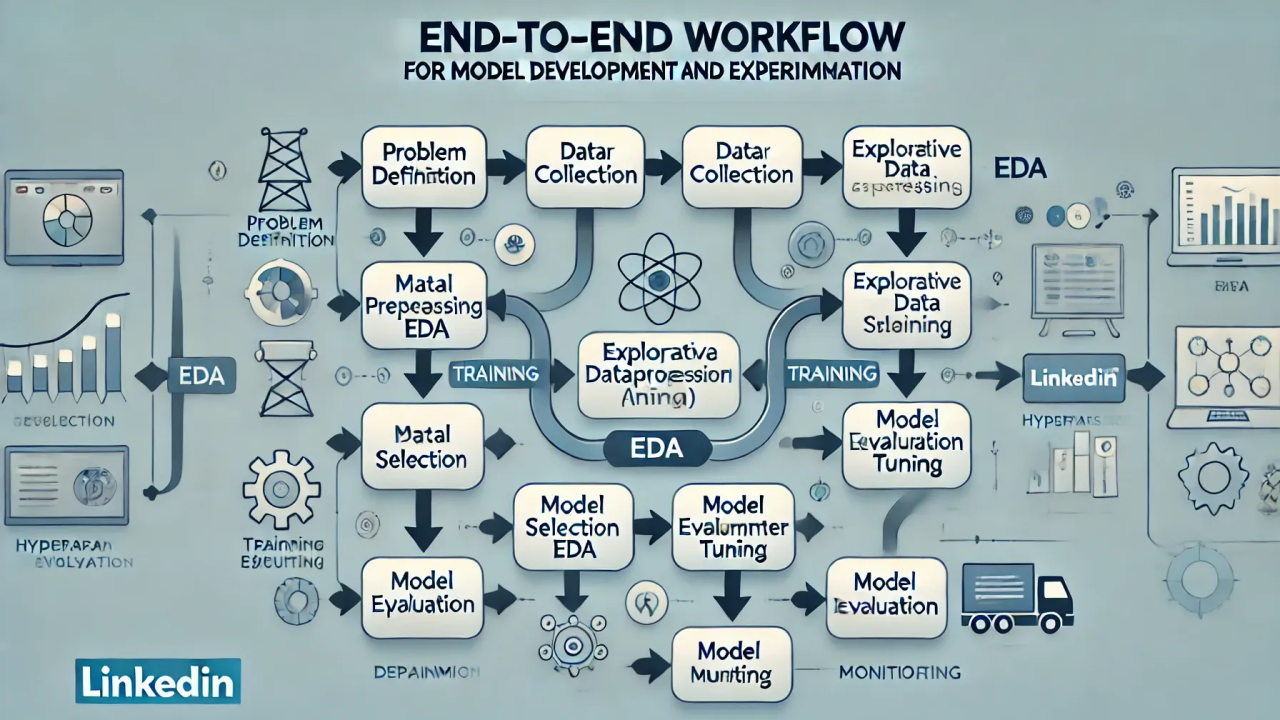
Case study and what they do differently to achieve success in workflow automation
A strong example is SmartDev’s AI-powered invoice processing case study for a Singapore-based financial advisory firm. The client wanted to improve invoice verification speed and accuracy in insurance operations, where teams previously relied heavily on manual reviews. Instead of using AI only for basic invoice extraction, SmartDev implemented an LLM-assisted invoice extraction and validation layer that could read PDFs and scans, extract key data, apply rule-based checks, standardize validation decisions, and route exceptions for human review.
What made this implementation successful was its workflow-first approach. The solution followed intelligent document processing and accounts payable automation patterns, turning invoice verification into a structured, repeatable process rather than a manual “read-and-check” task. By combining AI extraction, validation rules, exception handling, and structured outputs for accounting systems, the client reduced manual dependency, improved consistency, and created a more scalable foundation for invoice operations.
The key difference is the mindset behind the implementation – a “workflow-first approach”. They do not say: “Let’s use AI for invoice processing.” They say: “Let’s reduce manual invoice verification time by automating extraction, validation, exception routing, and accounting system updates”. That shows how these steps link with each other as a workflow. AI succeeds when it is embedded into workflows, not left as isolated tools.
At SmartDev, this is where NORA fits in. NORA is SmartDev’s AI adoption accelerator, designed to help enterprises move from fragmented AI experiments to scalable operational workflows. Instead of automating isolated tasks, NORA connects AI capabilities such as document extraction, data validation, exception routing, human review, and system integration into repeatable business processes.
In practice, this means a workflow like invoice processing does not stop at data extraction. The extracted data can be checked against business rules, exceptions can be routed to the right people, validated outputs can be prepared for accounting systems, and the workflow can be monitored and improved over time. NORA provides a reusable foundation for these connected steps, while SmartDev customizes each implementation around the client’s data sources, approval rules, compliance needs, and existing systems. This helps reduce implementation risk and improve the chances that AI moves beyond pilots into real business use.
How to avoid enterprise AI failure?
1. Start with workflow pain, not AI hype
Enterprises should begin by identifying the workflows that are slow, repetitive, costly, or error-prone. These are the areas where AI has the highest chance of creating real business value because the problem is already visible and measurable. When companies start from pain points, AI becomes a tool for solving operational friction, not just a trendy technology experiment.
The better question is not, “Where can we use AI?” but “Which workflow needs to become faster, more accurate, or easier to scale?” This shift helps teams focus on outcomes such as reducing processing time, lowering manual workload, improving accuracy, or accelerating decision-making. It also makes ROI easier to measure because the project is tied to a clear operational problem from the beginning.
2. Map the full workflow before automating
AI should not be added to one isolated task without understanding the process around it. Before implementation, enterprises need to map where data comes from, which systems are involved, who approves each step, where human decisions happen, and where delays usually appear. Without this visibility, companies may automate one small activity while leaving the real bottlenecks untouched.
This is how fragmented automation happens. A company may automate document extraction, for example, but still require employees to validate the data, update internal systems, request approvals, and track exceptions manually. Mapping the full workflow helps ensure AI supports the entire process, not just one disconnected task.
3. Design for integration and human review
Successful AI implementation depends on how well the solution connects with existing enterprise systems. AI should not sit outside the business as a separate tool. It needs to work with ERP, CRM, accounting platforms, document repositories, workflow systems, or other core platforms so that information can move smoothly across the organization.
Human review is equally important. In high-risk or exception-heavy workflows, AI should support decision-making rather than replace human judgment entirely. By keeping humans in the loop for unclear, sensitive, or high-impact cases, enterprises can improve trust, maintain governance, and make adoption easier for business users.
4. Use reusable AI foundations to scale faster
Enterprises do not need to build every AI solution from scratch. Reusable AI foundations can reduce implementation risk by providing proven capabilities for common workflow needs, such as document extraction, validation, exception routing, human review, and system integration. This helps teams move faster while still adapting the solution to their specific business process.
At SmartDev, NORA supports this workflow-first approach. As an AI adoption accelerator, NORA helps connect reusable AI capabilities into repeatable business workflows instead of leaving them as isolated tools. This allows enterprises to scale AI more effectively, reduce pilot risk, and build automation around how work actually moves across people, systems, and decisions.

Conclusion
The failure of AI projects happens because they usually fall into the hidden trap called “fragmented implementation”. To avoid this, enterprises need a workflow-first mindset. Instead of asking, “How can we use AI?”, leaders should ask, “Which workflow can we redesign to become faster, more accurate, and easier to scale?” Successful AI implementation comes from connecting AI capabilities with business rules, human review, system integration, and continuous improvement.
At SmartDev, this is the role of NORA, our AI adoption accelerator. NORA helps enterprises move beyond fragmented AI experiments by connecting reusable AI capabilities into scalable, end-to-end workflows. Rather than treating AI as another standalone tool, NORA supports a more practical path to enterprise AI adoption: one where AI is embedded into how work actually gets done.