
TL;DR
- Client retention is the ability to keep customers over time and build long-term relationships.
- It is more cost-effective than acquiring new customers and increases revenue through repeat business.
- Key strategies include personalization, strong customer support, and data-driven insights.
- High retention leads to better loyalty, stronger brand reputation, and sustainable growth.
What is Client Retention?
Client retention is the process of engaging and satisfying customers so they continue doing business with a company over a defined period. It is often measured using metrics such as retention rate, churn rate, and customer lifetime value.
A high retention rate indicates that customers find value in a company’s products or services, while a low rate suggests dissatisfaction or better alternatives in the market.
Retention goes beyond just preventing customer loss. It involves building meaningful relationships, understanding customer needs, and consistently delivering value throughout the customer journey.
Why Client Retention Matters for Businesses
Focusing on client retention provides several strategic advantages that directly impact business performance.
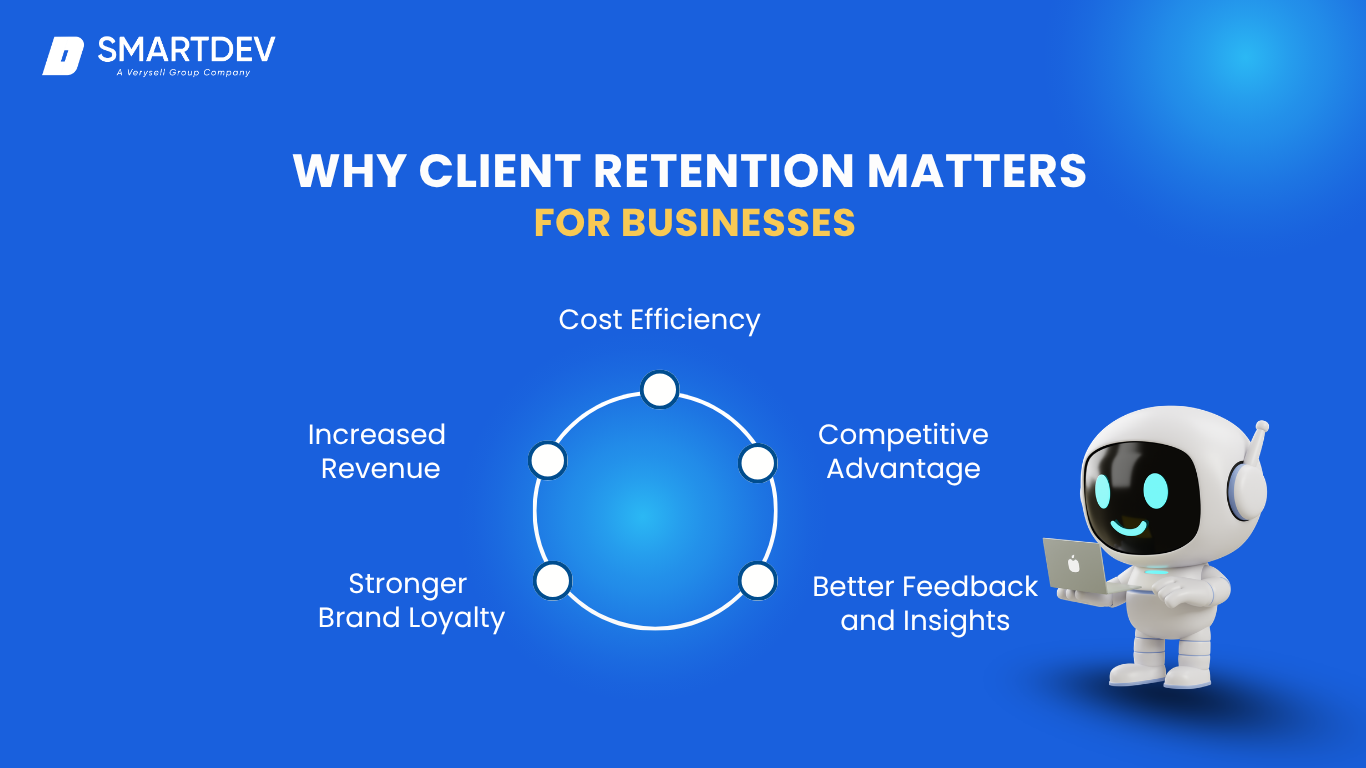
Cost Efficiency
Retaining existing customers is generally less expensive than acquiring new ones. Marketing and sales costs are significantly reduced when businesses focus on maintaining relationships.
Increased Revenue
Loyal customers are more likely to make repeat purchases and spend more over time. This increases overall customer lifetime value and revenue predictability.
Stronger Brand Loyalty
Satisfied customers are more likely to recommend a brand to others. This creates a network effect that supports organic growth.
Competitive Advantage
In markets with similar products or services, strong client relationships can differentiate a business from competitors.
Better Feedback and Insights
Long-term clients provide valuable insights that help businesses improve products, services, and customer experience.
How to Improve Client Retention
Improving client retention requires a combination of strategy, technology, and customer-centric practices.
Deliver Consistent Value
Ensure that products or services continuously meet or exceed customer expectations. Regular updates, improvements, and innovation help maintain engagement.
Personalize Customer Experience
Tailor communication and offerings based on customer preferences, behavior, and history. Personalization strengthens relationships and increases satisfaction.
Provide Excellent Customer Support
Responsive and helpful customer service plays a key role in retaining clients. Quick issue resolution builds trust and confidence.
Use Data and Analytics
Track customer behavior and engagement metrics to identify risks of churn. Data-driven insights enable proactive retention strategies.
Build Strong Relationships
Engage with customers through regular communication, feedback loops, and loyalty programs. Strong relationships increase emotional connection to the brand.

When Should Businesses Focus on Client Retention?
Client retention should be a continuous priority, but it becomes especially important in certain situations:
- When customer acquisition costs are high
- When facing increased competition
- When aiming to improve profitability
- During business scaling or expansion
- When experiencing declining customer engagement or rising churn rates
Businesses that integrate retention strategies early can build a more stable and predictable growth model.
Related Terms in Client Retention
Customer Success Management
Focuses on ensuring customers achieve their desired outcomes while using a product or service.
Net Promoter Score (NPS)
A metric used to measure customer loyalty and likelihood to recommend a brand.
Customer Lifetime Value (CLV)
Represents the total revenue a business can expect from a customer over the entire relationship.