
Kurz zusammengefasst
- Capacity Planning is the process of forecasting future IT resource needs and ensuring your infrastructure can meet demand before problems arise.
- Without it, businesses face system slowdowns, outages, and emergency spending that could have been avoided with basic forward planning.
- It applies equally to servers and cloud resources as it does to human resources such as development teams and support staff.
Capacity Planning is a discipline that separates reactive IT organizations from proactive ones. Whether you are managing cloud infrastructure, data centers, or software development teams, understanding future demand and preparing for it ahead of time prevents costly disruptions and wasted spending. This article explains how it works and when to use it.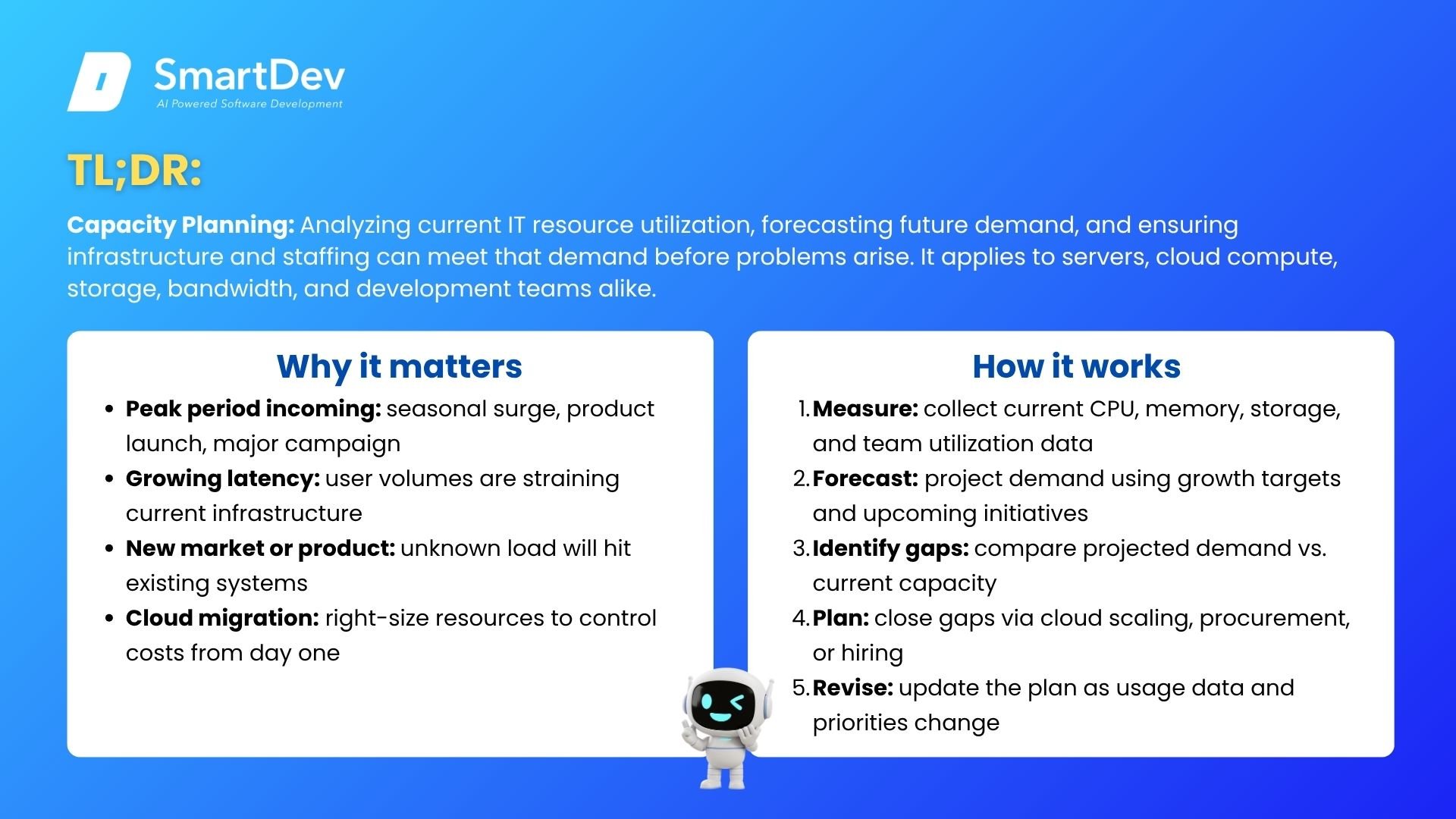
What is Capacity Planning?
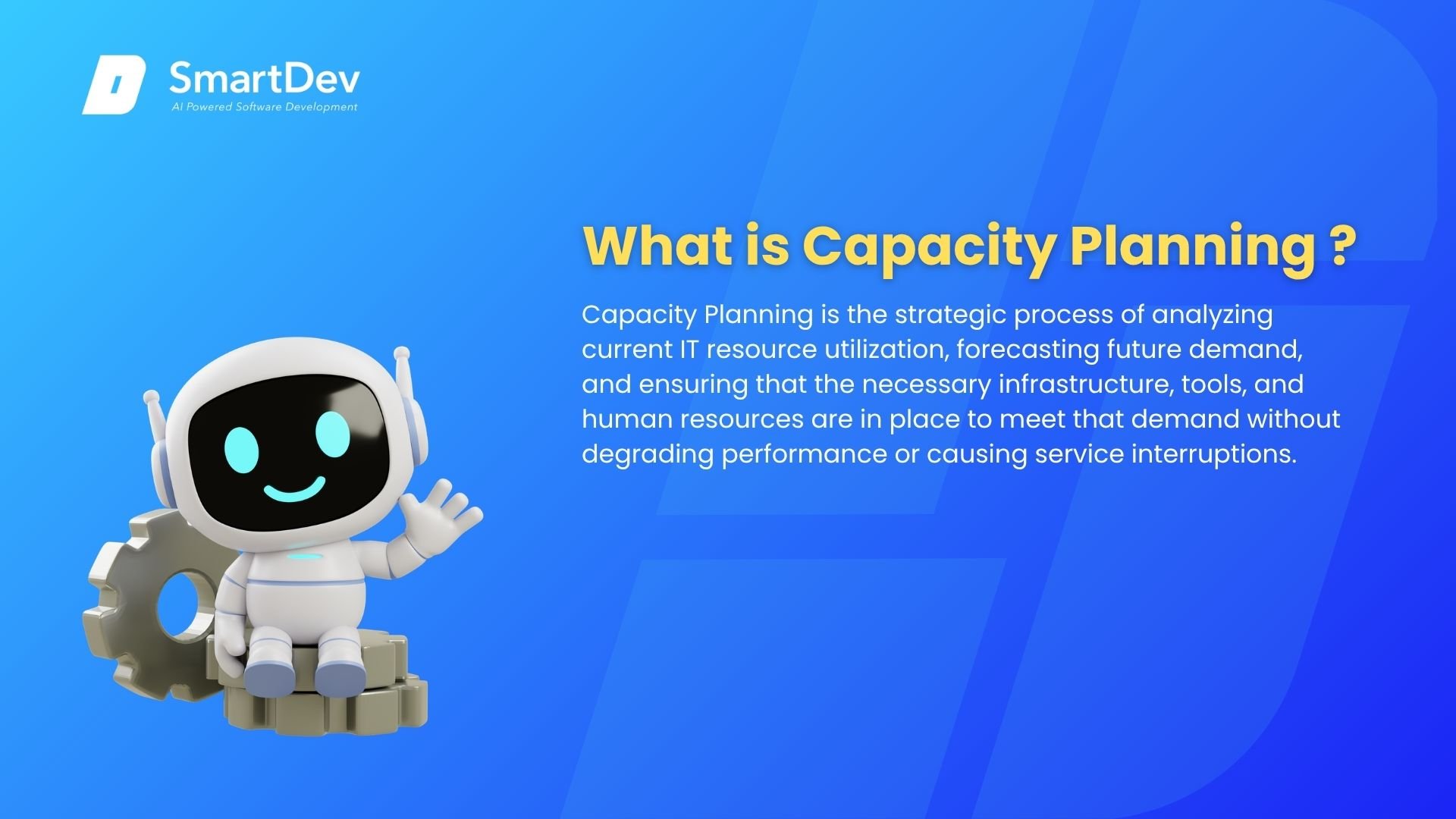
Capacity Planning is the strategic process of analyzing current IT resource utilization, forecasting future demand, and ensuring that the necessary infrastructure, tools, and human resources are in place to meet that demand without degrading performance or causing service interruptions. It applies to servers, storage, network bandwidth, cloud compute, and staffing levels across technical teams.
There are three main types of capacity planning in IT:
- Workload-based planning: Forecasts resource needs based on historical usage patterns and anticipated changes in business activity or user volume
- Trend-based planning: Extrapolates current growth trajectories to estimate when existing capacity will be exhausted and new resources will be required
- Scenario-based planning: Models specific events, such as product launches, seasonal traffic spikes, or business acquisitions, to test whether current capacity can handle them
Warum ist das für Unternehmen wichtig?
Underprovisioned systems crash under load. Overprovisioned systems waste money. Capacity Planning solves both problems by matching resources to real demand, ensuring you are neither caught short during peak periods nor paying for idle infrastructure during slow ones.
- Reduce unplanned outages by identifying capacity constraints before they become service failures that affect customers and revenue
- Improve cost efficiency by right-sizing infrastructure and avoiding both costly over-provisioning and emergency scaling charges
- Accelerate business growth by ensuring IT infrastructure can support new products, markets, and customer volumes without becoming a bottleneck
- Protect service quality by maintaining consistent application performance even as demand fluctuates throughout the day, week, or business cycle
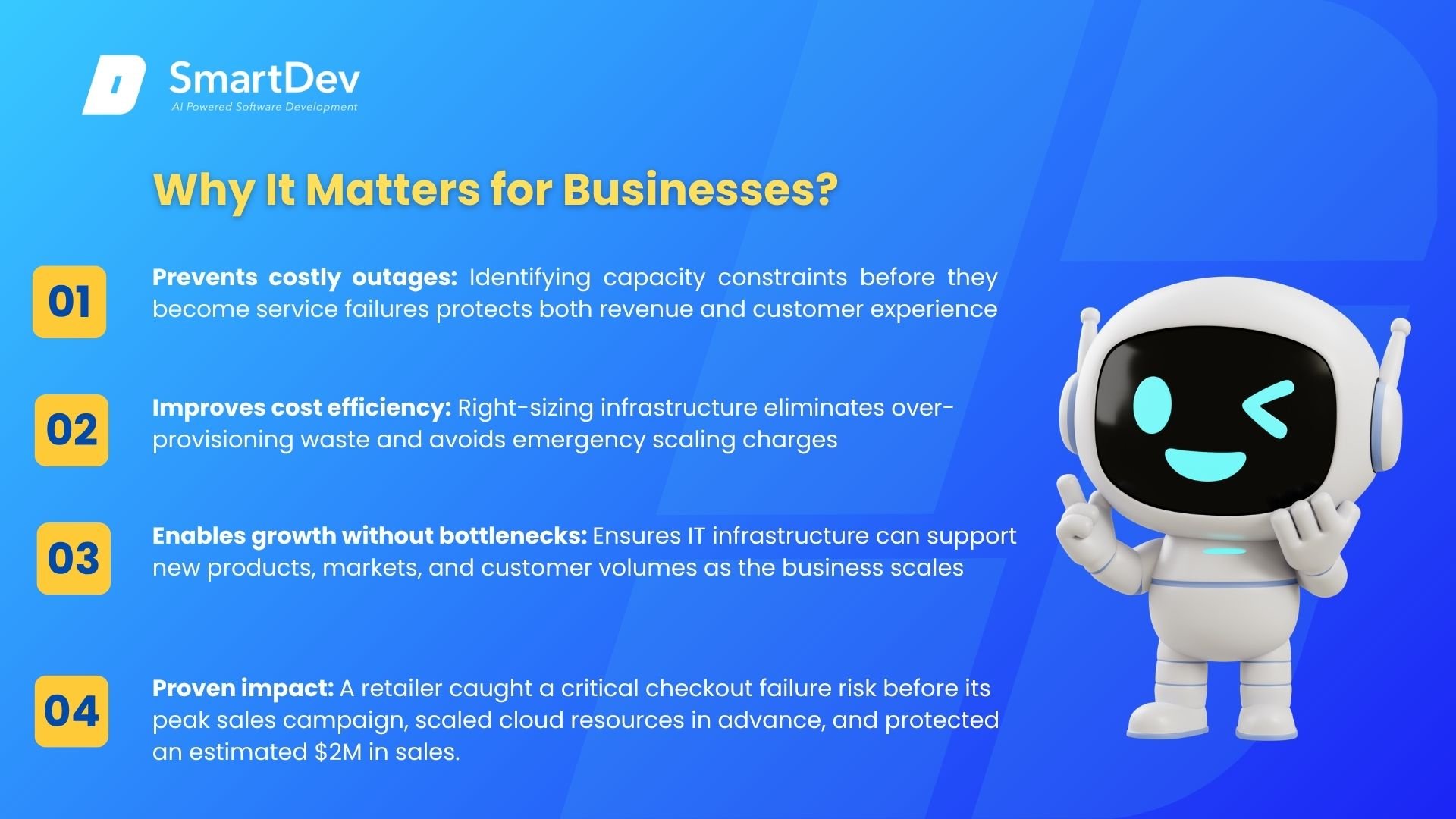
For example, a retail company that conducted capacity planning ahead of its annual sales campaign identified that its checkout infrastructure would fail at 60% of projected peak traffic. By scaling cloud resources in advance, it handled a record transaction volume without a single outage, protecting an estimated $2 million in sales that a failure would have cost.
How Does Capacity Planning Work?
- Measure current utilization: Collect data on how current resources (CPU, memory, storage, bandwidth, team hours) are being consumed day-to-day and during peak periods.
- Forecast future demand: Use historical data, business growth targets, and upcoming initiatives (new product launches, geographic expansion, marketing campaigns) to project resource needs over the next 6 to 24 months.
- Identify gaps: Compare projected demand against current capacity to find where shortfalls will occur and when, giving the business time to act before a problem develops.
- Plan for additional capacity: Determine how to close the identified gaps, whether through cloud scaling, hardware procurement, team hiring, or process optimization, and build these into the IT budget and roadmap.
- Monitor and revise: Capacity plans are not set-and-forget documents. They are updated regularly as actual usage data comes in and business priorities change.
The result is an IT environment that consistently supports business operations without surprise failures or budget shocks from emergency infrastructure spend.
When to Use Capacity Planning?
Capacity Planning is especially valuable in these situations:
- You are approaching a known peak period (seasonal traffic surge, product launch, or major marketing event) and need confidence your systems will hold
- Your applications are experiencing growing latency or degraded performance as user volumes increase, signaling that current capacity is becoming strained
- Your business is entering a new market or launching a new product that will add unpredictable new load to existing infrastructure
- You are migrating to cloud infrastructure and need to size cloud resources correctly to control costs from day one
When capacity planning may be less urgent:
- Your application is in early development with very few users and infrastructure costs are negligible relative to other investment priorities
- You are using a fully managed serverless platform that auto-scales without any manual provisioning required
Weitere verwandte Begriffe
Cloud-Migration: The process of moving an organization’s data, applications, and infrastructure from on-premise systems to cloud-based environments. Capacity Planning is directly relevant during cloud migration, as it determines how to size cloud resources correctly from day one to avoid both cost overruns and underperformance.
Technical Architecture: The structural design that defines how software components, systems, and infrastructure fit together to support business operations. Technical architecture sets the boundaries within which Capacity Planning operates, because the architectural decisions made upfront determine what resources can be scaled and how.
Projekt-Roadmap: A high-level plan that maps out the timeline, milestones, and resource requirements for delivering a technology initiative. Capacity Planning feeds directly into project roadmaps, converting demand forecasts and infrastructure gap analyses into concrete budget and timeline commitments.