
Kurz zusammengefasst
- What is Cloud Migration?
- Moving digital assets (apps, databases, IT resources) from on-premise to cloud platforms.
- Improves scalability, cost efficiency, and system availability.
- Key Migration Strategies:
- Rehosting: Minimal changes to move systems.
- Replatforming: Optimizing for better performance.
- Refactoring: Redesigning for cloud-native use.
- Repurchasing: Switching to cloud-based software.
- Retiring: Removing outdated systems.
- Warum es wichtig ist:
- Reduces infrastructure costs.
- Enhances collaboration and system reliability.
- Supports innovation and faster deployment.
- When to Migrate:
- When infrastructure limits growth, scalability, or flexibility.
What is Cloud-Migration?
Cloud migration is the process of transferring digital assets such as applications, databases, and IT resources from local servers or legacy infrastructure to cloud-based platforms. Cloud providers offer remote computing resources that allow businesses to store data, run applications, and scale operations without maintaining physical hardware.
Organizations may choose different migration approaches depending on their technical requirements and business objectives. Some systems can be moved without major modifications, while others may require redesign or optimization to take full advantage of cloud-native features.
Common cloud migration strategies include:
- Rehosting: Moving applications to the cloud with minimal changes
- Replatforming: Making limited optimizations to improve performance
- Refactoring: Redesigning applications to use cloud-native architecture
- Repurchasing: Switching to cloud-based software solutions
- Retiring: Removing outdated systems that are no longer needed
Cloud migration enables businesses to access computing resources on demand, improve system availability, and reduce dependency on physical infrastructure. 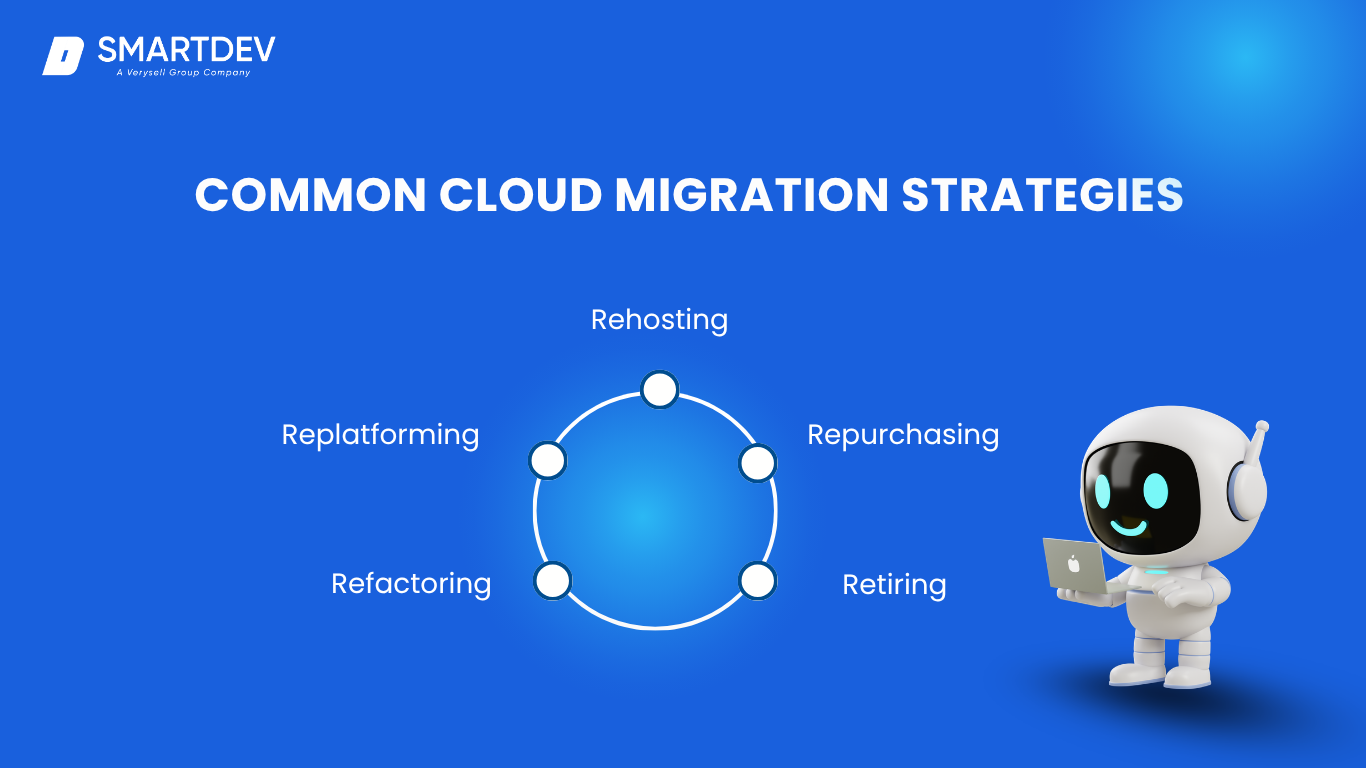
Why Cloud Migration Matters for Businesses
Cloud migration provides organizations with the flexibility needed to compete in rapidly evolving markets. By moving systems to cloud environments, businesses can improve efficiency, reduce operational complexity, and accelerate innovation.
One of the main advantages of cloud migration is scalability. Cloud platforms allow organizations to increase or decrease computing resources based on demand. This ensures optimal performance during peak usage without unnecessary infrastructure costs.
Cost optimization is another key benefit. Instead of investing in physical hardware and maintenance, businesses can adopt a pay-as-you-go model that aligns expenses with actual usage. This allows better financial planning and resource allocation.
Cloud environments also support collaboration by enabling secure access to systems from multiple locations. Distributed teams can work more effectively using shared platforms and real-time data synchronization.
Additional business benefits include:
- Faster deployment of applications and services
- Improved system reliability and availability
- Enhanced disaster recovery capabilities
- Increased flexibility to support innovation
- Reduced infrastructure maintenance burden
Cloud migration helps organizations build technology foundations that support long-term growth and digital transformation initiatives.
How Cloud Migration Works
Cloud migration typically involves structured planning, assessment, and execution to ensure minimal disruption to business operations. The process includes several important stages:
Assessment and Planning
Organizations evaluate their current IT infrastructure to determine which applications and data should be migrated. This stage identifies dependencies, performance requirements, and potential risks.
Choosing a Cloud Strategy
Businesses select a migration strategy based on technical complexity and desired outcomes. Decisions may include choosing between public, private, or hybrid cloud environments.
Datenmigration
Data is transferred from on-premise systems to cloud storage environments. Secure transfer protocols help maintain data integrity and confidentiality throughout the process.
Anwendungsmigration
Applications are moved or redesigned to operate efficiently in cloud environments. Testing ensures that systems perform correctly after migration.
Optimization and Monitoring
After migration, organizations monitor system performance and optimize resources to improve efficiency. Continuous monitoring helps maintain reliability and security standards.
Successful cloud migration requires coordination between IT teams, cloud architects, and business stakeholders to ensure that systems meet operational and compliance requirements. 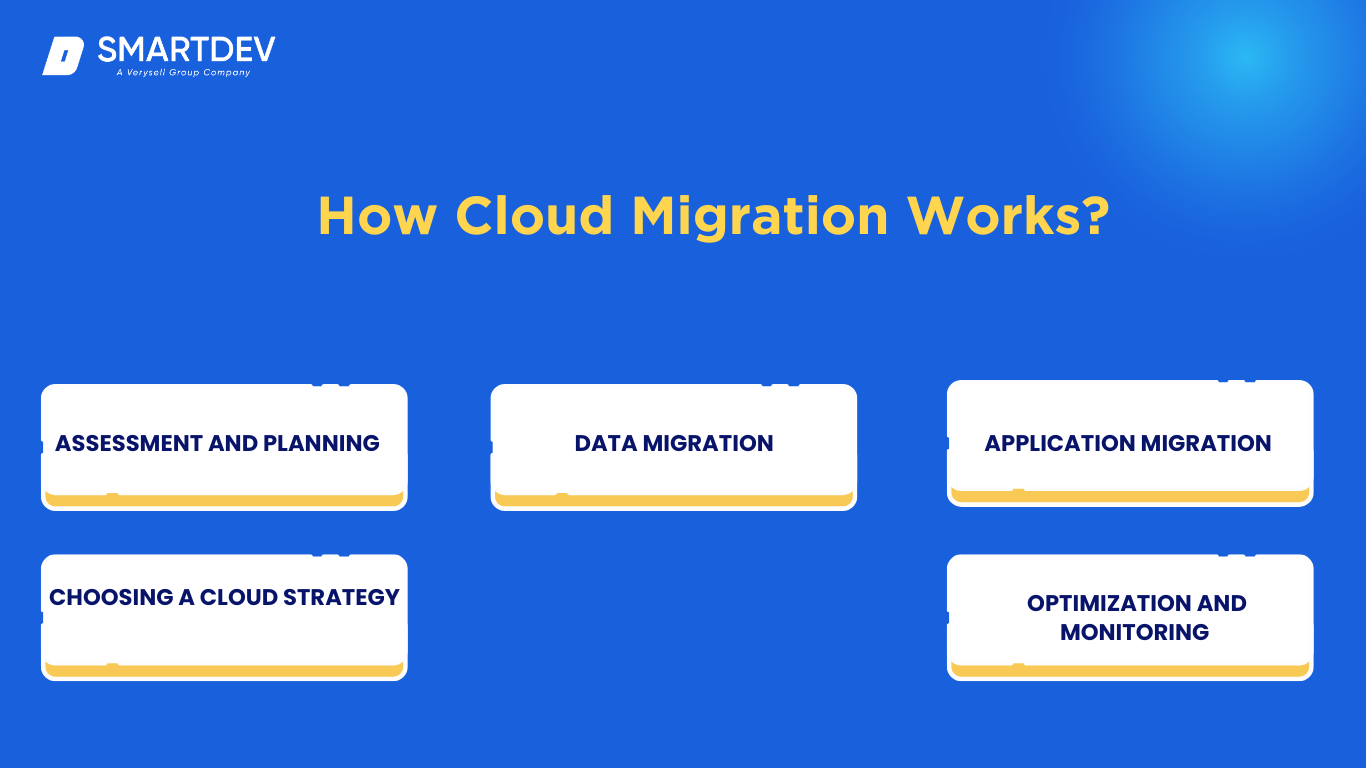
When Should Businesses Consider Cloud Migration?
Businesses should consider cloud migration when existing infrastructure limits growth, flexibility, or operational efficiency.
Common indicators include:
- Increasing infrastructure maintenance costs
- Difficulty scaling systems to meet demand
- Need for improved data accessibility
- Digital transformation initiatives requiring modern architecture
- Requirements for stronger disaster recovery solutions
Organizations often begin with pilot migrations to evaluate performance improvements before expanding migration efforts across additional systems.
Adopting cloud migration at the right time helps businesses maintain competitiveness while improving technical capabilities.
Related Terms in Cloud Migration
Cloud Architecture
Cloud architecture refers to the design of systems, services, and infrastructure that operate within cloud environments. It ensures scalability, reliability, and efficient resource utilization.
Datenmigration
Data migration is the process of transferring data between systems, formats, or storage environments. It is a critical step in ensuring business continuity during cloud adoption.
DevOps
DevOps is a set of practices that combines software development and IT operations to improve collaboration, automation, and deployment speed within cloud environments.