
Kurz zusammengefasst
- Responsible AI ensures AI systems are ethical, transparent, fair, and aligned with human values.
- Helps reduce risks related to bias, privacy, misinformation, and regulatory compliance.
- Builds customer trust by ensuring AI decisions are explainable, secure, and accountable.
- Requires governance frameworks, bias testing, and human oversight across the AI lifecycle.
What is Responsible AI?
Verantwortungsvolle KI refers to the development, deployment, and use of artificial intelligence systems in a way that is ethical, transparent, fair, and aligned with societal values. It ensures that AI technologies operate safely, respect user privacy, minimize bias, and remain accountable to human oversight.
Responsible AI frameworks guide organizations in designing systems that are explainable, secure, and compliant with regulations. This includes managing risks related to data privacy, algorithmic bias, misinformation, and unintended consequences.
By integrating ethical principles into AI development processes, organizations ensure that AI systems generate reliable outcomes while maintaining public trust.
Warum ist das für Unternehmen wichtig?
As AI adoption increases, organizations face growing scrutiny regarding how their AI systems impact customers, employees, and society. Responsible AI helps companies manage ethical risks, regulatory requirements, and reputational concerns associated with AI deployment.
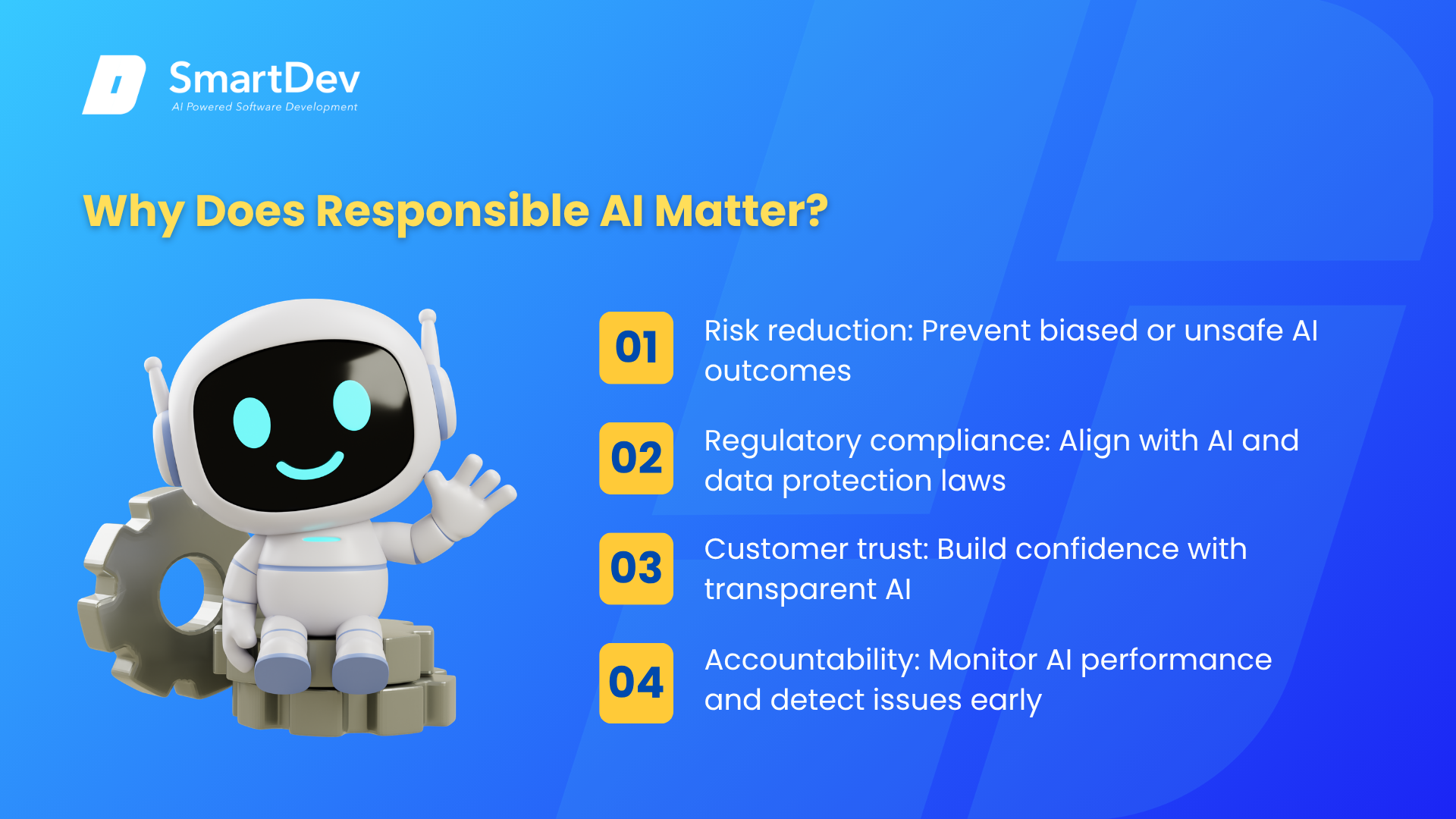 Business impact includes:
- Risk reduction: Minimizes legal, ethical, and reputational risks related to biased or unsafe AI outputs.
- Regulatory compliance: Supports alignment with evolving AI regulations and data protection laws.
- Customer trust: Transparent and fair AI systems strengthen user confidence and brand credibility.
- Sustainable innovation: Encourages long-term AI adoption by ensuring systems are reliable and explainable.
- Operational accountability: Establishes governance structures to monitor AI performance and detect issues early.
Organizations that ignore responsible AI principles risk deploying systems that produce inaccurate, unfair, or harmful outcomes.
How is Responsible AI implemented?
Responsible AI is implemented through governance frameworks, ethical guidelines, and technical safeguards embedded throughout the AI lifecycle. Organizations establish policies to ensure transparency, fairness, and accountability in AI decision-making processes.
Technical practices include bias testing, model explainability methods, data privacy protections, and human oversight mechanisms. Many organizations also create review boards or ethics committees to evaluate AI use cases before deployment.
Continuous monitoring is required to detect model drift, unintended bias, or performance issues, ensuring AI systems remain aligned with organizational values and regulatory standards.
Why is Responsible AI critical for long-term AI adoption?
AI systems increasingly influence decisions related to finance, healthcare, hiring, and public services. Without responsible AI practices, these systems may reinforce bias, produce misleading outputs, or expose sensitive data.
Responsible AI helps organizations balance innovation with accountability, ensuring that AI solutions deliver value without compromising ethical standards. It also supports collaboration between technical teams, legal teams, and business leaders to manage risks effectively.
By embedding responsible AI principles early, organizations can scale AI initiatives confidently while maintaining compliance and trust.
Weitere verwandte Begriffe
- KI-Governance: Defines the policies and oversight structures that ensure AI systems operate ethically, transparently, and securely.
- Human-in-the-Loop: Refers to processes where human judgment is integrated into AI decision-making to ensure oversight, accuracy, and accountability.
- Erklärbarkeit: The ability to understand and interpret how AI models generate decisions or predictions, improving transparency and trust.