
TL;DR
- A Request for Information (RFI) is a formal document sent to potential vendors to gather information about their capabilities before issuing a more detailed procurement request.
- It is the first and broadest step in the vendor selection process, used to map the market and narrow a long list of candidates to a qualified shortlist.
- An RFI does not commit your organization to any vendor or ask for final pricing — its purpose is discovery and market intelligence.
Before you can select the right IT outsourcing partner or technology vendor, you need to understand what the market actually offers. An RFI is the structured way to do that. It gathers comparable information from multiple vendors at low cost, helping your team make informed decisions about who deserves a more detailed evaluation.
What is a Request for Information (RFI)?
A Request for Information (RFI) is a formal procurement document sent by an organization to a group of potential vendors to gather standardized information about their capabilities, services, experience, and approach, as the first step in a structured vendor evaluation process.
The RFI sits at the beginning of the procurement sequence. It is followed by a Request for Proposal (RFP), which asks shortlisted vendors for detailed solutions and commercial terms, and then a Request for Quotation (RFQ), which focuses specifically on pricing for a defined scope. The three documents serve different purposes: the RFI maps the market, the RFP evaluates solutions, and the RFQ compares prices.
A well-designed RFI typically includes 10 to 20 targeted questions covering the vendor’s company background, relevant technical expertise, delivery methodology, security and compliance posture, and reference customers. The responses allow the procurement team to objectively compare candidates and identify which vendors merit the deeper investment of an RFP process.
Pourquoi c'est important pour les entreprises
Enterprise IT procurement decisions often involve significant multi-year contracts. Issuing an RFP to every available vendor is expensive in both time and effort. The RFI filters that universe to a manageable shortlist before detailed evaluation begins.
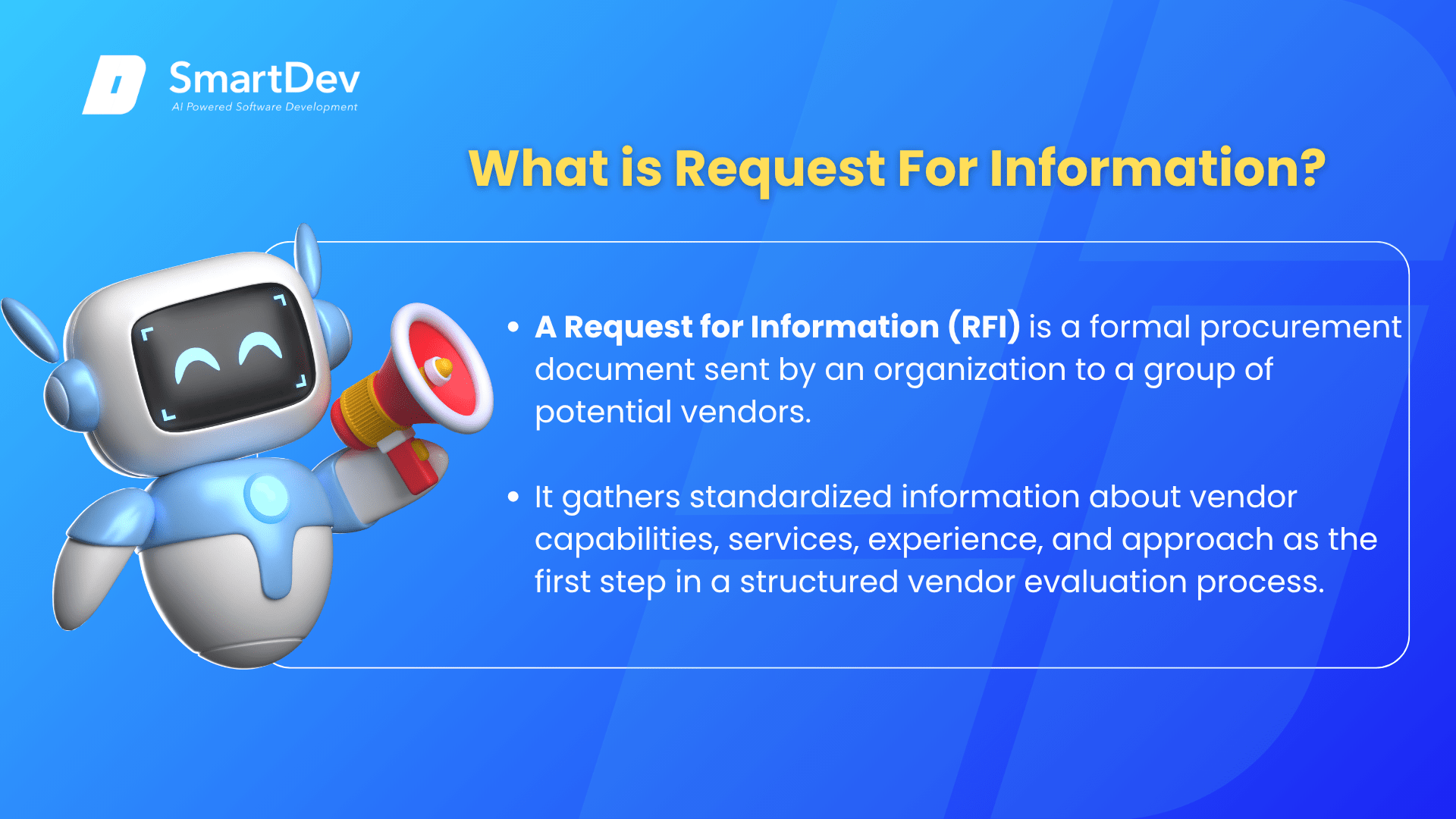
- Reduce procurement time and cost by eliminating unqualified vendors before the expensive RFP phase.
- Improve decision quality by gathering structured, comparable information rather than relying on vendor sales materials and demos.
- Increase market visibility by surfacing vendors and solutions you may not have been aware of before the process began.
- Accelerate the procurement cycle by creating a clear documented basis for shortlist decisions that stakeholders can review and validate.
For example, a retail enterprise evaluating IT outsourcing partners for its e-commerce platform sent an RFI to 14 vendors. Based on responses, they shortlisted four for a full RFP. Two vendors that appeared strong in sales conversations were eliminated because their RFI responses revealed gaps in their cloud security posture and retail sector experience. The RFI saved the team from investing six weeks of RFP work on unqualified candidates.
How Does an RFI Work?
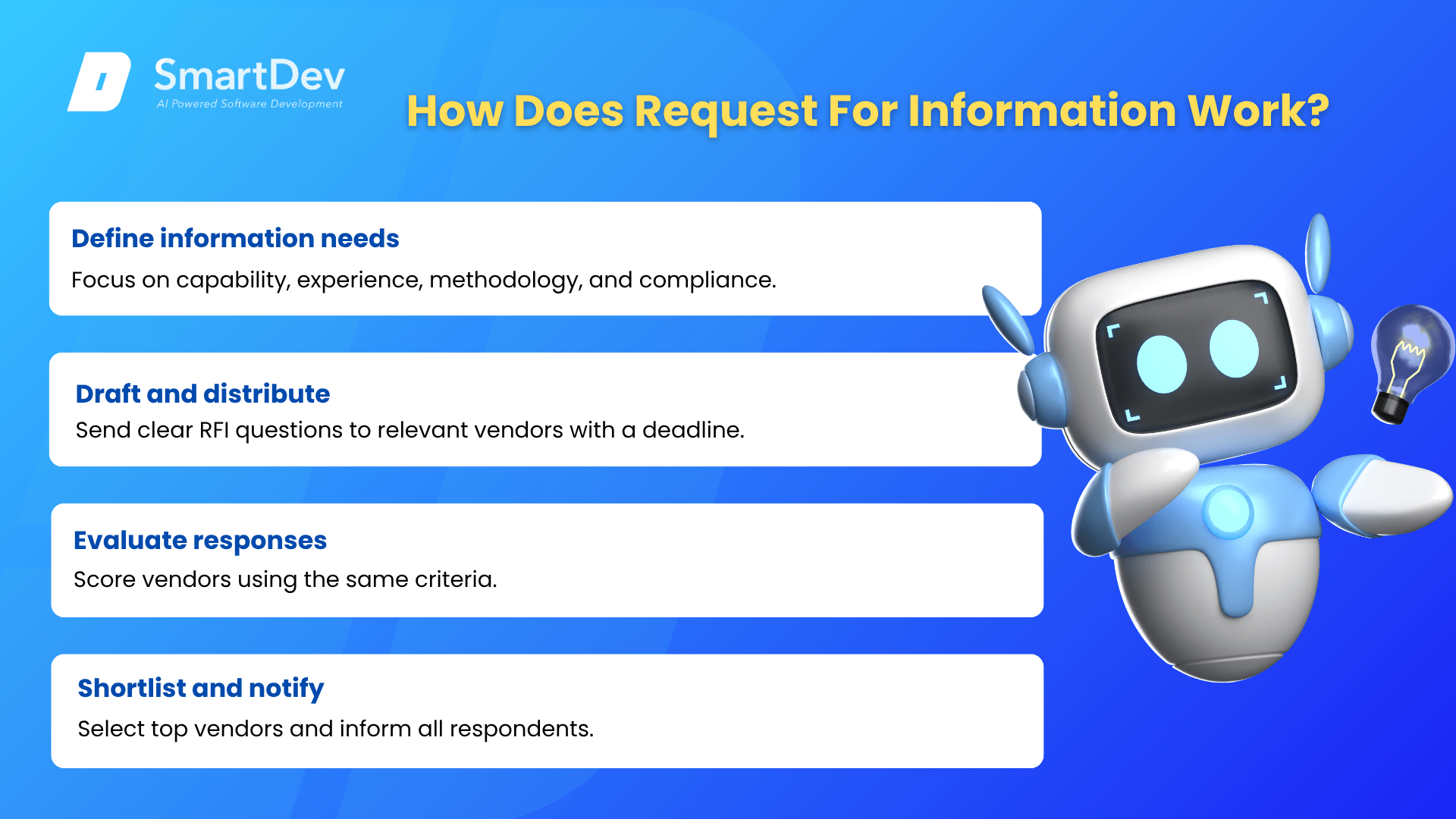
- Define Your Information Needs: Identify the categories of information that will help you evaluate whether a vendor is worth shortlisting. Focus on capability, experience, methodology, and compliance, not pricing at this stage.
- Draft and Distribute: Write a concise RFI document with clear questions and a firm response deadline. Send it to a broad but relevant list of vendors, typically 8 to 15 candidates.
- Evaluate Responses: Score each RFI response against a consistent evaluation rubric. Compare vendors on the same criteria to remove subjective bias from the shortlisting decision.
- Shortlist and Notify: Select the top four to six vendors for the next stage of procurement. Notify all respondents of the outcome, including those not selected.
The result is a fact-based shortlist that gives your RFP process a much higher probability of identifying the right partner, rather than discovering misalignment after significant evaluation effort has been invested.
When to Use an RFI?
- Use an RFI when you are entering an unfamiliar vendor market and need to understand what solutions and providers exist before defining your requirements in detail.
- Use an RFI when the number of potential vendors is large enough that issuing a full RFP to all of them would be impractical.
- Use an RFI before major IT outsourcing engagements, ERP implementations, or cloud platform selections where vendor capability and cultural fit are as important as price.
- Avoid using an RFI when you already know which vendors you want to evaluate and simply need to compare their detailed proposals and pricing.
Autres termes associés
Retainer Model: A pricing arrangement where a client pays a recurring fee for ongoing access to a vendor’s services or expertise.
Revenue Share Model: A commercial arrangement where the revenue generated from a product, service, or partnership is distributed between the involved parties according to an agreed formula.
System Design: The process of defining the architecture, components, and data flows of a software system to meet both functional requirements and non-functional goals like scalability, reliability, and performance.