

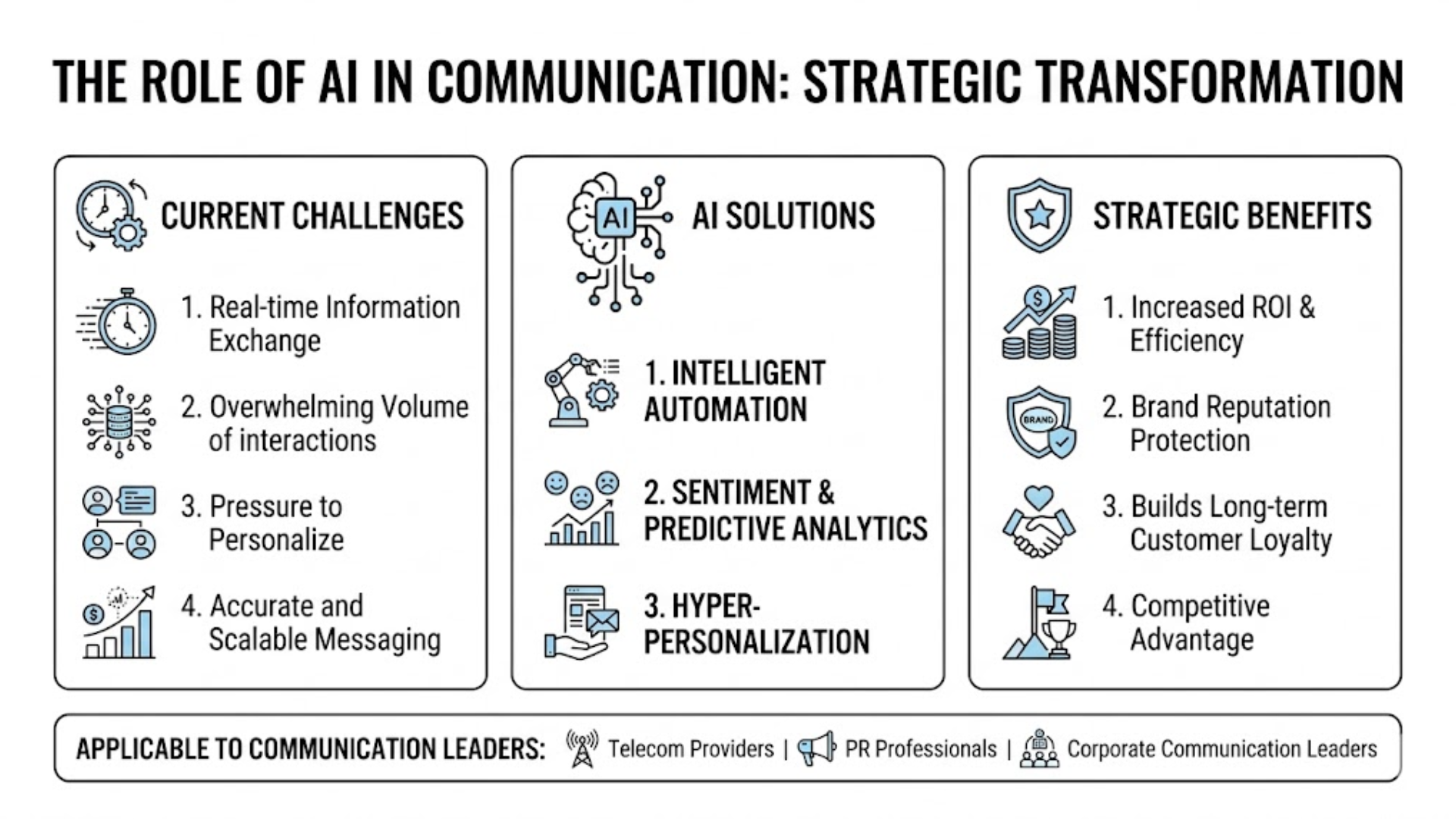
In an era defined by real-time information exchange and an overwhelming volume of digital interactions, communication leaders are under increasing pressure to deliver personalized, accurate, and scalable messaging. This is where AI use cases in communication becomes a critical solution, enabling organizations to transform traditional communication strategies into more intelligent and efficient systems.
No longer just an experimental trend, artificial intelligence has become a core foundation of modern communication. For telecommunications providers, PR professionals, and corporate communication leaders, understanding and applying AI use cases in communication is no longer optional, it is a key competitive advantage. By leveraging AI, organizations can improve ROI, protect brand reputation, and build long-term customer loyalty in an increasingly competitive global landscape.
What is AI and Why Does It Matter in the Communication Industry?
Artificial intelligence (AI) refers to the simulation of human cognitive processes through advanced computational systems, forming the backbone of many modern digital innovations. At its core, AI is powered by machine learning, where algorithms analyze vast datasets to uncover patterns without explicit programming.
Natural language processing (NLP) enables machines to understand, interpret, and generate human language with remarkable accuracy, while computer vision allows systems to extract meaningful insights from images and video. Together, these technologies form the foundation of powerful AI use cases in communication, driving smarter and more adaptive interactions.
The importance of AI use cases in communication within the communication industry is both transformative and far-reaching. Modern communication systems no longer function as simple message delivery tools; instead, they actively analyze sentiment, context, and user intent. This shift enables organizations to move from reactive communication models to proactive, data-driven engagement strategies.
Whether it’s optimizing telecommunications networks, delivering personalized PR campaigns, or automating internal knowledge sharing, AI is redefining how information is created, managed, and distributed.
Market trends further highlight the rapid adoption of AI use cases in communication across industries. As user trust in AI continues to grow with many individuals now relying on AI for critical decisions such as finance and healthcare, organizations are accelerating their investments in intelligent communication technologies.
This surge in adoption underscores the strategic importance of AI in meeting evolving customer expectations and maintaining a competitive edge in a data-driven world.
| Metric | Industry Statistic | Implications for the Communication Sector | |
| Enterprise Adoption Rate | 62.52% of EU enterprises in the information and communication sector utilized AI in 2025. | The communication sector leads all other economic activities in AI adoption, establishing a new baseline for operational standards. | |
| Generative AI in Production | 68% of telecommunications organizations have moved generative AI into full production. | The industry has moved beyond pilot testing, deploying models that actively interface with consumer data and infrastructure. | |
| Customer Communications | 97% of businesses plan to use AI in their customer communications this year. | The near-universal adoption indicates that omnichannel execution powered by AI is essential for competitive survival. | |
| Generative AI ROI Realization | 74% of telecommunications organizations leveraging generative AI in production report meaningful ROI. | Investments in intelligent systems are successfully yielding financial returns, validating continued technological expansion. |
Business Benefits of AI Use Cases in Communication
1. Efficiency Improvements
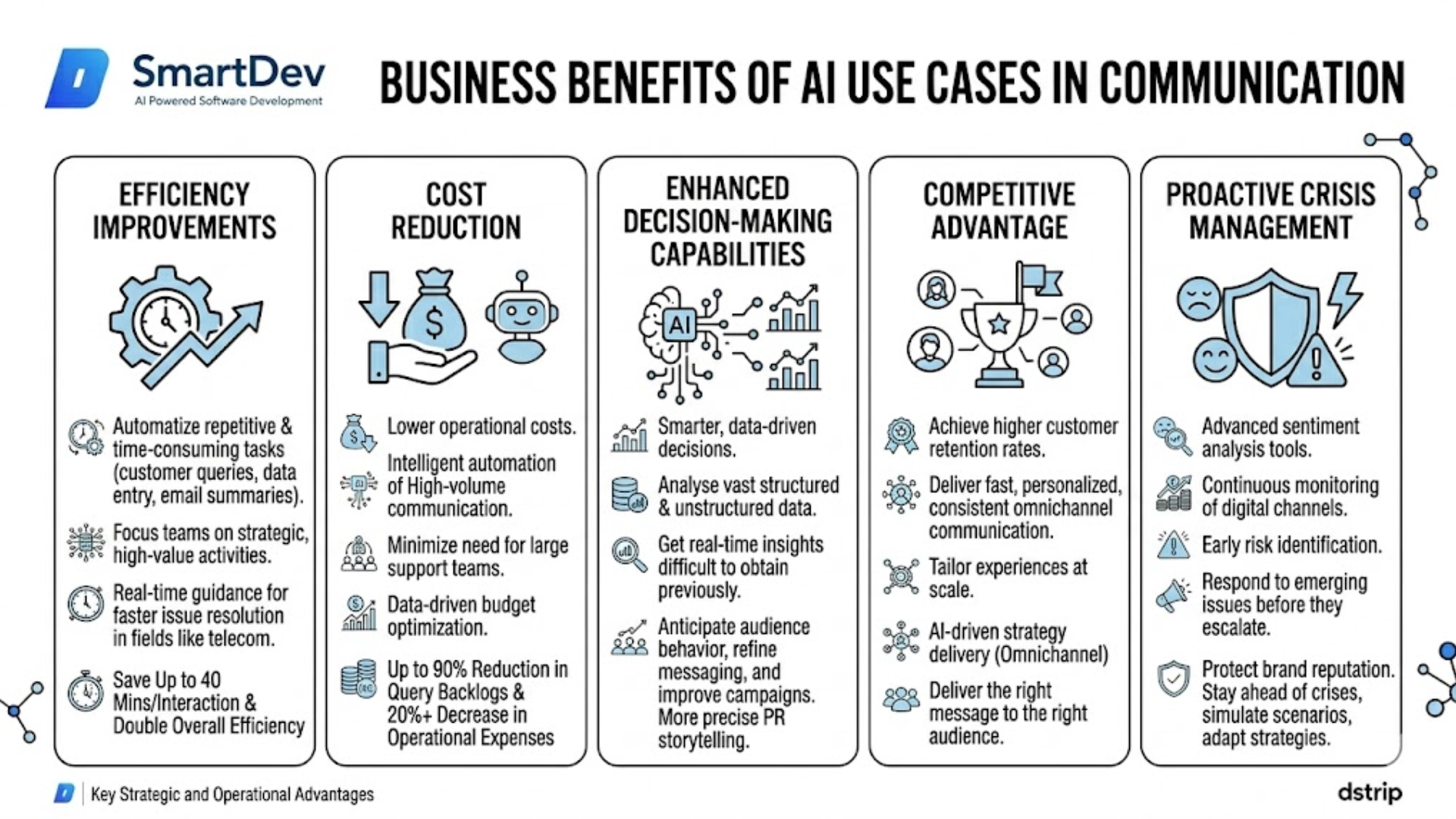
One of the most immediate advantages of implementing AI use cases in communication is the significant boost in operational efficiency. By automating repetitive and time-consuming tasks, such as customer inquiries, data entry, and email summarization, AI allows teams to focus on strategic, high-value activities.
In industries like telecommunications, AI-powered systems can provide real-time guidance to technicians, reducing downtime and accelerating issue resolution. As a result, organizations leveraging AI use cases in communication often report substantial productivity gains, with some teams saving up to 40 minutes per customer interaction and even doubling overall efficiency.
2. Cost Reduction
Improved efficiency naturally leads to reduced operational costs. Through intelligent automation, businesses can minimize the need for large support teams while still managing high volumes of communication. AI-driven chatbots and virtual assistants can handle thousands of simultaneous interactions, significantly lowering overhead costs.
Companies adopting AI use cases in communication have reported up to a 90 percent reduction in customer query backlogs and more than 20 percent decrease in operational expenses. Additionally, predictive analytics helps optimize budget allocation, ensuring marketing and communication efforts are more targeted and cost-effective.
3. Enhanced Decision-Making Capabilities
Another critical benefit of AI use cases in communication is the ability to make smarter, data-driven decisions. AI systems analyze vast amounts of structured and unstructured data, from social media conversations to market trends, providing real-time insights that were previously difficult to obtain.
This empowers communication leaders to anticipate audience behavior, refine messaging strategies, and improve campaign performance. In public relations, AI enables more precise storytelling by uncovering audience preferences and aligning communication strategies with evolving market demands.
4. Competitive Advantage
Leveraging AI use cases in communication gives organizations a powerful competitive edge. Today’s consumers expect fast, personalized, and consistent communication across all channels. AI makes it possible to deliver tailored experiences at scale, meeting these expectations effectively.
Businesses that implement AI-driven omnichannel communication strategies achieve significantly higher customer retention rates compared to those that rely on traditional methods. By using predictive models, recommendation engines, and real-time data analysis, companies can deliver the right message to the right audience at the right moment, outperforming competitors in the process.
5. Proactive Crisis Management
AI also plays a crucial role in proactive crisis management. Advanced sentiment analysis tools continuously monitor digital channels, detecting shifts in public perception and identifying potential risks early.
With AI use cases in communication, organizations can respond to emerging issues before they escalate, crafting timely and targeted messaging to protect their brand reputation. This proactive approach enables communication teams to stay ahead of crises, simulate potential scenarios, and adapt strategies dynamically, turning risk management into a strategic advantage.
Challenges Facing AI Use Cases in Communication
1. Data Privacy and Security Concerns
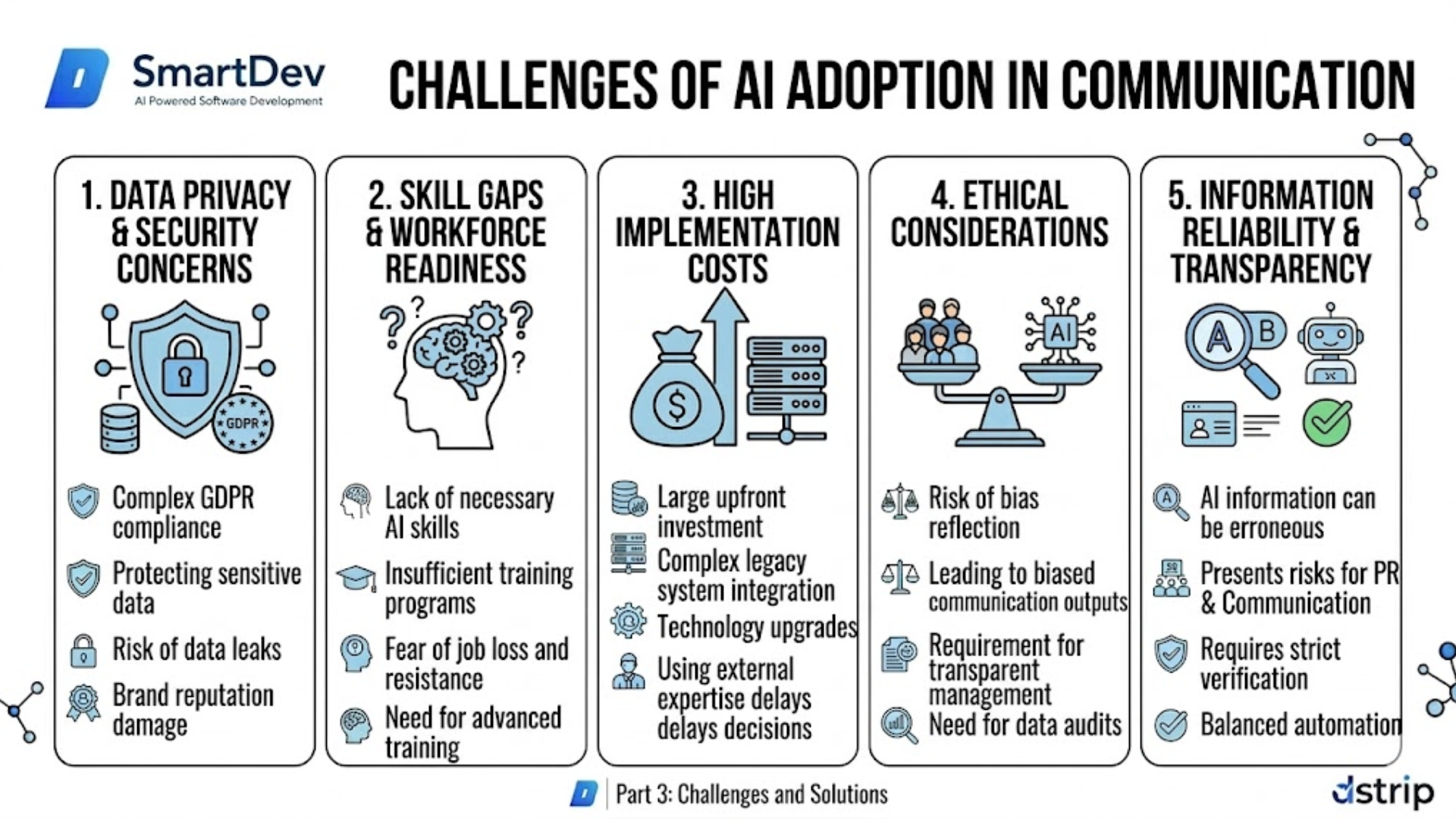
One of the most critical challenges in implementing AI use cases in communication is ensuring data privacy and security. AI systems rely on vast amounts of data, including sensitive customer information, internal documents, and proprietary business insights.
Complying with global data protection regulations such as GDPR is essential but highly complex. Without strong safeguards like data encryption, continuous monitoring, and strict access controls, organizations risk serious data breaches. These incidents can lead to financial losses and long-term damage to brand trust.
2. Skill Gaps and Workforce Readiness
A major barrier to scaling AI use cases in communication is the gap between technological advancement and workforce readiness. While many employees are beginning to use AI tools, a large percentage still lack the skills needed to apply them effectively and safely.
At the same time, many organizations do not provide sufficient training programs. This creates resistance to adoption, as employees may feel uncertain about using new technologies or concerned about job security. Addressing this challenge requires continuous upskilling and a strong focus on change management.
3. High Implementation Costs
Although AI use cases in communication offers strong long-term ROI, the initial investment can be significant. Implementing AI requires modern infrastructure, system integration, and high-quality data preparation.
Many organizations still operate on legacy systems that are not designed to support AI, making integration complex and costly. Expenses related to technology upgrades, data restructuring, and external expertise can slow down decision-making and delay adoption.
4. Ethical Considerations
Ethical concerns are another major challenge in deploying AI use cases in communication. AI models are trained on historical data, which means they can unintentionally reflect existing biases.
If not properly managed, this can lead to biased or inappropriate communication outputs, potentially harming brand reputation and alienating audiences. To mitigate this risk, organizations must implement transparent AI practices, regularly audit data sources, and ensure human oversight in content generation.
5. Information Reliability and Transparency
Maintaining accuracy is essential when applying AI use cases in communication. AI systems, especially large language models, can sometimes generate incorrect or misleading information with high confidence.
In fields like public relations, journalism, and corporate communication, this poses a serious risk. Organizations must establish strict validation processes and ensure human review remains part of the workflow. Balancing automation with accountability is key to maintaining trust and communication integrity.
Core AI Use Cases in Communication
The foundation of modern AI use cases in communication lies in a set of core technologies that enable systems to process, analyze, and generate information at scale. These fundamental capabilities power a wide range of applications across industries, regardless of specific business functions or sectors.
1. Natural Language Processing (NLP)
Natural Language Processing (NLP) is a key pillar of AI use cases in communication, enabling machines to understand and interact using human language. By combining linguistics with machine learning, NLP allows systems to interpret context, sentiment, and intent within text.
This technology powers essential functions such as text summarization, language translation, and automated content creation. Large Language Models (LLMs) rely heavily on NLP to process complex, unstructured data sources like emails, contracts, social media content, and customer feedback, turning them into actionable insights.
2. Computer Vision
Computer vision is another critical component of AI use cases in communication, giving machines the ability to interpret visual data such as images and videos. Using deep learning techniques like Convolutional Neural Networks (CNNs), systems can identify objects, detect patterns, and analyze visual context at a detailed level.
In communication workflows, this enables automated image tagging, brand monitoring in video content, and real-time analysis of visual interactions. These capabilities are especially valuable for media monitoring, digital marketing, and virtual communication platforms.
3. Predictive Analytics
Predictive analytics plays a vital role in advancing AI use cases in communication by enabling organizations to anticipate future trends and behaviors. By analyzing historical data and identifying hidden patterns, AI models can generate accurate forecasts and actionable insights.
This allows businesses to predict customer preferences, optimize communication strategies, and proactively address potential issues. As a result, organizations can shift from reactive communication approaches to more strategic, forward-looking decision-making.
4. Generative AI
Generative AI represents a major evolution in AI use cases in communication, moving beyond analysis to content creation. These models can generate original text, images, audio, and even video based on learned data patterns.
For communication professionals, this means faster content production, enhanced creativity, and the ability to scale personalized messaging. Generative AI supports everything from drafting emails and reports to creating marketing campaigns, providing a powerful tool for delivering high-quality, tailored communication at scale.
Ready to reduce your customer query backlog by 90% and lower operational costs by 23%?
SmartDev helps enterprises deploy intelligent chatbots that resolve routine queries instantly and improve first-call resolution rates without losing the human touch.
Optimize your support budget and choose the AI strategy that maximizes your ROI with SmartDev’s expertise.
Talk to an AI Strategy ExpertSpecific Applications of AI Use Cases in Communication
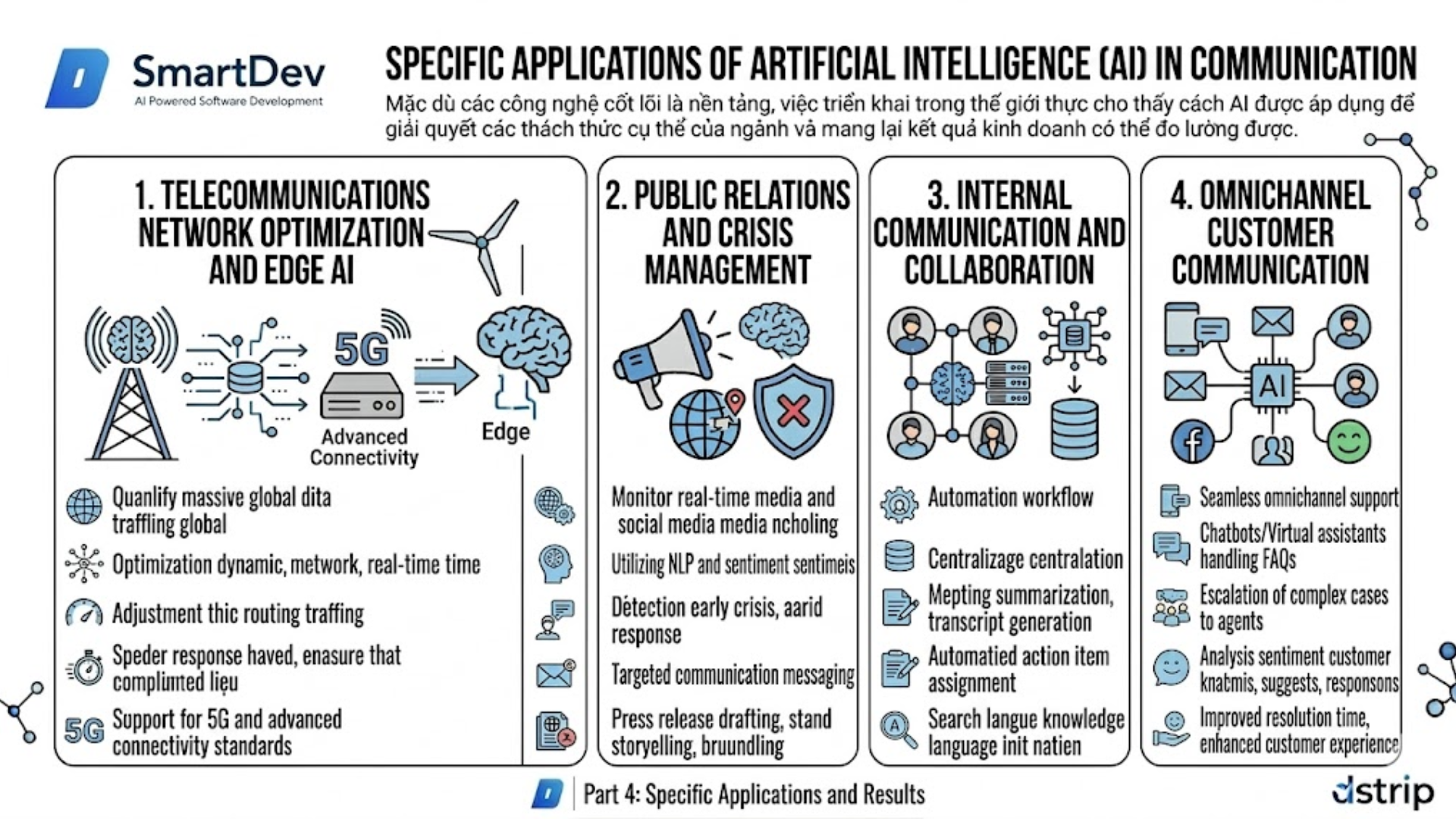
While core technologies form the foundation, real-world implementations highlight how AI use cases in communication is applied to solve industry-specific challenges and deliver measurable business outcomes.
1. Telecommunications Network Optimization and Edge AI
In the telecommunications sector, AI use cases in communication plays a critical role in optimizing network performance. Service providers must manage massive volumes of global data traffic, and AI enables dynamic, real-time network optimization.
Instead of relying on static configurations, AI systems continuously analyze traffic patterns and adjust routing to improve reliability and reduce latency. Edge AI further enhances this capability by processing data closer to end users, reducing response times, ensuring data compliance, and supporting advanced connectivity standards like 5G and beyond.
2. Public Relations and Crisis Management
Artificial intelligence is transforming public relations into a more proactive and data-driven discipline. Through AI use cases in communication, organizations can monitor media channels, social platforms, and online discussions in real time using NLP and sentiment analysis.
This allows PR teams to detect potential crises early and respond with targeted messaging. Generative AI also supports content creation by drafting press releases and refining brand narratives based on audience insights, helping organizations maintain a consistent and effective communication strategy.
3. Internal Corporate Communications and Collaboration
AI significantly improves internal communication by automating workflows and centralizing knowledge. A key AI use cases in communication is the use of intelligent collaboration tools that can summarize meetings, generate transcripts, and assign action items automatically.
AI-powered knowledge management systems also allow employees to search internal data using natural language, making it easier to access policies, reports, and technical documents. This reduces information silos and enhances collaboration across teams.
4. Omnichannel Customer Communication Management
Customer communication has been revolutionized by AI-driven automation. Through AI use cases in communication, businesses can deliver seamless, personalized support across multiple channels, including chat, email, and social media.
AI chatbots and virtual assistants handle routine inquiries instantly, while more complex cases are escalated to human agents with full context provided by AI systems. These systems can analyze customer sentiment, suggest responses, and improve resolution times. As a result, organizations achieve higher efficiency, better customer experiences, and stronger long-term relationships.
Examples of AI in the Communication Industry
Real-World Case Studies
Leading global organizations provide empirical, undeniable evidence of artificial intelligence successfully transforming corporate communication and marketing strategies.
| Organization | AI Application Focus | Success Metrics and Quantifiable Outcomes | |
| Domino’s Pizza | Crisis Management & Sentiment Analysis | Analyzed over 10,000 social posts in 24 hours during an acute crisis, resulting in a 20% increase in positive sentiment within a single week. | |
| Grab | Automated Customer Support Chatbots | Reduced customer query backlog by 90% and lowered operational costs by 23% while successfully expanding into six new international markets. | |
| Nike | Brand Reputation Management | Tracked complex industry trends and competitor sentiment, driving a 15% increase in positive sentiment and a 25% engagement boost among Gen Z audiences. | |
| TELUS | Internal Workflow & Support Automation | Deployed generative AI tools for employees to handle routine tasks, saving team members an average of over 40 minutes per customer interaction. | |
| Vodafone | Network Investment & Optimization | Utilized generative AI to optimize global network planning, specifically targeting customer experience improvements and proactively reducing subscriber churn. |
These real-world implementations categorically prove that integrating automated reasoning into communication pipelines directly impacts the bottom line through enhanced engagement, crisis mitigation, and massive efficiency gains.
Innovative AI Solutions in Communication
The evolution of AI use cases in communication is driven by continuous innovation, with emerging technologies pushing beyond traditional capabilities and redefining how organizations interact, operate, and engage with audiences.
One of the most significant advancements is the rise of Agentic AI. Unlike conventional chatbots that respond only to direct inputs, autonomous AI agents can execute complex, multi-step workflows across enterprise systems. These intelligent agents are capable of managing processes independently, coordinating schedules, and resolving operational issues without constant human intervention. This marks a major shift from reactive automation to proactive, self-directed communication systems.
Another powerful AI use cases in communication is the development of AI-driven content recommendation platforms. Solutions like Taboola leverage advanced machine learning algorithms to analyze user behavior, context, and content performance in real time. By dynamically optimizing content and advertisement placement, these platforms significantly increase engagement rates and improve overall communication effectiveness.
Together, these innovations demonstrate how AI use cases in communication is evolving into a more autonomous, intelligent, and strategic force, enabling organizations to deliver highly relevant, timely, and impactful communication at scale.
AI-Driven Innovations Transforming the Communication Industry
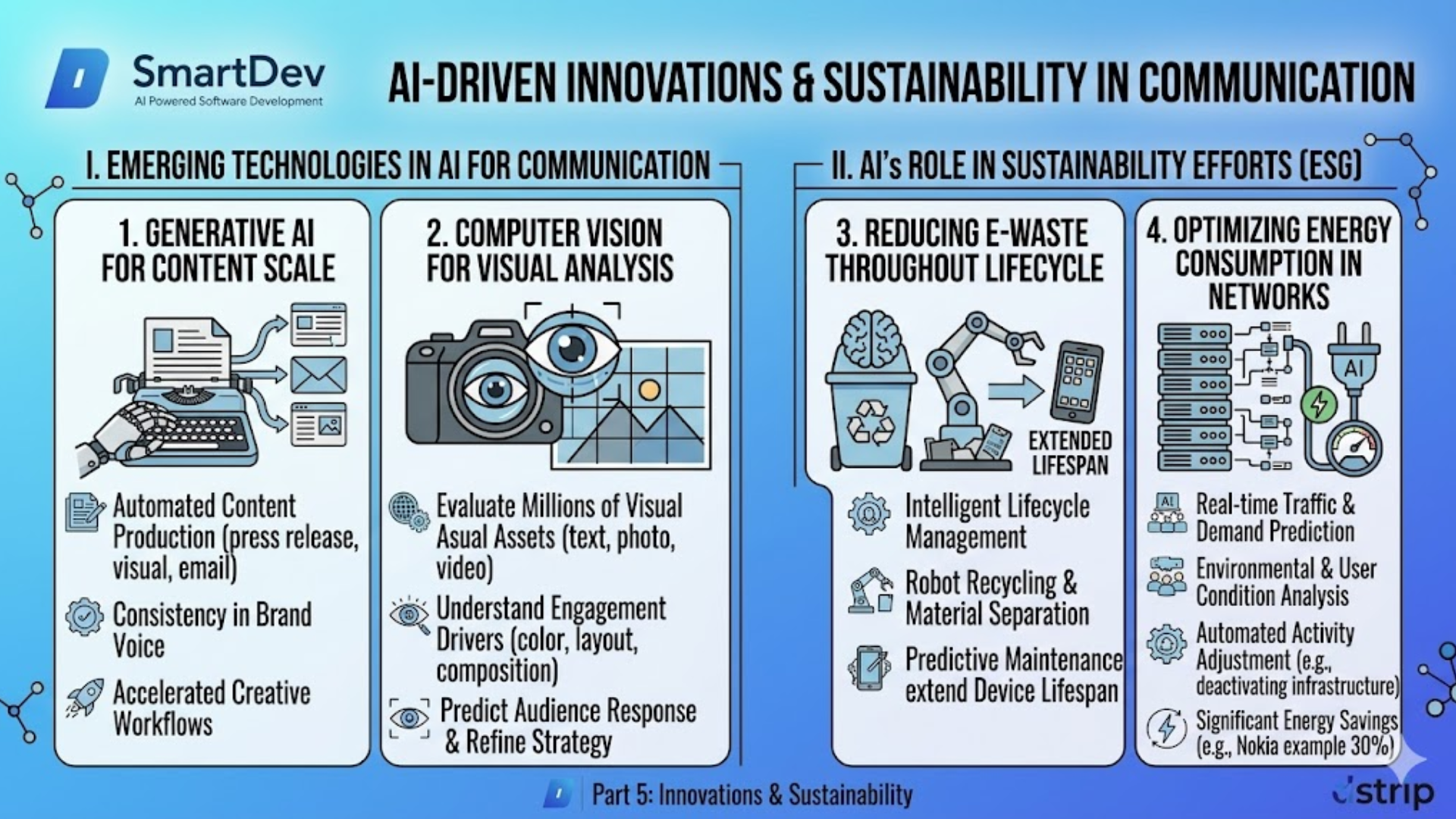
Emerging Technologies in AI for Communication
The rapid evolution of AI use cases in communication is being fueled by the convergence of advanced technologies, creating highly specialized solutions for modern communication and marketing needs.
Generative AI, for example, is reshaping content creation by enabling organizations to produce press releases, marketing visuals, and personalized emails at scale. These systems ensure consistency in brand voice while significantly reducing production time. This makes AI use cases in communication a powerful tool for accelerating creative workflows without sacrificing quality.
At the same time, computer vision is transforming how visual content is analyzed and optimized. Instead of relying only on text-based insights, organizations can now evaluate millions of visual assets to understand what drives engagement. AI can assess elements such as color, layout, and composition to predict audience response, helping brands refine their communication strategies with greater precision.
AI’s Role in Sustainability Efforts
Beyond communication efficiency, AI use cases in communication is also playing an important role in advancing sustainability and ESG goals, particularly in telecommunications and digital infrastructure.
Reducing E-Waste Through Predictive Analytics
The growing volume of electronic devices has made e-waste a global concern. AI helps address this challenge through intelligent lifecycle management. Using computer vision and smart sensors, recycling systems can quickly identify and separate valuable materials, improving recovery rates.
Additionally, predictive maintenance powered by AI can detect early signs of hardware degradation, extending device lifespan and reducing unnecessary waste. This supports a shift toward a more sustainable, circular economy in the communication industry.
Optimizing Energy Consumption with Smart Systems
Telecommunications networks consume significant amounts of energy, but AI is helping to optimize this usage. Intelligent energy management systems analyze network traffic, environmental conditions, and user behavior in real time.
By predicting demand and automatically adjusting network activity, such as temporarily deactivating underutilized infrastructure, organizations can significantly reduce energy consumption. For example, solutions developed by Nokia have demonstrated energy savings of up to 30 percent in live network environments, without compromising service quality.
These advancements highlight how AI use cases in communication is not only transforming business performance but also contributing to a more sustainable and responsible digital future.
How to Implement AI Use Cases in Communication
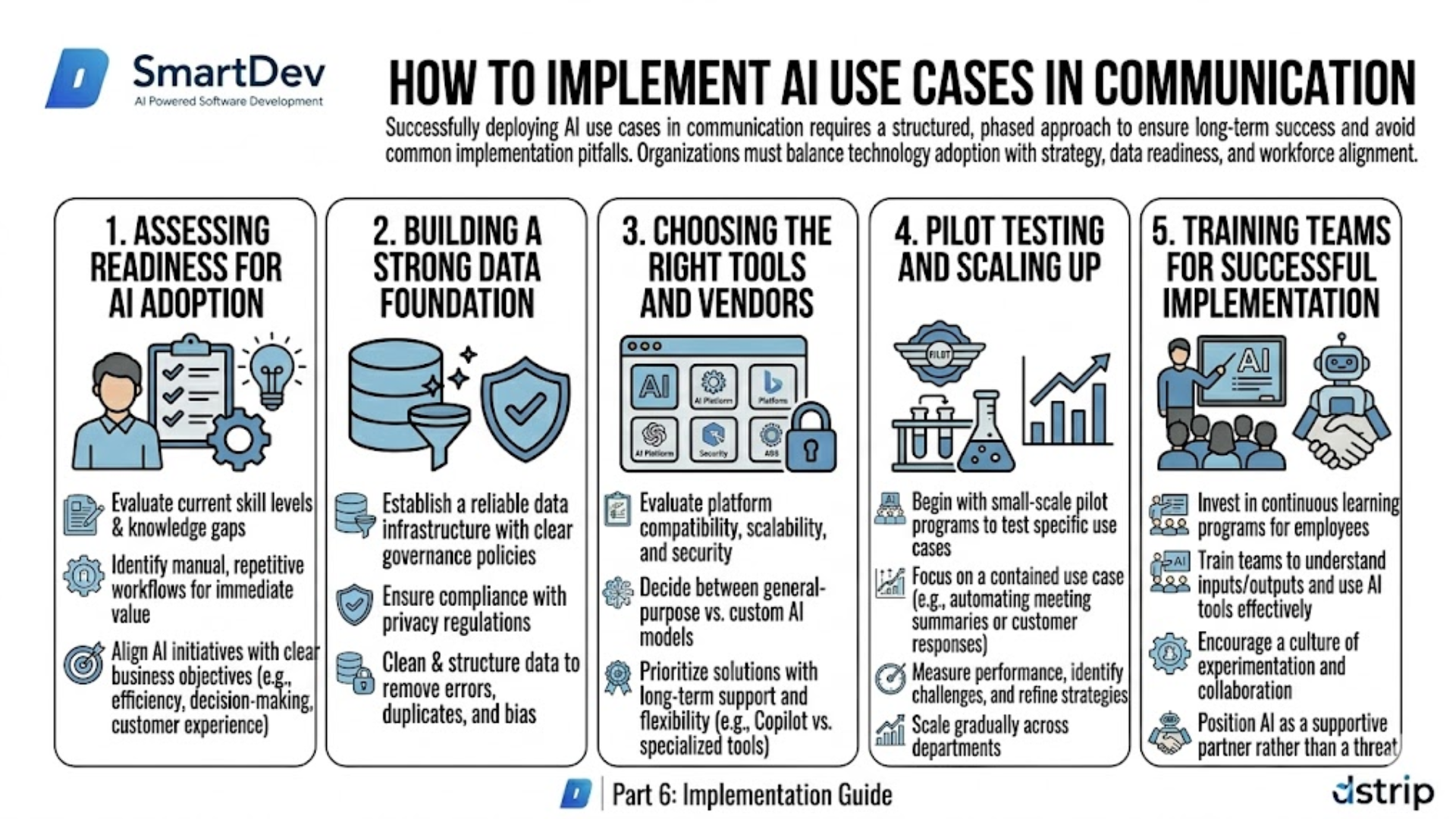
Successfully deploying AI use cases in communication requires a structured, phased approach to ensure long-term success and avoid common implementation pitfalls. Organizations must balance technology adoption with strategy, data readiness, and workforce alignment.
1. Assessing Readiness for AI Adoption
The first step in implementing AI use cases in communication is evaluating organizational readiness. Leaders need to assess current skill levels, identify knowledge gaps, and determine where AI can deliver the most immediate value.
This involves pinpointing workflows that rely heavily on manual, repetitive tasks and aligning AI initiatives with clear business objectives, such as improving efficiency, accelerating decision-making, or enhancing customer experience. A strong strategic foundation ensures that AI adoption delivers measurable results.
2. Building a Strong Data Foundation
Data is the backbone of every successful AI use cases in communication. Organizations must establish a reliable data infrastructure supported by clear governance policies.
This includes identifying relevant data sources, ensuring compliance with privacy regulations, and cleaning data to remove errors, duplicates, and bias. High-quality, well-structured data enables AI systems to generate accurate insights and perform effectively across communication processes.
3. Choosing the Right Tools and Vendors
Selecting the right technology is a critical step in scaling AI use cases in communication. With a wide range of AI platforms available, organizations must carefully evaluate solutions based on compatibility, scalability, and security.
For example, tools like Microsoft Copilot can enhance internal communication and collaboration, while custom AI models may be better suited for specialized use cases. Decision-makers should prioritize solutions that integrate seamlessly with existing systems and offer long-term support and flexibility.
4. Pilot Testing and Scaling Up
Rather than deploying AI across the entire organization at once, businesses should begin with small-scale pilot programs. This approach allows teams to test specific AI use cases in communication scenarios in a controlled environment.
By starting with a focused use case, such as automating meeting summaries or customer responses, organizations can measure performance, identify challenges, and refine implementation strategies. Once proven effective, AI solutions can be scaled gradually across departments.
5. Training Teams for Successful Implementation
The success of AI use cases in communication ultimately depends on people. Without proper training and support, even the most advanced systems will fail to deliver value.
Organizations must invest in continuous learning programs that help employees understand how to use AI tools effectively, craft better inputs, and evaluate outputs critically. Encouraging a culture of experimentation and collaboration ensures that teams see AI as a supportive partner rather than a threat, driving higher adoption and long-term success.
Measuring the ROI of AI in the Communication Industry
To justify the substantial upfront investments and ongoing operational costs, executives must implement rigorous, data-driven frameworks for accurately measuring the Return on Investment (ROI) generated by artificial intelligence.
Key Metrics to Track Success
Success measurement must extend far beyond simple financial accounting to include comprehensive operational, functional, and workforce-related metrics. Establishing a clear performance baseline prior to implementation is mandatory to accurately track these indicators.
| Category | Key Metrics to Track | Impact on Business Value |
| Productivity Improvements | Average handling time, hours saved per employee, content volume generated, time-to-market speed. | Demonstrates the efficiency of automation, showing how AI frees up human capital for higher-level strategic work. |
| Cost Savings | Reduction in third-party vendor costs, decreased operational overhead, lowered training and onboarding expenses. | Directly reflects the financial efficiency gained by automating manual processes and reducing employee turnover. |
| Customer Experience | Customer Satisfaction (CSAT) scores, Net Promoter Scores (NPS), first-call resolution rates, customer lifetime value (CLV). | Highlights the effectiveness of AI in delivering hyper-personalized, rapid support that drives brand loyalty. |
| Revenue Growth | Incremental revenue from AI-optimized campaigns, lead-to-customer conversion rates. | Proves that AI is not just a cost-saving tool, but a primary driver of new business generation and sales optimization. |
Case Studies Demonstrating ROI of AI Use Cases in Communication
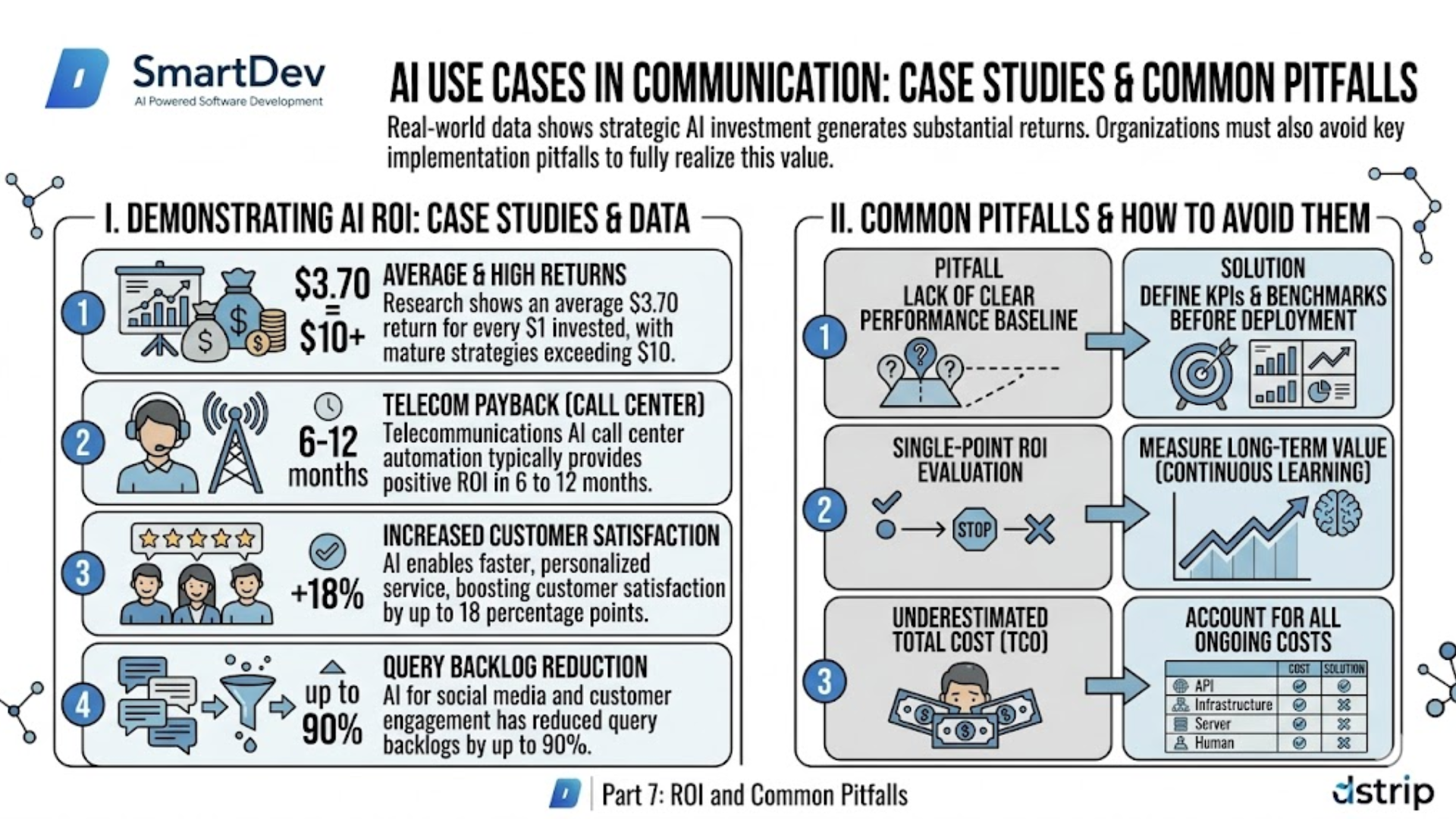
Real-world data clearly shows that investing in AI use cases in communication can generate substantial financial returns when implemented strategically. According to research by International Data Corporation, organizations adopting generative AI achieve an average return of 3.70 dollars for every dollar invested. For leading enterprises with mature AI strategies, returns can exceed 10 dollars per dollar spent.
In practical scenarios, telecommunications companies leveraging AI-driven call center automation often see positive ROI within 6 to 12 months. These improvements are typically accompanied by higher customer satisfaction, with increases of up to 18 percentage points due to faster response times and more personalized interactions.
Similarly, businesses applying AI use cases in communication to social media management and customer engagement have reported up to a 90 percent reduction in query backlogs. This level of efficiency directly supports scalability and enables sustained growth across global markets.
Common Pitfalls and How to Avoid Them
Despite the strong potential of AI use cases in communication, many organizations struggle to accurately measure ROI due to avoidable strategic mistakes.
One common issue is the lack of a clear performance baseline before implementation. Without initial benchmarks, it becomes difficult to quantify improvements or justify investment. Another frequent mistake is evaluating ROI at a single point in time, rather than considering the long-term value created as AI systems continuously learn and improve.
Organizations also often underestimate the total cost of ownership, overlooking ongoing expenses such as infrastructure, API usage, and human oversight. These hidden costs can significantly impact overall returns if not properly accounted for.
To avoid these challenges, businesses should define clear KPIs before deployment, continuously monitor performance, and adopt a comprehensive approach to ROI calculation. This includes measuring revenue growth, cost savings, and efficiency gains while factoring in all associated costs. By taking a structured and data-driven approach, organizations can fully realize the value of AI use cases in communication.
Future Trends of AI Use Cases in Communication
As technology continues to evolve, the future of AI use cases in communication is moving toward more immersive, predictive, and emotionally intelligent systems. Advances in computational power and deep learning are reshaping how organizations connect with audiences and manage communication at scale.
Predictions for the Next Decade
Looking ahead to 2030 and beyond, AI use cases in communication will be deeply integrated with next-generation connectivity such as 5G and emerging 6G networks, combined with edge computing. This convergence will enable entirely new communication experiences.
One of the most anticipated innovations is holographic communication, where high-quality digital avatars can interact in real time within virtual or hybrid environments. These experiences may also include haptic feedback, creating more natural and engaging interactions.
Another major trend is the rise of Emotion AI. This technology analyzes facial expressions, voice patterns, and behavioral signals to understand human emotions with increasing accuracy. As part of future AI use cases in communication, Emotion AI will help organizations respond more empathetically during customer interactions, improving both user experience and relationship building.
How Businesses Can Stay Ahead of the Curve
To remain competitive, organizations must take a proactive approach to adopting AI use cases in communication. This means going beyond basic implementation and building long-term capabilities around AI strategy and innovation.
Companies should invest in continuous learning and workforce development, focusing not only on technical skills but also on uniquely human strengths such as emotional intelligence, ethical judgment, and cultural awareness. These capabilities will complement AI systems and enhance overall communication effectiveness.
In addition, establishing clear governance frameworks is essential. Organizations need dedicated teams to oversee AI usage, ensure compliance with evolving regulations, and address risks such as bias and transparency.
Ultimately, the future of AI use cases in communication will belong to organizations that successfully combine human insight with AI-driven efficiency, creating a balanced approach that delivers both technological excellence and authentic, meaningful communication.
Conclusion
The adoption of AI use case in communication is reshaping how organizations create, manage, and deliver information. From automation and personalization to data-driven decision-making, AI is becoming a core driver of efficiency and competitive advantage.
To stay ahead, businesses must act now by investing in data, skills, and strategy. Those who embrace AI use case in communication early will not only remain competitive but also lead the future of digital communication.