TL;DR
- Ensures projects are delivered on time, within budget, and aligned with business goals
- Improves coordination between business teams, engineers, and stakeholders
- Supports predictable outcomes through structured planning, monitoring, and continuous improvement
What is Delivery Management?
 Delivery management is the practice of planning, coordinating, and overseeing the successful delivery of products or services from initial concept to final release. It ensures that projects are completed on time, within budget, and aligned with defined business objectives and quality standards.
In technology environments, delivery management connects business goals with technical execution. It involves managing scope, timelines, resources, risks, and stakeholder expectations across the entire software development lifecycle. Delivery managers work closely with product teams, engineers, and business stakeholders to ensure that priorities remain aligned and progress stays transparent.
Modern delivery management often incorporates agile practices, continuous feedback loops, and performance monitoring to ensure consistent improvement. Rather than focusing only on deadlines, delivery management emphasizes value creation, collaboration, and predictable outcomes. It helps organizations translate strategy into working solutions that generate measurable business impact.
なぜ企業にとって重要なのか
Delivery management helps organizations maintain control over complex projects while ensuring consistent quality and efficiency. As companies adopt digital products and distributed development teams, structured delivery processes become essential for maintaining alignment and reducing operational risks.
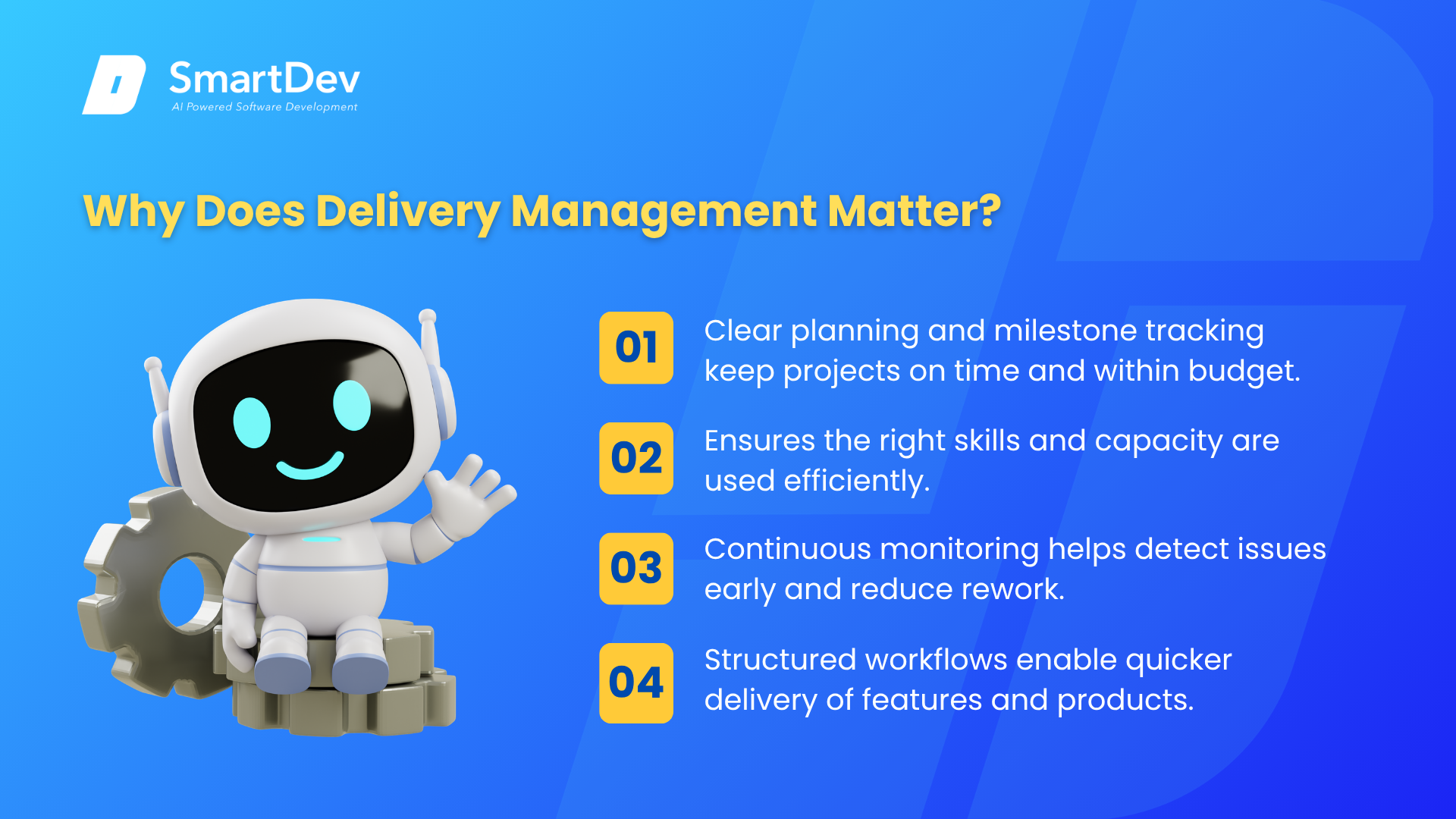 Business impact includes:
- Predictable outcomes: Clear planning and milestone tracking help ensure projects meet deadlines and budget expectations.
- Improved resource utilization: Delivery management ensures the right skills and capacity are allocated effectively across projects.
- Higher product quality: Continuous monitoring and feedback loops help identify issues early and reduce costly rework.
- Stronger stakeholder alignment: Transparent communication improves collaboration between business and technical teams.
- Faster time to market: Structured workflows enable teams to deliver features and products more efficiently.
Without effective delivery management, projects may experience delays, unclear priorities, or misalignment between technical execution and business strategy. Strong delivery practices help organizations scale operations while maintaining consistency and performance.
How does Delivery Management work?
Delivery management works by establishing structured workflows that guide projects from planning to execution and continuous improvement. The process typically begins with defining project scope, expected outcomes, and success metrics.
Delivery managers coordinate teams, manage timelines, and monitor risks to ensure progress remains aligned with objectives. Regular check-ins, sprint reviews, and performance tracking provide visibility into project status and enable faster decision-making.
Automation tools and collaboration platforms are often used to track milestones, manage dependencies, and measure key performance indicators. Continuous feedback loops allow teams to refine processes and improve efficiency over time.
By combining governance frameworks with agile collaboration practices, delivery management ensures that teams can adapt to changing requirements while maintaining control over scope, quality, and timelines.
When is Delivery Management needed?
Delivery management becomes essential when organizations handle multiple projects, distributed teams, or complex digital products. It is particularly important during digital transformation initiatives, product scaling phases, or outsourcing engagements where coordination across stakeholders is critical.
Companies often prioritize delivery management when implementing new technologies, launching software products, or managing long-term partnerships with external vendors. Structured delivery practices help maintain consistency and reduce operational uncertainty in fast-changing business environments.
Other related Terms
- Agile Methodology: An iterative approach to project management that emphasizes flexibility, collaboration, and continuous improvement. Delivery management often relies on agile practices to maintain adaptability while ensuring consistent progress.
- DevOps: A collaborative model that integrates software development and IT operations to enable faster deployment and continuous delivery. DevOps supports delivery management by improving automation, monitoring, and feedback loops.
- Service Level Agreement (SLA): A formal agreement that defines expected service performance metrics such as availability, response time, and quality standards. Delivery management ensures that project outcomes meet agreed SLA commitments.