

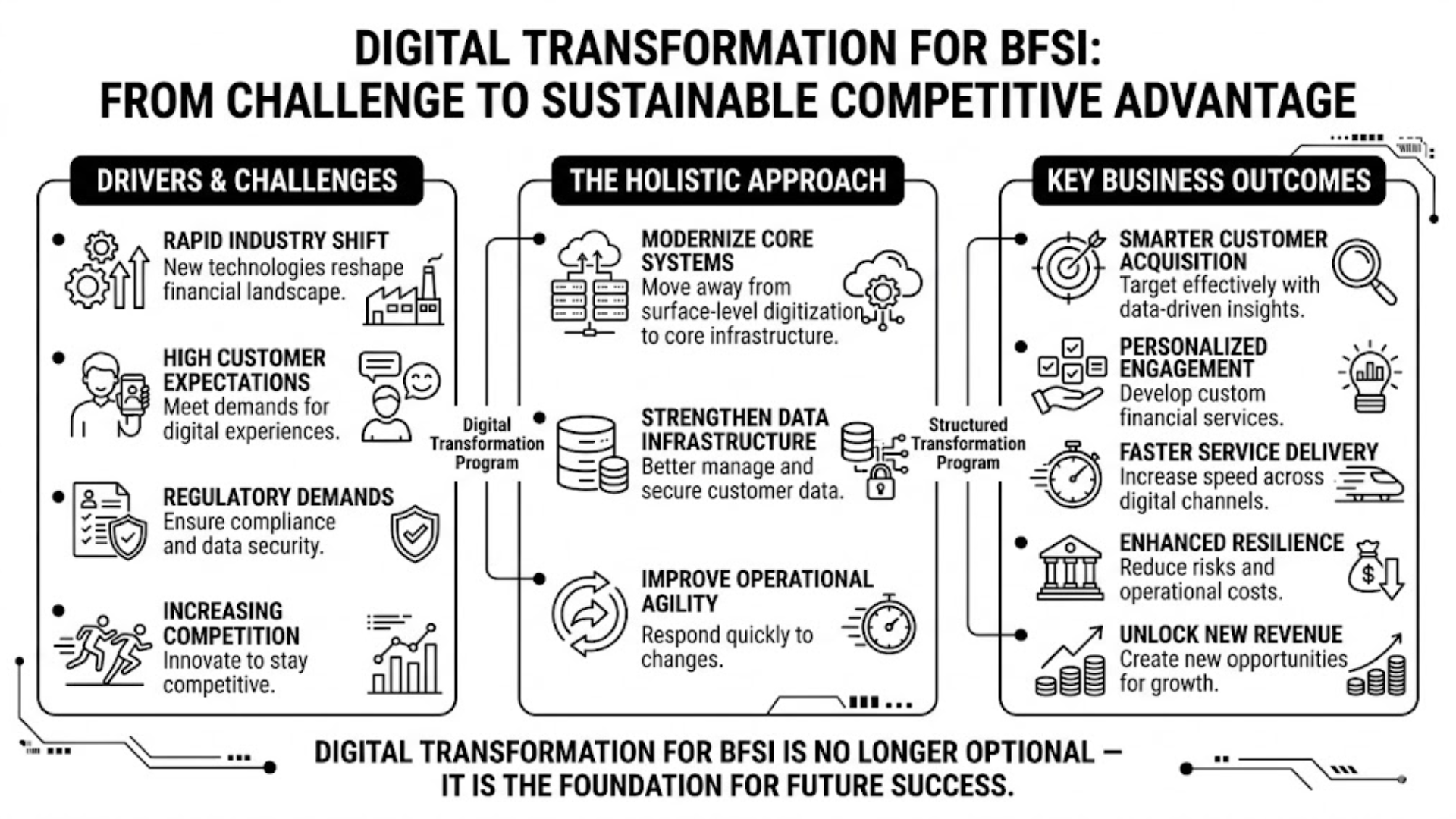
The Banking, Financial Services, and Insurance (BFSI) industry is experiencing a major shift as new technologies reshape how financial institutions operate and compete. Today, digital transformation for BFSI is no longer optional. Instead, it has become a critical driver of innovation, efficiency, and long-term growth. Financial organizations must adapt quickly to meet rising customer expectations, regulatory demands, and increasing market competition.
Rather than focusing only on surface-level digitization, companies now need a holistic digital transformation for BFSI strategy. This approach modernizes core systems, strengthens data infrastructure, and improves operational agility. At the same time, it enables smarter customer acquisition, more personalized engagement, and faster service delivery across digital channels.
As a result, financial institutions that invest in structured transformation programs are better positioned to enhance resilience, reduce operational costs, and unlock new revenue opportunities. In a rapidly evolving financial ecosystem, digital transformation for BFSI has become the foundation for sustainable competitive advantage.
The Macro Context and Drivers of BFSI Digital Transformation
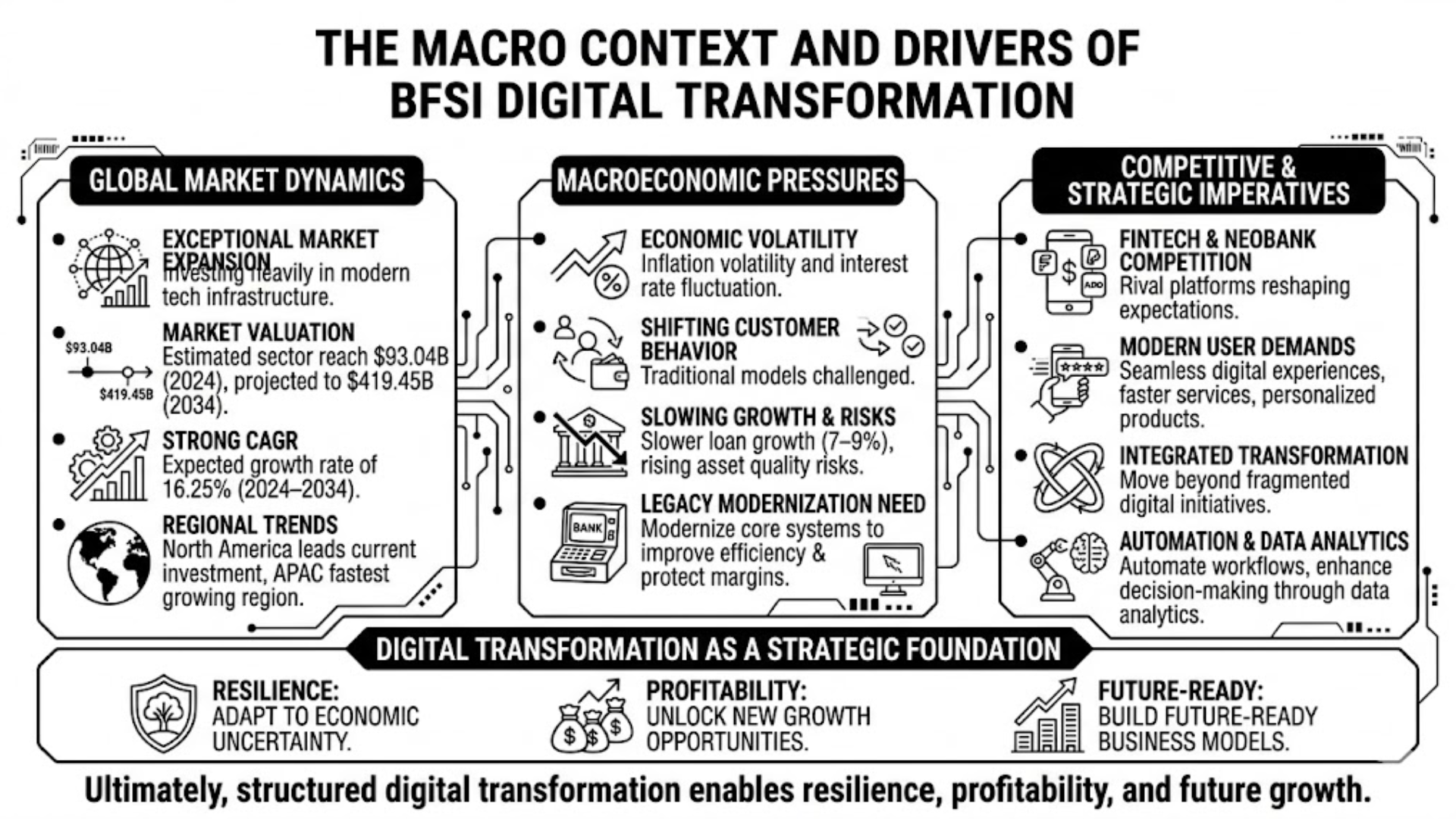
The global market for digital transformation for BFSI continues to expand at an exceptional pace as financial institutions invest heavily in modern technology infrastructure. Market research estimates the sector reached $93.04 billion in 2024 and is expected to grow to $419.45 billion by 2034, with a strong CAGR of 16.25%. While North America leads in current investment, Asia-Pacific is emerging as the fastest-growing region, fueled by rapid digital adoption and expanding financial ecosystems in developing economies.
Several macroeconomic pressures are accelerating the need for digital transformation for BFSI. Inflation volatility, fluctuating interest rates, and shifting customer financial behavior are challenging traditional banking revenue models. Many institutions are seeing slower loan growth, typically ranging between 7–9%, while asset quality risks continue to rise. These conditions are pushing financial organizations to modernize legacy systems and improve operational efficiency in order to protect margins and maintain financial stability.
At the same time, competition from fintech companies, neobanks, and digital-first platforms is reshaping customer expectations. Modern users demand seamless digital experiences, faster services, and personalized financial products. To stay competitive, BFSI organizations must move beyond fragmented digital initiatives and implement integrated transformation strategies. A structured approach to digital transformation for BFSI enables institutions to automate workflows, enhance decision-making through data analytics, and improve customer engagement across multiple channels.
Ultimately, digital transformation for BFSI serves as a strategic foundation that helps financial institutions adapt to economic uncertainty while unlocking new growth opportunities. By combining automation, AI-driven insights, and scalable cloud infrastructure, organizations can increase resilience, improve profitability, and build future-ready business models.
The Shift from IT-Centric Thinking to Business Value
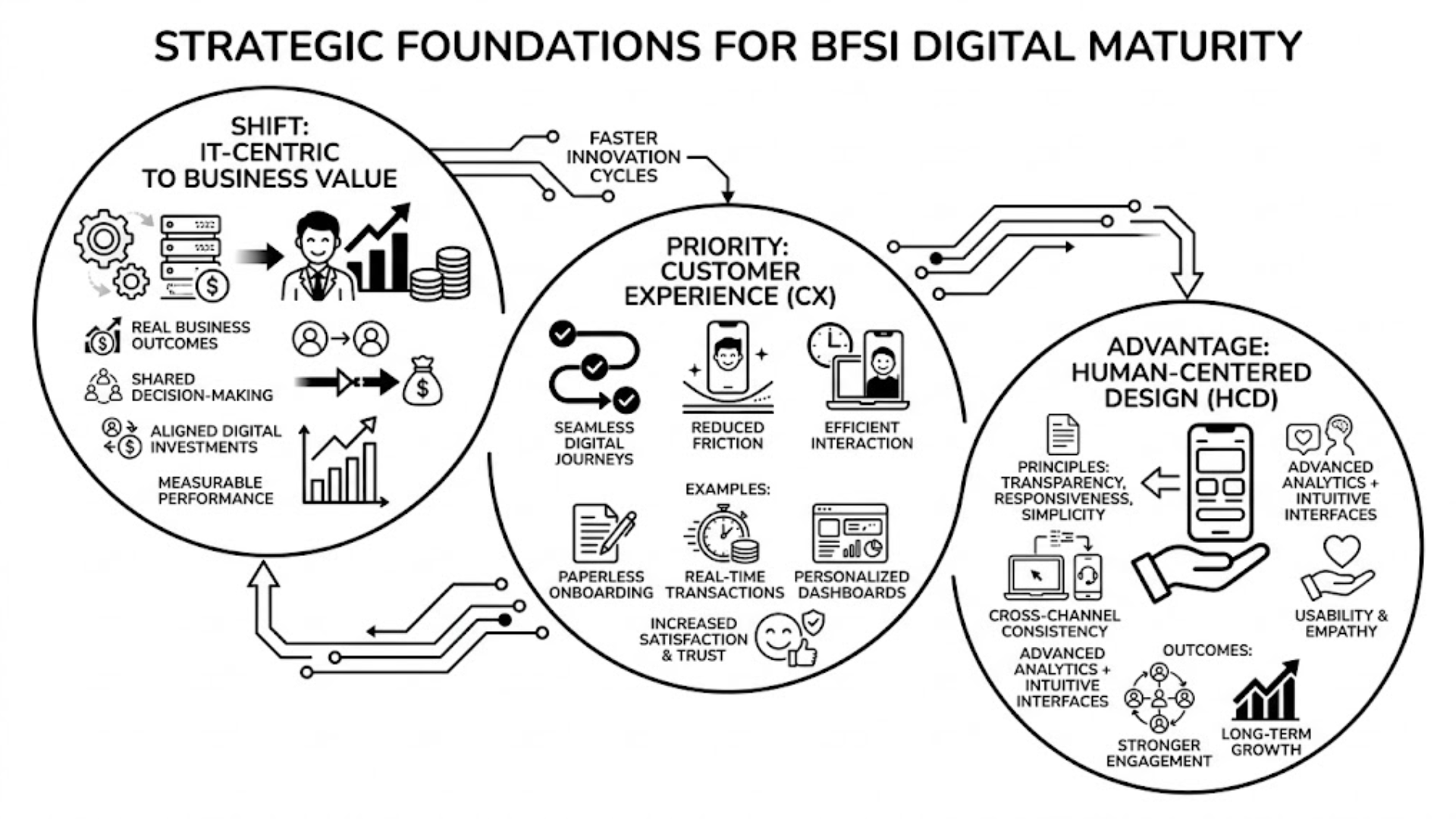
In recent years, digital transformation for BFSI has moved beyond basic IT modernization toward delivering real business outcomes. Decision-making power is increasingly shared between business leaders and technology teams. As a result, organizations can align digital investments more closely with strategic goals such as revenue growth, operational efficiency, and customer retention. This shift enables faster innovation cycles and ensures technology initiatives directly support measurable business performance.
Customer Experience as a Strategic Priority
Improving Customer Experience (CX) has become a primary objective of digital transformation for BFSI initiatives. Financial institutions now focus on creating seamless digital journeys that reduce friction and improve accessibility. For example, paperless onboarding, real-time transactions, and personalized financial dashboards help customers interact with services more efficiently. These enhancements increase satisfaction while strengthening trust in digital channels.
Human-Centered Design as a Competitive Advantage
Leading organizations understand that technology alone does not create loyalty. Instead, successful digital transformation for BFSI integrates human-centered design principles such as transparency, responsiveness, and simplicity. By combining advanced analytics with intuitive interfaces, financial institutions can deliver consistent experiences across mobile apps, online platforms, and support channels. Ultimately, organizations that prioritize usability and empathy will achieve stronger customer engagement and long-term growth.
Technology Pillars Shaping Digital Transformation for BFSI
To achieve meaningful results, organizations must build digital transformation for BFSI on a foundation of integrated technologies. These solutions work together to create secure, scalable, and intelligent financial ecosystems. Rather than operating independently, modern technologies connect data, workflows, and decision-making processes to enable faster innovation and better customer outcomes.
AI and Agentic AI as Strategic Growth Drivers
Artificial Intelligence has evolved from experimental pilots into a core component of digital transformation for BFSI strategies. Financial institutions increasingly rely on AI to automate complex processes such as credit scoring, fraud detection, and regulatory compliance monitoring. As adoption continues to grow, AI enables organizations to deliver personalized services, improve risk accuracy, and strengthen operational resilience.
Agentic AI represents the next stage of this evolution. Instead of performing isolated tasks, AI agents can manage entire workflows, supporting employees in decision-making and reducing manual effort. For example, AI can analyze financial documents, pre-fill loan applications, and identify risk signals in real time. This capability significantly accelerates processing speed while improving accuracy and compliance performance.
Hybrid Cloud and Core System Modernization
Legacy infrastructure often limits the scalability of innovation initiatives. Therefore, modern digital transformation for BFSI strategies prioritize cloud-native and composable architectures. Hybrid cloud environments allow financial institutions to combine the flexibility of public cloud platforms with the control of private infrastructure. This approach supports secure data management while enabling faster deployment of digital products.
By integrating APIs and modular services, organizations can modernize core systems without disrupting existing operations. As a result, banks can improve time-to-market for new offerings while maintaining regulatory compliance and data security standards.
Intelligent Automation with RPA and Document Processing
Robotic Process Automation (RPA) plays a key role in reducing operational costs and improving workflow efficiency. Within digital transformation for BFSI, RPA automates repetitive tasks such as data entry, reconciliation, and compliance checks. When combined with Optical Character Recognition (OCR) and AI-powered document understanding, automation tools can extract and process information from large volumes of financial documents.
These intelligent workflows reduce processing time, minimize human error, and allow employees to focus on strategic and customer-facing activities. Ultimately, automation helps financial institutions scale operations while maintaining high levels of accuracy and service quality.
| Core Technology | Implementation within BFSI Organizations | Quantitative & Strategic Impact |
|---|---|---|
| Artificial Intelligence (AI) & ML | Predictive risk models, automated credit analysis, empathetic NLP chatbots. |
Up to 80% reduction in manual processing time; positive ROI within 6-8 months. |
| Generative & Agentic AI | Synthetic data generation for model training, drafting legal and loan memos. |
Maximizes privacy security; unlocks the capacity for the “10x bank” model. |
| Hybrid Cloud Architecture | Composable architectures, balancing workloads between public and on-premise servers. |
Reduces hardware maintenance costs, accelerates product time-to-market. |
| RPA & Intelligent Automation | Account reconciliation, automated KYC/AML verification, multi-system compliance reporting. |
Eliminates human error, drastically cuts back-office operational expenses. |
| Open Banking & APIs | API ecosystem integration with e-commerce, authorized data sharing. |
Expands financial distribution channels (Embedded Finance), creates new revenue streams. |
Case Studies: Practical Implementation and Business Impact
Understanding digital transformation for BFSI becomes clearer when examining real-world implementations. Leading financial institutions demonstrate how strategic technology adoption improves efficiency, enhances customer experience, and generates measurable business value. These examples highlight how innovation directly translates into competitive advantage across multiple financial segments.
AI Virtual Assistants Transform Retail Banking CX
AI-powered virtual assistants have redefined customer service standards in modern banking. In the United States, Bank of America reported 26 billion digital interactions in 2024, reflecting strong adoption of digital channels. Its AI assistant Erica handled more than 676 million customer requests, providing instant support across mobile and online banking platforms.
Similarly, NatWest Group deployed its AI assistant Cora, which managed over 11 million conversations within one year. These solutions demonstrate how digital transformation for BFSI enables financial institutions to provide 24/7 personalized support while reducing operational costs and improving response times.
Back-Office Automation Improves Compliance Efficiency
Automation technologies also deliver strong value in regulatory and operational workflows. A major Caribbean financial services provider faced the challenge of updating records for more than 4,000 high-risk customers within its core banking system. Manual processing would have required significant human resources, extensive document verification, and repetitive data entry tasks.
By implementing RPA combined with AI-powered document understanding, the organization automated data validation, document classification, and compliance checks. This digital transformation for BFSI initiative enabled the institution to meet regulatory requirements efficiently while avoiding additional hiring costs. As a result, operational risk decreased and compliance processes became faster and more accurate.
Advanced Analytics Strengthen Investment Decision-Making
In wealth management and investment banking, advanced analytics plays a critical role in improving portfolio performance. Financial institutions now use big data platforms and machine learning models to process large volumes of market signals in real time. These insights support more accurate risk pricing, faster onboarding processes, and stronger compliance with regulatory standards.
Through digital transformation for BFSI, organizations can continuously refine underwriting models, optimize portfolio allocation strategies, and improve transparency for investors. Ultimately, data-driven decision-making helps institutions increase returns while maintaining strong governance and risk control frameworks.
Explore how SmartDev partners with BFSI teams through a focused AI sprint to validate use cases, align stakeholders, and define a clear path forward before AI development begins.
SmartDev helps BFSI organizations clarify AI use cases and assess feasibility, enabling confident decisions and reducing risks before committing to AI development.
Learn how SmartDev accelerates AI initiatives, ensuring rapid deployment and reduced time to market.
Strengthen Your BFSI Security Testing with UsThe Implementation Roadmap for BFSI Digital Transformation
Turning a technological vision into reality requires a structured, data-driven, and iterative execution roadmap. McKinsey’s renowned “4D” framework (Discover, Design, Deliver, De-risk) offers a perfect philosophical foundation: Discover the business strategy, Design breakthrough customer journeys, Deliver via a partner network, and De-risk by focusing on quick wins. Based on this, an exemplary implementation roadmap for BFSI institutions in 2026 is divided into three core phases.
Phase 1: Comprehensive Assessment and Foundation Building (Weeks 1 – 8)
Every transformation effort must originate from business goals, not just an infatuation with new technology.
- Current-State Assessment and Gap Analysis: Conduct an in-depth audit of the existing technology landscape, identify bottlenecks in legacy systems, and document workflows that consume the most time.
- Define Vision and Build the ROI Case: Clearly establish core Key Performance Indicators (KPIs), such as reducing customer churn, accelerating credit approvals, or enhancing automated compliance. Investment proposals require strong sponsorship and commitment from the C-suite.
- Vendor Evaluation and Selection: Objectively evaluate platform providers and IT outsourcing partners. This requires rigorous vetting of security standards, reliability checks from past implementations, and assessing the flexibility of collaboration models.
- Prioritize Initiatives (Quick Wins): Avoid the trap of trying to replace the entire architecture overnight. Select 1 to 2 high-impact, low-risk pilot projects, such as deploying RPA for end-of-day reconciliation to quickly prove the model works and build internal confidence.
Phase 2: Process Redesign and Core Deployment (Months 2 – 6)
This is the juncture where engineering integrates deeply into business processes.
- Data Migration and Standardization: Move critical, fragmented business data into a centralized, governed format to provide a clean “food source” for AI algorithms and real-time analytics pipelines.
- Business Process Redesign: Digital transformation isn’t about digitizing obsolete processes. Banks must boldly eliminate cumbersome approval steps and redesign the customer journey based on a “digital-first” philosophy.
- Pilot Technology Deployment: Launch core applications (like upgrading core banking modules or integrating payment APIs). Typically, visible improvements in KPIs and early successes begin to emerge around month three. Concurrently, roll out comprehensive communication and training programs for staff adopting the new systems.
Phase 3: Deep AI Integration and Scaling (Months 6 – 24)
The final phase focuses on turning digital transformation into a continuous improvement loop rather than a project with a finish line.
- Launch the AI Ecosystem: Deploy machine learning and AI algorithms deep into operational workflows, from omnichannel service personalization to real-time anti-money laundering (AML) detection.
- Optimize and Scale: Expand successful pilot projects across all branches and departments. Measurable cost savings usually become evident between 6 and 12 months, while the overall break-even point (positive ROI) is typically achieved between 12 and 18 months for focused initiatives.
- Risk Management and Iteration: Continuously update cybersecurity defenses and utilize Agile methodologies to regularly gather feedback and iterate features based on real-time market fluctuations.
| Roadmap Phase | Estimated Timeframe | Core Activities & Target Outcomes |
|---|---|---|
| Phase 1: Assessment & Preparation | Weeks 1 – 8 |
Assess legacy architecture, define ROI cases, evaluate IT outsourcing vendors, target “Quick Wins”. |
| Phase 2: Pilot & Redesign | Months 2 – 6 |
Centralize data, redesign workflows, deploy automation tools, record initial KPI improvements. |
| Phase 3: Acceleration & Scaling | Months 6 – 24 |
Embed AI into core workflows, scale cross-departmental automation, achieve positive ROI, establish continuous iteration. |
Common Pitfalls and Risk Management Strategies
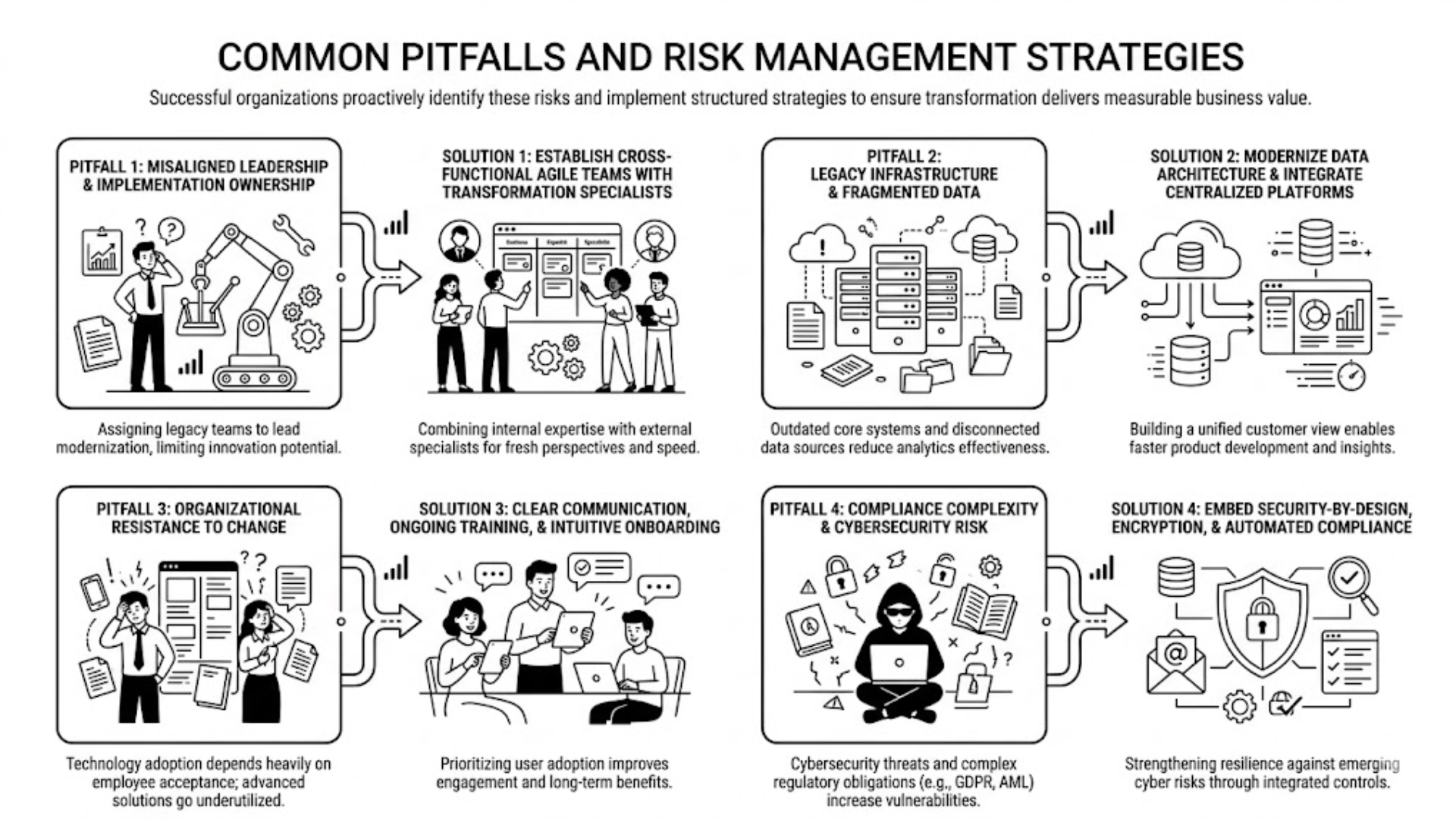
While digital transformation for BFSI offers significant opportunities, many initiatives fail due to internal misalignment, outdated infrastructure, and regulatory complexity. Successful organizations proactively identify these risks and implement structured strategies to ensure transformation delivers measurable business value.
Pitfall 1: Misaligned Leadership and Implementation Ownership
A common mistake in digital transformation for BFSI is assigning legacy system teams to lead modernization initiatives. These teams may unintentionally adapt new technologies to outdated processes, limiting innovation potential. Financial institutions should instead establish cross-functional Agile teams that combine internal business expertise with external transformation specialists. This structure encourages fresh perspectives and accelerates implementation speed.
Pitfall 2: Legacy Infrastructure and Fragmented Data
Outdated core systems and disconnected data sources often slow innovation efforts. Siloed data prevents organizations from building a unified customer view, reducing the effectiveness of analytics and personalization strategies. To maximize the value of digital transformation for BFSI, institutions must modernize data architecture and integrate centralized decision platforms. A unified data environment enables faster product development and more accurate insights.
Pitfall 3: Organizational Resistance to Change
Technology adoption depends heavily on employee and customer acceptance. Without proper change management, even advanced solutions may remain underutilized. Effective digital transformation for BFSI requires clear communication from leadership, ongoing training programs, and intuitive onboarding experiences. Organizations that prioritize user adoption can improve engagement and ensure transformation investments deliver long-term benefits.
Pitfall 4: Compliance Complexity and Cybersecurity Risk
As digital services expand, cybersecurity threats and regulatory obligations also increase. Financial institutions must comply with standards such as GDPR, PCI DSS, and AML/KYC while protecting sensitive customer data. Embedding security-by-design principles into digital transformation for BFSI initiatives helps reduce vulnerabilities and maintain trust. Real-time monitoring, encryption frameworks, and automated compliance controls strengthen resilience against emerging cyber risks.
Evaluating Delivery Models: In-house, Big 4 Consulting, or Offshore Outsourcing?
Selecting the right delivery model is a critical success factor for digital transformation for BFSI. Many financial institutions struggle to bridge the gap between strategic planning and technical execution. Building entirely in-house teams is becoming increasingly difficult due to talent shortages, long hiring cycles, and rising salary expectations. As demand for AI, cloud, and cybersecurity expertise grows, organizations are increasingly turning to external partners to accelerate implementation speed and maintain competitiveness.
In-house Teams: Control with Resource Constraints
Developing solutions internally offers full control over product direction and data governance. However, scaling in-house capabilities for digital transformation for BFSI often requires significant time and investment. Recruiting specialized talent such as AI engineers, cloud architects, and cybersecurity experts can take months, slowing innovation cycles. Internal teams may also lack exposure to diverse transformation projects, limiting their ability to apply best practices efficiently.
Big 4 Consulting Firms: Strong Strategy and Governance
Global consulting firms such as Deloitte, PwC, EY, and KPMG provide strong expertise in regulatory frameworks, risk advisory, and enterprise-level transformation strategies. Their structured methodologies support governance, compliance alignment, and large-scale program management.
However, the scale of these organizations may result in higher consulting fees and slower implementation cycles. For many BFSI institutions, strategy alone is insufficient without agile technical execution capabilities.
Offshore Outsourcing: Agility and Cost Efficiency
Offshore outsourcing partners offer strong technical capabilities combined with flexible delivery models. This approach enables financial institutions to reduce development costs while gaining access to specialized skills such as AI engineering, cloud architecture, and compliance-focused software development. In many cases, offshore partnerships reduce operational costs by 30–60% compared to fully in-house teams.
Within digital transformation for BFSI, offshore teams often operate using Agile methodologies that support rapid iteration, continuous integration, and faster time-to-market. This flexibility allows organizations to scale development resources based on project requirements while maintaining strong control over product customization.
Choosing the Right Model for Long-Term Transformation
Each delivery model offers distinct advantages depending on organizational priorities, budget, and transformation maturity. Many financial institutions adopt hybrid approaches that combine internal domain expertise, consulting guidance, and offshore engineering capacity. By selecting the right partner ecosystem, organizations can accelerate digital transformation for BFSI while balancing cost efficiency, compliance requirements, and innovation speed.
| Strategic Evaluation Criteria | Conglomerate Consulting (Big 4: PwC, Deloitte…) | Specialized Partner (Mid-sized Offshore Outsourcing) |
|---|---|---|
| Core Competencies |
Regulatory auditing, macro-strategy, M&A consulting. |
Software architecture design, custom coding, AI/Fintech deployment. |
| Cost Structure | Requires massive budgets, high project management overhead. |
Reduces overall operating costs by 30% – 60%, optimizing cash flow. |
| Execution Speed & Agility |
Complex hierarchies, lengthy change-request processes. |
High agility (Agile), ultra-fast MVP release times. |
| Service Experience |
Relationships are often transactional and fragmented. |
End-to-end partnership, profound product understanding, and customization. |
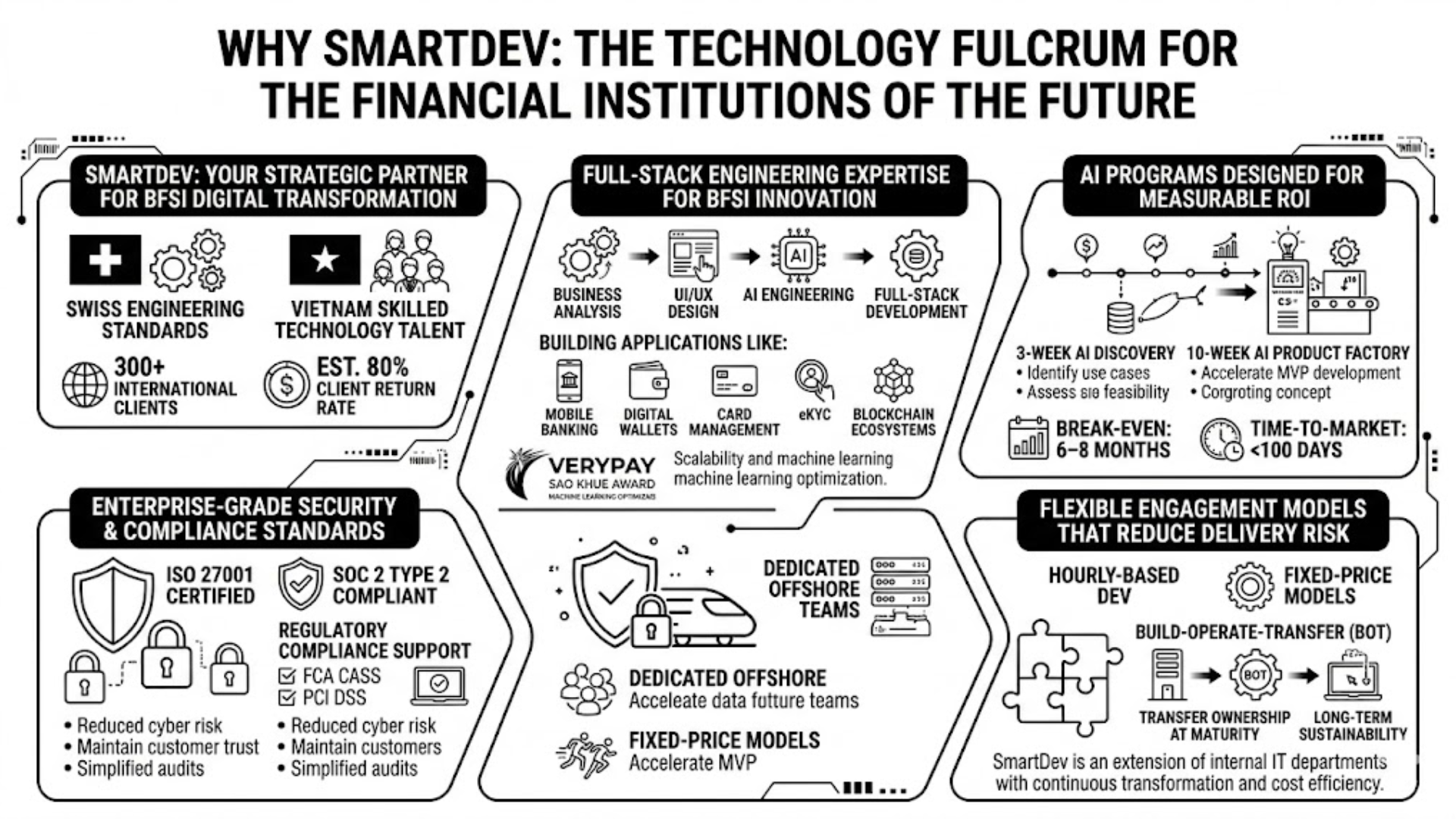
Why SmartDev: The Technology Fulcrum for the Financial Institutions of the Future
As organizations move deeper into the vendor evaluation stage, decision-makers increasingly focus on partners that can demonstrate measurable business outcomes. In the context of digital transformation for BFSI, buyers prioritize vendors that combine engineering expertise, security maturity, and proven delivery speed. The rising search interest in “why SmartDev” reflects a growing trend: financial institutions now benchmark technology providers based on their ability to execute complex digital initiatives with clear ROI.
Founded in 2014 by Swiss entrepreneurs and now part of the Verysell Group, SmartDev operates global delivery centers in Vietnam (Da Nang and Hanoi). By combining Swiss-quality engineering standards with Vietnam’s highly skilled technology talent pool, SmartDev supports more than 300 international clients, achieving an estimated 80% client return rate. This positioning allows SmartDev to deliver scalable, high-performance solutions aligned with modern digital transformation for BFSI priorities.
Full-Stack Engineering Expertise for BFSI Innovation
SmartDev provides an end-to-end capability stack covering Business Analysis, UI/UX design, AI engineering, and full-stack development. This integrated delivery approach supports financial institutions in building mobile banking applications, digital wallets, card management systems, eKYC platforms, and blockchain-enabled financial ecosystems.
A strong example of this capability is VeryPay, a mobile payment platform engineered to scale transaction processing through machine learning optimization. The system enables stable performance during peak transaction volumes while maintaining high security standards. Recognition from Sao Khue Awards in 2024 and 2025 highlights SmartDev’s ability to deliver production-ready fintech solutions that support long-term digital transformation for BFSI strategies.
AI Programs Designed for Measurable ROI
A major challenge in digital transformation for BFSI is proving the business value of AI investments. SmartDev focuses on implementation frameworks that convert AI concepts into deployable solutions with clear financial impact. Structured programs such as the 3-week AI Discovery initiative help organizations identify practical use cases and assess feasibility before committing major resources.
Additionally, the 10-week AI Product Factory model accelerates MVP development, enabling faster validation of digital product ideas. Data from SmartDev deployments indicates that AI-driven initiatives can achieve break-even within 6–8 months, while optimized engineering workflows reduce time-to-market to under 100 days. Faster delivery cycles help financial institutions capture new revenue opportunities earlier in the product lifecycle.
Enterprise-Grade Security and Compliance Standards
Security remains a critical pillar of successful digital transformation for BFSI initiatives. SmartDev applies globally recognized governance frameworks, including ISO 27001 certification and SOC 2 Type 2 compliance, to ensure secure development processes and infrastructure resilience. These standards support strict regulatory requirements across global financial markets, including frameworks aligned with FCA CASS rules and PCI DSS compliance requirements.
Embedding security-by-design principles throughout the development lifecycle helps financial institutions reduce cyber risk exposure while maintaining customer trust. Strong compliance capabilities also simplify regulatory audits and accelerate the approval process for digital financial products.
Flexible Engagement Models that Reduce Delivery Risk
Compared to traditional consulting structures, SmartDev offers flexible collaboration models designed to reduce operational risk and improve scalability. Engagement options include hourly-based development, dedicated offshore teams, fixed-price delivery models, and Build-Operate-Transfer (BOT) structures.
The BOT model allows financial institutions to establish dedicated engineering teams with minimal upfront investment. Once the delivery environment reaches maturity, ownership can be transferred to the client organization, ensuring long-term sustainability. This flexibility allows SmartDev to operate as an extension of internal IT departments, supporting continuous digital transformation for BFSI initiatives while maintaining cost efficiency.
Conclusion
Digital transformation for BFSI requires financial institutions to move beyond legacy systems and adopt agile, AI-driven architectures. Modern transformation initiatives no longer focus only on operational efficiency but also improve customer experience, personalization, and digital engagement. Organizations that combine strong execution capability with secure and scalable infrastructure gain a clear competitive advantage.
However, executing digital transformation for BFSI entirely in-house or relying only on traditional consulting models can slow innovation and increase costs. Many financial institutions now partner with specialized technology providers to accelerate delivery speed, access niche expertise, and reduce operational risk.
SmartDev provides a practical path to close the execution gap through strong engineering expertise, measurable ROI-driven AI programs, and enterprise-grade security standards. By combining flexibility with deep fintech experience, SmartDev enables organizations to implement digital transformation for BFSI faster, safer, and more sustainably.