Healthcare stands at one of the most defining moments in its modern history. Rising system pressures, shifting expectations, and rapid technological breakthroughs are converging all at once. Against this backdrop, Ctrl + Shifter EP07: Agentic AI in Healthcare — Transforming Medical Innovation brings a rare inside view from healthcare executive Sandip Kumar, who has spent years navigating both the operational trenches and the executive boardrooms of major health systems.
His message is clear: healthcare innovation is no longer about adopting new tools — it’s about rethinking how care works from the inside out. And agentic AI, a new generation of AI that doesn’t just analyze but takes action, may be one of the most transformative forces yet.
1. Why Healthcare Innovation Matters Now
Healthcare organizations everywhere face intensifying pressures. Costs continue to rise, clinician burnout remains high, and operational systems struggle to keep pace with demand. Innovation is no longer something leaders do when they have extra time or budget — it has become a strategic necessity.
Sandip captures the reality bluntly: “Healthcare has many pressures… high costs, staffing issues, and operational friction everywhere.”
These aren’t abstract challenges. They show up in every delayed appointment, every overwhelmed nurse, every patient waiting weeks for a specialist.
Healthcare innovation matters now because the traditional ways of working aren’t enough. Systems must evolve if they want to continue delivering safe, high-quality care. The urgency has, in many ways, become the catalyst for innovation itself.
2. Healthcare Innovation Starts with Real Problems
One of the most overlooked truths about innovation is that it succeeds only when it tackles the right problems. Many organizations start with technology first — but Sandip emphasizes that real transformation begins with understanding operational reality.
He shares a striking insight from his experience: “Most people don’t realize we’re missing 25% of efficiency in our daily operations.”
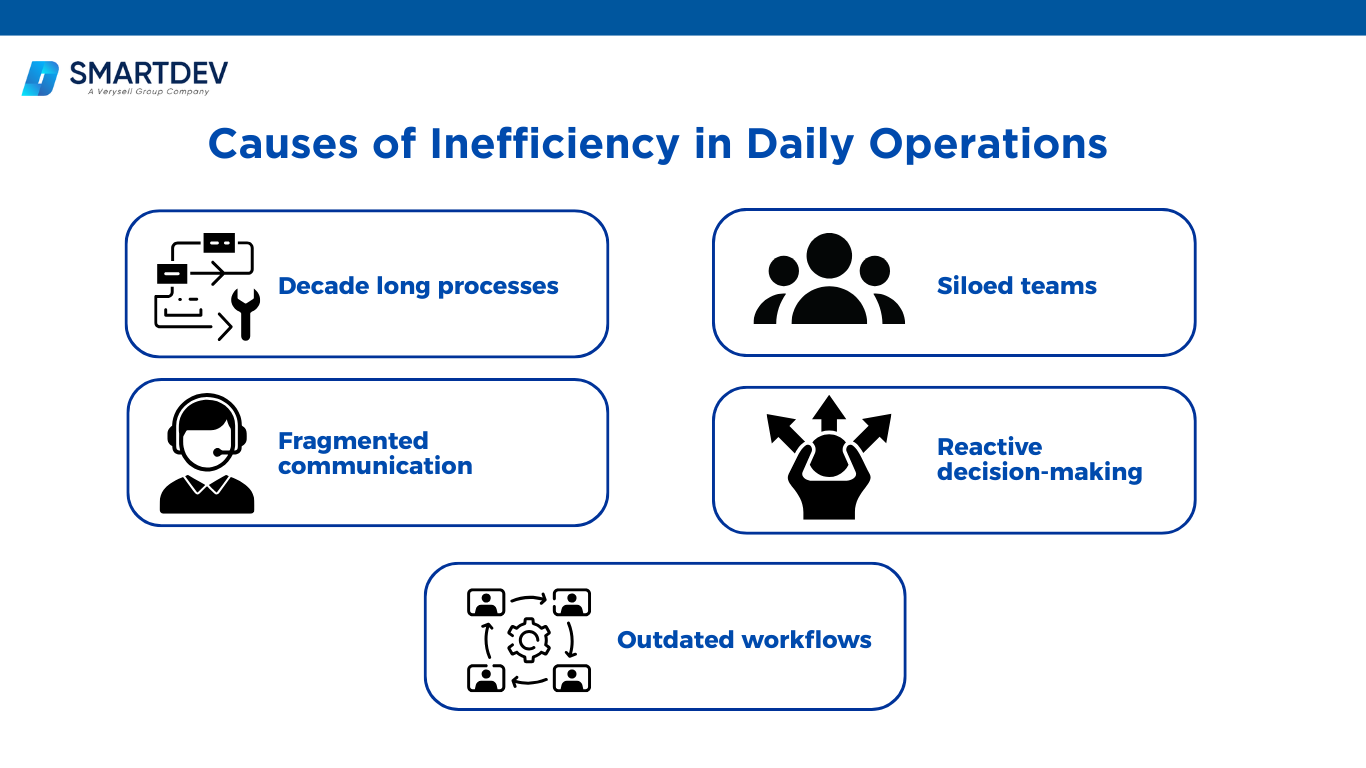
This inefficiency isn’t caused by poor intentions or lack of effort, but by:
- Processes built decades ago
- Fragmented communication
- Outdated workflows
- Siloed teams
- Reactive decision-making
Innovation must target these underlying issues. That’s why Sandip’s mantra — “Think big, start small, start fast” — has resonated deeply across healthcare teams. It reframes innovation from being a massive overhaul to something iterative, practical, and grounded in real-world challenges.
3. Why Agentic AI Is Emerging in Healthcare Innovation
Traditional AI systems excel at providing insights, but agentic AI goes further. It can interpret context, coordinate tasks, recommend next steps, and act within workflows. This shift from passive intelligence to active collaboration is exactly why agentic AI is gaining momentum in healthcare innovation.
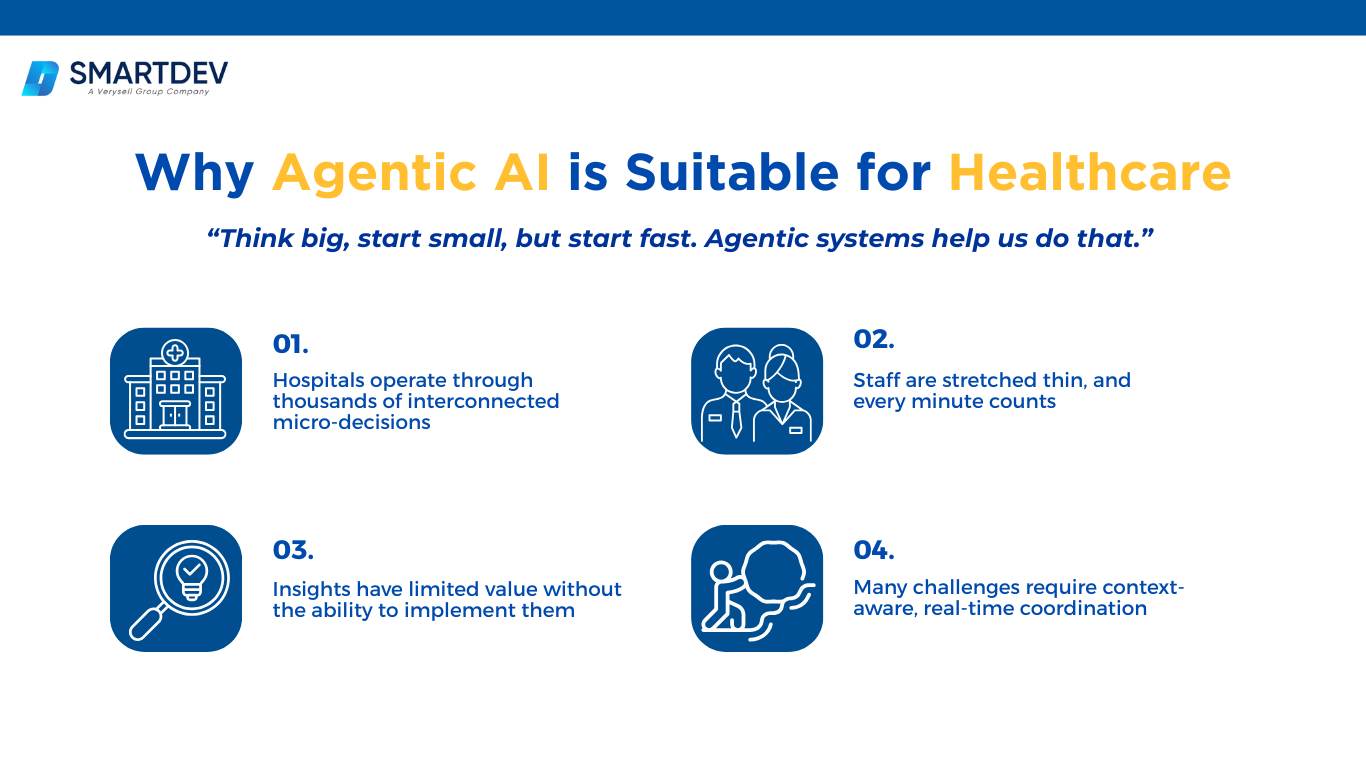
As Sandip notes: “Think big, start small, but start fast. Agentic systems help us do that.”
What makes agentic AI so well-suited for healthcare?
- Hospitals operate through thousands of interconnected micro-decisions
- Staff are stretched thin, and every minute counts
- Insights have limited value without the ability to implement them
- Many challenges require context-aware, real-time coordination
In essence, agentic AI behaves like an operational co-pilot — identifying issues before they escalate, nudging workflows in the right direction, and reducing the cognitive load on clinical teams. It fills the gap between insight and action, which has historically been one of healthcare’s biggest obstacles.
 4. Healthcare Innovation in Practice: How AI Improves Hospitals
 4. Healthcare Innovation in Practice: How AI Improves Hospitals
Innovation becomes real when it touches everyday operations. In the episode, Sandip shares an example from a project called Yara, an agentic AI solution helping hospitals streamline their most complex workflows.
He paints the picture clearly: “If you work in a hospital, you’ll see inefficiencies everywhere. Yara helps us tackle those hidden gaps.”
How AI is improving hospitals in practice:
- Reducing waiting times by forecasting patient demand
- Optimizing staff allocation so clinicians spend more time with patients
- Automating repetitive tasks, freeing nurses from administrative overload
- Spotting operational bottlenecks early to prevent delays
- Pulling insights from multiple data systems so decisions are faster and more informed
Sandip describes it beautifully: “We’re not just improving efficiency. We’re improving the care journey.”
This is where healthcare innovation shines — not in futuristic theories, but in real, tangible improvements that patients and clinicians can feel every day.
5. The Human Side of Healthcare Innovation
No matter how powerful the technology, innovation rises or falls on people. Adoption, trust, and cultural readiness matter just as much as algorithms.
Sandip reflects on this from personal experience: “I spent so much time understanding people and the workflow… technology alone won’t fix healthcare.”
Successful healthcare innovation requires:
- Leadership alignment around shared goals
- Transparent communication that reduces uncertainty
- Involvement from clinicians early in the design process
- Training that builds confidence rather than fear
- Small, visible wins that build momentum
Technology might spark transformation, but people make it real. And as Sandip points out, the work of building trust and clarity is often harder than building the technology itself — but it’s the work that matters most.
6. What’s Next for Healthcare Innovation
Looking forward, healthcare innovation will extend far beyond AI adoption. The systems we build today will shape entirely new roles, care models, and patient experiences.
One of Sandip’s most intriguing predictions involves the rise of new talent: “We’ll see the rise of flowgrammers — people who design workflows with AI.”
This signals a shift toward systems where humans and AI collaborate seamlessly to orchestrate care.
Future healthcare innovation may include:
- AI-assisted care pathways that adapt to patient needs
- Hospitals that dynamically optimize their operations
- Workforce models where technology handles routine load, allowing clinicians to focus on complex care
- Patient experiences with less friction, shorter waits, and more clarity
And guiding all of this is a mindset Sandip repeats often: “Think big, start small, start fast.”
This approach may be the real driver of healthcare innovation — with agentic AI accelerating the journey.