
What Is Agile Methodology?
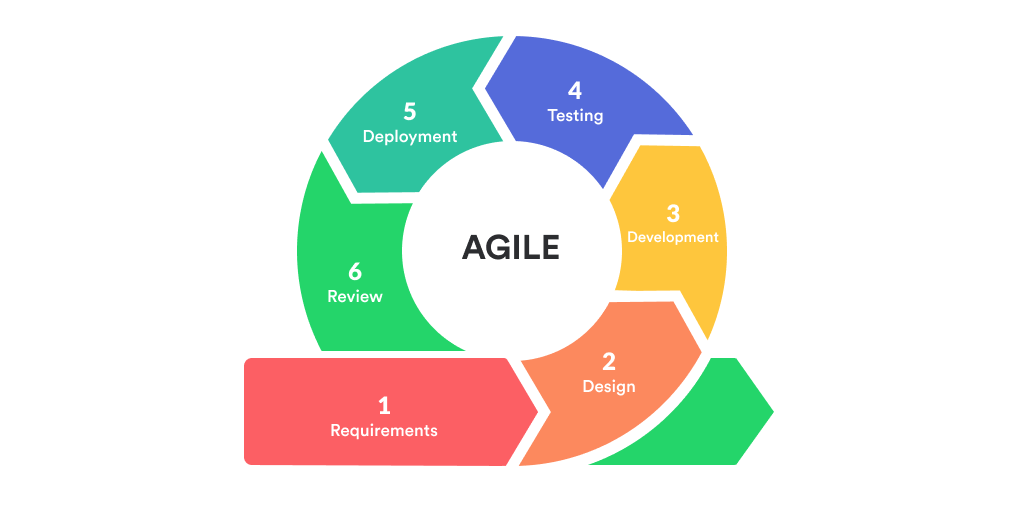
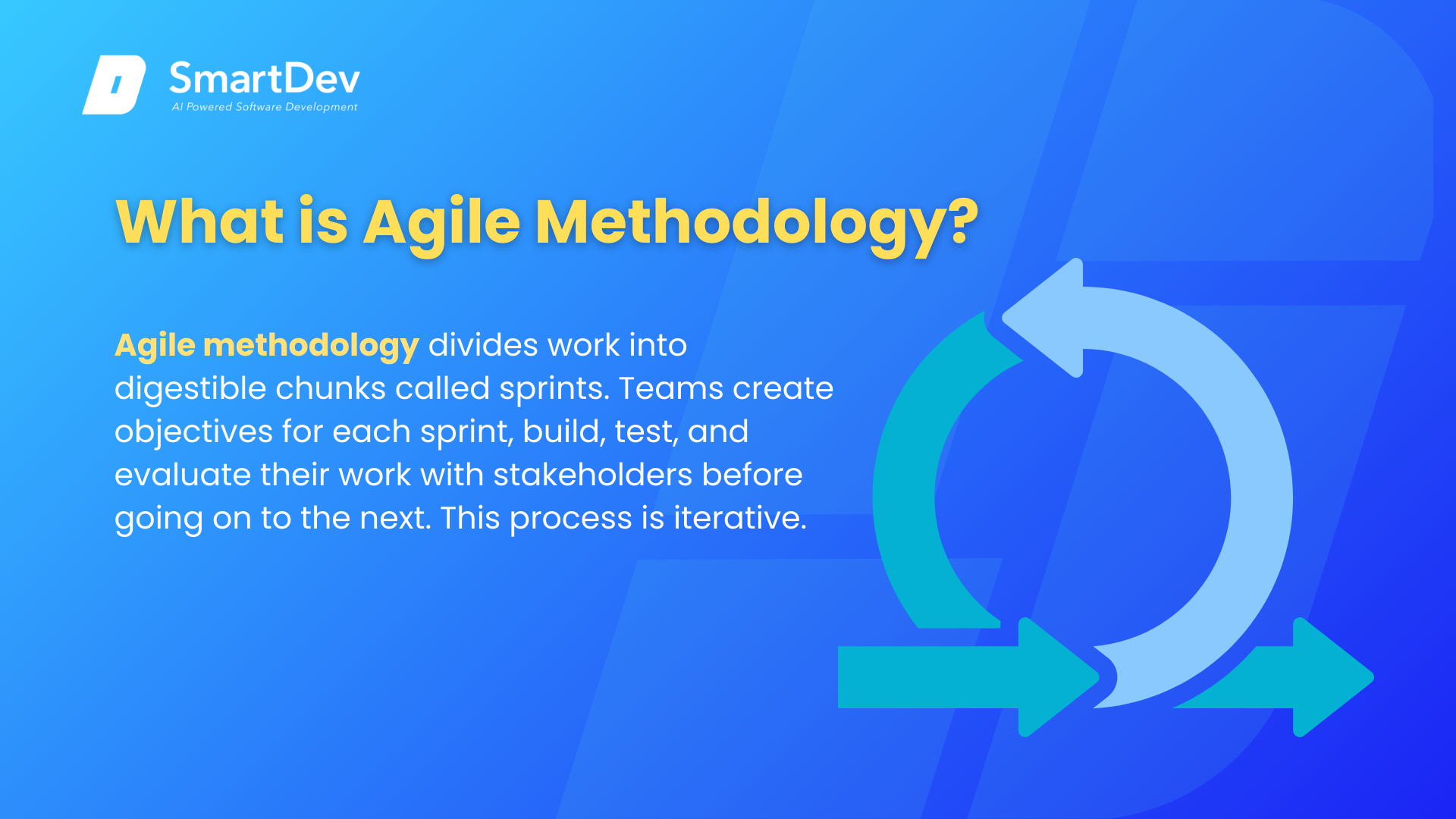
Agile methodology divides work into digestible chunks called sprints. Teams create objectives for each sprint, build, test, and evaluate their work with stakeholders before going on to the next. This process is iterative. Teams evaluate their performance at the end of each sprint to determine what could be improved. Teams that receive regular feedback are better able to meet client needs, adjust to change, and provide outcomes more quickly.
Key characteristics of Agile include incremental product delivery, continuous customer feedback, adaptive planning and frequent testing and improvement. There are four common Agile frameworks from scrum, kanban, extreme programming to lean software development that share same principles but differ in execution methods and team workflows.
Why is Agile Methodology Important?
Agile has become a dominant development methodology because it addresses many limitations of traditional project management approaches such as the Waterfall model. The main benefits include:
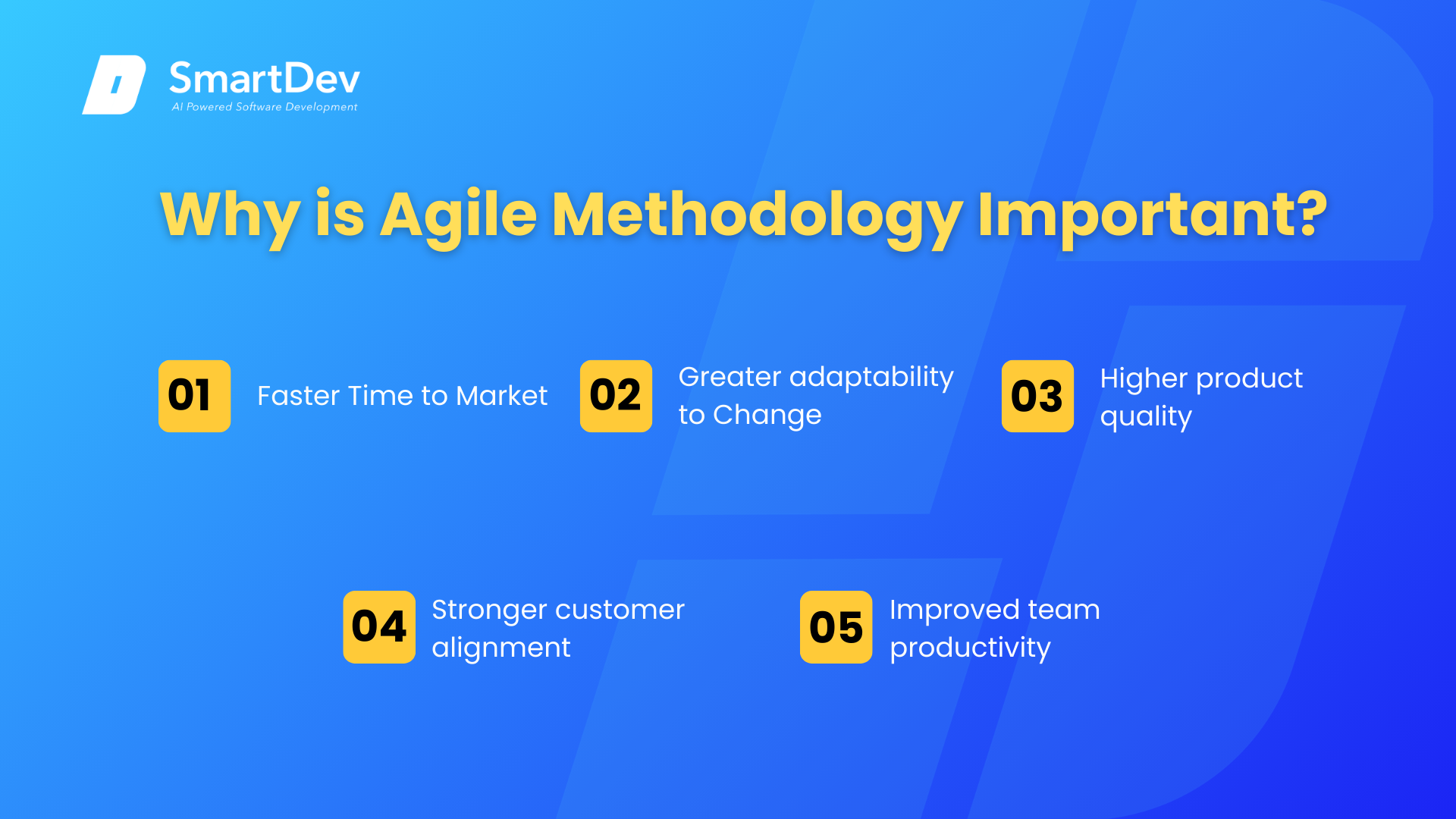
1. Faster Time to Market
2. Greater Adaptability to Change
3. Higher Product Quality
4. Stronger Customer Alignment
Frequent feedback loops are a key component of Agile methodology, playing a crucial role in ensuring that the final product aligns closely with user needs and business goals. By engaging stakeholders and users regularly through demonstrations, reviews, and testing sessions, teams can gather valuable insights and reactions that guide the development process. This iterative feedback mechanism allows teams to make informed adjustments and prioritize features that hold the most value for users, thereby enhancing user satisfaction
5. Improved Team Productivity
Agile methodology fosters a culture of transparency, ownership, and collaboration, which are vital for the success of modern development teams. By encouraging open communication through regular meetings, such as daily stand-ups and sprint reviews, team members have the opportunity to share progress, challenges, and insights, creating a transparent environment where everyone is aware of project status. This level of openness cultivates a sense of ownership among team members, as they take responsibility for their contributions and feel empowered to influence the direction of the project.
Moreover, Agile emphasizes collaboration across various roles, breaking down silos and promoting cross-functional teamwork. Such collaboration not only enhances creativity and problem-solving but also ensures that diverse perspectives are considered, leading to more innovative and high-quality solutions. Ultimately, this supportive framework nurtures a cohesive team dynamic, driving both individual and collective success in delivering robust and effective products.
Who Should Use Agile Methodology?
We believe agile is used by a wide range of organizations and professionals involved in product development and digital transformation. Typical stakeholders include:

| Role | Responsibility |
|---|---|
| Product Owners | Define product requirements and prioritize features |
| Scrum Masters / Agile Coaches | Facilitate Agile processes and remove obstacles |
| Development Teams | Build and test product features |
| UX Designers | Improve user experience based on feedback |
| QA Engineers | Ensure product quality through continuous testing |
| Business Stakeholders | Align product development with business objectives |
When Should Agile Methodology Be Used?
Agile is most effective in environments where requirements are uncertain or likely to change over time. Organizations should consider Agile when product requirements are evolving, customer feedback is essential during development, rapid innovation is required, and speed to market is a competitive advantage. Conversely, Agile may be less suitable for projects with strict regulatory requirements or highly fixed specifications, where traditional structured approaches may be more appropriate.
| Situation | Agile Suitability |
|---|---|
| Innovative software products | High |
| AI and data science projects | High |
| Startup product development | High |
| Infrastructure deployment | Medium |
| Highly regulated systems | Lower |
How Does Agile Methodology Work?
Agile operates through short development cycles known as iterations or sprints, typically lasting 1–4 weeks. A typical Agile workflow includes:
1. Product Backlog Creation
This initial phase involves compiling all project tasks, features, and requirements into a comprehensive product backlog. The items in the backlog are prioritized based on their value to the business and users, ensuring that the most critical tasks are addressed first. The backlog serves as a dynamic document, evolving as new features and requirements emerge throughout the project.
2. Sprint Planning
During sprint planning, the team meets to select a subset of the high-priority tasks from the product backlog to work on during the upcoming sprint. This phase involves estimating the effort required for each task and defining clear goals, ensuring that all team members share the same understanding of the work ahead.
3. Iterative Development
Throughout the sprint, developers engage in iterative development, building and testing features incrementally. This iterative approach allows teams to incorporate feedback and make adjustments in real-time, ensuring that the product continuously evolves towards meeting user needs.
4. Daily Stand-Ups
These short, focused meetings, typically lasting 15 minutes, help synchronize the team’s efforts by allowing each member to share their progress, discuss what they plan to accomplish next, and identify any obstacles they may be facing. This routine fosters accountability and keeps everyone aligned.
5. Sprint Review
At the end of each sprint, a sprint review is conducted where the team demonstrates the completed work to stakeholders. This process not only showcases accomplishments but also invites valuable feedback that can influence the next steps, ensuring that the product continues to align with stakeholder expectations.
6. Sprint Retrospective
Following the sprint review, the team holds a retrospective to reflect on the sprint’s processes and outcomes. This is an opportunity to discuss what went well, what could be improved, and how to implement changes in the next sprint. This continuous improvement mindset is central to Agile, empowering teams to enhance their efficiency and effectiveness over time.
How Much Does Agile Methodology Cost to Implement?
The cost of implementing Agile Methodology is generally less about purchasing technology and more about transforming processes, team structures, and organizational culture. Unlike traditional project frameworks that often require heavy upfront planning and rigid governance models, Agile focuses on continuous improvement and collaboration. As a result, most organizations invest primarily in training, coaching, and workflow transformation rather than large infrastructure changes. At SmartDev, we follow Agile methodologies and clear communication to ensure project adaptability, seamless execution, and on-time delivery.
Other Related Terms
1. Scrum Framework
Scrum is a lightweight Agile framework that organizes work into short iterations called sprints, typically lasting two to four weeks. It defines specific roles such as Product Owner, Scrum Master, and Development Team, along with structured ceremonies including sprint planning, daily stand ups, sprint reviews, and retrospectives.
2. Kanban Workflow
Kanban is a workflow management method that focuses on visualizing tasks, limiting work in progress, and improving continuous delivery. Work items move across a visual board representing different stages of the workflow such as To Do, In Progress, and Done.
3. CI/CD Pipelines
CI/CD refers to a set of development practices that automate the integration, testing, and deployment of code. Continuous Integration ensures that code changes are frequently merged and tested, while Continuous Delivery allows software to be released quickly and reliably.