
Artificial intelligence (AI) is rapidly reshaping the Business Process Outsourcing (BPO) industry, bringing innovative solutions that are transforming how companies operate. As businesses face increasing pressure to reduce costs, improve efficiency, and enhance customer experiences, the integration of AI technologies into BPO services has become essential. AI enables automation of repetitive tasks, accelerates data analysis, and enhances decision-making, which leads to improved operational efficiency and cost savings. Moreover, AI-powered tools such as chatbots, predictive analytics, and robotic process automation (RPA) are redefining customer service and internal processes. This transformation allows BPO companies to offer more value to their clients while staying competitive in an ever-evolving marketplace.
The growing adoption of AI in BPO is not just about improving existing processes, but about enabling companies to drive innovation and deliver more personalized services. Businesses are increasingly recognizing that AI is not a luxury but a necessity to remain competitive and future-proof their operations. According to IBM, AI-driven BPO solutions are expected to reach $10 billion by 2025, as organizations aim to leverage these technologies to enhance customer experiences, improve productivity, and lower operational costs. In this article, we will explore how AI is transforming BPO, the benefits it brings, the challenges to consider, and how businesses can implement AI effectively to stay ahead in the industry.
What is AI and Why Does It Matter in BPO?
What is AI?
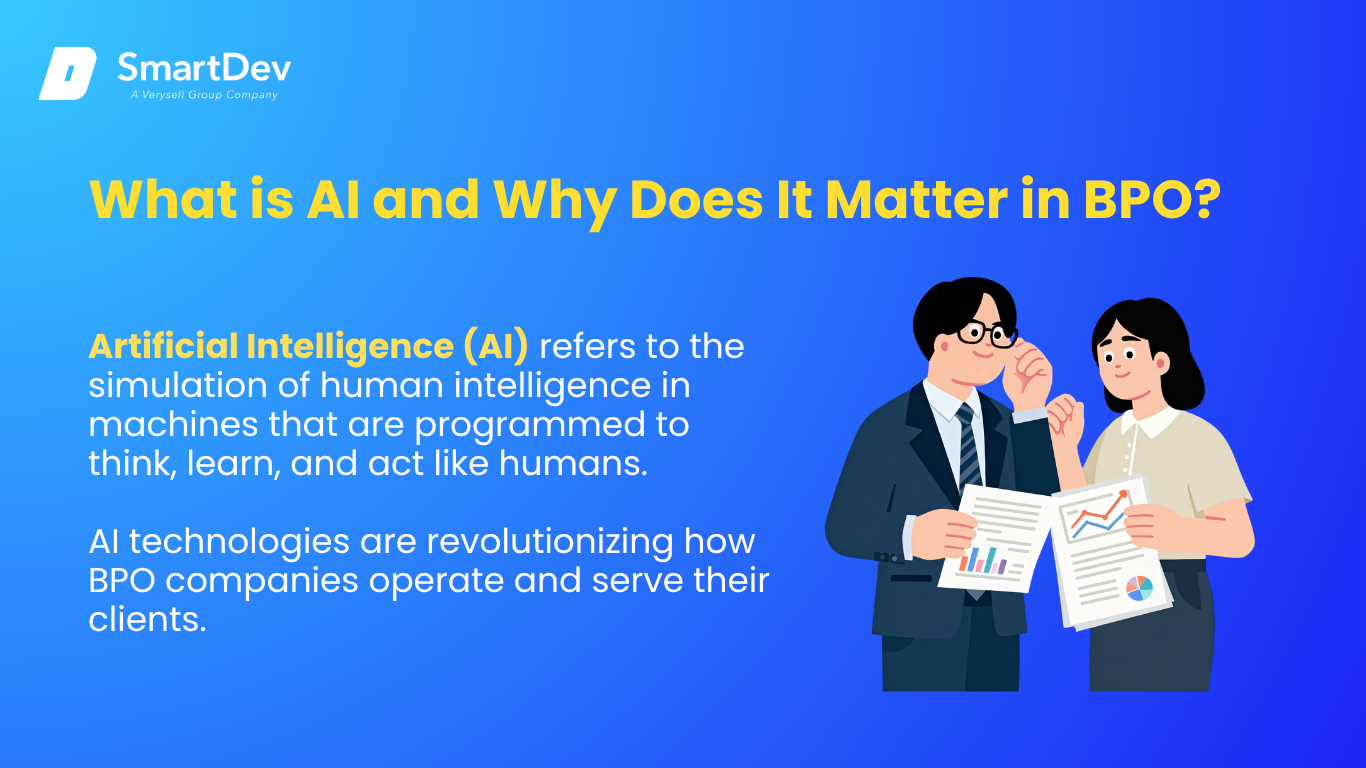
Artificial Intelligence (AI) refers to the simulation of human intelligence in machines that are programmed to think, learn, and act like humans. AI incorporates several core technologies such as machine learning (ML), natural language processing (NLP), and computer vision. Machine learning allows AI systems to improve their performance over time by learning from vast amounts of data, without the need for explicit programming. NLP enables machines to process, understand, and generate human language, which is crucial in applications like customer service chatbots. Computer vision, on the other hand, empowers AI systems to interpret and analyze visual data, enabling tasks like image recognition or even video surveillance.
AI has a wide range of applications in industries from healthcare to finance, and it is also transforming the Business Process Outsourcing (BPO) industry. By automating repetitive tasks, optimizing workflows, and enhancing decision-making, AI technologies are revolutionizing how BPO companies operate and serve their clients. In particular, the role of AI in customer service, data processing, and decision support systems has been a game-changer for businesses looking to cut costs, improve service quality, and drive efficiency.
The Growing Role of AI in Transforming BPO
AI is increasingly reshaping the BPO industry, offering several key benefits that drive efficiency and competitiveness:
- Automation of Repetitive Tasks: AI technologies like Robotic Process Automation (RPA) help automate time-consuming tasks such as data entry, invoice processing, and customer queries, reducing human labor and errors.
- Improved Decision-Making: AI analyzes large volumes of data to provide valuable insights, enabling better decision-making in areas like forecasting, inventory management, and strategic planning.
- Enhanced Customer Service: AI-powered chatbots and virtual assistants, driven by Natural Language Processing (NLP), offer instant and personalized support, improving customer satisfaction and reducing wait times.
- Cost Reduction: By automating tasks and streamlining processes, AI helps businesses lower operational costs while maintaining high-quality services.
- Market Competitiveness: The growing adoption of AI allows BPO companies to stay ahead by offering scalable, efficient, and data-driven services that give them a competitive edge in the industry.
As noted by SmartDev and other industry leaders, AI’s impact on BPO is undeniable, with the market expected to surpass $10 billion by 2025.
Business Benefits of AI in BPO
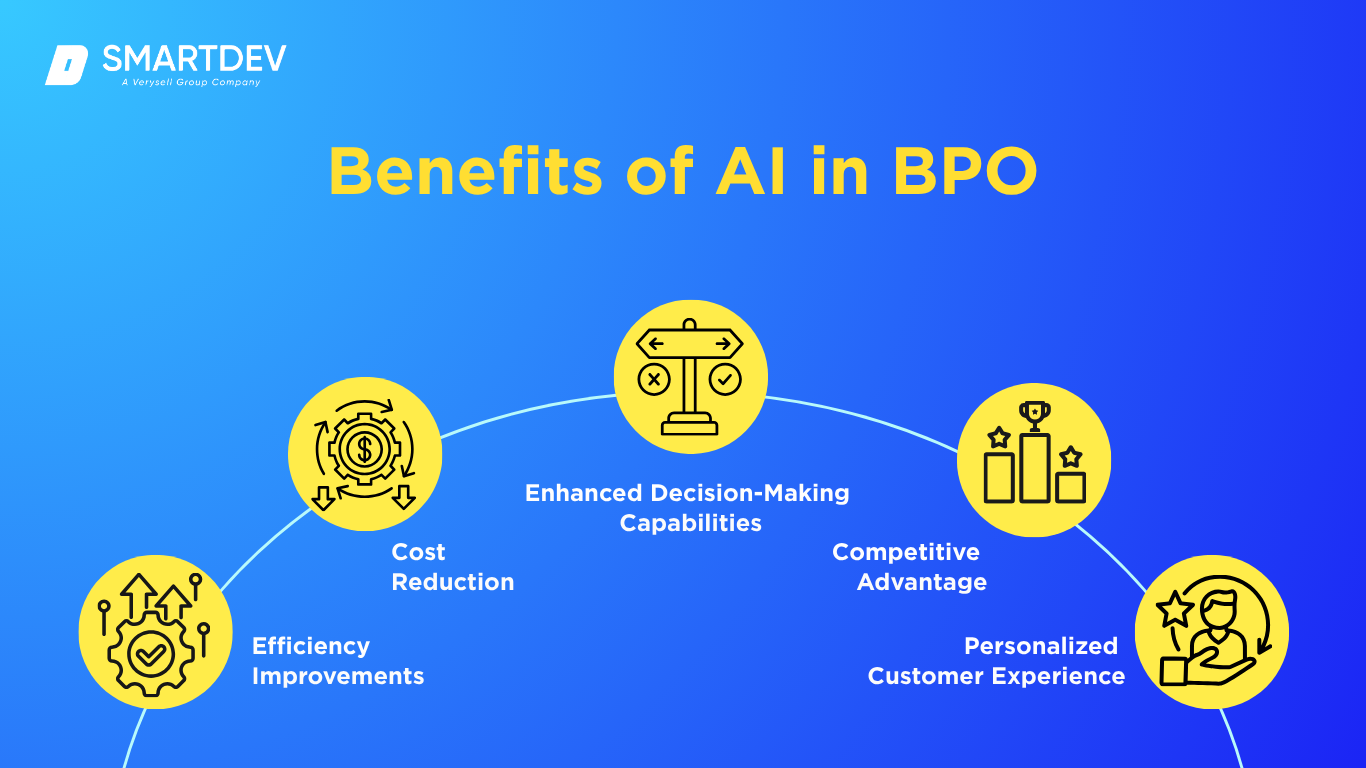
The integration of AI into business processes brings several tangible benefits. Here are five critical advantages that AI provides to BPO:
1. Efficiency Improvements
AI-driven automation greatly enhances the efficiency of BPO operations. By automating repetitive tasks like data entry, invoice processing, and handling customer inquiries, AI speeds up processes and reduces human error. This leads to faster delivery of services and enables BPO companies to handle larger volumes of work without increasing the workforce. Since AI can process data continuously and without breaks, it ensures high productivity levels, even during off-hours or weekends.
Moreover, AI enables employees to focus on more complex and high-value tasks that require human creativity and decision-making. Instead of spending time on mundane and repetitive activities, employees can now concentrate on innovation, customer relations, and strategic planning. This division of labor helps businesses improve their overall efficiency while allowing employees to work on tasks that are more intellectually engaging.
2. Cost Reduction
AI plays a significant role in reducing operational costs for BPO companies. The automation of routine tasks means that businesses can reduce their reliance on human workers for low-level tasks, resulting in savings on wages, training, and recruitment. For example, AI can handle tasks like processing large amounts of data or responding to customer queries, freeing up human resources for more strategic roles.
In addition, AI reduces the likelihood of human error, which can be costly. Mistakes in data entry or customer service can lead to expensive rework and damage client relationships. By minimizing these errors, AI helps companies avoid costly disruptions and rework, thus improving overall profitability. The cost savings achieved through AI adoption can be reinvested in innovation, used to improve services, or passed on to clients as a competitive advantage.
3. Enhanced Decision-Making Capabilities
AI enhances decision-making capabilities by providing real-time, data-driven insights that would otherwise take significant time and effort to gather manually. Machine learning algorithms and predictive analytics can process vast amounts of data to identify trends, patterns, and potential risks. This gives BPO companies the ability to make more accurate, data-backed decisions on customer behavior, market trends, and operational efficiency.
With the insights provided by AI, businesses can improve their strategic planning and forecasting. For example, by analyzing customer interactions, AI can predict which clients are likely to churn, enabling businesses to take preventative actions. The ability to make decisions based on real-time, actionable insights allows BPO companies to stay agile, optimize workflows, and reduce the risk of costly mistakes in business operations.
4. Competitive Advantage
AI provides BPO companies with a distinct competitive edge by enabling them to deliver services faster, more accurately, and at a lower cost. The ability to scale operations quickly while maintaining high service quality is a critical advantage in the highly competitive BPO industry. With AI, businesses can handle increasing volumes of work without compromising performance or client satisfaction.
Additionally, AI allows BPO companies to introduce innovative services that differentiate them from their competitors. For example, AI-powered customer service tools like chatbots or virtual assistants can provide personalized and instant responses to customers, improving customer satisfaction. These AI-driven innovations position businesses as industry leaders, attracting new clients and retaining existing ones by offering more advanced and efficient solutions.
5. Personalized Customer Experience
AI tools, such as chatbots and virtual assistants, play a crucial role in providing a personalized, round-the-clock customer experience. Through natural language processing (NLP), AI can understand customer queries and provide timely, accurate responses that feel personalized to each individual. This level of engagement ensures that customers receive immediate attention and support, enhancing satisfaction and trust.
In addition to improving response times, AI helps businesses offer tailored services by analyzing customer data. By leveraging insights from previous interactions, AI can recommend products, services, or solutions that match the customer’s preferences or needs. This personalized approach not only improves the customer experience but also builds customer loyalty, as clients feel more valued and understood, ultimately leading to better retention rates for BPO companies.
Need Expert Help Turning Ideas Into Scalable Products?
Partner with SmartDev to accelerate your software development journey — from MVPs to enterprise systems.
Book a free consultation with our tech experts today.
Let’s Build TogetherChallenges Facing AI Adoption in BPO
While the potential benefits of AI in BPO are clear, there are several challenges to its widespread adoption. Here are five common hurdles businesses may face:
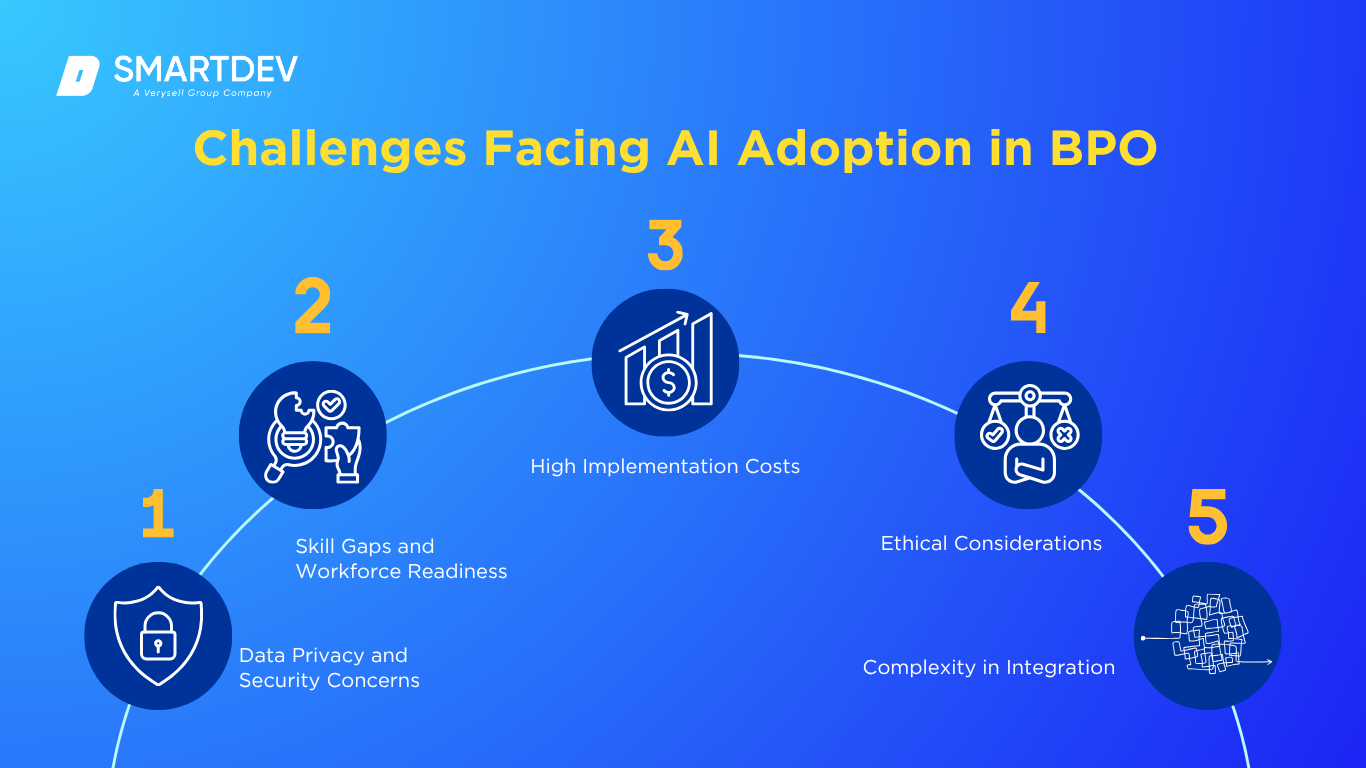
1. Data Privacy and Security Concerns
AI systems rely on vast amounts of data to function effectively, often involving sensitive client and customer information. This reliance on data creates significant privacy and security risks. If AI systems are not properly secured, they can become targets for cyberattacks, leading to data breaches and compromising sensitive information. As a result, businesses must prioritize the security of their AI systems to prevent unauthorized access and ensure the protection of confidential data.
In addition to security threats, businesses also need to ensure that their AI systems comply with data protection regulations, such as the General Data Protection Regulation (GDPR) in the European Union. Non-compliance with these regulations can result in severe penalties and damage to a company’s reputation. To mitigate these risks, companies must adopt robust security measures, including data encryption, secure cloud storage, and regular system audits. Maintaining transparency and establishing strong data governance policies are crucial steps in building and preserving client trust in AI systems.
2. Skill Gaps and Workforce Readiness
One of the major challenges for BPO companies adopting AI is the skills gap in the workforce. AI technologies require specialized knowledge and expertise in fields such as machine learning, data analysis, and automation. However, many employees in the BPO sector may not have the necessary skills to work effectively alongside AI systems. This gap in knowledge can make it difficult to fully integrate AI into business operations and leverage its potential benefits.
To overcome this challenge, businesses must invest in upskilling and reskilling their workforce. Training programs focused on AI technologies, data analytics, and automation tools will help employees adapt to the new technological landscape. Companies should also provide ongoing support, including workshops, certifications, and mentorship opportunities, to ensure that employees are continuously learning and growing in their roles. By addressing the skill gap, businesses can better prepare their workforce for the future of AI in BPO and maximize the value of these technologies.
3. High Implementation Costs
While AI offers long-term cost savings, the initial investment required to implement AI solutions can be substantial. Deploying AI systems involves not only purchasing the necessary software and hardware but also investing in infrastructure upgrades and dedicated personnel for system development and maintenance. For many BPO companies, especially smaller businesses, the high upfront costs can be a significant barrier to adoption.
The challenge lies in securing the capital needed to fund AI implementation, as the costs associated with AI systems can be prohibitive. However, businesses should consider the long-term benefits of AI, such as operational efficiency, cost savings, and improved service delivery, which can offset the initial investment. Additionally, businesses can explore financing options, such as grants, partnerships, or funding from venture capitalists, to reduce the financial burden. Once AI is integrated, the return on investment (ROI) from automation, data-driven insights, and enhanced decision-making can far exceed the initial costs, making it a worthwhile investment in the long run.
4. Ethical Considerations
As AI systems become increasingly integrated into decision-making processes, ethical concerns regarding bias, fairness, and accountability have emerged. AI systems are trained on data, which can sometimes reflect historical biases or societal inequalities. If not properly managed, AI algorithms can perpetuate these biases, leading to unfair treatment of certain groups or individuals. For example, biased AI systems could affect hiring decisions, customer service interactions, or loan approvals, which can harm businesses’ reputations and create legal liabilities.
To address these ethical issues, businesses need to ensure that their AI systems are transparent, fair, and free from discrimination. This includes using diverse and representative datasets for training, regularly auditing AI models for fairness, and implementing mechanisms for human oversight. Companies must also establish clear accountability structures to ensure that AI-driven decisions can be explained and justified. By prioritizing ethical considerations, BPO companies can build trust with clients and customers while avoiding the negative consequences of biased AI systems.
5. Resistance to Change
Resistance to AI adoption can be a significant obstacle for many BPO companies, particularly among employees who may fear job displacement or feel uncomfortable with new technologies. Employees may worry that AI will replace their roles or make their skills obsolete, which can lead to reluctance in embracing AI-driven processes. This resistance can slow down the adoption of AI and hinder its successful integration into the workplace.
Overcoming resistance to change requires effective communication and stakeholder buy-in. Businesses need to clearly articulate the benefits of AI, such as the ability to handle repetitive tasks, enhance job roles, and create opportunities for career growth in more strategic areas. By reassuring employees that AI will augment their work rather than replace it, companies can help foster a more positive attitude toward AI adoption. Additionally, providing training programs and opportunities for employees to learn how to collaborate with AI systems can ease the transition and ensure a smoother integration process.
Core AI Use Cases in BPO
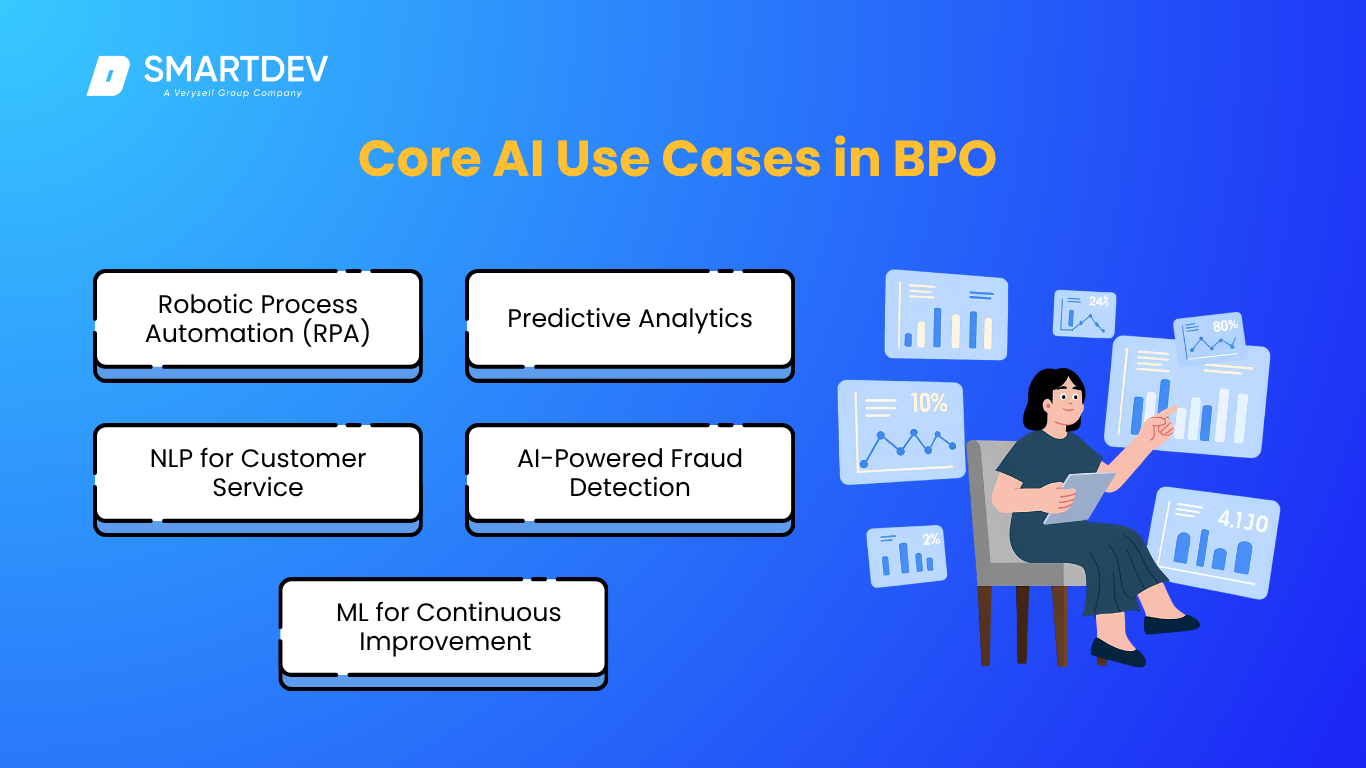 AI can be applied across various aspects of BPO, enhancing operations through automation, improving customer service, and enabling data-driven decision-making. Below are the foundational AI use cases that benefit the BPO industry:
1. Robotic Process Automation (RPA)
Robotic Process Automation (RPA) is one of the most widely implemented AI technologies in BPO. RPA uses AI-powered robots to automate repetitive, rule-based tasks that typically require human intervention, such as data extraction, invoice processing, report generation, and order management. AI systems can complete these tasks much faster and with greater accuracy than humans, reducing the chances of error and increasing productivity.
For example, a BPO company handling large volumes of data can deploy RPA bots to automatically collect and input data from various sources, significantly speeding up the process. By automating these mundane, time-consuming activities, businesses can reduce operational costs, improve speed, and ensure more accurate data management. This allows human employees to focus on higher-value tasks, such as problem-solving, decision-making, or customer engagement, thus optimizing the overall workforce.
2. Natural Language Processing (NLP) for Customer Service
Natural Language Processing (NLP) plays a crucial role in customer service automation within BPOs. NLP enables AI systems to understand, interpret, and generate human language in a way that mimics human interaction. In BPO, this technology powers chatbots, virtual assistants, and automated call systems, allowing them to handle customer inquiries, complaints, and requests in real-time and 24/7.
For instance, AI-driven chatbots can be used to answer frequently asked questions, provide basic troubleshooting steps, or direct customers to the appropriate service departments. NLP helps these systems understand the context of customer interactions, ensuring that responses are not only accurate but also personalized. This results in improved customer satisfaction as inquiries are resolved quickly and efficiently, and customers are able to interact with the system in a conversational manner, enhancing the overall experience.
3. Predictive Analytics
AI-powered predictive analytics is transforming decision-making in the BPO industry. This technology leverages historical data and machine learning algorithms to forecast trends, predict customer behavior, and identify potential issues before they arise. By using predictive analytics, BPO companies can improve workforce management, optimize resource allocation, and anticipate demand fluctuations.
For example, predictive analytics can help BPOs forecast customer inquiries or service requests, allowing them to better plan for peak times by adjusting staffing levels accordingly. Additionally, it can be used to predict customer churn, enabling businesses to take proactive measures to retain clients. By identifying patterns and potential risks early, businesses can make more informed decisions, improve operational efficiency, and deliver better outcomes for their clients.
4. AI-Powered Fraud Detection
Fraud detection is another key application of AI in BPO, especially for businesses in sectors like finance, insurance, and payment processing. AI-powered fraud detection systems analyze large datasets and identify unusual patterns or behaviors that could indicate fraudulent activity. By leveraging machine learning and data analytics, AI systems can detect potential fraud in real-time, enabling BPO companies to take immediate action.
For example, in financial services, AI can monitor transactions for signs of anomalies, such as unusual spending behavior or multiple login attempts from different locations. When such activities are detected, the AI system can flag the transaction for further review or automatically initiate fraud prevention protocols, minimizing the impact on clients. AI’s ability to quickly analyze vast amounts of data ensures that fraud is detected early, reducing the risk of financial losses and protecting sensitive client information.
5. Machine Learning for Continuous Improvement
Machine learning (ML) allows AI systems to learn from past experiences and continuously improve their performance over time. In BPO, machine learning can be used to optimize processes by analyzing historical data, customer feedback, and previous interactions to refine future operations.
For example, an AI system processing customer service tickets can learn from past interactions to provide more accurate and contextually appropriate responses in the future. The more data the system collects, the more it improves its decision-making capabilities, leading to a more efficient workflow. Machine learning can also be applied to optimize resource allocation by learning which processes take the most time or resources and finding ways to improve those processes. By continuously evolving, AI systems in BPO can drive ongoing improvements in operational efficiency, service quality, and customer satisfaction.
Specific Applications of AI in BPO
AI is playing a transformative role in the BPO industry, automating processes, enhancing customer interactions, and improving efficiency across various business functions. Below are some key applications of AI that are reshaping BPO operations:
1. AI in Customer Service: Chatbots and Virtual Assistants
 AI-powered chatbots and virtual assistants are revolutionizing customer service by providing instant, 24/7 support for customers. These systems handle routine inquiries, complaints, and requests with ease, offering a seamless and responsive customer experience.
How it helps: Chatbots and virtual assistants powered by Natural Language Processing (NLP) understand and respond to customer queries in real-time, mimicking human interactions.
Benefits:
- Instant Response: Customers receive immediate assistance, reducing wait times.
- Scalability: AI systems can manage high volumes of queries simultaneously, which is particularly helpful during peak hours or busy seasons.
- Efficient Escalation: More complex issues are automatically escalated to human agents, ensuring customers get the right support.
Example: Companies like Moneypenny use AI to manage client communications, reducing the time spent by human agents on simple inquiries. This enhances productivity and customer satisfaction while lowering operational costs.
2. AI in HR and Recruitment
 AI is transforming recruitment in BPO by automating processes like candidate screening, resume parsing, and interview scheduling. These AI tools help businesses identify the best candidates faster and more accurately.
How it helps: AI systems analyze vast amounts of data from resumes and applications, matching candidates to job requirements based on skills, experience, and qualifications.
Benefits:
- Faster Hiring: AI shortens the hiring cycle by instantly processing applications and filtering out unqualified candidates.
- Bias Reduction: AI helps remove unconscious bias by evaluating candidates solely on qualifications, promoting diversity in recruitment.
- Enhanced Accuracy: Machine learning algorithms continually improve their ability to assess candidate suitability, resulting in more accurate hiring decisions.
Example: UpSource uses AI to help BPO companies quickly identify top talent, enhancing the efficiency and effectiveness of recruitment processes.
3. AI in Data Entry and Document Processing
 AI-powered tools are transforming how BPO companies manage data entry and document processing by automating these traditionally time-consuming tasks. AI can extract, organize, and categorize data from documents like invoices, contracts, and forms.
How it helps: AI systems automatically read and interpret various document formats (e.g., PDFs, scanned images) to extract relevant information, reducing human involvement.
Benefits:
- Faster Data Processing: AI can process large volumes of data quickly, significantly reducing the time spent on manual entry.
- Higher Accuracy: With AI, there is less room for human error in data transcription and categorization.
- Cost Savings: By automating these tasks, businesses can lower operational costs and reallocate resources to higher-value activities.
Example: Companies like Staple.ai are using AI-driven document processing solutions to automate data entry in BPO operations. This not only saves time but also ensures compliance with data regulations, improves data security, and allows employees to focus on more strategic tasks.
Examples of AI in BPO
AI is transforming the BPO landscape, enabling businesses to automate processes, improve operational efficiency, and enhance customer experiences. Below are real-world case studies of companies successfully integrating AI into their BPO operations:
1. IBM: AI-Powered BPO Solutions
Overview
IBM offers AI-powered BPO solutions that help businesses optimize their operations and improve service delivery. IBM’s AI-driven tools integrate machine learning, predictive analytics, and automation to streamline various business processes, such as data management, customer service, and decision-making.
Challenges
- High operational costs due to inefficiency in manual processes.
- Difficulty in providing personalized customer experiences at scale.
- Slow response times and bottlenecks in decision-making processes.
Solutions
- Automates repetitive tasks like data entry, invoice processing, and report generation.
- Uses machine learning to provide data-driven insights for decision-making.
- Implements AI-powered customer service tools to deliver personalized recommendations and real-time responses.
Achievements
- Reduced operational costs through automation.
- Improved the speed and accuracy of processes.
- Delivered personalized customer experiences, increasing client satisfaction and loyalty.
2. Canon: AI Solutions for Document Management and Data Processing
Overview
Canon has integrated AI into its BPO operations to optimize document management and data processing. By leveraging AI for document digitization and analysis, Canon has successfully streamlined workflows and improved efficiency in various industries, including finance, healthcare, and legal services.
Challenges
- Time-consuming and error-prone manual document processing.
- Difficulty in managing large volumes of paper-based documents, affecting storage and accessibility.
- Bottlenecks in workflow due to manual data entry and document retrieval.
Solutions
- Implemented AI-powered Optical Character Recognition (OCR) to digitize and organize documents.
- Uses machine learning to analyze and extract key data points from invoices, contracts, and other documents.
- Secures and stores digital documents for easier access and compliance.
Achievements
- Reduced time spent on manual tasks, improving operational speed.
- Increased accuracy in data management, reducing errors and rework.
- Enhanced workflow efficiency, leading to cost savings and faster processing times.
3. Innovative AI Solutions in BPO: Generative AI and Computer Vision
Overview
Emerging AI technologies such as Generative AI and computer vision are reshaping how BPO companies operate. These technologies allow businesses to go beyond simple automation, offering dynamic solutions for content creation and visual data analysis.
Challenges
- Traditional BPO services were limited to basic automation and lacked creativity and innovation.
- Increasing demand for faster and more dynamic solutions from clients.
- Difficulty in analyzing visual data for decision-making and operational insights.
Solutions
- Generative AI: Automates content creation, such as product descriptions, social media posts, and marketing materials, saving time and resources.
- Computer Vision: Analyzes images and video data for tasks like inventory tracking, anomaly detection, and quality assurance, improving operational efficiency.
Achievements
- Automated content creation with Generative AI, reducing manual effort and time.
- Enhanced visual data analysis with computer vision, improving decision-making accuracy.
- Increased productivity, faster response times, and the ability to offer innovative services to clients.
How to Implement AI in BPO
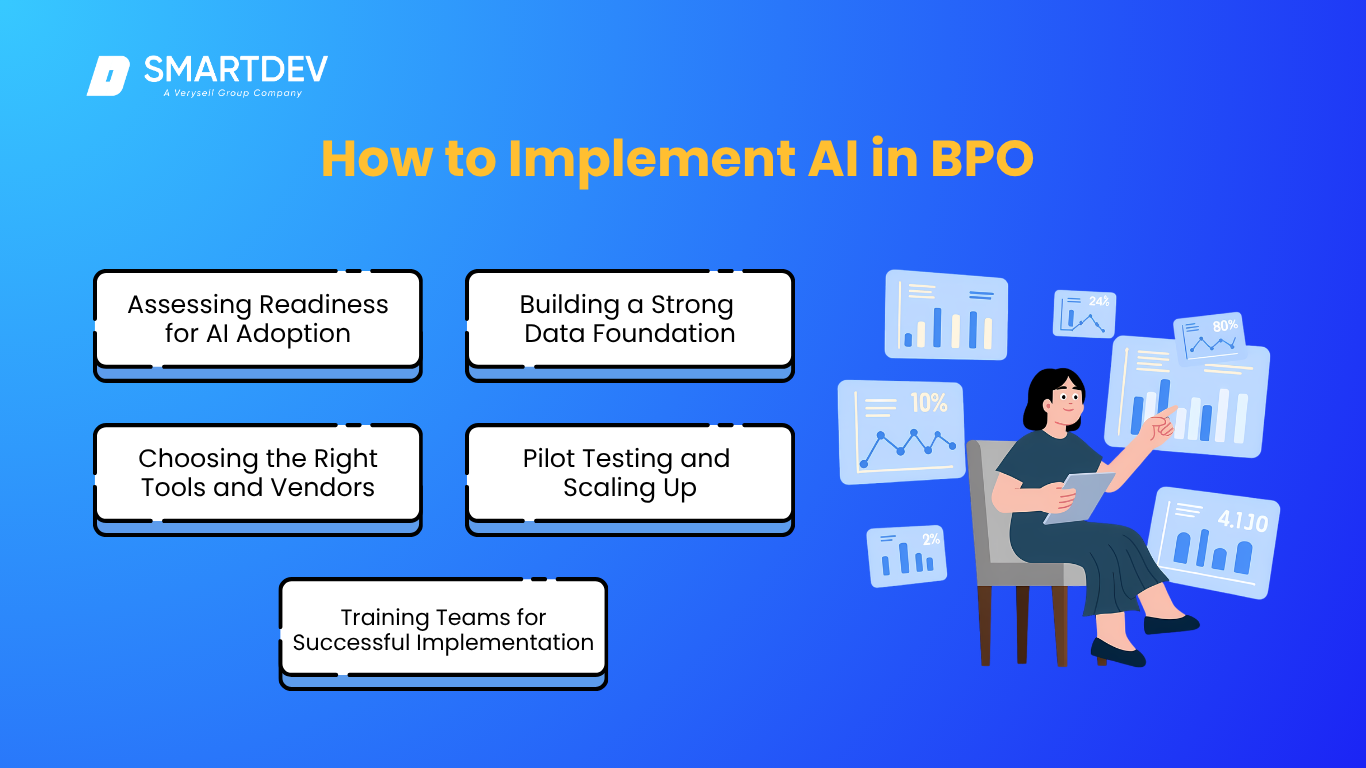
 1. Assessing Readiness for AI Adoption
 1. Assessing Readiness for AI Adoption
Before implementing AI, businesses should evaluate areas where AI can add value, such as customer service or automation. It’s important to assess if existing systems can support AI and if the workforce is ready for the transition.
2. Building a Strong Data Foundation
AI relies on accurate and organized data. BPO companies must focus on collecting, cleaning, and managing data to ensure the AI system functions effectively. Proper data security and management practices must also be implemented to protect sensitive information.
3. Choosing the Right Tools and Vendors
Selecting the right AI tools and vendors is crucial. BPO companies should evaluate AI platforms that meet their specific needs and ensure the vendor has a strong track record in delivering BPO solutions. Scalability and compatibility with existing systems should also be considered.
4. Pilot Testing and Scaling Up
Start with small-scale pilot tests to evaluate AI performance in a limited setting. This helps identify challenges and fine-tune the system before scaling it across the organization. Successful pilot testing ensures smooth integration and broader deployment.
5. Training Teams for Successful Implementation
Employees need to be trained to work effectively with AI tools. Offering training programs helps staff understand how AI can enhance their roles. Continuous support and collaboration between humans and AI are essential for a successful implementation.
Measuring the ROI of AI in BPO
Measuring the return on investment (ROI) from AI in BPO requires tracking several key metrics. Productivity improvements are a primary indicator, as AI helps automate repetitive tasks, enabling employees to focus on higher-value activities. Additionally, cost savings through automation, such as reduced labor costs and error rates, are essential for evaluating AI’s financial impact.
Customer satisfaction is another crucial metric to track, as AI tools like chatbots and virtual assistants often lead to faster response times and better service. Case studies have shown that businesses can see a significant ROI by reducing manual processes and enhancing operational efficiency, ultimately leading to improved service delivery and customer retention.
Future Trends of AI in BPO
 As AI continues to evolve, its role in BPO will become even more integrated into daily operations. The use of generative AI is expected to increase, particularly for content creation and data-driven insights, allowing BPO companies to provide more personalized services at scale. Additionally, advancements in Natural Language Processing (NLP) will lead to even more sophisticated customer interactions, making AI-powered systems more intuitive and human-like.
Machine learning algorithms will further enhance efficiency by continuously learning from data to improve performance. These innovations will not only drive greater automation but also allow for a deeper level of personalization, making BPO services more tailored to client needs. As AI evolves, businesses will gain even more opportunities to optimize processes, reduce costs, and deliver superior customer experiences.
Conclusion
AI is poised to revolutionize the BPO industry, providing numerous advantages, including cost reduction, improved decision-making, and enhanced customer experiences. By automating repetitive tasks, AI allows BPO companies to streamline operations, increase efficiency, and reduce human errors. Additionally, AI-driven insights enable businesses to make more informed decisions and personalize their services, which can lead to higher customer satisfaction and retention. As AI continues to advance, its potential to transform BPO operations will only grow, allowing businesses to maintain a competitive edge.
By taking the right steps, BPO companies can leverage AI to optimize their operations and remain agile in a rapidly evolving market. As AI technologies continue to mature, businesses that embrace these innovations will be better positioned to thrive and stay ahead of the competition. For more insights, explore how AI can transform your business with solutions from leading providers like SmartDev.