
TL;DR
- Penetration testing is a simulated cyberattack on your systems, conducted by certified security professionals to find and fix vulnerabilities before real attackers can exploit them.
- It goes beyond automated security scanning by using the same creative tactics as real hackers to expose weaknesses that tools alone cannot find.
- Most regulatory frameworks, including PCI DSS, HIPAA, and ISO 27001, require regular penetration testing as a compliance obligation.
Penetration testing is one of the most concrete investments a business can make in cybersecurity. Unlike compliance checklists or automated scanners, a skilled penetration tester thinks like an attacker, probing your systems for the kinds of weaknesses that lead to real breaches. For any organization that stores sensitive data or runs mission-critical software, penetration testing is not optional.
What is Penetration Testing?
Penetration testing (also called pen testing or ethical hacking) is a security assessment method in which certified professionals simulate real-world cyberattacks on a company’s systems, networks, or applications to identify and document exploitable vulnerabilities before malicious actors can discover them.
The key distinction from vulnerability scanning is intentionality and depth. Automated scanners flag known weaknesses based on predefined signatures. Penetration testers actively attempt to exploit those weaknesses, chain multiple vulnerabilities together, and probe for logic flaws, misconfigurations, and human factors that scanners miss.
Penetration tests are scoped in advance and conducted under a formal agreement that defines what systems can be tested, what attack methods are permitted, and what the reporting requirements are. Common types include network penetration testing, web application penetration testing, social engineering tests, and cloud infrastructure assessments.
 Pourquoi c'est important pour les entreprises
The average cost of a data breach reached $4.88 million in 2024 according to IBM, and the reputational damage often exceeds the financial impact. Penetration testing is the most direct way to find the doors attackers would use before they do.
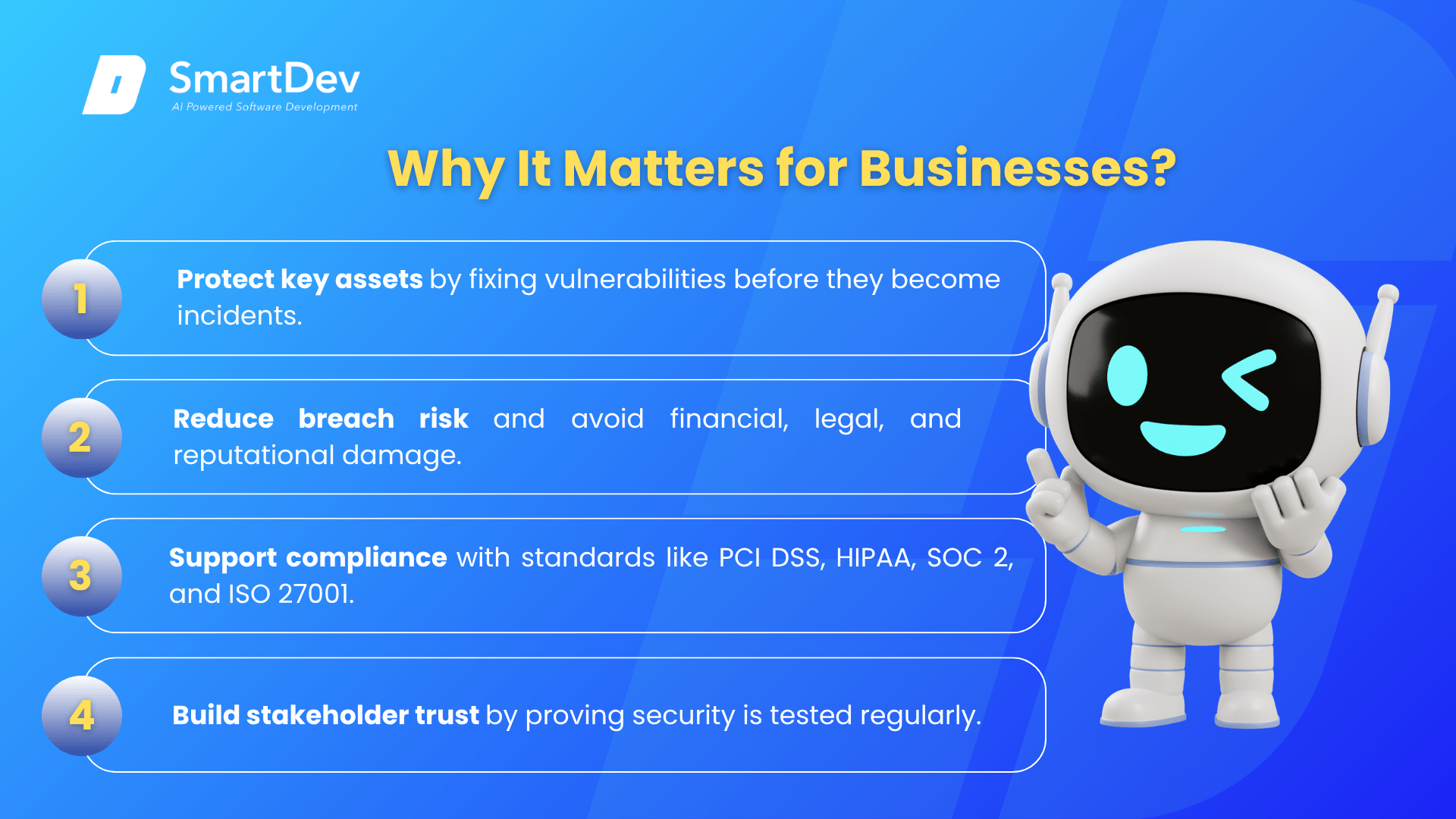
- Protect customer data, intellectual property, and business continuity by closing vulnerabilities before they become incidents.
- Reduce breach risk and the associated financial, legal, and reputational costs of a successful cyberattack.
- Improve regulatory compliance by meeting the penetration testing requirements in frameworks such as PCI DSS, HIPAA, SOC 2, and ISO 27001.
- Increase stakeholder confidence by demonstrating to customers, partners, and boards that security is tested rigorously and regularly.
For example, a payment processing company that underwent an annual penetration test discovered that a legacy API endpoint was exposing transaction records without authentication. The vulnerability had existed for two years undetected by internal monitoring. Remediation cost less than $10,000. The potential regulatory fine for the breach it would have caused was estimated at over $2 million.
How Does Penetration Testing Work?
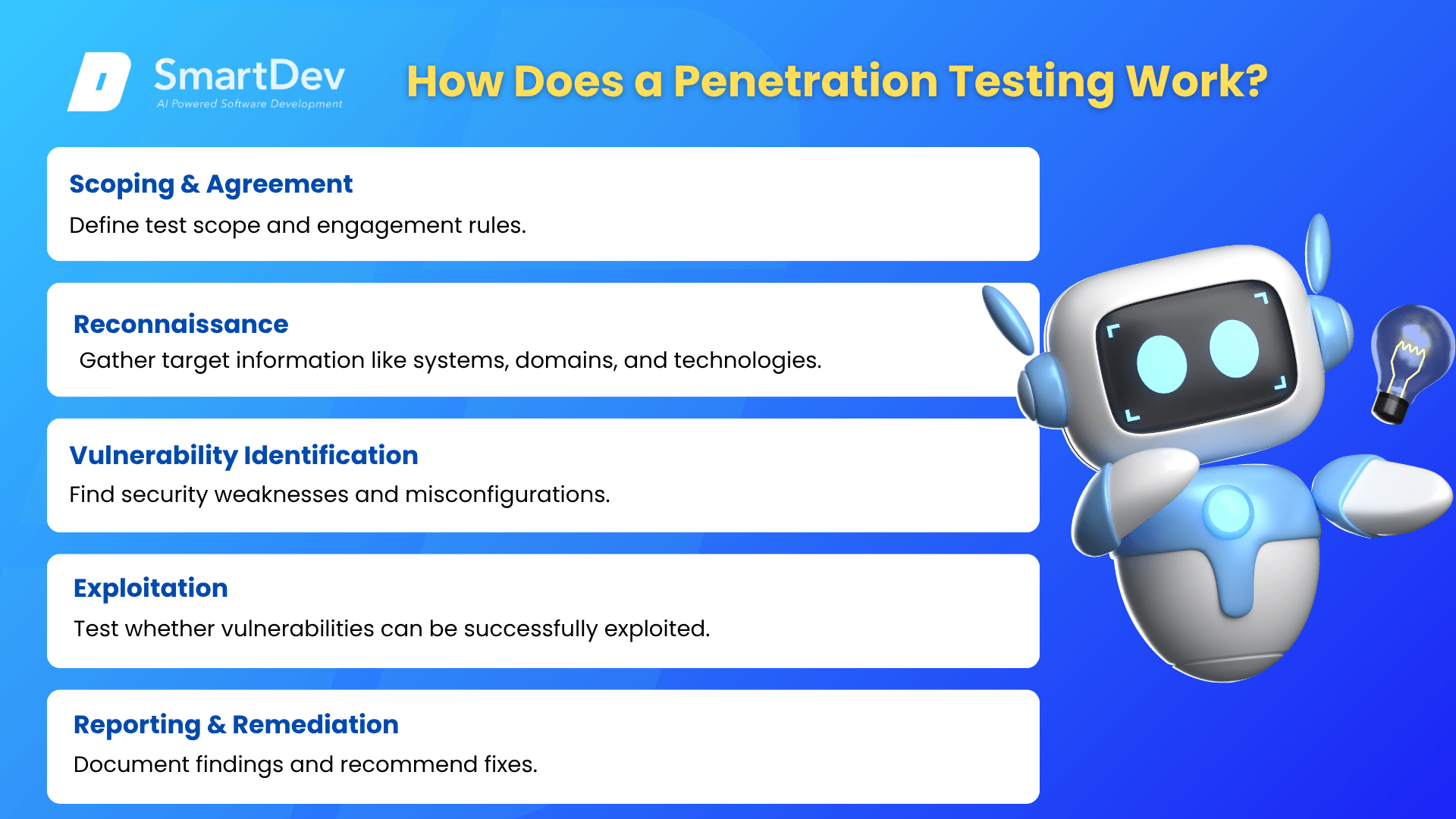
- Scoping and Agreement: Define the systems, applications, and methods included in the test. Agree on rules of engagement to ensure the test does not disrupt live operations.
- Reconnaissance: The tester gathers information about the target environment, including IP ranges, domain names, technology stack, and publicly available data, mimicking what a real attacker would do first.
- Vulnerability Identification: Using a combination of automated tools and manual techniques, the tester identifies weaknesses in the target systems, including unpatched software, misconfigurations, and access control gaps.
- Exploitation: The tester attempts to exploit identified vulnerabilities to determine whether they are genuinely exploitable and what level of access they would grant an attacker.
- Reporting and Remediation: A detailed report documents each finding, its severity, proof of exploitation, and recommended remediation steps. The security team then addresses findings in priority order.
The result is a clear, evidence-based picture of your actual security posture, with specific actions to address real vulnerabilities rather than theoretical risks.
How Much Does Penetration Testing Cost?
Penetration testing costs depend heavily on scope. A basic web application penetration test typically ranges from $5,000 to $15,000. A full infrastructure test for a mid-sized enterprise can cost $20,000 to $50,000. Highly complex assessments of large environments with multiple applications and cloud systems can exceed $100,000.
Three factors that drive cost include scope size (more systems and applications require more time), depth of testing required (compliance-driven tests have defined scopes; adversarial red team exercises are broader and more expensive), and the certification level of testers (OSCP, CEH, and CREST-certified professionals command higher rates but deliver higher-quality findings).
Compared to the average cost of a data breach, even an annual comprehensive penetration test represents a very small fraction of the financial risk it mitigates.
Autres termes associés
Pre-sales Engineering: A discipline within technology sales where technical experts work alongside sales teams to assess client requirements, design solution architectures, and demonstrate that a proposed product or service can meet the buyer’s specific needs.
Global Delivery Model: A structured approach to IT service delivery in which work is distributed across teams located in multiple countries or regions.
End-to-End Testing : A quality assurance methodology that validates complete system workflows, often conducted alongside penetration testing as part of a comprehensive pre-release security and quality assessment.