

Most enterprises expanding to Asia burn through millions on offshore strategies that promise savings but deliver operational chaos. The brutal reality? GCC establishment costs $2-5 million upfront with 12-18 month deployment timelines that can kill your competitive edge before you even start.
Meanwhile, companies are discovering a third path that actually works: Offshore Development Centers (ODCs) that deliver 40-60% cost savings with operational deployment in 30-60 days. This analysis breaks down exactly which model will save your company more money based on real data from 300+ successful Asian expansions.
TL;DR: The Numbers Don’t Lie
GCC Reality: GCCs require $2-5M initial investment and 12-18 months setup time
ODC Alternative: ODCs start at $200K with 30-60 day deployment
Bottom Line: ODCs deliver 40-60% cost savings with operational flexibility that GCCs simply cannot match
What Global Capability Centers Actually Cost
A Global Capability Center is a wholly-owned subsidiary that multinational corporations establish in offshore locations. Sounds simple, right? Fortune 500 companies typically establish GCCs when planning to scale to 500+ employees over 3-5 years, requiring complete operational control and substantial long-term investment commitments.
Here’s what nobody tells you about GCCs: you’re building everything from scratch. Legal entities, management teams, office infrastructure, operational processes — the complete package. This model makes sense for technology companies with a minimum viable scale of $50+ million annual offshore spending, but for most enterprises, it’s like using a sledgehammer to crack a nut.
The fundamental challenge? GCCs demand an all-or-nothing approach. You commit massive upfront capital before hiring your first developer, absorb all operational risks directly, and manage complex local compliance without established expertise. Beyond the hype, GCCs carry significant risks that enterprise leaders often underestimate.
As of June 2025, 174 of the world’s biggest 500 companies have their GCCs in India, growing from just 22% in 2015. These centers have collectively set up over 390 facilities and now employ more than 950,000 professionals. But the scale required to make GCCs viable puts them out of reach for most companies.
Why ODCs Make Financial Sense
An Offshore Development Center provides dedicated teams through partnership with established service providers. No direct infrastructure investment. No legal entity headaches. ODCs deploy operational teams within 30-60 days through established recruitment networks and proven onboarding processes.
This model combines offshore cost savings with operational flexibility. You can scale teams based on project requirements without establishing legal entities or managing HR operations. ODC providers absorb operational complexities, legal requirements, and infrastructure management within transparent monthly fees that eliminate budget surprises.
The key advantage? You leverage existing provider infrastructure, legal frameworks, and operational expertise to deliver immediate value. Companies begin productive development work within weeks while providers handle compliance, talent retention, and business continuity simultaneously.
According to research, businesses can save between 39% and 72% in offshore development costs by hiring teams from locations like Vietnam, India, and Eastern Europe, compared to building an in-house team in high-cost regions.
The Real GCC Setup Costs (Prepare for Sticker Shock)
Establishing a GCC in Asia typically requires $2-5 million in initial investment before hiring the first developer. Let’s break down where this money actually goes:
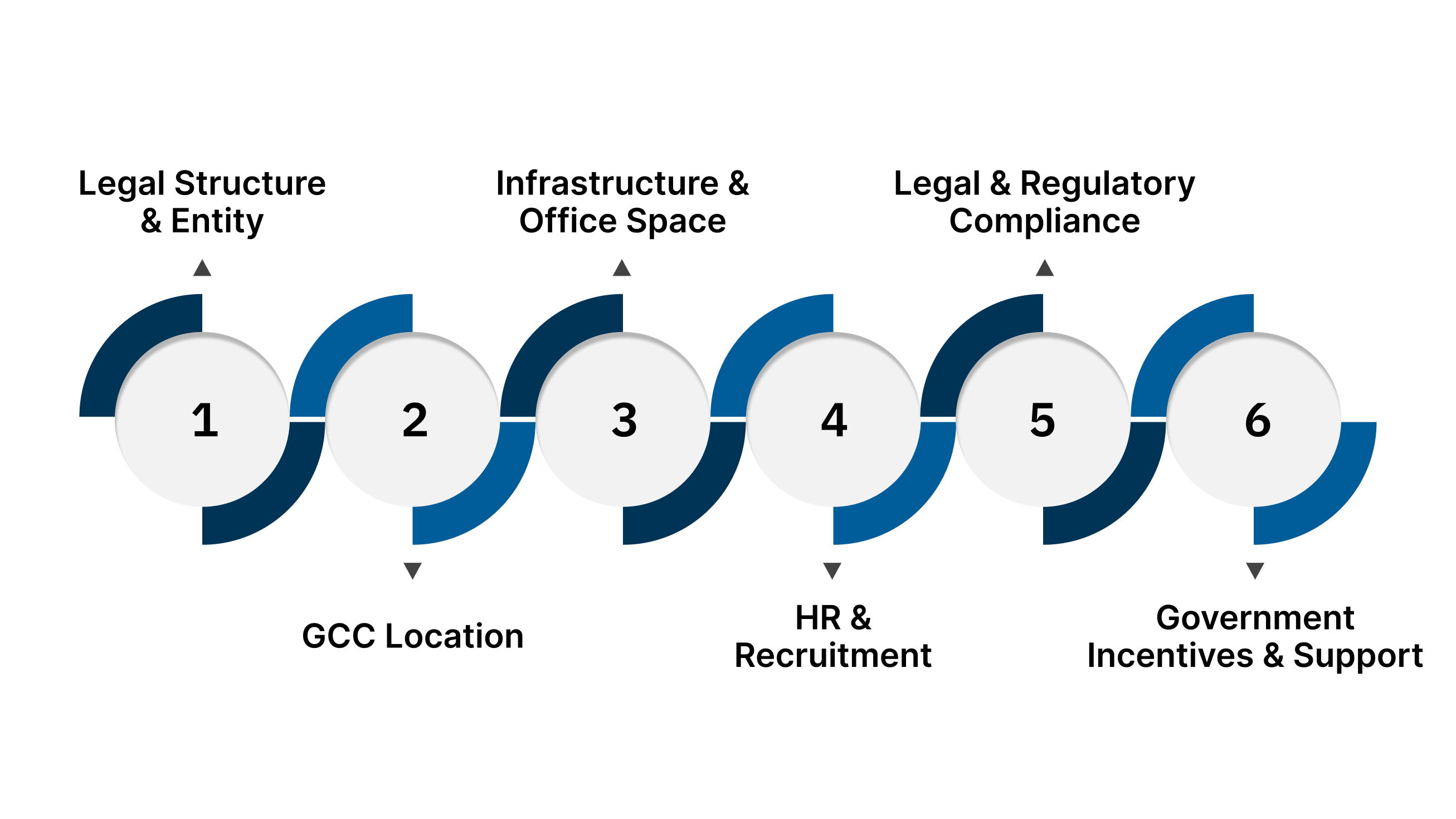
Legal Entity Establishment
Setting up the legal foundation alone consumes significant resources:
-
Legal entity establishment: $50,000-$150,000 depending on jurisdiction
-
Regulatory approvals and documentation: 3-6 months timeline
-
Local director appointments and banking relationships: Additional compliance costs
-
Visa requirements for expatriate management: Ongoing expenses
Company incorporation typically takes 3-6 weeks, banking setup requires 2-3 weeks, and tax and regulatory registrations add another 3-6 weeks.
Infrastructure Investment
Office infrastructure represents a substantial upfront commitment:
-
Office infrastructure: $300,000-$800,000 in major Asian tech hubs
-
Prime locations in Bangalore, Manila, or Ho Chi Minh City: Premium rates apply
-
Technology infrastructure and security systems: $50K-100K upfront for cloud, security, licenses
-
Enterprise-grade connectivity and disaster recovery: Ongoing operational costs
GCC infrastructure costs typically make up 20-30% of total expenses, covering workspaces, IT systems, and cloud infrastructure essential for efficient operations.
Management and Operations
Human capital represents the largest ongoing investment:
-
Local management hiring: $100,000-$300,000 in annual salaries
-
HR teams and administrative support: Dedicated headcount required
-
Compliance management: $100,000-$150,000 annually for multi-country setups
-
Insurance coverage: $100,000-$300,000 annually
Workforce costs typically represent 60-70% of operational expenses, including salaries, training programs, and retention initiatives.
ODC Investment: A Different Story Entirely
ODCs eliminate traditional setup costs by leveraging provider infrastructure. Initial investment typically ranges from $200,000-$500,000, covering team recruitment, training, and first-quarter operations without legal entity establishment or office setup.
This dramatic cost reduction stems from providers absorbing infrastructure investments and distributing costs across multiple clients. You access enterprise-grade facilities, technology systems, and operational support without direct capital investment.
The financial advantage extends beyond initial costs to ongoing predictability. ODC pricing models provide transparent monthly fees covering developer salaries, infrastructure, management, and compliance. No budget surprises, no hidden costs.
Monthly costs for dedicated teams typically range from $8,000-$25,000 depending on team size and expertise level, with long-term engagements reducing per-developer costs by 20-30% compared to short-term contracts.
Hidden GCC Costs That Kill ROI
GCC operations incur significant hidden costs that often surprise enterprise decision-makers during the first operational year. These expenses rarely appear in initial business cases but dramatically impact actual ROI.
Technology Infrastructure Reality
The technology stack alone consumes 25-30% of the total budget:
-
Office space: $15-30 per sq ft annually
-
IT equipment: $2,000-$4,000 per developer
-
Enterprise software licenses: $1,000-$3,000 per seat annually
-
Network connectivity and security: $50,000-$150,000 annually
-
Technology refresh cycles: $500,000-$1,000,000 every 3-4 years
Human Resources Overhead
People costs extend far beyond salaries:
-
Dedicated HR teams: $200,000-$500,000 annually
-
Management overhead: 15-25% of total operational costs
-
Employee retention programs: $100,000-$300,000 annually
Studies indicate that every time an organization replaces a salaried employee, it can cost them the equivalent of six to nine months of salary. For GCCs with high attrition rates, these costs compound rapidly.
Compliance and Regulatory Burden
GCC compliance has become increasingly complex as centers expand across multiple countries. Regulations such as GDPR, HIPAA, and ISO 27001 governing data and operations demand proactive and structured approaches. The failure to meet compliance requirements can result in financial penalties, operational disruptions, and reputational damage.
Timeline Reality: Speed Kills (Competition)
GCC establishment requires 12-18 months from initial decision to operational team delivery. This extended timeline often kills competitive advantages in fast-moving markets.
The typical GCC setup journey breaks down into distinct phases:
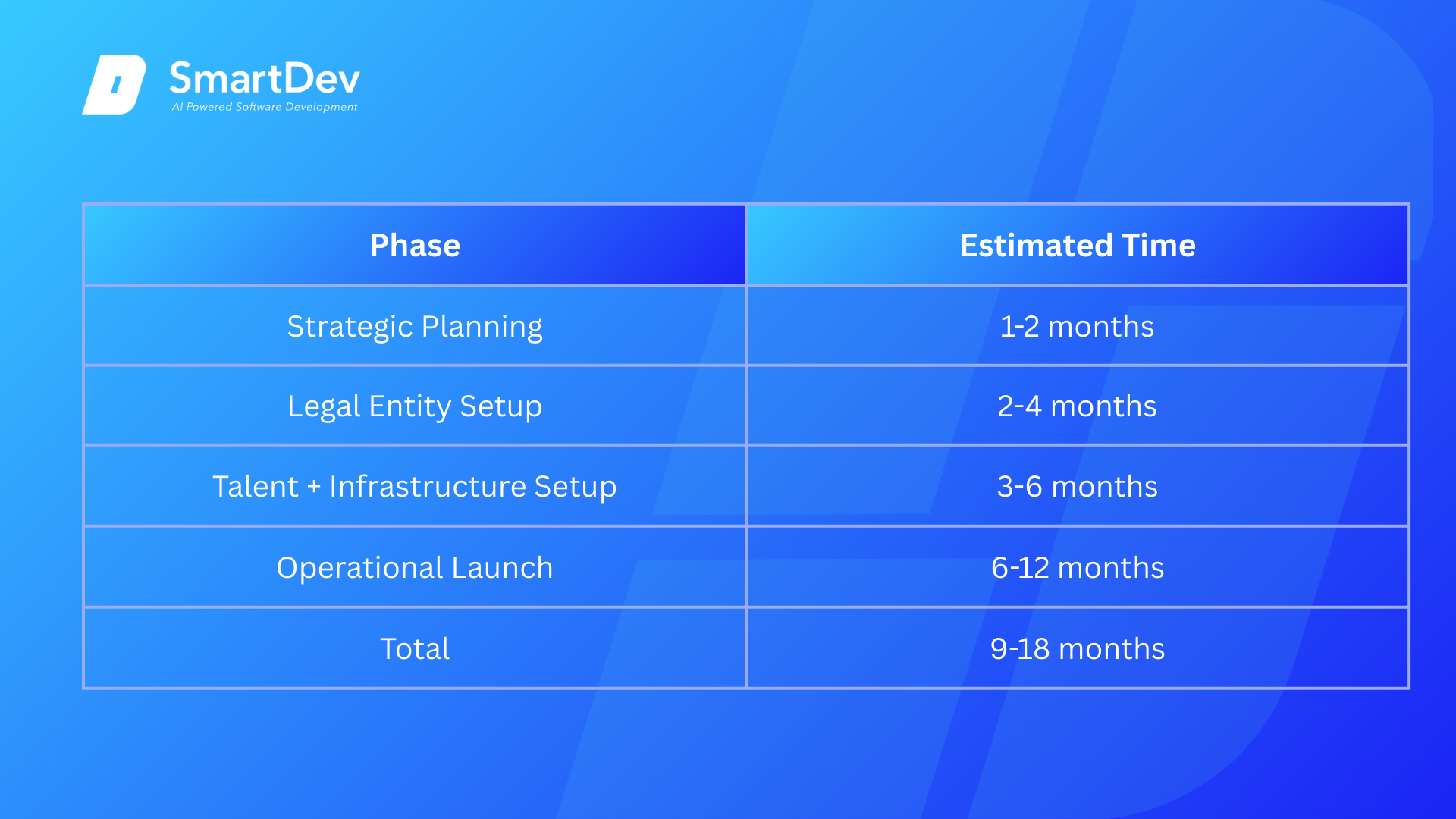
Legal entity registration alone takes 3-6 months depending on jurisdiction requirements. Office setup, team hiring, and operational establishment add another 6-12 months before productive development work begins.
ODCs deliver operational teams within 30-60 days through established recruitment networks and proven onboarding processes. Companies begin development work immediately while providers handle infrastructure setup and compliance simultaneously.
For organizations with aggressive market timelines, this difference can determine success or failure. A company waiting 12-18 months to start development loses ground to competitors who deployed ODC teams within weeks.
Scaling Economics: Where ODCs Really Shine
GCC scaling requires proportional infrastructure investment, extended hiring timelines, and increased management complexity. Adding 50+ developers typically requires office expansion costing $200,000-$500,000 plus annual rent increases.
Management layer additions become necessary at 100+ employees, adding $300,000-$600,000 in annual overhead costs. Multiple office locations multiply management overhead without providing proportional productivity benefits.
ODCs provide flexible scaling without infrastructure investment or management overhead increases. Companies can scale teams up or down with 30-60 day notice periods, eliminating long-term real estate commitments and redundancy costs.
A US tech company scaled ODC teams up by 40% within 45 days without additional facility costs, avoiding $700K in fixed overhead during a critical product launch period.
The scalability advantage becomes particularly pronounced for companies with variable workloads. ODCs offer the flexibility to expand during peak demand periods and contract during slower phases without the fixed cost burden that GCCs impose.
Ready to choose between GCC and ODC without burning millions on the wrong decision?
SmartDev helps enterprises evaluate offshore models that reduce setup time, lower operational risk, and accelerate team deployment without sacrificing quality.
Optimize your offshore budget and maximize ROI with SmartDev's offshore expansion expertise.
Get Your Offshore Strategy AssessmentRisk and Exit Strategy: The Ultimate Test
GCC operations expose companies to direct regulatory, compliance, and operational risks. Political stability, currency fluctuation, and regulatory changes directly impact operations without buffer protection.
GCC Risk Profile
Key challenges for GCCs include:
-
Geopolitical instability: Trade conflicts and tariff changes lead to cost escalation and disruption
-
Data security and privacy violations: GCCs handling sensitive customer data face significant compliance risks
-
Regulatory compliance challenges: Must comply with multiple regulatory frameworks across jurisdictions
-
Talent scarcity: Competition for specialized skills in AI, machine learning, and cybersecurity remains fierce
Exit Costs: The Hidden Trap
GCC closure involves complex legal procedures and employee severance obligations. Exit costs typically range from $500,000-$2,000,000 with closure timelines spanning 6-18 months.
In Philippines labor law, for instance, employees terminated due to closure are entitled to separation pay equivalent to one month pay or at least one-half month pay for every year of service, whichever is higher. Similar requirements exist across Asian jurisdictions.
Wells Fargo announced plans to close its GCC in Chennai in 2025, with operations expected to wind down by Q4 FY2026-27 as part of broader restructuring. The inability to quickly adjust operations represents significant strategic and financial risk.
ODC Exit Flexibility
ODC partnerships transfer operational risks to experienced service providers. Contract termination procedures are clearly defined with 30-90 day notice periods and minimal financial exposure.
A well-defined termination clause ensures a clear, fair exit process and minimizes legal or operational disruptions. Key elements typically include required notice period, final payment terms for work completed, IP and deliverable handover obligations, and post-termination confidentiality terms.
Total Cost Breakdown: The Real Numbers
GCC Three-Year TCO (50 developers)

Most GCCs achieve cost recovery and positive ROI within 24-36 months, depending on efficiency, automation adoption, and workforce performance.
ODC Three-Year Investment (50 developers)
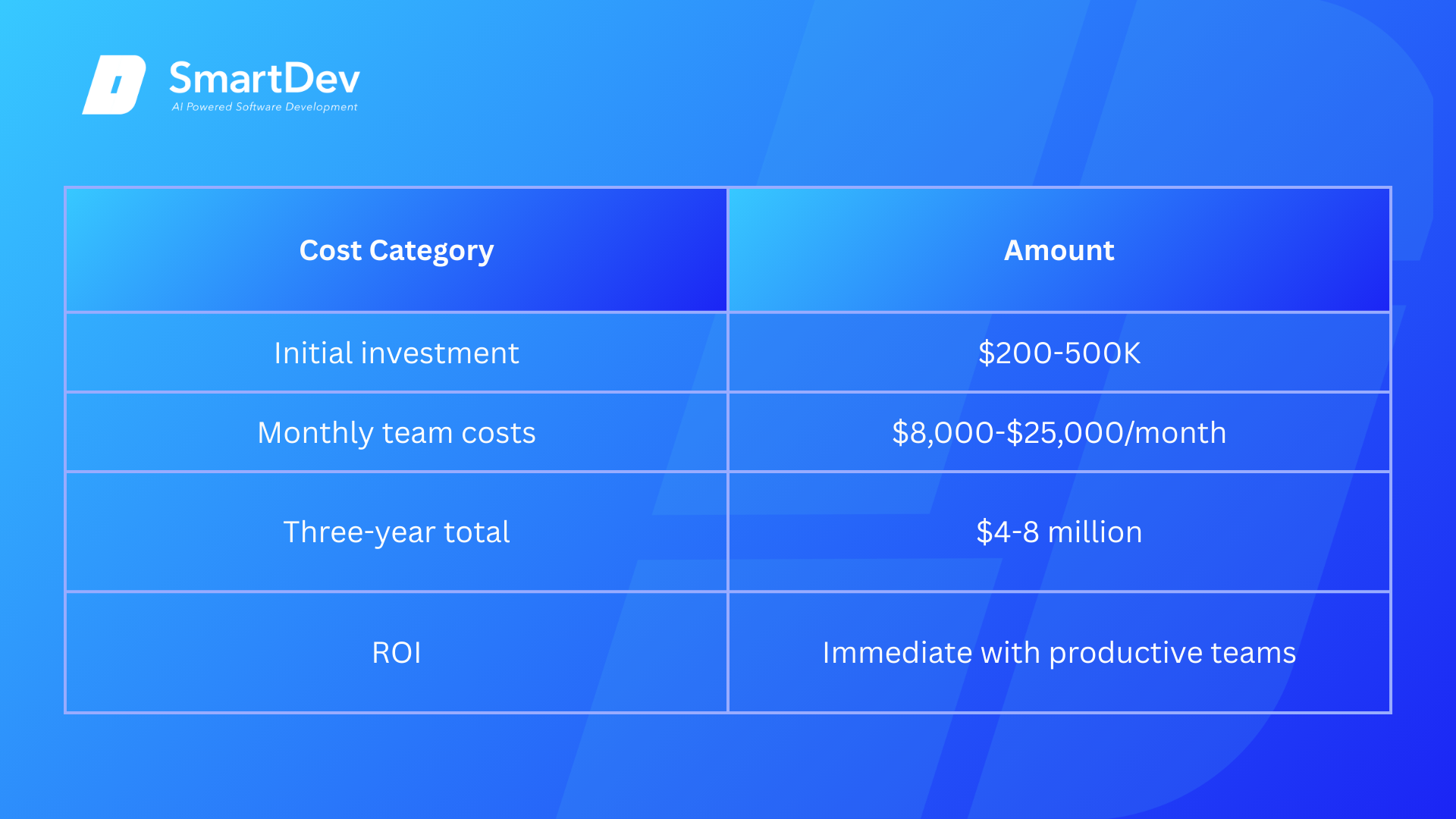
A global financial firm reduced offshore spending by $6M over 3 years by switching from GCC to ODC model, demonstrating substantial cost optimization opportunities through partnership approaches.
Companies typically achieve 300-400% ROI within 18 months of establishing Vietnamese development centers, with client retention rates exceeding 90% after the first year.
Vietnam’s ODC Advantage
Vietnam offers exceptional ODC value with developer costs 50-70% lower than traditional outsourcing destinations while maintaining high technical quality. Government IT initiatives and educational investments have created robust talent pipelines.
The Numbers Behind Vietnam’s Rise
Vietnam’s tech talent ecosystem has grown remarkably:
-
530,000+ software developers with 1.5 million total ICT workforce
-
57,000-80,000 new IT graduates annually entering the workforce
-
Top 10 global ranking for algorithmic skills
-
2nd in ASEAN for developer skills in 2024
-
111% increase in international hiring of Vietnamese talent in 2024
Political stability and pro-business policies provide predictable operational environments for long-term partnerships. Vietnam’s strategic location, cultural compatibility, and English proficiency create ideal conditions for Asian market expansion.
Developer Cost Comparison
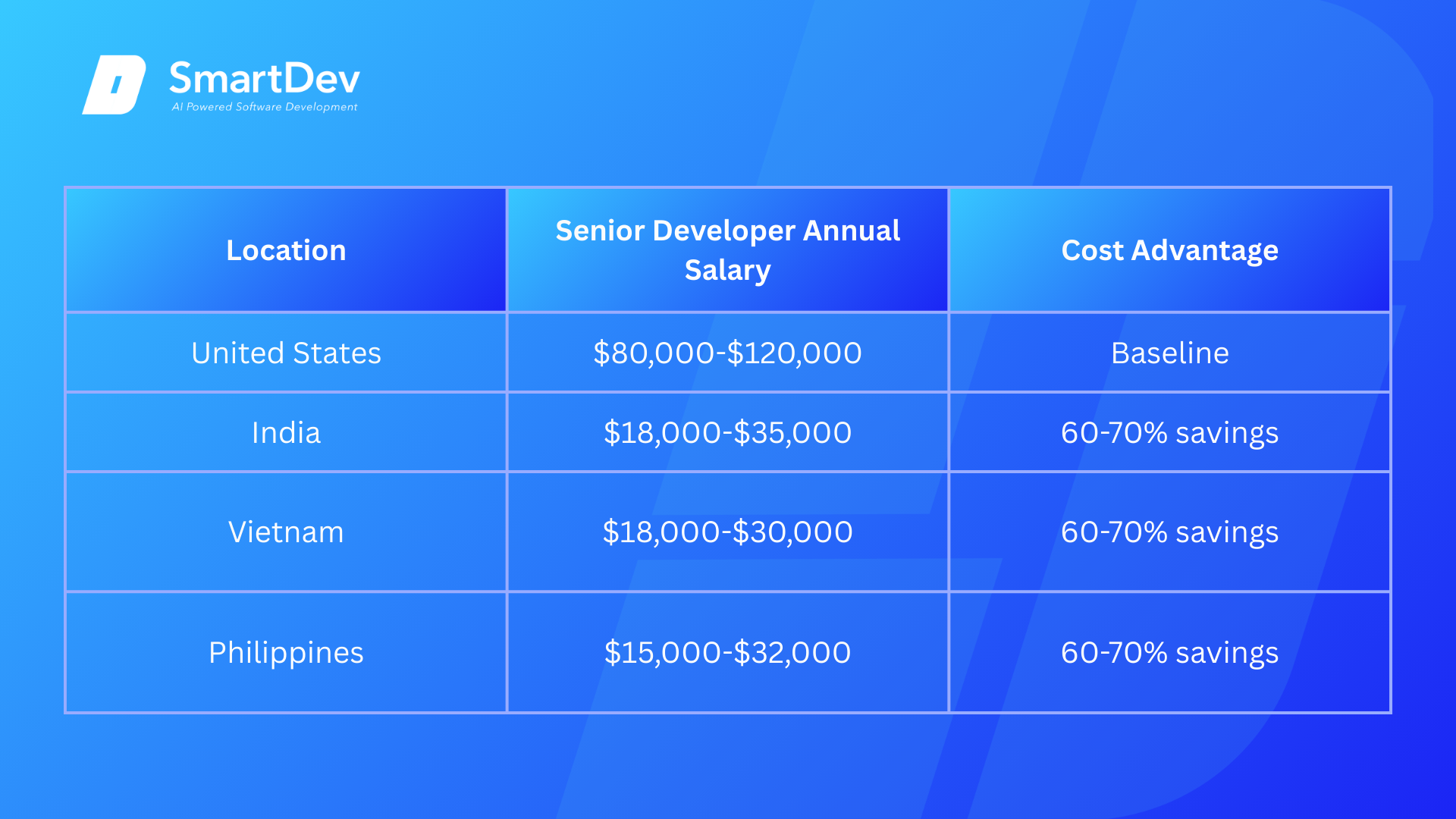
Vietnamese developers typically earn 40% to 80% less than those in Singapore, highlighting a significant difference in talent costs between the two countries. This cost advantage combines with quality that consistently meets or exceeds expectations.
Major corporations have taken notice. SAP recently launched SAP Labs Vietnam with a 150 million euro investment, aiming to employ 500 professionals by 2027. The company describes Vietnam as “a catalyst for innovation in one of Asia’s most dynamic tech markets.”
When GCCs Still Make Sense
GCCs work best for companies planning permanent Asian operations with 500+ employees, significant IP development requirements, and long-term market expansion strategies.
Minimum viable scale typically requires $50+ million annual offshore spending to justify setup and operational costs. Companies must possess internal offshore management expertise and long-term strategic commitment to Asian market expansion.
The GCC model suits enterprises with:
-
Predictable, sustained technology requirements
-
Financial resources to absorb operational complexity
-
Long-term strategic commitment without flexibility needs
-
Need for complete ownership and control over all assets, data, and talent
-
Enhanced compliance and security requirements for sensitive retail or financial data
After the setup phase, a GCC can deliver up to 25% lower costs per project compared to third-party models. However, this benefit only materializes at significant scale and after absorbing substantial upfront investment.
ODC Sweet Spot: Most Enterprises
ODCs excel for companies seeking immediate offshore capabilities, project-based development, or testing offshore strategies. Startups, scale-ups, and enterprises with variable workloads benefit from operational flexibility and predictable costs.
Companies lacking offshore management expertise should leverage ODC provider experience. The partnership model provides access to proven operational expertise, established compliance frameworks, and risk mitigation strategies.
ODCs work particularly well for companies prioritizing:
-
Speed-to-market advantages: Teams can start within weeks since the partner handles hiring, infrastructure, and local compliance
-
Cost optimization without complexity: Operating costs are lower than maintaining similar capacity in-house
-
Operational flexibility over direct control: Teams can expand or contract with business cycles
-
Testing offshore approaches before major commitments: Lower risk entry point for offshore development
-
Access to niche talent: Leverage experts in composable commerce, cloud modernization, or AI-driven analytics without long recruitment cycles
Making the Decision: Framework for Success
Decision criteria should emphasize strategic objectives, risk tolerance, and operational capabilities rather than simple cost comparisons. Companies must evaluate internal offshore management expertise, long-term commitment levels, and flexibility requirements.
Market timing and competitive pressures often favor ODC speed-to-market advantages over GCC long-term cost optimization. The ability to begin operations immediately and adjust based on market feedback provides strategic value beyond direct cost considerations.
Key Decision Factors
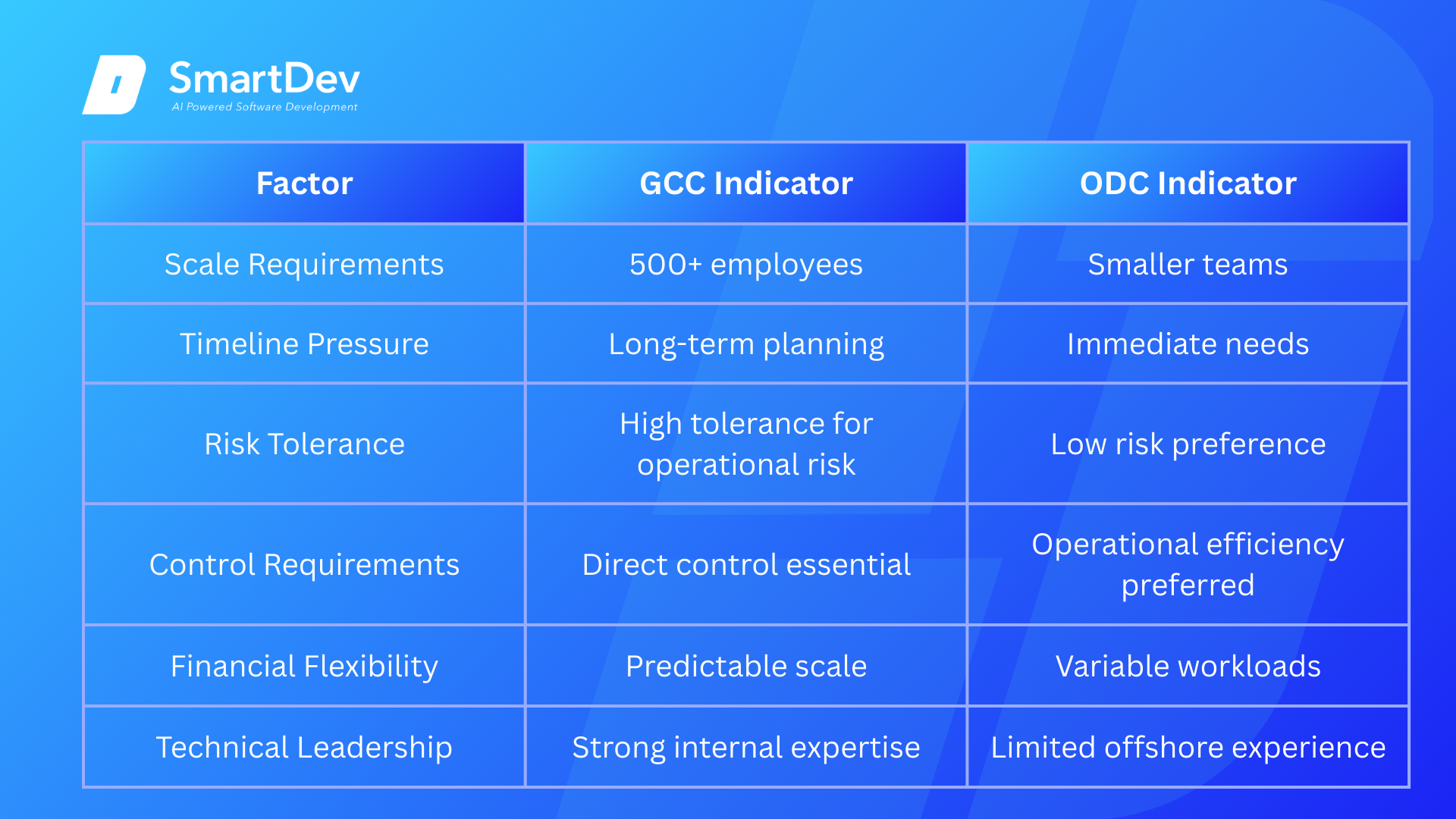
The Hybrid Path
Many mature enterprises successfully use a hybrid structure, employing the GCC for core strategic governance and ODCs for agile development and flexible capacity expansion. This approach balances control with delivery speed.
Organizations transitioning from project-based to dedicated teams often use ODCs as stepping stones that gradually build internal management capability while maintaining delivery momentum.
Your Next Steps
The choice between GCC and ODC ultimately depends on your company’s specific circumstances, timeline, and strategic priorities. For most enterprises seeking to expand into Asia without burning through millions in upfront capital, ODCs offer the fastest path to productive offshore teams with predictable costs and minimal risk.
Companies that rush into GCC establishment without proper planning often face high failure rates—struggling to meet long-term goals after the initial 2-3 years. Starting with an ODC allows you to test offshore strategies, build relationships with providers, and validate your approach before committing to larger investments.
Ready to start your Asian expansion with proven cost optimization? SmartDev’s ODC model has delivered 40-60% cost savings for 300+ global clients. Download our comprehensive Offshore Development Center Checklist or explore our talent solutions to begin your expansion within 30 days.
The numbers don’t lie: for speed, flexibility, and cost-effectiveness, ODCs represent the smarter choice for most enterprises entering Asian markets in 2025.