
TL;DR
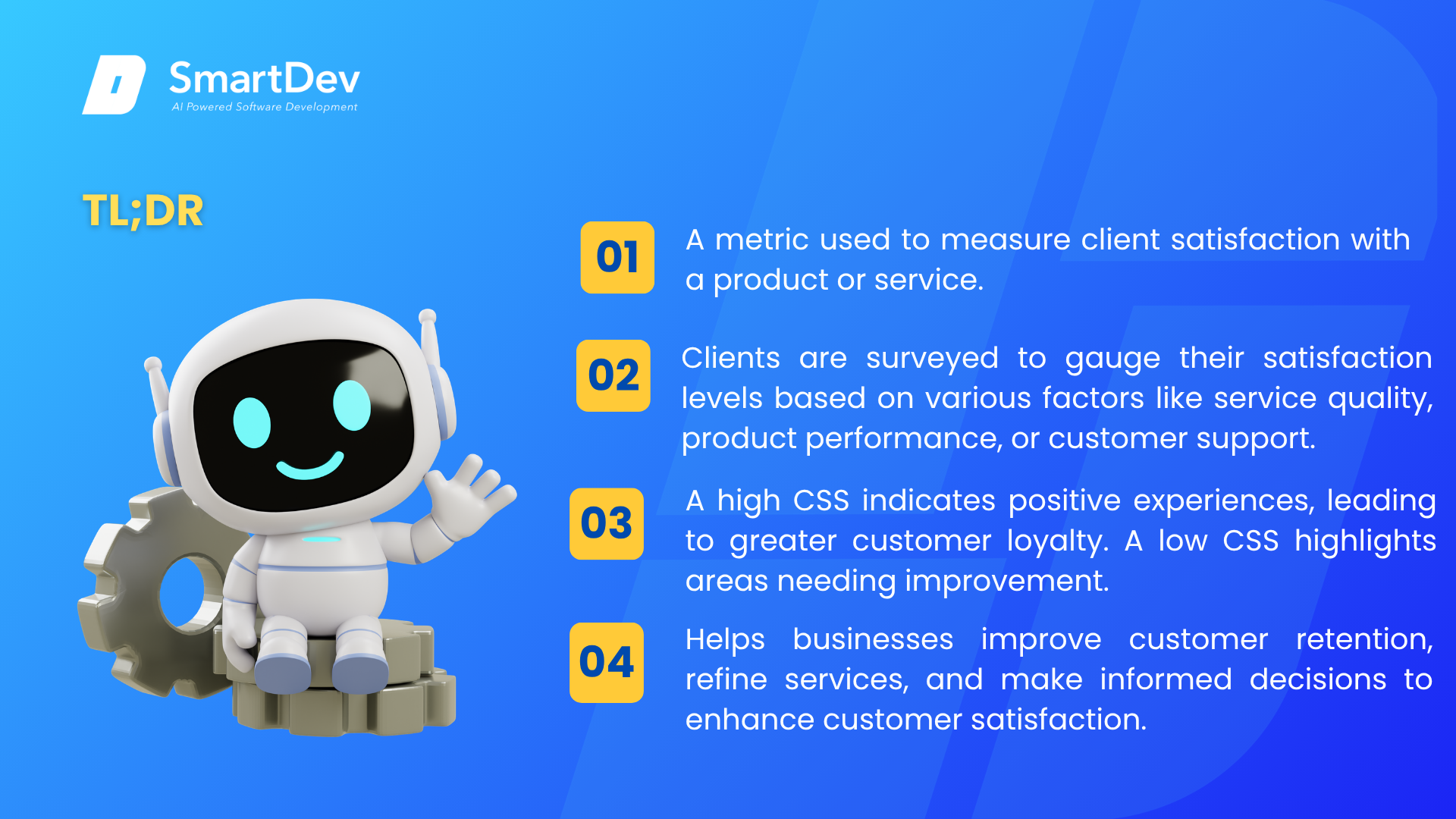
- A metric used to measure client satisfaction with a product or service.
- Clients are surveyed to gauge their satisfaction levels based on various factors like service quality, product performance, or customer support.
- A high CSS indicates positive experiences, leading to greater customer loyalty. A low CSS highlights areas needing improvement.
- Helps businesses improve customer retention, refine services, and make informed decisions to enhance customer satisfaction.
What is Client Satisfaction Score?
Client Satisfaction Score (CSAT) is a metric used to measure how satisfied customers are with a company’s product, service, interaction, or overall experience. It is typically collected through short surveys that ask clients to rate their satisfaction on a scale, such as 1–5, 1–7, or percentage-based ratings.
CSAT is commonly used after key touchpoints, including product delivery, customer support interactions, onboarding processes, or project completion milestones. The score provides immediate feedback on whether customer expectations were met and helps organizations identify strengths and areas for improvement.
Because CSAT is simple and direct, it is widely used across industries to monitor service quality and maintain strong customer relationships.
Why It Matters for Businesses?
Client Satisfaction Score provides actionable insight into how customers perceive the quality of a company’s products or services. High satisfaction levels are strongly linked to stronger loyalty, better retention, and increased likelihood of referrals.
Business impact includes:
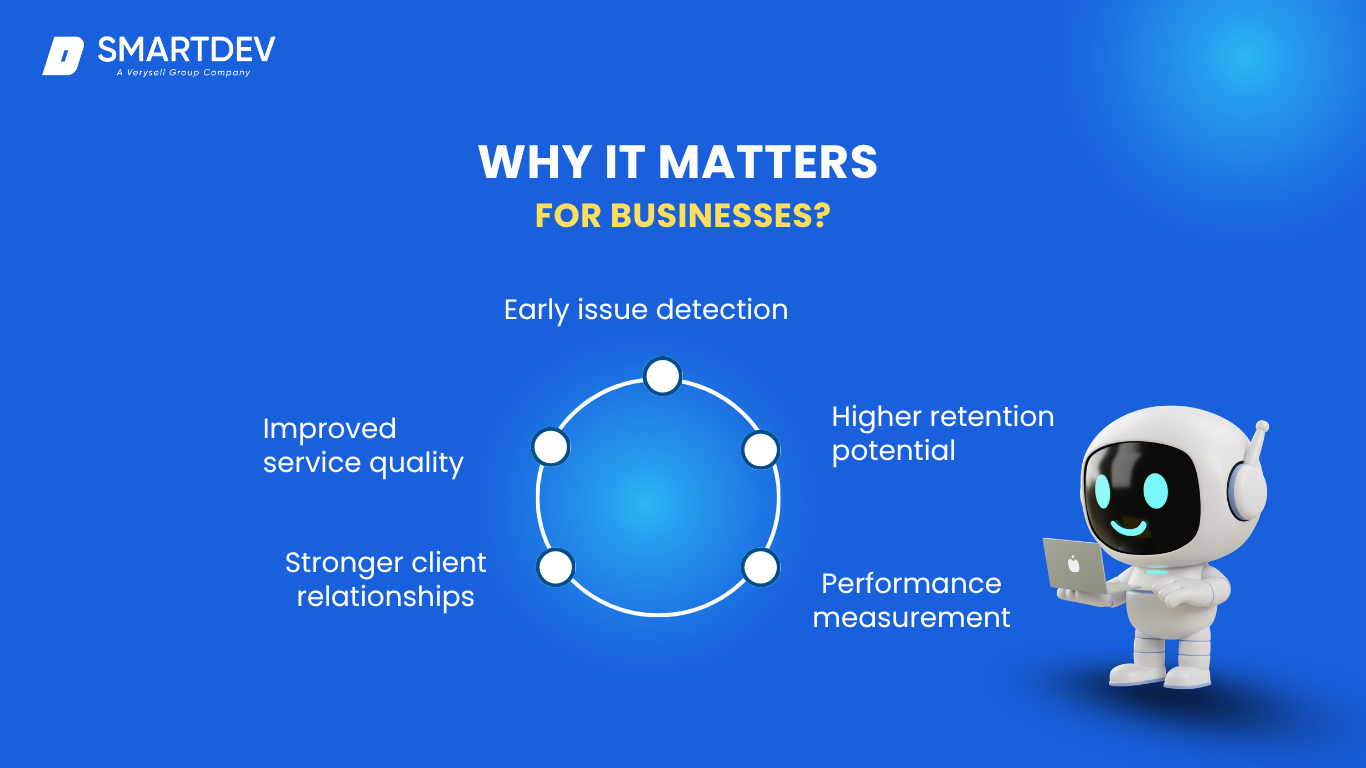
- Early issue detection: Identifies problems before they escalate into client churn.
- Improved service quality: Feedback highlights opportunities to refine processes and improve customer experience.
- Stronger client relationships: Demonstrates that the company values customer opinions and continuous improvement.
- Higher retention potential: Satisfied clients are more likely to continue partnerships and expand engagement.
- Performance measurement: Enables teams to track service effectiveness across different touchpoints.
Organizations that consistently track CSAT can better align their services with client expectations and continuously improve satisfaction levels.
How is Client Satisfaction Score measured?
CSAT is usually measured through short surveys that ask customers to rate their satisfaction with a specific experience. A common question format is: “How satisfied were you with your experience?” followed by a rating scale.
The final CSAT score is calculated by dividing the number of satisfied responses by the total number of responses, then multiplying by 100 to express the result as a percentage. For example, ratings of 4 and 5 on a 5-point scale are often considered “satisfied.”
Organizations may also include open-ended questions to capture qualitative feedback, helping teams better understand the reasons behind satisfaction or dissatisfaction.
When should CSAT be collected?
CSAT surveys are most effective when triggered immediately after key customer interactions. Common timing includes after onboarding completion, customer support resolution, product delivery milestones, or project reviews.
Collecting feedback close to the interaction ensures responses are accurate and relevant. Many organizations implement automated surveys within CRM or customer experience platforms to ensure consistent data collection. Regular measurement allows businesses to monitor trends over time and quickly respond to changes in satisfaction levels.
Other Related Terms
Net Promoter Score (NPS)
A metric that measures customer loyalty based on how likely clients are to recommend a company’s product or service to others.
Customer Success Management
A business function focused on ensuring clients achieve their desired outcomes, increasing satisfaction, retention, and long-term value.
Key Performance Indicators (KPI)
Quantifiable metrics used to evaluate how effectively a company achieves its business objectives, including customer experience and service quality performance.