
TL;DR:
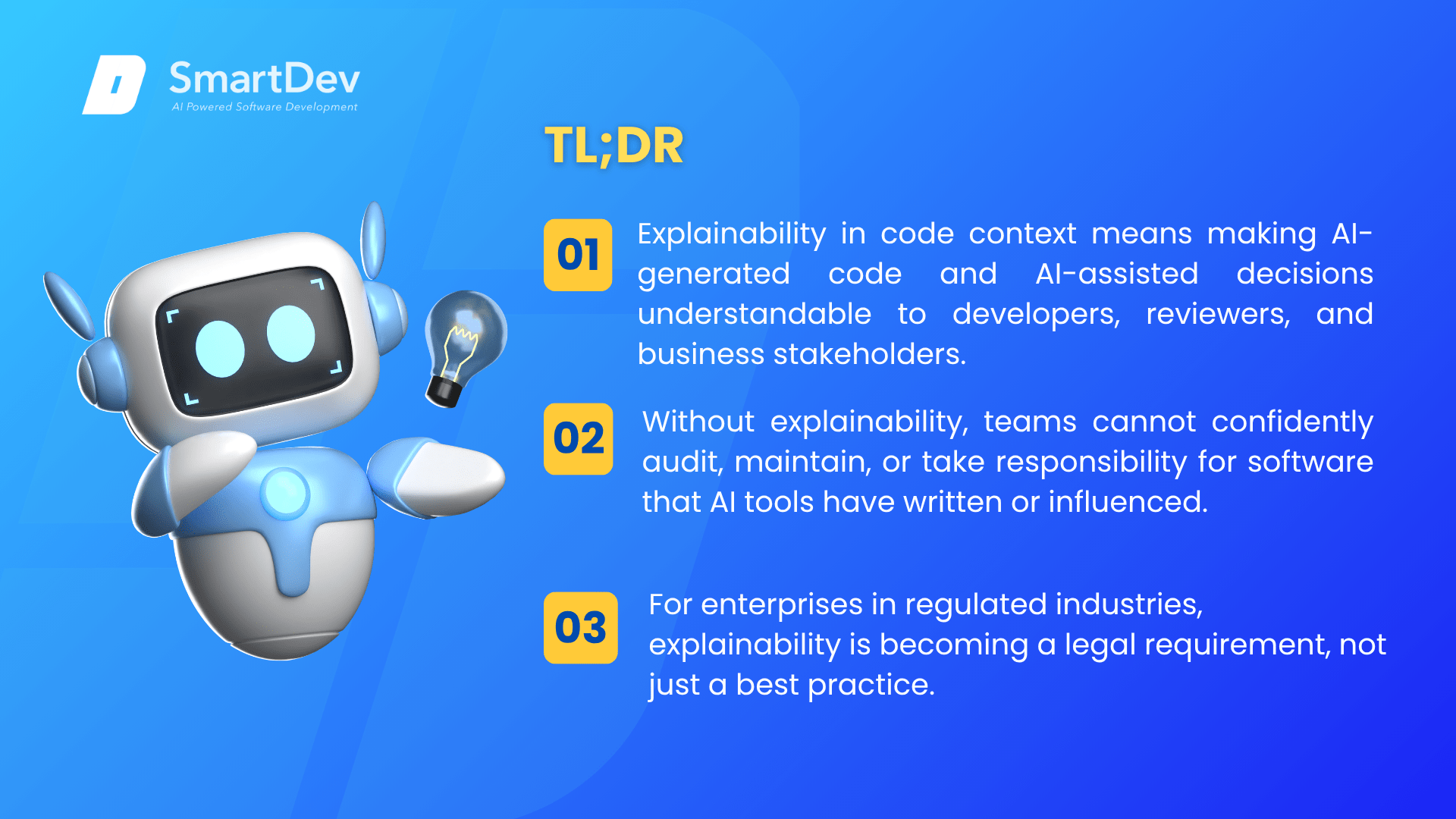
- Explainability in code context (often called explainability in code) means making AI-generated code and AI-assisted decisions understandable to developers, reviewers, and business stakeholders
- Without explainability, teams cannot confidently audit, maintain, or take responsibility for software that AI tools have written or influenced.
- For enterprises in regulated industries, explainability is becoming a legal requirement, not just a best practice.
As AI coding assistants write more of the software powering your business, a critical question emerges: can your team explain what that code does and why? Explainability in the code context is the practice of ensuring that AI-generated decisions, suggestions, and outputs are transparent and interpretable to the humans who must maintain, audit, and take responsibility for them. For business leaders overseeing software development, code explainability in AI is a governance priority that directly affects quality, liability, and regulatory compliance.
What is Explainability (in Code Context)?
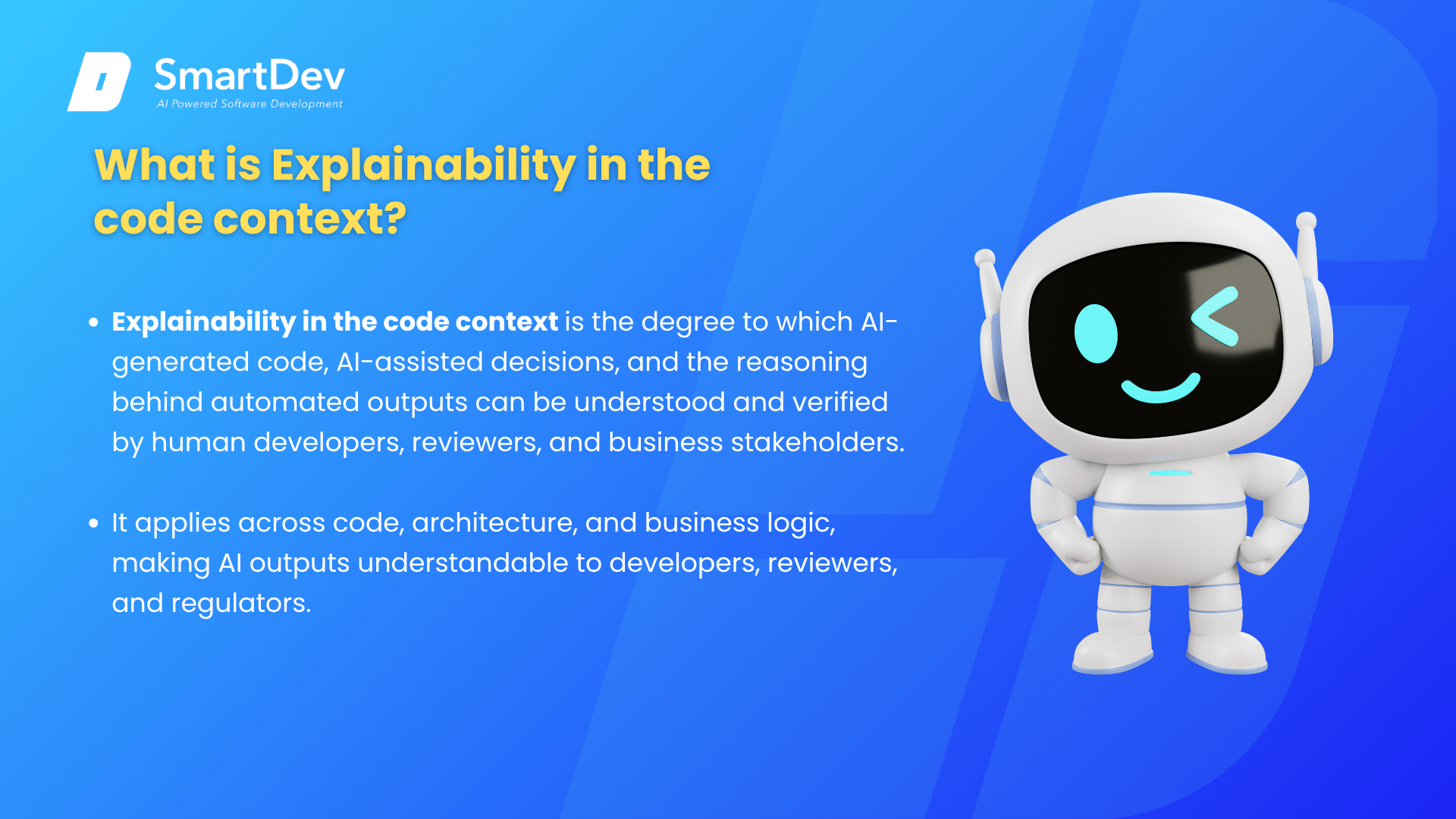
Explainability in the code context, sometimes referred to as AI code explainability, is the degree to which AI-generated code, AI-assisted decisions, and the reasoning behind automated outputs can be understood and verified by human developers, reviewers, and business stakeholders.
When an AI coding assistant suggests a function, recommends an architecture change, or flags a security issue, it is making a decision based on patterns in its training data. Explainability — and specifically explainability for AI coding assistants — asks: can your team see why that suggestion was made, evaluate whether the reasoning is sound, and trace the logic if something goes wrong? Without explainability, AI-generated code becomes a black box. Developers accept outputs they cannot fully interpret, and organizations ship software they cannot fully audit.
Explainability in code takes several forms. At the line-of-code level, it means AI tools that annotate their suggestions with references to the specific patterns, rules, or source examples that informed them, making explainable AI code easier to review. At the architecture level, it means AI systems that can articulate why they recommend one approach over another. At the business logic level, it means decision-making code, such as credit scoring, pricing algorithms, or content moderation rules, that can be explained in plain language to non-technical reviewers and regulators as part of broader explainability in code context practices.
Why It Matters for Businesses?
As AI writes more code and makes more decisions embedded in software, the business cannot simply trust that outputs are correct without understanding how they were reached. The absence of explainability creates compounding risk across three dimensions: operational, regulatory, and reputational.
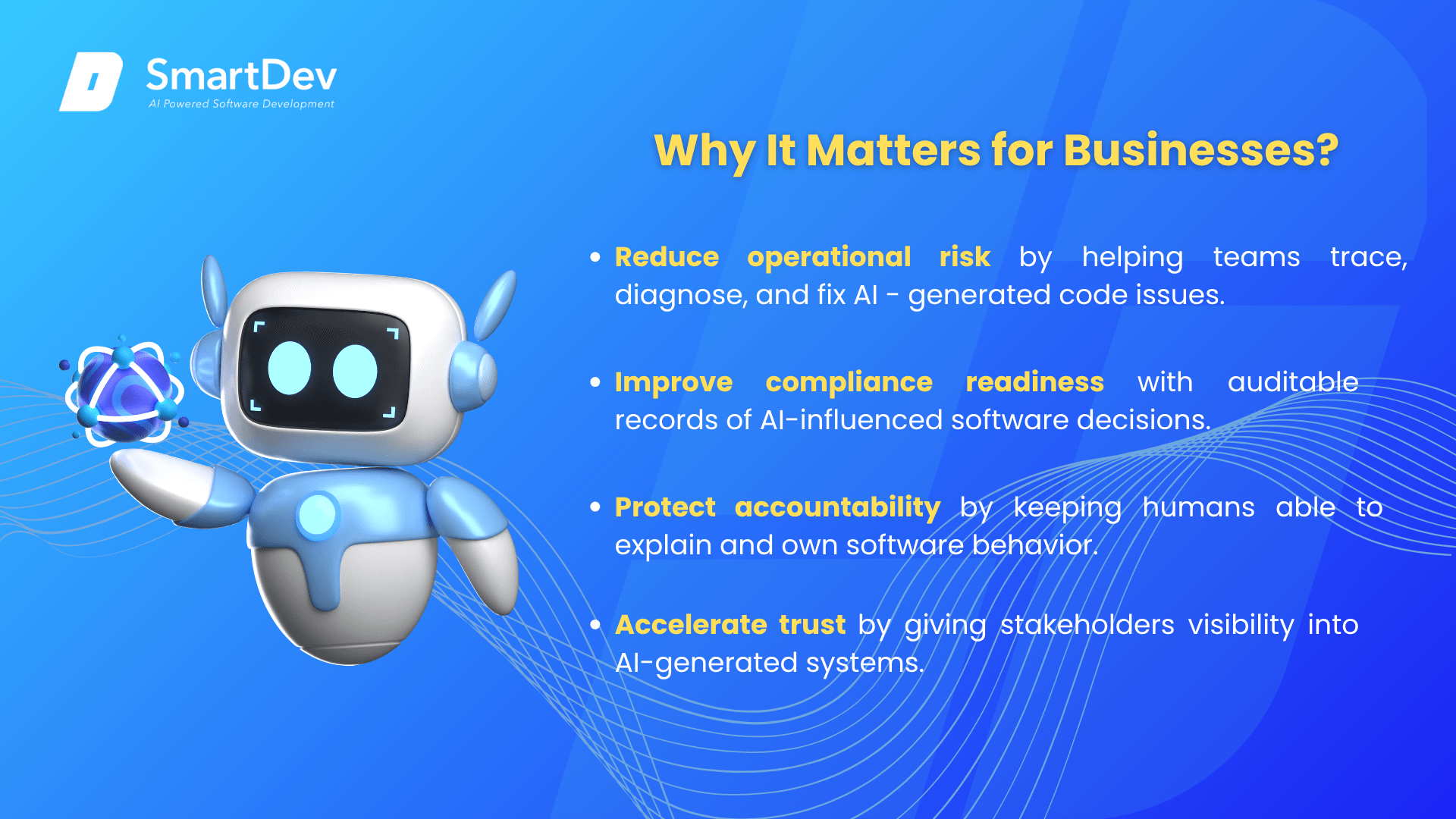
- Reduce operational risk by ensuring your development team can diagnose failures, trace errors to their source, and correct AI-generated code that behaves unexpectedly in production.
- Improve compliance readiness by maintaining auditable records of how AI tools influenced software decisions in regulated domains such as finance, healthcare, and public sector services.
- Protect accountability structures by ensuring that human developers and managers retain the ability to explain and own the behavior of software, even when AI generated significant portions of it.
- Accelerate trust in AI-assisted development by giving technical and non-technical stakeholders the visibility they need to approve and oversee AI-generated systems with confidence.
For example, a healthcare software company used an AI coding assistant to help build a patient triage algorithm. During a regulatory audit, authorities required a clear explanation of how certain patient classification decisions were reached. Because the development team had implemented explainability in code standards throughout the process, including annotated code reviews and documented AI suggestion trails, they could provide a satisfactory account. Teams without those practices in place have faced audit failures that required complete algorithm rebuilds at significant cost.
How Does Explainability Work in Code Development?
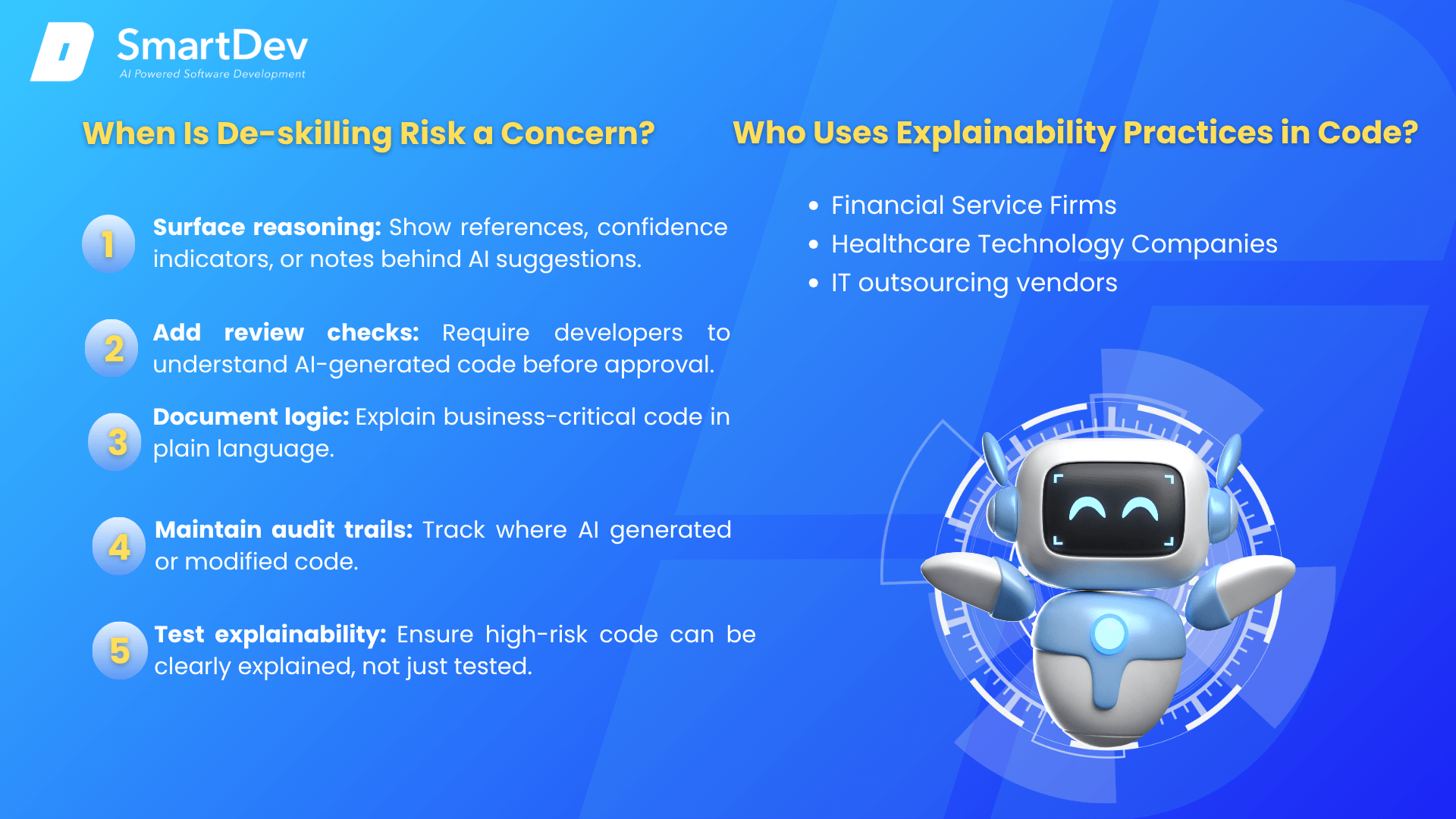
- AI tools surface reasoning alongside suggestions. Advanced AI coding explainability features in coding assistants provide references, confidence indicators, or annotations that help developers understand why a particular code suggestion was generated and what precedents it draws from.
- Code review processes include explainability checks. Review workflows are updated to require that AI-generated sections be understood and explained by the human developer accepting them, not just verified as functional through testing.
- Decision logic is documented in plain language. For code that drives business decisions, developers maintain documentation that translates the logic into terms a non-technical stakeholder or regulator can follow, strengthening overall explainability in code.
- Audit trails are maintained for AI contributions. Development pipelines log which portions of a codebase were generated or significantly modified by AI tools, creating a record that supports future review and accountability.
- Explainability testing is built into quality assurance. QA processes include checks that verify complex or high-risk code sections can be articulated, not just tested, by a member of the team responsible for them.
The result is a development culture where AI tools augment human understanding rather than replace it, keeping the team in genuine control of the software they ship and improving explainability in code context over time.
Who Uses Explainability Practices in Code?
Explainability in code is most critical in sectors where software decisions carry direct consequences for individuals and where regulatory oversight is active.
Financial services firms building credit scoring, fraud detection, and trading systems must be able to explain algorithmic decisions to regulators, auditors, and in some jurisdictions, to the individuals affected by those decisions.
Healthcare technology companies developing diagnostic tools, triage systems, and clinical decision support software are required in many markets to demonstrate that AI-assisted outputs are interpretable and do not substitute for human clinical judgment in ways that cannot be explained.
IT outsourcing vendors delivering AI-enhanced software to enterprise clients face increasing contractual requirements to provide explainability documentation as part of software delivery, particularly where client compliance obligations flow through to the vendor.
The roles driving explainability requirements include Chief Compliance Officers managing regulatory exposure, Legal Counsels advising on algorithmic accountability, and IT Directors overseeing quality standards for AI-assisted development programs that depend on robust explainability in code practices.
Other Related Terms
- AI Slop: Refers to low-quality, mass-produced content generated by AI tools, often prioritizing quantity over value.
- AI Governance: The organizational framework that defines policies for responsible AI use, of which explainability requirements for AI-generated code are one practical and enforceable component.
- Responsible AI: The broader practice of developing and deploying AI systems in ways that are safe, fair, transparent, and accountable, with explainability serving as one of the core technical pillars of that commitment.