TL;DR
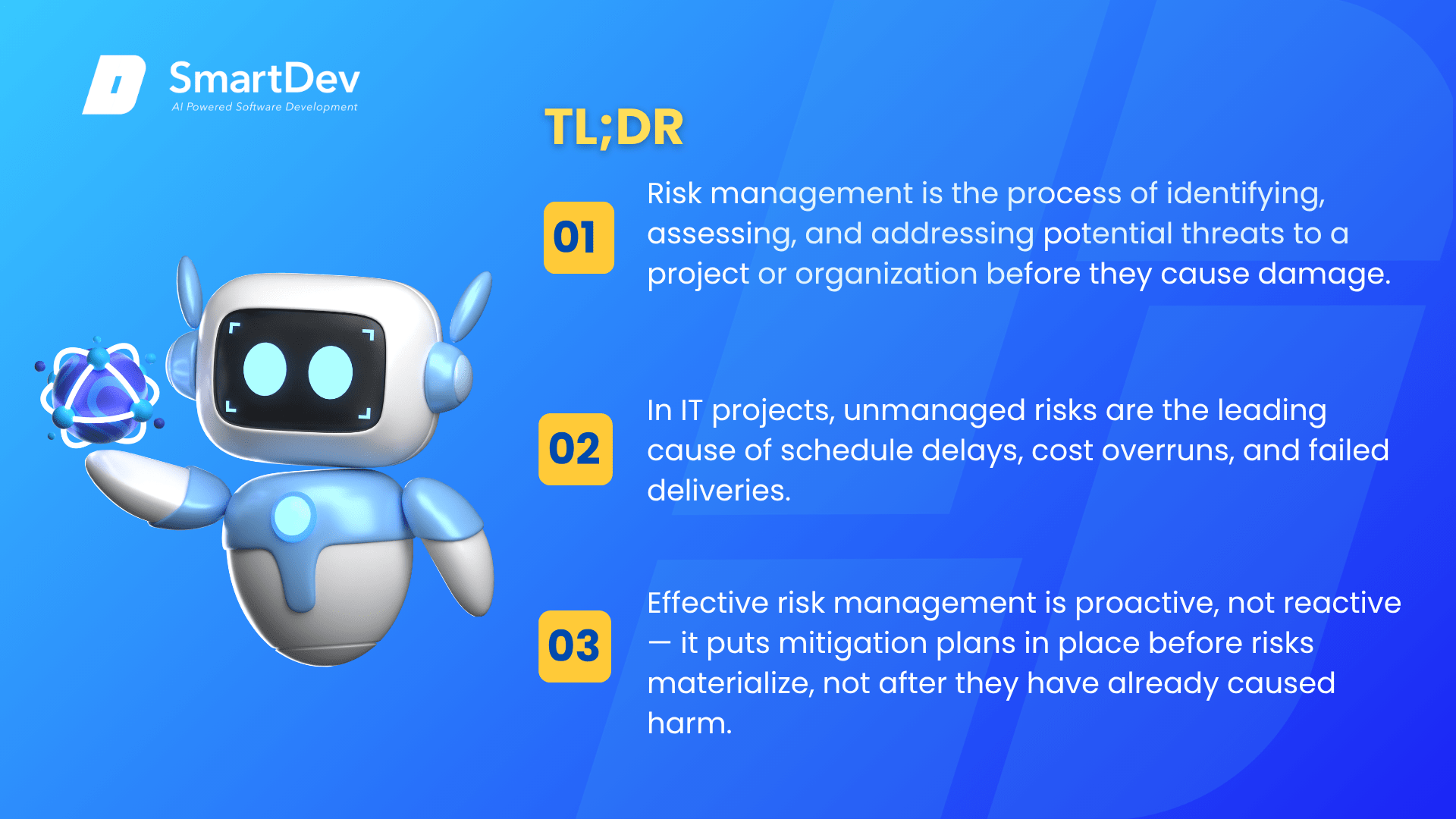
- Risk management is the process of identifying, assessing, and addressing potential threats to a project or organization before they cause damage.
- In IT projects, unmanaged risks are the leading cause of schedule delays, cost overruns, and failed deliveries.
- Effective risk management is proactive, not reactive — it puts mitigation plans in place before risks materialize, not after they have already caused harm.
Every IT project carries uncertainty. Technologies may not perform as expected. Key team members may leave. Vendors may miss commitments. Third-party APIs may change. Risk management is the discipline that identifies these threats in advance and ensures the team has a plan to deal with them before they turn into crises.
What is Risk Management?
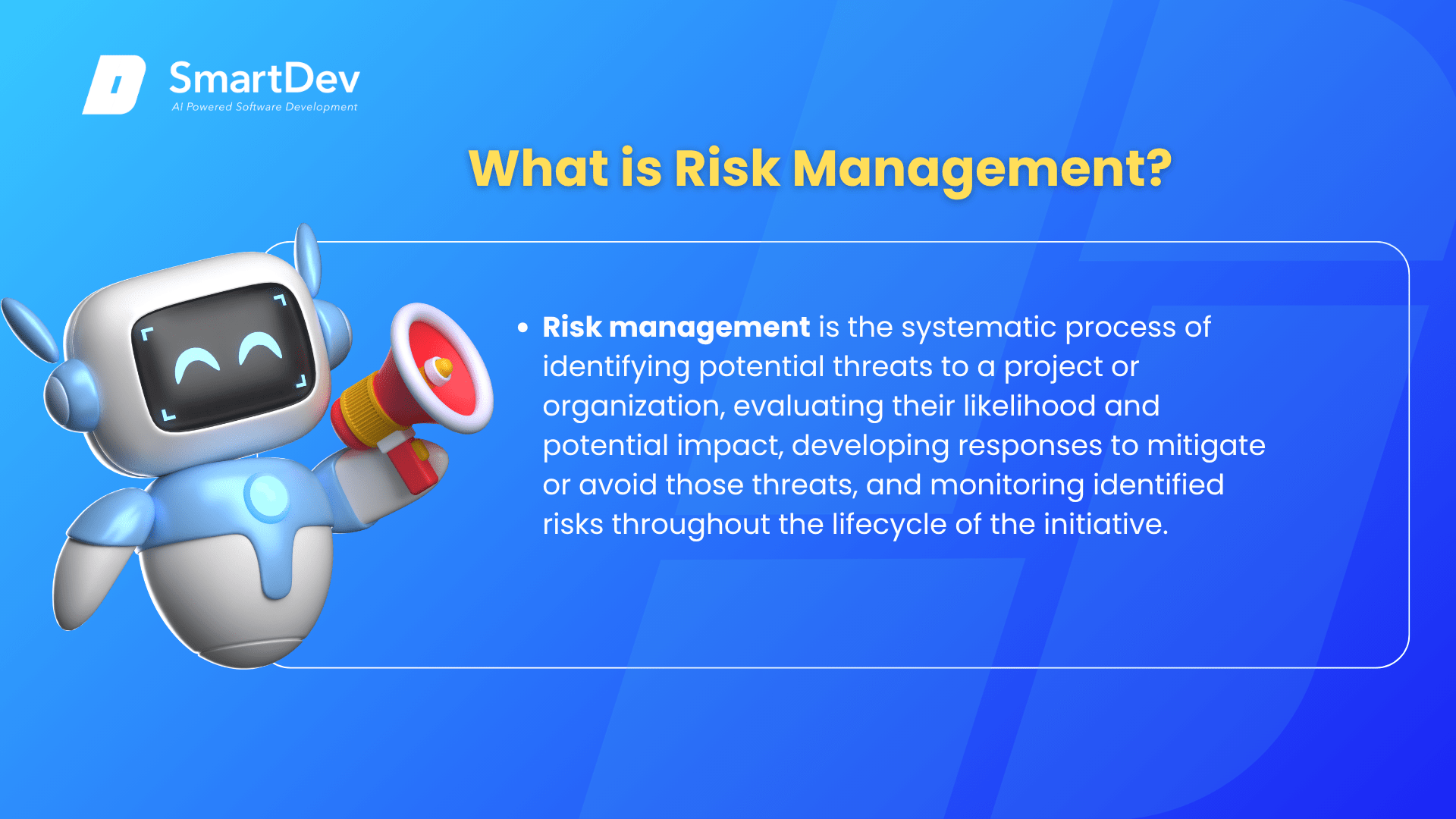
Risk management is the systematic process of identifying potential threats to a project or organization, evaluating their likelihood and potential impact, developing responses to mitigate or avoid those threats, and monitoring identified risks throughout the lifecycle of the initiative.
In IT projects, risk management operates at two levels. Project risk management focuses on threats specific to a single initiative: unclear requirements that could cause scope creep, a critical dependency on a vendor who has not yet confirmed delivery, or a technical architecture decision that has not been validated. Enterprise risk management (ERM) takes a broader view, looking at risks that could affect the organization’s strategic objectives across multiple projects and business functions.
Risks are characterized by two dimensions: probability (how likely is this to happen?) and impact (how severe would the consequences be?). A risk with high probability and high impact demands immediate attention and a concrete mitigation plan. A risk with low probability and low impact may simply be logged and monitored.
Why It Matters for Businesses?
IT projects are among the most risk-prone investments a business makes. The Standish Group reports that a significant portion of enterprise IT projects are delivered late, over budget, or without their originally planned features. Poor risk management is consistently cited as a contributing factor.
- Reduce project failure rates by identifying threats early enough to change course before they cause irreversible damage.
- Protect budget and timeline commitments by building contingency plans for high-probability risks before they materialize.
- Improve stakeholder confidence by demonstrating that the project team has a clear view of what could go wrong and a structured plan to address it.
- Accelerate decision-making when issues arise, because pre-planned risk responses give the team clear actions to take rather than having to improvise under pressure.
For example, a software company migrating its platform to a new cloud provider identified during risk planning that data migration was the highest-probability risk. The team developed a phased migration approach with rollback capability and tested the rollback procedure in a staging environment before go-live. When a data formatting issue was discovered mid-migration, the rollback plan was executed in under two hours with no production downtime.
How Does Risk Management Work?
- Identify Risks: Conduct a structured risk identification exercise with the project team and key stakeholders. Use techniques such as brainstorming, SWOT analysis, and lessons learned from previous projects to surface potential threats.
- Assess Likelihood and Impact: Rate each identified risk by its probability of occurring and the severity of its impact if it does. Use a risk matrix to prioritize risks visually and focus mitigation effort on the highest-priority items.
- Develop Response Plans: For each high-priority risk, define a mitigation strategy (how to reduce the likelihood or impact), a contingency plan (what to do if the risk occurs despite mitigation), and a risk owner (who is responsible for monitoring and responding).
- Monitor and Update: Review the risk register at regular intervals throughout the project. Risks change as projects progress — some become less likely as work is completed, while new risks may emerge as scope evolves.
The result is a project team that is never blindsided by foreseeable problems, and a leadership team that has real visibility into what might affect project outcomes and what is being done about it.
Who Uses Risk Management?
Risk management is used across all industries and organizational sizes, but it is particularly critical in IT project delivery, enterprise digital transformation, and outsourced software development. Project managers use risk registers to track threats and their mitigation status. CTOs and CIOs use risk management frameworks to assess the overall health of the technology portfolio. Procurement teams use vendor risk assessments to evaluate the probability of supplier failure before signing contracts.
In IT outsourcing, risk management extends across organizational boundaries. A mature outsourcing engagement includes joint risk identification between client and vendor, shared ownership of mitigation plans, and escalation procedures that both parties agree to before work begins.
Other Related Terms
Project Governance: The framework of oversight structures and escalation paths within which risk management decisions are made and communicated to senior stakeholders and steering committees.
Project Charter: The foundational project document that includes an initial risk assessment and establishes the authority and escalation paths needed for effective risk response.
Escalation Management: The process of raising unresolved risks and issues to higher levels of authority when project-level responses are insufficient to prevent impact on delivery.