
TL;DR
- Architecture Design is the process of defining how a software system’s components are structured, connected, and governed to meet business and technical requirements.
- Poor architecture leads to systems that are expensive to maintain, slow to scale, and difficult to integrate with new technology.
- Good architecture decisions made early save significant cost and effort over the life of the system.
Architecture Design is a foundational activity in every successful software project. It determines how a system is built, how it will scale, and how easy it will be to change in the future. Businesses that skip this step often pay the price later in costly rework and technical debt. This article explains what it covers and why it matters.
What is Architecture Design?
Architecture Design is the process of defining the high-level structure of a software system, including its components, their responsibilities, how they interact, and the principles that govern how the system is built and evolved. It is essentially the blueprint for a software product or platform, translating business requirements into a technical plan before any code is written.
Common architectural patterns used in software systems include:
- Monolithic architecture: All components are part of one deployable unit, simpler to start but harder to scale
- Microservices architecture: The system is split into small, independent services that communicate via APIs
- Event-driven architecture: Components react to events in real time, well-suited for systems that require instant updates
- Layered architecture: The system is organized into distinct layers (presentation, business logic, data) with clear separation of responsibilities
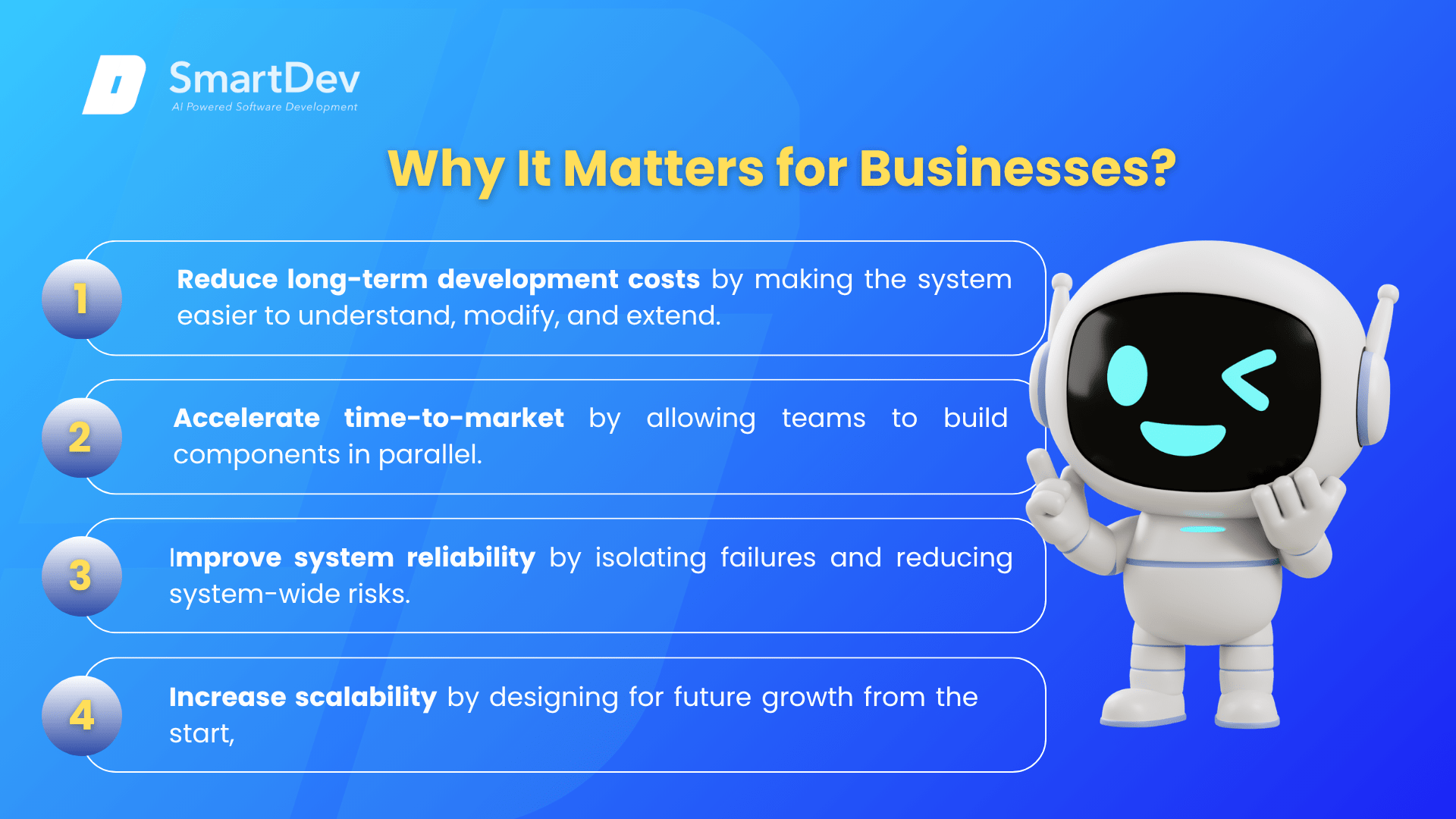
Why It Matters for Businesses?
Architecture decisions made at the start of a project shape what is possible for years to come. A well-designed architecture makes systems easier to extend, cheaper to operate, and more resilient to failure. A poorly designed one creates technical debt that compounds over time, slowing every future development effort.
- Reduce long-term development costs by making the system easier for teams to understand, modify, and extend
- Accelerate time-to-market by enabling teams to work on different components in parallel without stepping on each other
- Improve system reliability through design patterns that isolate failures and prevent one component from taking down the whole system
- Increase scalability by designing for growth from the start, avoiding costly rewrites when user demand increases
For example, a logistics platform that was originally built as a monolith faced a 12-month re-architecture project when it needed to support ten times the original user volume. A microservices design from the start would have allowed the team to scale only the high-demand components, at a fraction of the cost and timeline.
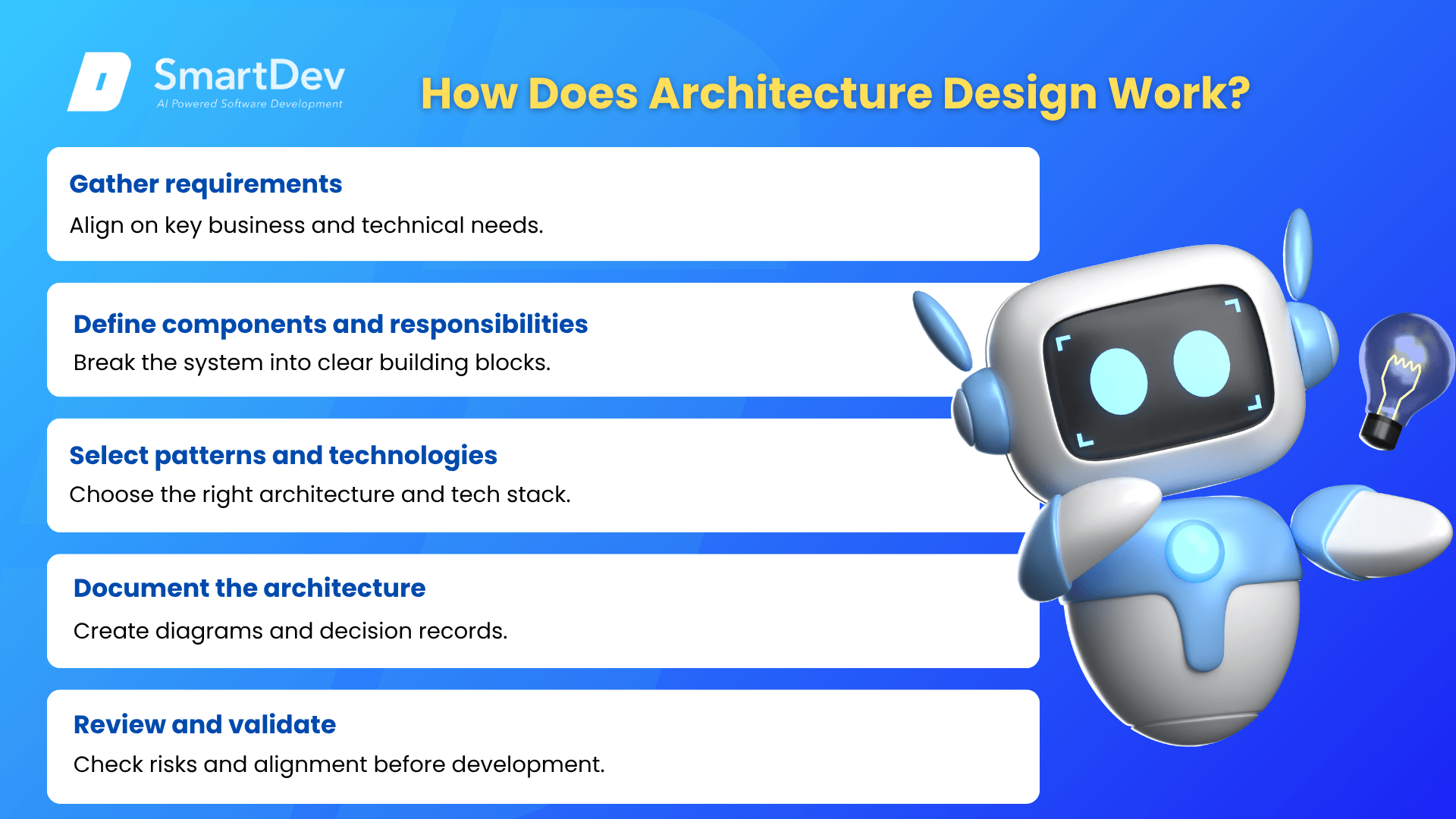
How Does Architecture Design Work?
- Gather requirements: The architect works with business and product stakeholders to understand functional requirements (what the system must do) and non-functional requirements (performance, security, availability, scalability).
- Define components and responsibilities: The system is divided into logical building blocks. Each component is assigned a clear responsibility to avoid duplication and confusion.
- Select patterns and technologies: The architect chooses the right architectural patterns (microservices, event-driven, etc.) and technology stack based on team skills, business constraints, and the system’s performance needs.
- Document the architecture: Diagrams and decision records are created to communicate the design to development teams and stakeholders. This documentation becomes a reference throughout the project.
- Review and validate: The design is reviewed with senior engineers and stakeholders to check for gaps, risks, and alignment with business goals before development begins.
The result is a clear, shared understanding of how the system will be built and a foundation that supports long-term growth and change.
Who Uses Architecture Design?
Architecture Design is used across a wide range of industries and company types:
- Technology companies building SaaS platforms, mobile apps, or data-intensive products rely on architecture design to ensure their systems scale and stay maintainable as user demand grows.
- Financial services and healthcare firms require rigorous architecture to meet regulatory compliance, security standards, and uptime requirements that govern their operations.
- Enterprises undergoing digital transformation use architecture design to integrate legacy systems with modern cloud platforms, APIs, and AI tools without disrupting ongoing business.
Key roles involved include Solution Architects, Enterprise Architects, CTO, IT Directors, and Lead Engineers, who collaborate to align technical decisions with business strategy.
Other Related Terms
- Technical Debt: The accumulated cost of poor or shortcut architectural decisions that must eventually be addressed through refactoring or redesign.
- Project Roadmap: A strategic plan that outlines the goals, objectives, key milestones, timelines, and resources required to complete a project successfully
- Waterfall Development: A structured approach to the Software Development Lifecycle (SDLC) where each project phase is completed before the next begins.